 cord
cordHiring In-Demand Talent in 2023
A data-led report on how the behaviour of Top Talent differs to the rest of the market

Our recent Applications Vs Sourcing report found that Talent Managers are in a strong position for making direct hires. There are more applications from a wider portion of the market and a better return of sourcing messages, due to less competition.
But, do these trends hold true for the most In-Demand Talent? In this report, we’ll analyse the same data points compared to the top 5% of candidates receiving the most messages from companies, to provide tips for hiring Top Talent.
Key Takeaways
- The most in-demand people on cord are not sending as many applications as the rest of the market.
- Top candidates are more selective with the messages they accept, with companies experiencing a 29.2% lower acceptance rate.
- Over the past year, on average, only 26.6% of Top Talent hires have come from applications, compared to 39.4% for the rest of the market.
- 20% of top talent hires never applied to a role, 4x the 5.1% rate seen in the general candidate pool.
The most In-Demand Talent aren't sending as many applications
A smaller percentage of first messages from In-Demand Talent
Although the application rate has increased for the entire market, the increase has not been as significant for In-Demand Talent. This means that they are less likely to apply to your position.
The graph shows the percentage of first messages sent by candidates, out of the total first messages sent by both companies and candidates, broken down by the Whole Market Vs. the Most In Demand Talent.
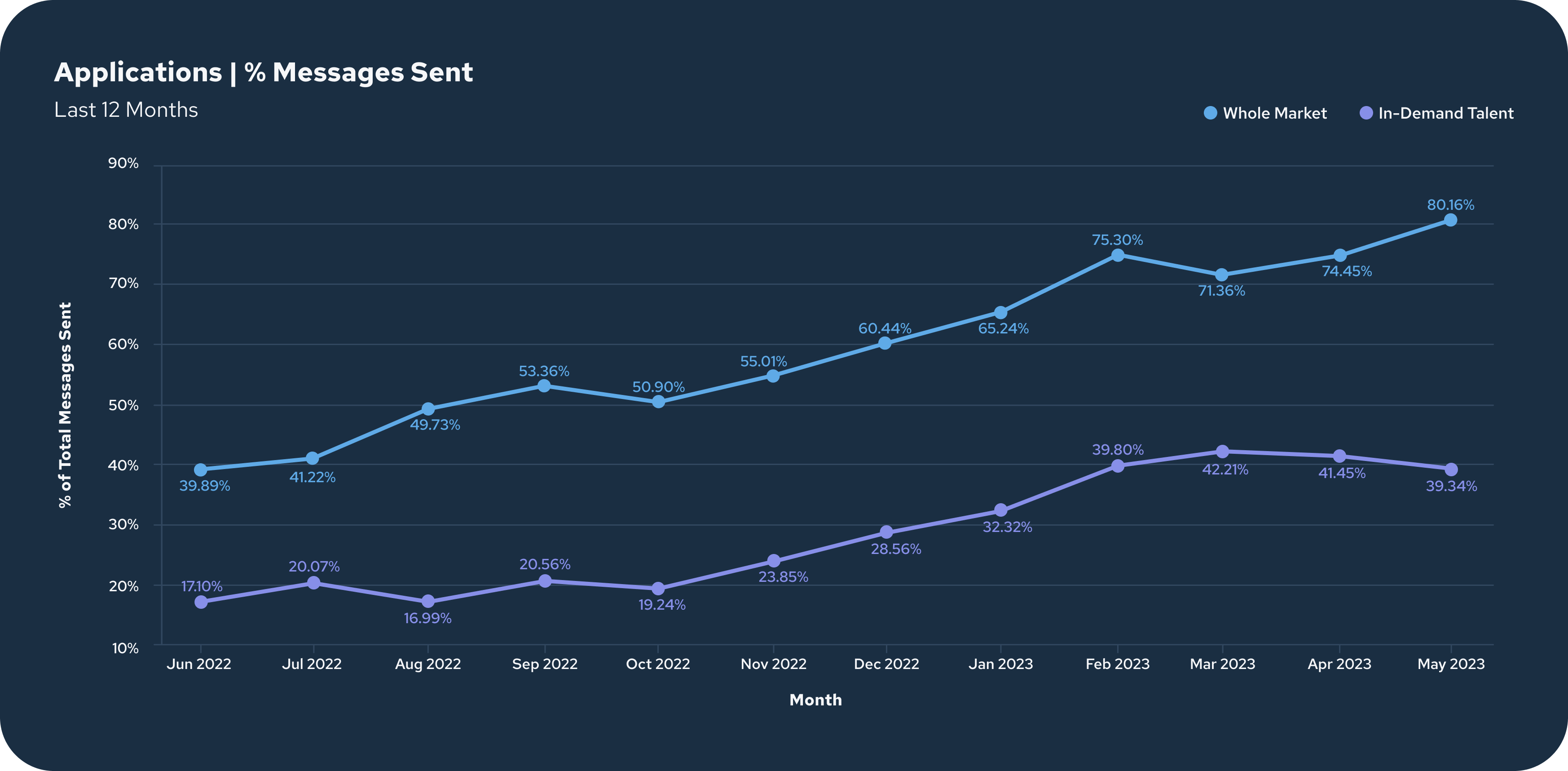
Looking at the Whole Market, candidates now send 80.2% of the total first messages on cord, compared to 39.9% in June 2022. Whilst this number has increased for In-Demand Talent, it’s not at the same rate, and their applications only make up 38.3% of total first messages sent.
Sourcing allows you to be competitive with In-Demand Talent
For the Whole Market, sourcing has dropped significantly, however for hiring In-Demand Talent sourcing remains the primary way of engaging candidates amongst companies. In short: To stay competitive with In-Demand Talent, you need to source.
The below graph is the inverse of the one above, this time focused on the percentage of first messages sent by companies, out of total first messages, reinforcing that you need to source to access the best talent.
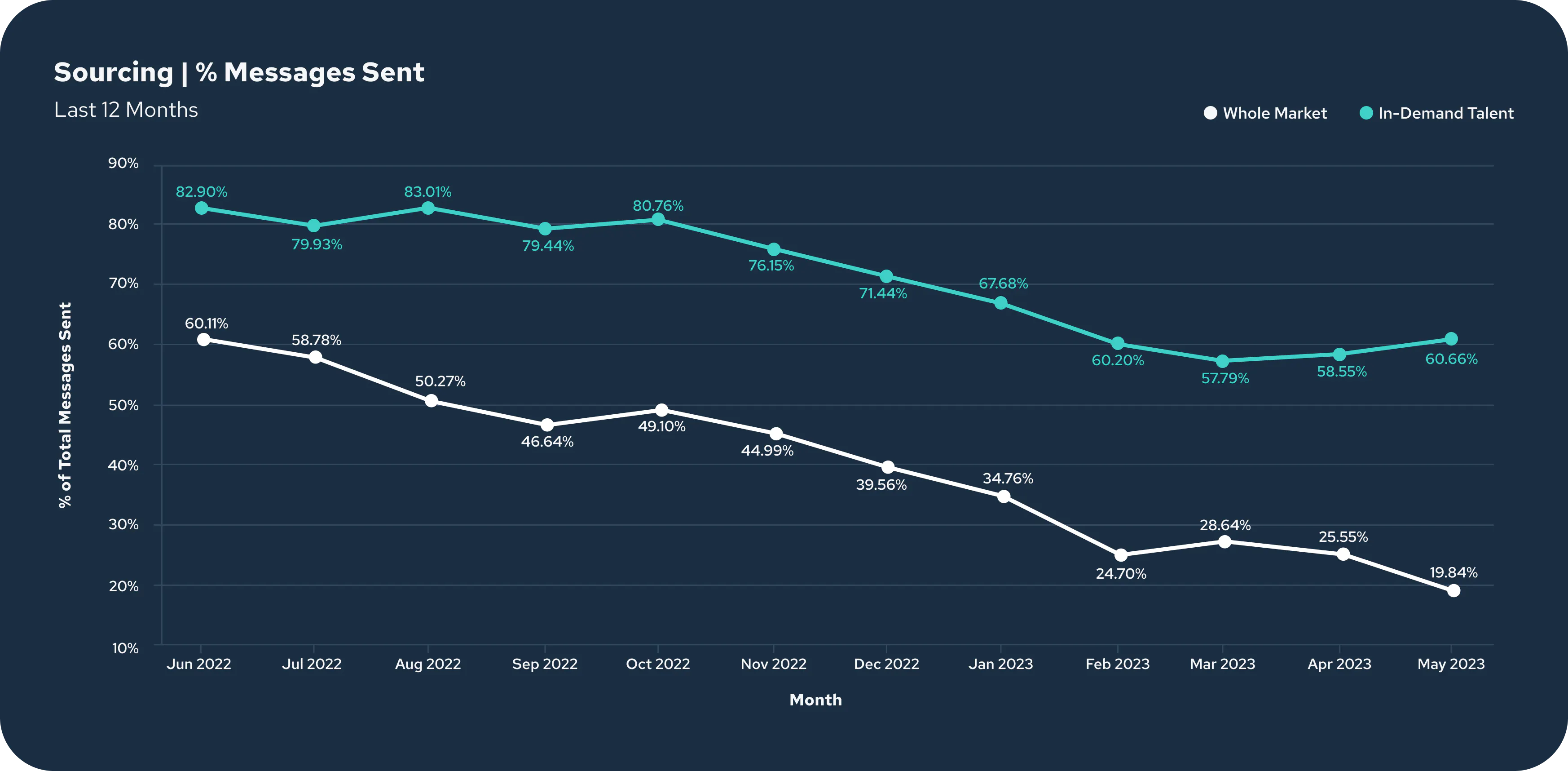
There has been a sharp decline in the % of sourcing messages sent to the Whole Market by 70.0%. Whilst the % of sourcing messages to the Top Talent has dropped by 26.8% over the last 12 months, companies are still making up 60.7% of first messages sent to this group.
Key Takeaways for Talent Managers:
You’re less likely to receive applications from In-Demand Talent
- Where the rest of the market is sending more applications than ever before, the Top Talent is actually sending fewer applications.
- Whilst the number of applications you receive has increased, it’s now less likely that the best talent will apply to your role.
- You need to focus on sourcing if you want to access these people.
You need to source be competitive for In-Demand Talent
- Sourcing numbers for the Whole Market have decreased, with many companies relying on applications. You can stand out above your competitors by focusing on sourcing.
- For In-Demand Talent, sourcing remains the norm, and you need to keep focusing on this to keep up with your competitors when hiring the Top Talent.
Sourcing remains the best way to engage In-Demand Talent
In-Demand talent is more selective when accepting messages
Previously, companies had similar acceptance rates for sourcing messages from the Whole Market and In-Demand Talent. However, in the past year, the acceptance rate for the Whole Market has gone up significantly, while In-Demand Talent remains just as selective as in June 2022.
This graph shows the % of company sourcing messages that are accepted by candidates, comparing the Whole Market Vs In-Demand Talent.
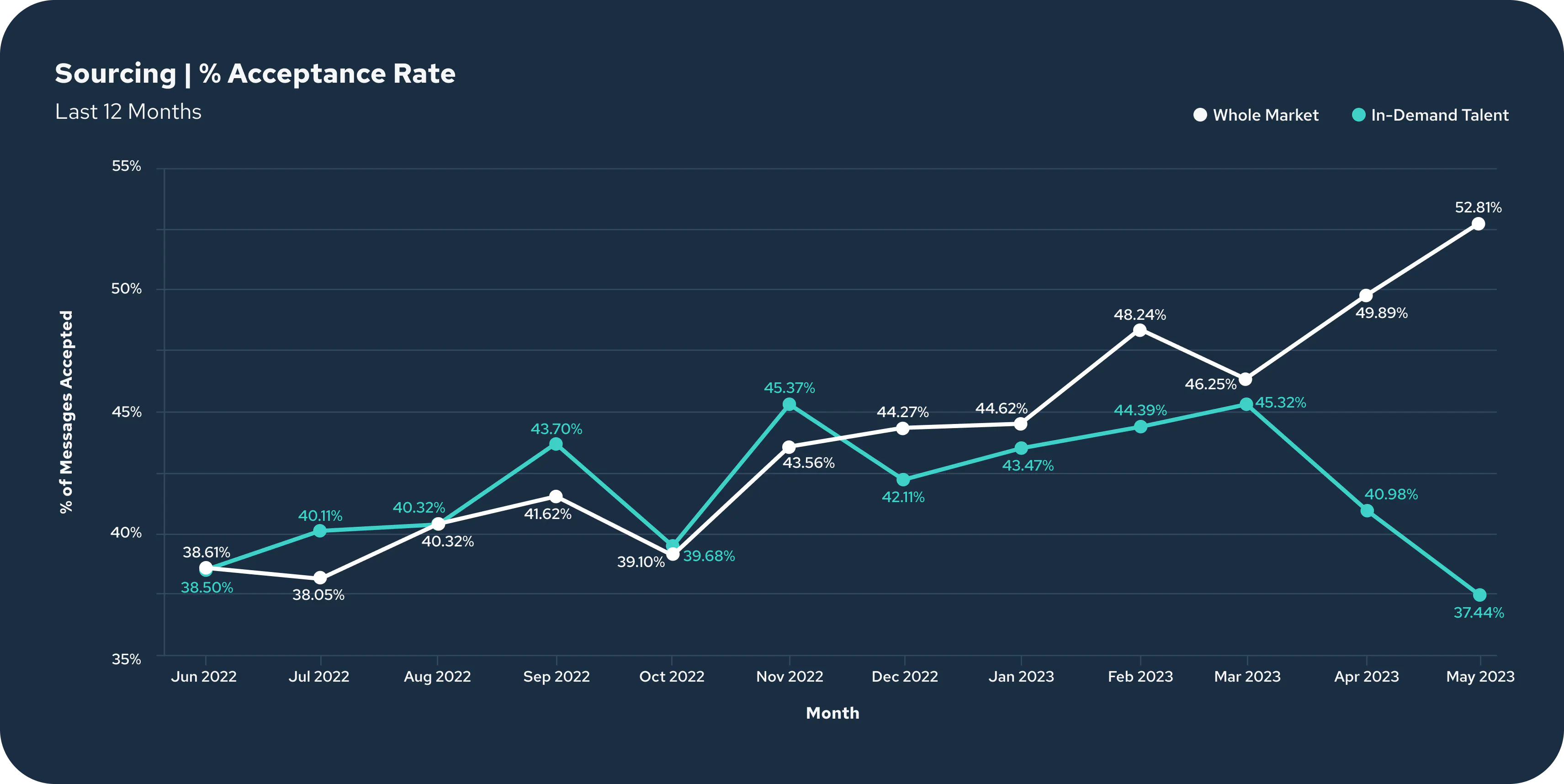
The acceptance rate for companies’ messages by the Whole Market has increased by 36.8% over the last 12 months, whilst In-Demand Talent has fluctuated, but ultimately returned to a similar level. In May 2023, the Whole Market acceptance rate was 29.1% higher than from In-Demand Talent.
You are more likely to accept messages from In-Demand Talent
Companies have overall become more selective with which applications they accept, with the acceptance rate for the Whole Market decreasing. Whilst the acceptance rate for In-Demand Talent has also decreased, this isn’t at the same rate as the Whole Market, and companies remain more likely to accept this group’s applications.
This graph compares the % of applications that are accepted by companies for In-Demand Talent vs the Whole Market
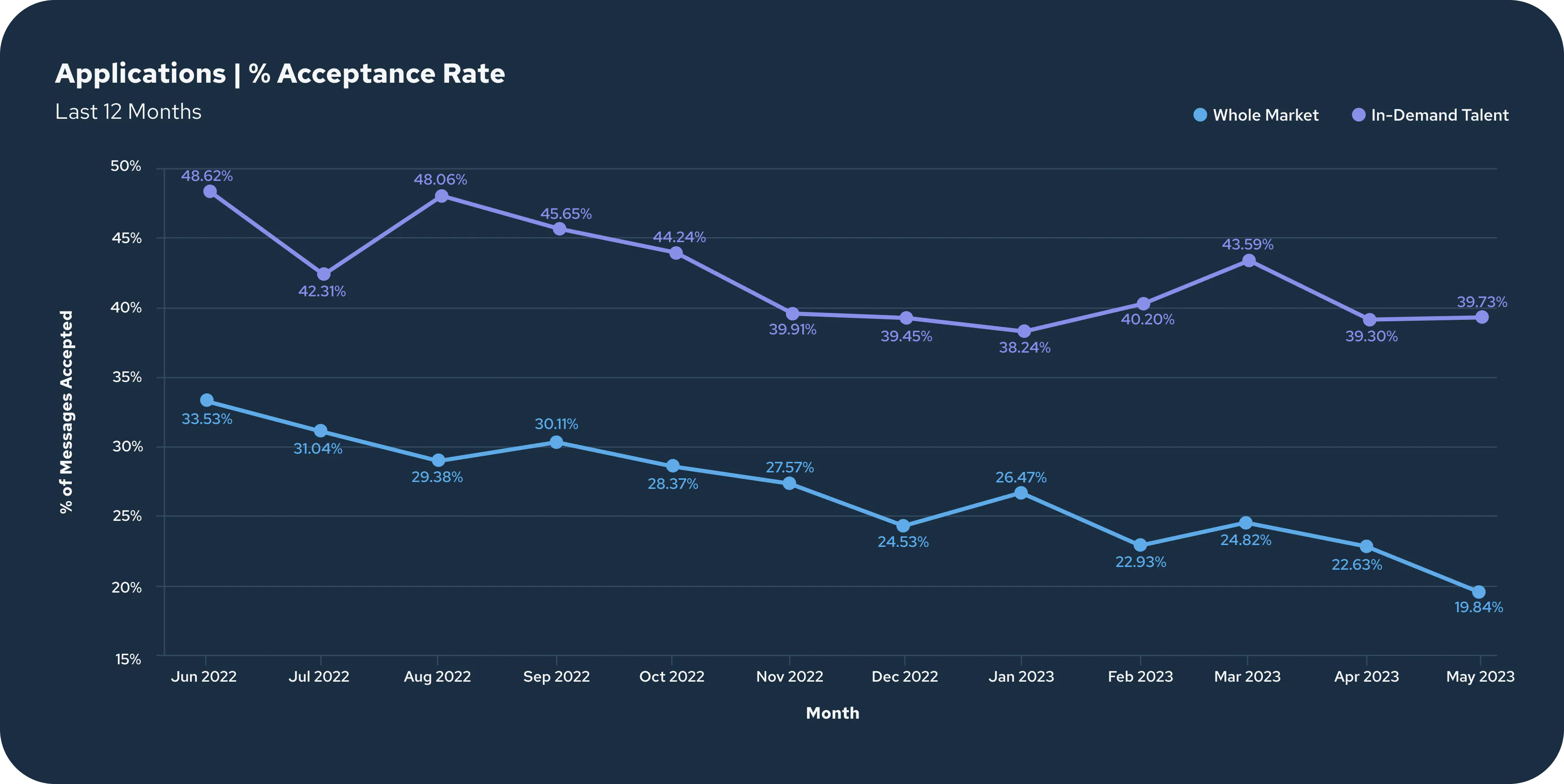
Compared to June 2022, there’s been an 18.3% drop in the acceptance rate for In-Demand Talent. However, this drop is significantly lower than the 40.8% drop we’ve seen with the Whole Market’s applications. In May 2023, the acceptance rate for In-Demand Talent was 50.1% higher than the rest of the market.
Key Takeaways for Talent Managers:
You need more effective outreach for In-Demand Candidates
- The response rate companies receive from Top Talent candidates is lower than for the rest of the market.
- It’s important to focus on building effective outreach messages when sourcing the Top Talent to give yourself the best chance of having your message accepted.
You have a better chance of speaking with Top Talent through sourcing
- Whilst sourcing In-Demand Talent is more competitive, with a lower acceptance rate, due to the number of applications sent by this group you’re still more likely to get these candidates into your pipeline through sourcing.
- This is different to the Whole Market, where more conversations are now initiated by candidates.
You miss a large portion of In-Demand Talent by relying on applications
Top Talent hires are more likely to not apply for positions
Relying on applications instead of sourcing can lead to concerns that you’re not reaching the entire market, as some candidates wait to be approached instead of applying.
The number of people not applying for positions has fallen for the overall Whole Market, so you now have wider access through applications alone. However, for In-Demand Talent, this number has actually risen, meaning more of this group are being hired without having to ever apply to a role.
This graph shows the % of people hired on cord who have never applied for a position during their job search, comparing the Whole market vs. In-Demand Talent.
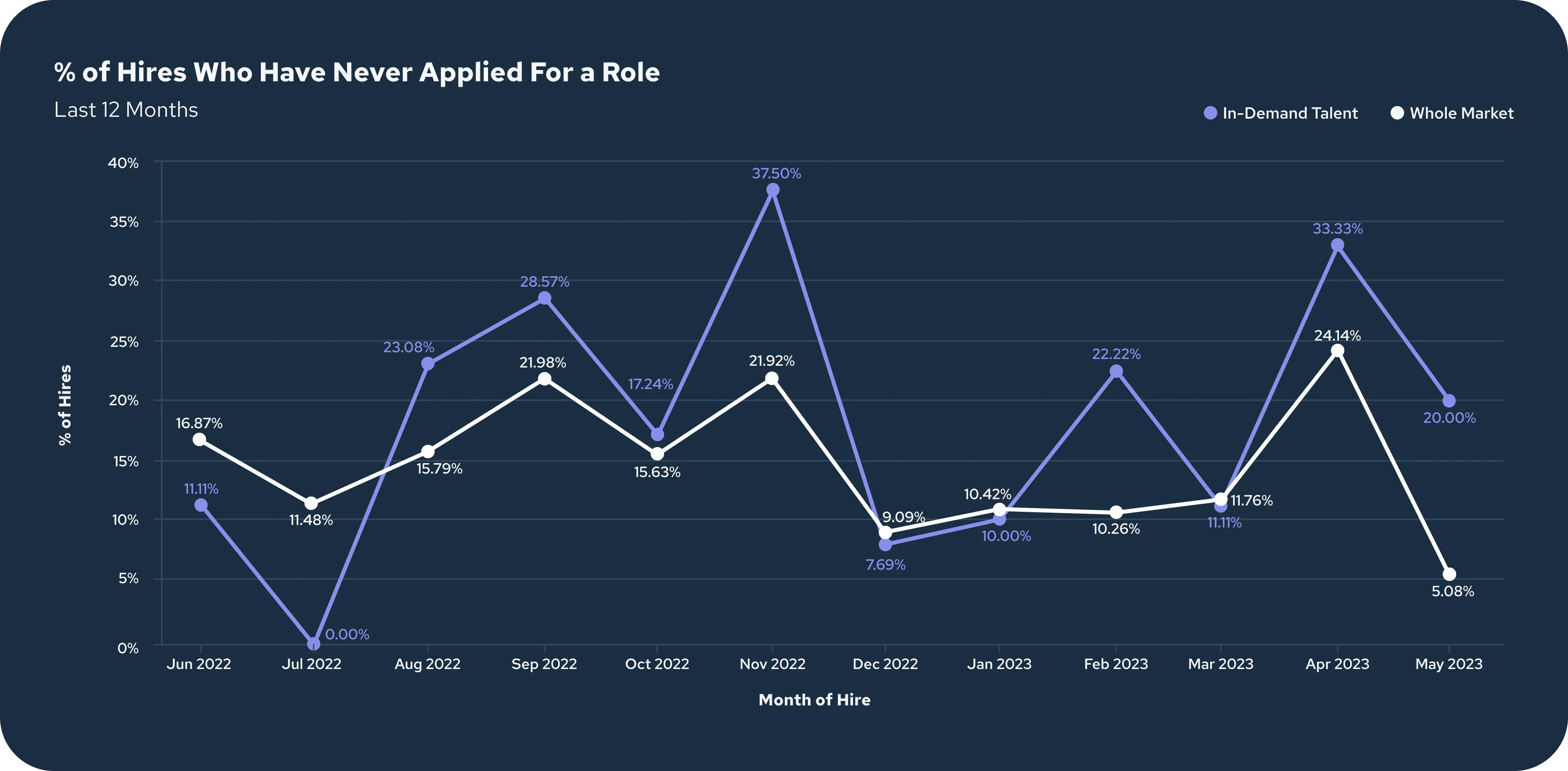
For the Whole Market, there’s been a 69.9% drop in the number of hires who never apply for a position, with just 5.1% in May 2023.
For In-Demand Talent, we’ve seen the number who never applied for a role increase from 11.1% in June 2022 to 20.0% in May 2023, 4x higher than the rest of the market.
Key Takeaways for Talent Managers:
You are less likely to hire Top Talent by relying on applications
- A much larger portion of all candidates are now applying for positions, meaning you can rely on applications to access the majority of the market
- However, the Top Talent is trending towards not applying for positions and this number is increasing.
You’re more likely to hire In-Demand Talent through sourcing
Hires from applications are increasing, but sourcing still results in more
Previously, a significant number of hires were initiated through sourcing and this was undoubtedly the most efficient way to make hires. This was even more true for In-Demand Talent, where up to 80% of hires were through sourcing.
In the last 12 months, we’ve seen a decrease in hires through sourcing and instead a rise in hires through applications. Despite this trend, for both groups, the majority of hires still remain through sourcing, with a bigger majority for In-Demand Talent.
These graphs show the % of hires made, split by the source of initial conversation for sourcing and applications respectively, comparing the Whole Market and In-Demand Talent.
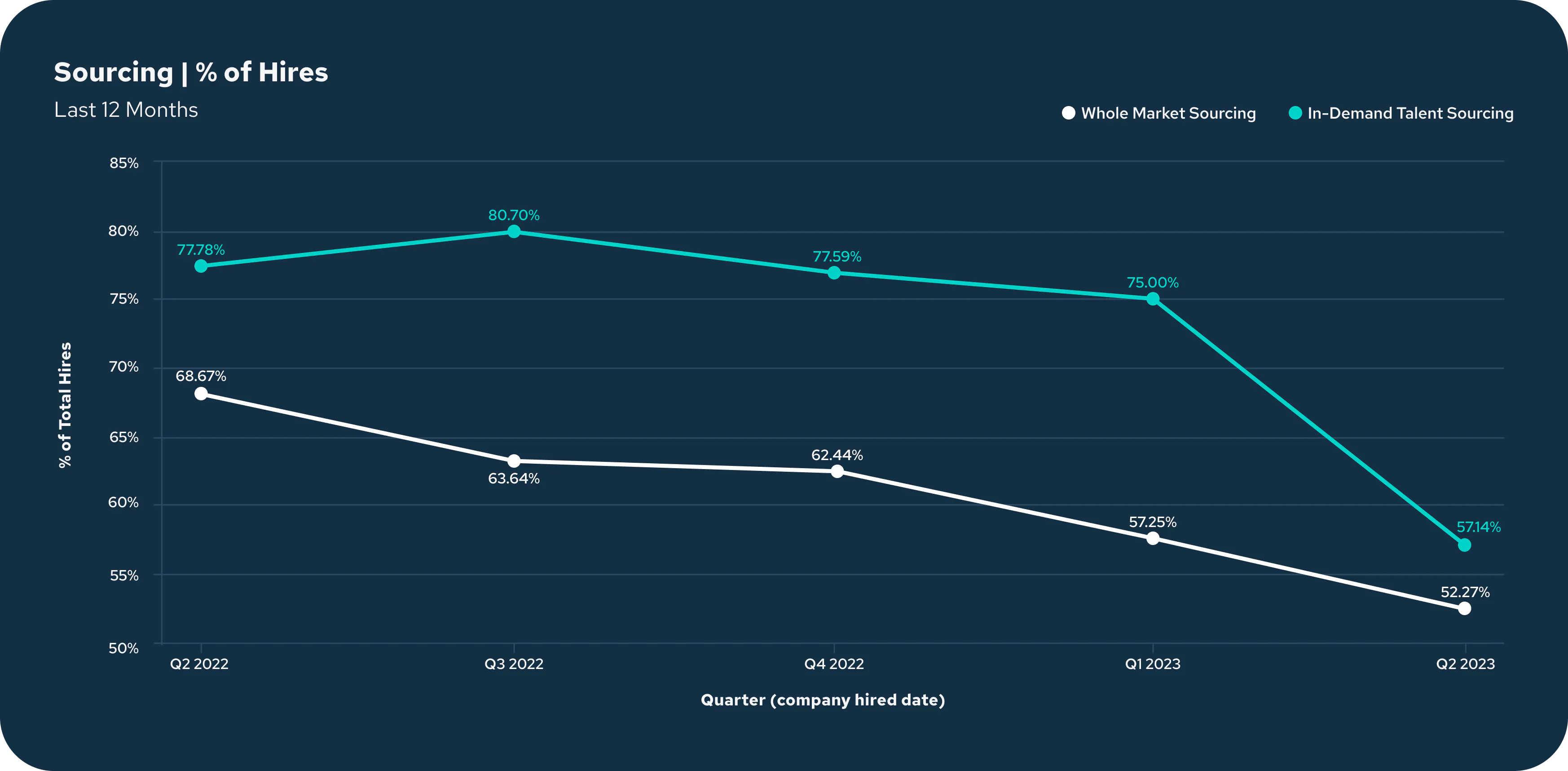
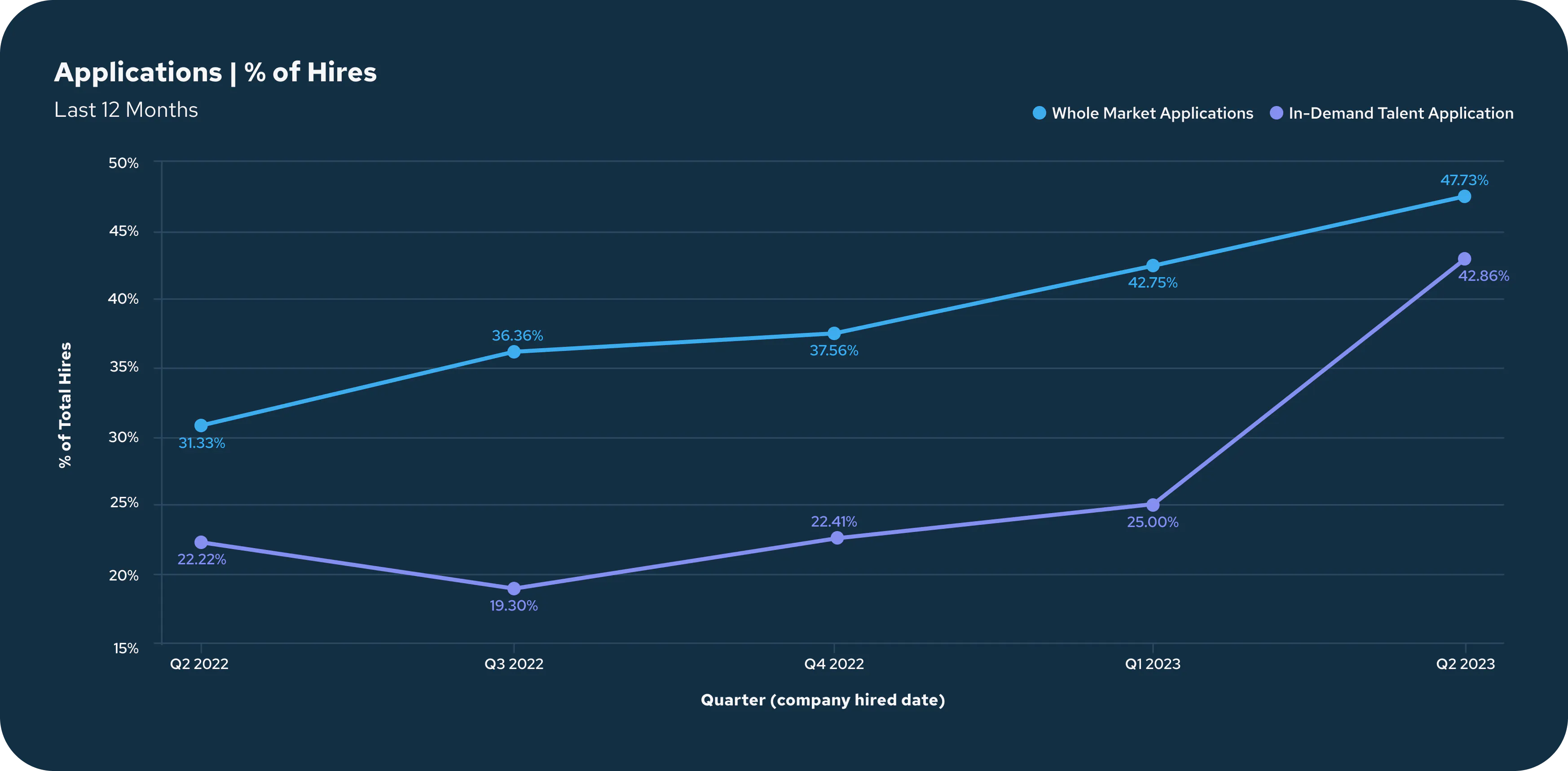
For the Whole Market, in Q1 2022, just 31.33% of all hires were initiated by candidate applications. In Q2 2023, there’s been a 73.1% increase in hires initiated by applications, and they now account for 47.7% of hires made on cord.
For In-Demand Talent hires, we’ve seen the number stay much more consistent until this last quarter, where it’s beginning to follow the trends of the rest of the market and applications from Top Talent are resulting a higher portion of hires.
Key Takeaways for Talent Managers:
You should focus on sourcing to hire In-demand Talent
- Sourcing was responsible for 73.4% of In-Demand hires over the year.
- Your chances of hiring Top Talent is much higher focusing on sourcing.
Summary
The most in-demand people in the market behave differently when looking for work. They are less likely to apply for positions and more selective when accepting messages from companies.
For companies, it’s clear from our Application Vs Sourcing report that you are in a much stronger position to fill your positions overall, and relying on applications alone is now a reasonable strategy for making direct hires.
However, if you want to engage and hire the most in-demand people, sourcing remains the best strategy.

Was this content useful?
You might also like
Candidate insights
Applications Vs Sourcing: What's the best way to make hires?
Analysis on market changes and the most effective way to make direct hires.

Talent Landscape Reports
Talent Landscape Report: Developers
Data-led insights on the salary, availability, demand and preferences of developers looking for work.