 cord
cordThe sourcing playbook: Lessons from 20,000+ outreach messages
Data-led insights on the behaviours that lead to the highest response rates from sourcing messages

Introduction
Sourcing is still the most efficient way to engage quality engineers and improve the gender diversity in your pipeline, with an average of 47% of sourcing messages getting positive responses from candidates.
The people sending the most effective messages have an astonishing 90% of their messages accepted by candidates. This is nearly a 1:1 ratio of messages sent, to candidates in the pipeline. TAs used to only be able to dream about this.
However, the worst performing users on cord have 25% of their messages accepted. Whilst this return is still good, it is nearly a 4x worse return on your time compared to the most effective users. Put simply, for every message the best-performing users send, the worst-performing users need to send 4 for the same result.
In this article, we dive into the outcomes of over 21,000 sourcing messages sent on cord, from 778 different users over the last 3 months. We compare messages from the Top 15% of users (who get a 90% response rate) with the Bottom 15% (who get a 25% response rate) to provide a practical guide to how to improve the return you get on your sourcing.
Here are our key insights:
- The Top users are typically more personal about the candidate, provide specific information about the role, and give clear next steps
- The Top users send shorter messages, with 557 characters and 3 paragraphs on average
- Sending a follow-up message could lead to 19% more messages being accepted
- Messages sent in the morning and earlier in the week have the best acceptance rate and response times
Personalise, provide details and give clear next steps
In this section, we break down the key differences in the content of messages sent by the Top and Bottom users on cord.
Be personal to the candidate
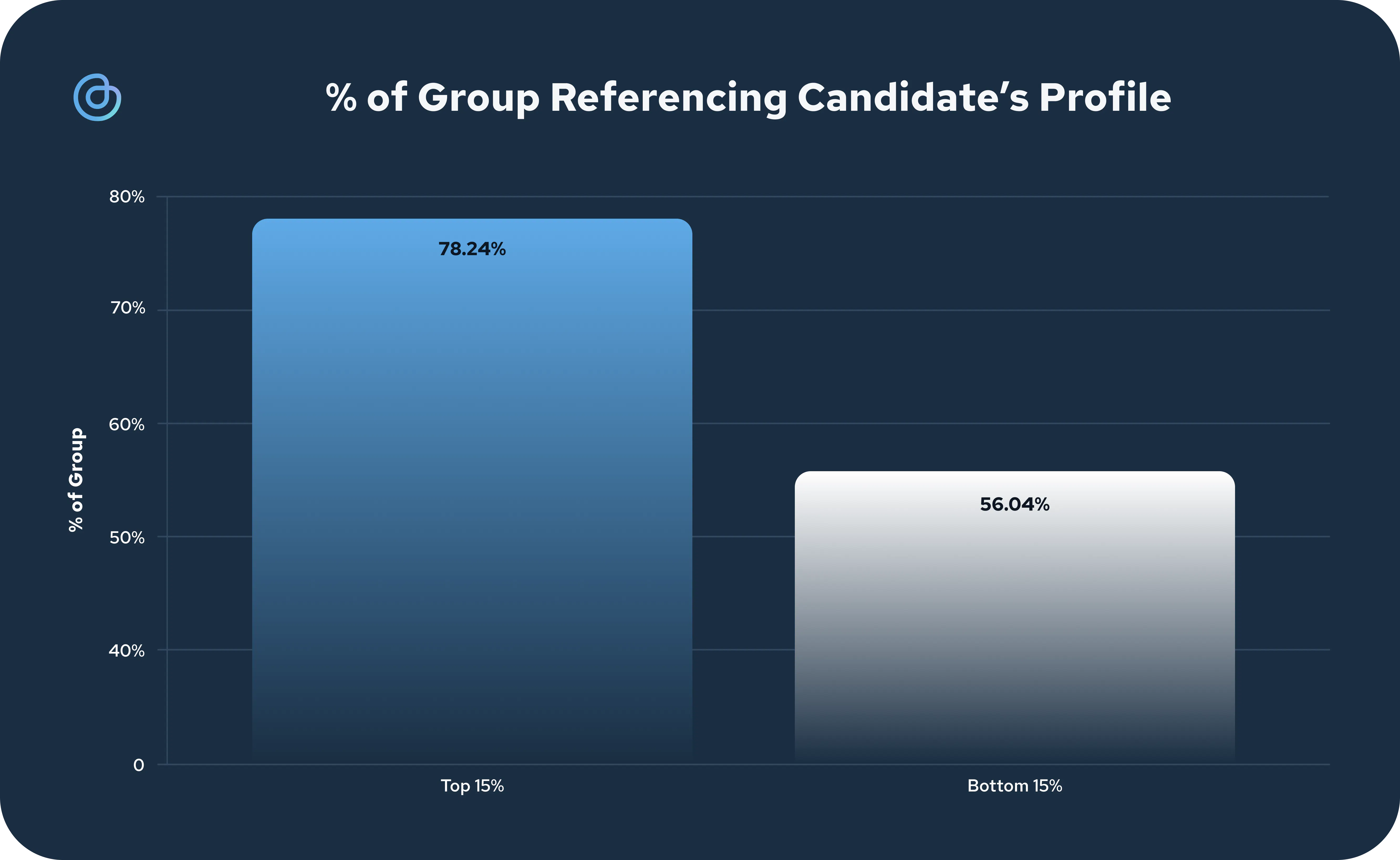
The Top 15% group was significantly more likely to personalise their message to speak about the candidate they were messaging, with 78% of the messages mentioning aspects such as “your profile”, “your experience”, or “your skills”. This is compared with just 56% of the Bottom 15% doing the same.
Give details on your position
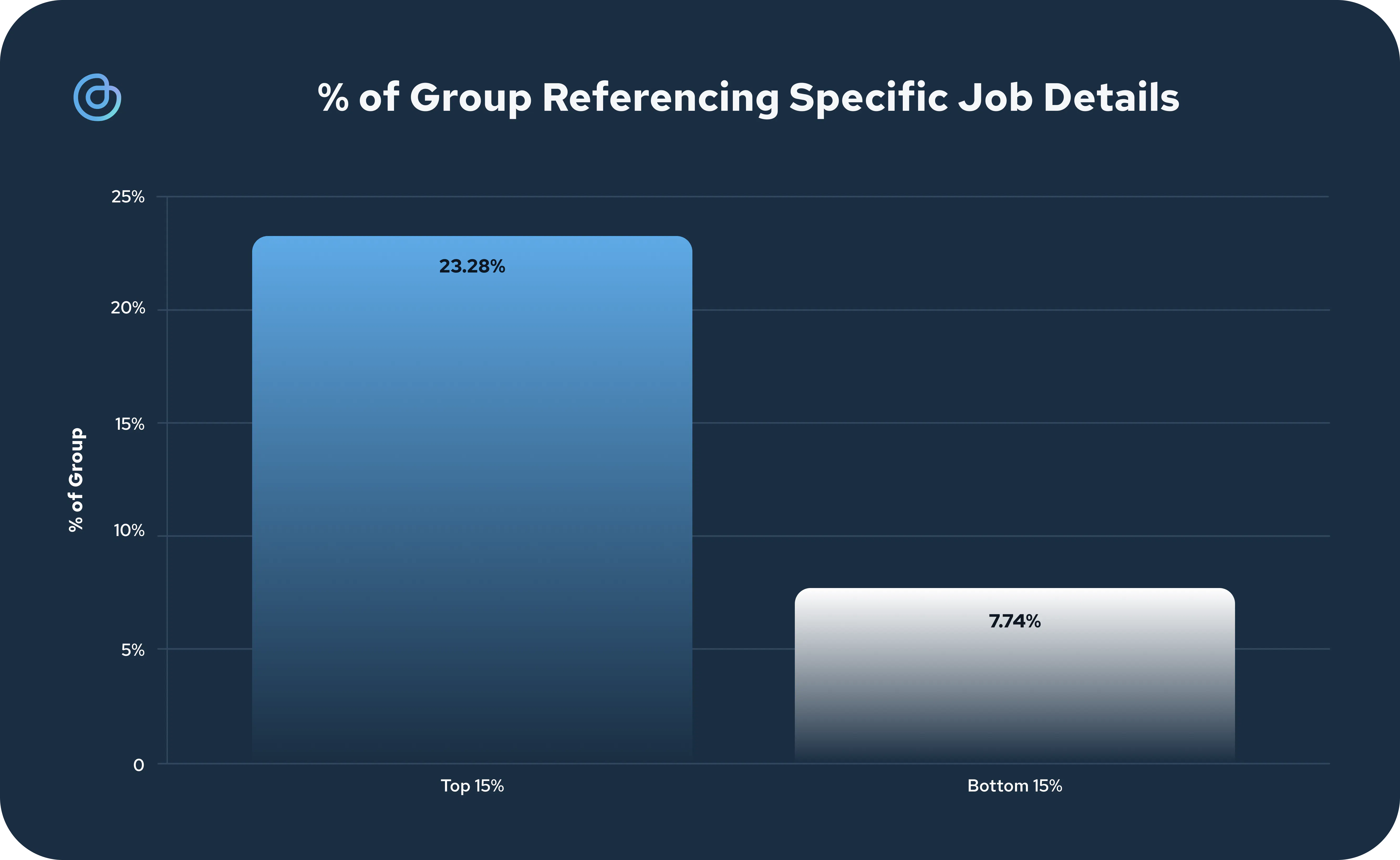
The Top 15% were also nearly three times as likely to include specific details about the job they were messaging about. 23% of these messages contained specific details on the job, whereas just 8% of the Bottom 15% of messages contained similar information.
Give a strong call to action
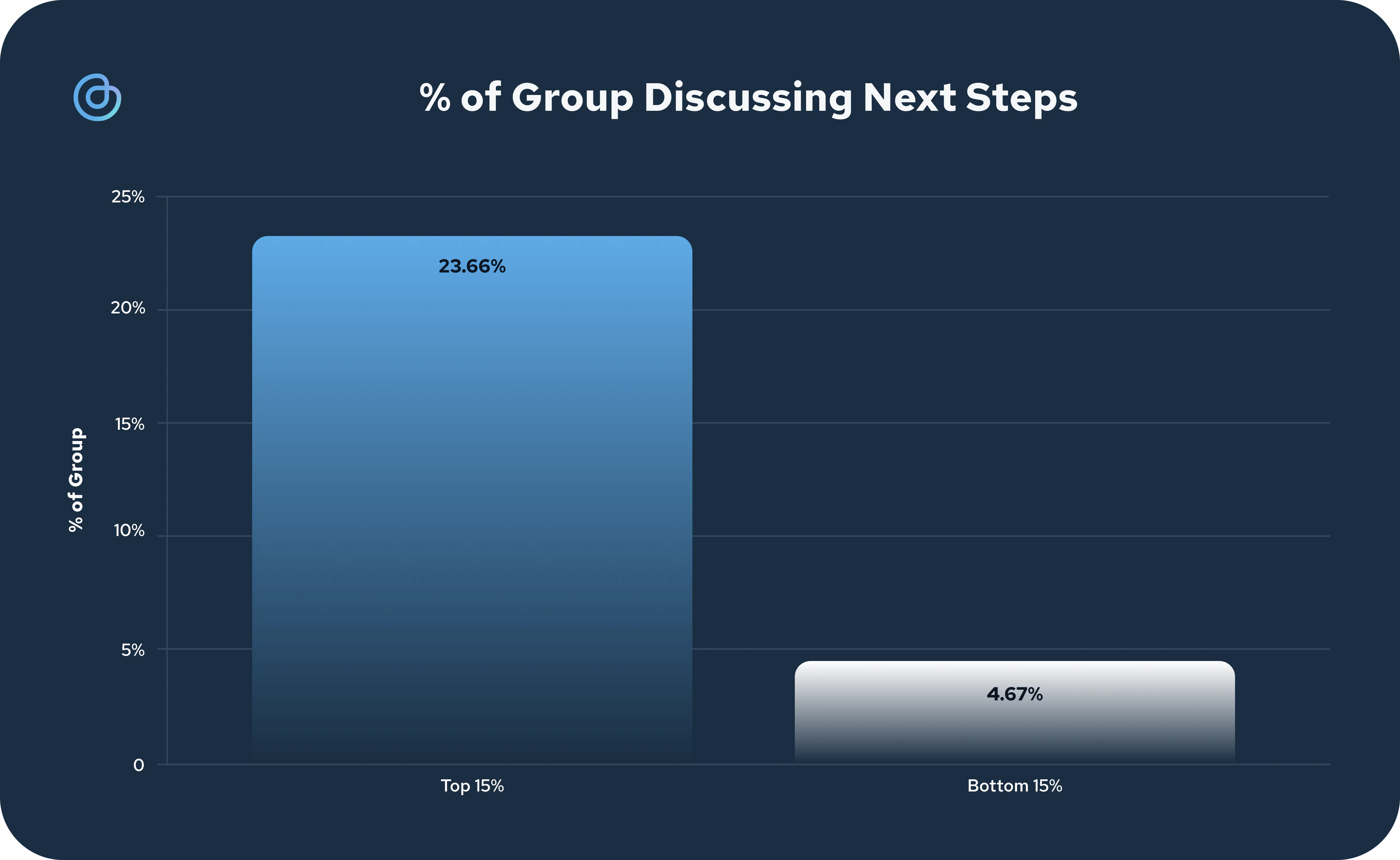
The Top 15% were also five times more likely to explicitly suggest a call or an interview in their message - 24% for the Top 15% compared to just 5% of the Bottom 15% group.
Candidates don’t care that you “hope they’re well”
A common bugbear about messages from Recruiters is the infamous “I hope you’re well!” message. The data showed that those users who included this phrase tended to be in the Bottom 15% group.
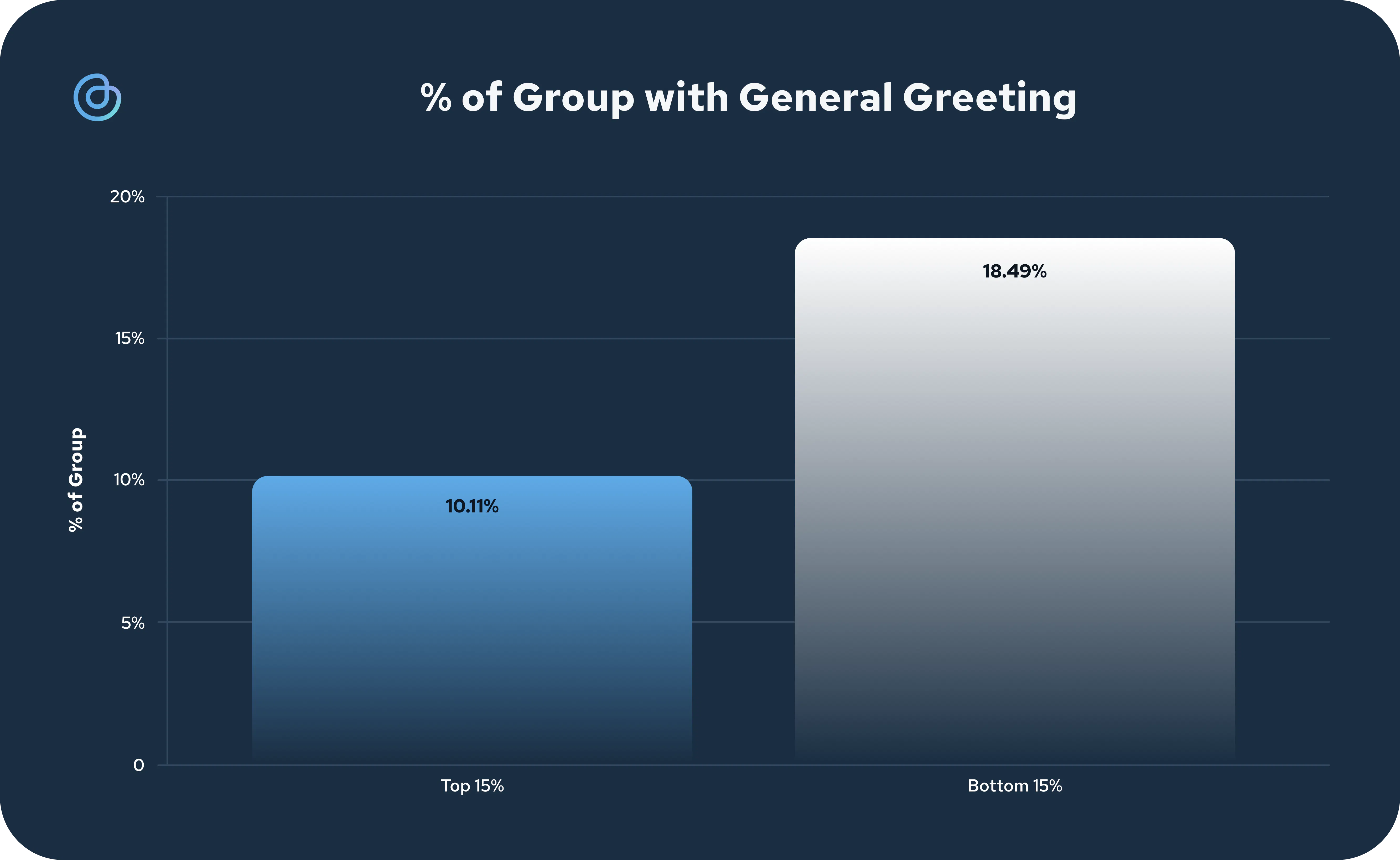
Insight: Craft your message to include a personal reference to the candidate’s profile, specific details about the job, and clear next steps. Stay away from space-filler well-wishes at the start of your message.
Send concise messages
With the core content structure established, the next question becomes, how concise should my message be? Let’s look at the data.
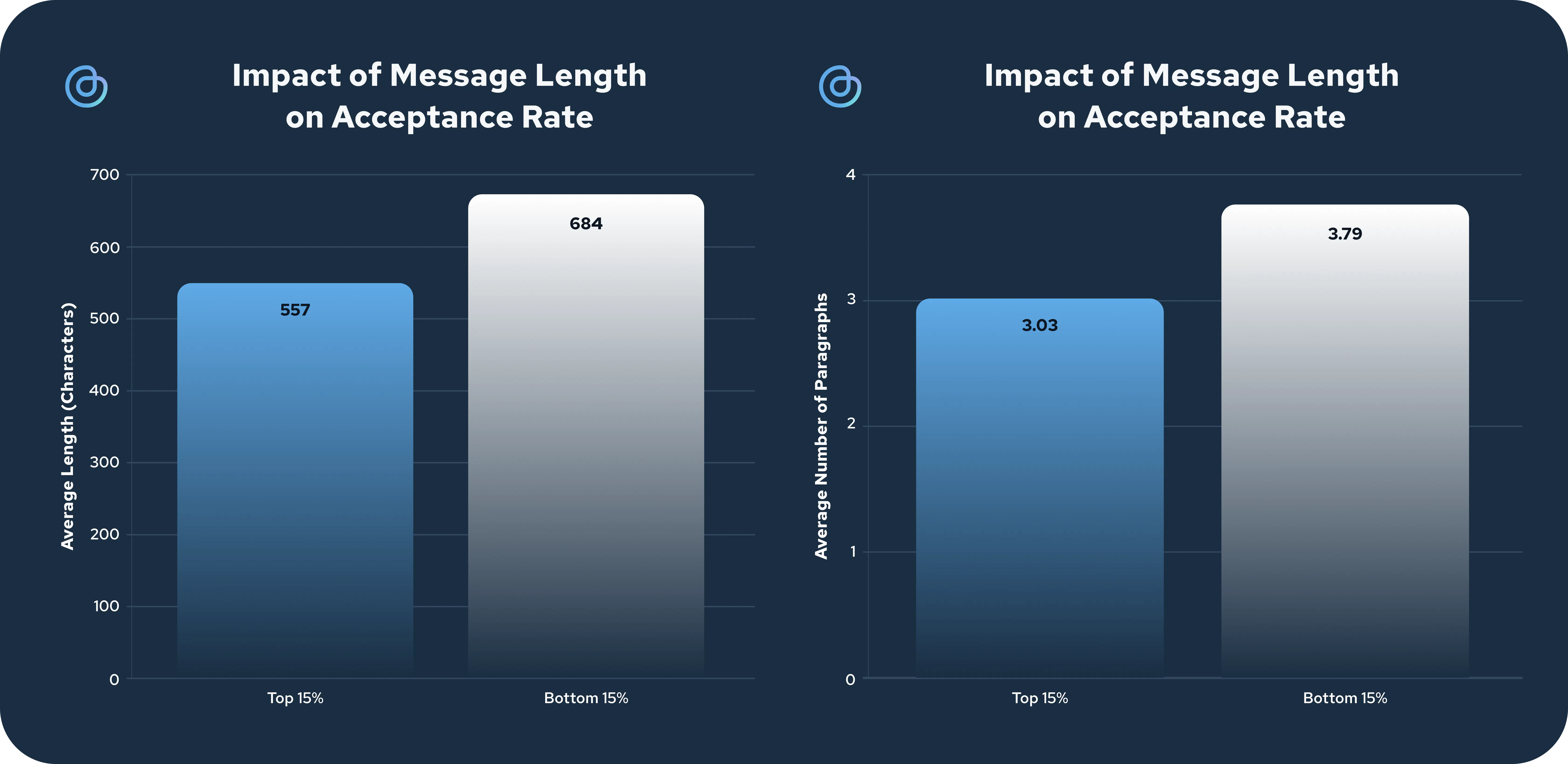
The Top 15% of users tend to send messages that are 20% shorter, with an average of 557 characters, compared with 684 characters from the Bottom 15% group.
The Top 15% also had fewer paragraphs per message, with an average of 3.03 paragraphs vs 3.79 from the Bottom 15% group.
Insight: Shorter messages perform better. Use around 550 characters split into 3 short paragraphs.
Follow up on your initial message
By analysing the difference between messages sent with an automated follow-up on cord to messages without, there’s evidence that sending a follow-up message increases your chance of a response.
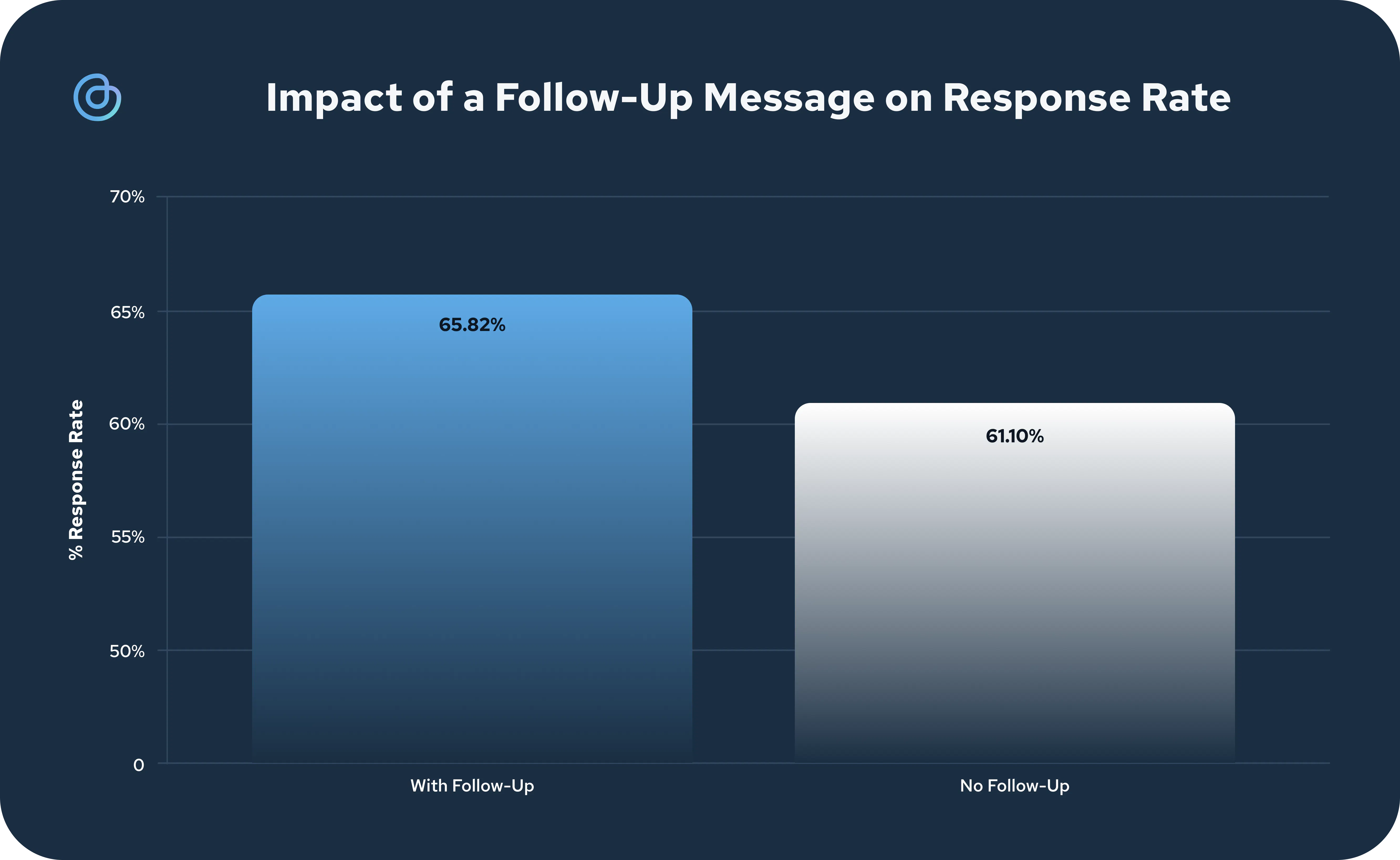
Messages sent with a follow-up result in a 5% higher overall response rate than those sent without.
Additionally, of the total 66% of responses, 20% were positive responses received after the follow-up was sent to the candidate. This indicates a strong correlation between follow-ups and an increased positive response rate
Insight: Always follow up on your original message to increase the chances of a positive response.
Send a message with an interview invite
Comparing the Top 15% and Bottom 15% groups, the data shows that those with the higher response rate are more likely to attach an interview invite.
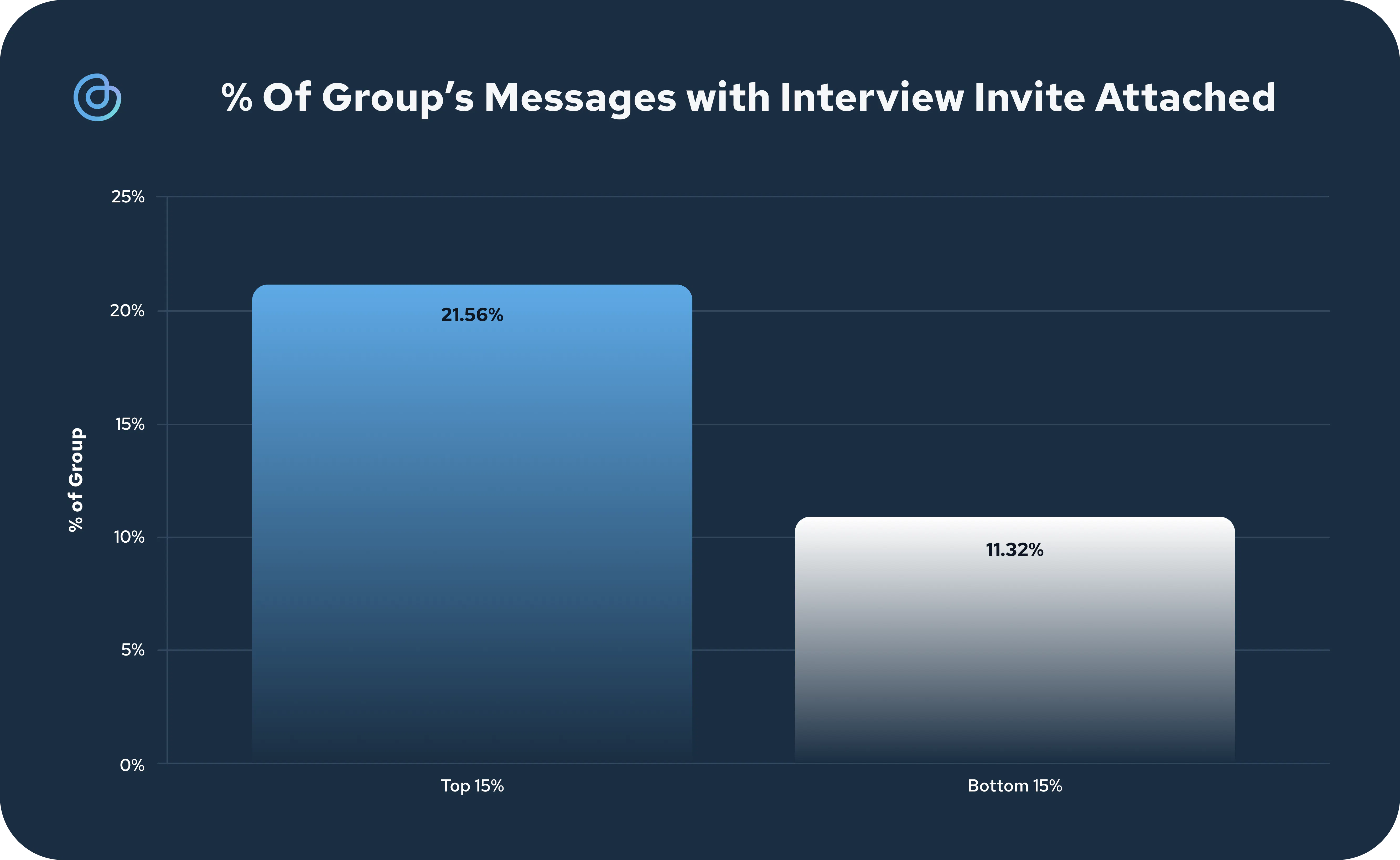
The highest-performing users are two times more likely to attach a calendar invite than the bottom-performing users.
Nb. On cord interview invites are attached to your message, so the data suggest that the best practice is both to attach the interview invite and explicitly reference it in your message. If you’re not using cord, consider using a tool like Calendly.
Insight: Add an interview invite to your initial outreach message to increase the acceptance rate.
Message candidates as soon as they start looking for work
The Top 15% group also tended to target candidates who were newer to the market over the Bottom 15%.
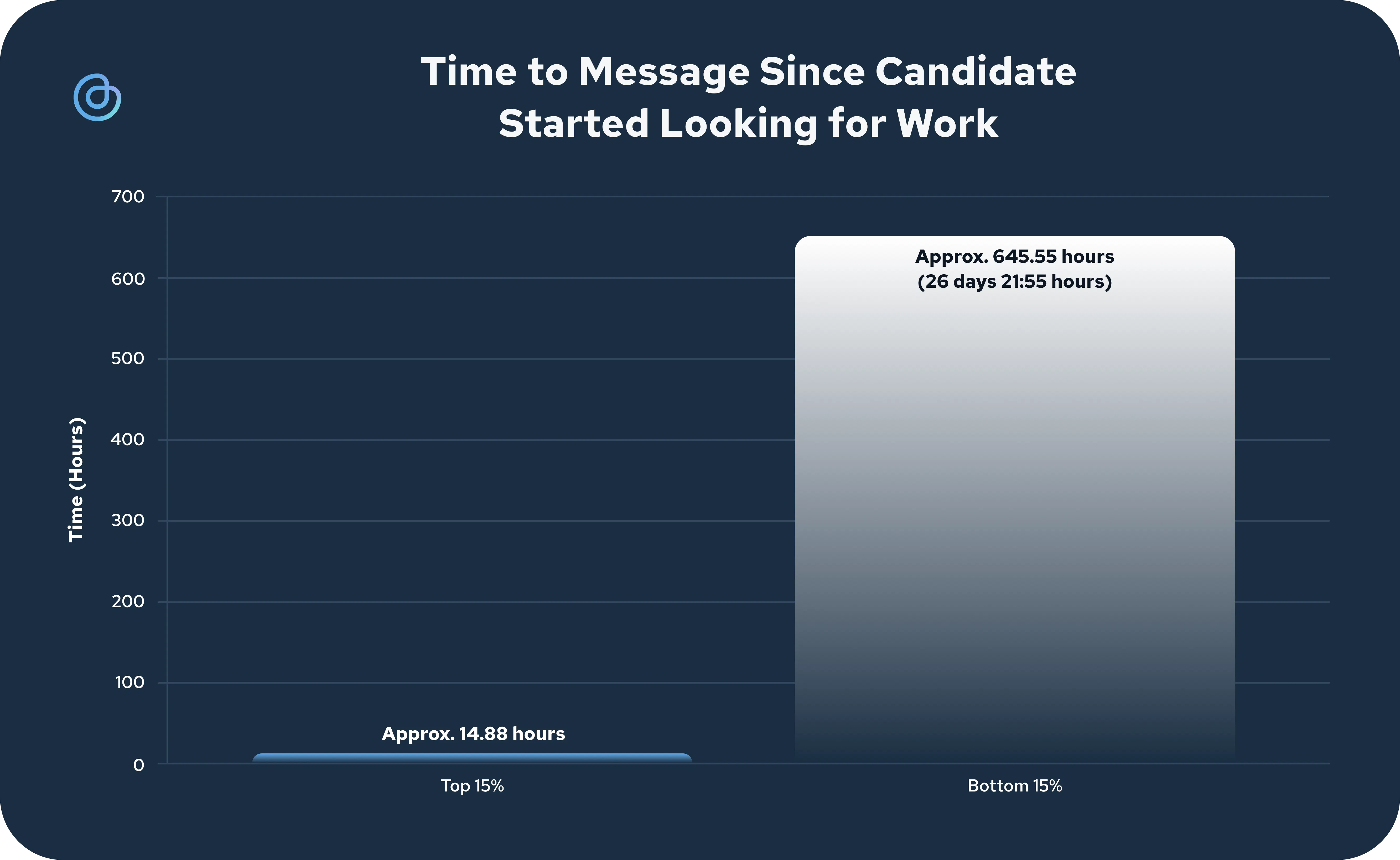
The difference from the graph is pretty obvious...
On average, the Top 15% group contacted candidates within the first day of them starting to look for work on cord, within 15 hours to be exact. In comparison, the Bottom 15% on average messaged people nearly 27 days after they started to look for work.
Insight: Message people as soon as they start looking for work to increase your positive response rate.
Send messages during working hours, towards the start of the week
When you send your message can also have an impact on the acceptance rate of your message.
Messages sent in the morning have the highest acceptance rate, while those sent at night have the lowest.
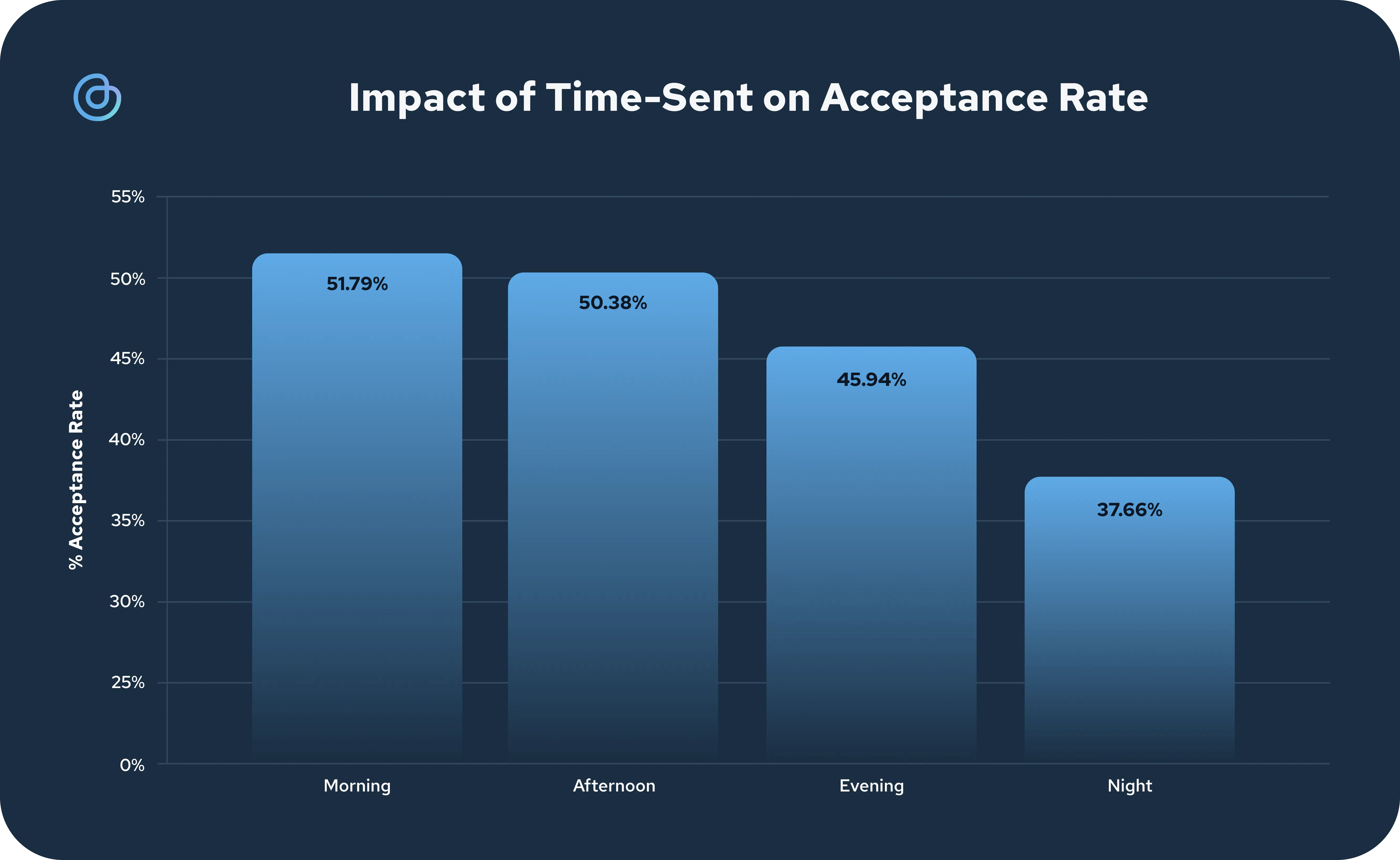
We also analysed the data for days of the week and whilst there was a slightly higher acceptance rate for messages sent earlier in the week, this wasn’t significant.
However, we did see a very significant difference in the response time you can expect, with messages sent on Monday and Tuesday being responded to around 60% faster than on Friday.
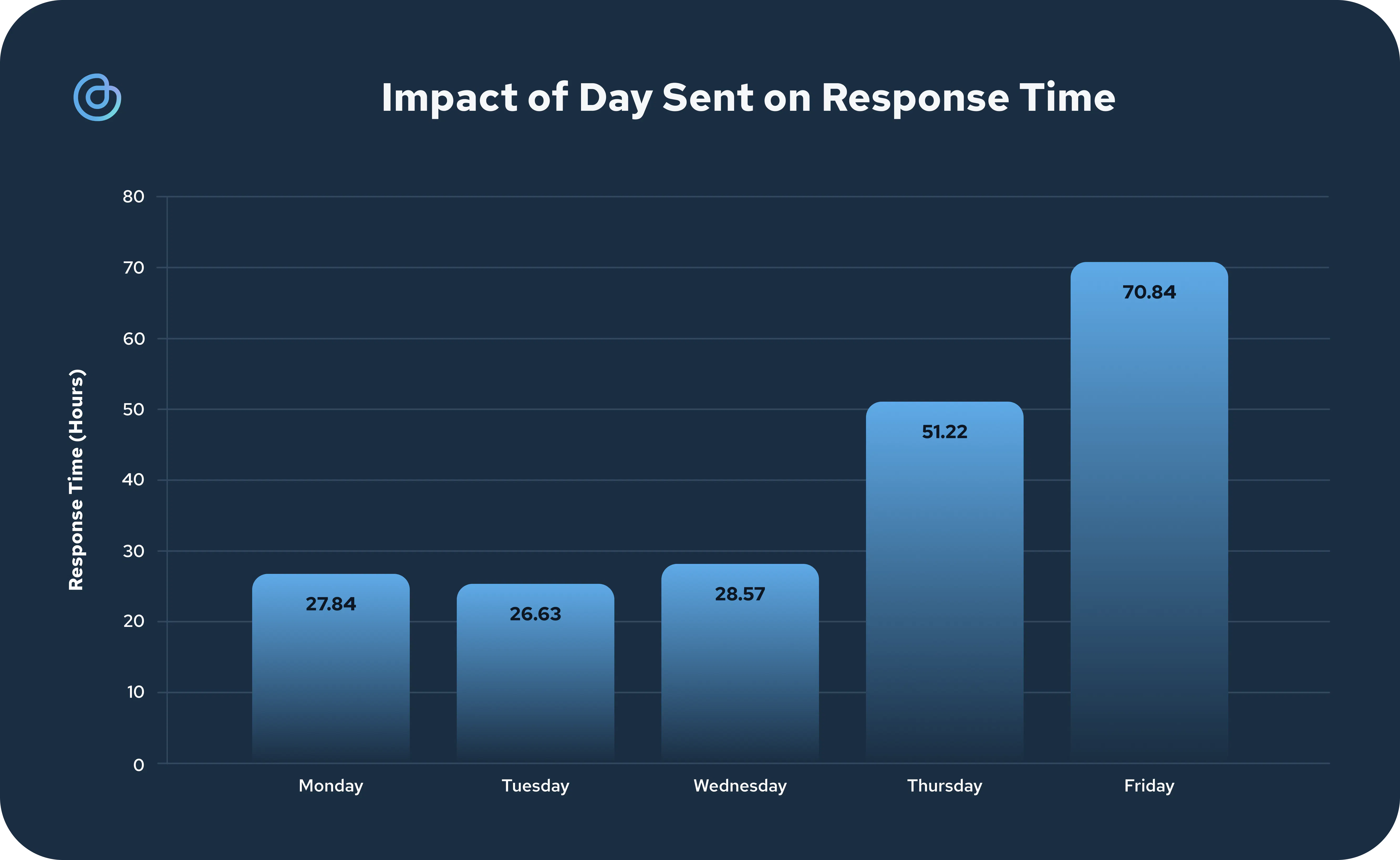
Insight: Stick to sending your messages during working hours, focusing on the morning for the best message acceptance rates. Spend more time sourcing at the start of the week to get a quicker response.
Conclusion
It is possible to have 90% of the sourcing messages you send accepted by candidates. Our Top 15% of users prove this. While there are factors that may be out of your control, the data in this article demonstrably proves that you can improve your results by following 6 simple steps.
- Send personalised messages that provide information about the position and request a call/interview at the end
- Make your message concise, 550 characters and 3 short paragraphs
- Send a follow-up message, it could result in 20% more people responding to
- Attach an interview invite to your initial message
- Message new candidates as soon as they start looking for work (within a day is best)
- Send messages during working hours & prioritise the start of the week for sourcing
cord’s sourcing workflow has been custom-built to enable you to deliver on these key points and maximise the return on your sourcing. Features in this workflow include automated personalisation based on variables in the candidate profile, notifications as soon as a candidate starts looking for work, automatic follow-up messages and in-built interview booking. Find out more here.
Was this content useful?
You might also like

Diversity & inclusion
How Sourcing Can Improve Gender Diversity
Why the most gender diverse teams are using a sourcing-led hiring strategy.

Candidate insights
Update: Applications Vs Sourcing
Recent data analysis on the market changes and most effective way to make direct hires

Candidate insights
Hiring In-Demand Talent in 2023
A data-led report on how the behaviour of Top Talent differs to the rest of the market