 cord
cordCandidate Journey Optimization Guide
Strategic Touchpoints and Actionable Tactics for Talent Acquisition Professionals
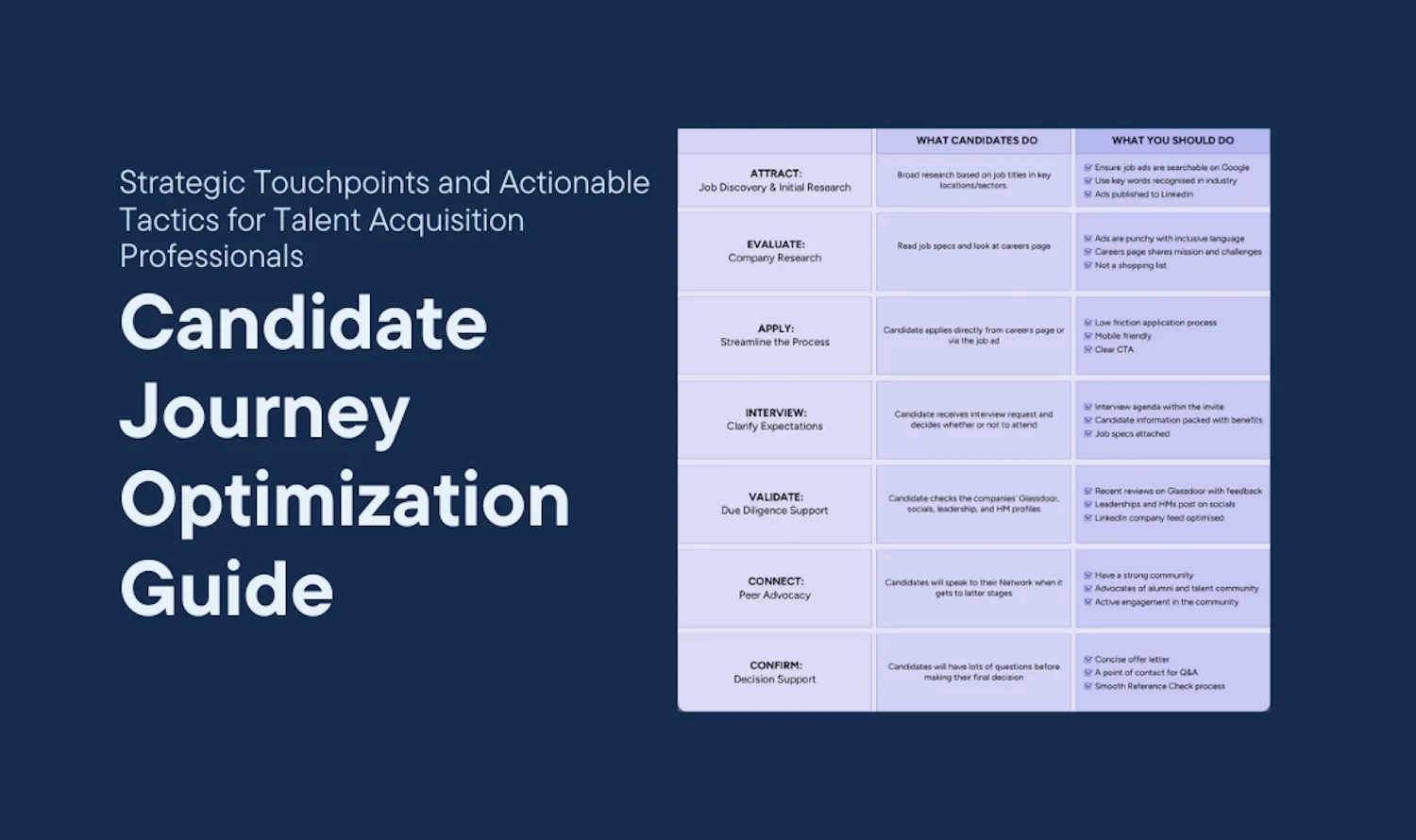
Candidate experience determines whether top talent joins your company or walks away. Most organizations focus on what they need from candidates without considering what candidates actually do at each stage of their decision-making process.
The key is reverse-engineering your recruitment process from the candidate's perspective. Every interaction either strengthens or undermines your employer brand. There's rarely middle ground.
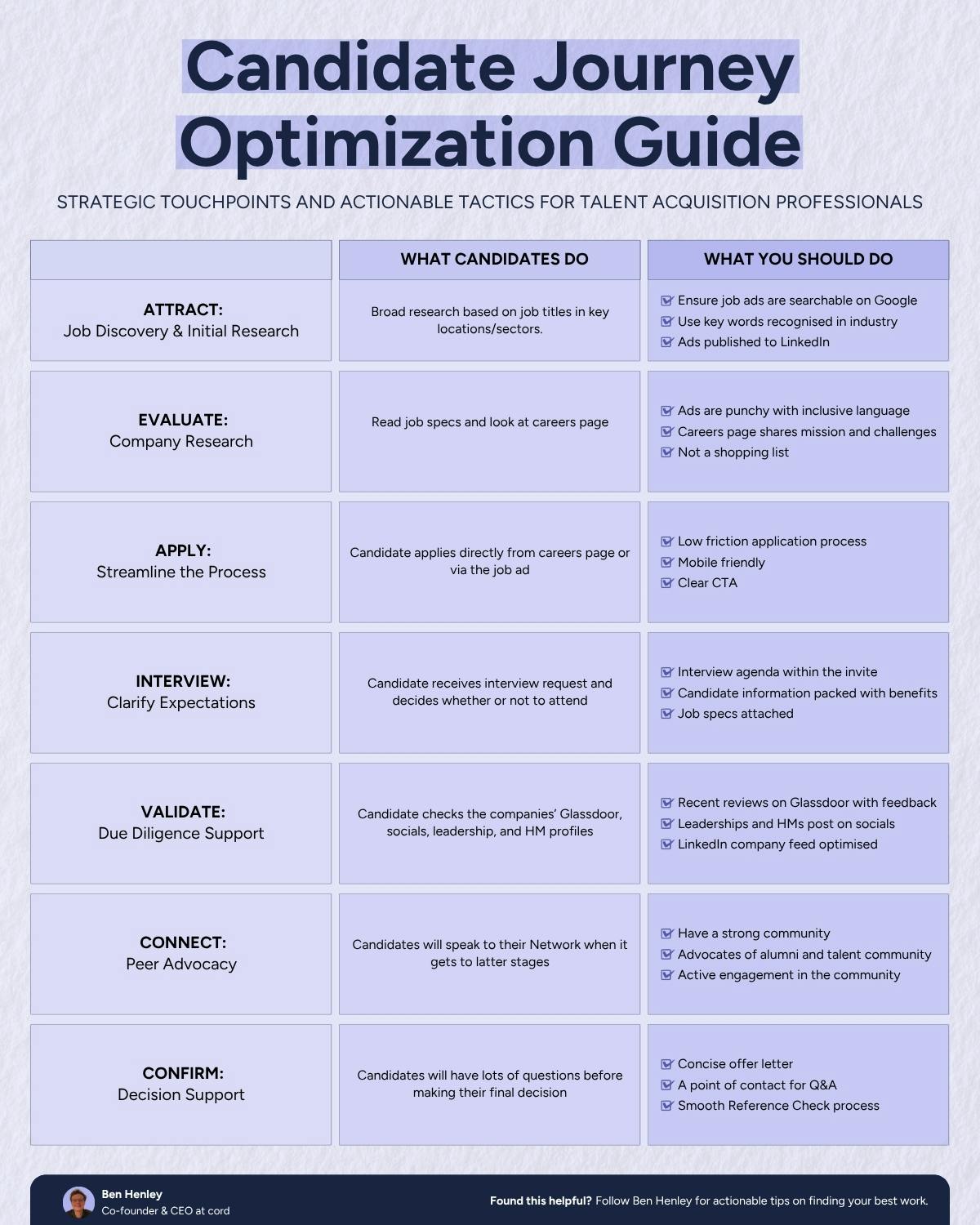
The brilliant Adriano Herdman (Move Co-Founder) breaks it all down into two key sections:
(1) What candidate do and (2) What you should do
Here's what candidates do at each stage and the specific actions you should take to optimize their experience:
Attract: Job Discovery & Initial Research
What Candidates Do: Broad research based on job titles in key locations and sectors.
What You Should Do:
- Ensure job ads are searchable on Google
- Use keywords recognized in your industry
- Publish ads to LinkedIn for maximum visibility
Evaluate: Company Research
What Candidates Do: Read job specs and explore your careers page.
What You Should Do:
- Write ads with inclusive language that draws people in
- Design careers pages that share your mission and real challenges
- Avoid creating a simple shopping list of requirements
Apply: Streamline the Process
What Candidates Do: Apply directly from careers page or via job ad.
What You Should Do:
- Create a low-friction application process
- Make forms mobile-friendly
- Use clear calls-to-action (CTA)
Interview: Clarify Expectations
What Candidates Do: Receive interview request and decide whether to attend.
What You Should Do:
- Include interview agenda within the invite
- Pack candidate information with benefits details
- Attach job specs to every interview invitation
Validate: Due Diligence Support
What Candidates Do: Check company's Glassdoor, social media, leadership, and HR profiles.
What You Should Do:
- Maintain recent reviews on Glassdoor with constructive feedback
- Have leadership and HR teams post regularly on social channels
- Optimize LinkedIn company feed with authentic content
Connect: Peer Advocacy
What Candidates Do: Speak to their network when reaching later stages.
What You Should Do:
- Build a strong employee community
- Train advocates from alumni and current talent community
- Encourage active engagement within your professional community
Confirm: Decision Support
What Candidates Do: Have many questions before making their final decision.
What You Should Do:
- Write concise offer letters
- Assign a single point of contact for Q&A
- Create a smooth reference check process
The Bottom Line
Every touchpoint in your candidate journey either builds trust or creates friction. Candidates will either drop out due to poor experience or become enthusiastic about joining your team.
By mapping what candidates actually do at each stage and optimizing your response accordingly, you transform recruitment from a screening process into a compelling candidate experience that attracts and retains top talent.

Was this content useful?