 cord
cordApplications Vs Sourcing: What's the best way to make hires?
Analysis on market changes and the most effective way to make direct hires.
Introduction
Hiring for tech companies has previously required intense sourcing efforts and headhunting. In a competitive market, applications were often not an effective method to directly hire your positions.
In the last 12 months, this status quo has been rocked. Mass layoffs alongside reduced investment rounds means more people are looking for work, and fewer companies are hiring. With more candidates applying and fewer companies sourcing, Talent Managers are questioning what is now the most effective and efficient way to make direct hires.
This report examines how the market has changed and what these changes mean for people looking to make quality hires into their teams.
Key Insights
- Talent Managers are in one of the strongest positions in recent history for making direct hires
- Candidates are sending more applications than ever before, allowing companies to be more selective with which applications they accept
- Sourcing is now less competitive. You now get a much better return on your outbound messages.
- A higher portion of candidates are now applying for positions than previously, so applications are now giving you access to a wider portion of the market
Candidates are applying to more jobs
The number of applications sent by candidates has increased, whilst sourcing has significantly decreased.
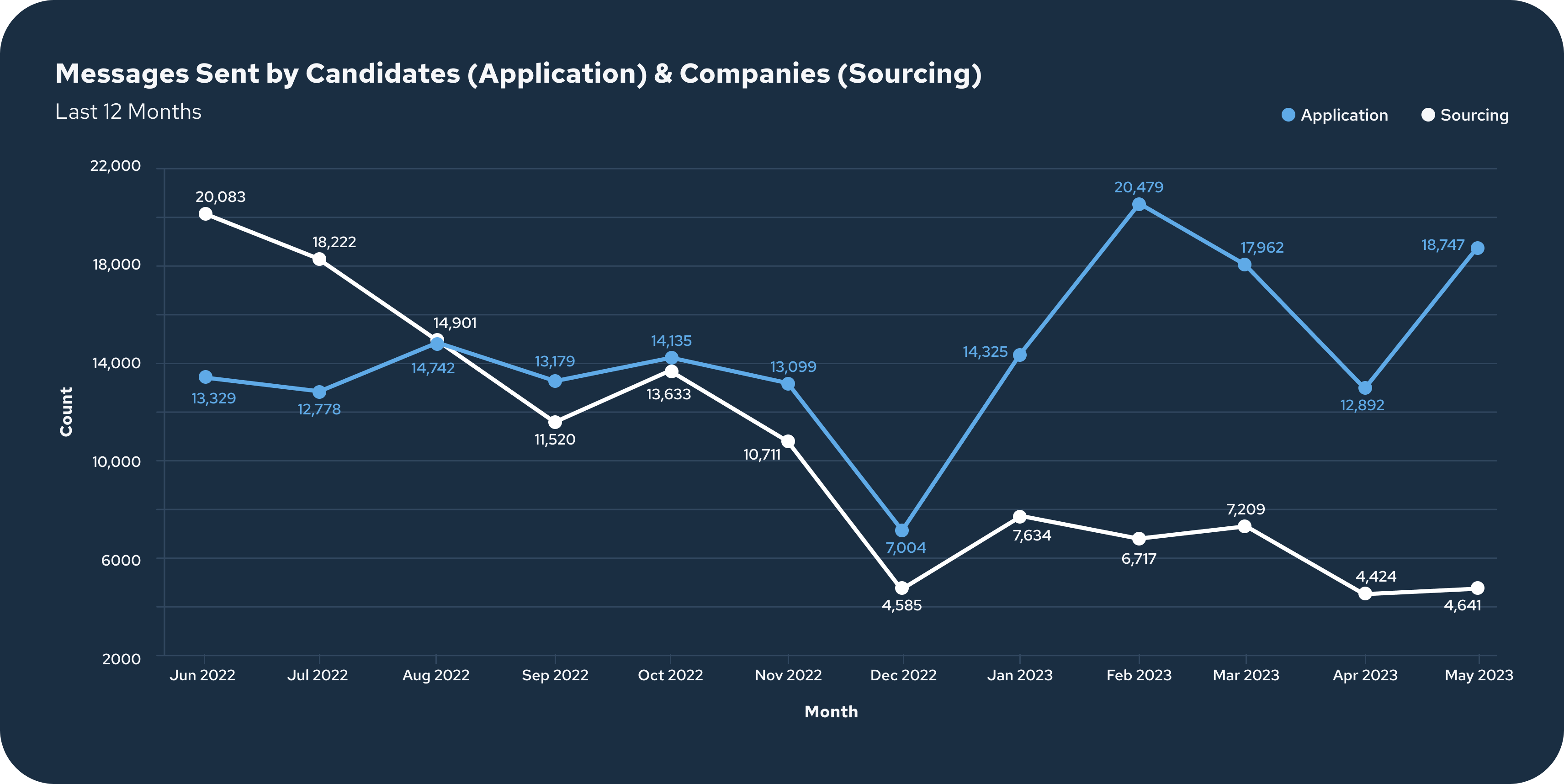
Compared to June 2022, May 2023 saw a 41% increase in the number of applications sent by candidates. At the same time, we’ve seen a 77% decrease in sourcing messages sent by companies.
Candidates are sending the vast majority of the first messages.
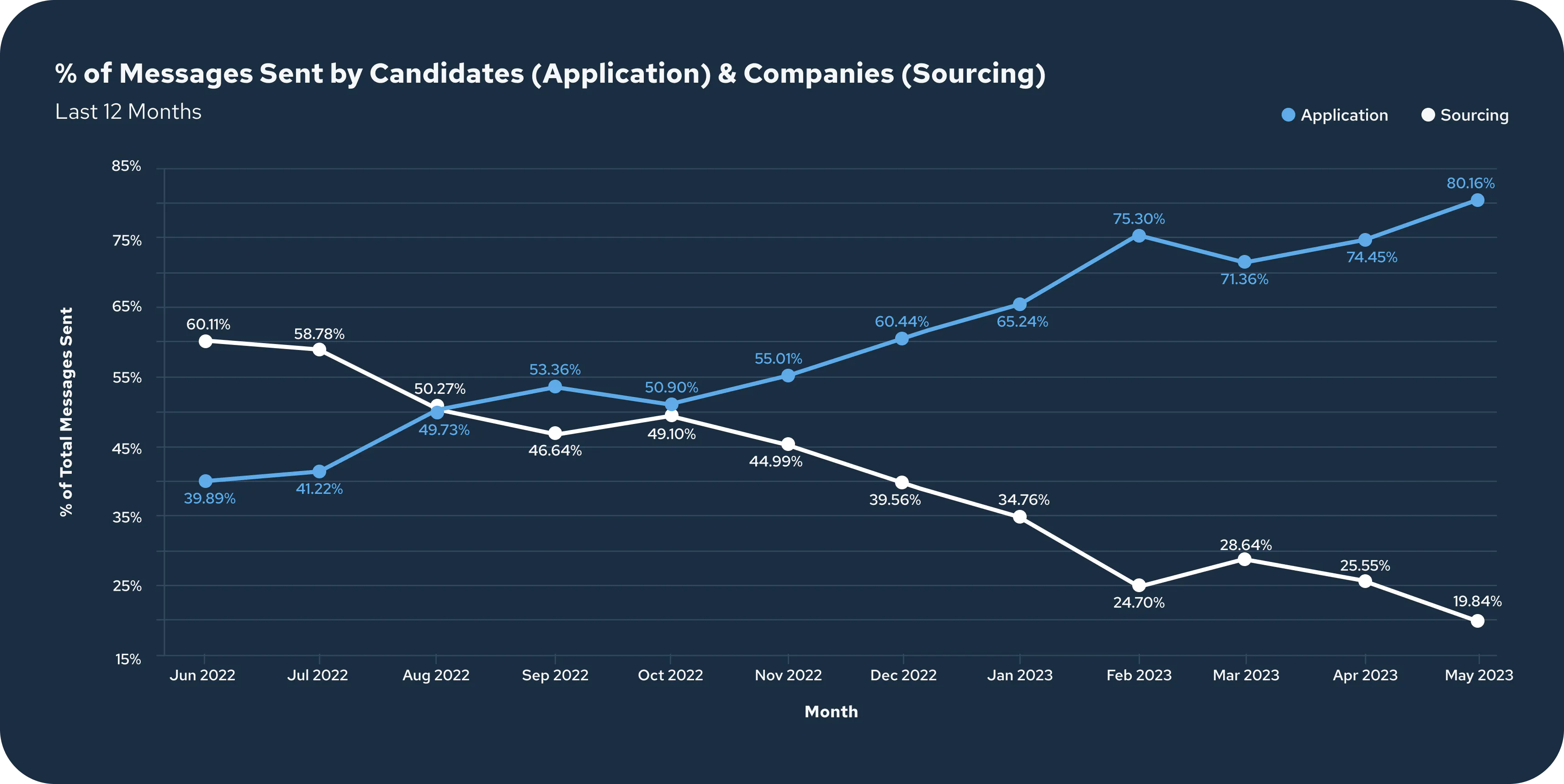
In May 2023 80.2% of first messages were sent from candidates, compared with 39.9% in June 2022, meaning candidates are now twice as likely to send the first message. Companies are now three times less likely to send the first message, sending just 19.8% of the first messages on cord, compared to 60.1% in June 2022.
What does this mean for Talent Managers?
More applications: For those companies who remain hiring, they are now receiving significantly more applications for their positions. For Talent Managers, this means you can expect around 2x the number of applications that you would this time last year.
Sourcing is less competitive than ever before: With more active candidates than ever before and 3x fewer sourcing messages being sent by companies, the average candidate will be receiving significantly fewer messages compared to this time last year. For Talent Managers, you’re likely to get a better return on the sourcing effort you put in than previously.
Sourcing messages have a higher conversion rate
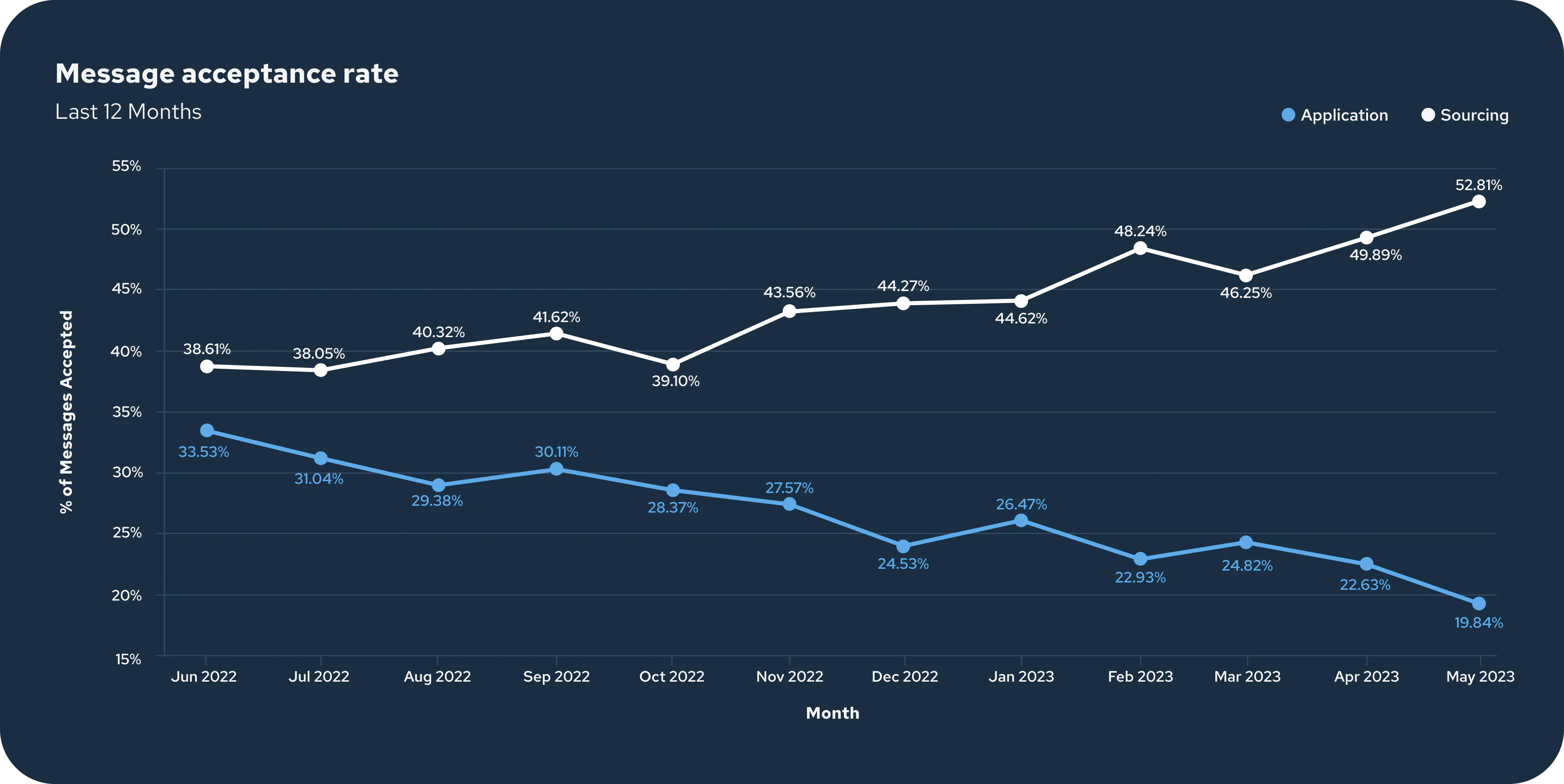
More messages doesn’t always lead to a better return. Whilst it’s clear that the number of messages sent by candidates has increased, the number of those being accepted by companies hasn’t increased at the same rate.
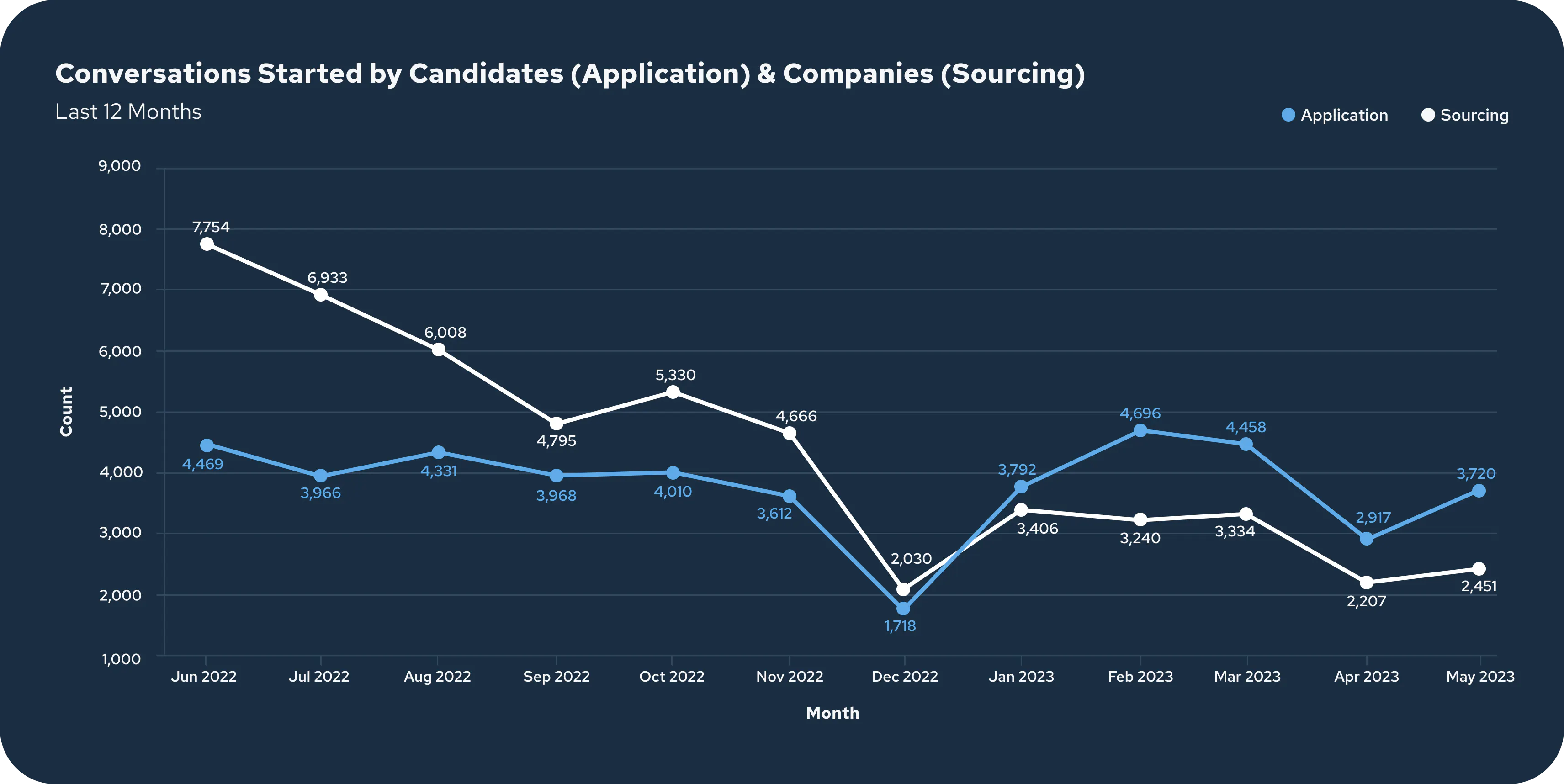
Similarly, whilst the number of messages being sent by companies has decreased, we’ve seen the percentage of those being accepted significantly increase. For companies in May 2023, 52.8% of their messages were accepted, compared with 38.6% in June 2022.
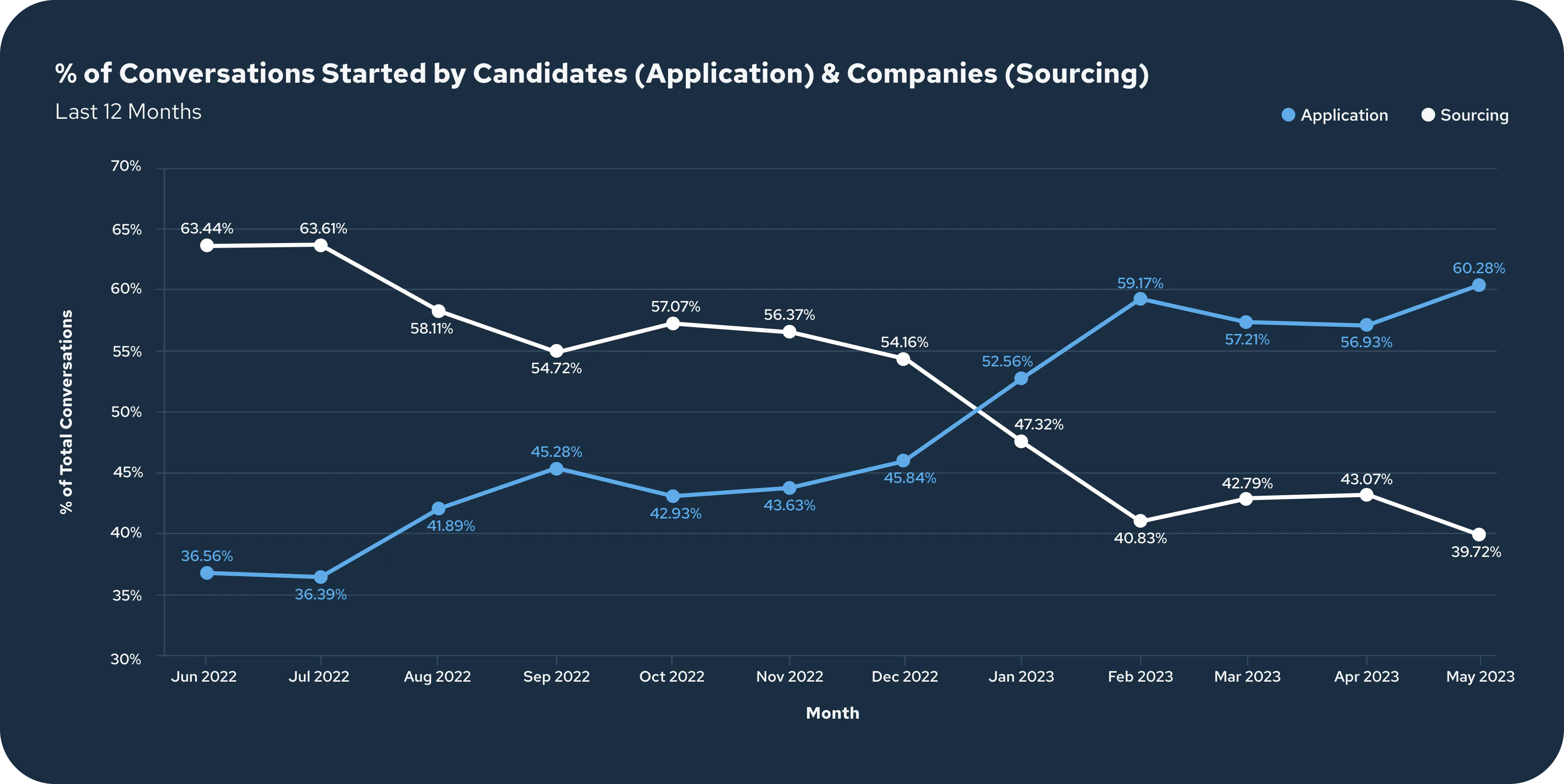
Applications are the biggest source of accepted messages
For the first time, this year we’re seeing a higher % of accepted messages being initiated through candidates. In May 2023, 60.3% of all successful messages were through applications, compared with just 36.6% in June 2022.
Companies are now more selective with their applications.
With the increase in applications per position, we’re seeing that companies are accepting a smaller percentage of applications from candidates. Just 19.8% of candidates messages are being accepted by companies in May 2023. In June 2022, 33.5% of candidates messages were accepted. This is a 40.9% decrease.
What does this mean for Talent Managers?
There’s never been a better time to source: With sourcing now less competitive, for the companies who are sending messages the chances of those being accepted by candidates has increased by 38.8% since June 2022. This means sourcing is now a more effective and efficient use of your time compared to a year ago.
More people in the pipeline from applications: The higher volume of applications means that now 60% of the people who you progress to your pipeline can come from applications. Nearly twice what it was a year ago.
Applications now give you access to more of the market
Companies are often concerned that not sourcing for your position will limit your reach of the market, as there could be candidates that simply don’t apply for positions and instead wait to be contacted. We’ve looked at the percentage of candidates and hires who never apply for a position on cord.
A larger portion of the market are now applying for roles
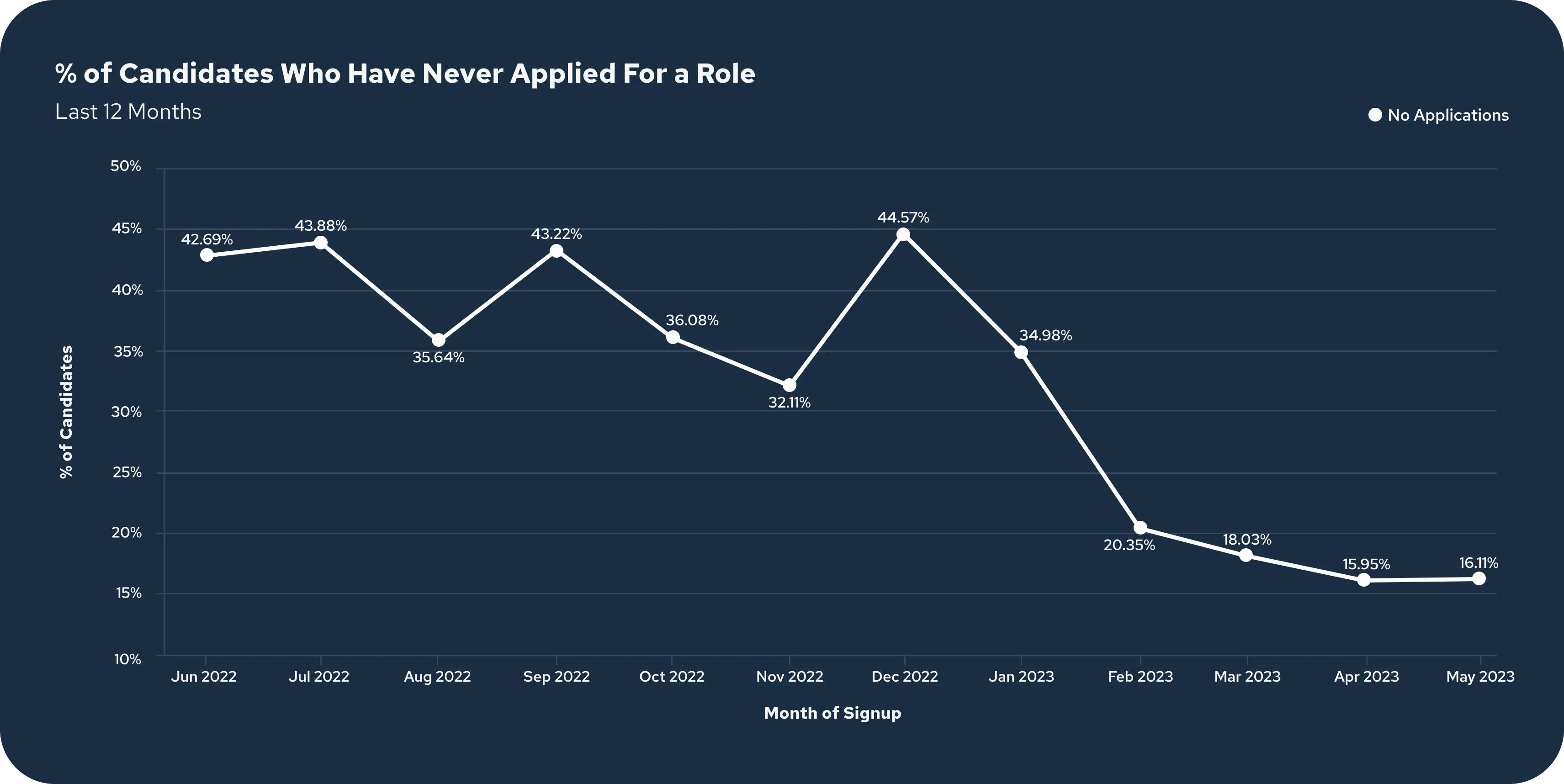
In June 2022, 42.7% of candidates never applied for a position and waited to receive messages from companies. In May 2023, we’ve seen this number fall by 62.3% to just 16.1%.
Fewer hires never apply for a position
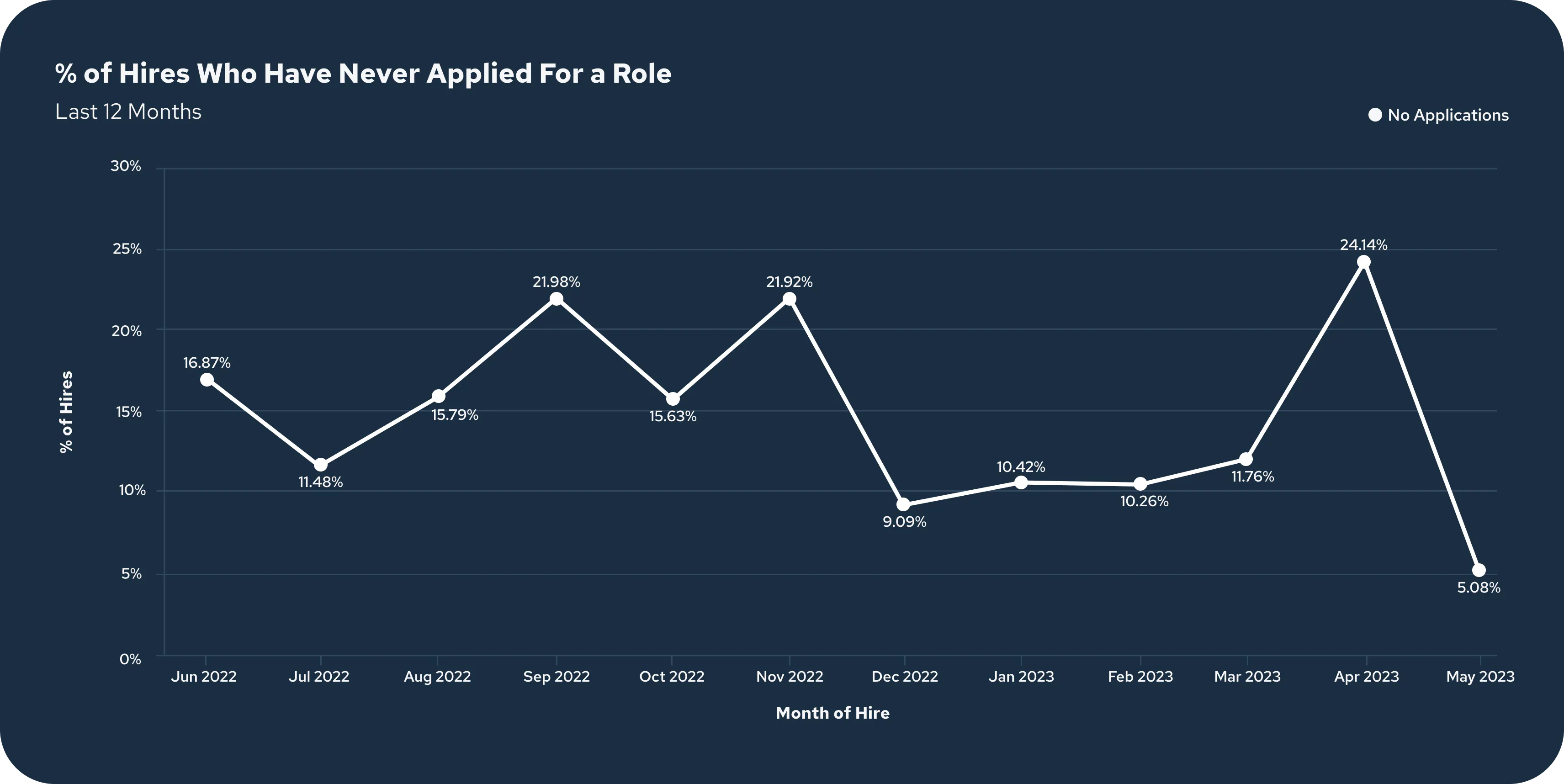
Similarly looking at the hire data, there’s been a 69.9% drop in the number of hires who never apply for a position. In May 2023, just 5.1% of the hires made on cord had never applied for a position, compared to 16.9% in June 2023.
What does this mean for Talent Managers?
You can rely on applications to reach more of the market: As there is still 16.11% of candidates who never apply for a position, you still can’t access the full market through applications alone. However, you can now access a wider portion of the candidate base through this avenue than previously.
More hires from inbound, better conversion from sourcing
In this section, we examine what percentage of hires result from application Vs sourcing, to give deeper insights into which source you are most likely to make your hires from.
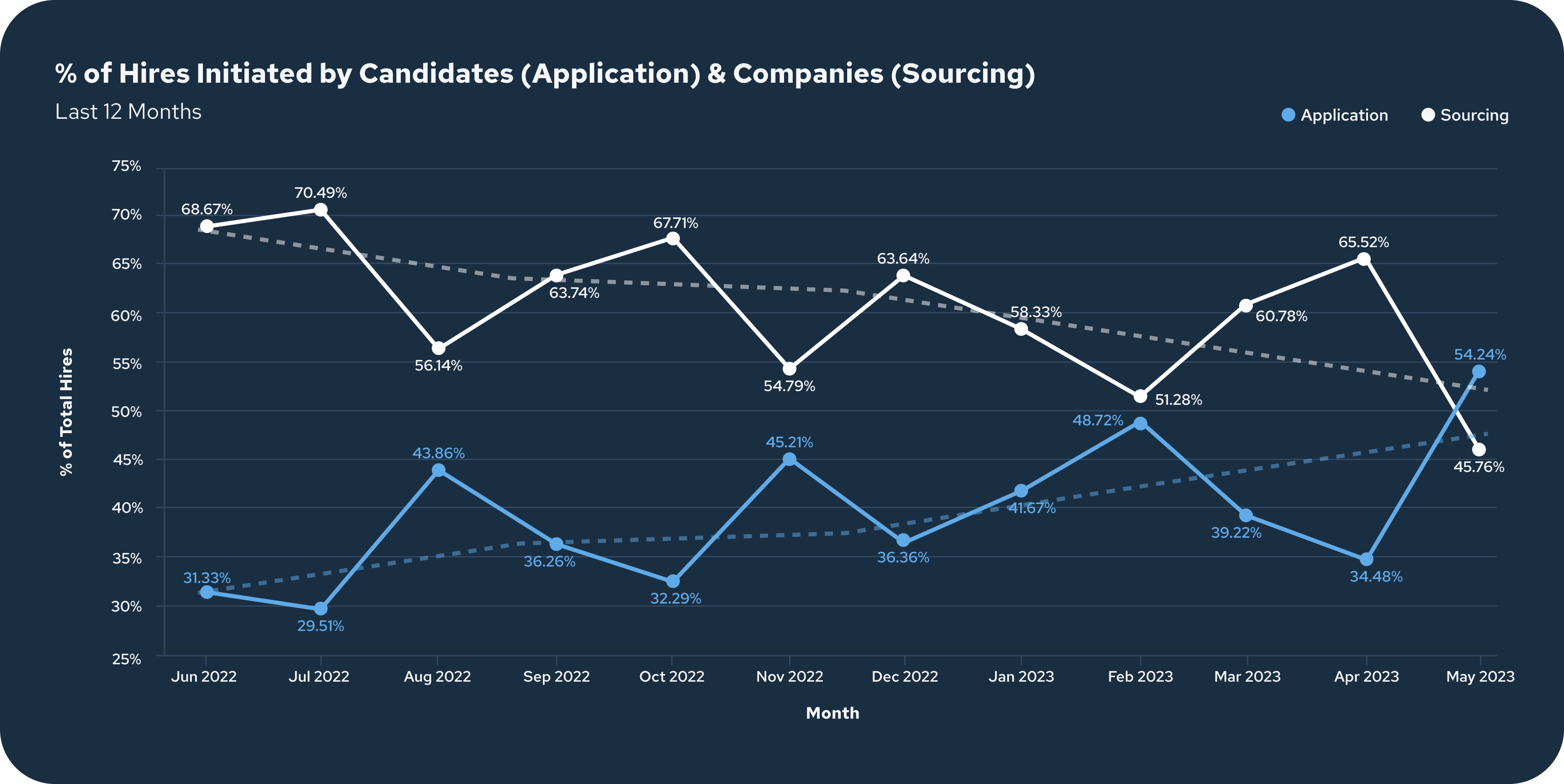
In June 2022, 31.33% of all hires were initiated by candidate applications. In May 2023, there’s been a 73.1% increase in hires initiated by applications.
What does this mean for Talent Managers?
More hires are now made through applications than sourcing: In May 2023, we’ve seen for the first time the balance switch to more hires being initiated by candidate applications. You’re now more likely to hire a position through applications for the first time ever.
Sourcing is more efficient: Applications accounted for 80% of messages, but only converted to 54% of hires made. Sourcing messages, however, accounted for just 20% of messages yet converted to 46% of hires. Sourcing will give you a better return on the time you invest.
Summary
The increase in applications means companies can now be more selective and have a much better chance of making hires than ever before. These applications are also giving you access to a wider portion of the market, so you can be less concerned about missing out on talent.
Sourcing remains an incredibly valuable method for making hires, with less competition your chances of success are much greater than before. Higher response rates and better conversion rates from message to hire, mean sourcing is also a more efficient use of your time. With more companies now relying on applications, you can give yourself a competitive advantage by actively sourcing the best talent.
In short, there has never been a better time to hire in technology. Companies are receiving more applications and getting a higher conversion rate from their sourcing.

Was this content useful?