 cord
cordTalent Landscape Report: Developers
Data-led insights on the salary, availability, demand and preferences of developers looking for work.

Introduction
The Talent Landscape Report provides data and insights on candidate and competitor salaries, candidate preferences, availability and demand. It's designed to help Talent Teams make data-led decisions, by drawing on 90,000 data points across 4,944 developer profiles and 726 positions.
Key Insights
Disparities between desired and advertised salaries
Companies consistently advertise salaries higher than the market's expectations.
- It’s important to not only consider what salary people are expecting, but what they will be being offered by your competitors.
- Developers’ salary expectations may change during the interview process as they learn their market value. It is crucial to keep the salary conversation open throughout the interview process.
- Make sure to properly scope out requirements and benchmark your position before you start hiring.
Most in demand skills
The Demand Index gives a great insight into the competitiveness for each position. The higher the index score, the easier a position should be to hire for. You can utilise this for setting your strategy, with the knowledge that those positions with the lowest Demand Index will likely be harder and take you longer to fill.
- For positions with low Demand Index, you’ll need to go above and beyond your normal process, and plan hiring to allow for long lead times.
- Compare Demand Indexes where you can be flexible on requirements. E.g. a Junior Front End Developer has a much higher Demand Index than a Mid Level. Could you hire and train a Junior, rather than a Mid Level, to increase your chances of hiring

Candidate preferences
- Not offering fully remote work will rule out 40.16% of active developers. 63.52% of companies currently require an element of on-site working.
- The job title Full Stack Developer is more popular with developers than companies. Consider if your position could be Full Stack to open up more opportunities for talent.
Skills: salary, availability, demand
Below, we've drawn comparisons between the most popular languages being hired on cord. In order to draw accurate comparisons, we’ve focused purely on Senior Developers.
Salary
The average salary for Senior Developers with this language as a core skill, compared to the average salary being advertised by companies for this core skill. We have focused on the 8 most popular skills on cord.
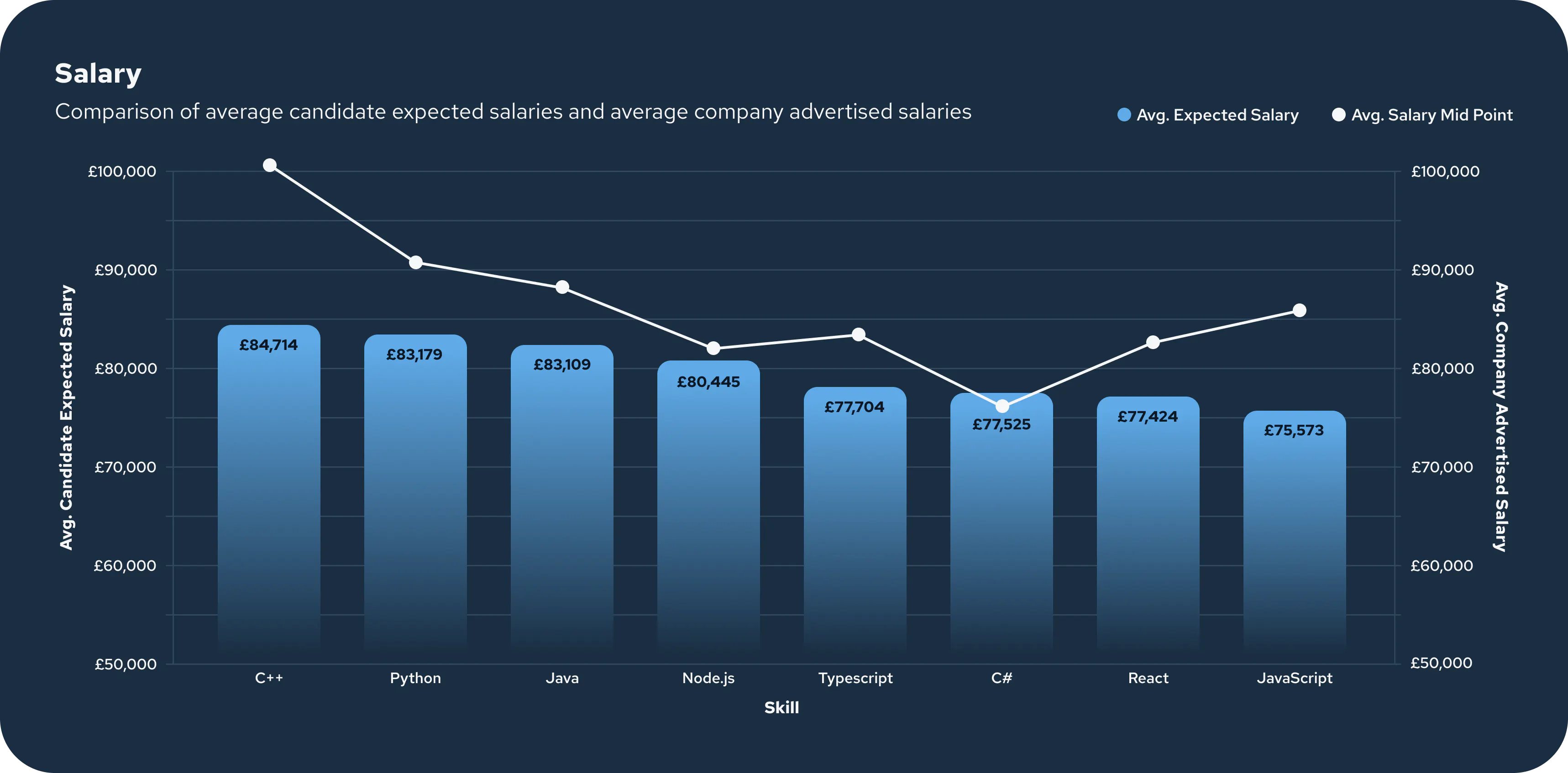
- The average salary expectation for all Senior Developers is £79,831, with the average advertised salary for a Senior Developers being £86,427. On average, the salaries advertised by companies are £6,596 higher than people’s expectations.
- The highest-paid skillset is C++, where a Senior Developers is expecting £84,714 and the average company is offering £100,833. This is also the biggest pay disparity, with a difference of £16,119.
- JavaScript is the skillset with the lowest average expected salary, with Senior Developers expecting £75,574, and companies offering, on average, £85,500. This is the second largest pay disparity, with a £9,926 difference.
- Node.js is the JavaScript technology with the highest expected salary of £80,446. The highest company-advertised salary for these skills is for core JavaScript, at £85,500.
- The lowest paid skillset is C#, where the average Senior Developers is expecting £76,949, while the average company is paying £77,525. This is the only skillset where advertised salaries are lower than expectations.
Check out cord’s salary benchmarking tool where you can test your roles against both people’s expectations and other positions on cord.
Availability
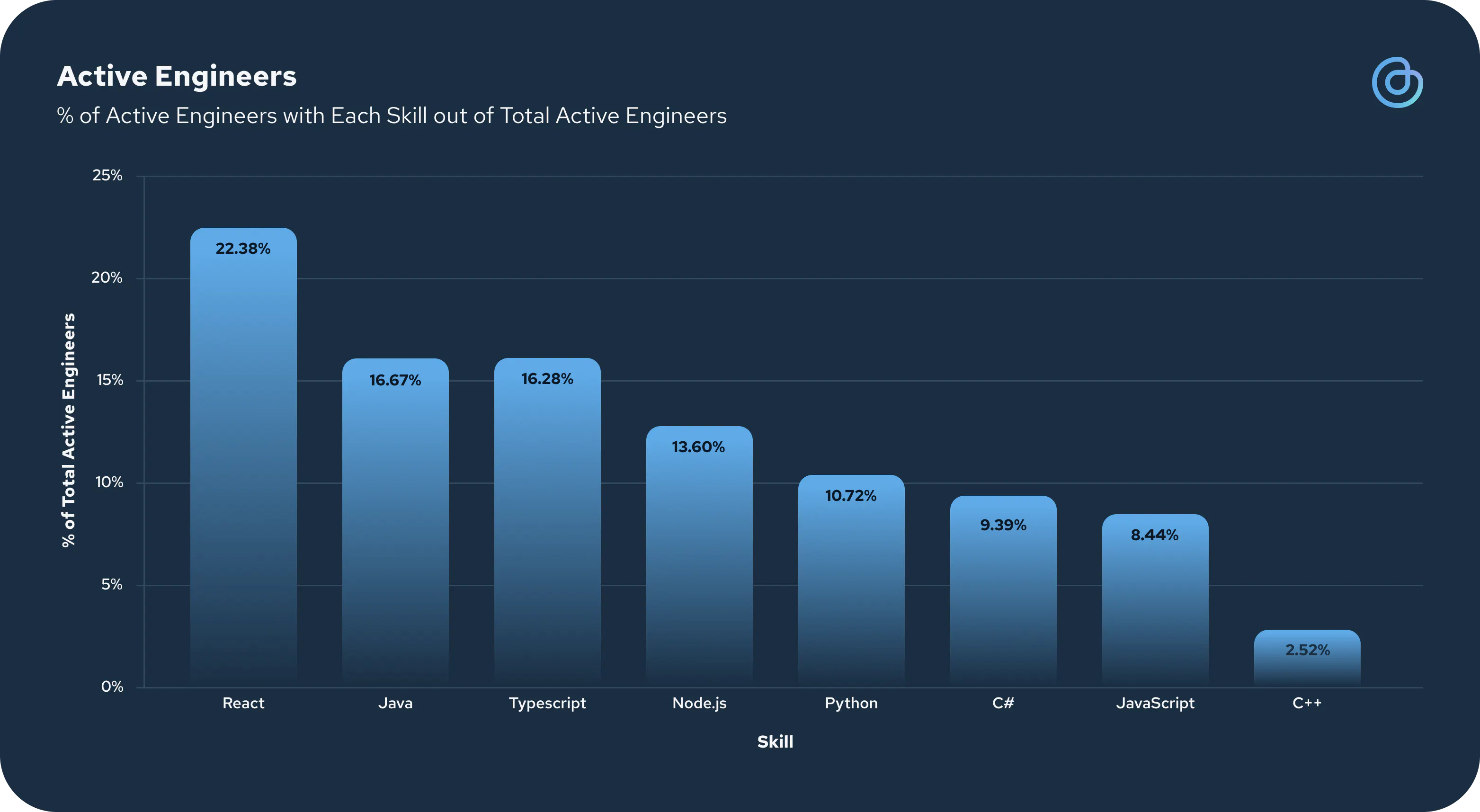
The skill distribution of active developers
Demand Index
The number of developers available with this core skill, divided by the number of live positions seeking this core skill. A lower score suggests a more competitive position to hire for.
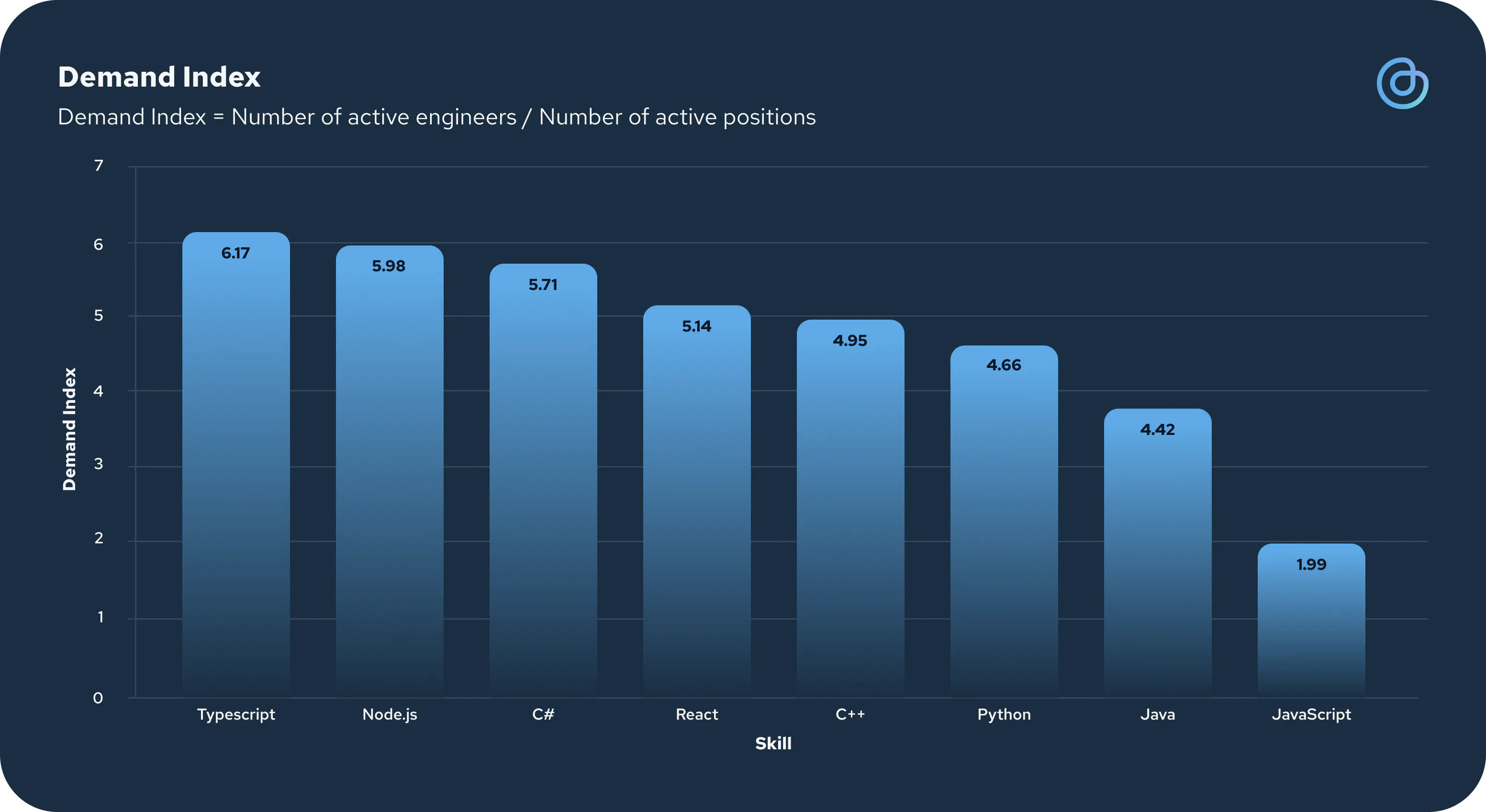
- Whilst React is the most abundant skillset across Senior Developers, with 22.38% of developers, the Demand Index for React is 5.14, making it the fifth most competitive skill on the market to hire for.
- C++ has a significantly lower number of developers, with just 2.52% of the market. However, the Demand Index is 4.95, meaning your lack of competition makes hiring this inline with other skills.
- JavaScript is the second lowest available skill and the significantly lowest Demand Index with 1.99.*
*This could suggest JavaScript is the most competitive skill to hire for. However, as React and Node.js become more popular, developers may be choosing to list more specific skills rather than just JavaScript. The low Demand Index could instead indicate that companies have not yet adapted to this trend.
Candidate Preferences
We've analysed preferences from candidates with a Developer job title. As developers are able to choose multiple preferences, this will include these people in multiple categories.
Remote working preferences
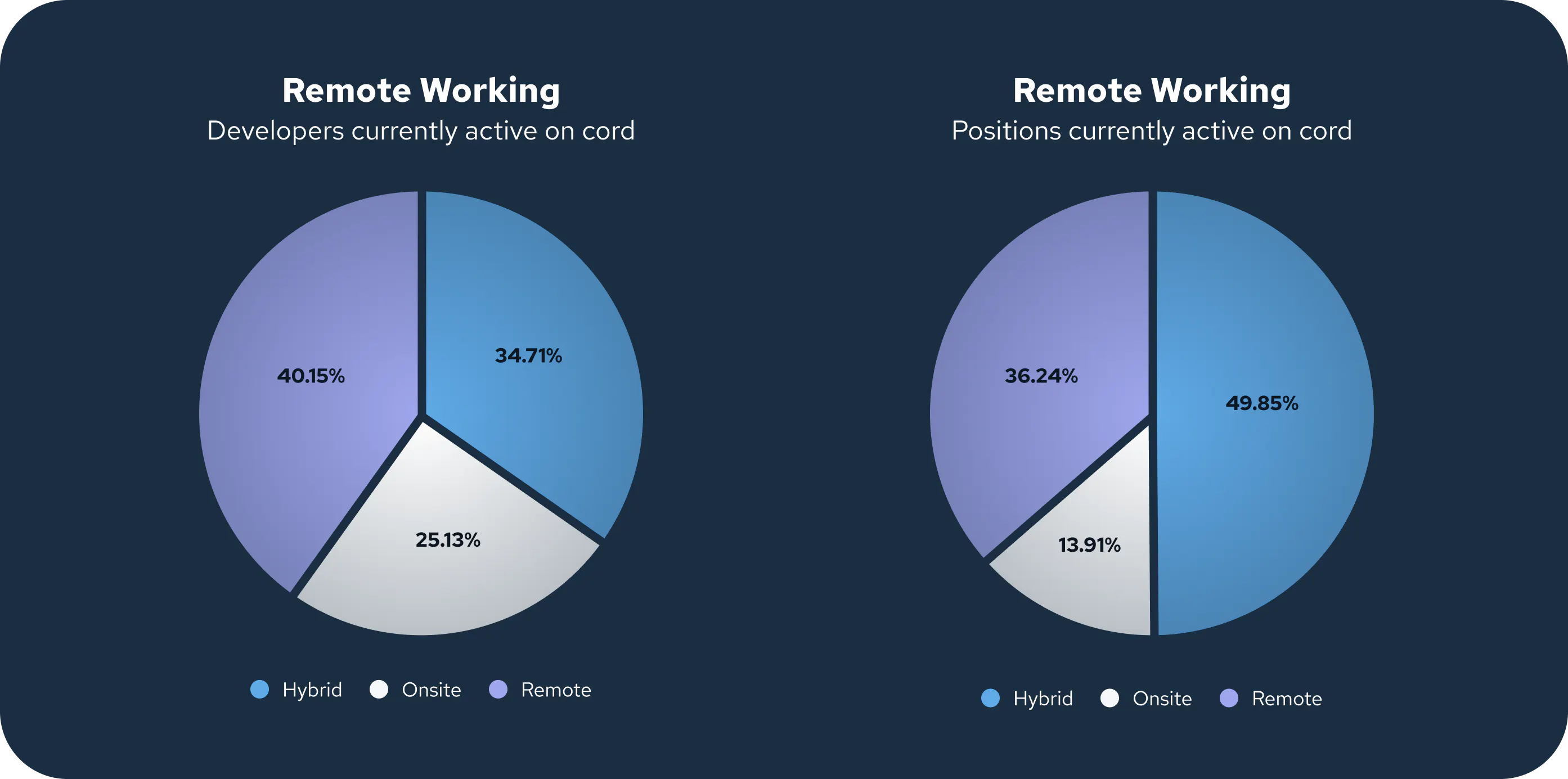
- The majority of developers (40.26%) are looking for remote work. The majority of positions (49.85%) are hybrid.
- 25.13% of developers would consider on-site work, which is significantly higher than the current demand from 13.91% of companies.
- 59.84% of developers would consider an element on on site work, with either hybrid or fully on-site, with 63.52% of companies seeking this.
Job title preferences
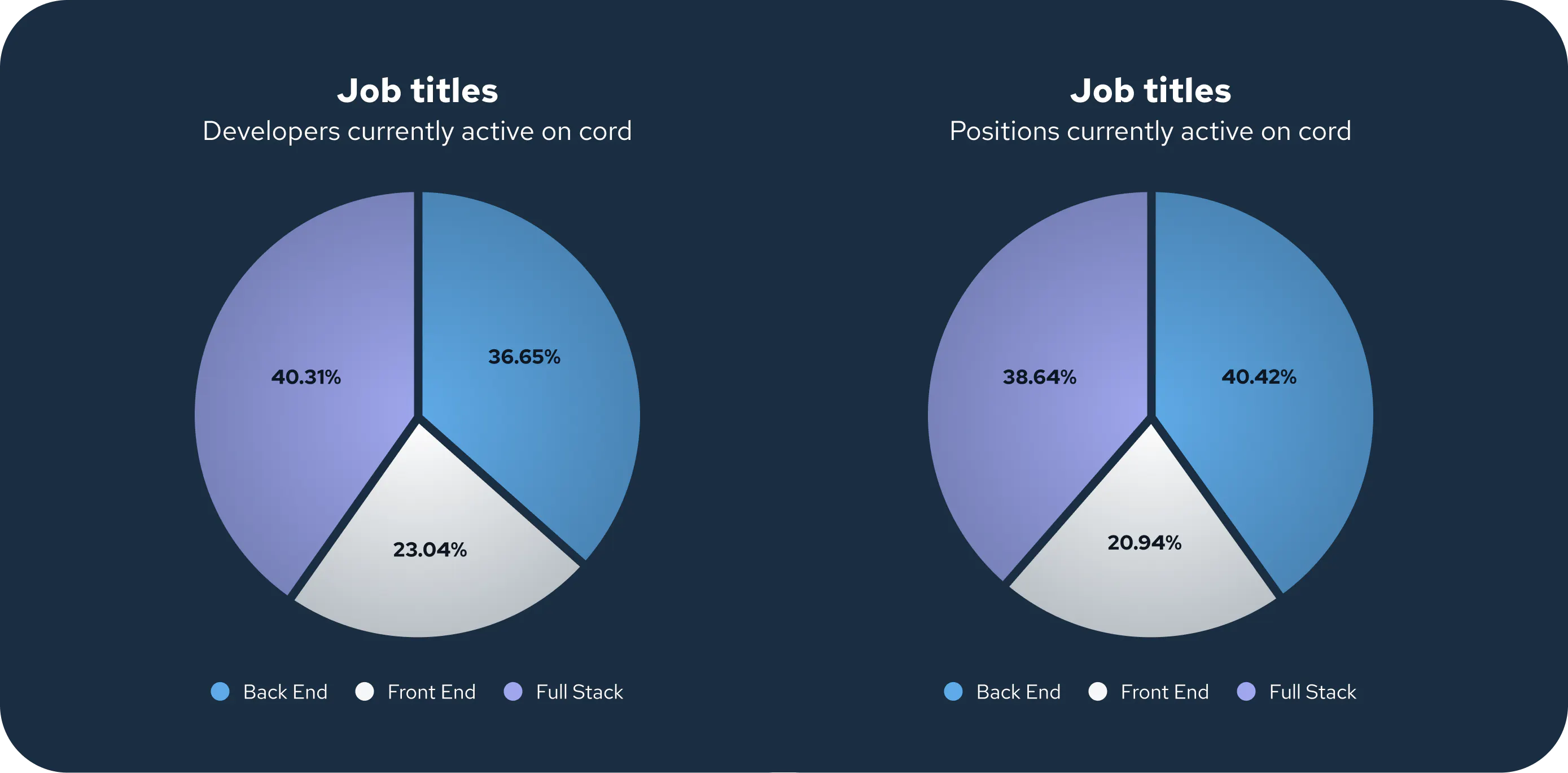
- The most popular job title for developers is Full Stack Developer, with 40.31%. The most popular position for companies is Back End Developer, with 40.42%.
- There are more Back End (36.57%) than Front End (23.12%) developers looking for work. The trend is reflected in position listings too, with 40.42% Back End and 20.94% Front End positions.
Company size preferences

- The most preferred company size for developers is 51-200, with 18.78% of developers.
- The least preferred company size is 1-10, with only 10.69% of developers stating this as their preference. This could be a sign of developers looking for stability in an unstable market.
- The second least favourable company size is 5000+. This could be a consequence of the increasing redundancy numbers we’ve been seeing from larger tech companies.
Industry preferences
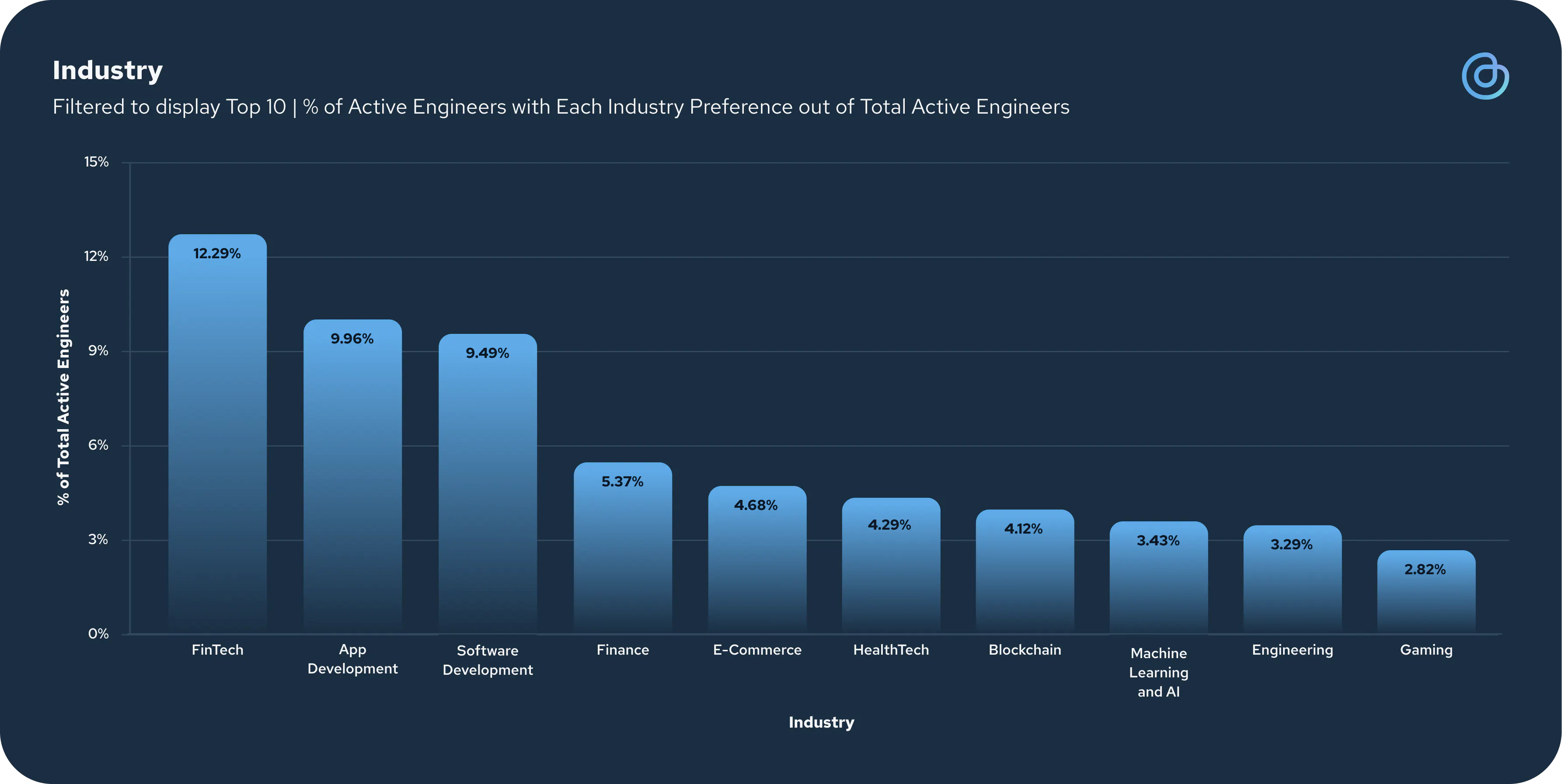
- The most popular industry for developers is Fintech, with 12.29% of developers listing this as their preference.
Job Titles
Below we have compared salaries and demand for developers with Front End, Full Stack, and Back End Developer job titles.
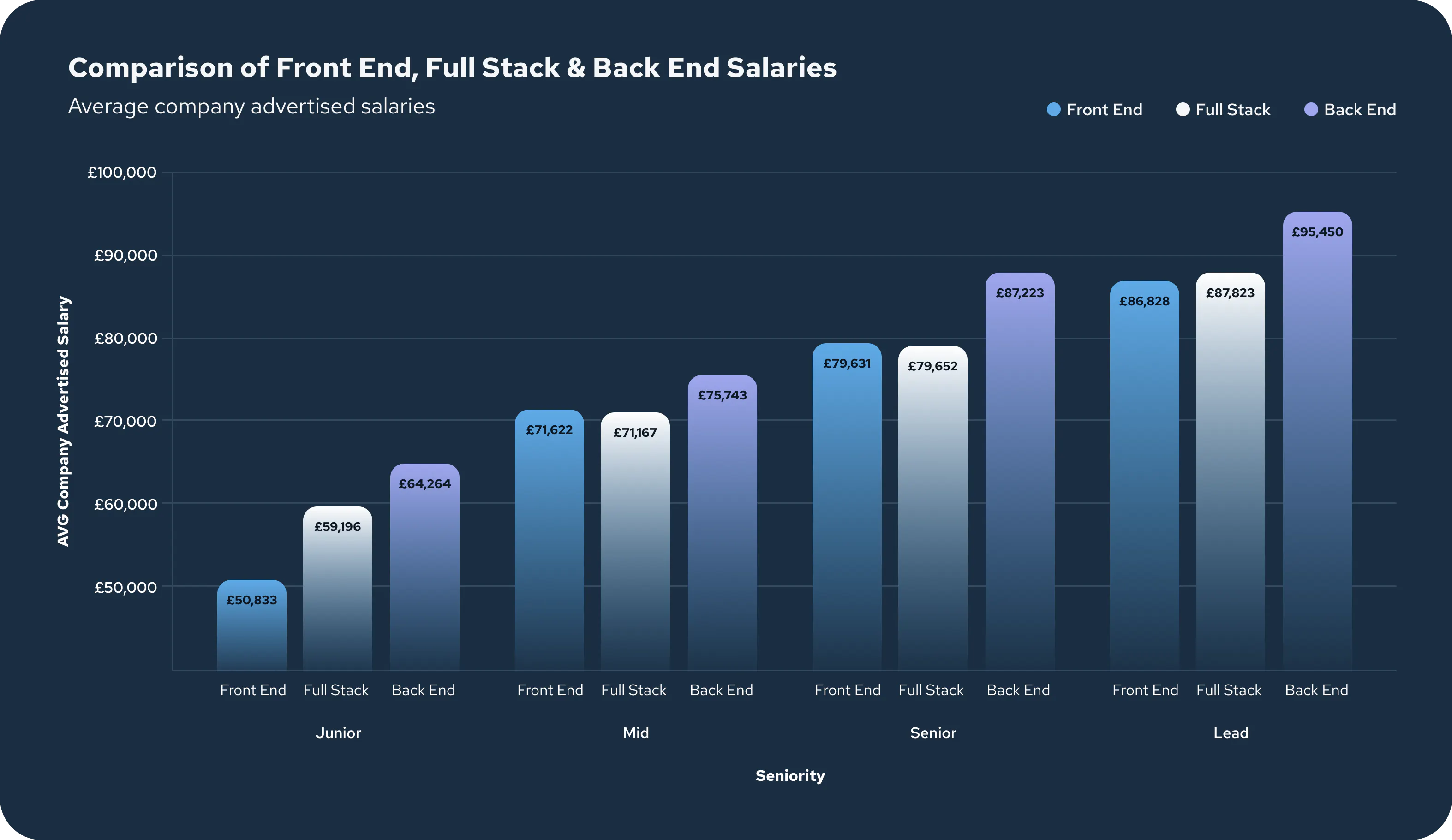
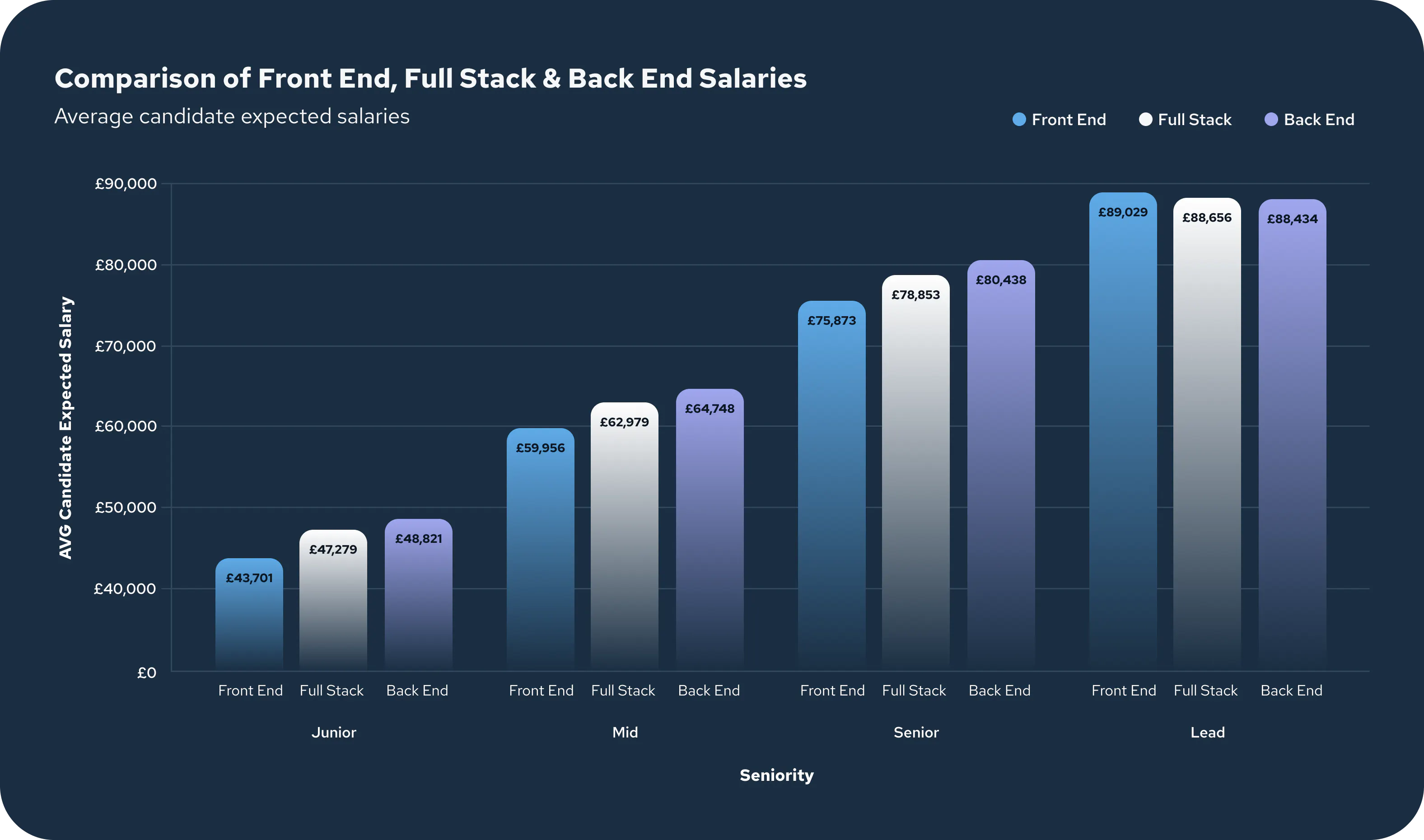
- Front End Developers consistently have the lowest salary expectations across seniorities, apart from at Lead level, where they are then the highest.
- Back End Developer advertised salaries are consistently the highest across all seniorities.
- The biggest increase in salaries is from Junior to Mid level. On average, we see a £15,961 increase for developers expectations and a £14,747 increase in advertised salaries between these two experience levels.
- The jump between Senior and Lead salaries is consistently the smallest, with a £10,318 increase in expectations and £7,865 increase in advertised salaries.

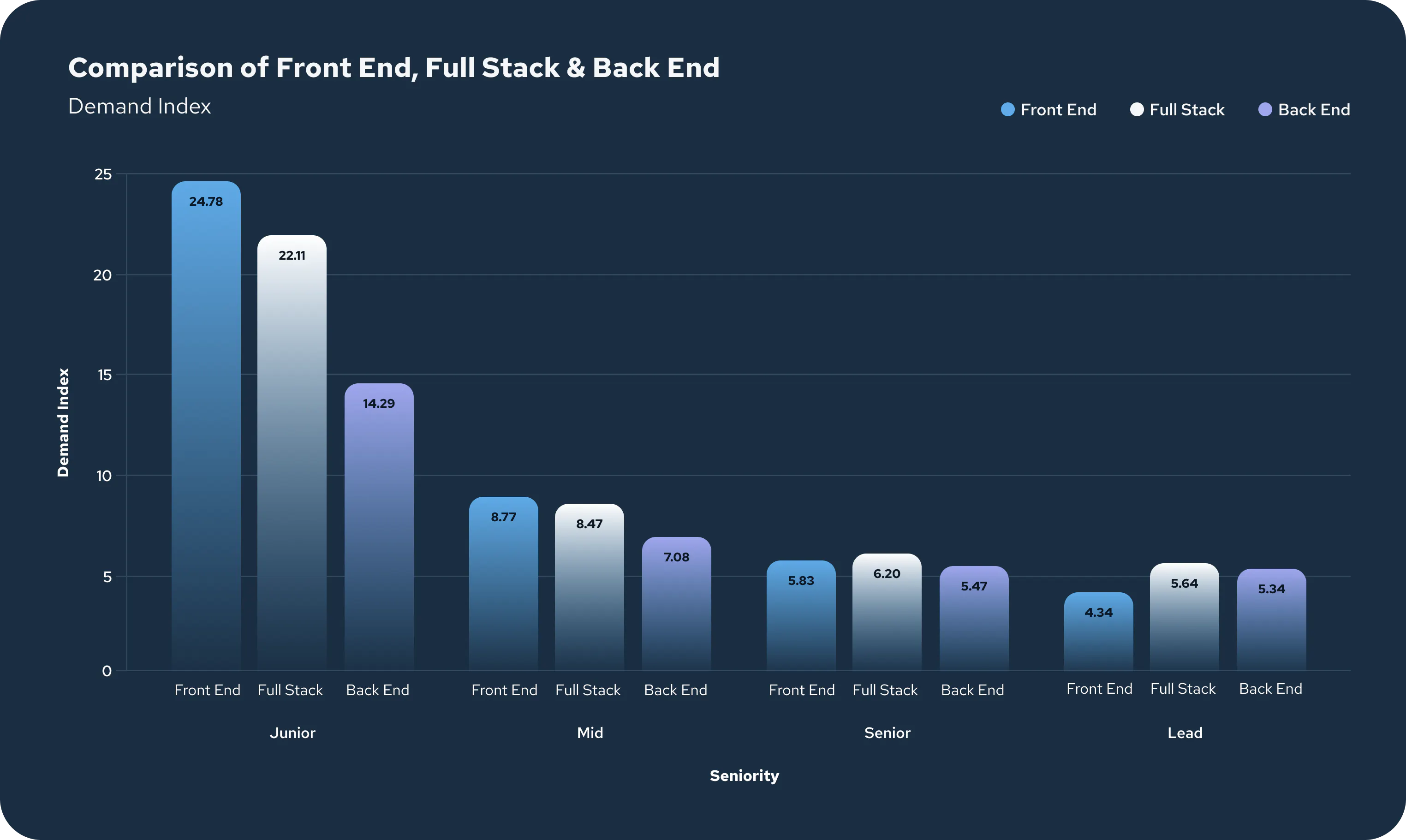
- Whilst Mid and Senior developers are more active in the market, the Demand Index for these seniorities shows they are still very competitive to hire for.
- Junior developers take up a comparatively smaller portion of the active market on cord, but the high Demand Index indicates hiring these positions is less competitive across the board.
- The most competitive position to hire for are Lead Front End Developers. This is also the position where companies are paying £2,495 lower than what developers are looking for. Benchmarking your salary could make you easily stand out in a highly competitive market
Back End Developers
Salary
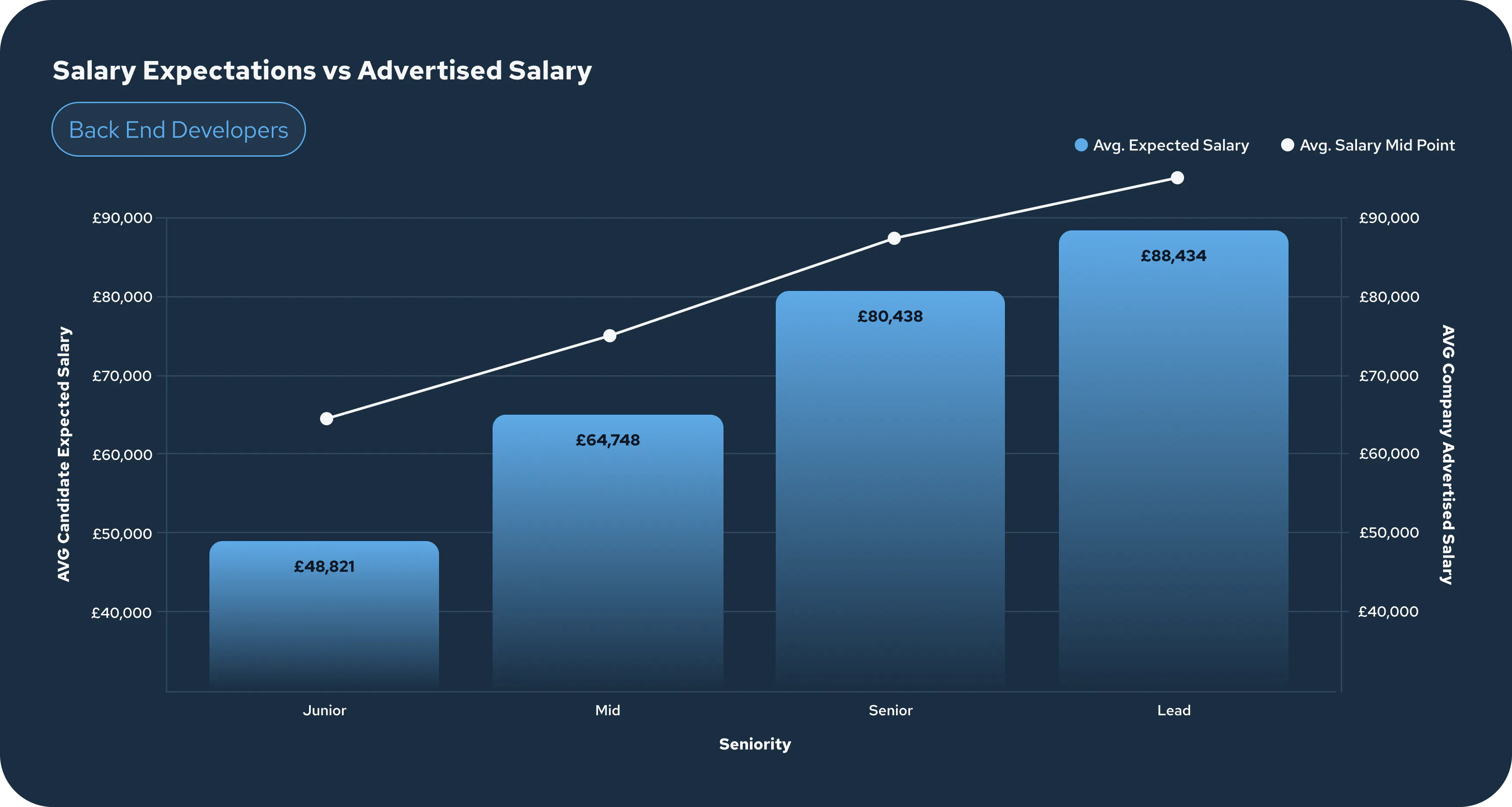
- The biggest disparity in pay is for Junior Back End Developers, where companies are paying £15,443 more than the average expected salary.
- The closest gap between advertised salary and expected salary is for Senior Back End Developers, at £6,785.
Availability & Demand
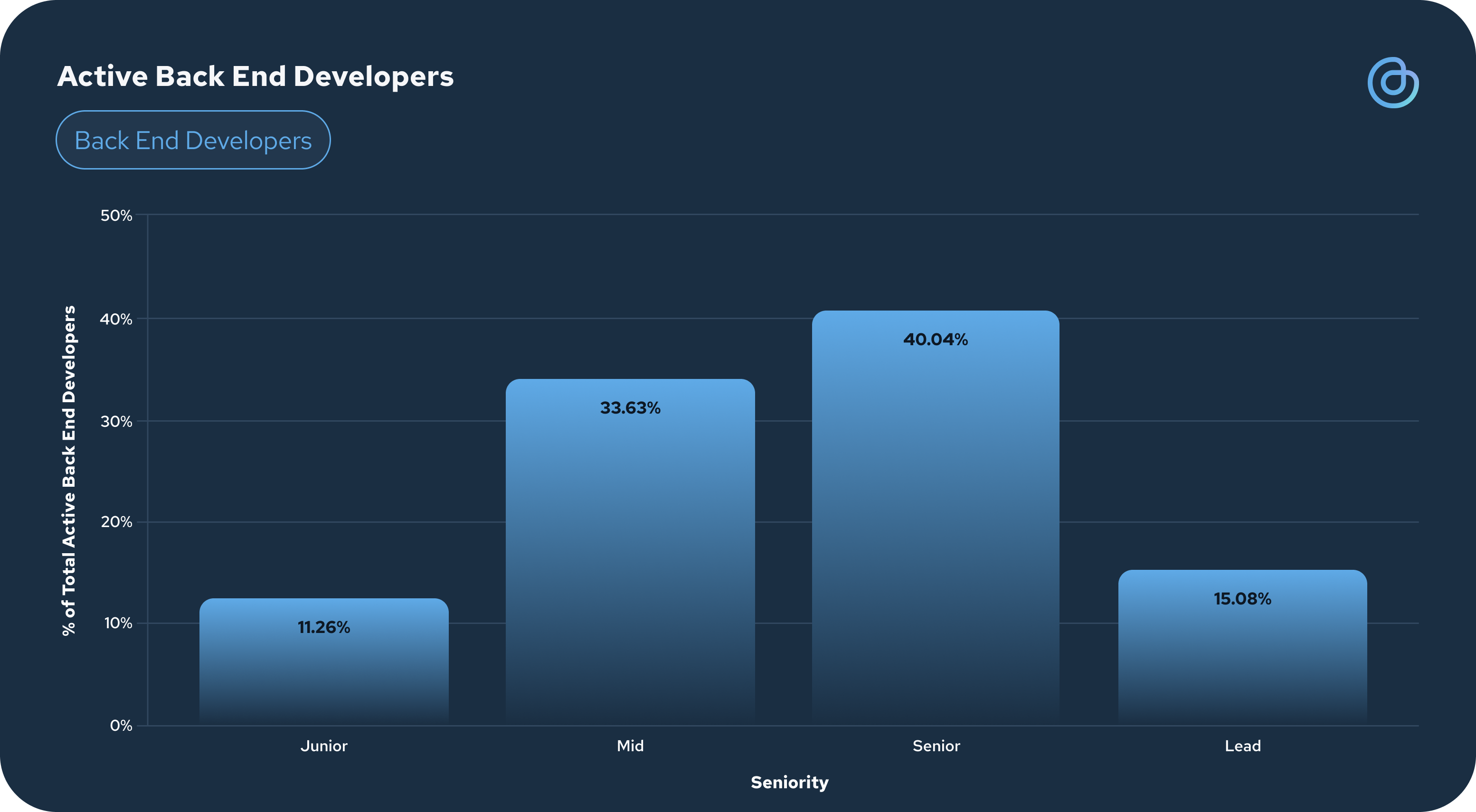

- Whilst Junior Back End Developers have the fewest number of active developers on cord with 11.26%, they’re less competitive to hire for with a 14.29 Demand Index.
- The most competitive seniority to hire for is Lead Back End Developers, with a 5.34 Demand Index.
- Whilst Senior Back End Developers are the most abundant, with a 40.04% share of the market, their Demand Index puts them as highly competitive to hire for.
Full Stack Developers
Salary
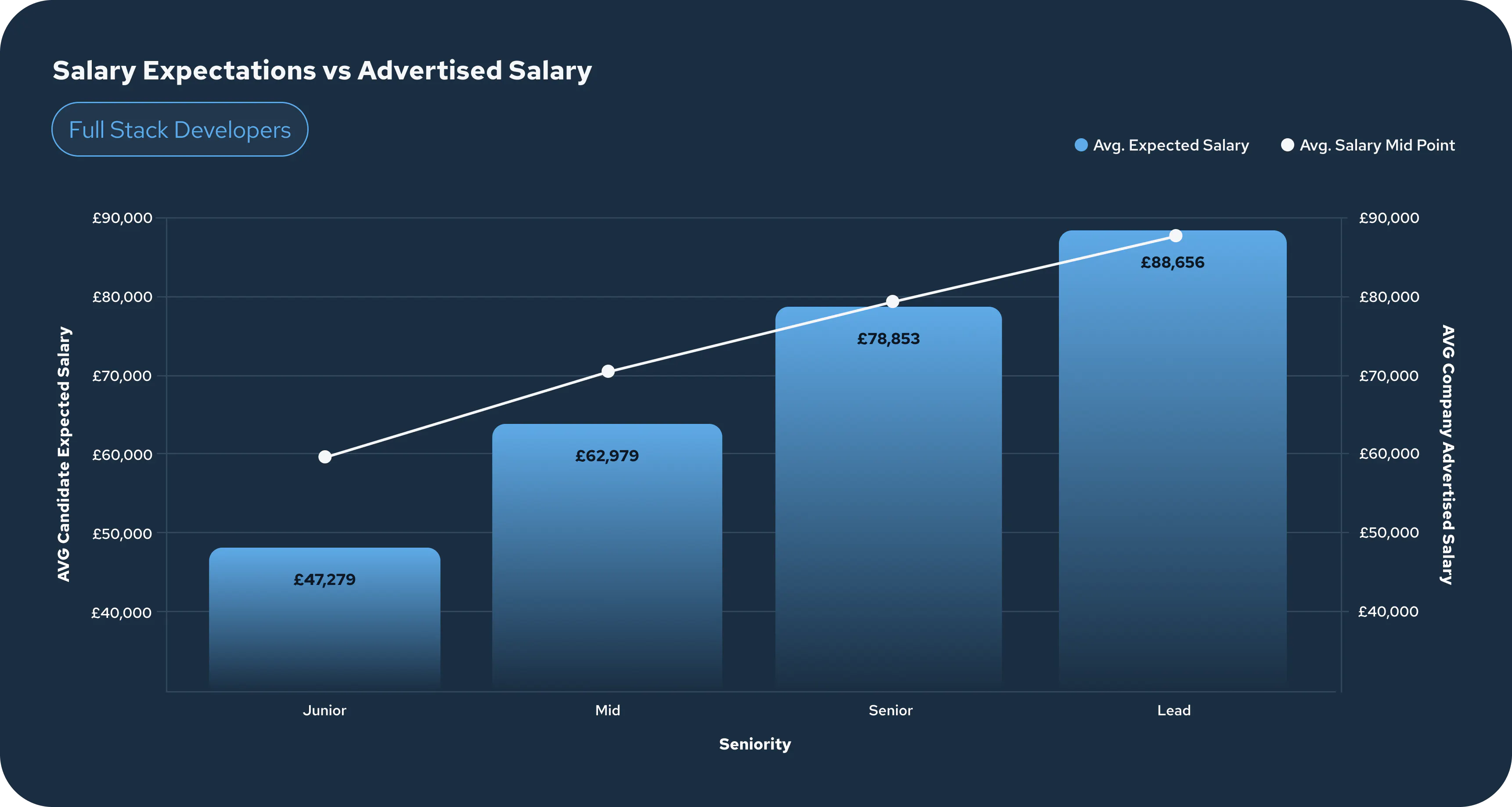
- Senior and Lead Full Stack Developers have expectations closer to advertised salaries. Senior developers expect just £799 less than advertised, and Lead developers £833 more than advertised.
Availability & Demand
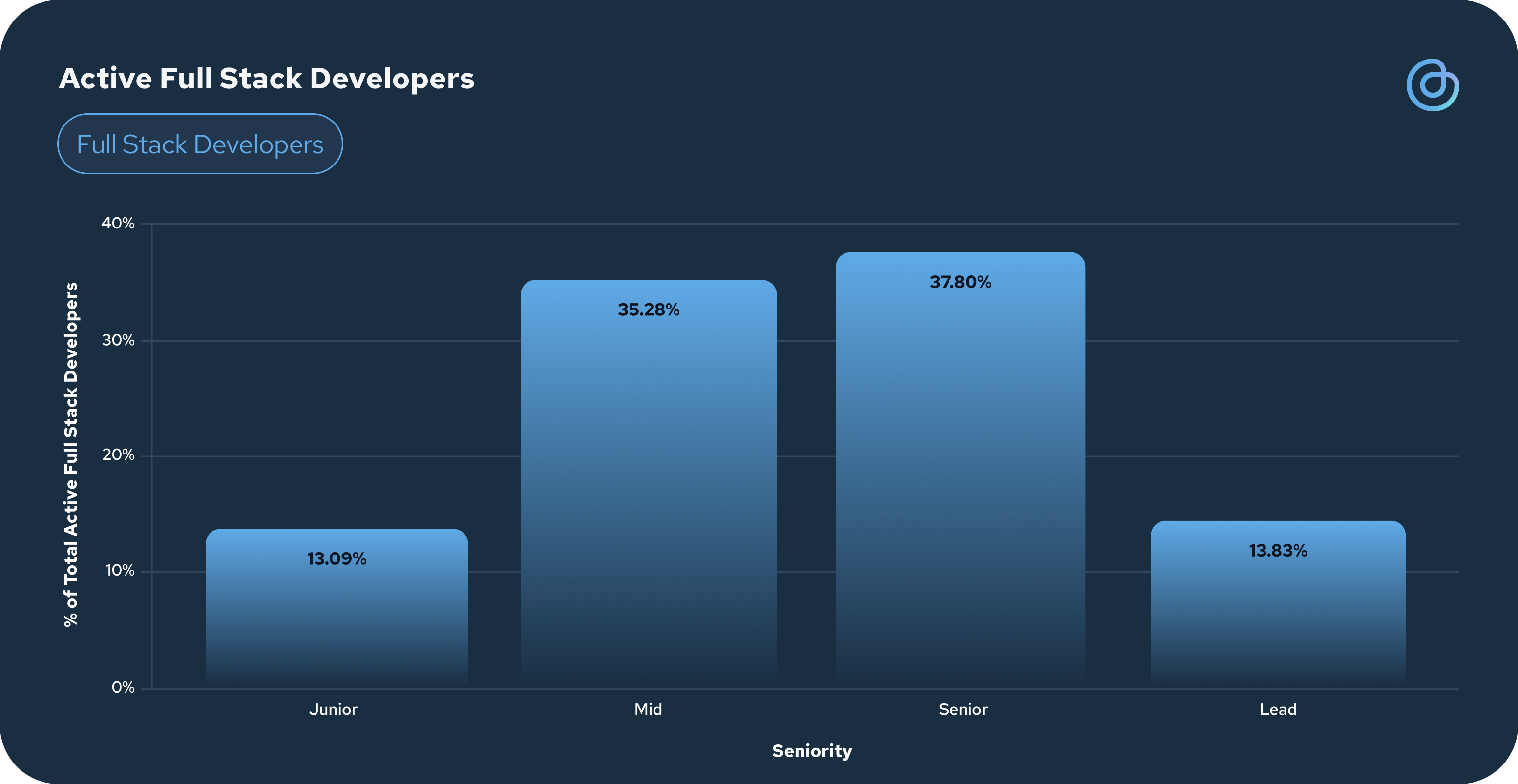
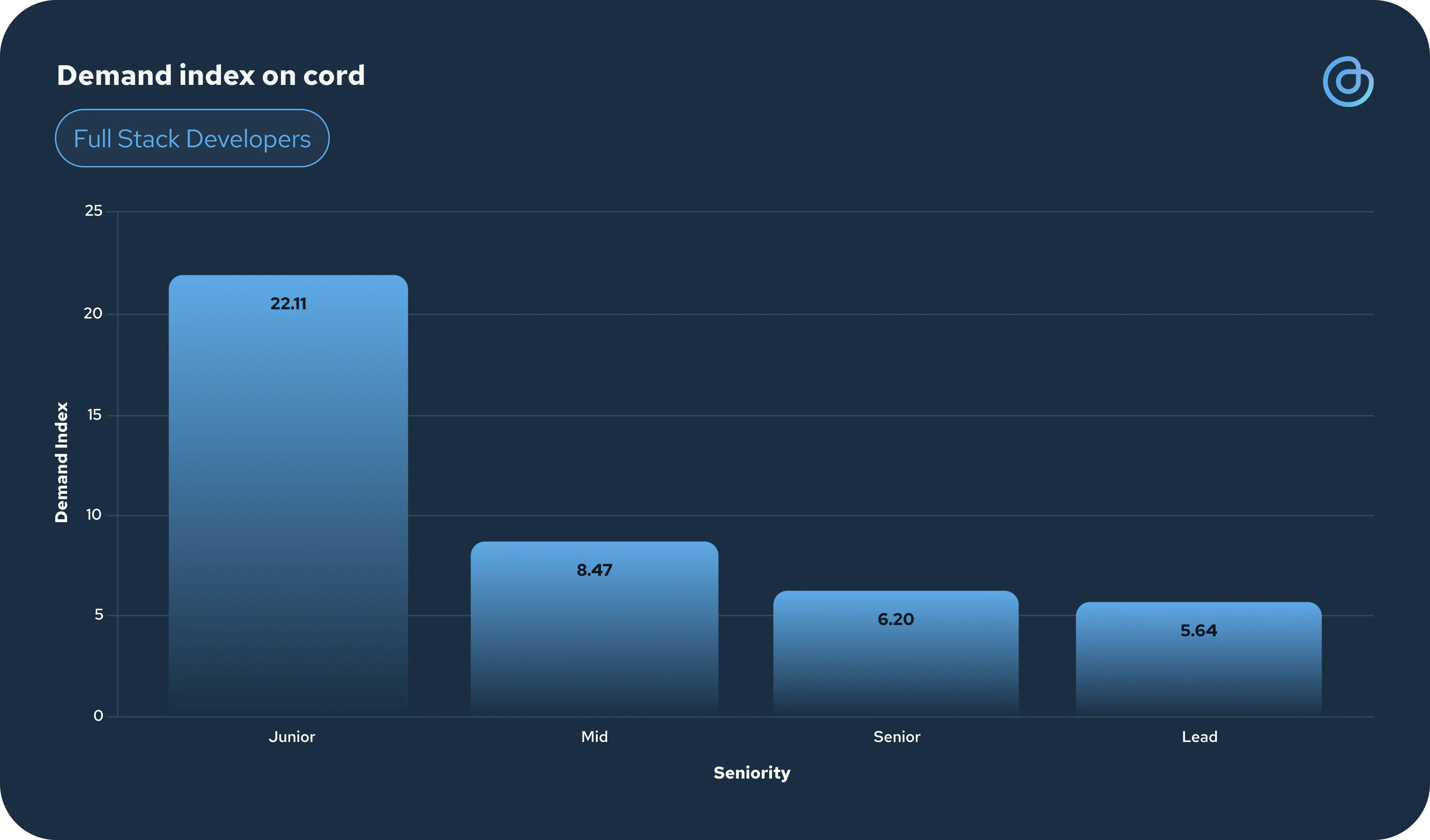
- Lead Full Stack Developers have the second lowest number of active developers and the lowest Demand Index, with 5.64, suggesting this is the most difficult seniority to hire for.
- Junior Developers are the smallest pool of active developers, however the Demand Index is significantly higher than other experience levels at 22.11, as well as being a 7.82 higher than Junior Back End Developers.
Front End Developers
Salary
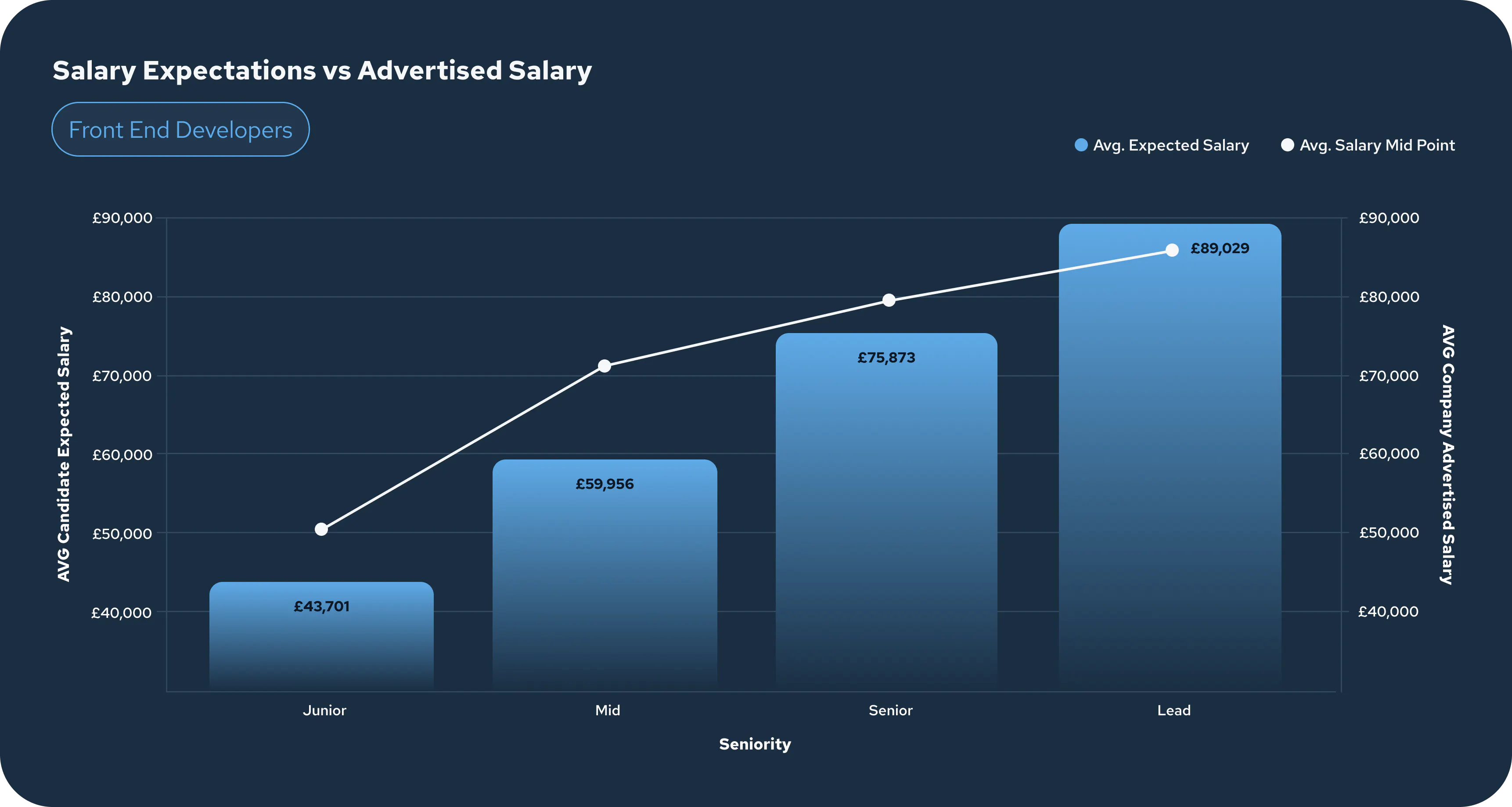
- The biggest jump in company advertised salaries between Junior to Mid level, with a £20,789 increase. This is also the largest pay disparity, where Mid Level Positions are advertised £11,897 higher than average salary expectations.
- There is a larger jump for Senior to Lead level Front End Developers than we’ve seen with the other two job titles, with a £13,156 increase.
- Lead Front End Developers are the group where expectation are highest vs company advertised salaries, with developers exceptions £2,201 more than advertised positions.
Availability & Demand
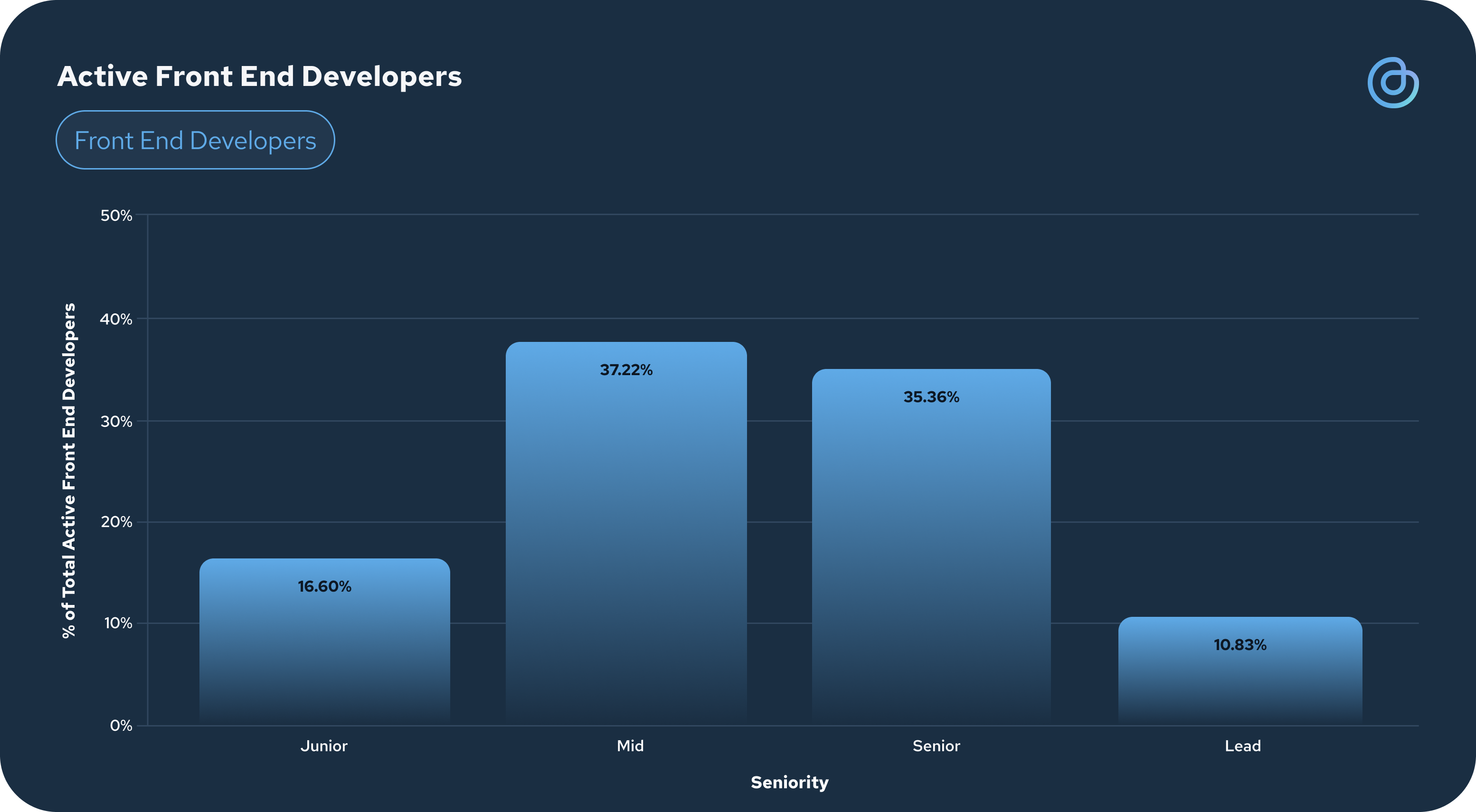
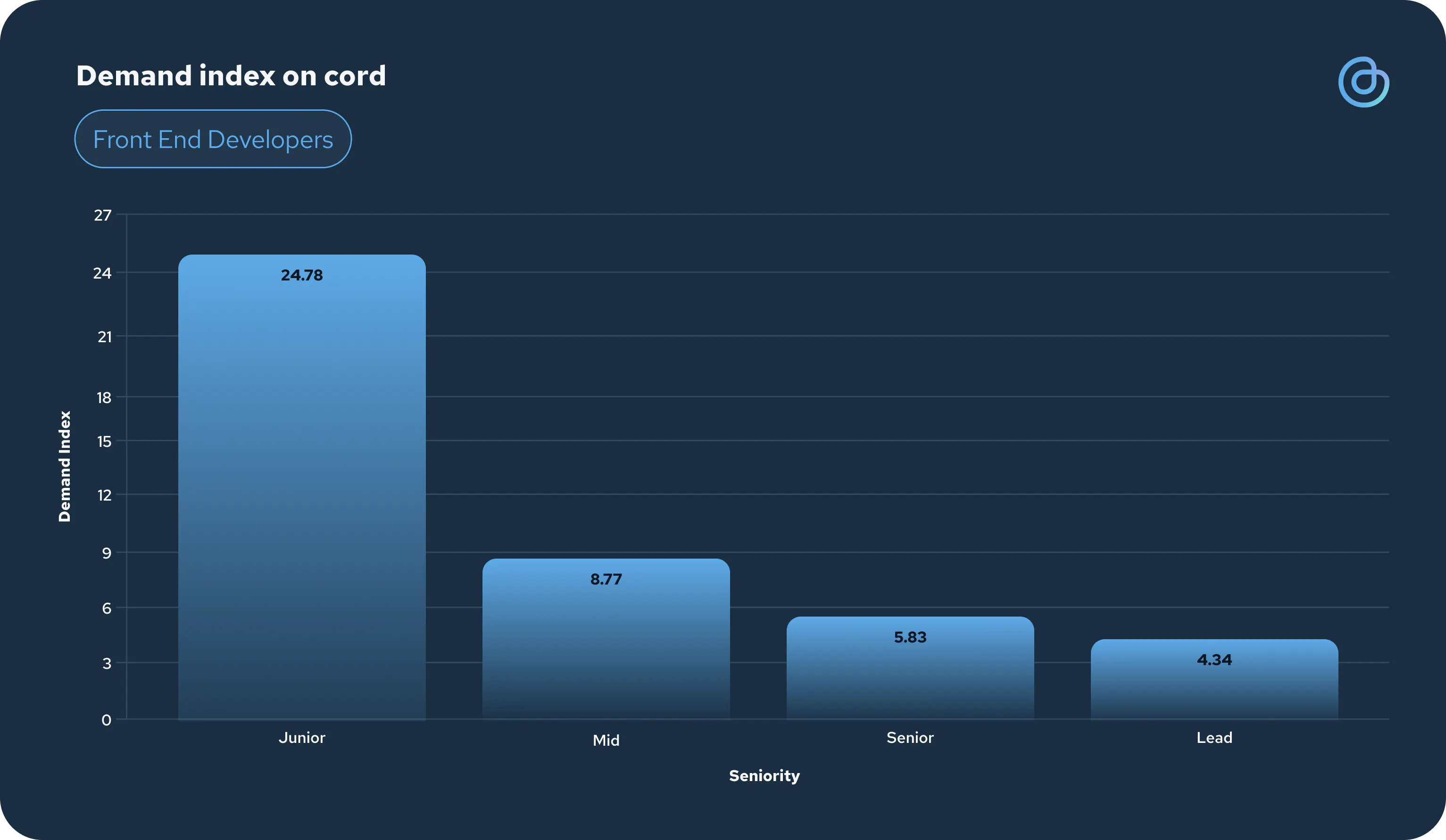
- Junior Front End Developers have the highest Demand Index across all job titles, with 24.78. This is 3.67 higher than Full Stack Developers and 10.49 higher than Back End Developers.
- Lead Front End Developers have the lowest Demand Index with 4.34, suggesting this is the most competitive job title and seniority to hire for.
By utilising this data, we hope you can build effective strategies that target the right developers for your position and ultimately increase your chances of hiring them.
We will be building further, data driven reports in our Hiring Insights page. If you have any questions, feedback, or requests for further research, please email rebecca@cord.co.

Was this content useful?