 cord
cordEngineer interviews: Building a process that attracts great candidates
Lessons from over 300 engineers on how to reduce your interview drop-out rate

Introduction
89% of candidates say that their experience in the interview process impacts their decision on whether or not to accept a job offer from your company.
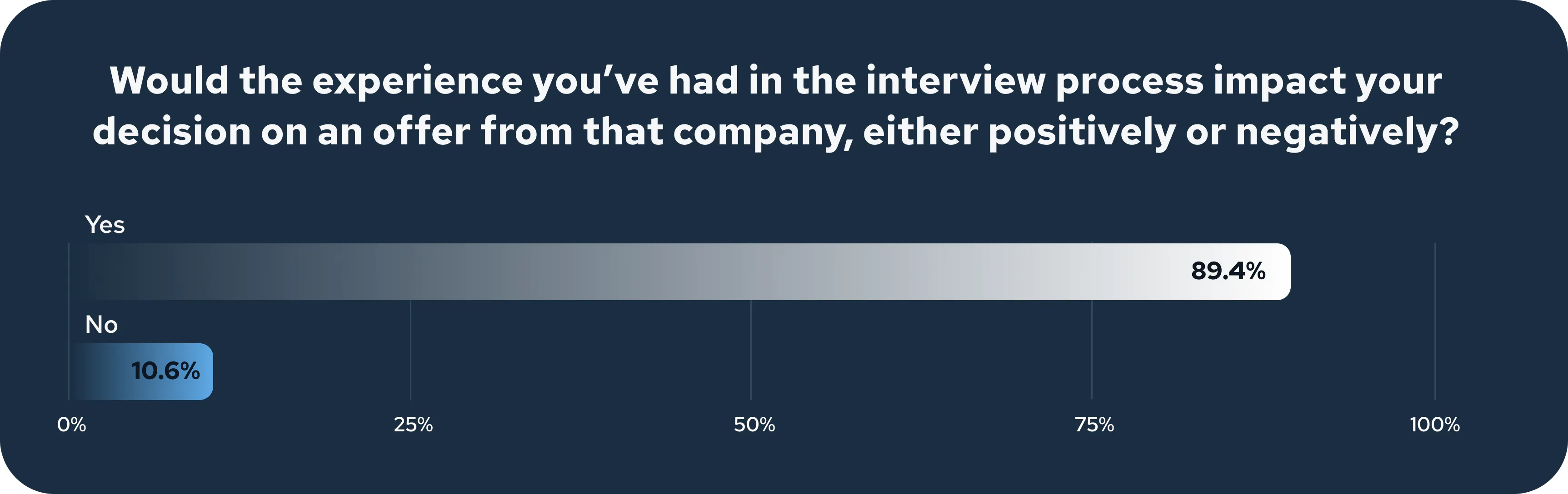
Interviewing is highly time-consuming, so it can be incredibly costly to have top talent drop out from your pipeline, or reject your job offer, after all the hard work and time you put in.
So we surveyed over 300 engineers to understand how they want to be interviewed, to enable tech hiring teams to build a candidate-centred process that optimises for getting engineers to complete your process and ultimately increase your chances of making hires.
By building an engaging process focused on the engineer, you will:
- Increase the number of engineers who are willing to enter your process in the first place
- Decrease your dropout rate and increase the chances
- Improve your candidate experience and hiring reputation in the engineering community
Here are our key insights:
- The biggest pain point that 52% of candidates experience is not receiving sufficient feedback from companies
- 49% of Candidates struggle with the length of interview processes, preferring 3 or fewer stages
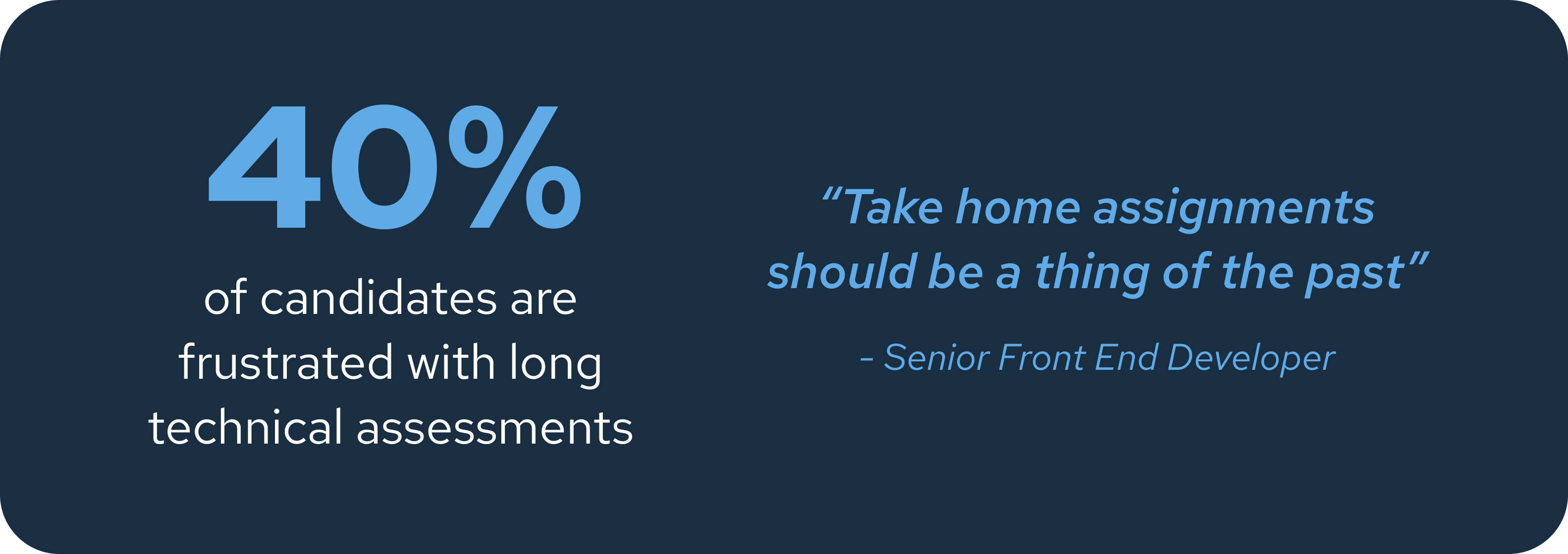
- The most favoured way to demonstrate technical skills is a take-home technical test, but 40% of candidates find the length of these a key problem
- The most important information engineers need to understand is remote/flexible working, salary/benefits, and engineering processes
- Engineers are most keen to meet their Direct Line Manager, a peer from their team, and the CTO
Overcoming engineering candidates' pain points
Candidate experience is essential to your reputation within the engineering community, and your interview process is an integral contributor to this. However, engineers often experience the same pain points when looking for work, making it a time-consuming, emotionally draining, and laborious task.
The Top 3 frustrations candidates experience in the interview process are all things fully within the company’s control. By ensuring your process doesn’t perpetuate these problems, you can get ahead of your competitors and keep candidates engaged in your process.
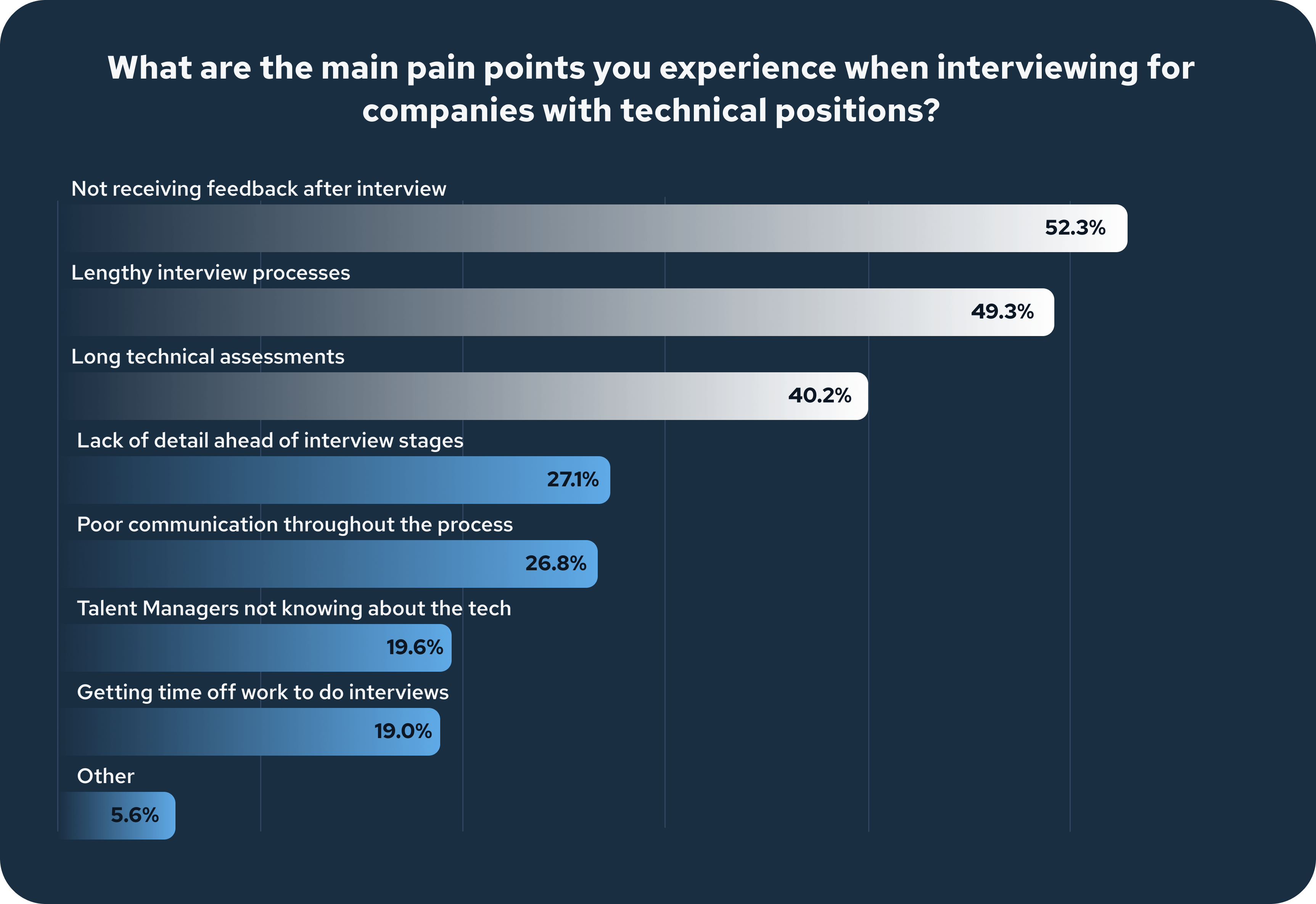
Providing Feedback
Giving feedback is the most important thing to candidates. It should be a non-negotiable in your interview process. But sadly, 52% of candidates still struggle with getting this when interviewing.
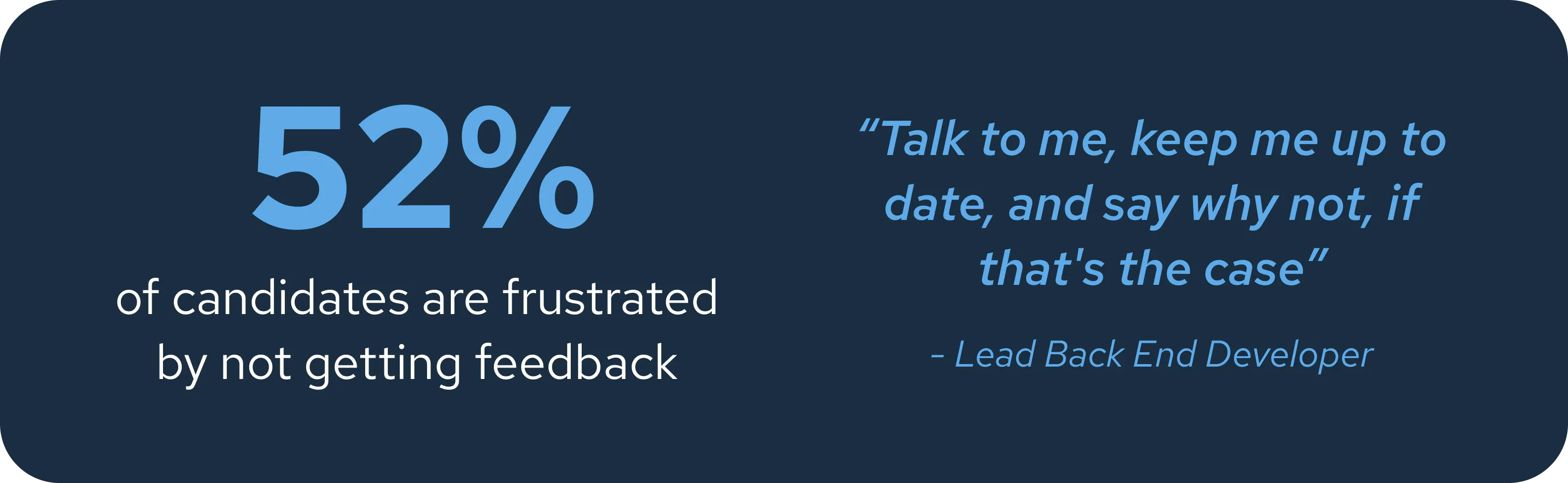
There are two points where you should be providing feedback:
1. During the process
Provide feedback at every stage, both positive and constructive. This builds trust with candidates, improves their confidence in the process, allows you to judge how people take direction, and provides guidance so they can perform to the best ability.
2. At the end of the process
After an engineer has dedicated their free time to your interview process, they deserve an explanation for why they’re not a fit, or how they can improve. Whilst this might not affect you directly, it affects you indirectly by damaging your company’s reputation in the community. 75% of candidates wouldn’t apply to your position if they have heard poor things about your candidate experience.
Insights:
- Provide feedback throughout the interview process to improve transparency, trust, and candidate performance
- Provide feedback after every interview process ends. Not doing so will damage your company's reputation.
Interview Stages
The biggest pain point for 49% of candidates is lengthy interview processes. This was of even greater concern with Leads (58.8%) and Seniors (51.2%), who typically see more stages in their interviews.
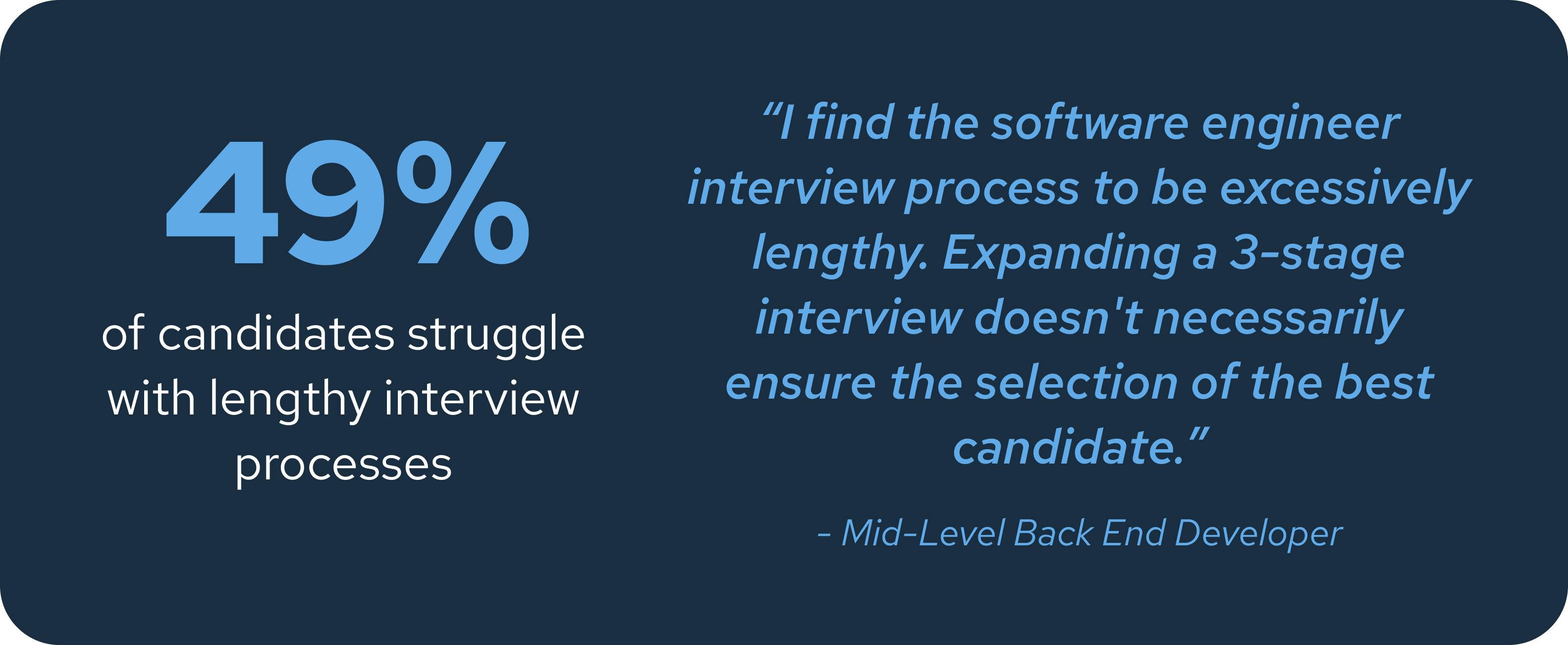
We investigated the number of stages that would make a candidate consider not entering, or dropping out of your process. 49% of candidates would be put off by 3 or more stages, and 84% would be put off by 4 or more stages. This means if you have 4 stages in your interview process, you could be losing out on 84% of candidates.
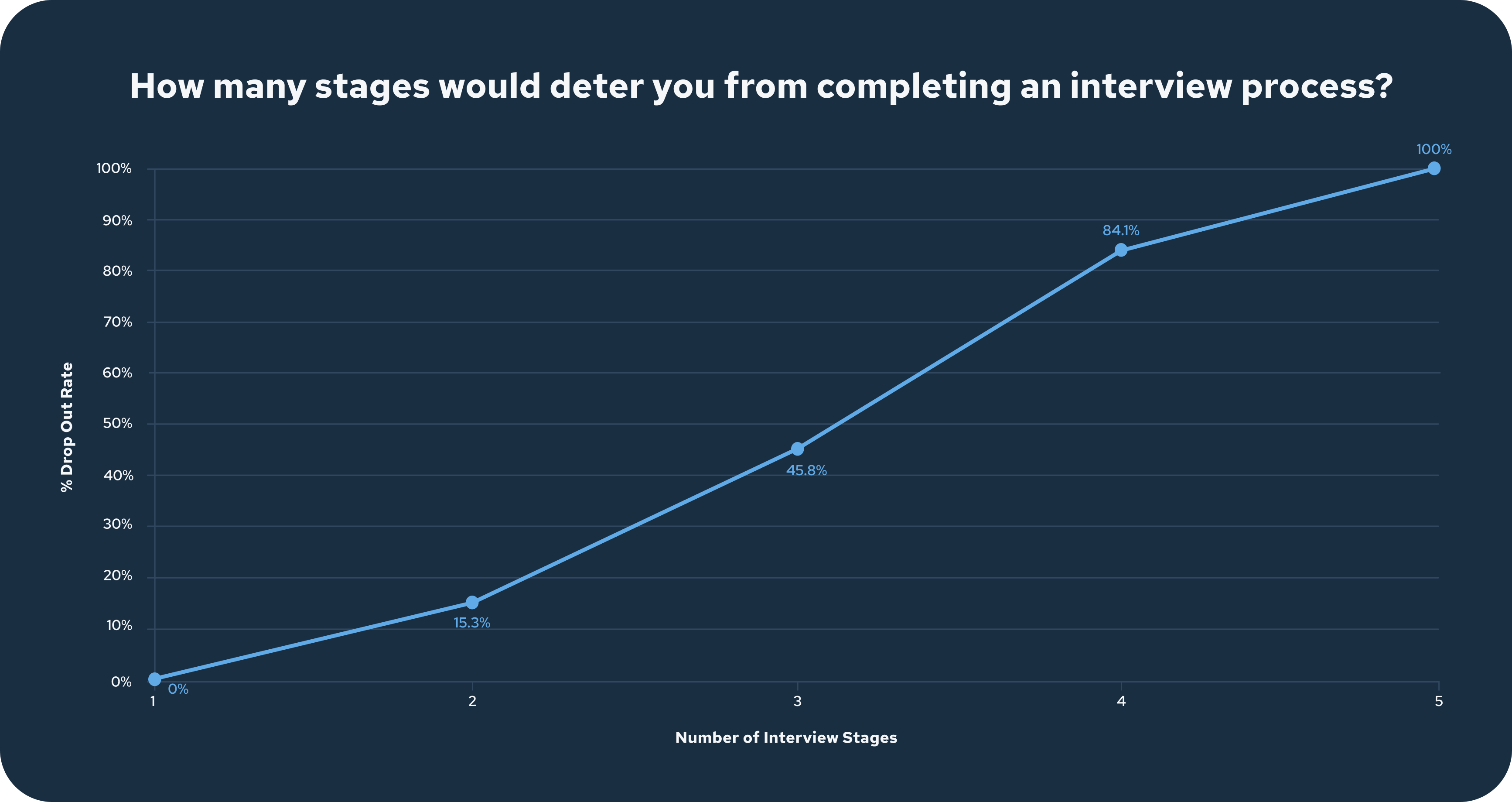
Insight:
- Keep your interviews at fewer than 4 stages or risk deterring the majority of candidates from completing your process. Condense interview stages wherever possible.
Technical Assessments
For the majority of companies hiring engineers, an assessment of their technical skills is an essential part. You want to assess candidates in a way that allows them to best demonstrate their skills, so we asked candidates which method they prefer.
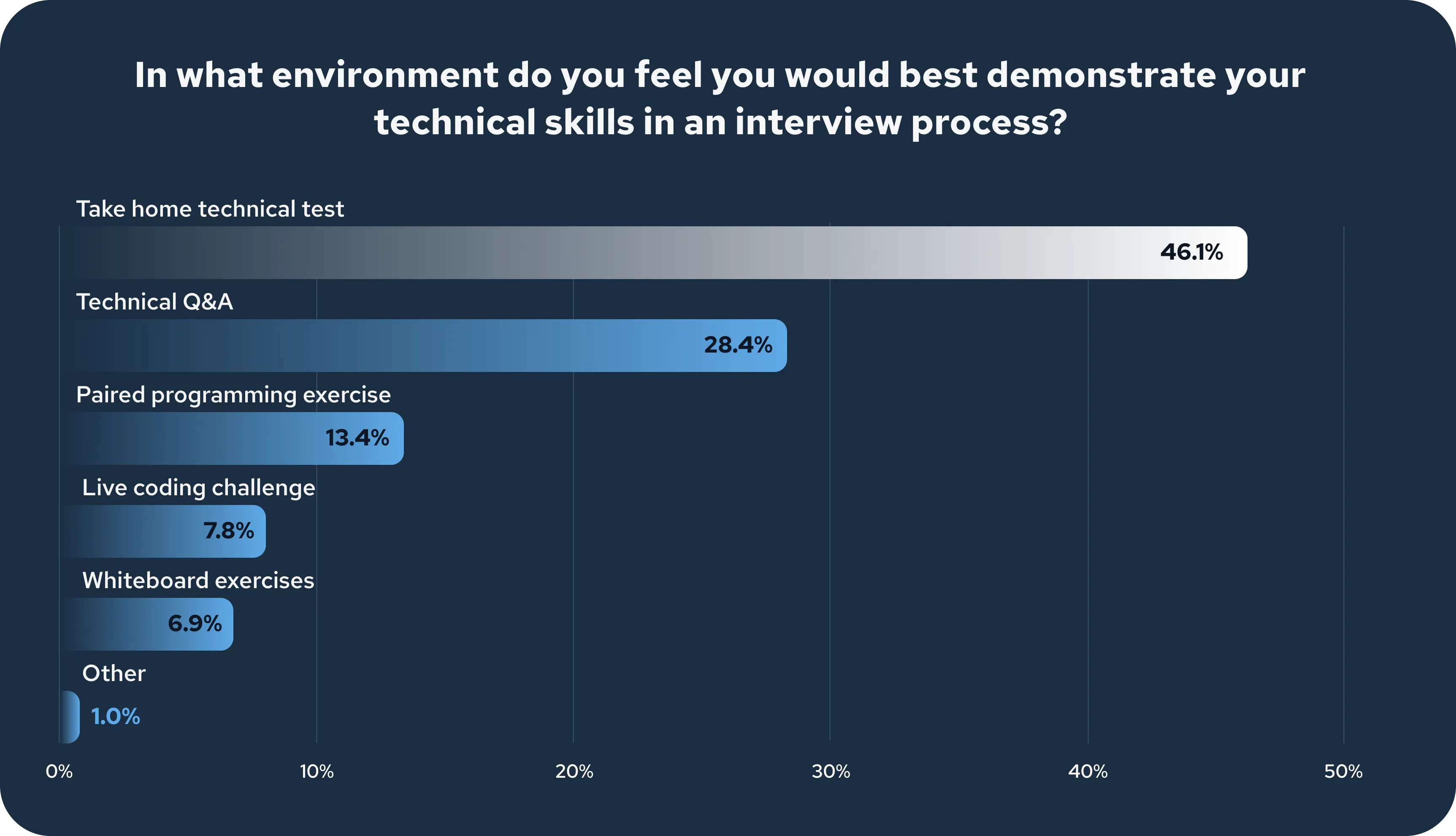
Engineers’ strong preference was a take-home test. They preferred this to alternatives as they felt it reflected real-life working conditions most closely and allowed them to showcase their skills in a familiar environment.
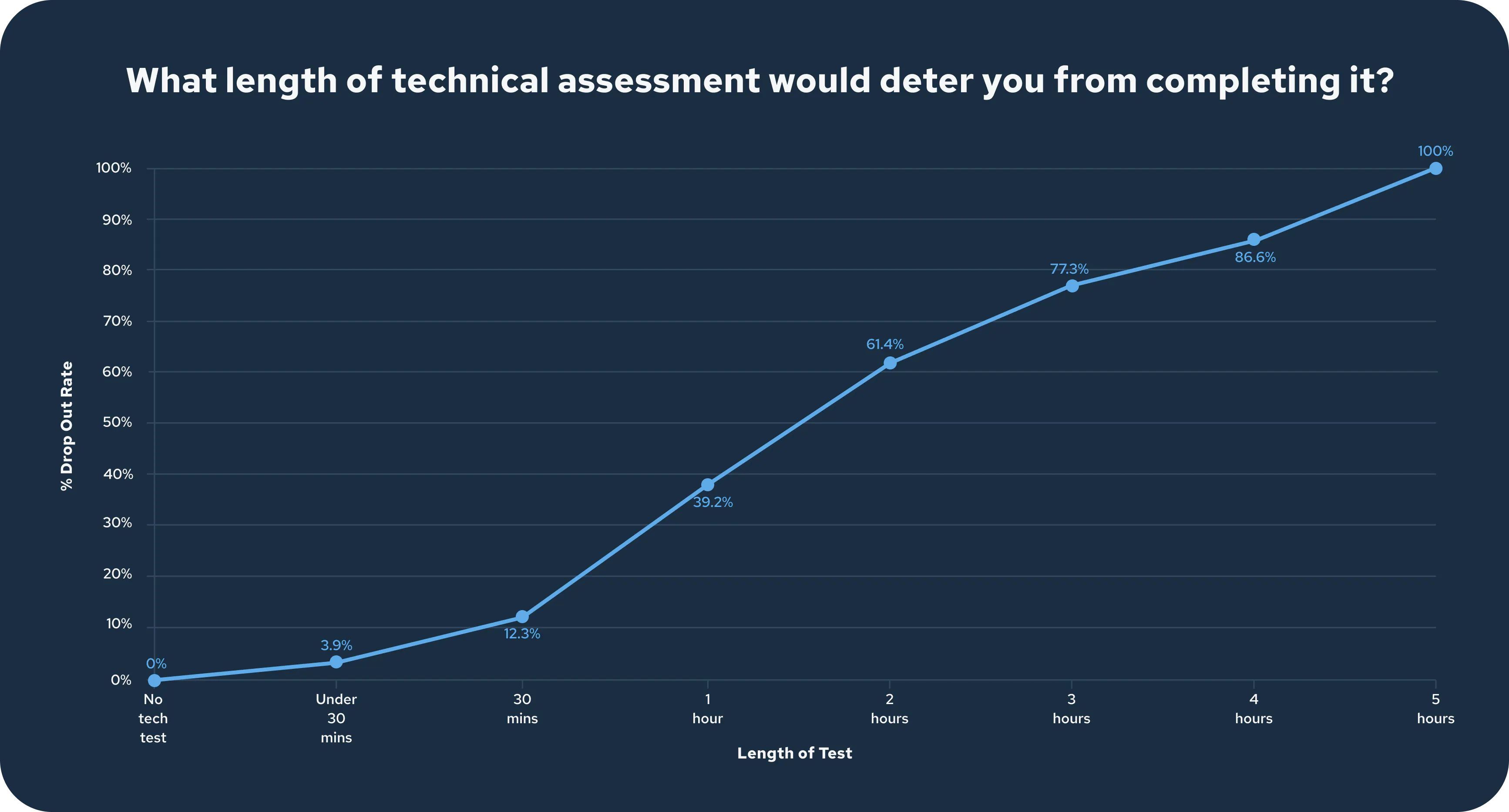
However, despite this being the most popular option, 4% of candidates said they would not complete a technical test, and we had multiple comments from engineers who felt these were an outdated part of the interview process. 40% of candidates also stated that long technical assessments were their biggest pain point during interviews.
As this is a clear friction point for candidates, we investigated the impact length of technical test had on drop out rate. As you’d expect, the dropout increased significantly with length, with 39% of candidates unwilling to spend up to 1 hour on a technical test, and 61% of candidates unwilling to spend up to 2 hours.
When it comes to seniority, Junior candidates were more accepting of technical tests than the rest of the market. Only 26% of them selected this as a pain point in the process, compared to the 40% average, and they were more willing to spend longer on a technical test.
Insights:
- If you need to technically assess candidates, do so in a take-home technical test
- Keep your technical test to below 1 hour ideally, but 2 hours at the most
- Junior candidates are more tolerant of longer technical tests
Give engineering candidates more of what they want
Too often, companies think about the interview process as a way to find the right person to fill their position. It can be easy to forget that the candidate is also interviewing you.
Interviews are where the candidate understands how your company operates and communicates. It’s also their opportunity to meet the key members of the team and get information on what matters to them.
Giving them access to the right information and people ensures the best candidate experience, as well as a well-informed decision at the end of the process. So we explored this in detail.
What candidates care about most
We asked engineers the key details they needed to understand during the interview process and the top answers included remote/flexible working policy, salary/benefits, and the engineering processes and culture.
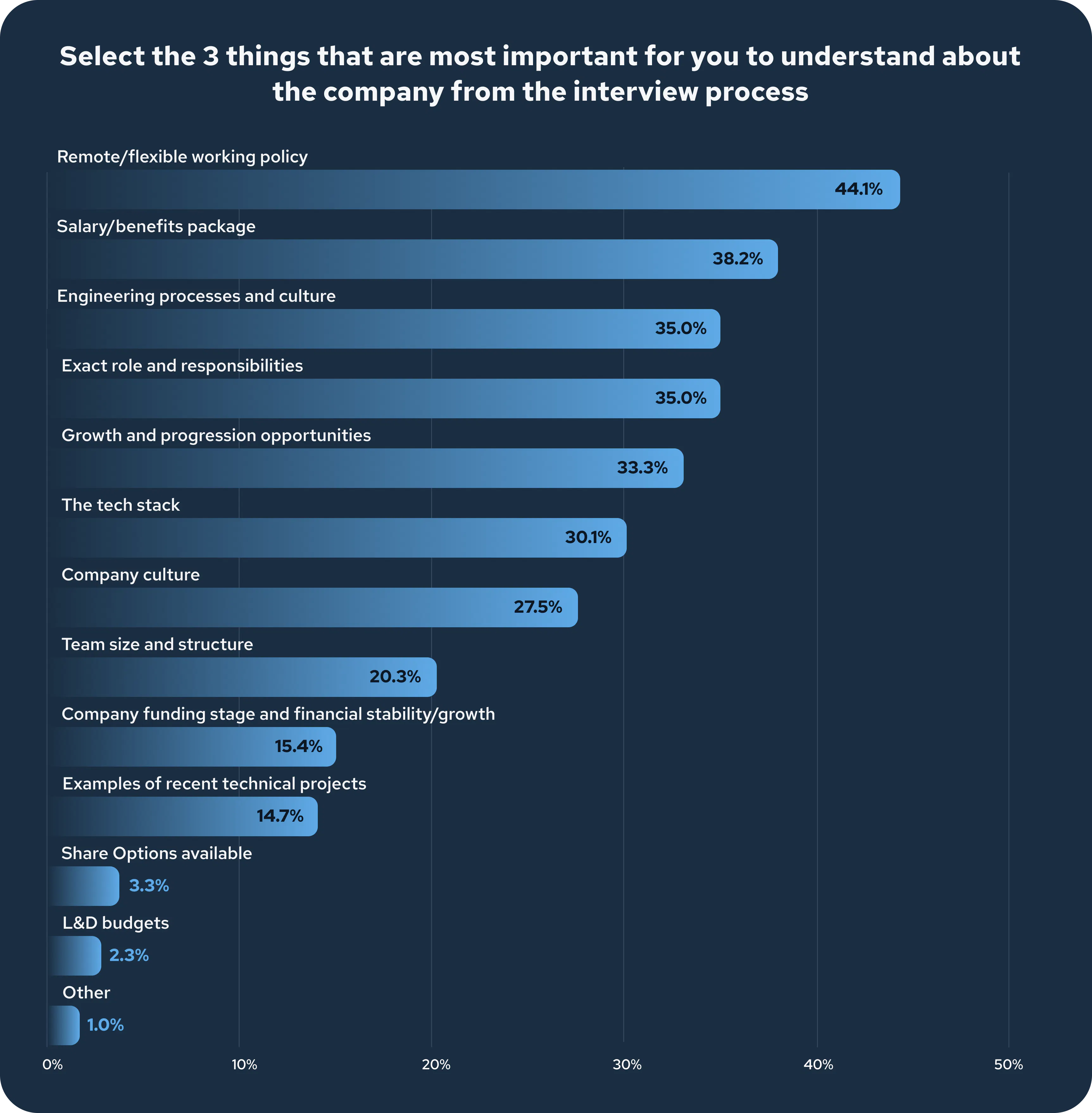
Do not skip the basics here. It's essential that you reinforce and explain the things that really matter to candidates in your process.
Give this information early, to keep engagement in the process, ideally in the initial screening call, where both parties are trying to uncover the things that matter.
Who candidates want to meet
Who they meet during the interview process is also essential in helping engineers make their decisions, with the Direct Line Manager, peer from their team, and CTO as the top three picks.
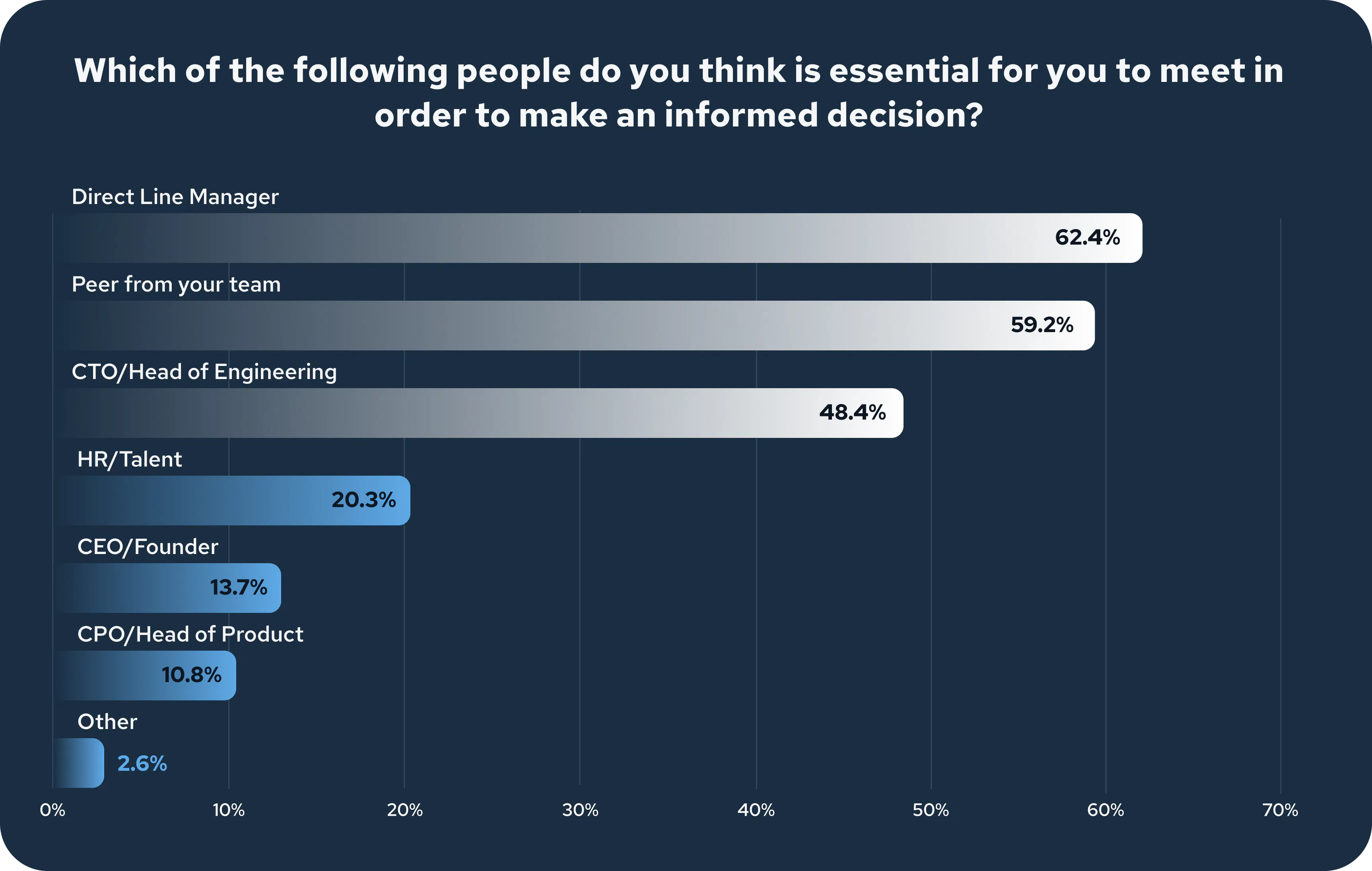
Try to include these three figures throughout the process and consider if you should remove those that didn’t rank highly. Many companies include a final stage with their CEO/Founder, or other senior members of the company. You should decide if this is a truly essential part of the process, as it doesn’t add to the engineer experience and will instead add further stages and friction points.
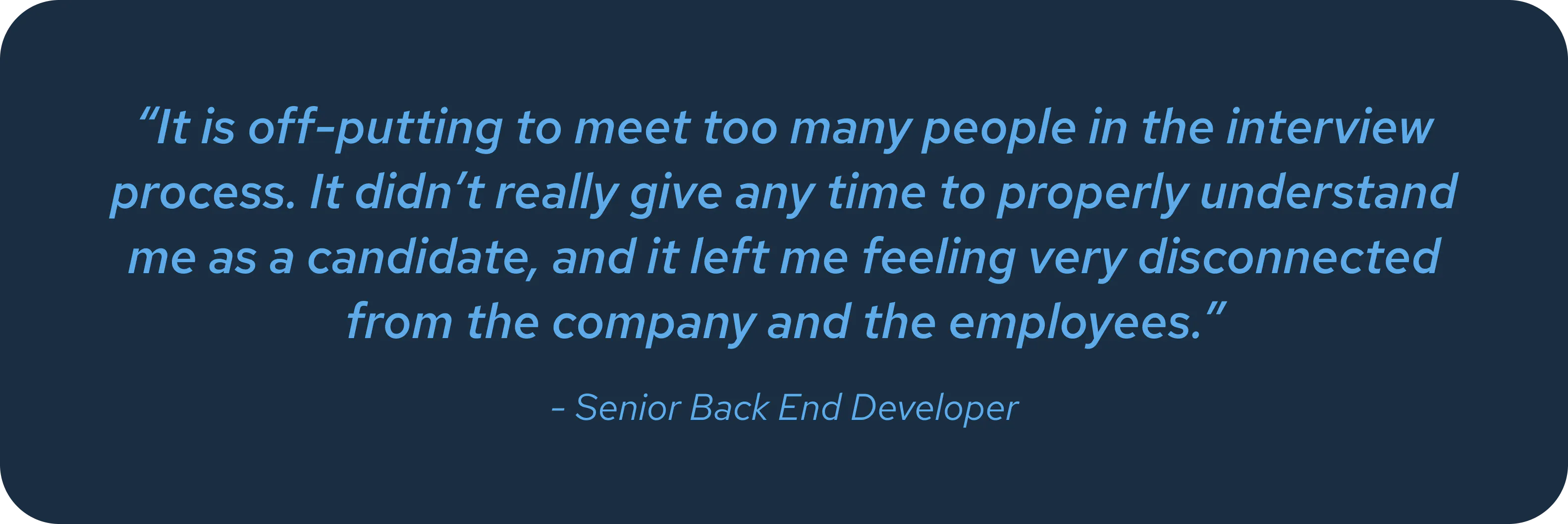
It’s also important to not overwhelm engineers with meeting too many people, and try to keep at least one consistent person throughout the process leading them through.
Insights:
- Ensure the information that matters to candidates; remote/flexible working policy salary/benefits, and engineering processes and culture are communicated clearly and early during the interview process.
- Factor in the people candidates want to meet on the interview panel, not just the people you want to meet them.
- Try to limit the number of people involved so you don’t overwhelm the candidates or add unnecessary stages
Summary
Building an engaging process designed for the engineers ensures you limit your drop-off rates, increase your offer-acceptance rate, lower wasted time from your team, and boost your hiring reputation.
You can improve the most common pain points candidates experience by:
- Providing prompt and frequent feedback after each interview
- Limiting the number of interview stages to 3 or less
- Assess technical skills through a take home test, that is no longer than 1 hour
Remember, candidates are interviewing you. To increase your interview pipeline conversion, ensure they are getting the information and meeting the people they need:
- Include information on remote/flexible working, salary/benefits, and engineering culture/processes
- Ensure they meet their Direct Line Manager, a peer from their team, and the CTO/Head of Engineering
Was this content useful?
You might also like

Talent Landscape Reports
2024 Hiring Playbook
Insights & Strategies for Talent Managers

Candidate insights
The sourcing playbook: Lessons from 20,000+ outreach messages
Data-led insights on the behaviours that lead to the highest response rates from sourcing messages

Candidate insights
How to attract quality applications
Analysis of a recent candidate survey and company behaviour data to provide actionable advice for hiring-teams