 cord
cordHow to attract quality applications
Analysis of a recent candidate survey and company behaviour data to provide actionable advice for hiring-teams

With companies currently overwhelmed by the huge increase in application numbers, we wanted to investigate what actions hiring teams can take to improve the quality of these applications, to make the time you spend processing these more valuable.
Our report covers a recent candidate survey of 170 experienced people working in technology companies, as well as an analysis of thousands of cord company data points, to demonstrate what candidates care about most when applying and how the top companies on cord differ in behaviour.
Throughout the report, we’ve isolated the top 10% of companies that receive the highest quality applications and compared their behaviour to the rest of the market. This group has been defined as companies with the highest percentage of applications accepted.
Key Takeaways
- Progression opportunities, role responsibilities and remote working all ranked highest in the most important factors encouraging applications
- A complicated application process and unclear job responsibilities are the biggest factors deterring a candidate from applying
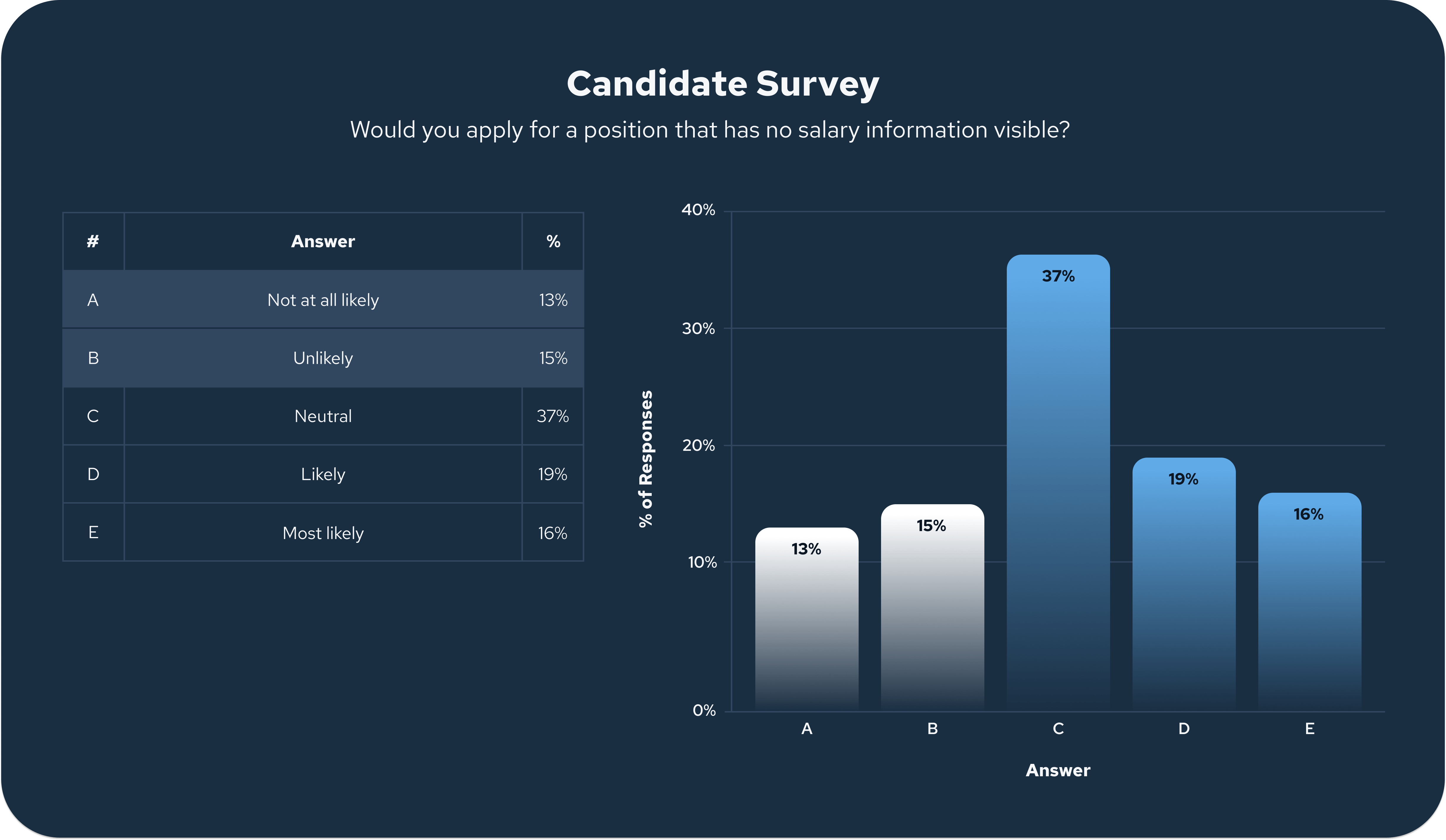
- Compensation isn’t the most important factor for candidates, but not having a visible salary will deter 28% of candidates from applying
Career Progression Matters to Candidates
The most important factor for candidates when choosing to apply for a position is opportunities for growth and advancement. This was selected by 31% of candidates in our survey.
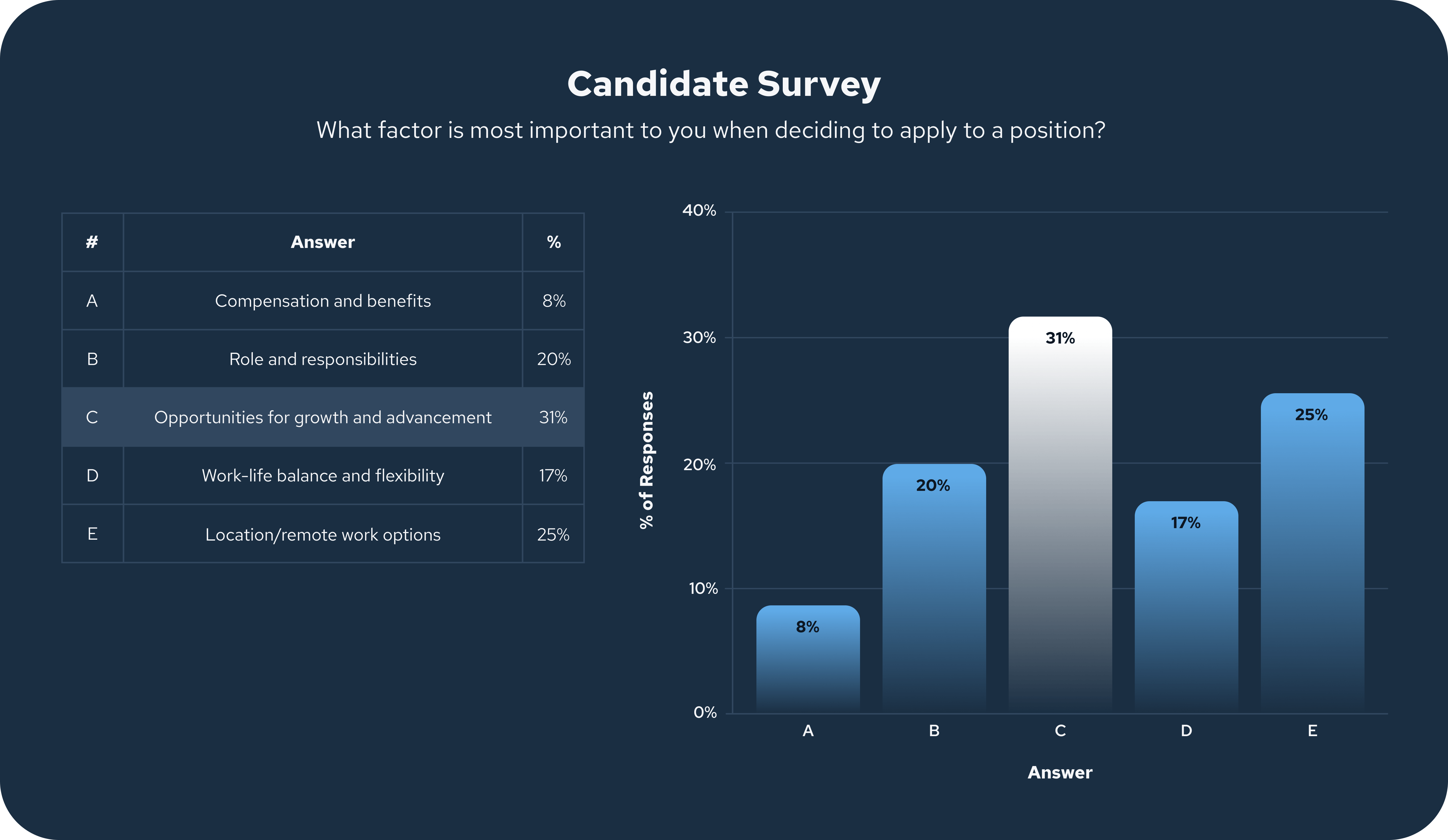
If you’re looking for someone ambitious, who is keen to learn and progress in your company long-term, you need a culture that promotes learning and development. Most importantly, you need to demonstrate this culture effectively through your benefits package and job description.
Action Point
- Stand out to the most ambitious candidates by including the progression route for the position within the job description, to make it clear what opportunities are available
- Consider adding an L&D budget and time dedicated to training to your company benefits to make it clear to candidates you value progression and will aid them in their career
Offering remote working increases the quality of applicants
The second most important factor for candidates when deciding to apply is Location and Remote Working options, with 25% of candidates selecting this.
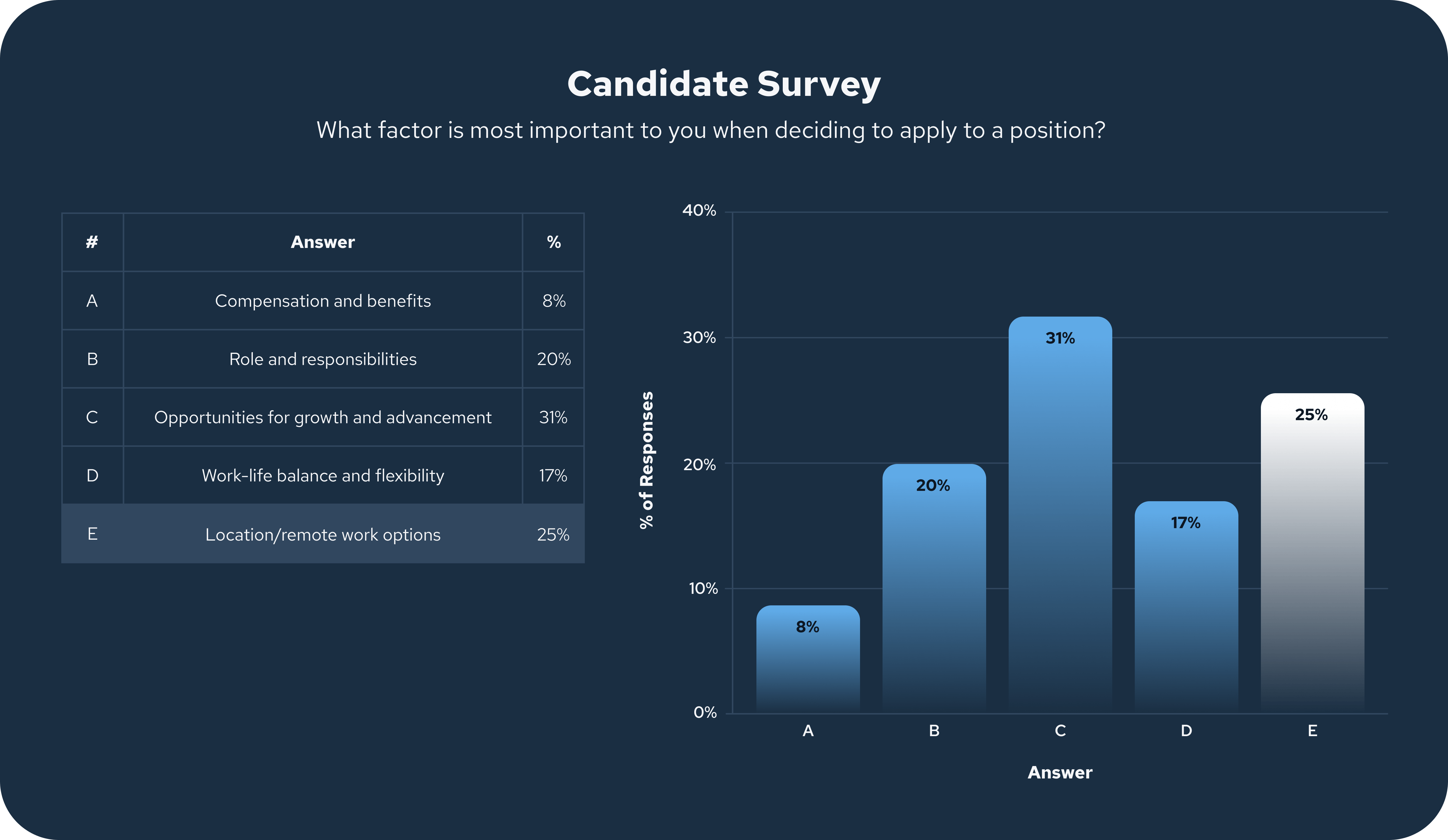
When we analysed company data to see how our Top Quality group compared to the rest of the market, we saw there was a higher percentage of this group advertising fully remote positions compared to the rest of the market.
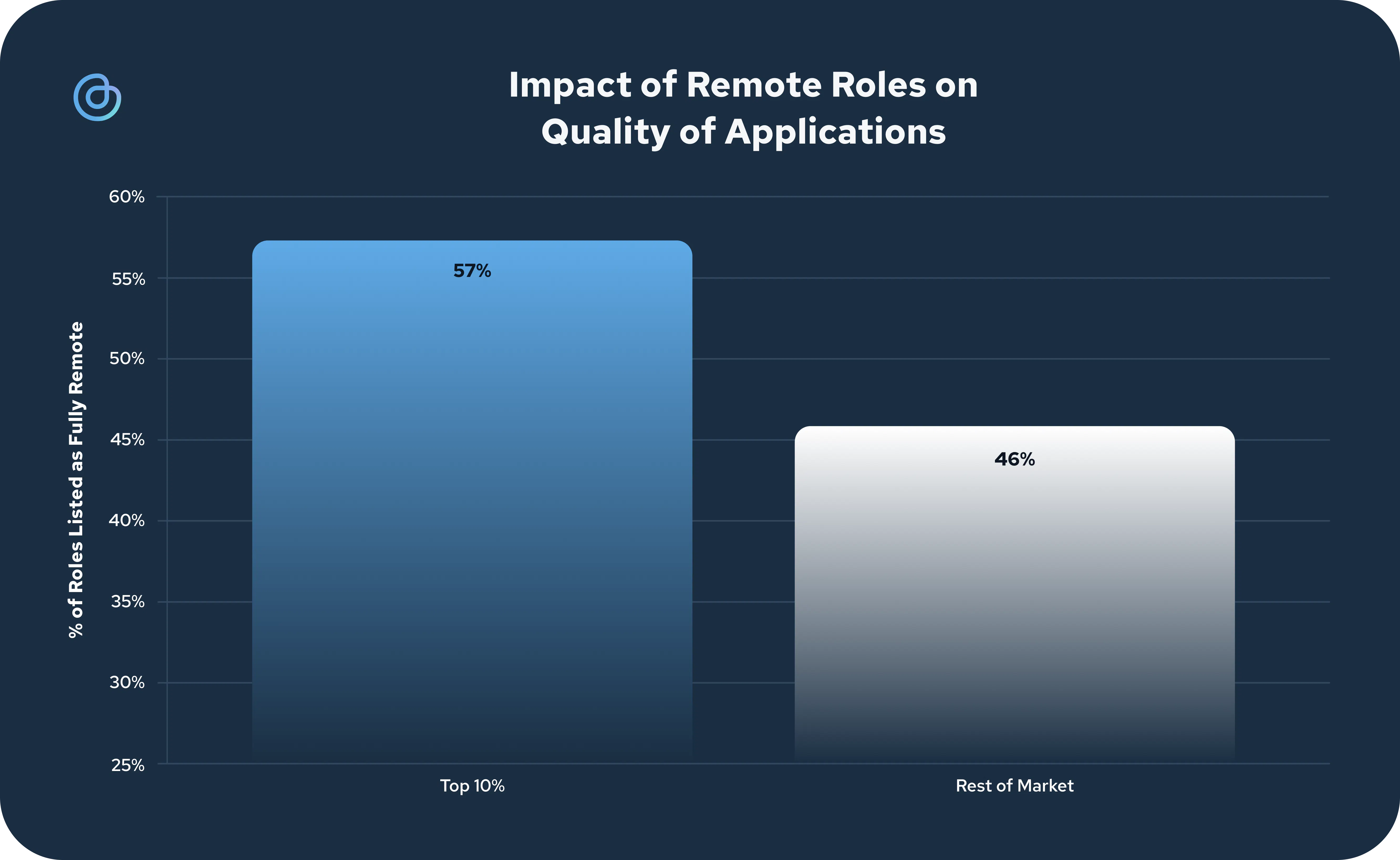
57% of the Top Quality group had fully remote positions, compared to 46% of the rest of the market. By not restricting your position to a specific location, you get access to a wider pool of quality applications.
Action Point
- Being upfront about remote working opportunities is essential, as candidates look for this highly when choosing whether to apply.
- Making your position fully remote where possible rather than hybrid gives you a better chance of receiving more, high-quality applications.
Candidate experience matters
Long application processes deter candidates
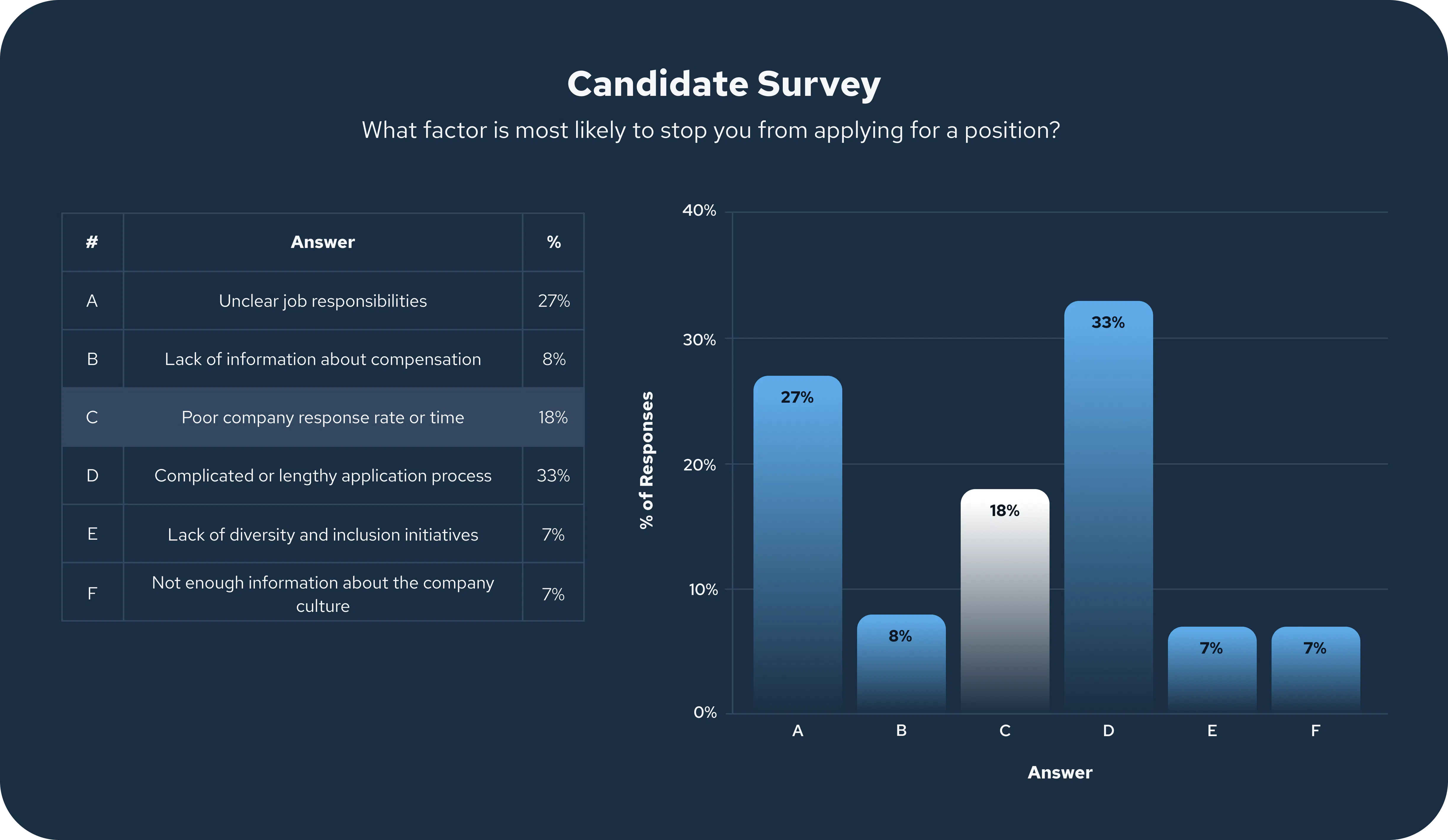
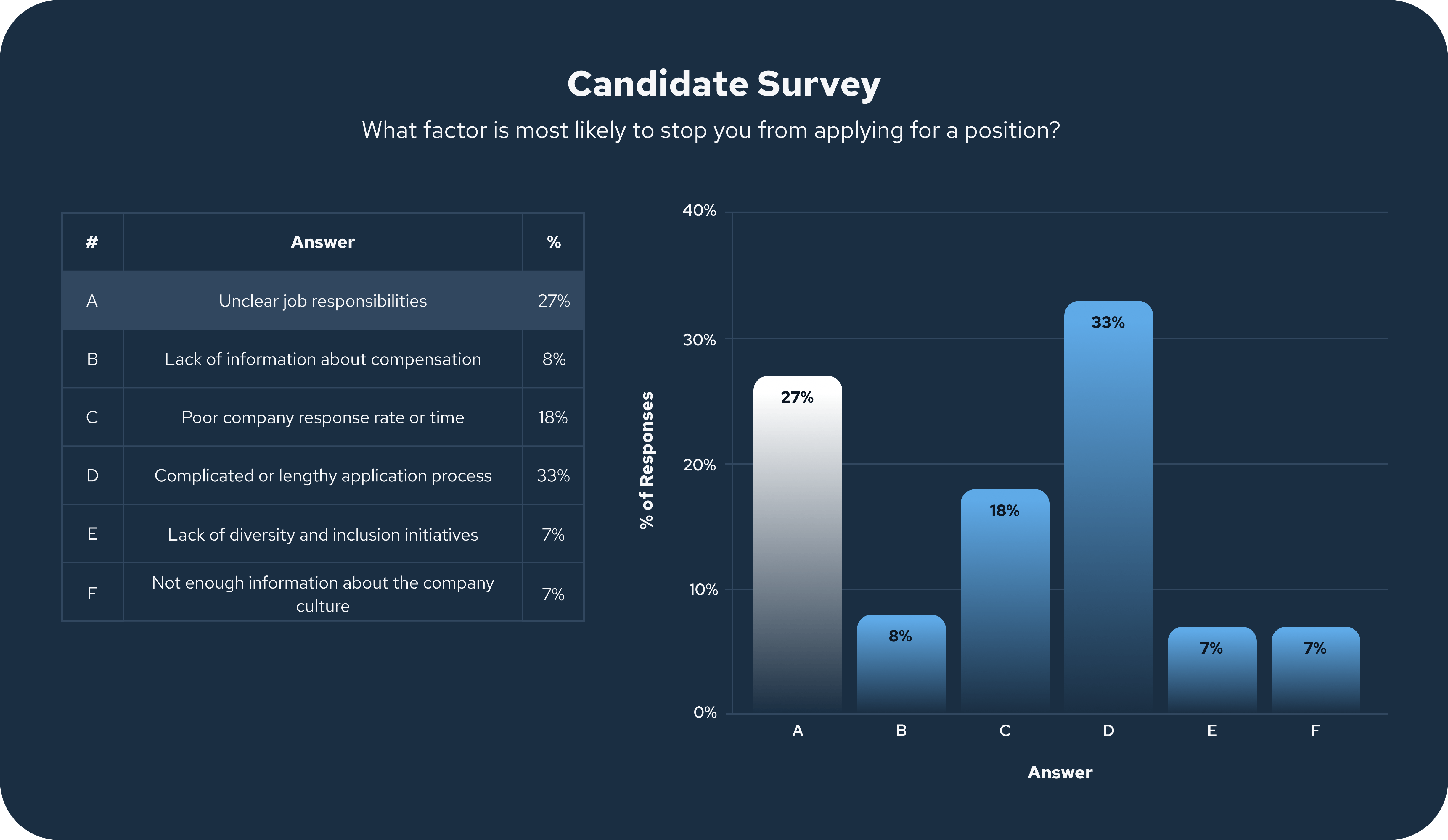
Having a complicated or lengthy application process is the top reason a candidate would choose not to apply to your role, with 33% of candidates choosing this option.
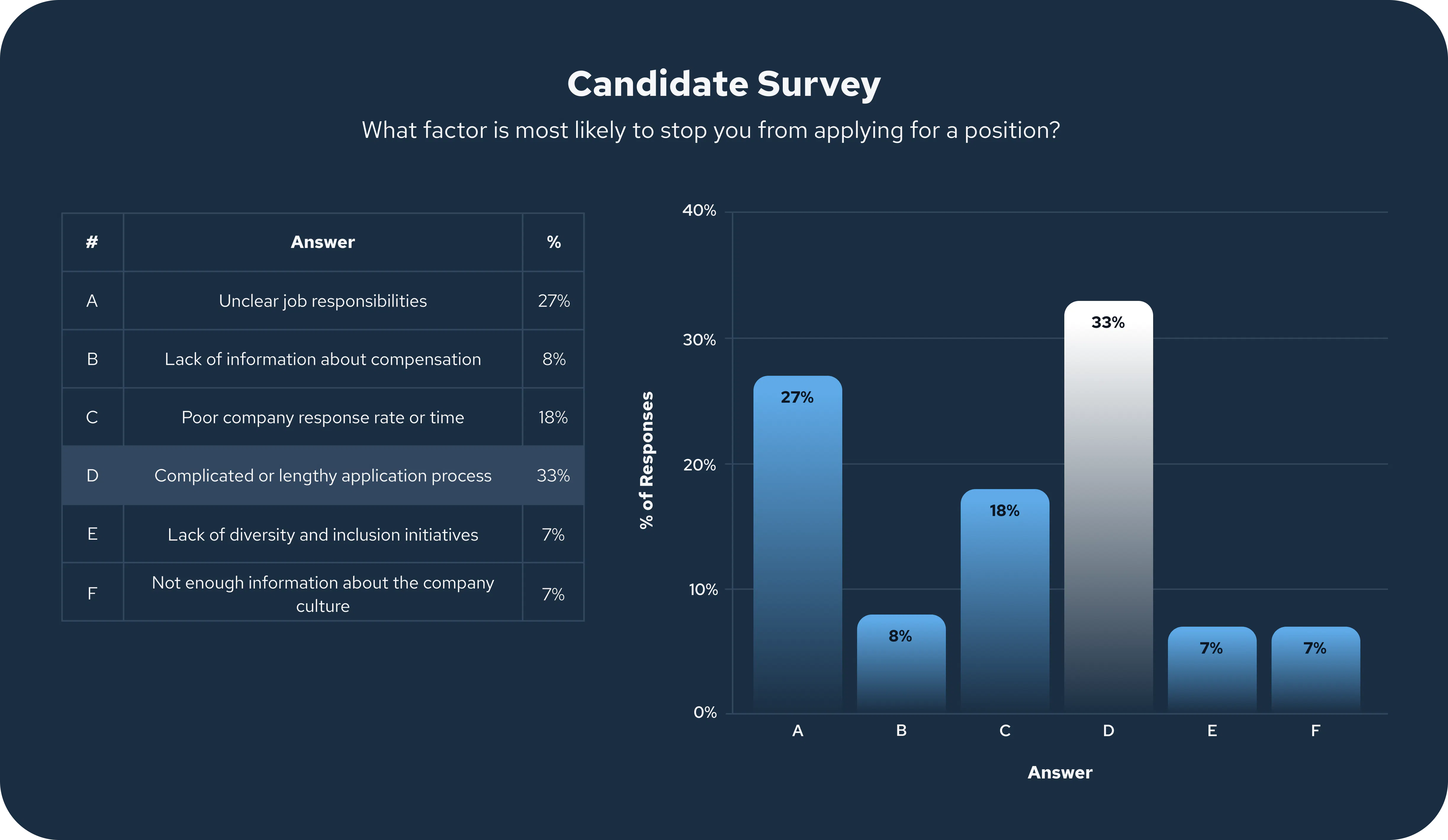
It’s also important to consider your interview process. Being upfront about the whole application process and condensing this into short and simple steps will ensure you’re not deterring the best candidates on the market from applying to you.
Your hiring reputation matters to candidates
75% of candidates we surveyed said they were unlikely or not at all likely to apply if they have heard about poor candidate experience at your company.
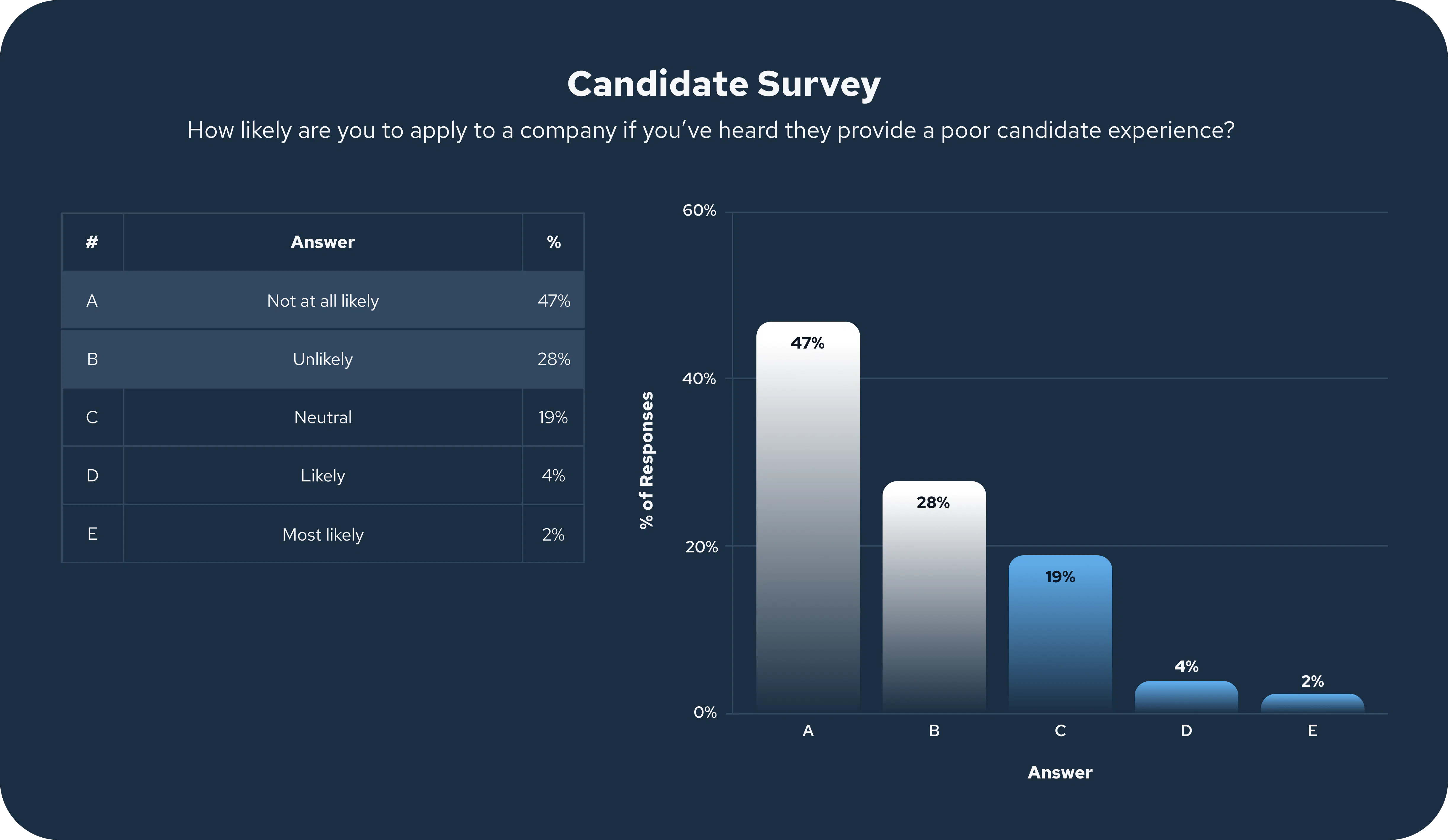
Candidates talk to their friends and colleagues about their experiences, they review sites like Glassdoor before deciding to apply, and what they find here clearly matters.
Focusing on delivering an excellent candidate experience is essential, as having a poor one will damage your reputation and be detrimental to your hiring future.
Responding to candidates frequently and quickly helps your reputation
On cord, we give an insight into your candidate experience by making your response rate and time visible on your job listings.
Our survey showed this as the 3rd strongest deterrent that stops people people applying to your position, with 18% of candidates quoting this as their top reason.
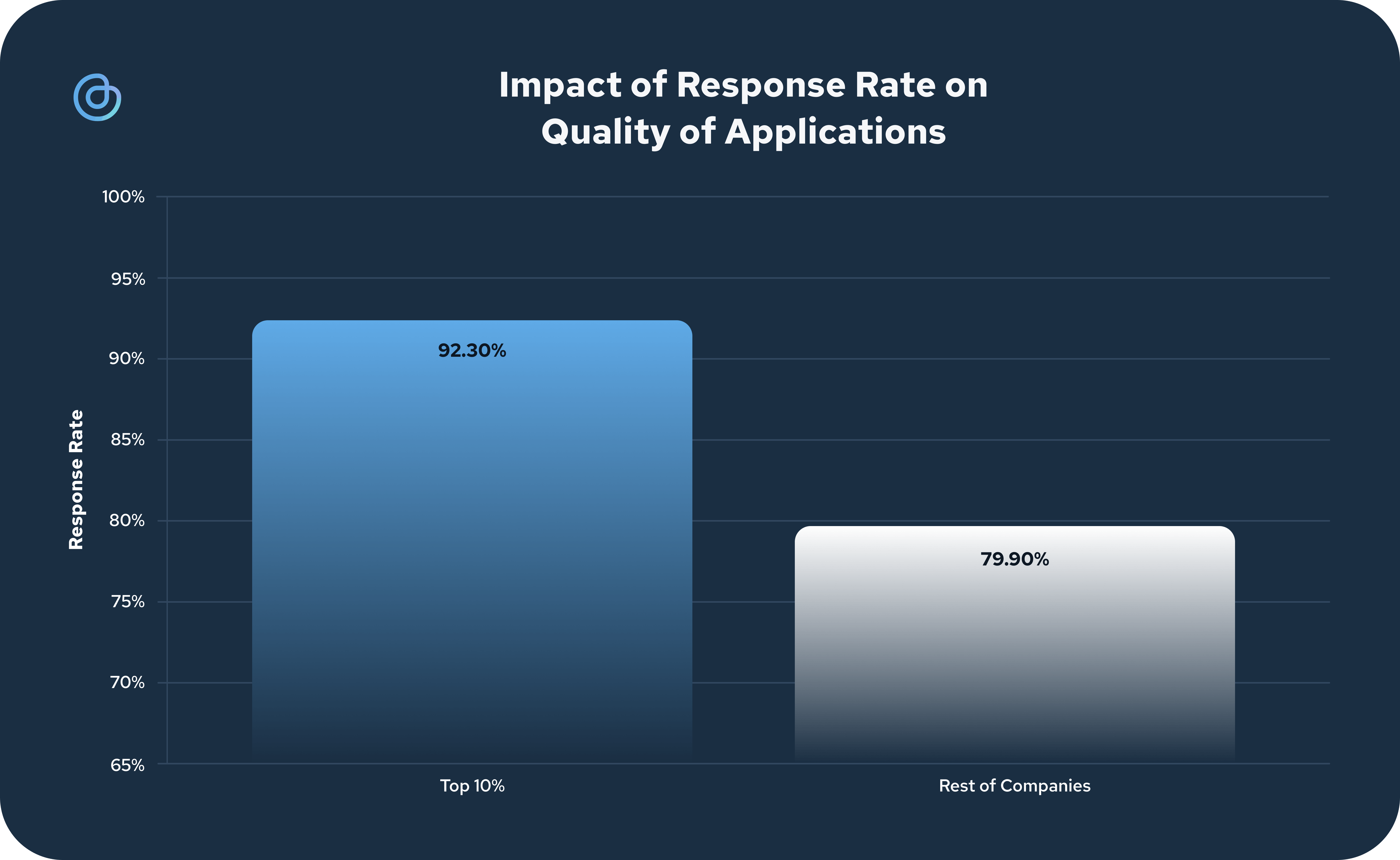
This is also supported by company data. Looking at the top 10% of companies that receive the highest quality applications, they have an average response rate of 92.3%, whereas the rest of the market is just 79.9%.
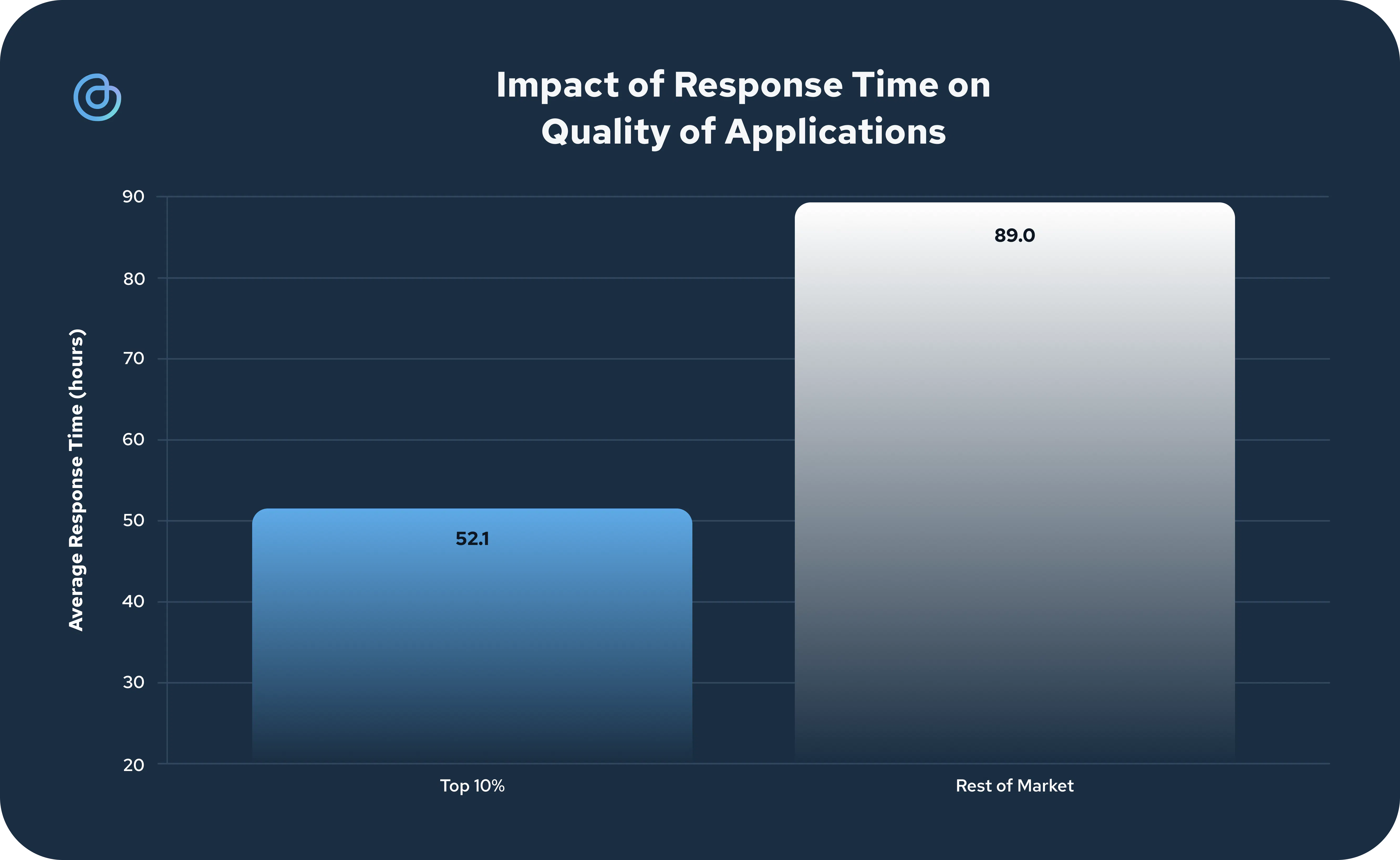
Similarly, these top companies have much lower response times, with an average response time of 52.1 hours, compared with 89.0 hours for the rest of the market.
Action Point:
- Streamline your application and interview processes is essential to encourage the best candidates
- Focus on promoting a great candidate experience to not only to win over the current candidates in your process but also to increase the likelihood of quality candidates applying in the future.
- Responding quickly to every candidate will increase the quality of your applications
Lack of salary information may deter 28% of candidates from applying
Compensation and Benefits was the lowest factor for why a candidate would apply for your positions, with just 8% of candidates selecting this option.
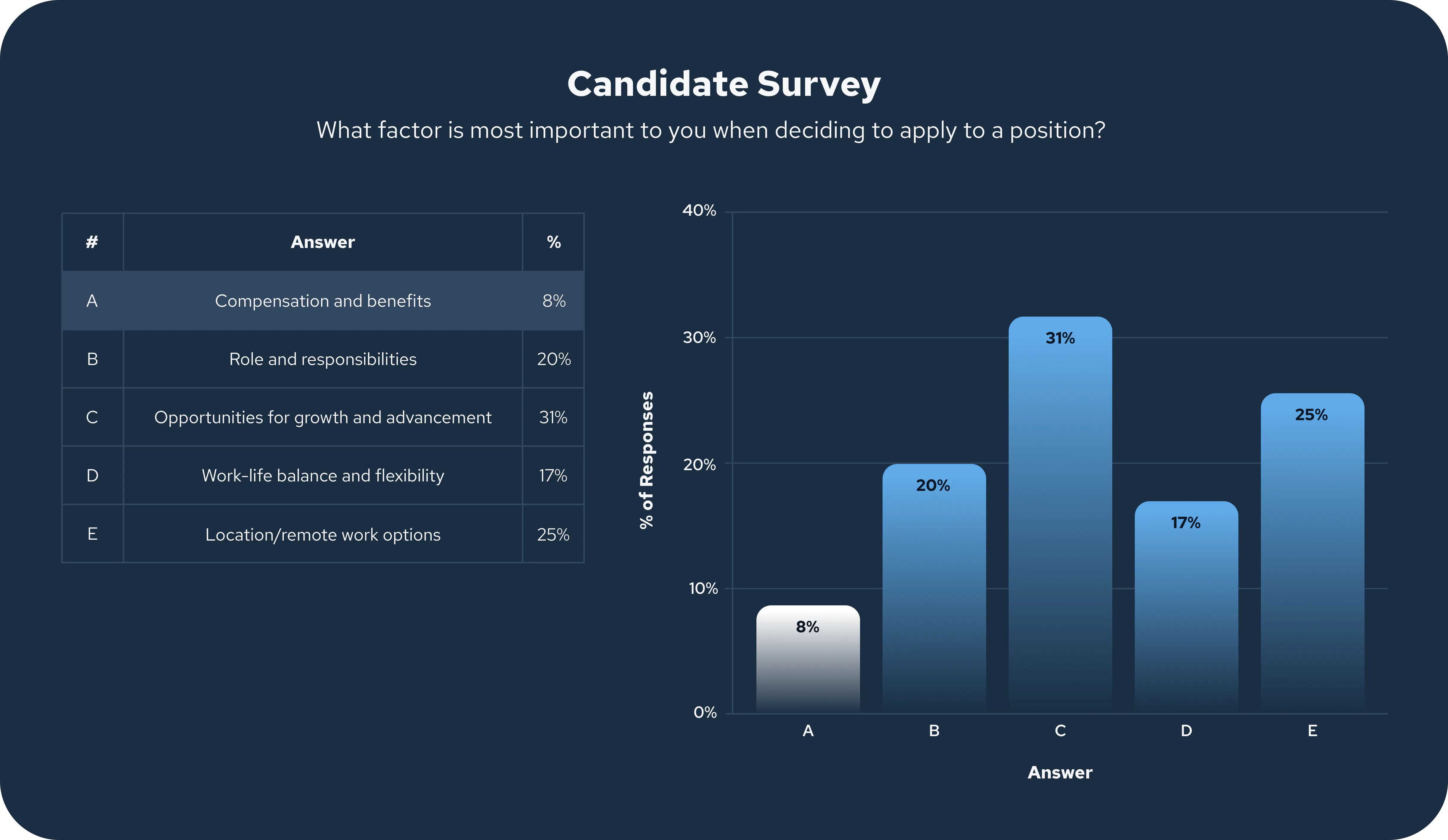
Whilst this percentage is perhaps lower than you would expect, when we directly asked candidates how likely they would be to apply to a position that didn’t list salary information, 28% said they would be either unlikely or not at all likely.
Action Point:
- Have a visible salary on your position to attract more candidates to apply
- Be upfront about your benefits package, as these are taken into consideration for the whole compensation package
- Remember that other factors like progression, flexibility, and the job role itself may be more important than salary, so lead with these over-salary, and ensure these are clearly stated in your job description too
Clear roles and responsibilities encourage quality applicants
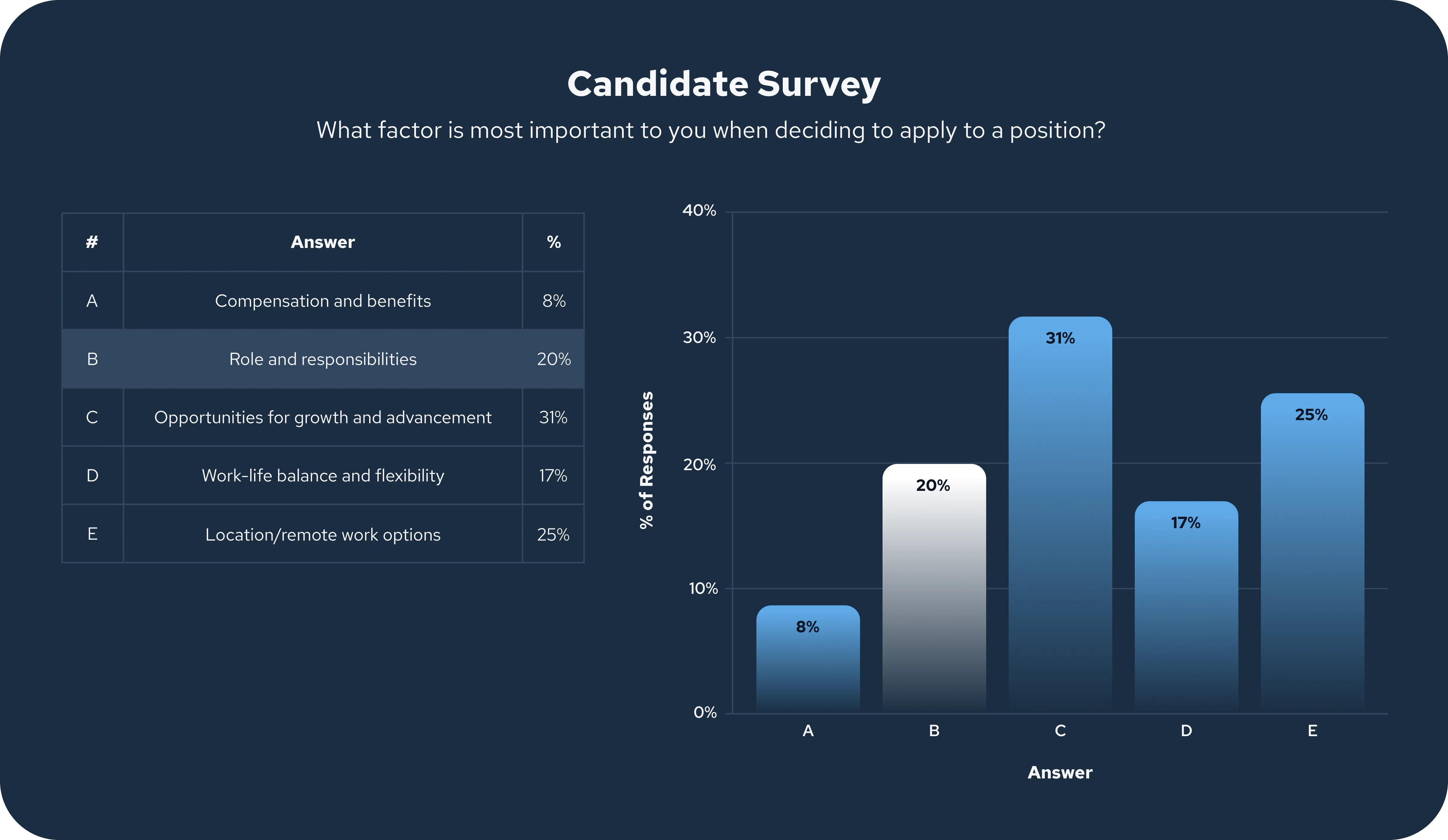
This was the 3rd most important factor in driving candidates to apply with 20% of candidates rating it as the most important factor.
Unclear role responsibilities was also the 2nd highest deterrent for candidates not applying to your position.
Your job description should clearly lay out what is expected within the role, to give candidates clarity on if the role is right for them to apply. You should also use this as your pitch for the role, highlighting the most exciting parts of the position to attract the best applications.
Looking at the data on applications, we can also see that being clearer about the requirements for the position and skills needed improves the quality of applications. Those companies that listed a higher number of required skills tended to receive higher-quality applications.
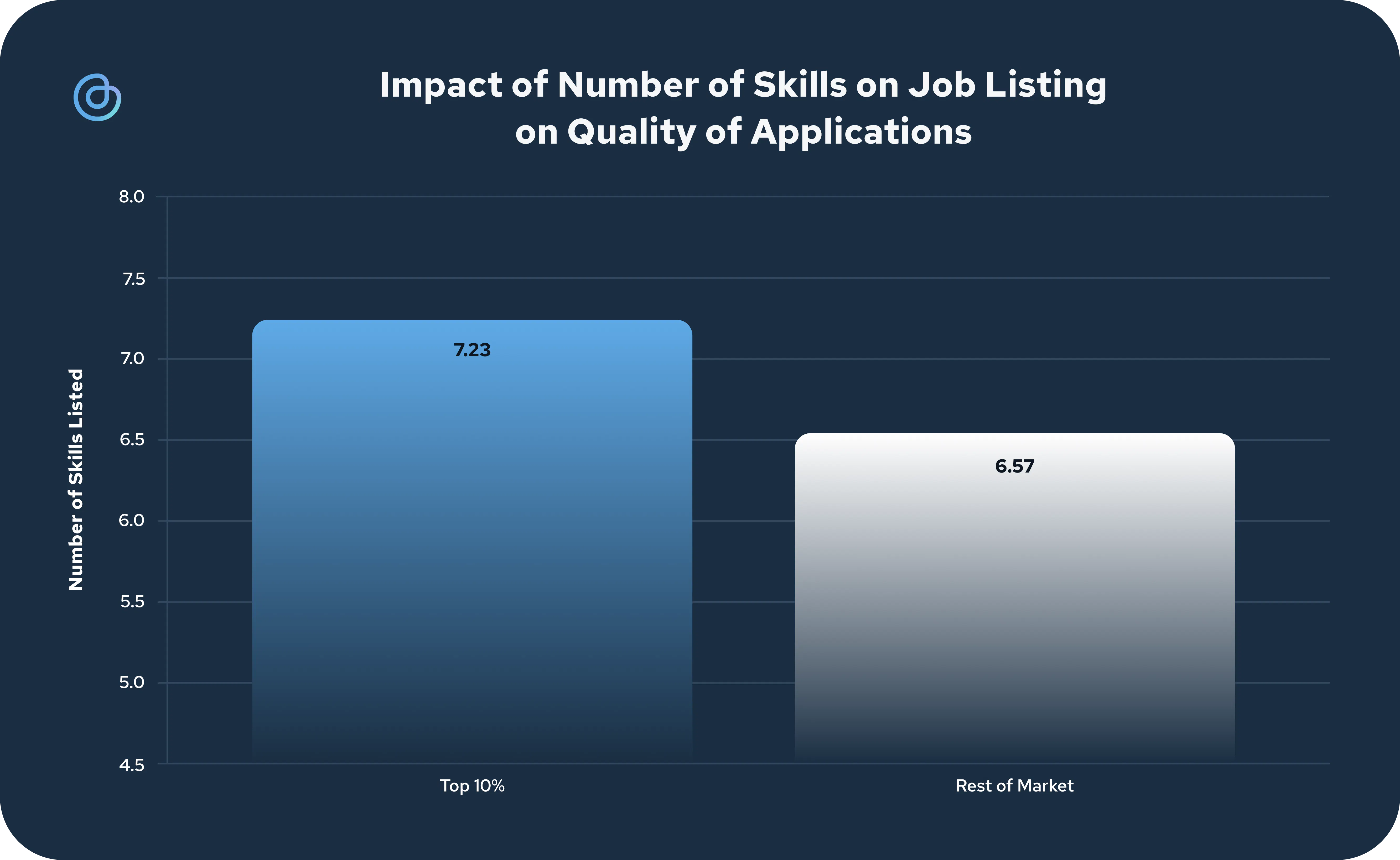
The top companies had on average 7.23 skills listed, compared to 6.57 for the rest of the market.
Action Points:
- Be detailed about the core responsibilities of the position. Clarity matters to candidates.
- Increase the quality of applications by being specific about your required skills and experience
Conclusion
From our candidate survey, we can summarise that candidates are considering the following when applying for jobs:
- Career progression is the most important factor for candidates when choosing to apply
- Remote working also scores very highly as the 2nd most important factor for candidates when choosing to apply, and companies with remote positions tended to receive more and higher quality applications
- Candidates care deeply about the candidate experience, lengthy application processes are the biggest deterrent for people applying, and 75% won’t apply if they’ve heard poor things about your candidate experience from other sources
- Compensation isn’t as important for candidates when choosing to apply, however 28% are unlikely to apply if you don’t have salary listed
- Unclear Role Responsibilities are the 2nd highest deterrent for people not applying, as well as the 3rd most important factor that makes them apply

Was this content useful?
You might also like


Webinars
Webinar: Supercharge your application workflow
How to save time with our new feature set, designed to help you surface quality applications and keep your response rate high.

Product features
Supercharge your application workflow
A feature set purpose-built to make responding to applications fast, effective and rewarding.

Diversity & inclusion
How Sourcing Can Improve Gender Diversity
Why the most gender diverse teams are using a sourcing-led hiring strategy.