 cord
cordHow Sourcing Can Improve Gender Diversity
Why the most gender diverse teams are using a sourcing-led hiring strategy.

Introduction
Our recent Navigating Gender Diversity in tech article analysed cord data to understand the current state of gender diversity and what companies could do to improve the gender balance in their teams.
This report digs deeper into one key finding from the report: focusing on sourcing can lead to more women in your recruitment pipeline.
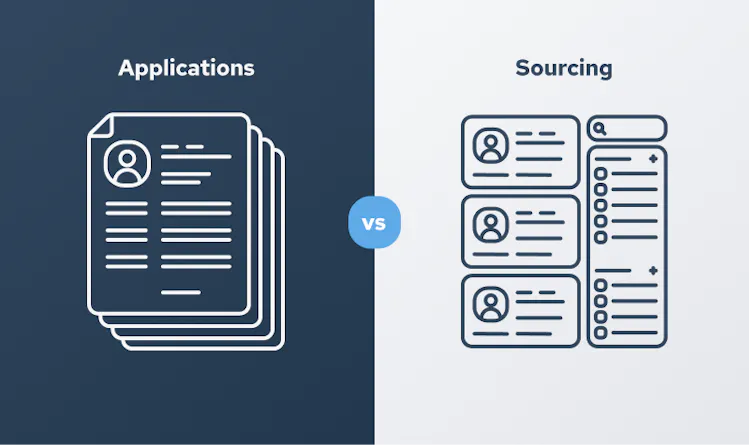
With market changes meaning that companies are now focusing much more on applications than sourcing, it’s an interesting time to consider if this new market trend could be damaging gender diversity in hiring.
You won’t receive as many applications from women
If you focus purely on applications to fill your position, you likely won’t receive as many applications from women.
Looking at the number of applications sent to companies over the last 12 months, just 22.51% of those were applications from women.
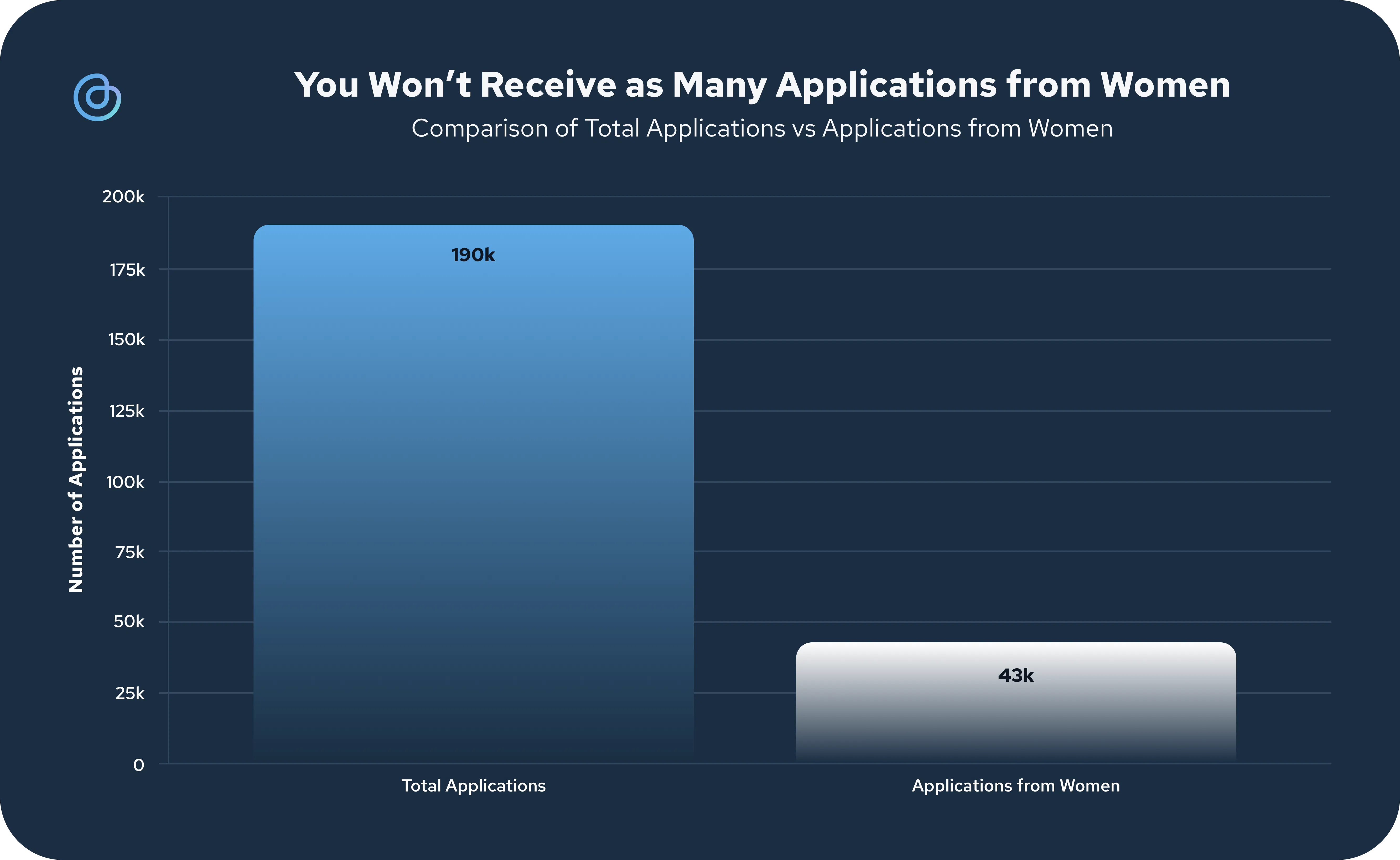
In the tech industry, women are widely underrepresented, with our recent analysis showing there is currently no tech and product position where women make up over 46% of the candidate pool, and the average representation across the data set is 23.1%.
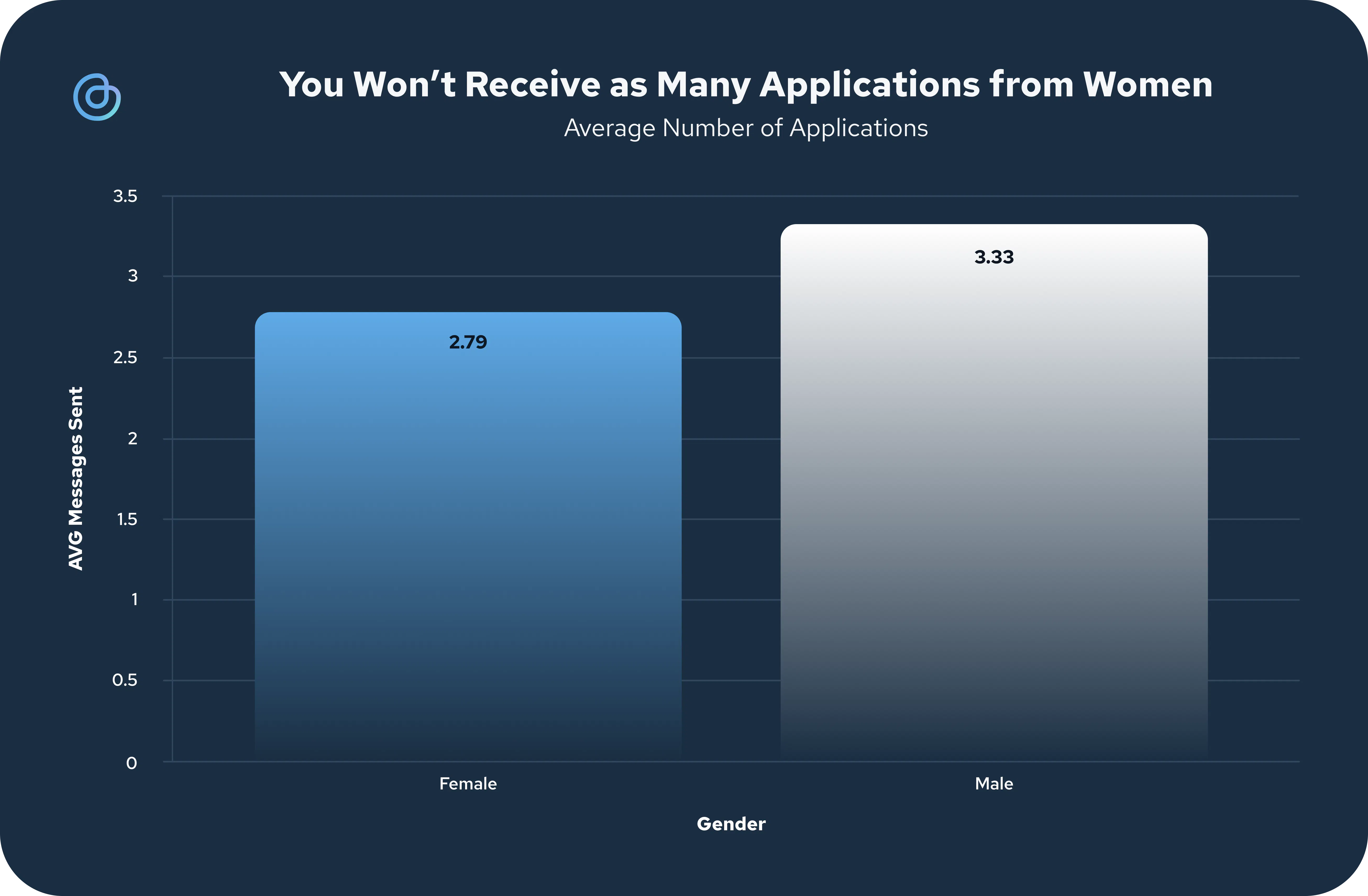
On an individual level too, women are less likely to apply to your position. Women on average send 16% fewer applications than their male counterparts.
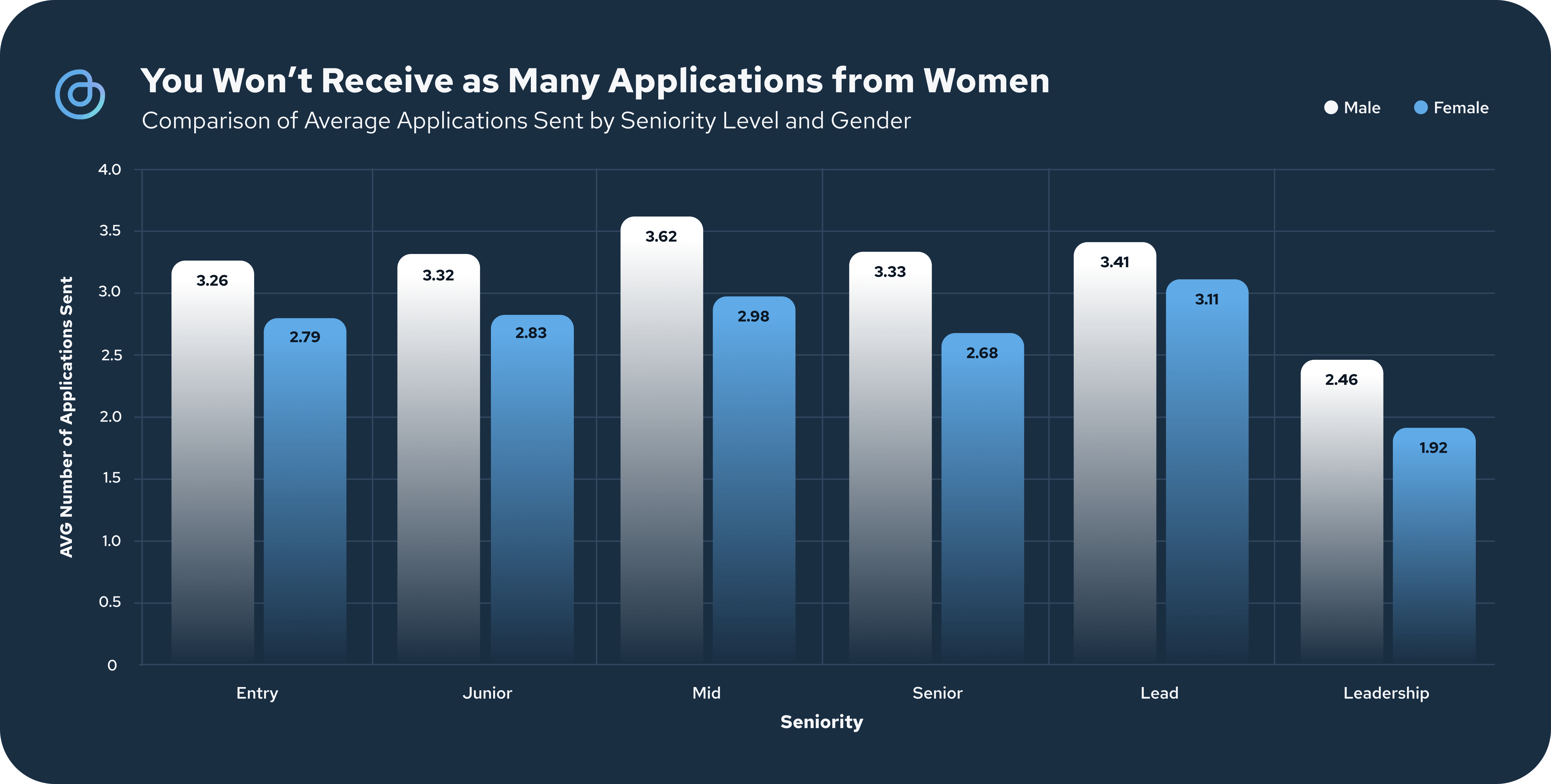
This trend persists across all seniority levels too. With the biggest difference existing in entry and lead level positions
This combination of fewer women on the market, with differences in behaviour meaning they are less likely to apply, means that focusing purely on applications will likely give you a smaller group of female candidates in your pipeline.
By sourcing, you’re able to proactively reach out to female candidates who may not have applied for your position. You can also use tools, such as cord’s diversity filters, to target just female candidates if you’re looking to increase your diversity.
How do the top 5% of companies behave?
We analysed the top 5% of companies who had the highest percentage of conversations with women to see how they behaved compared to the rest of the market.
Fewer Sourcing Messages, but more targeted
The top 5% sent fewer sourcing messages per position in total, with an average of 7.2 messages per position compared to 12.2 average from the rest of the market.
However, of those sourcing messages the Top 5% sent 61.92% to women, compared with the rest of the market where women made up just 20.75% of the messages sent.
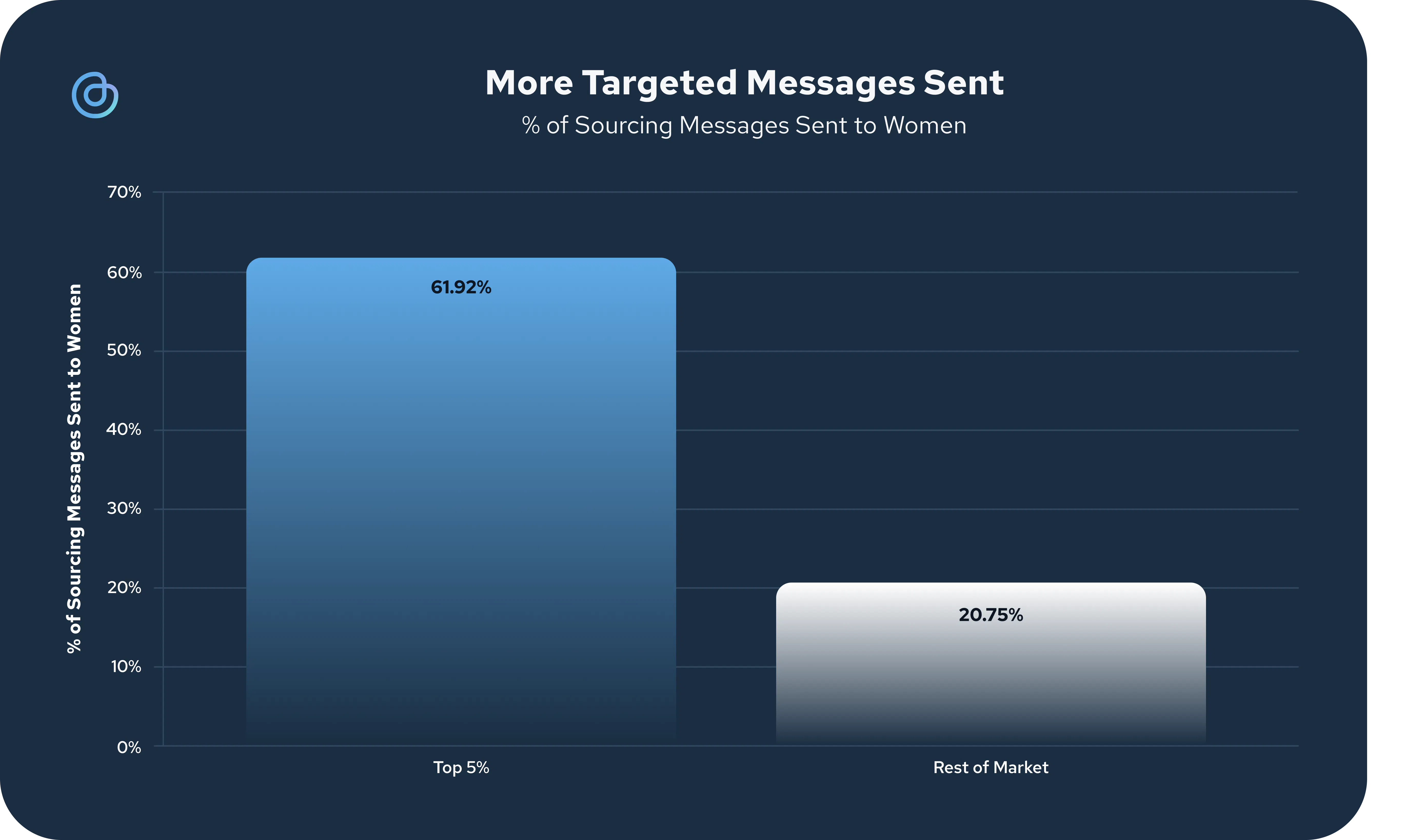
In real terms, this resulted in the Top 5% sending 4.5 messages to women per position, compared with 2.4 messages to women from the rest of the market.
Despite sending nearly half as many messages overall, the top 5% sent nearly twice as many messages to women than the rest of the market. The companies having the most conversations with women are clearly making a concerted effort to specifically target this group.
More Diverse Applications
The Top 5% received a similar number of total applications per position than the rest of the market (23.4 vs 22.8 respectively). However, 27.7% of the Top 5%’s applications were from women, compared with 22.4% for the rest of the market.
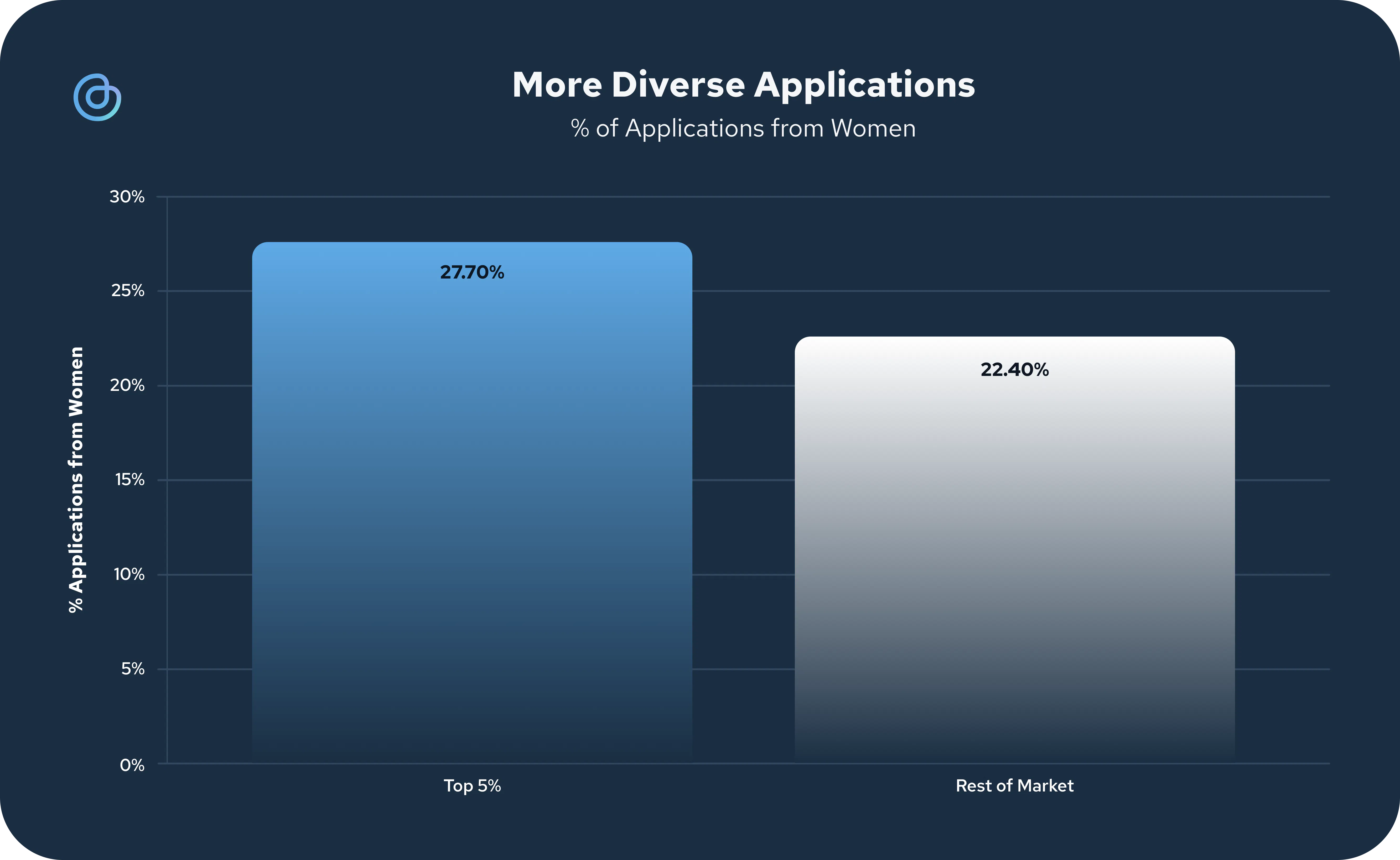
Whilst the Top 5% of companies are attracting 23.7% more female applications than the rest of the market, through factors like employer branding, this isn’t as significant as the impact from their targeted sourcing messages.
Utilise diverse sourcing tools
A big benefit of sourcing is that you can be selective in who you reach out to and utilise tools to either remove unconscious bias, or target specific groups.
We looked at the usage of our ‘Source Without Bias’ tool, which masks candidates’ names and photos when sourcing, and the impact this had on diversity sourcing.
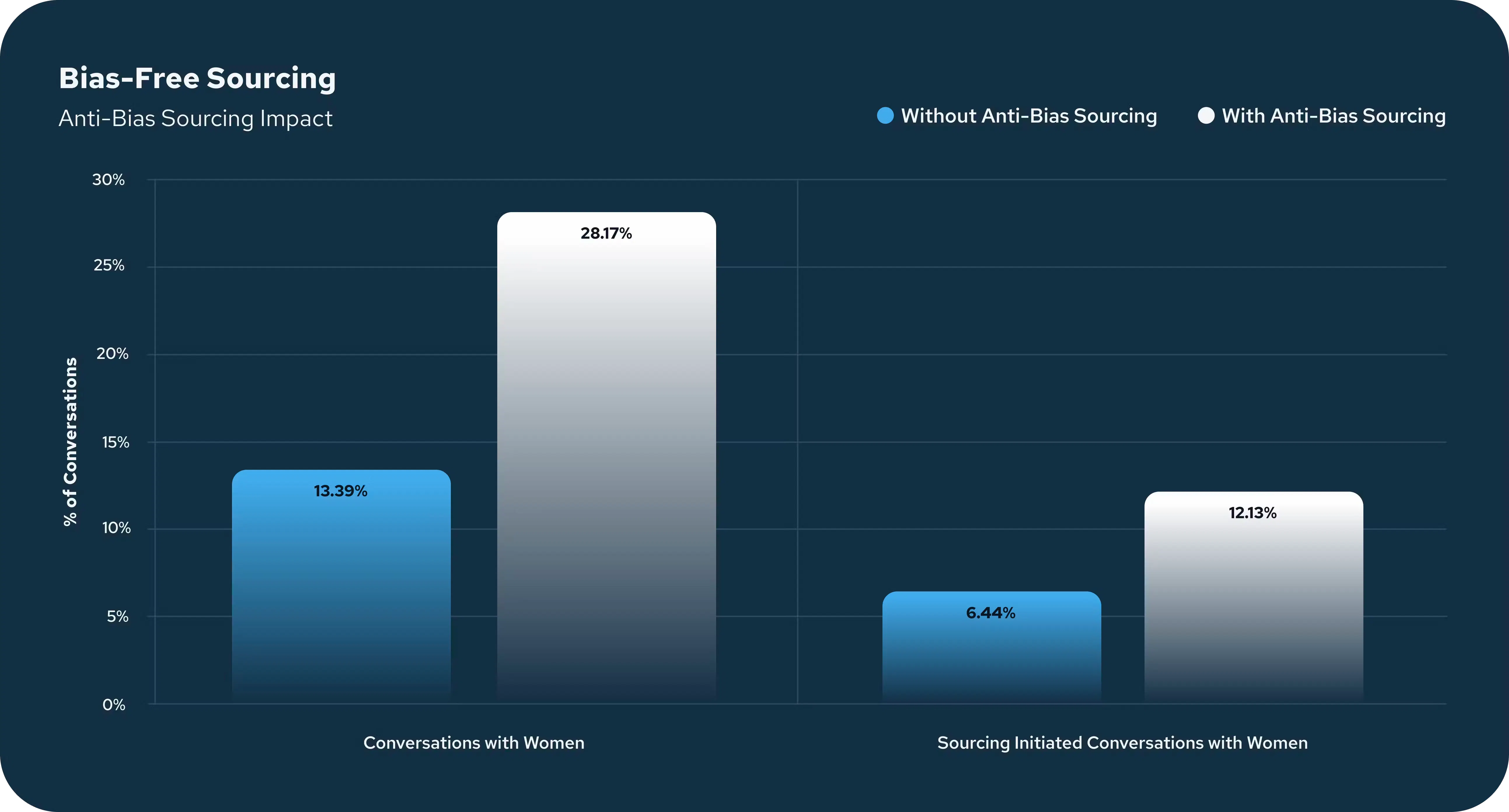
Companies who utilised this feature had twice as many total conversations with women, and twice as many sourcing-initiated conversations.
This shows that unconscious gender bias is still very real, and utilising a bias-free tool like cord’s can help to double the number of women in your pipeline.
cord also offers the option to filter by different diversity groups. By focusing on sourcing you get the chance to utilise this feature and solely reach out to females who meet your role criteria.
Conclusion
Whilst relying on applications is now a feasible way to fill your position, given the increase in application numbers over the last 6 months, doing so may be limiting your access to females in tech.
You are less likely to receive an application from a female candidate, due to both them being less available in the market and less likely to apply.
From looking at the Top 5% of companies for gender diversity in their pipeline, it’s clear that with a targeted diverse sourcing approach is the best approach, your chances of having a female candidate in your pipeline is doubled.
If you’re looking to boost your gender diversity, switching your hiring strategy to being sourcing-led over application-led is the most effective method.
____
cord is a hiring tool where you can source and receive applications from pre-verified, high-quality, active engineers to make direct hires. cord offers a Source Without Bias tool, as well as diversity filters, to help companies boost their gender diversity.
If you’d like to learn more about how sourcing on cord can boost your gender diversity, book in a demo with our team.

Was this content useful?