 cord
cordNavigating Gender Diversity in Tech
Analysing the diversity landscape and how top companies are driving improvements.

Introduction
As part of our commitment to transparency and equality, we've meticulously analysed data from candidates and companies who have used cord over the past year.
This deep dive involved exploring gender representation across job roles and seniority levels, assessing salary expectations, and scrutinising behavioural patterns in the job market. Our goal is to not only shed light on the state of gender disparities, but also to provide practical insights that will help shape effective strategies for championing gender diversity in the tech industry
Setting the Stage for Gender Equality in Tech: Representation, Seniority, and Salary Expectations
We first need to understand the current state of the tech and product job market. We've looked at three main areas: job roles, seniority levels, and salary expectations. This helps us see where the biggest gaps are and where we can make the most impact.
Diversity Across Job Positions
Our analysis of tech and product roles reveals considerable variation in gender representation. Design and product-focused roles demonstrate higher representation of women, while more technical roles lag behind.
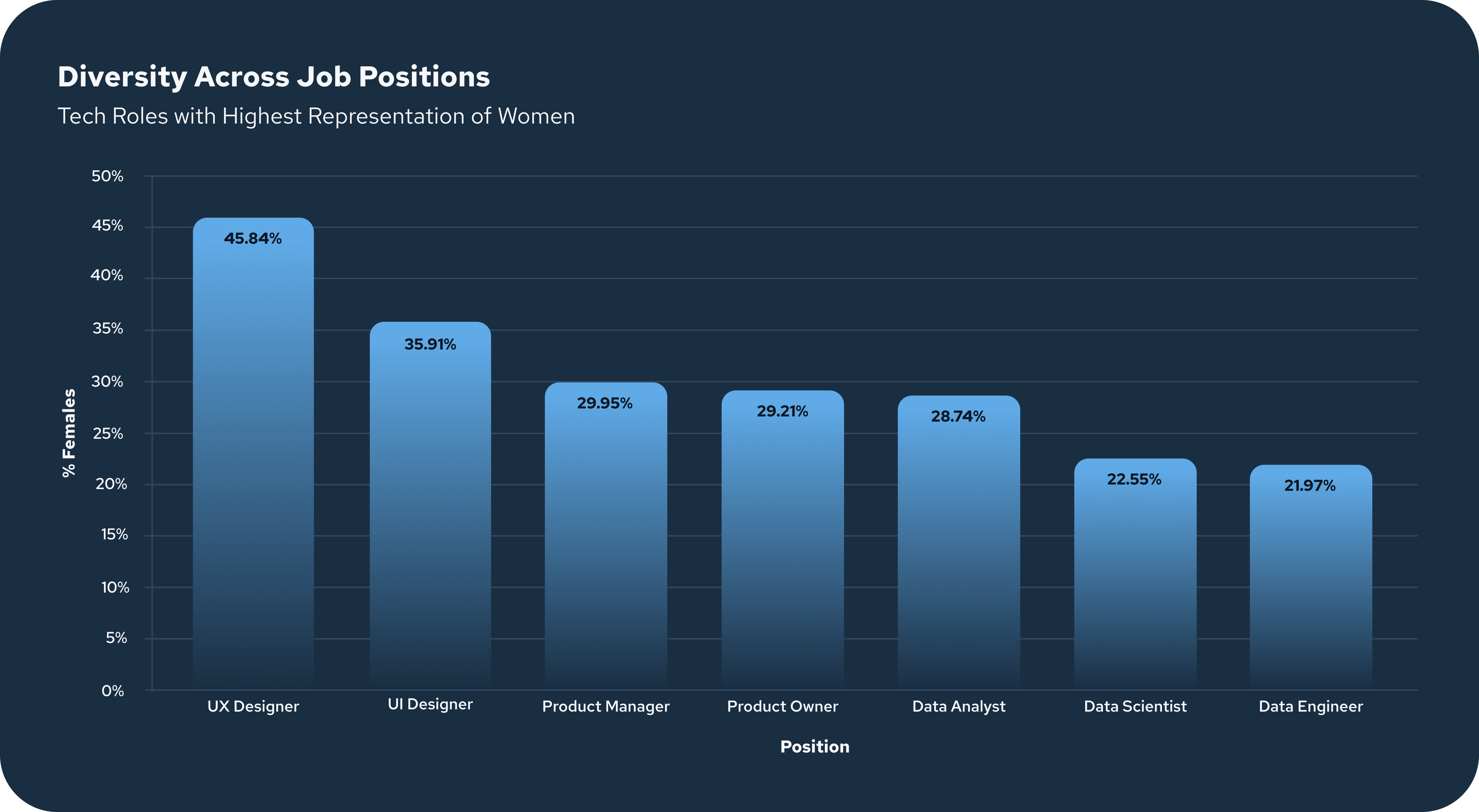
- UX Designer roles have the highest representation of women at 45.84%.
- UI Designer roles show a representation of 35.91% women.
- Product Manager and Product Owner roles also show promising representation with 29.95% and 29.21% respectively.
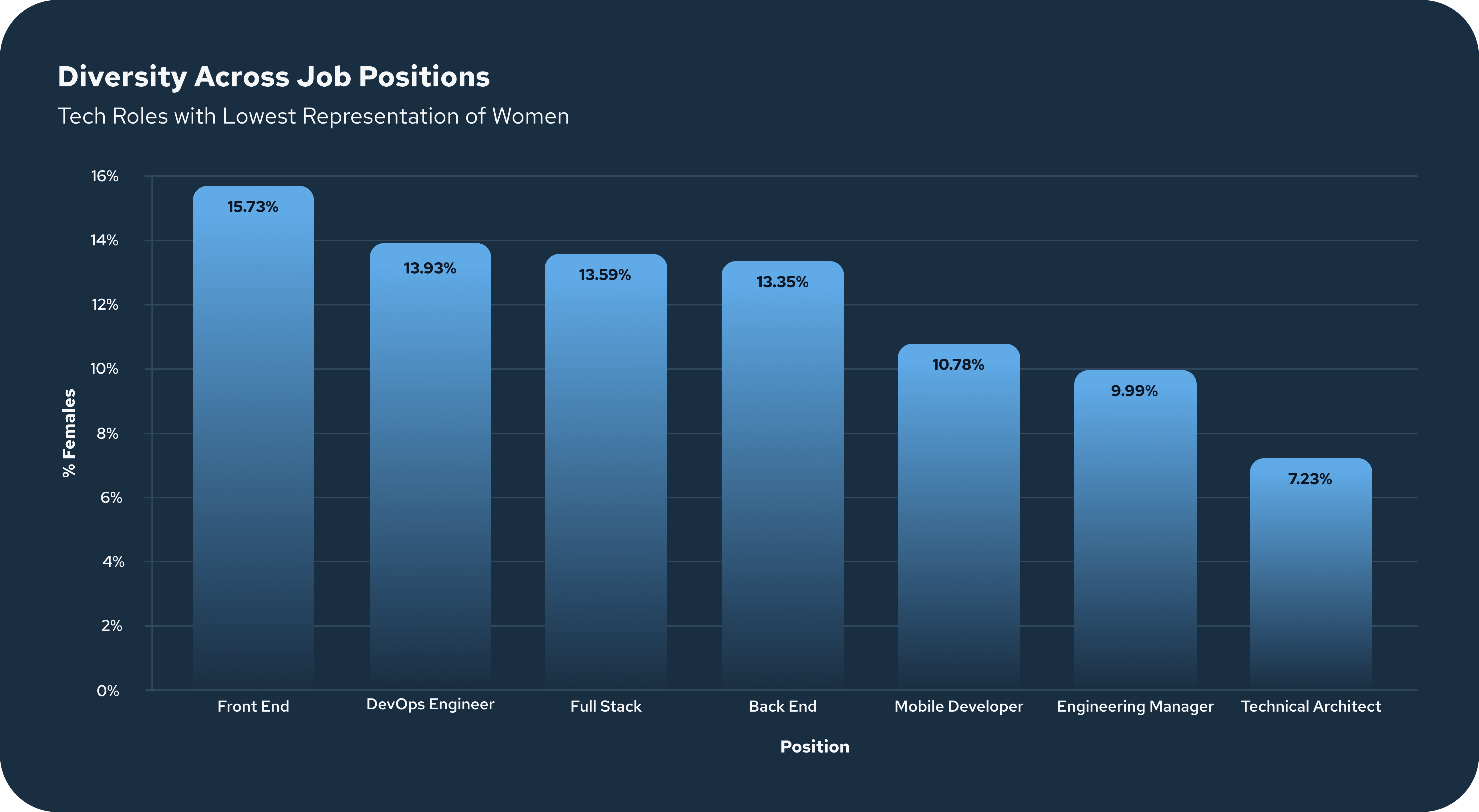
On the other hand, more technical roles show lower representation:
- Technical Architect roles have the lowest representation of women, standing at 7.23%.
- Engineering Manager roles follow with 9.99% representation of women.
- Mobile Developer roles show a representation of 10.78% women.
- Back End Developer and Full Stack Developer roles also show a need for improvement with 13.35% and 13.59% representation respectively.
These figures illustrate the need for targeted efforts to boost gender diversity in technical roles, while also continuing to support and enhance representation in roles where women are already well-represented.
Where are Women in the Hierarchy?
In the tech industry, a higher proportion of women were found in 'entry', 'junior', and 'mid' level roles compared to men. Conversely, a smaller proportion of women were found in 'senior', 'lead', and 'leadership' roles. This suggests a gender gap in higher-level positions that needs to be addressed.
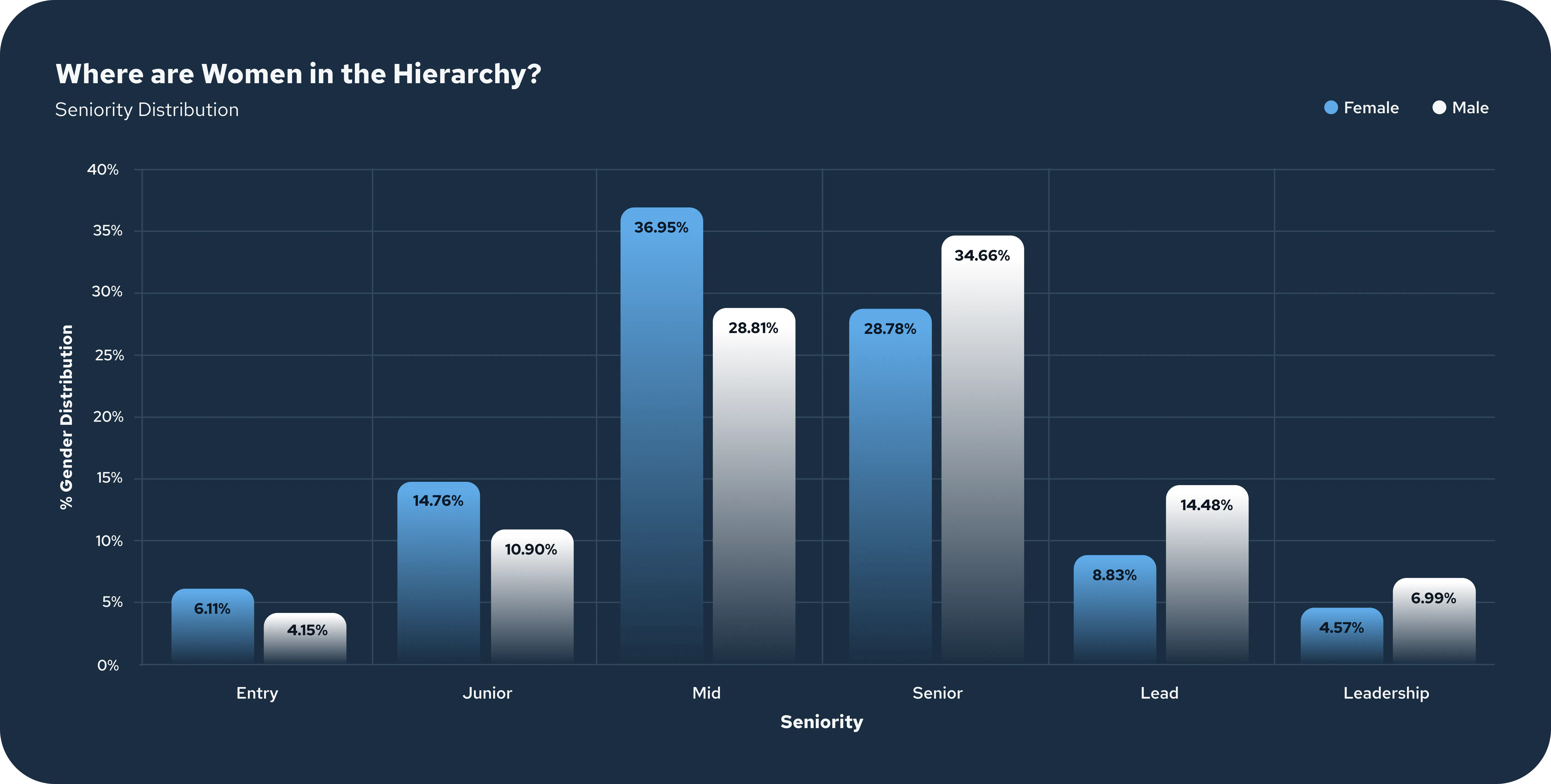
For Talent Acquisition Managers, these findings highlight two key areas of focus. Firstly, efforts to retain and advance women in tech should be strengthened, especially as they progress to higher-level roles. Secondly, initiatives to attract more women into senior positions are vital to close the gender gap at these levels.
In essence, to foster gender diversity in tech, it is crucial to not only bring more women into the industry, but also to support their progression throughout their careers.
Exploring the gender pay gap
Delving into gender-based salary expectations reveals a stark contrast. On average, male candidates expected a minimum salary of £80,577.71, compared to female candidates who expected £69,426.06.
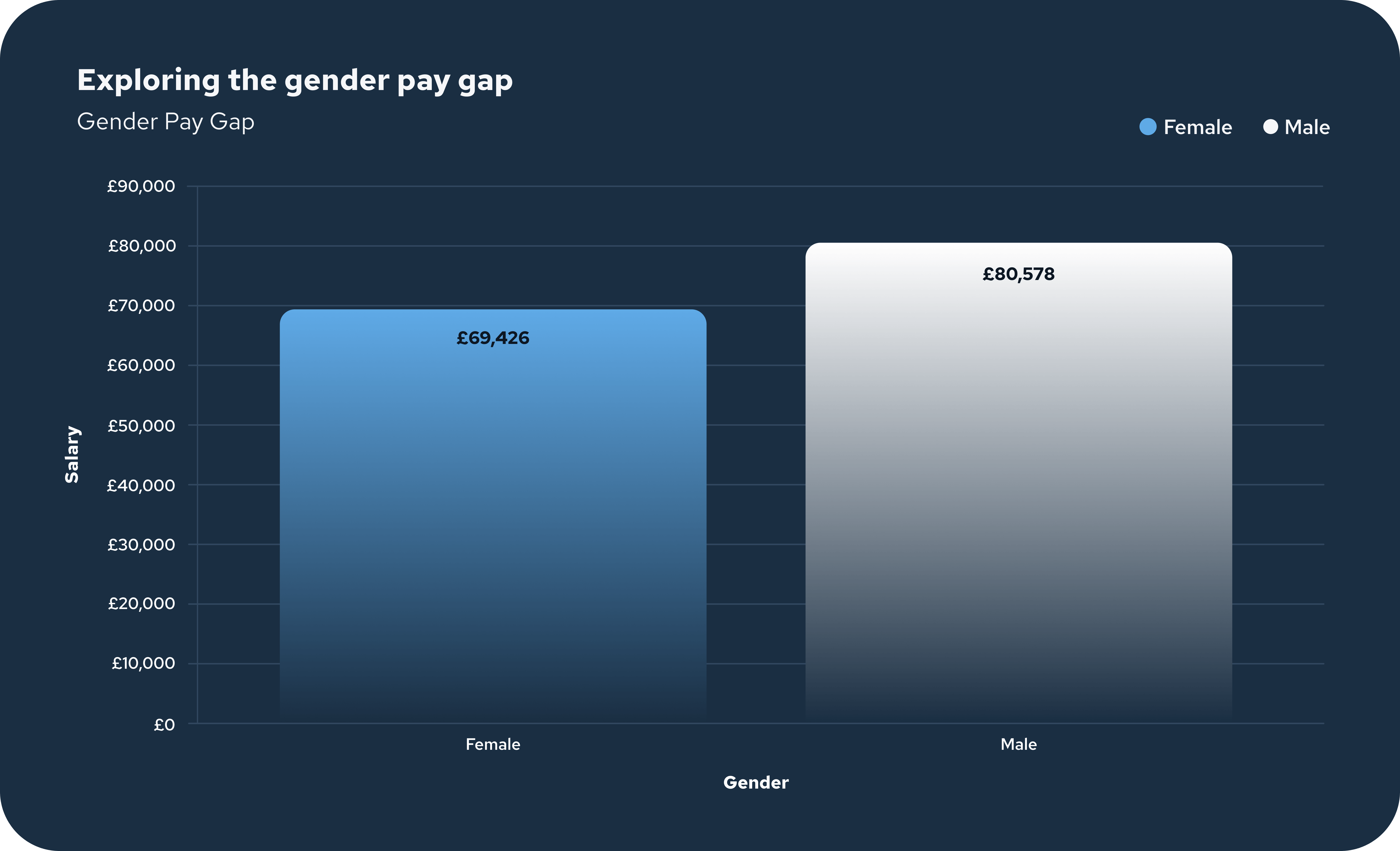
This pattern persists across all seniority levels and within specific job roles, with men consistently having higher salary expectations.
Women receive and send fewer messages
In order to understand how to improve gender diversity, it's essential to consider that men and women may behave differently when looking for work.
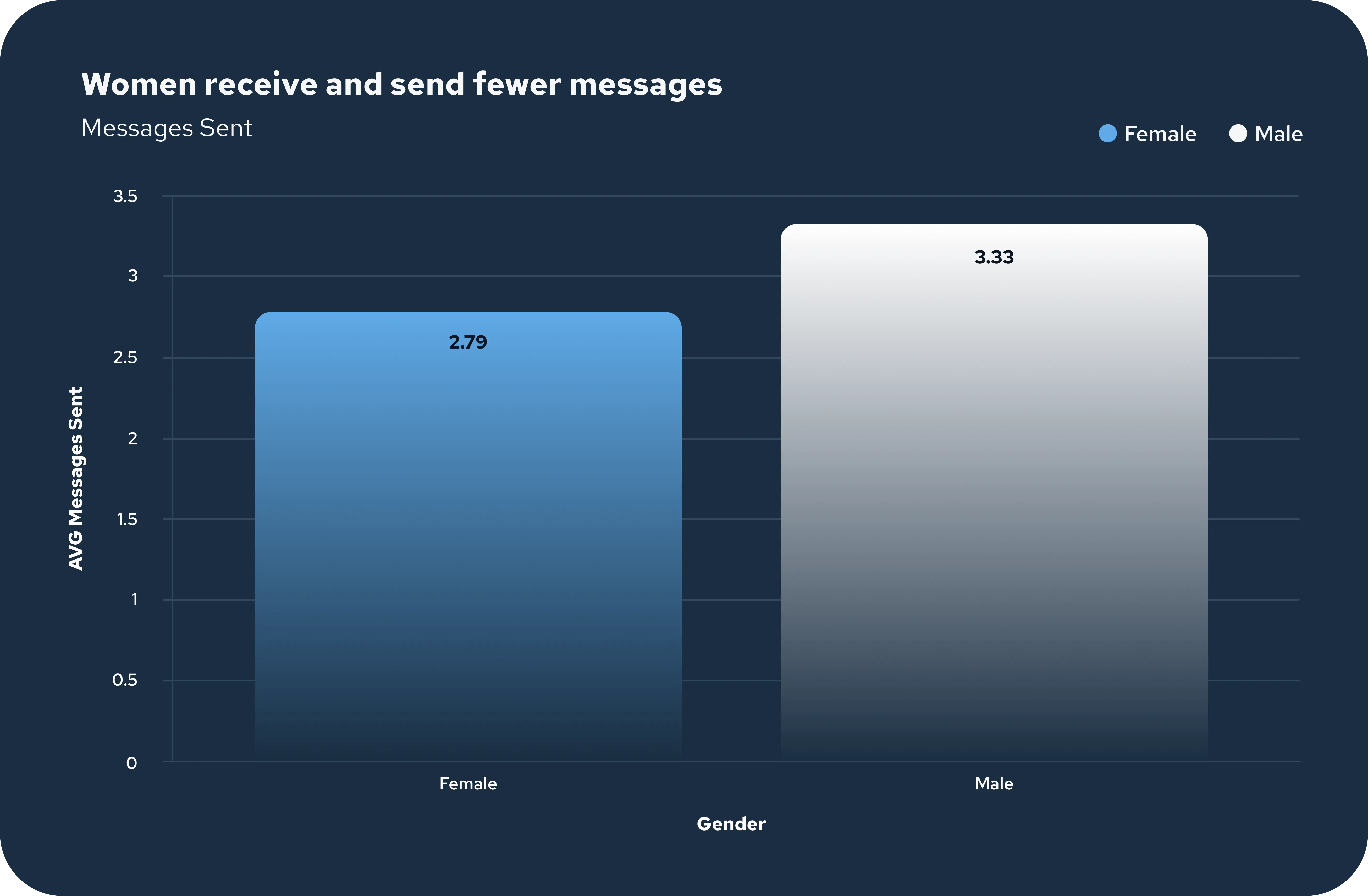
Women, on average, send fewer messages compared to men. Specifically, the number of messages sent by women is approximately 16.31% lower than that of men.
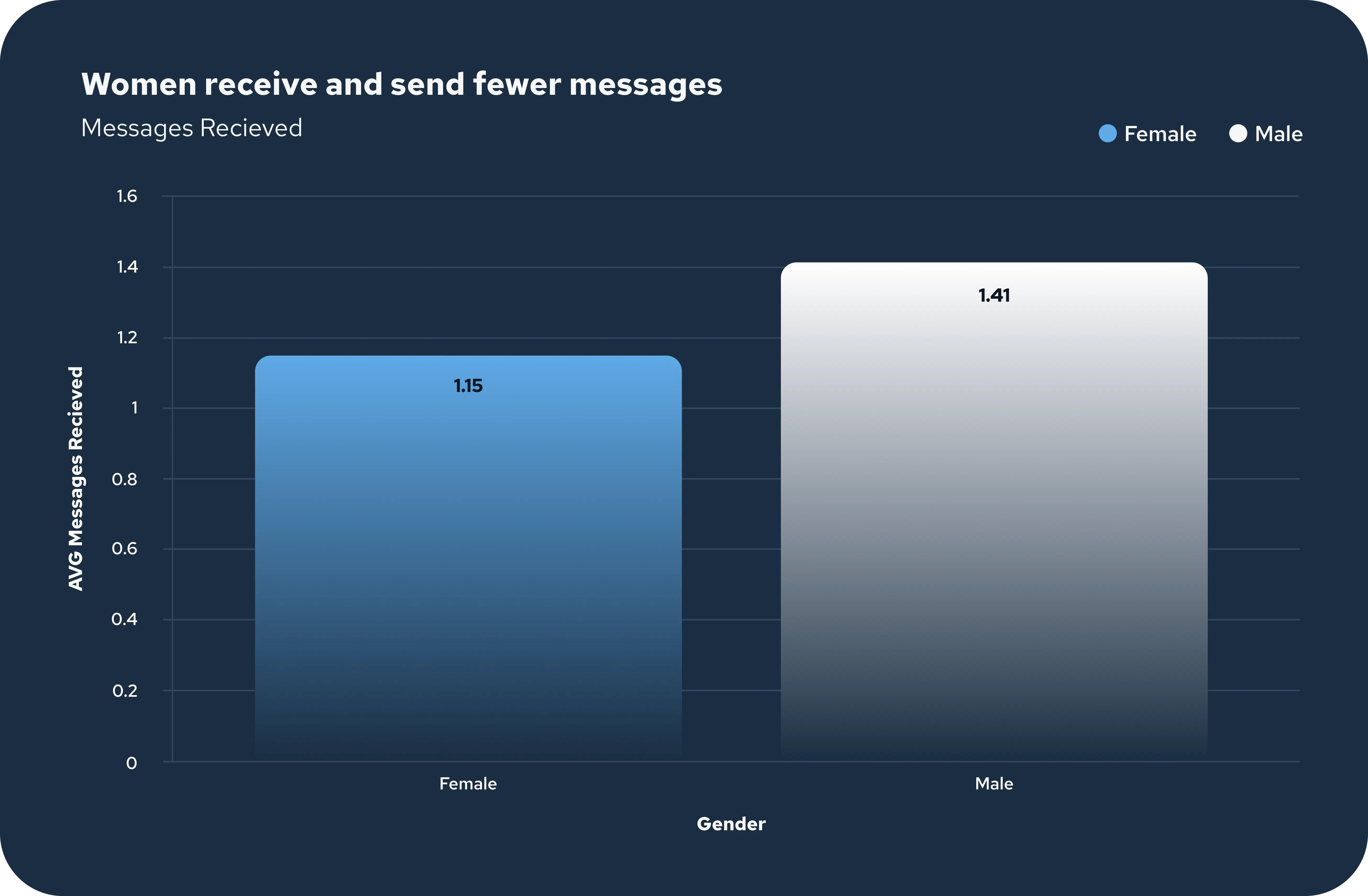
Women also receive fewer messages on average compared to men. The number of messages received by women is approximately 18.70% lower than that of men.
For companies looking to boost their gender diversity, focusing on sourcing could be more effective.
How the top companies hire more women
Building a gender-diverse workforce isn't just about understanding candidate behaviour—it's also about self-reflection. We analysed how company policies and practices can influence gender diversity in their applicant pools and drew some revealing conclusions.
Bias-Free Sourcing
Our results suggest that companies using anti-bias sourcing features have a higher likelihood of engaging in conversations with women.
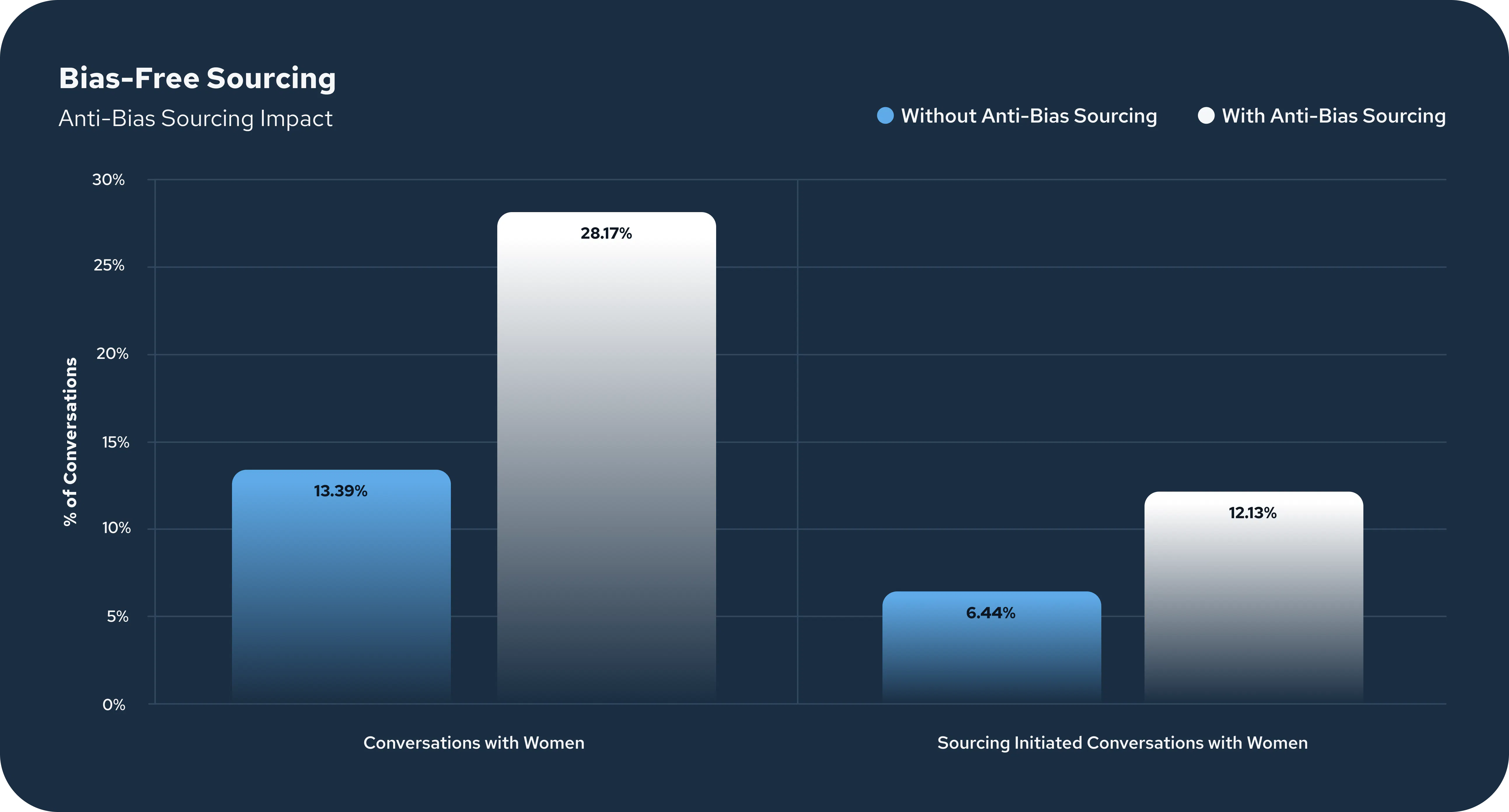
Our analysis revealed two key findings:
- Companies using the anti-bias sourcing feature engage in more conversations with women. On average, these companies had 28.17 conversations with women, compared to only 13.39 conversations for companies not using the feature.
- The anti-bias sourcing feature also led to more sourcing-initiated conversations with women. Companies with the feature had an average of 12.13 sourcing-initiated conversations with women, almost double the average of 6.44 for companies without the feature.
The data suggest that the use of anti-bias sourcing features could potentially double the engagement with female candidates.
Diversity Transparency
We investigated the claim that companies displaying a gender split on their profiles see more interaction and applications from women. Our findings partially contradict the statement.
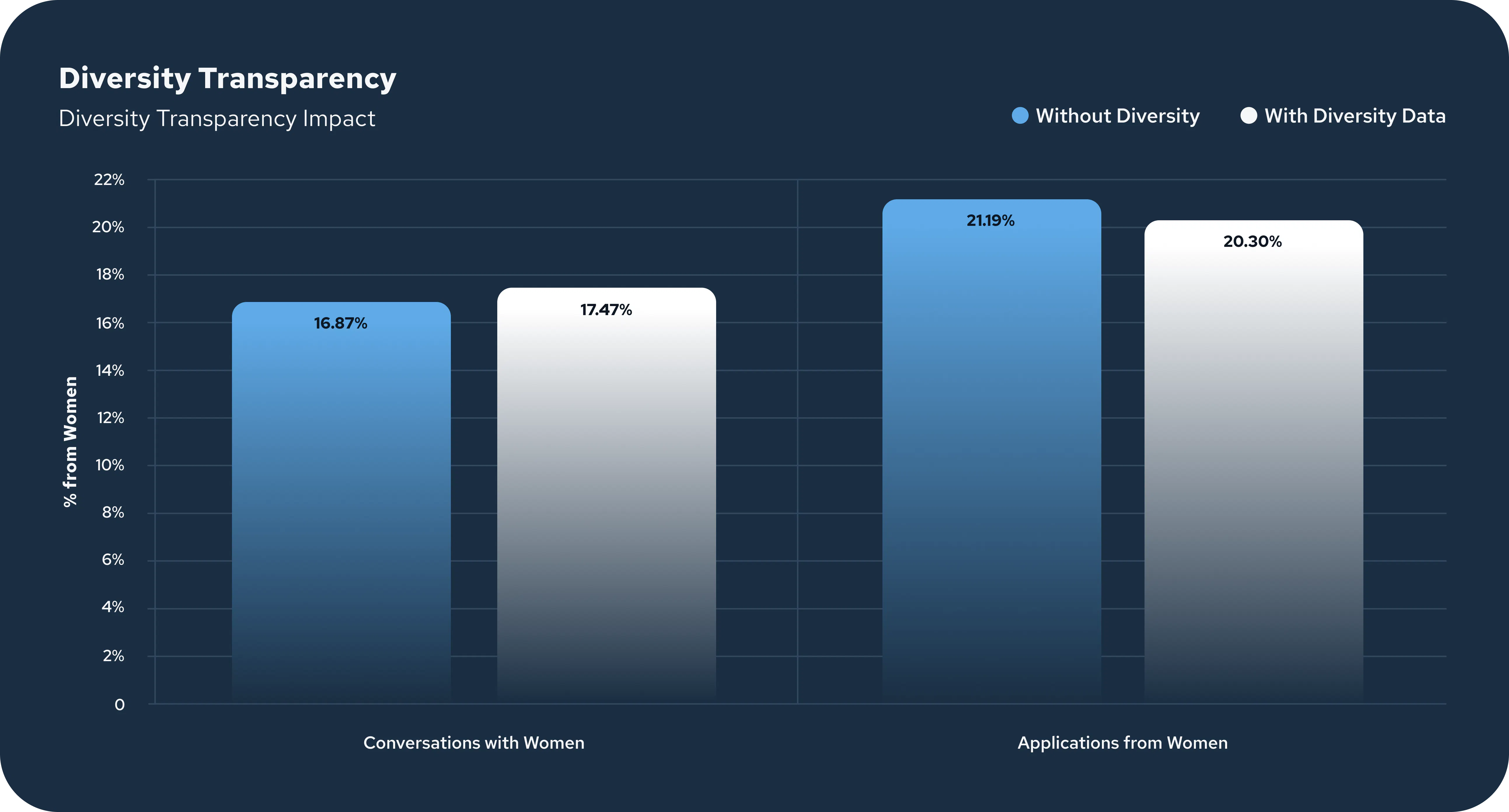
While companies that display a gender split indeed have a slightly higher rate of conversations with women, at approximately 17.5% compared to 16.9% for those that do not, the trend does not hold for applications. Interestingly, the rate of applications from women is slightly lower for companies that display a gender split on their profile, at about 20.3% compared to 21.2% for those that do not.
Does Remote Work have an impact?
Our data suggests that a company's remote work policy has less of an impact than we may instinctively think for improving gender diversity.
Companies with a remote-first policy do have slightly more conversations with women that they have sourced themselves (20.33%) compared to companies without such a policy (19.76%). This suggests that the flexibility offered by remote work can be a draw for women.
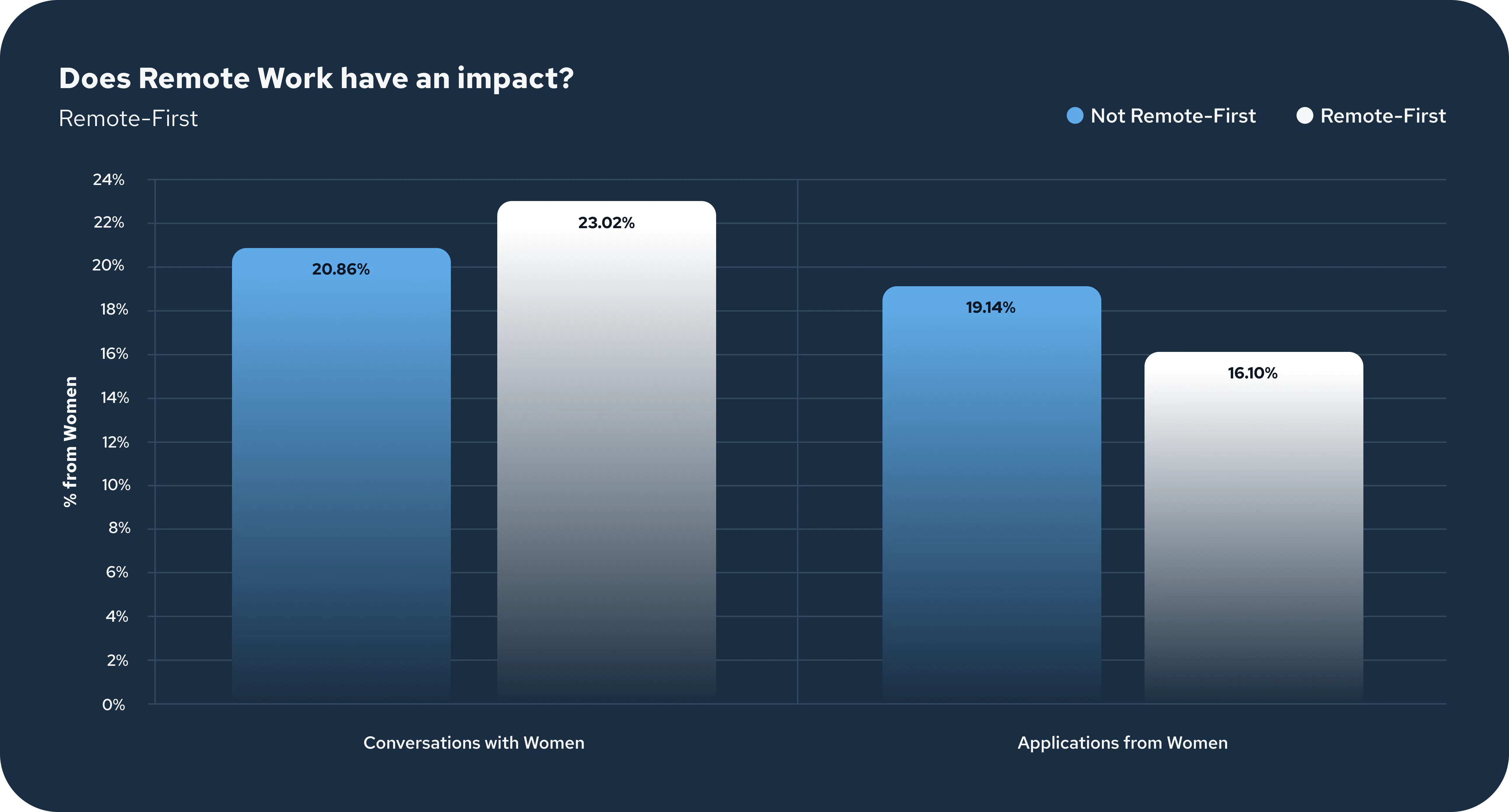
However, when it comes to conversations initiated by women through applications, remote-first companies have a slightly lower rate (18.72%) compared to non-remote companies (20.99%). This implies that while remote work may attract women candidates, other factors may be influencing their decision to apply.
In conclusion, while our data suggests that adopting a remote-first policy may increase a company's interactions with women candidates, it's not the definitive solution to improving gender diversity. Companies should consider other strategies alongside remote work to attract a more diverse pool of applicants.
Actionable Insights: Building a Gender Diverse Hiring Strategy
Based on our comprehensive analysis, here are some data-driven insights and practical strategies that can guide Talent Acquisition Managers in their quest for gender diversity:
- Adopt Active Sourcing and Outreach Strategies: Given that women may be less likely to actively apply for jobs, focusing on sourcing and sending more messages can help companies reach out to potential female candidates.
- Ensure a Bias-Free Selection Process: Implement practices to reduce unconscious bias in your selection process. This could include anonymised CVs, structured interviews, and diverse interview panels.
- Promote Clear Career Progression Paths: Given that women are more represented in mid-level and entry-level roles, providing clear progression paths could potentially attract more women to higher-level positions.
- Implement Remote-First Policies: These policies may help attract more women and ensure fairness in the sourcing process.
- Effective Employer Branding: Think about the positioning of your company and industry in a way that would be appealing to a diverse pool of candidates.
Remember, the goal is not just to increase the number of women who apply, but to ensure they feel welcomed, valued, and have the opportunity to thrive within your organisation.
Conclusion: Embracing the Journey Towards Gender Equality
The journey towards achieving greater gender equality in the tech industry is a continuous process, but with these data-backed insights and strategies, Talent Acquisition Managers can make significant strides in the right direction.
By understanding the current landscape and tailoring strategies accordingly, Talent Acquisition Managers can play a pivotal role in fostering a more inclusive environment.
We hope that this comprehensive analysis serves as a valuable guide on the path towards achieving greater gender equality in the tech industry.

Was this content useful?