 cord
cordResponse rates: cord vs LinkedIn Recruiter
September 4, 2026
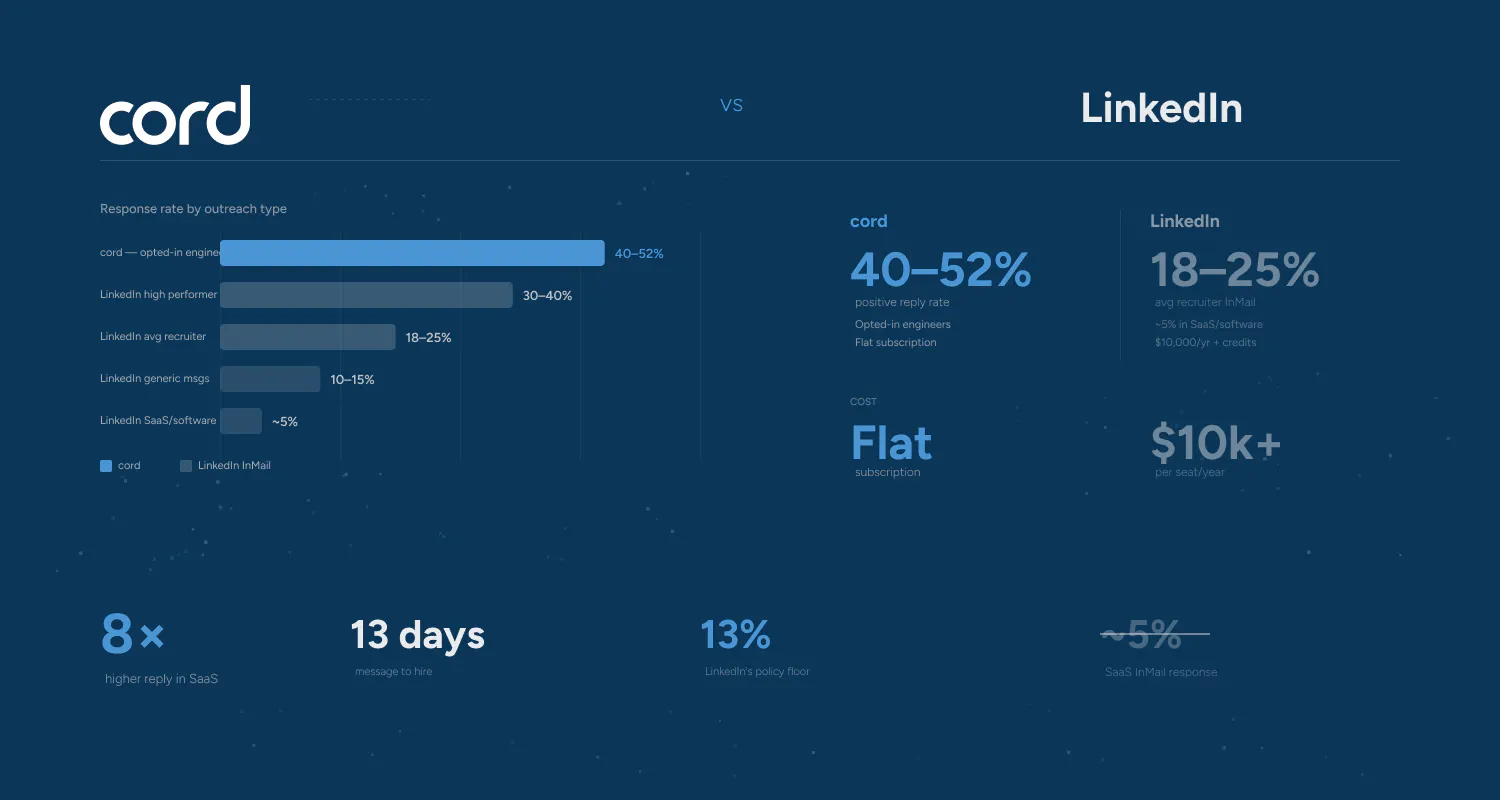
LinkedIn InMail averages an 18 to 25% response rate for recruiters, drops below 10 to 15% for generic messages, and is lowest of all in software and SaaS at around 5% (LinkedIn, industry benchmarks). Direct messages to engineers who have said they're open to moving get a positive reply 40 to 52% of the time on cord. The gap isn't the network. It's whether the person wanted the message.
What is the average LinkedIn InMail response rate?
The average LinkedIn InMail response rate is 18 to 25% for recruiters sending targeted, personalised messages. Below that, 10 to 15% signals generic messaging or poor targeting, and above 30 to 40% is high-performing. LinkedIn itself requires recruiters to hold a response rate of at least 13% across 100 or more InMails, or it restricts their sending. A direct message to an opted-in engineer on cord gets a positive reply 40 to 52% of the time.
Response rate by InMail performance tier:
- Poor or generic messaging: below 10 to 15%.
- Software and SaaS, the lowest-responding sector: around 5%.
- Average recruiting outreach: 18 to 25%.
- High performer: 30 to 40%.
- Direct message to an opted-in engineer on cord: 40 to 52%.
Why are InMail response rates lowest for engineers?
Software and SaaS is the lowest-responding sector on LinkedIn, at roughly 5%, well under the 18 to 25% average. Engineers get more recruiter messages than almost anyone, most of them generic and about roles they never asked about, so they filter hard. LinkedIn's own 13% policy floor is a tell: the baseline is low enough that the platform has to police it. Reaching the people least likely to reply, through the channel they most tune out, is a difficult place to start.
How cord reaches a higher response rate
The factors LinkedIn itself credits for better InMail response are targeting people marked "Open to Work" (up to 35 to 37% higher), keeping messages short, and personalising them. cord is built around those conditions rather than bolting them on: every engineer has said they're open, the message comes from the hiring manager rather than a recruiter, and there are no credits pushing you to send more and say less. That's why the reply rate lands at 40 to 52%, above even LinkedIn's high-performer tier, and it turns into hires: one London team messaged a front-end engineer directly and had them hired thirteen days later.
cord vs LinkedIn Recruiter: the honest comparison
They cover different ground, and each is the right tool for a different job.
- What it is. LinkedIn Recruiter is InMail sourcing across LinkedIn's entire network. cord is direct messaging to engineers who have said they're open.
- Typical response. LinkedIn Recruiter: 18 to 25% recruiting, around 5% in software and SaaS. cord: 40 to 52%.
- Cost. A LinkedIn Recruiter seat runs around $10,000 a year with InMail credits metered. cord is a flat subscription.
- Best for. LinkedIn Recruiter: any industry, any role, the widest passive reach. cord: engineering hiring, where reply rate and fit matter most.
LinkedIn Recruiter genuinely wins when you need to reach across every industry and role, or source passive people who aren't on a specialist platform. For hiring engineers, messaging a pool that has already opted in beats broadcasting to the segment least likely to reply.
What are the alternatives to LinkedIn Recruiter?
The main alternatives fall into a few groups: AI sourcing and talent-intelligence platforms (SeekOut, hireEZ, Findem), outreach and CRM tools (Gem, Pin), contact-data enrichers (Apollo.io, Lusha), and direct-sourcing platforms like cord, where engineers opt in and you message them directly rather than paying per InMail. Most of the sourcing tools still put you back in the business of cold outreach; the direct route changes what the reply rate can be in the first place.
Frequently asked questions
What is a good LinkedIn InMail response rate?
18 to 25% is a good rate for targeted recruiter outreach; above 30 to 40% is high-performing, and below 10 to 15% signals generic messaging. LinkedIn requires recruiters to hold at least 13%.
Why is my InMail response rate low?
Usually generic messages sent to people who aren't looking, and in tech especially, inbox fatigue. Software and SaaS is the lowest-responding sector at around 5%. Response climbs with shorter, personalised messages to people marked open.
What response rate can you get messaging engineers directly?
On cord, direct messages to engineers open to moving get a positive reply 40 to 52% of the time, above LinkedIn's high-performer InMail tier.
What are the alternatives to LinkedIn Recruiter?
AI sourcing platforms (SeekOut, hireEZ, Findem), outreach and CRM tools (Gem, Pin), contact enrichers (Apollo, Lusha), and direct-sourcing platforms like cord.
The response rate isn't fixed by the tool you buy. It's set by who's on the other end and whether they wanted to hear from you. Message the segment least likely to reply and you get InMail's numbers; message engineers who've opted in and you get better ones.