 cord
cordCost per hire: cord vs recruitment agencies
September 4, 2026
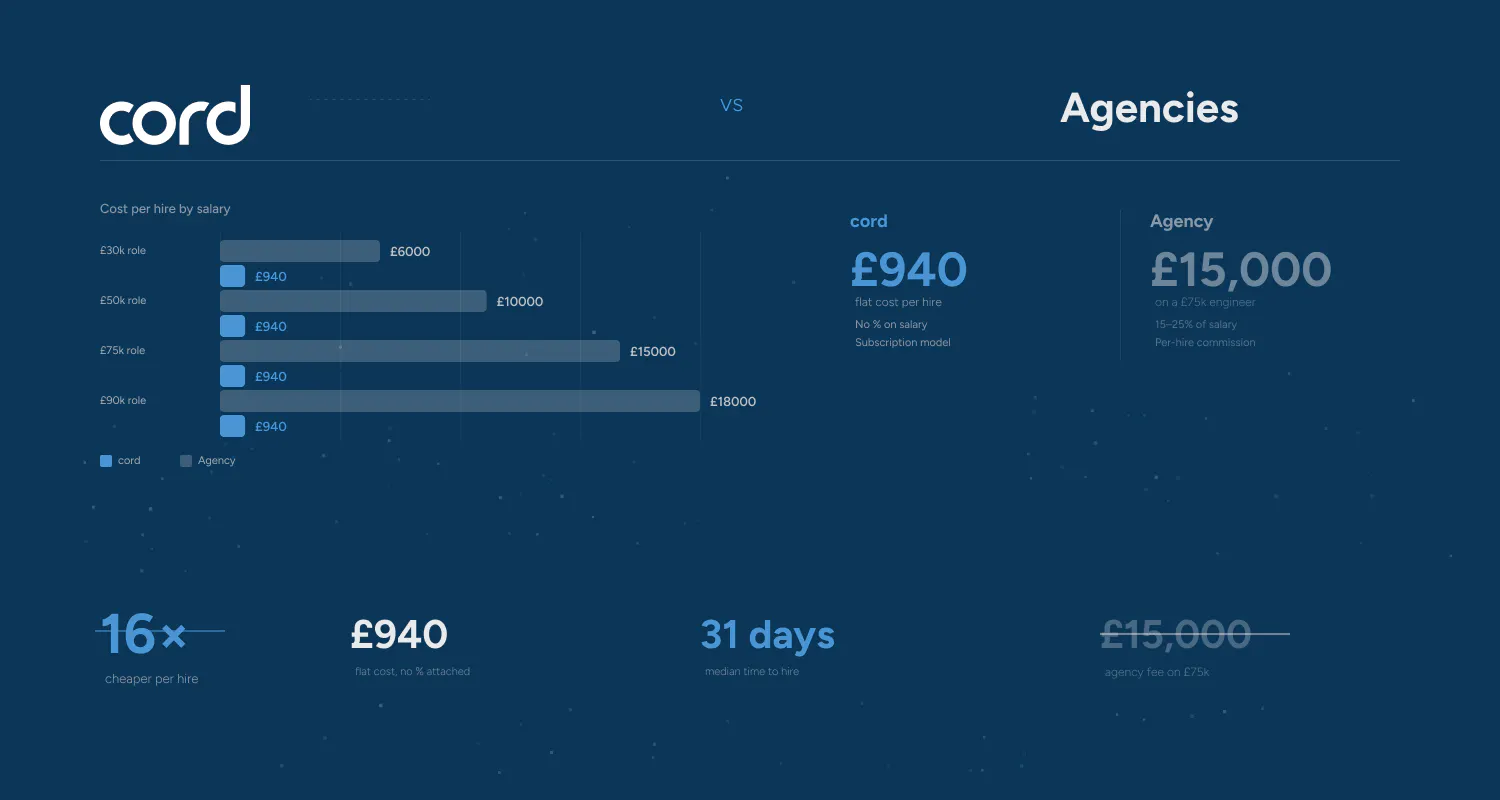
In the UK, recruitment agencies charge employers 15 to 25% of a new hire's first-year salary, rising to 25 to 30%+ for specialist or senior roles. On a £75,000 engineer that's roughly £15,000 for one hire. Hiring the same engineer directly on cord costs around £940, its published cost-per-hire figure, with no percentage on top.
How much do recruitment agencies charge in the UK?
UK recruitment agencies charge a percentage of the hire's first-year salary, and it rises with seniority and scarcity. Standard roles run 15 to 20%, specialist and technical roles 20 to 25%, and executive or hard-to-fill roles 25 to 33% or more. By law, agencies charge the employer, never the candidate. For temporary staff, they add a 15 to 25% markup on the worker's hourly rate instead.
Typical UK agency fees by role type:
- Standard or entry-level roles: 15 to 20% of first-year salary, about £6,000 to £8,000 on a £40,000 salary.
- Specialist or technical roles: 20 to 25%, about £8,000 to £10,000 on a £40,000 salary.
- Executive or senior roles: 25 to 33% or more, £10,000 and up.
What does a recruitment agency cost per hire?
Turned into cash, the fee is a large one-off per hire. On a £30,000 role at 20% it's £6,000; on a £50,000 engineer, £10,000; on a £90,000 senior hire, £18,000. Most agreements include an 8 to 12 week rebate if the person leaves early, which tells you the risk is real enough to be priced in. Hiring directly on cord costs around £940 a hire, a flat cost with no percentage attached, so it doesn't climb with the salary.
cord vs a recruitment agency
They solve the sourcing problem in different ways, and each suits a different job.
- Cost model. An agency charges a percentage of first-year salary on every hire. cord is a flat subscription with no per-hire fee.
- Typical cost per engineering hire. Around £15,000 on a £75,000 salary through an agency, against around £940 on cord.
- Speed. Agencies fill permanent roles in 32 to 42 days. Roles filled directly on cord close in a median of 31 days.
- Best for. Agencies: executive and C-suite search, hard-to-fill niche roles, and hiring with zero internal effort. cord: engineering roles, hiring at any volume, and keeping cost and control in-house.
An agency genuinely earns its fee for executive or confidential searches, for rare skills, and when you have no capacity to run the process yourself. For hiring engineers, where the pool can be searched and messaged directly, the percentage buys a shortlist you can now build for a fraction of the cost.
What are the alternatives to a recruitment agency?
The main alternatives to a percentage-based agency are flat-fee recruitment services (Get Staffed, Job Board Direct, typically £199 to £500), direct job boards (Indeed, Reed, CV-Library, or GOV.UK's Find a job), employee referrals, freelance marketplaces like Upwork, and direct-sourcing platforms like cord, where you message engineers who fit instead of paying a fee per hire. They share one thing: the employer keeps control of the process and avoids the commission.
Frequently asked questions
How much does a recruitment agency charge to hire someone in the UK?
15 to 25% of first-year salary for permanent roles, rising to 25 to 33%+ for specialist, senior or executive positions. On a £40,000 salary at 20%, that's £8,000.
Is it cheaper to hire without a recruitment agency?
Yes, usually by a wide margin. A direct platform like cord averages around £940 a hire with no percentage, against roughly £10,000 to £18,000 for an agency placement on a mid to senior salary.
Are recruitment agencies worth the fee?
They earn it for executive search, rare skills, and when you need someone else to run the whole process. For roles you can source directly, such as most engineering hires, the fee is harder to justify.
What are the alternatives to using a recruitment agency?
Flat-fee recruitment services, direct job boards, employee referrals, freelance marketplaces, and direct-sourcing platforms like cord.
The agency fee is a percentage of the salary, charged again on every hire. Direct hiring is a flat cost that doesn't move with the salary or the headcount. For engineering roles, that's the difference between paying five figures a hire and paying once for the tool.