 cord
cord12 Talent Acquisition Metrics for Hiring Success
Beyond Vanity Numbers: Metrics That Actually Predict Hiring Effectiveness

World-class talent teams track their metrics closely. While many focus on vanity numbers like total applicants, the most effective hiring teams measure actual indicators of hiring effectiveness.
The brilliant Adriano Herdman (Move Co-Founder) put these together.
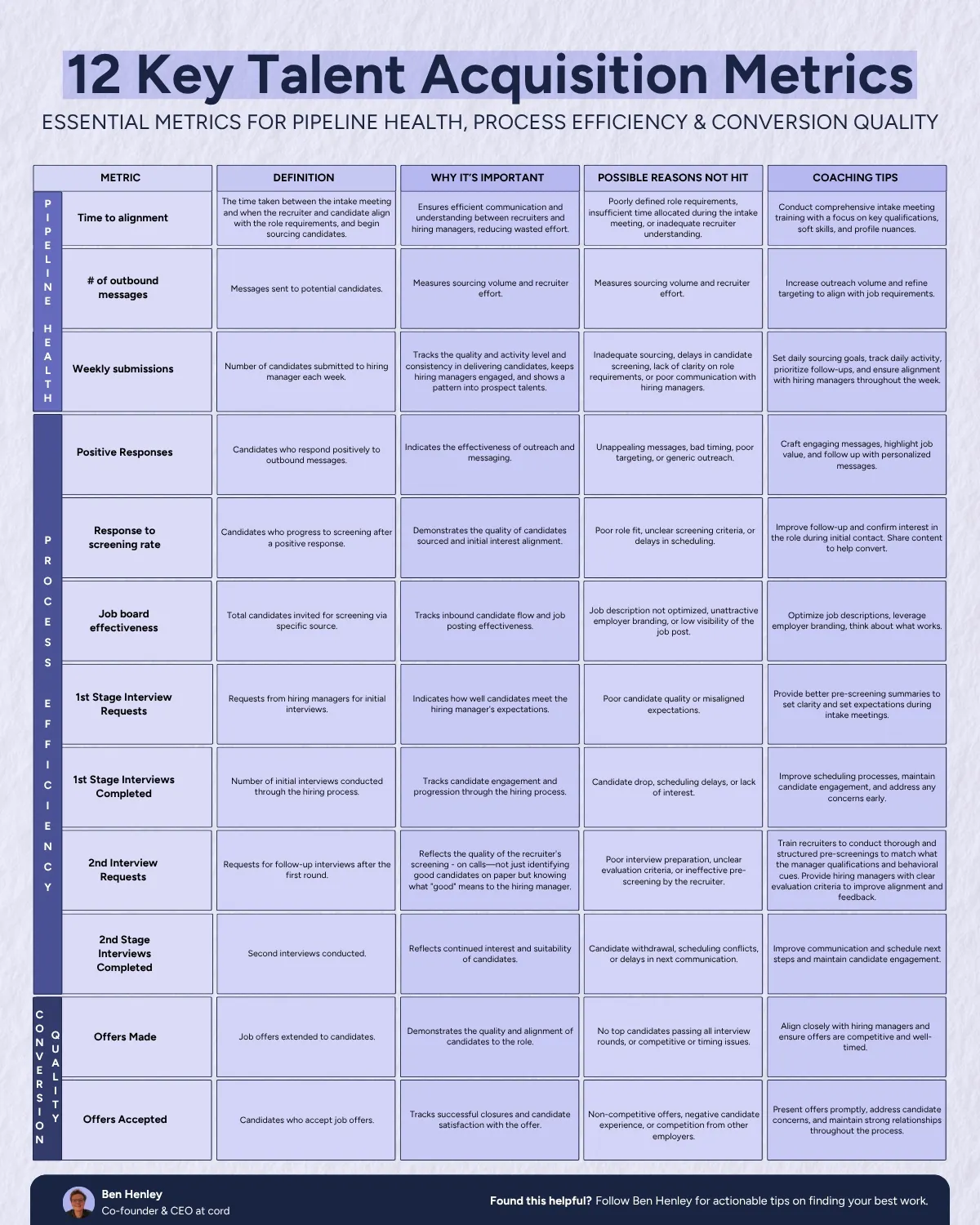
Here are the 12 most important talent acquisition metrics every hiring team should track, organized by what they reveal about your hiring process.
Pipeline Health Metrics
These metrics show how effectively you're attracting the right candidates and aligning early expectations.
Time to Alignment
Definition: The time between the intake meeting and when the recruiter and hiring manager align on role requirements and begin sourcing candidates.
Why it matters: Ensures efficient communication and understanding between recruiters and hiring managers, reducing wasted effort.
Common failure points: Poorly defined role requirements, insufficient time allocated during the intake meeting, or inadequate recruiter understanding.
Coaching tips: Conduct comprehensive intake meetings with a focus on key qualifications, soft skills, and profile nuances.
Number of Outbound Messages
Definition: Messages sent to potential candidates.
Why it matters: Measures sourcing volume and recruiter effort.
Common failure points: Measures sourcing volume and recruiter effort.
Coaching tips: Increase outreach volume and refine targeting to align with job requirements.
Weekly Submissions
Definition: Number of candidates submitted to hiring manager each week.
Why it matters: Tracks the quality and activity level and consistency in delivering candidates, keeps hiring managers engaged, and shows a consistent flow of prospect talent.
Common failure points: Inadequate sourcing, delays in candidate screening, lack of clarity on role requirements, or poor communication with hiring managers.
Coaching tips: Set daily sourcing goals, track daily activity, prioritize follow-ups, and ensure alignment with hiring managers throughout the week.
Positive Responses
Definition: Candidates who respond positively to outbound messages.
Why it matters: Indicates the effectiveness of outreach and messaging.
Common failure points: Unappealing messages, bad timing, poor targeting, or generic outreach.
Coaching tips: Craft engaging messages, highlight job value, and follow up with personalized messages.
Response to Screening Rate
Definition: Candidates who progress to screening after a positive response.
Why it matters: Demonstrates the quality of candidates sourced and initial interest alignment.
Common failure points: Poor role fit, unclear screening criteria, or delays in scheduling.
Coaching tips: Improve follow-up and confirm interest in the role during initial contact. Share content to help convert.
Process Efficiency Metrics
These highlight internal speed, consistency, and where bottlenecks cost you top talent.
Job Board Effectiveness
Definition: Total candidates invited for screening via specific source.
Why it matters: Tracks inbound candidate flow and job posting effectiveness.
Common failure points: Job description not optimized, unattractive employer branding, or low visibility of the job post.
Coaching tips: Optimize job descriptions, leverage employer branding, think about what work looks like.
1st Stage Interview Requests
Definition: Requests from hiring managers for initial interviews.
Why it matters: Indicates how well candidates meet the hiring manager's expectations.
Common failure points: Poor candidate quality or misaligned expectations.
Coaching tips: Provide better pre-screening summaries to set clarity and set expectations during intake meetings.
1st Stage Interviews Completed
Definition: Number of initial interviews conducted through the hiring process.
Why it matters: Tracks candidate engagement and progression through the hiring process.
Common failure points: Candidate drop, scheduling delays, or lack of interest.
Coaching tips: Improve scheduling processes, maintain candidate engagement, and address any concerns early.
2nd Interview Requests
Definition: Requests for follow-up interviews after the first round.
Why it matters: Reflects the quality of the recruiter's screening, on-site - just identifying good candidates but knowing what "good" means to the hiring manager.
Common failure points: Poor interview preparation, unclear evaluation criteria, or ineffective pre-screening by the recruiter.
Coaching tips: Train recruiters to conduct thorough and structured pre-screenings to match what matters most. Provide hiring managers clear evaluation criteria to improve alignment and feedback.
2nd Stage Interviews Completed
Definition: Second interviews conducted.
Why it matters: Reflects continued interest and suitability of candidates.
Common failure points: Candidate withdrawal, scheduling conflicts, or delays in next communication.
Coaching tips: Improve communication and schedule next steps and maintain candidate engagement.
Conversion Quality Metrics
This is where many companies lose strong candidates without realizing why.
Offers Made
Definition: Job offers extended to candidates.
Why it matters: Demonstrates the quality and alignment of candidates to the role.
Common failure points: No top candidates passing all interview rounds, or competitive or timing issues.
Coaching tips: Align closely with hiring managers and ensure offers are competitive and well-timed.
Offers Accepted
Definition: Candidates who accept job offers.
Why it matters: Tracks successful closures and candidate satisfaction with the offer.
Common failure points: Non-competitive offers, negative candidate experience, or competition from other employers.
Coaching tips: Present offers promptly, address candidate concerns, and maintain strong relationships throughout the process.
Why These Metrics Matter
Companies that use structured talent acquisition metrics reduce time-to-fill by 25% and improve quality-of-hire by over 40%. Here's why tracking these metrics is crucial:
- Catch process failures before they hurt quality-of-hire: Identify bottlenecks and issues early in the process
- Make smarter decisions with data, not gut instinct: Use concrete numbers to guide hiring strategies
- Improve ROI by focusing on channels that work: Allocate resources to the most effective sourcing methods
- Protect the candidate experience at every stage: Ensure smooth progression through your hiring funnel
Most teams track outputs like number of applications or interviews scheduled. The best teams track impact by measuring conversion rates at each stage of the hiring process.
If you're not measuring each conversion point in your hiring funnel, you're not just missing data - you're missing quality hires. Start tracking these 12 metrics to transform your talent acquisition process from reactive to strategic.

Was this content useful?