 cord
cordA Recruiter's Guide to Candidate Experience Surveys
How to turn candidate feedback into real hiring insights—without losing the human touch

The best talent teams don't guess at candidate experience—they measure it.
A well-designed survey is more than a feedback form. It's a roadmap to better hiring outcomes and stronger candidate relationships.
Here's what data-driven survey design actually looks like:
1. Timing Matters
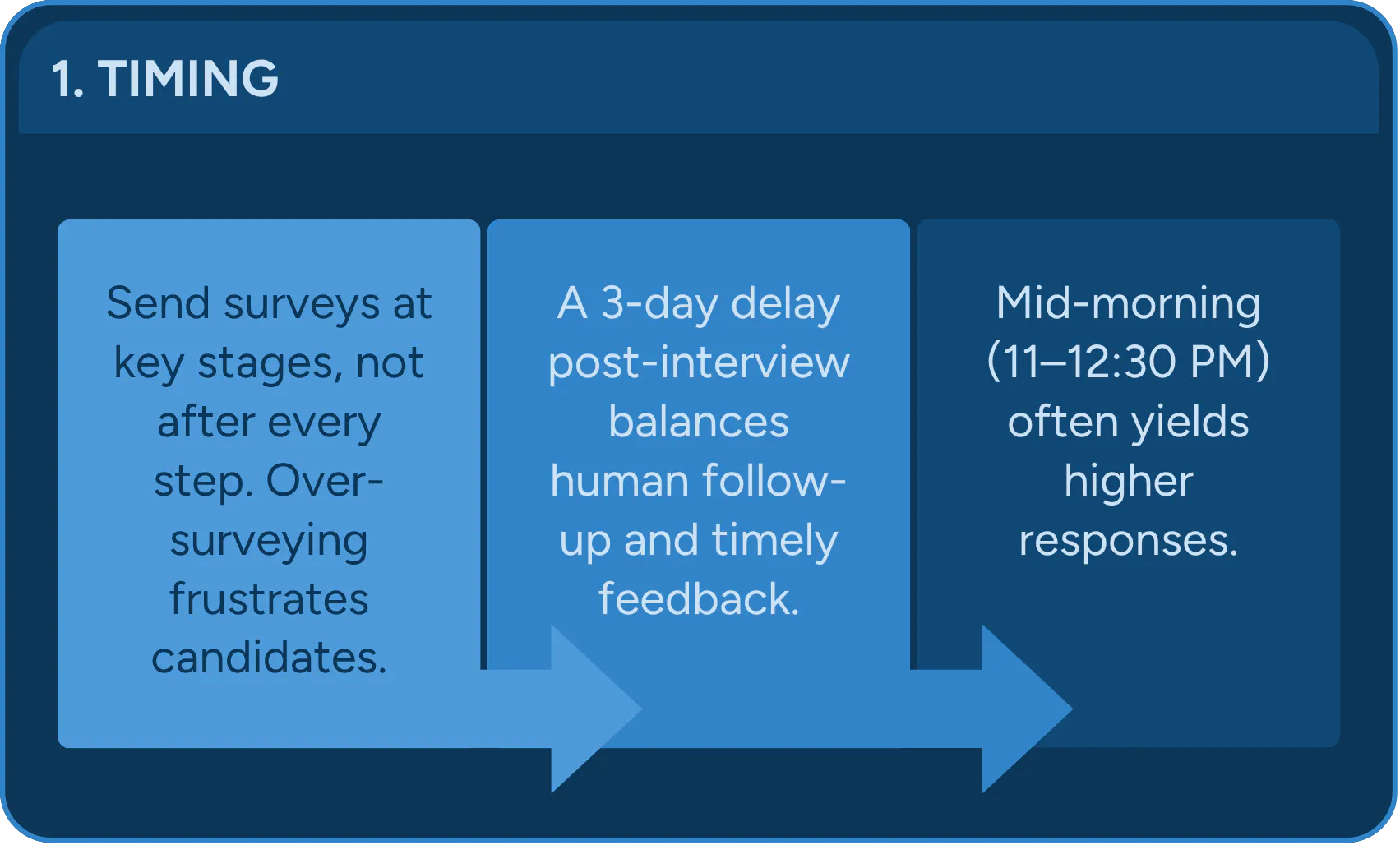
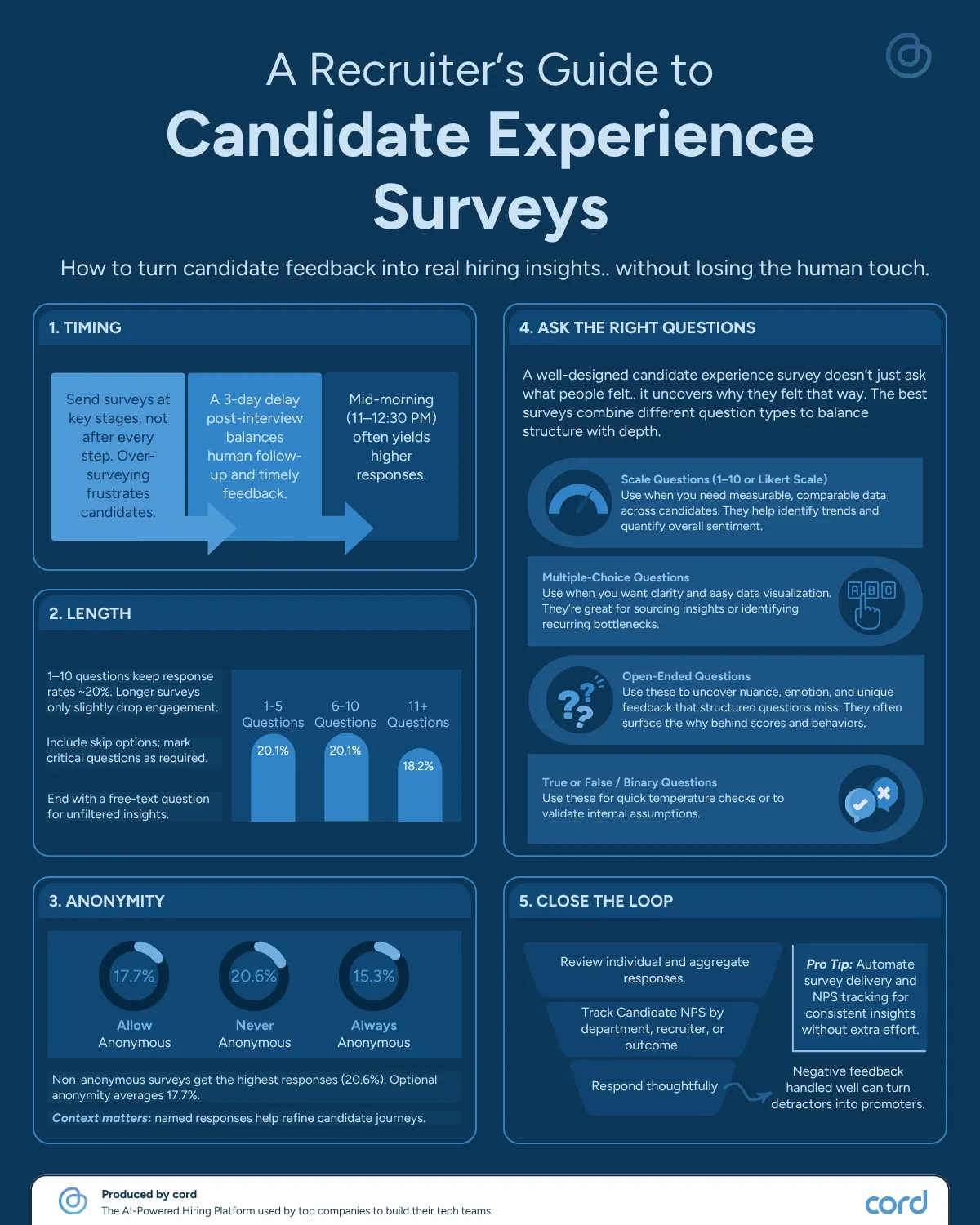
Send surveys at key stages, not after every step. Over-surveying creates friction and frustrates candidates.
A 3-day delay post-interview balances human follow-up with timely feedback. You want to give candidates space to reflect without letting the experience fade from memory.
Time of day matters too. Mid-morning (11:00 AM–12:30 PM) often drives higher responses. People are settled into their workday but not yet overwhelmed.
2. Survey Length ≠ Lower Response
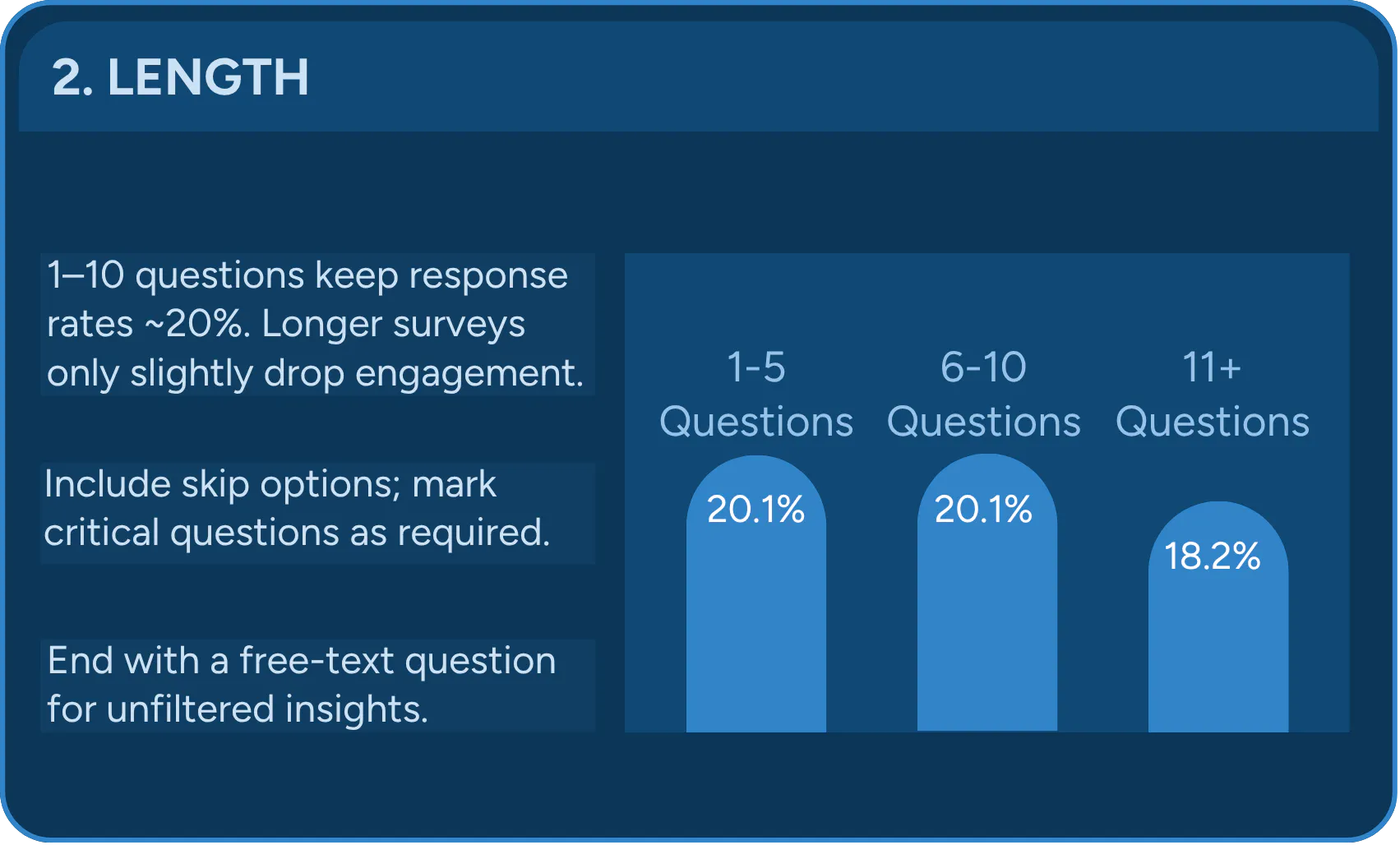
Contrary to popular belief, surveys with 1–10 questions maintain strong engagement (around 20%). Longer surveys only slightly drop engagement—the key is making every question count.
Keep response rates high by including skip options and marking only critical questions as required. This respects candidates' time while ensuring you get the data you need.
End with an open text field. That's where the most valuable insights come from—the unfiltered, unexpected feedback that structured questions miss.
3. Anonymity Isn't Always Best
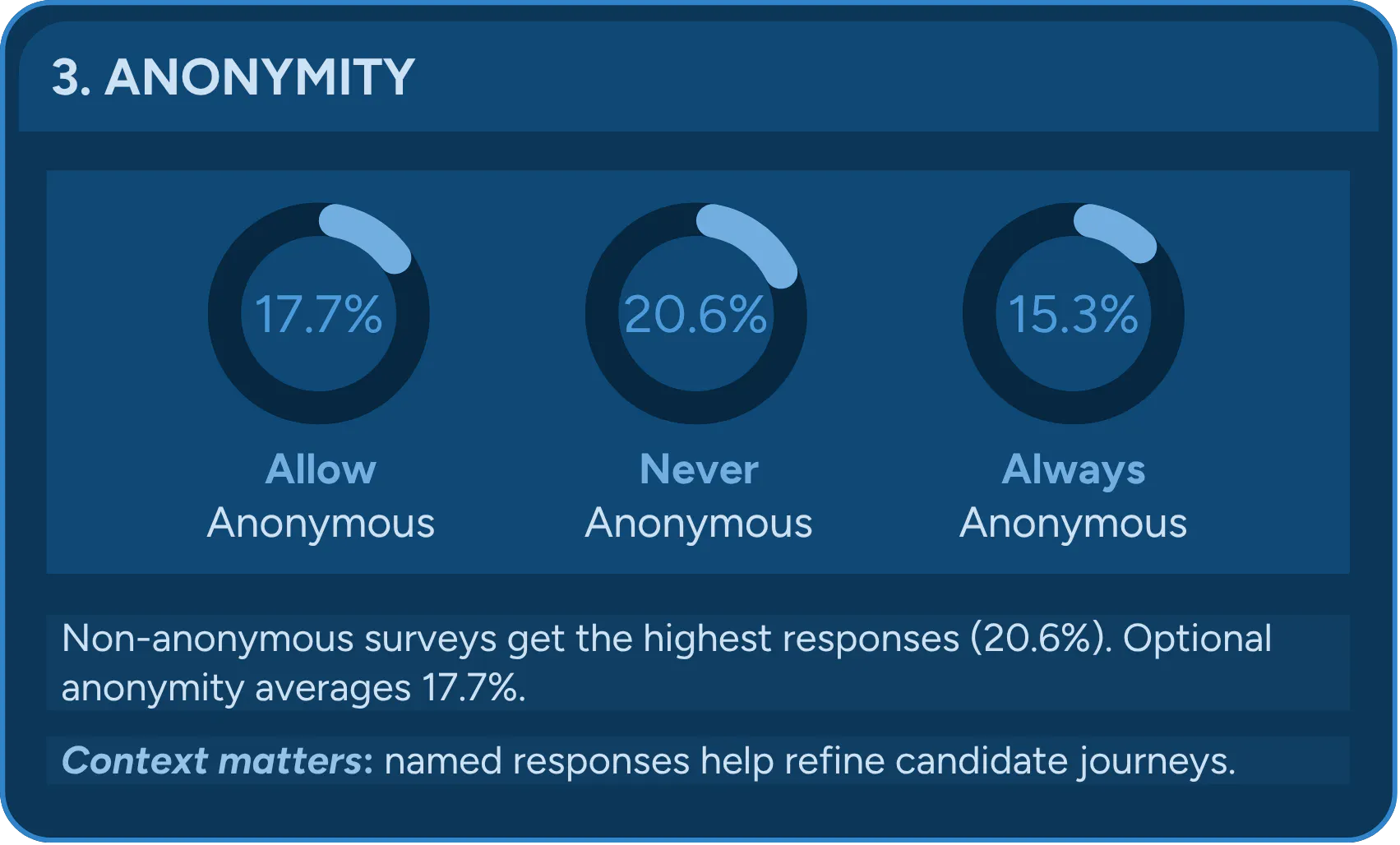
Anonymous surveys protect privacy, but named responses give context that helps you refine individual candidate journeys.
The data shows non-anonymous surveys get higher response rates (20.6%) compared to anonymous ones (17.7%). Optional anonymity averages 17.7%.
Consider hybrid approaches that align with your recruitment strategy. Sometimes knowing who said what helps you turn a negative experience into a positive relationship.
4. Ask the Right Questions
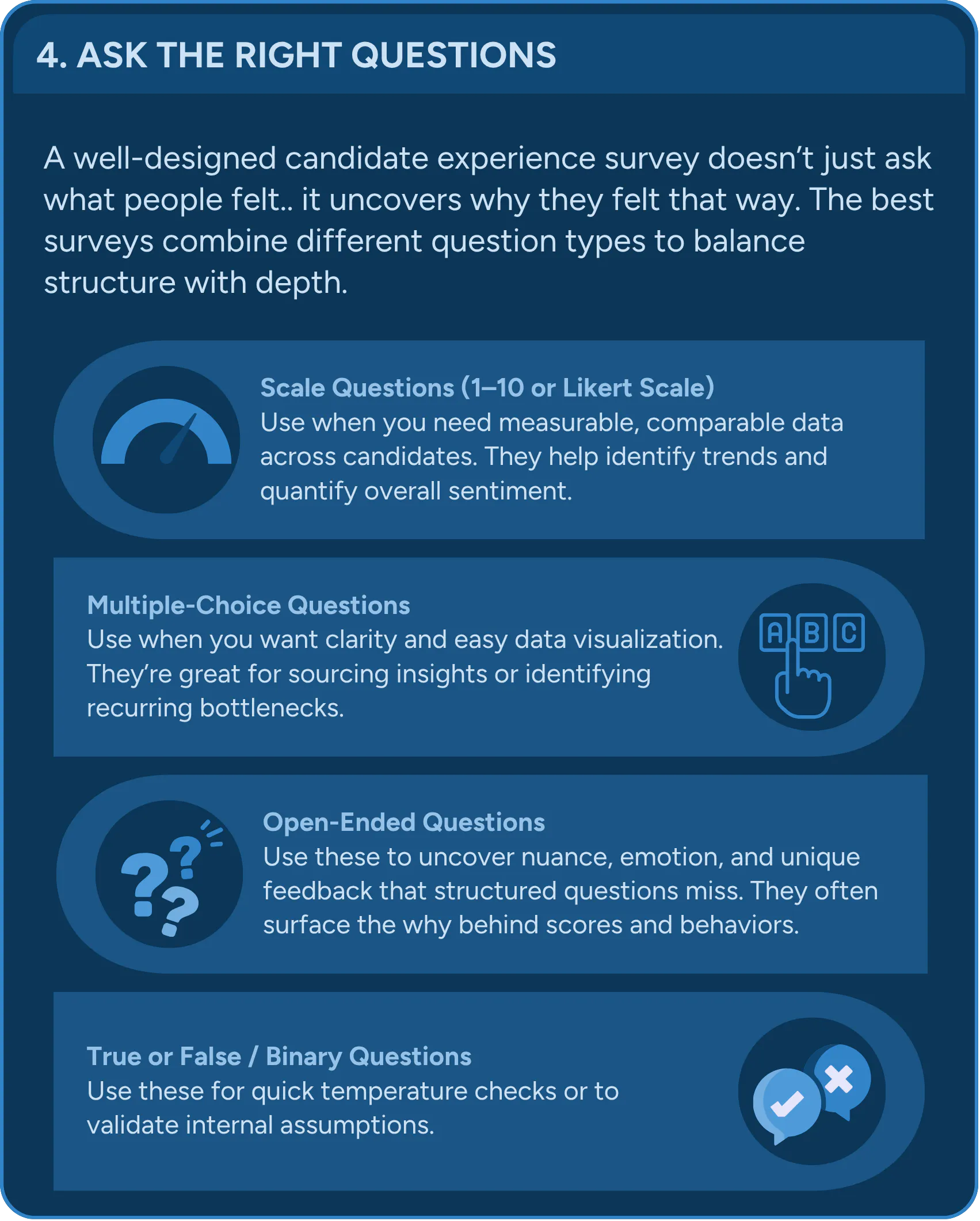
A well-designed candidate experience survey doesn't just ask what people felt—it uncovers why they felt that way. The best surveys combine different question types to balance structure with depth.
Scale Questions (1–10 or Likert Scale)
Use when you need measurable, comparable data across candidates. They help identify trends and quantify overall sentiment. Perfect for tracking metrics like Net Promoter Score (NPS) over time.
Multiple-Choice Questions
Use when you want clarity and easy data visualization. They're great for sourcing insights or identifying recurring bottlenecks in your process.
Open-Ended Questions
Use these to uncover nuance, emotion, and unique feedback that structured questions miss. They often surface the "why" behind scores and behaviors.
Example: "If you could change one thing about our hiring process, what would it be?"
True or False / Binary Questions
Use these for quick temperature checks or to validate internal assumptions about your process.
Align questions to your team's goals and recruiter expectations. Every question should serve a purpose.
5. Close the Feedback Loop
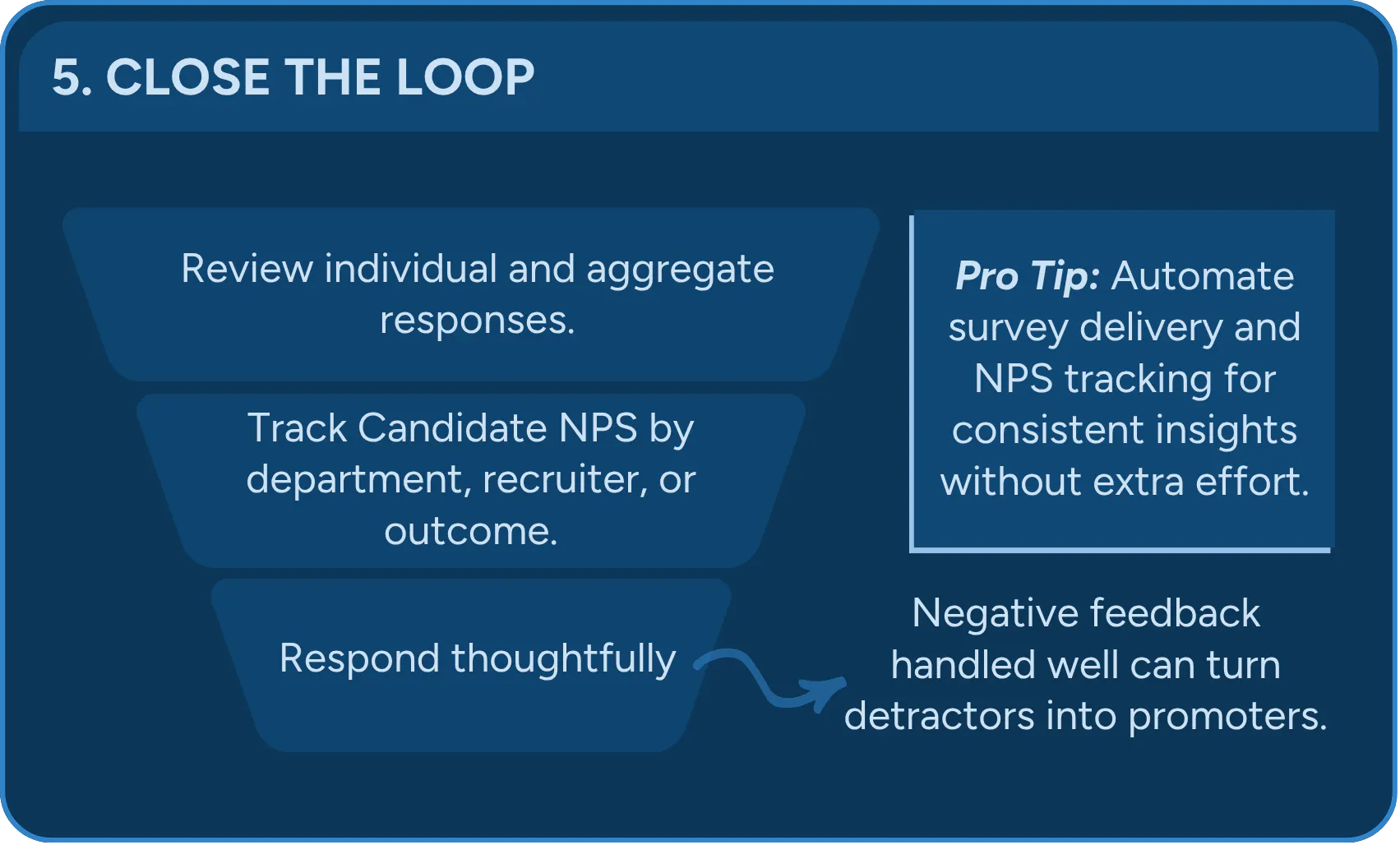
Review individual and aggregate responses to spot trends early. Are certain recruiters getting consistently lower scores? Are specific interview stages creating friction?
Track Candidate NPS by department, recruiter, or outcome. This helps you understand not just what's broken, but where.
Respond thoughtfully. Even negative feedback can turn detractors into promoters when handled well. A genuine follow-up shows candidates their voice matters.
Pro tip: Automate survey delivery and NPS tracking within your ATS for consistent insights without extra effort.
Takeaway
Candidate experience surveys aren't paperwork—they're a mirror to how your hiring process feels from the outside in.
Design them with care, analyze them with curiosity, and act on them with empathy.
That's how great teams find—and keep—their best people.

Was this content useful?