 cord
cordBehavioural vs. Situational Interview Questions
Master the art of asking the right questions at the right time
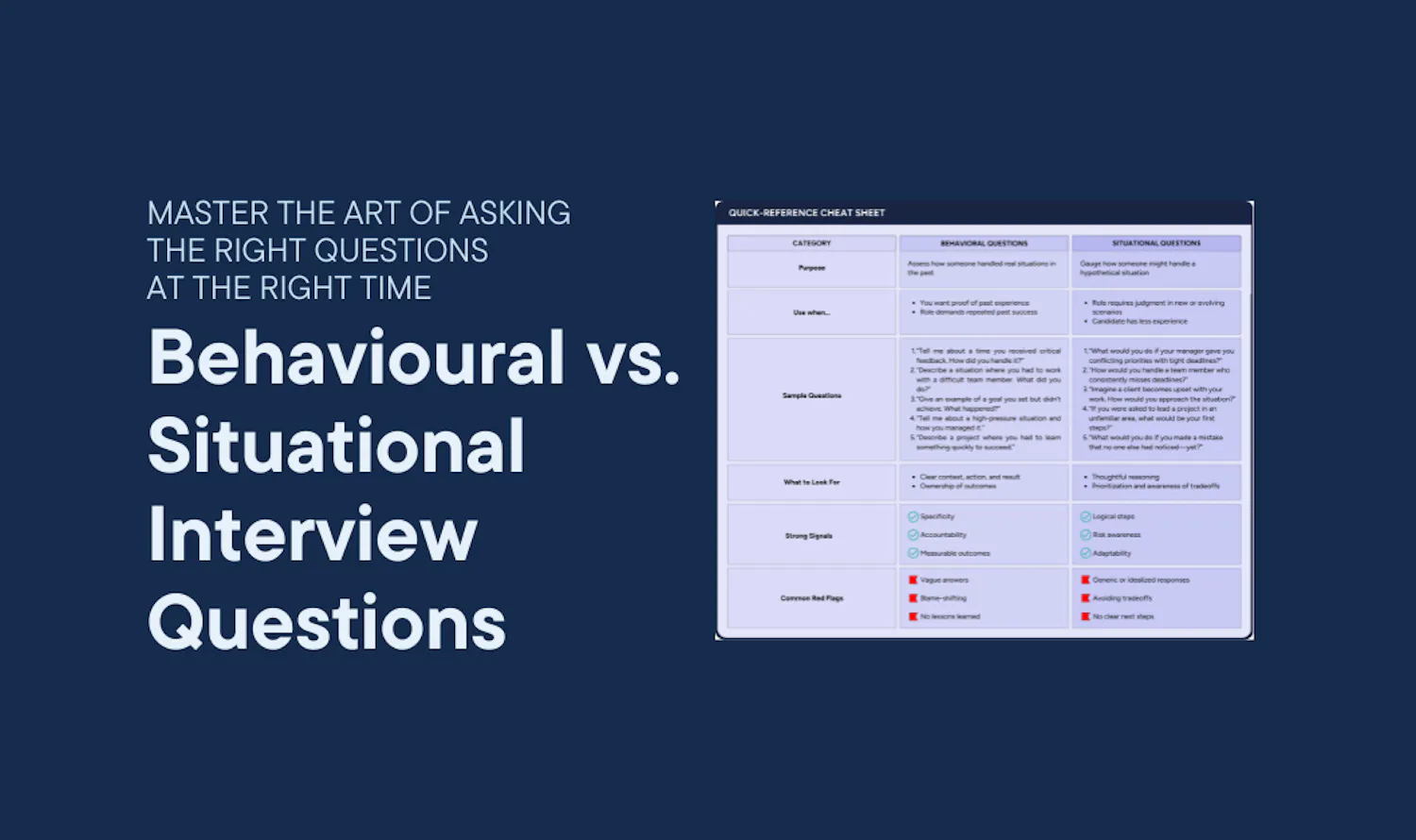
Hiring managers don't just need good questions—they need the right type of question at the right moment. Understanding when to use behavioural versus situational questions can transform your interviews from surface-level conversations into deeper evaluations of candidate potential.
Two Core Types of Interview Questions
Behavioural Questions: Revealing Past Performance Patterns
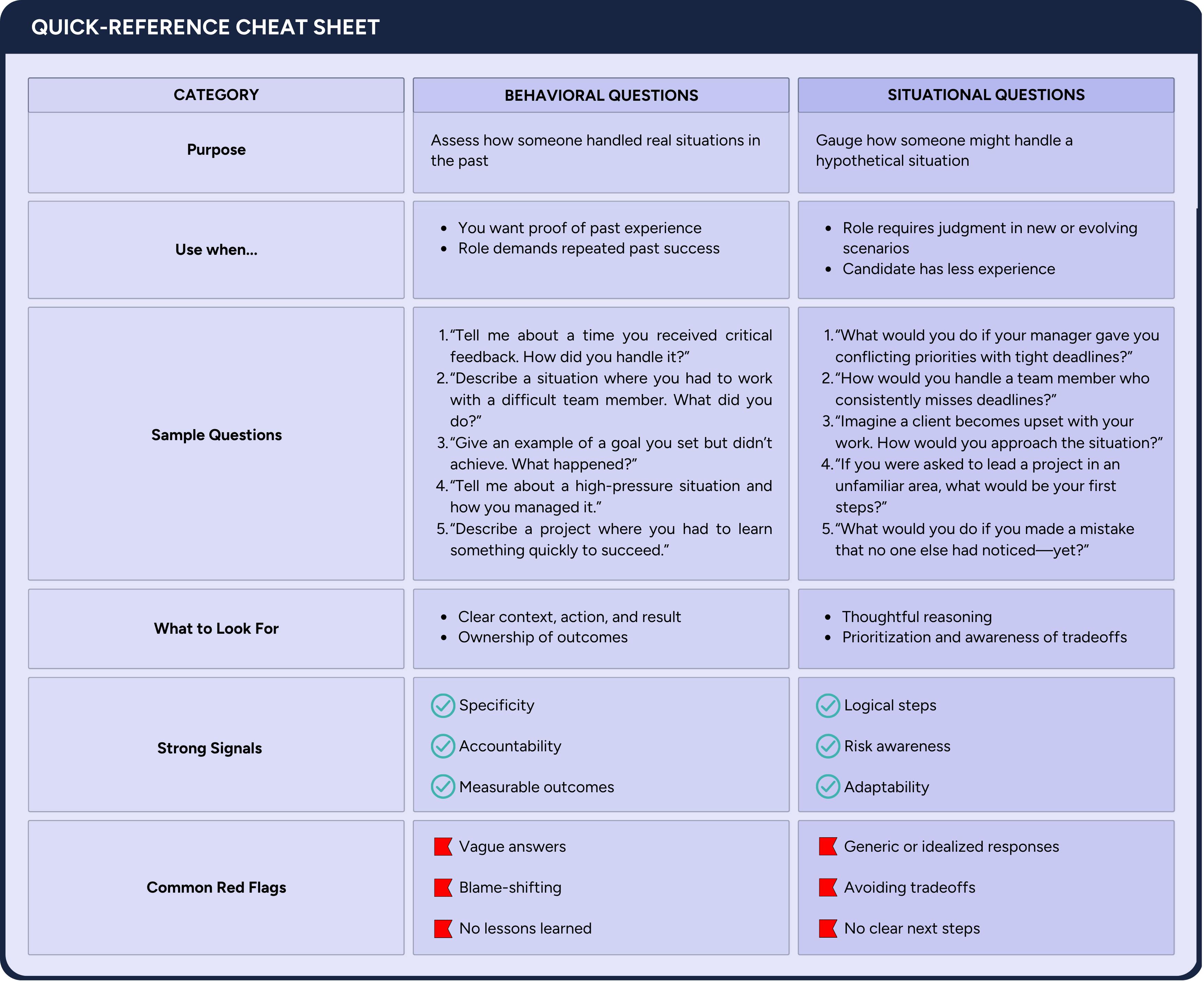
Behavioural questions assess how someone handled real situations in the past. They help you evaluate real-world accountability, problem-solving abilities, and how candidates navigate challenges they've already faced.
Examples of behavioural questions:
- "Tell me about a time you received critical feedback. How did you handle it?"
- "Describe a situation where you had to work with a difficult team member. What did you do?"
- "Give an example of a goal you set but didn't achieve. What happened?"
- "Tell me about a high-pressure situation and how you managed it."
- "Describe a project where you had to learn something quickly to succeed."
Situational Questions: Testing Future Judgment
Situational questions gauge how someone might handle a hypothetical situation. They're ideal for scenarios the candidate hasn't encountered but are likely to face in the role you're hiring for.
Examples of situational questions:
- "What would you do if your manager gave you conflicting priorities with tight deadlines?"
- "How would you handle a team member who consistently misses deadlines?"
- "Imagine a client becomes upset with your work. How would you approach the situation?"
- "If you were asked to lead a project in an unfamiliar area, what would be your first steps?"
- "What would you do if you made a mistake that no one else had noticed—yet?"
When to Use Each Type
Use Behavioural Questions When:
- You want proof of past experience
- The role demands repeated past success
- You need evidence of specific skills or competencies
Behavioural questions work best when the position requires proven experience in specific areas. They reveal patterns of behavior and demonstrate whether someone has successfully navigated similar challenges before.
Use Situational Questions When:
- The role requires judgment in new or evolving scenarios
- The candidate has less experience in certain areas
- The position involves unique challenges they likely haven't encountered
Situational questions help you understand how someone thinks through problems, prioritizes competing demands, and adapts to unfamiliar situations.
What to Look For in Strong Responses
Behavioural Question Responses Should Include:
- Specificity: Clear, detailed examples rather than vague generalizations
- Accountability: Ownership of outcomes, both positive and negative
- Measurable outcomes: Concrete results and lessons learned
Situational Question Responses Should Demonstrate:
- Thoughtful reasoning: Logical thought processes and consideration of multiple factors
- Prioritization and awareness of tradeoffs: Understanding of competing priorities and their implications
- Logical steps: Clear action plans with sequential thinking
- Risk awareness: Recognition of potential challenges and mitigation strategies
- Adaptability: Flexibility in approach based on changing circumstances
Red Flags to Watch For
Behavioural Question Warning Signs:
- Vague answers: Responses that lack specific details or context
- Blame-shifting: Consistently pointing fingers at others without taking responsibility
- No lessons learned: Inability to reflect on experiences or extract insights
Situational Question Warning Signs:
- Generic or idealized responses: Cookie-cutter answers that sound rehearsed
- Avoiding tradeoffs: Failure to acknowledge competing priorities or difficult decisions
- No clear next steps: Inability to articulate a logical action plan
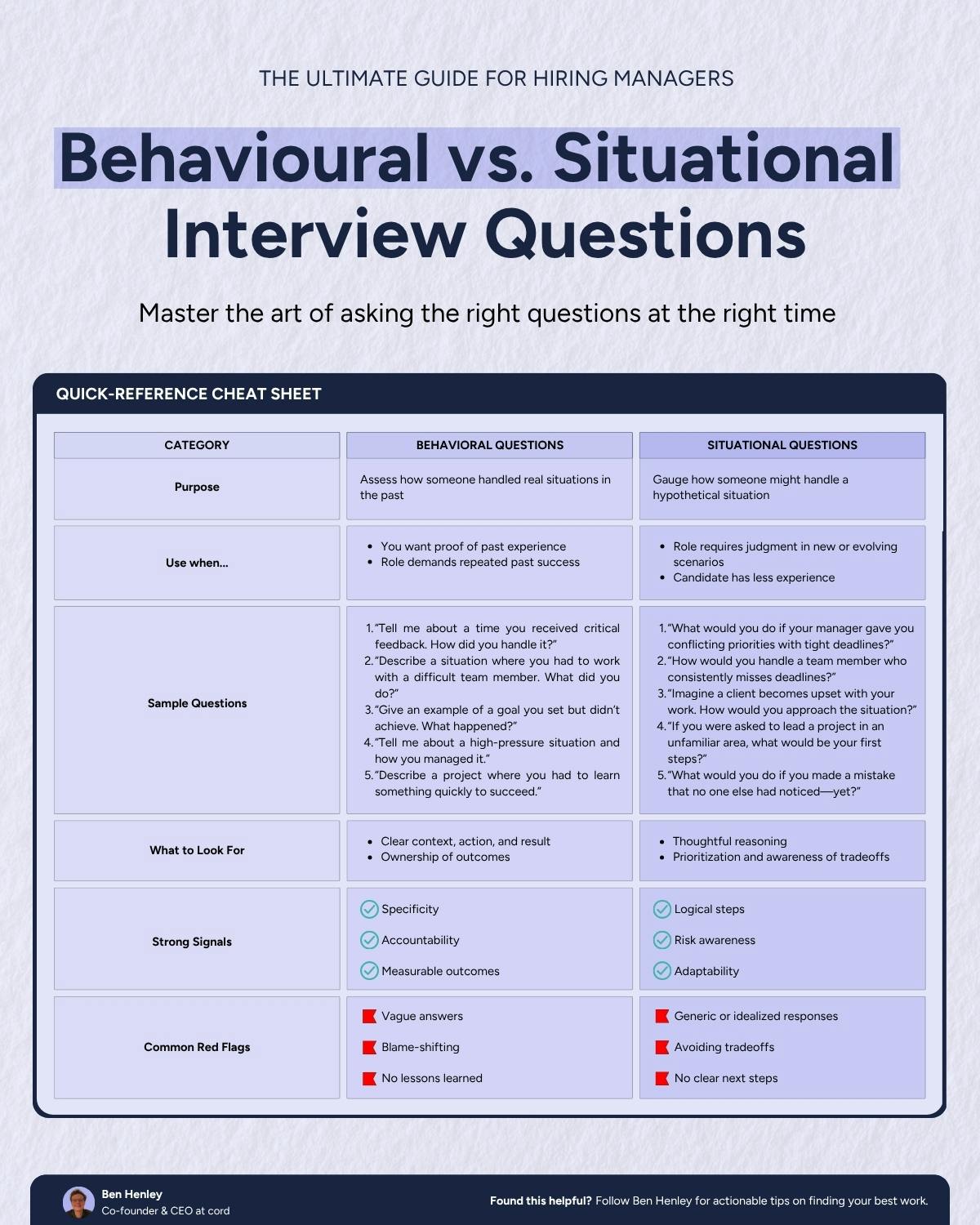
Making the Right Choice
Both question types serve important purposes in the interview process. The key is matching the question type to what you need to evaluate. Use behavioural questions to uncover evidence of proven experience and skills. Use situational questions to learn how someone thinks, learns, and adapts to new challenges.
By understanding this framework, you can move beyond surface-level impressions and focus on what truly matters for success in the role. The right questions at the right time will help you make better hiring decisions and build stronger teams.

Was this content useful?