 cord
cordCompensation Trends for 2026
A data-backed look at how salaries, skills, and opportunities are shifting in tech.
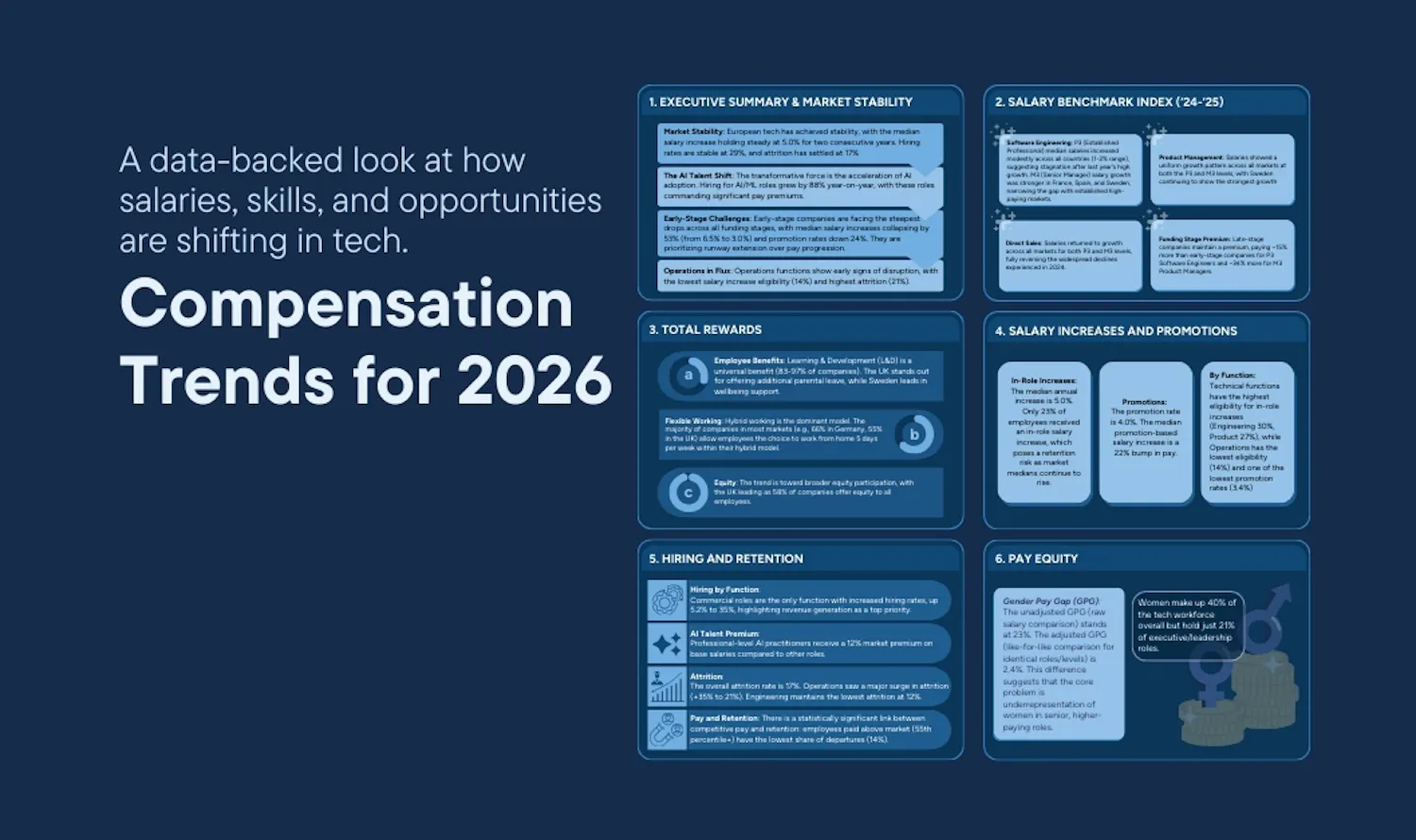
The compensation landscape isn't moving in one direction anymore. It's splitting, and if you're navigating your career in tech right now, you need to understand where the gaps are forming.
Here's what the 2026 data shows—and what it means for finding and keeping work that actually serves you.
Market Stability: Back, But Not for Everyone
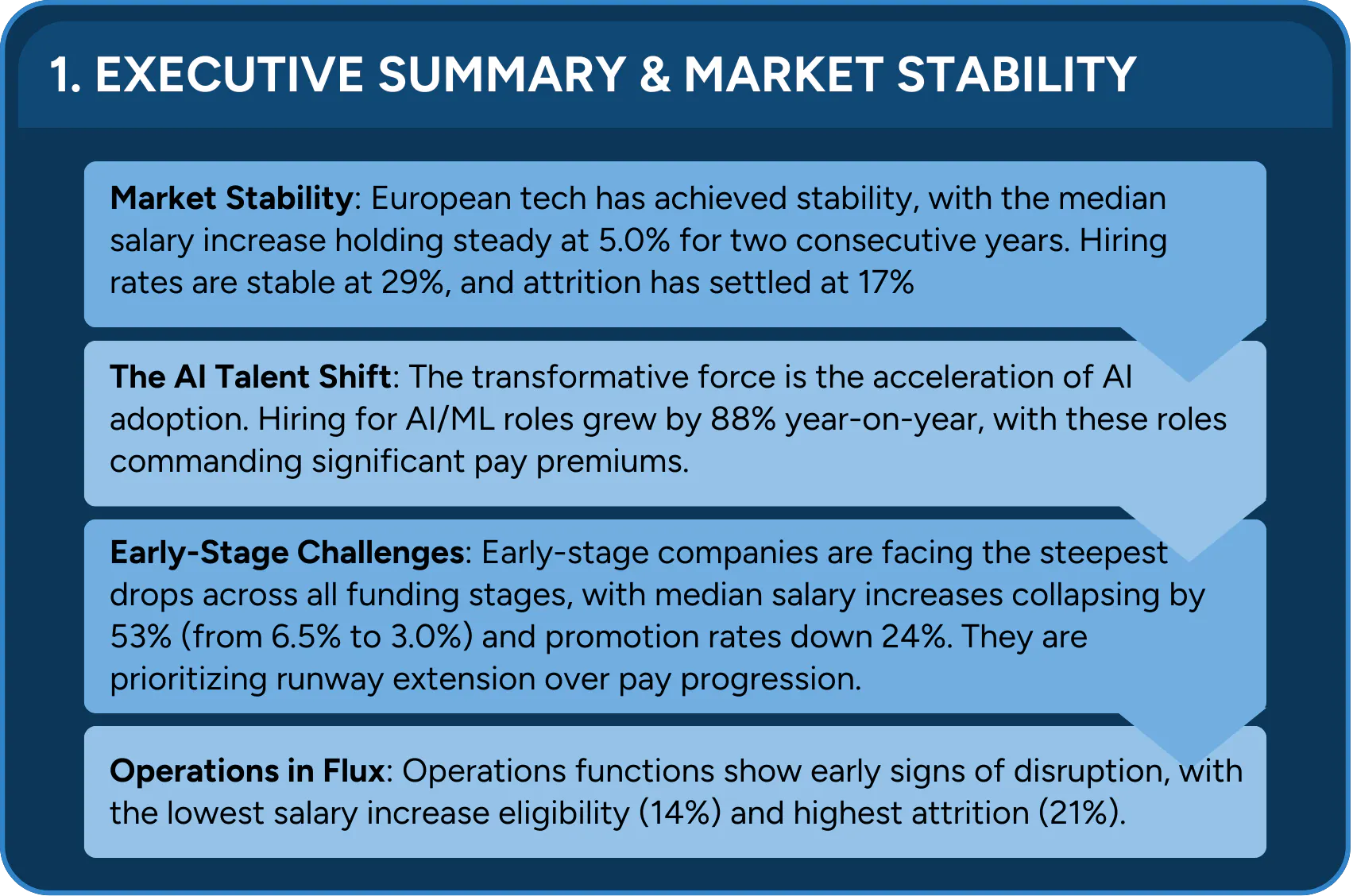
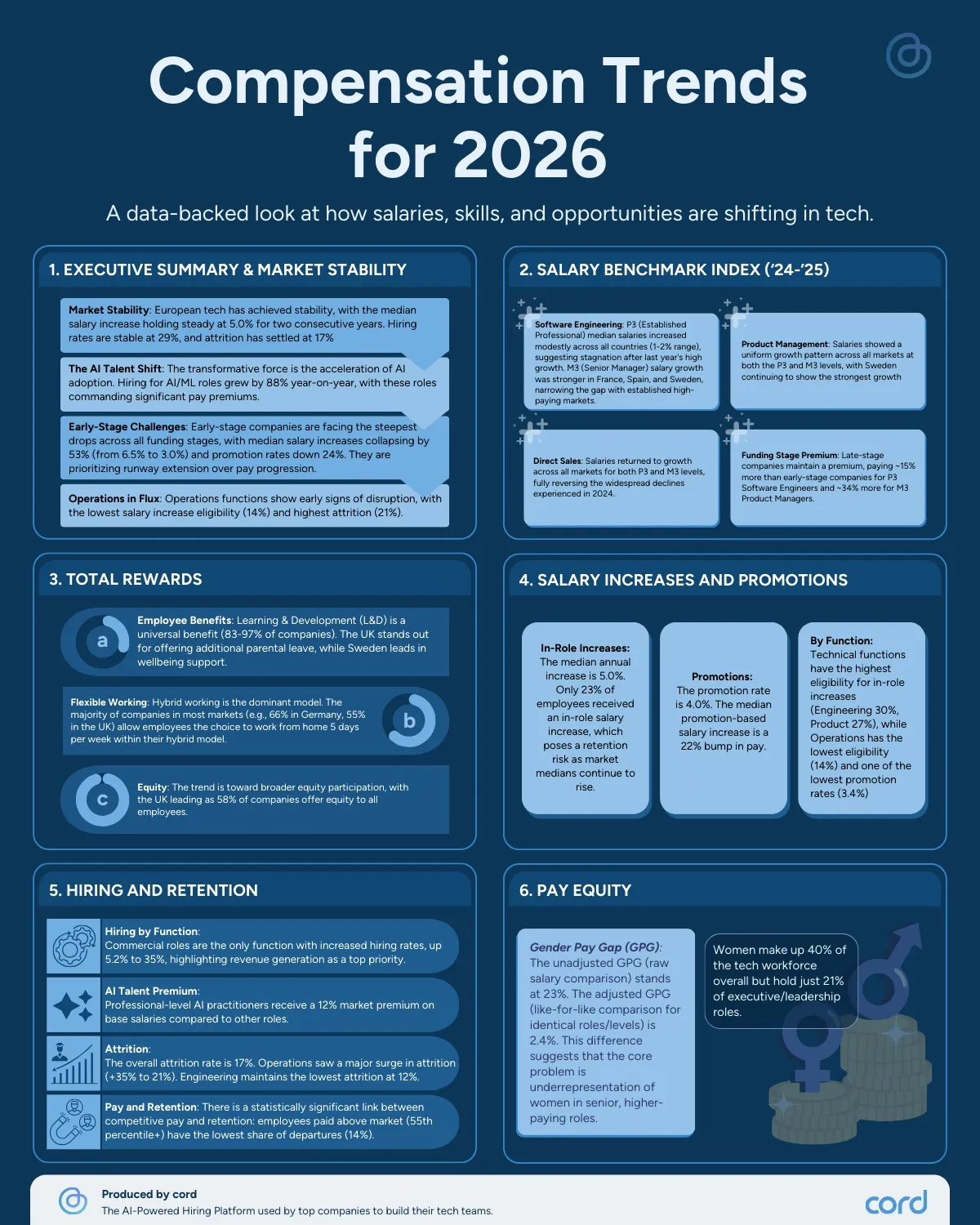
European tech has found its footing. Median salary increases held steady at 5.0% for the second consecutive year. Hiring rates stabilized at 29%, and attrition settled at 17%. If you're in a stable, late-stage company, this probably feels like relief after years of volatility.
But early-stage companies are facing a different reality. Median salary increases have collapsed by 53%—dropping from 6.5% to 3.0%. Promotion rates are down 24%. If you're at a startup banking on rapid salary progression, the math has changed. Runway extension is now prioritized over pay increases.
What this means for you: If you thrive in fast-paced environments but also need strong salary growth, late-stage companies may be the better move in 2026.
AI Skills Are No Longer Optional
The AI talent shift is real. Hiring for AI and ML roles grew 88% year-over-year, and these positions command a 12% salary premium over comparable roles. Professional-level AI practitioners are seeing their market value spike across every funding stage.
Operations functions, on the other hand, are showing early signs of disruption—lowest salary increase eligibility at 14% and highest attrition at 21%.
What this means for you: If you've been putting off learning AI tools or building adjacent skills, this is the year to stop waiting. The market is rewarding technical fluency in AI, and it's only accelerating.
Promotions Are the Real Salary Lever
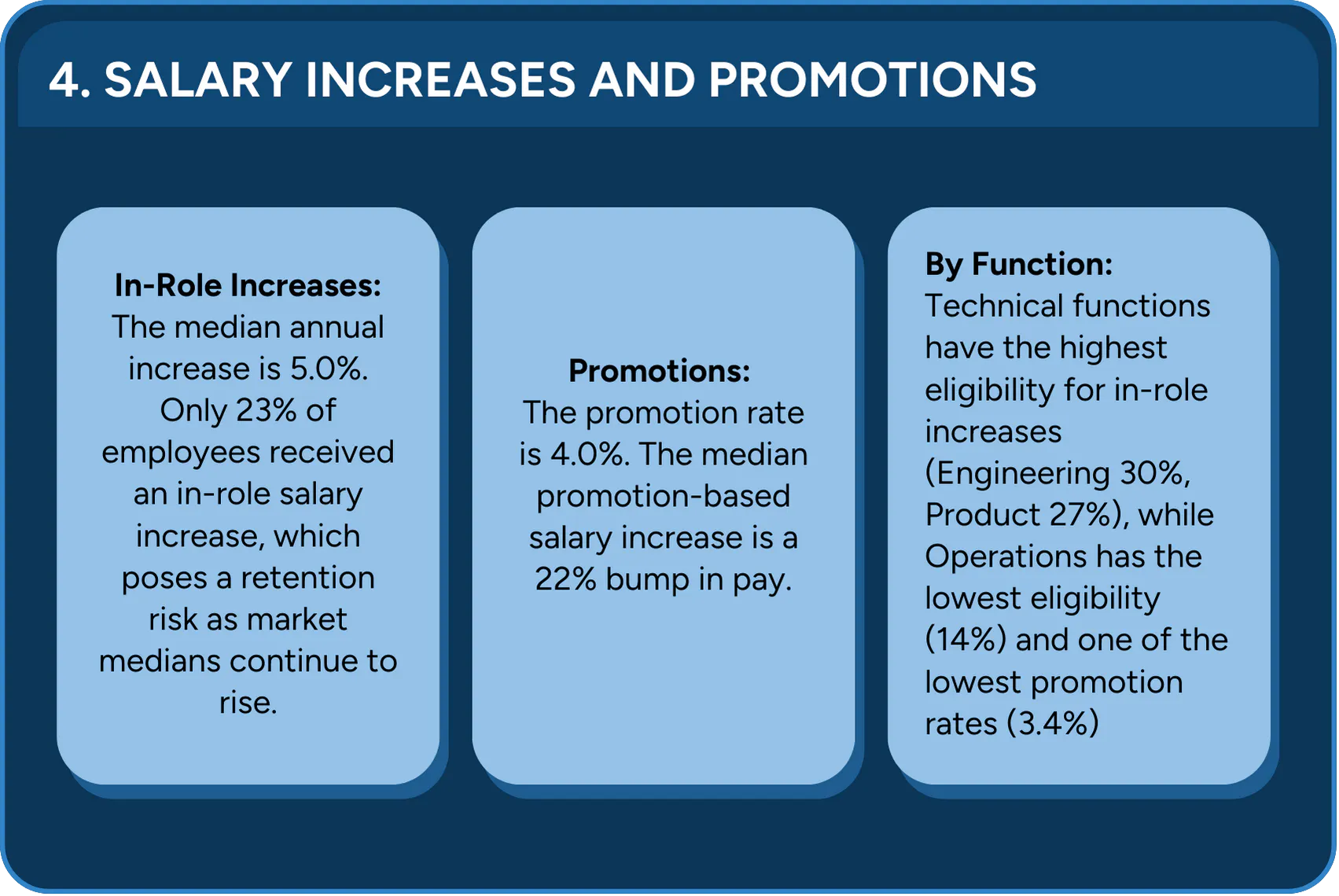
In-role salary increases are becoming rare. Only 23% of employees received one in 2025, with a median increase of 5.0%. But promotions? They deliver a 22% median bump in pay.
The promotion rate itself is 4.0%, which poses a real retention risk as high performers start looking elsewhere for upward mobility.
What this means for you: If you're stagnating in role, the issue may not be your output—it's the structure around you. If promotion paths aren't clear or accessible, it might be time to find a company where they are.
Pay Transparency Drives Retention
There's a statistically significant link between competitive pay and retention. Employees paid above the 55th percentile have the lowest attrition rate at 14%. Fair pay isn't a nice-to-have anymore—it's retention strategy.
What this means for you: If your company isn't transparent about compensation bands or you're consistently underpaid relative to market, you're statistically more likely to leave. And companies know this now.
Total Rewards: The Differentiators That Actually Matter
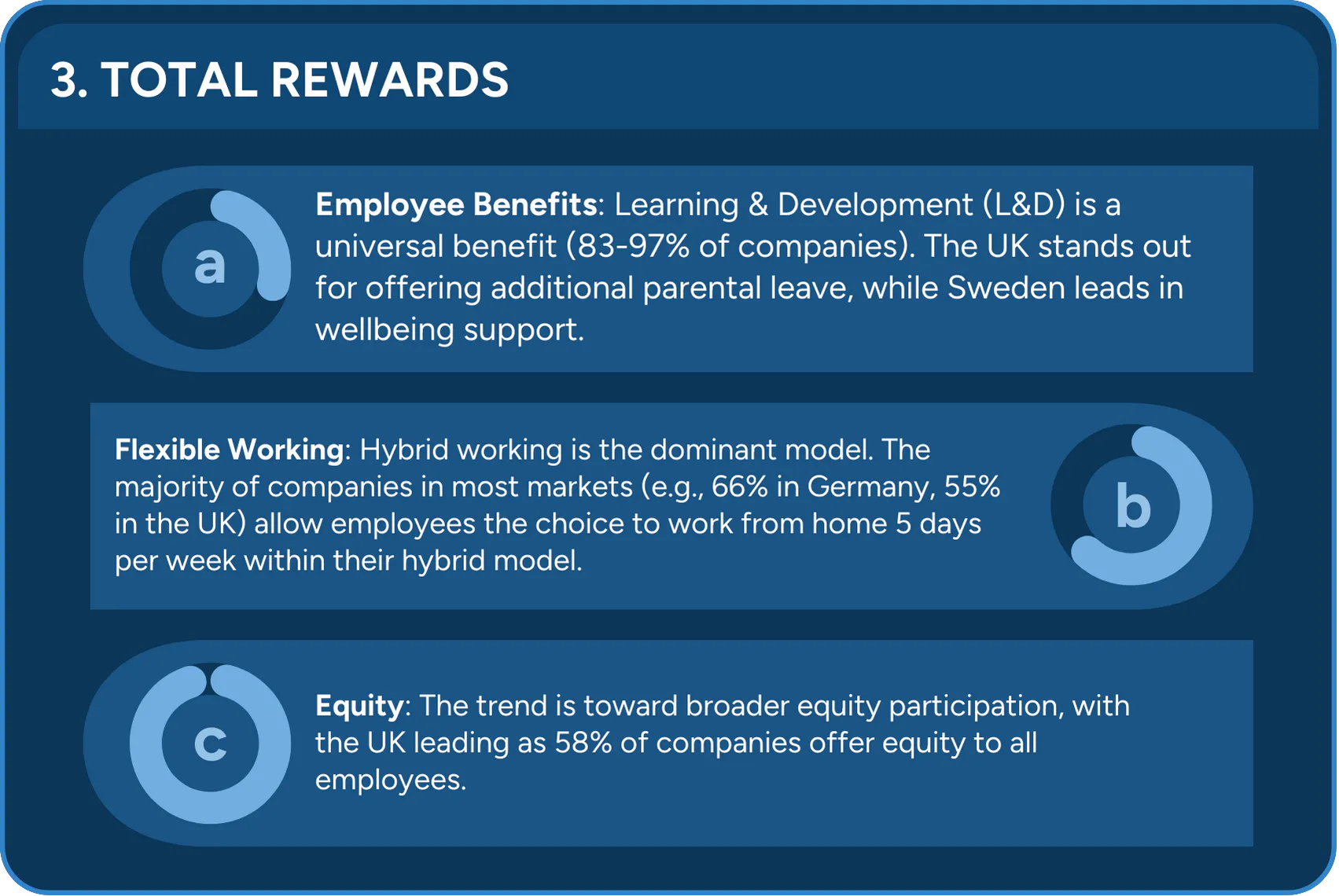
Most companies (83–97%) now offer Learning & Development benefits as a baseline. The UK leads in offering additional parental leave, while Sweden prioritizes wellbeing support. Flexible working remains dominant—60% of companies in most markets allow employees to choose working from home 5 days per week within hybrid models.
Equity participation is also broadening. The UK now leads at 58% of companies offering equity to all employees.
What this means for you: When comparing offers with similar cash compensation, these benefits matter. Equity, flexibility, and L&D support are real differentiators—not just perks.
Hiring and Retention: Where the Movement Is Happening
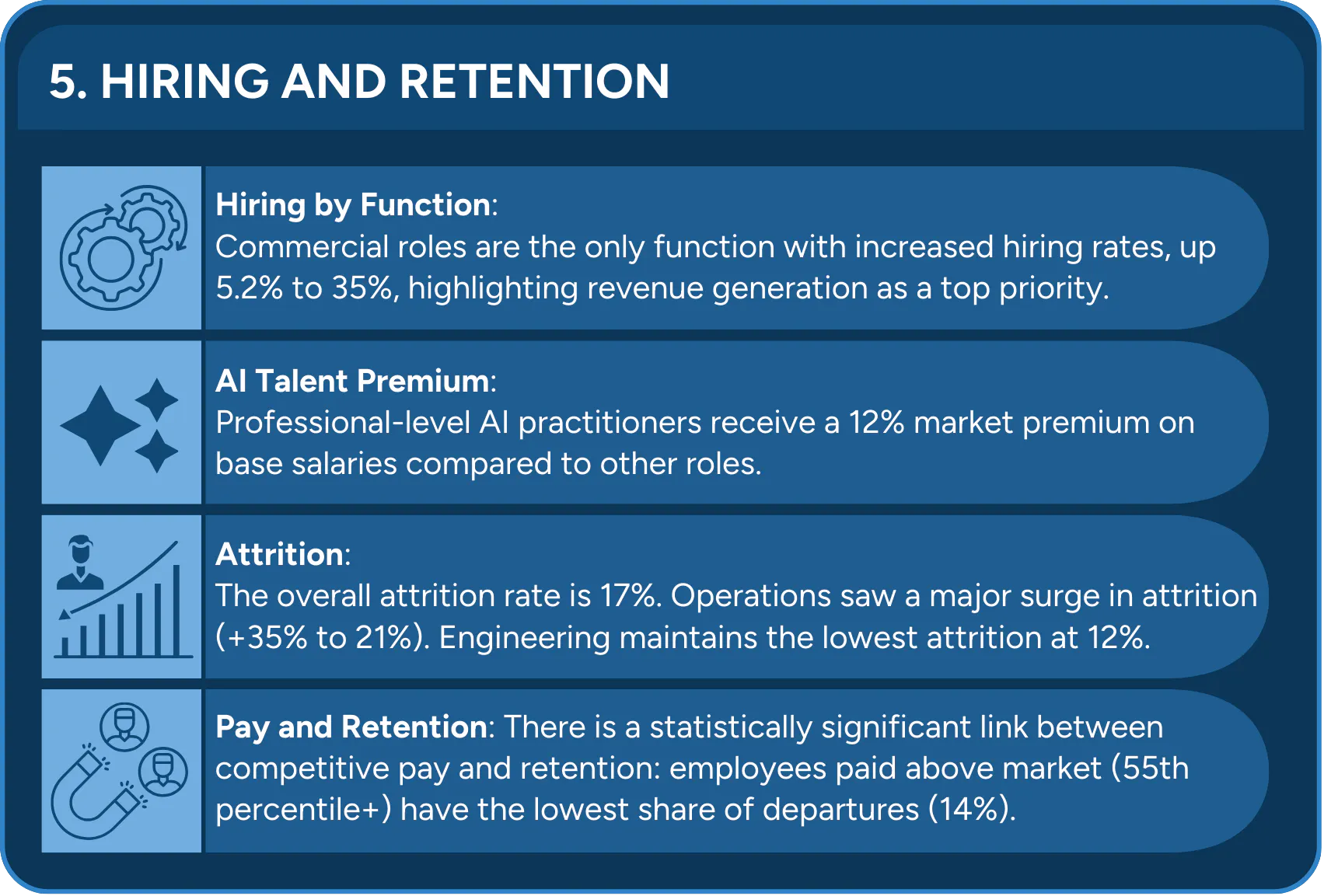
Commercial roles are the only function seeing increased hiring rates—up 5.2% to 35%. Revenue generation is clearly the priority.
Attrition overall sits at 17%, but there's wide variance by function. Operations saw a major surge to 21%, while Engineering maintains the lowest attrition at 12%.
Funding stage also matters. Late-stage companies maintain a roughly 15% hiring advantage over early-stage for both P3 Software Engineers and M3 Product Managers.
What this means for you: If you're in a high-attrition function or at a cash-strapped startup, be aware of the broader market dynamics. Your leverage may be higher than you think.
The Gender Pay Gap: Still a Structural Problem
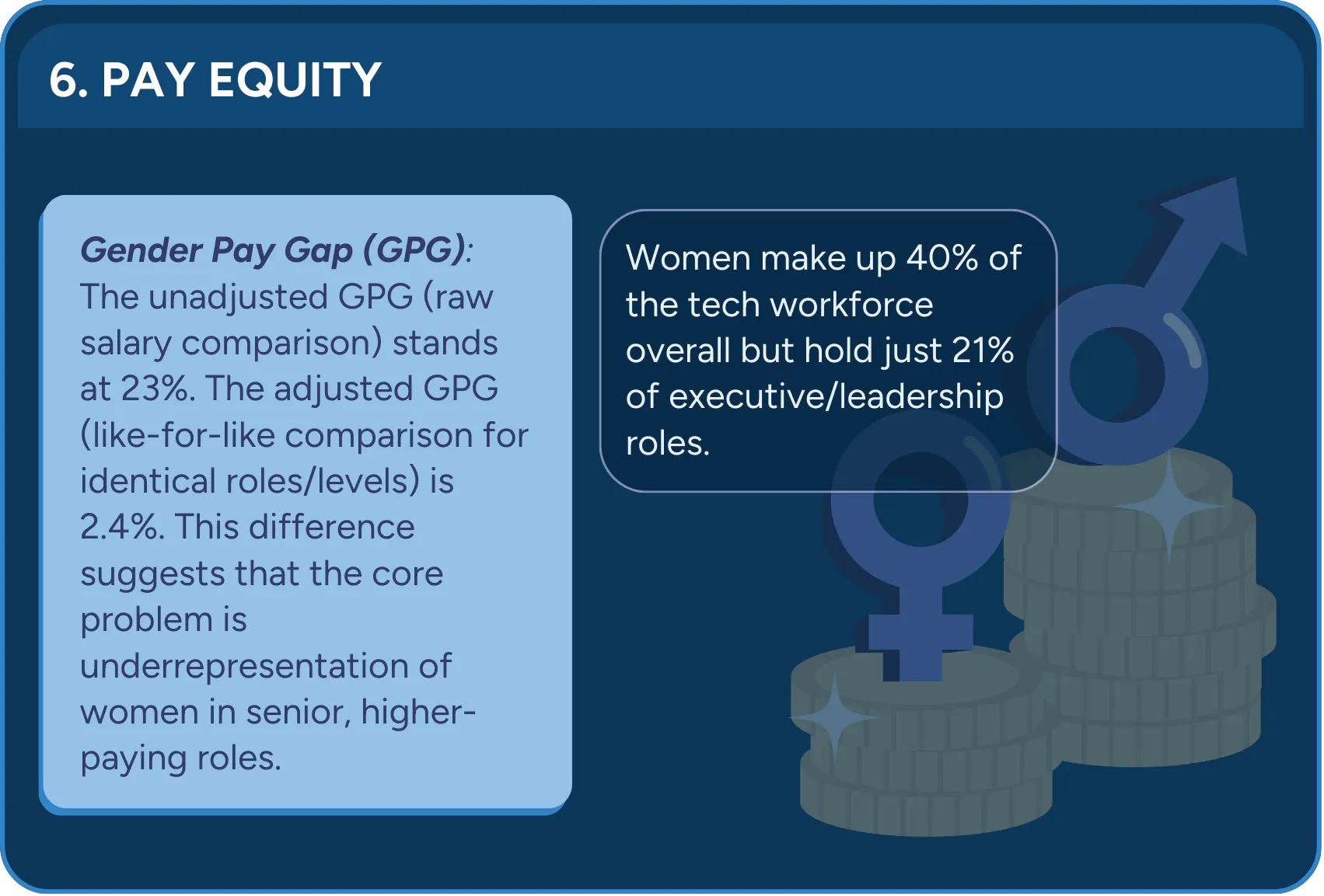
The unadjusted gender pay gap (raw salary comparison) stands at 23%. The adjusted gap—comparing like-for-like roles and levels—is 2.4%. That's progress, but it doesn't tell the full story.
Women make up 40% of the tech workforce overall but hold just 21% of executive and leadership roles. The core problem isn't equal pay for equal work—it's underrepresentation in senior, higher-paying roles.
What this means for you: Choosing workplaces with visible, measured commitment to equity isn't just values-based. It's career-growth aligned. Companies that actively promote women into leadership create more opportunities across the board.
Salary Benchmarks by Role and Market
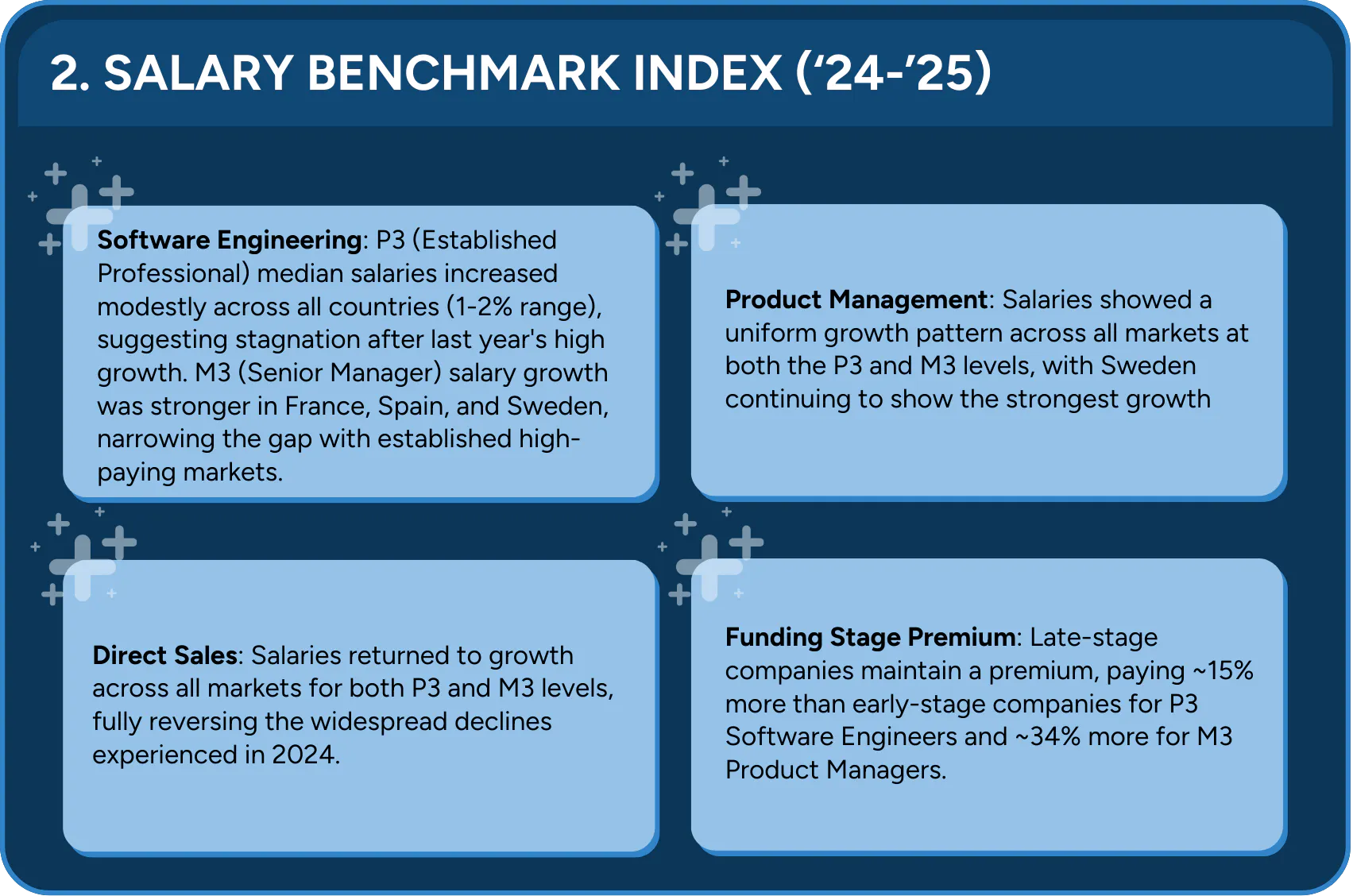
Software Engineering (P3 - Established level): Salaries increased modestly across all countries, with a 1–2% range. Stagnation after last year's high growth, but M3 (Senior Manager) roles saw stronger growth, especially in France and Sweden. High-paying markets continue to dominate.
Product Management: Salaries showed uniform and moderate growth at both P3 and M3 levels, with Sweden showing the strongest growth overall.
Direct Sales: Salaries returned to growth across all markets for both P3 and M3 levels, fully reversing the declines experienced in 2024.
Funding Stage Premiums: Late-stage companies maintain a 10–15% salary premium over early-stage companies for P3 Software Engineers and M3 Product Managers.
By Function: Who Has the Most Leverage
Technical functions have the highest eligibility for in-role salary increases—Engineering at 30%, Product at 27%. Operations has the lowest at 14% and one of the lowest promotion rates at 3.4%.
If you're in a technical role, your internal mobility and comp growth options are statistically better. If you're in operations, you may need to change companies to see meaningful progression.
What This All Means
Compensation in 2026 is no longer about blanket trends. It's about where you sit: your function, your funding stage, your seniority, your skills in AI, and whether your company views pay as retention strategy or cost control.
If you want to find your best work this year, pay attention to where compensation is moving—not where it used to be.

Was this content useful?