 cord
cordEmbedding AI in Your Daily Recruiting Workflows
How to Move Beyond Generic Tools to Build a Strategic AI-Powered Recruiting System

Most recruiting teams are now using general-purpose AI systems for surface-level tasks. But the real ROI comes when AI is embedded deep within your workflows.
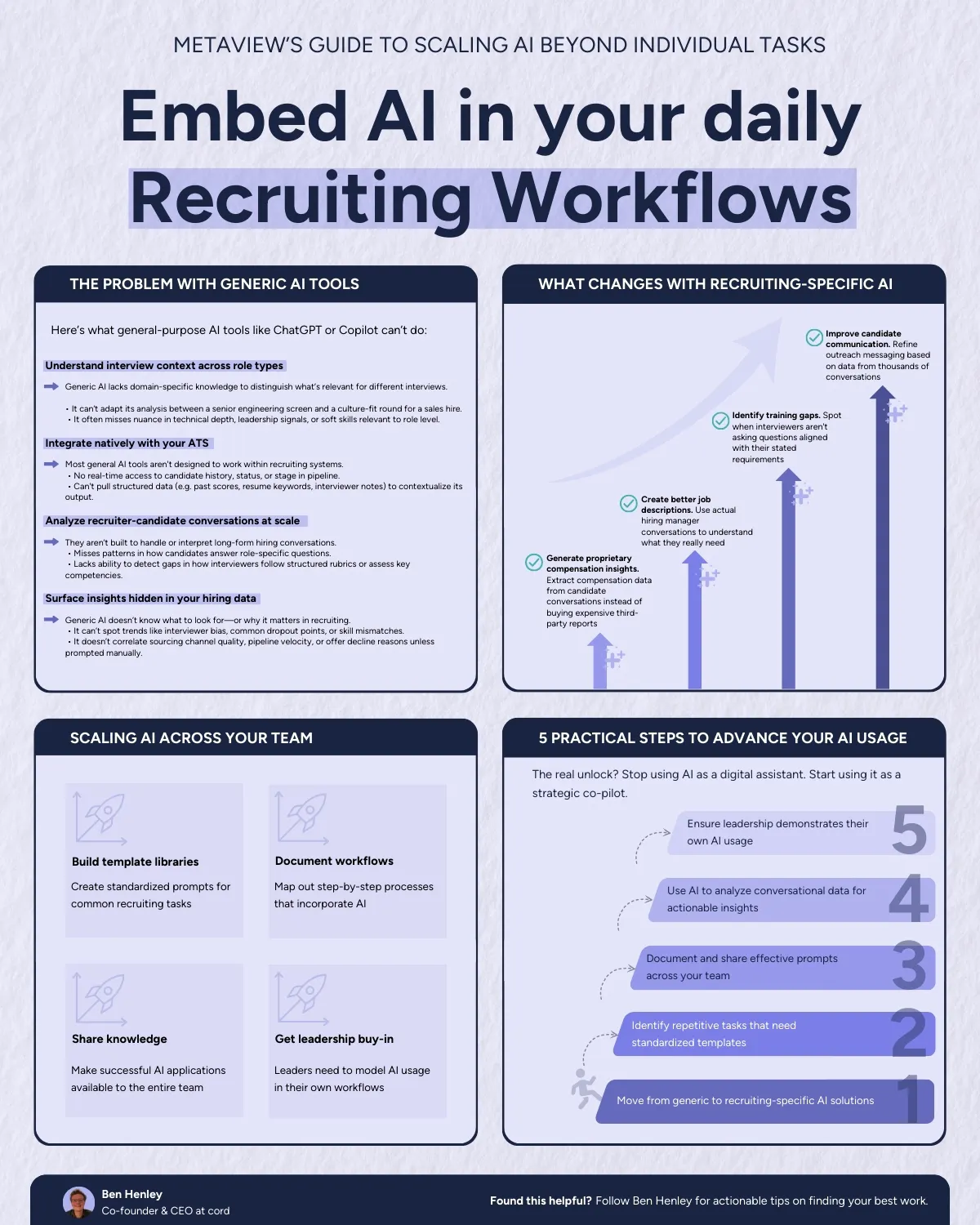
The Problem with Generic AI Tools
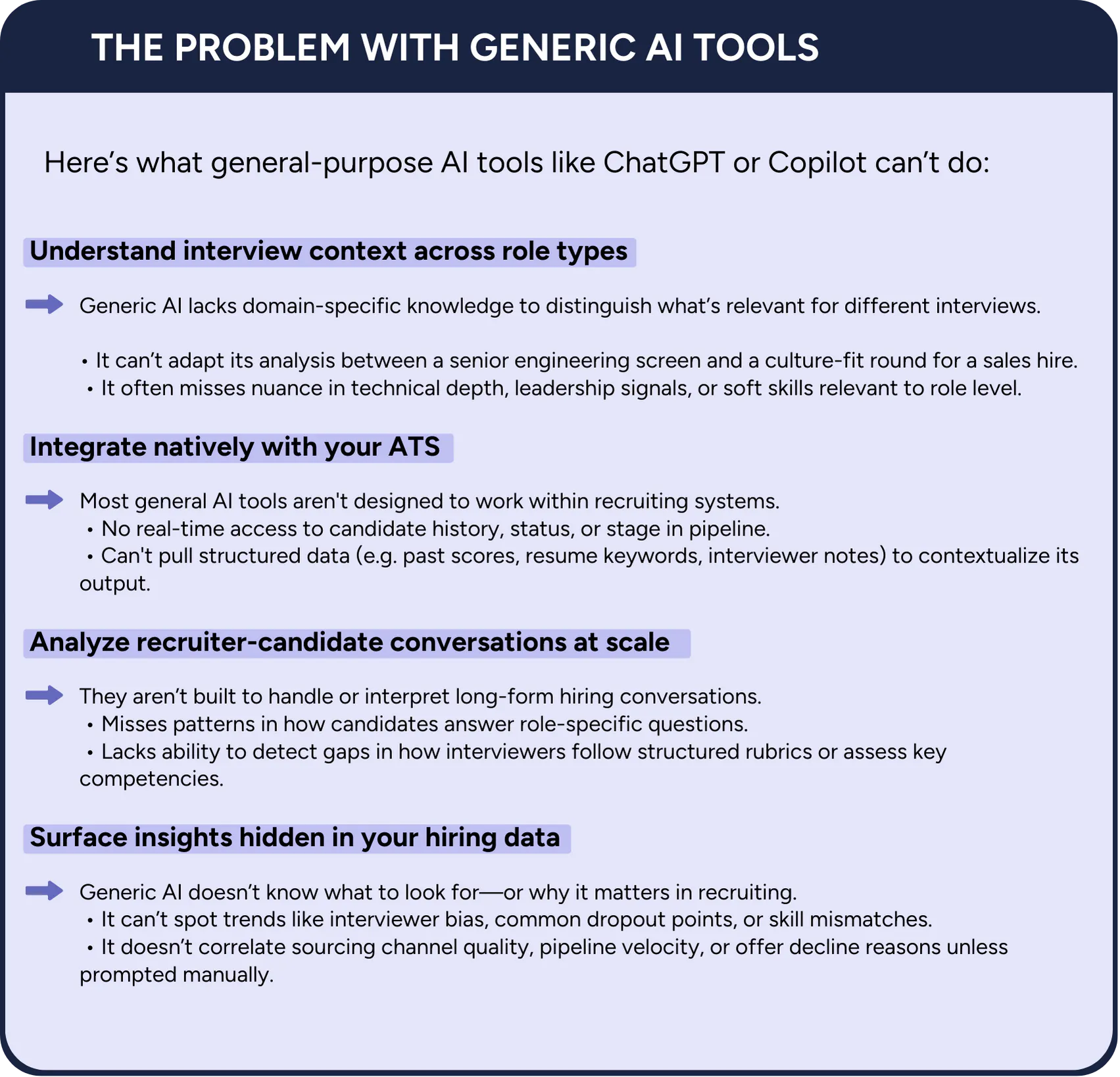
General-purpose AI tools like ChatGPT and Copilot have significant limitations when it comes to recruiting. Here's what they can't do:
Understand Interview Context Across Role Types
Generic AI lacks domain-specific knowledge to distinguish what's relevant for different interviews. It can't spot key differences between a senior engineering screen and a culture-fit round for a sales hire. It often misses nuances in technical depth, leadership signals, or soft skills relevant to role level.
Integrate Natively with Your ATS
Most general AI tools aren't designed to work within recruiting systems. They can't access candidate history, status, or stage in pipeline. They can't pull structured data like previous keywords, interviewer notes, or contextualize output.
Analyze Recruiter-Candidate Conversations at Scale
These tools aren't built to handle or interpret long-form hiring conversations. They miss patterns in how candidates answer role-specific questions and lack the ability to detect gaps in how interviewers follow structured rubrics or assess key competencies.
Surface Insights Hidden in Your Hiring Data
Generic AI doesn't know what to look for in recruiting. It can't spot trends like interviewer bias, common dropout points, or skill mismatches. It doesn't contextualize sourcing channel quality, pipeline velocity, or offer decline reasons unless prompted manually.
What Changes with Recruiting-Specific AI
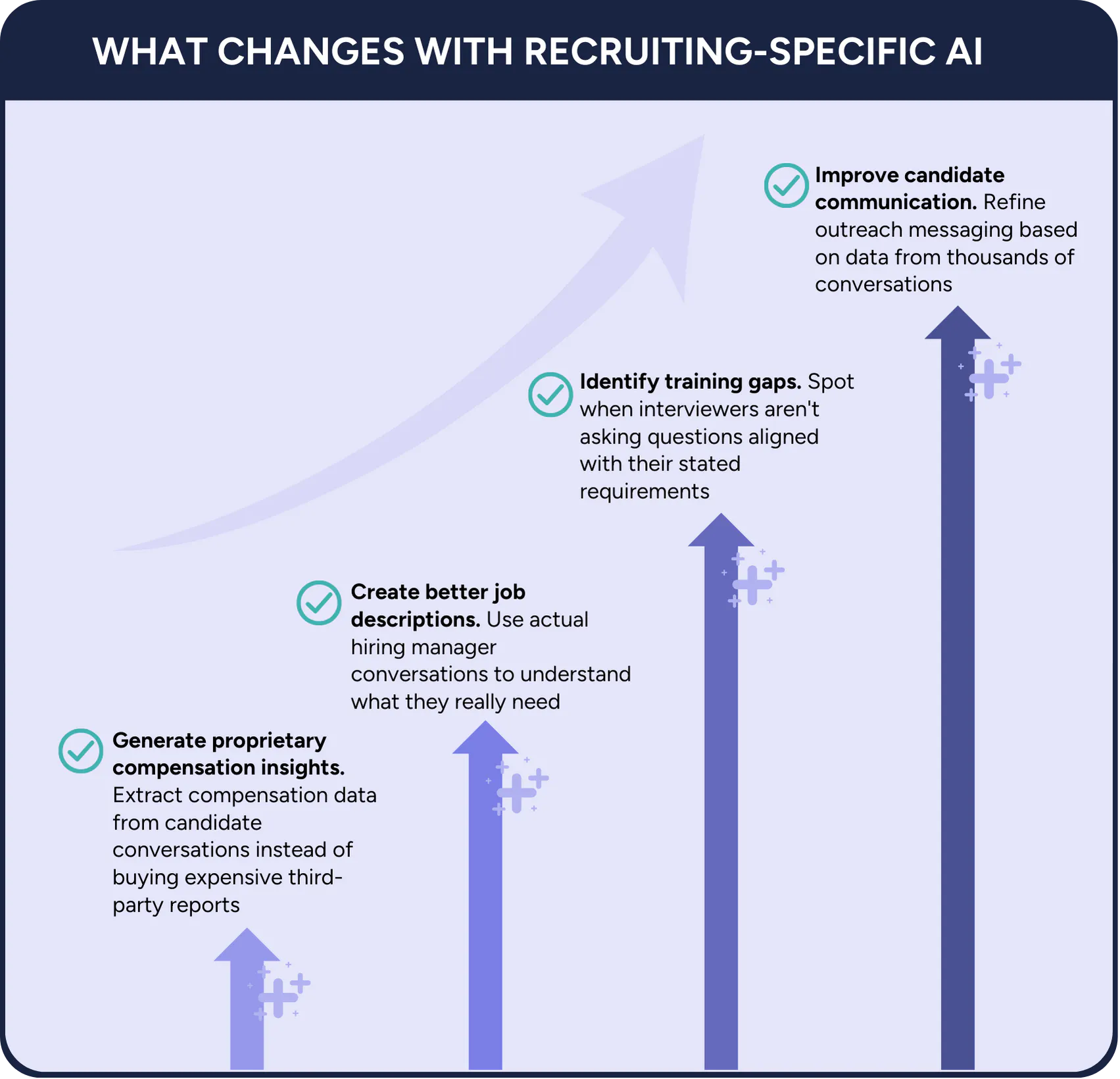
Specialized recruiting AI systems offer significant advantages (eg Metaview which is excellent):
Improve Candidate Communication
These systems refine outreach messaging based on data from thousands of conversations, leading to higher response rates.
Identify Training Gaps
They spot when interviewers aren't asking questions aligned with their stated requirements, helping improve interview quality.
Create Better Job Descriptions
AI can use actual hiring manager conversations to understand what they really need, not just what's in the job description template.
Generate Proprietary Compensation Insights
The system extracts compensation data from candidate conversations instead of relying on expensive third-party reports.
Scaling AI Across Your Team
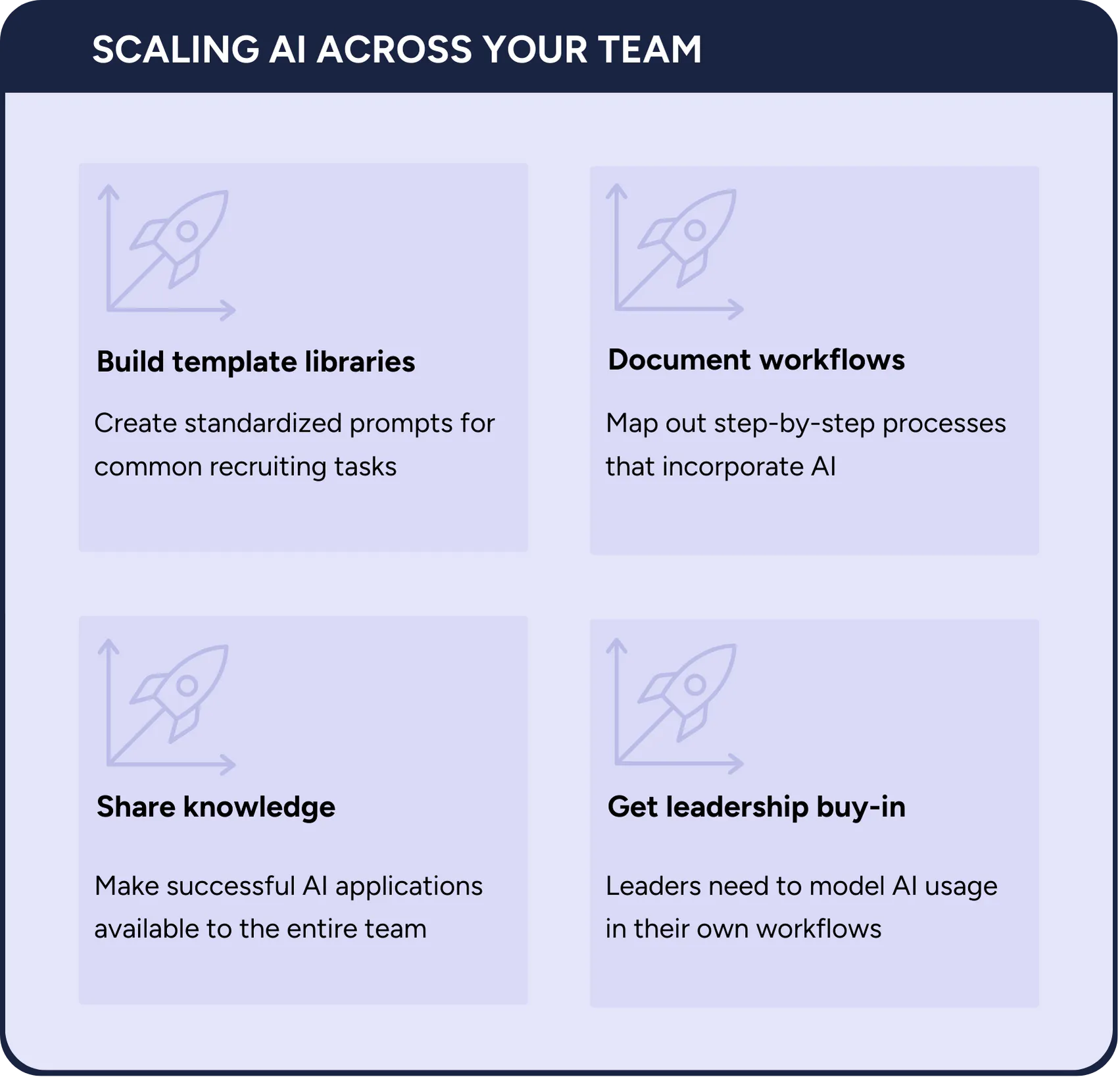
To maximize AI's impact, consider these four approaches:
Build Template Libraries
Create standardized prompts for common recruiting tasks. This ensures consistency across your team and reduces the learning curve for new users.
Document Workflows
Map out step-by-step processes that incorporate AI. This helps team members understand when and how to use AI tools effectively.
Share Knowledge
Make successful AI applications available to the entire team. When someone discovers an effective prompt or process, document it for others to use.
Get Leadership Buy-In
Leaders need to model AI usage in their own workflows. When managers demonstrate how they use AI, it encourages broader adoption across the team.
Five Practical Steps to Advance Your AI Usage
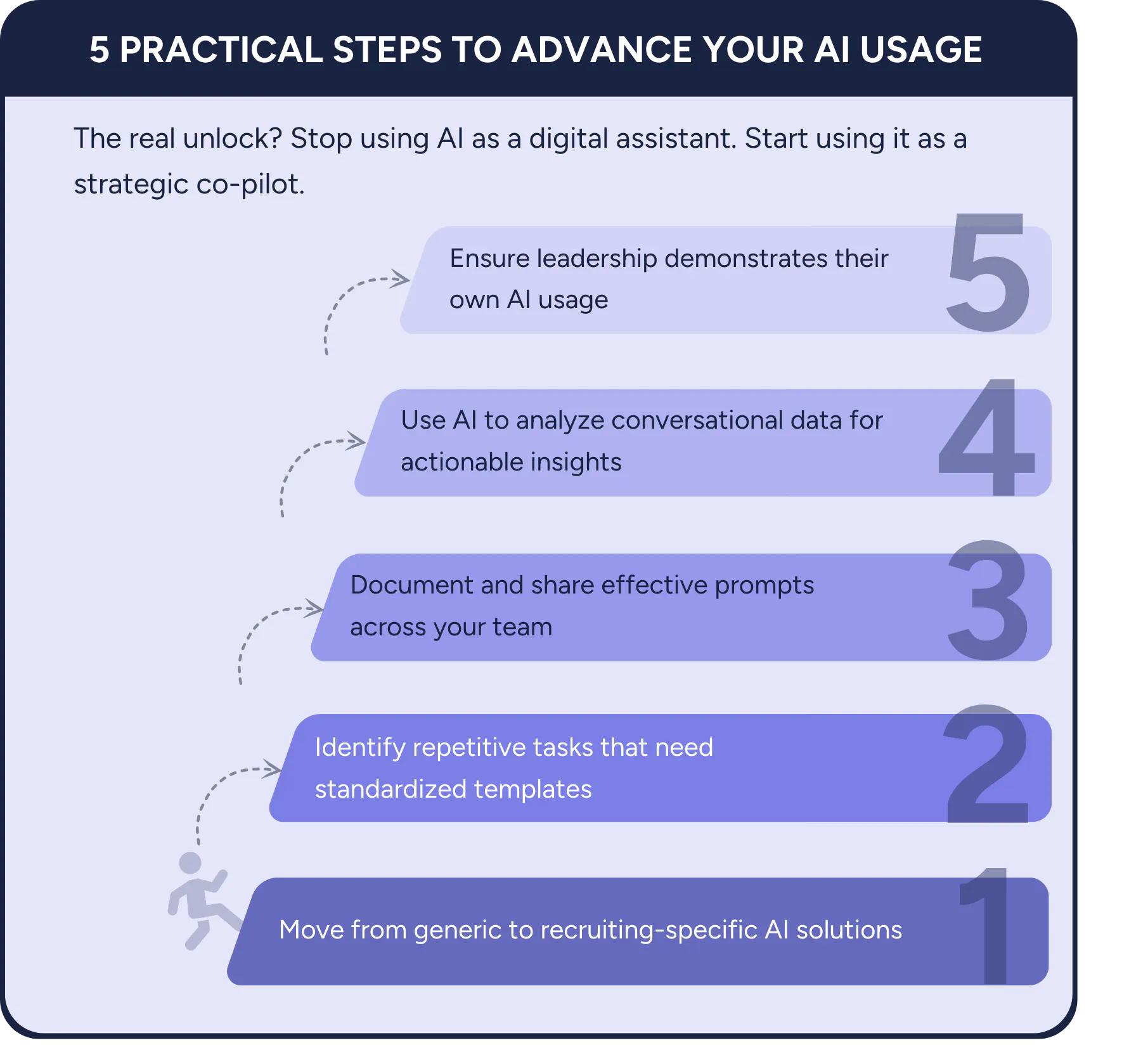
The key is to stop using AI as a digital assistant and start using it as a strategic partner:
- Move from generic to recruiting-specific AI solutions - Generic tools have their place, but specialized systems deliver better results for recruiting tasks.
- Identify repetitive tasks that need standardized templates - Look for activities your team does repeatedly and create AI-powered templates for them.
- Document and share effective prompts across your team - When someone finds a prompt that works well, make it available to everyone.
- Use AI to analyze conversational data for actionable insights - Don't just use AI to write emails; use it to understand patterns in your hiring process.
- Ensure leadership demonstrates their own AI usage - Leaders should show how they use AI in their daily work, not just encourage others to use it.
The Bottom Line
AI won't replace recruiters, but recruiters who use AI strategically will outperform those who don't. The difference lies in moving beyond surface-level applications to embedding AI deep within your recruiting workflows.
The teams that succeed will be those that invest in recruiting-specific AI solutions and take a systematic approach to implementation across their entire organization.

Was this content useful?