 cord
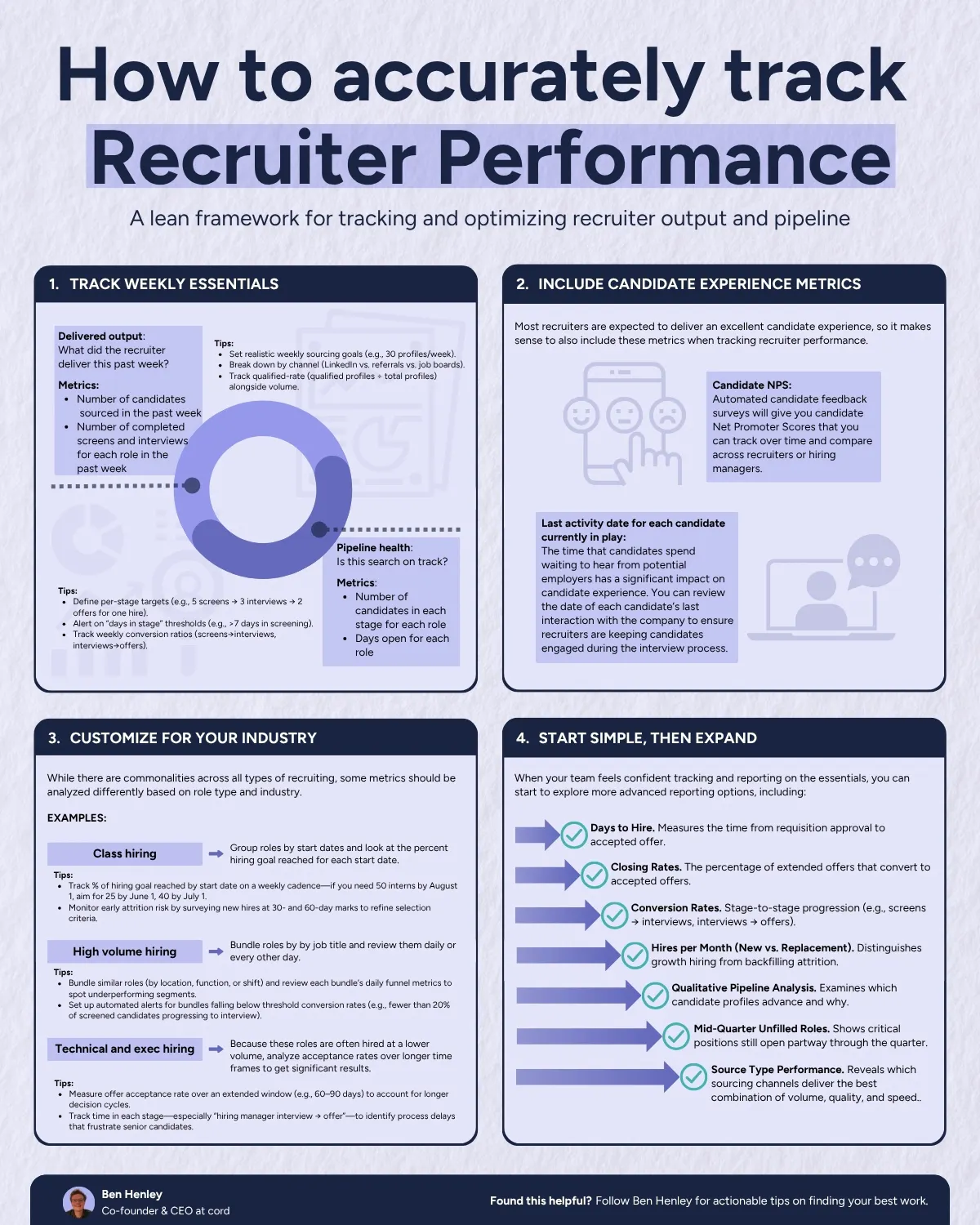
cordHow to accurately track Recruiter Performance
A lean framework for tracking and optimizing recruiter output and pipeline

Top-performing recruiters share one critical habit that sets them apart: they track their performance religiously. This isn't just about personal accountability—it's about giving talent teams and hiring leaders the data they need to make informed decisions.
When you track recruiter performance effectively, you can:
- Spot inefficiencies before they derail your pipeline
- Celebrate your top performers and replicate their approach
- Coach struggling recruiters with precise, data-backed feedback
- Align everyone around the metrics that truly drive hiring outcomes
Use this lean framework by Pinpoint to keep your entire talent organization on track:
Track Weekly Essentials
Start with the fundamentals that every recruiter should deliver consistently.
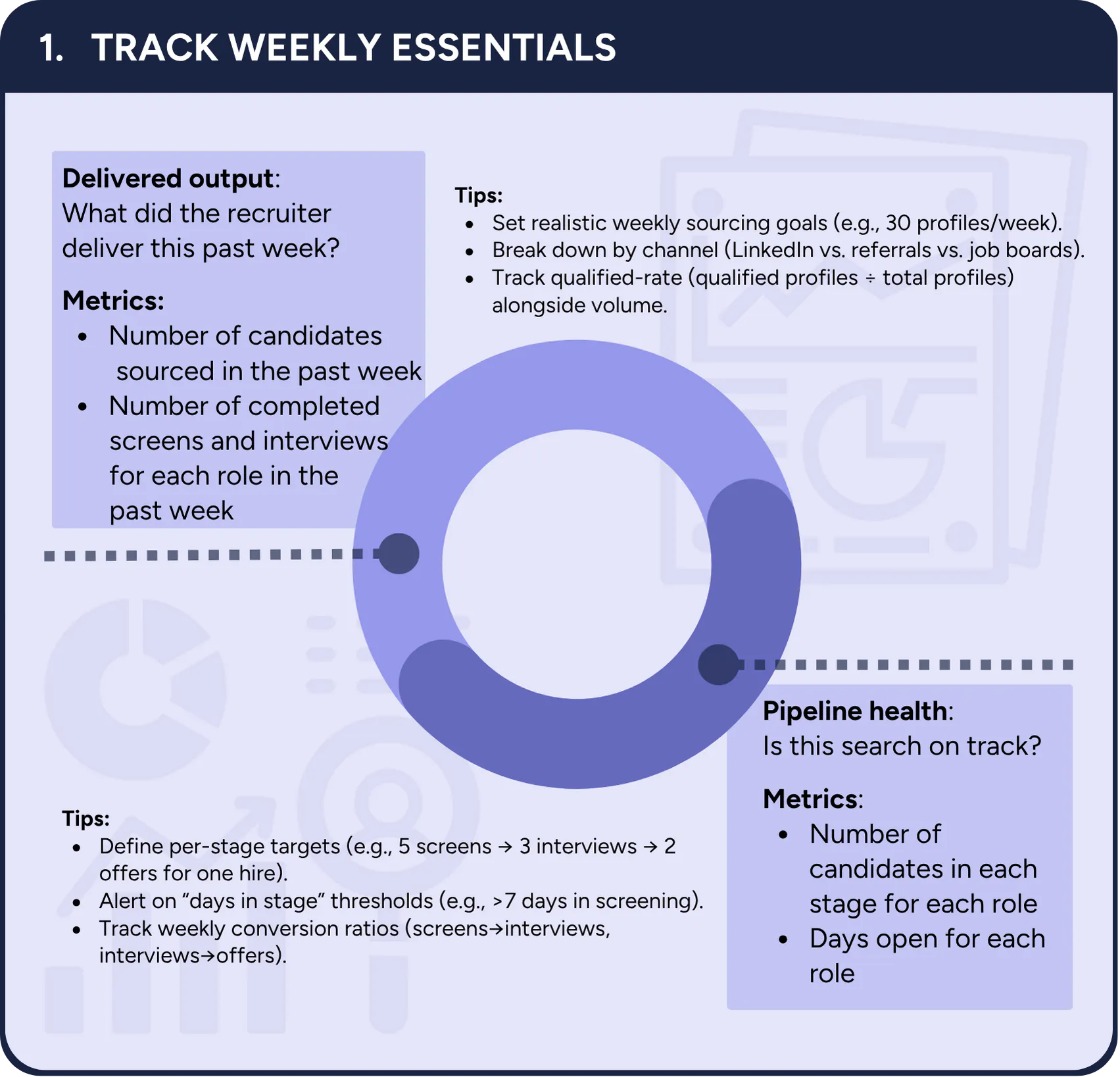
Delivered Output
Track what each recruiter delivered in the past week:
- Number of candidates sourced
- Number of completed screens and interviews for each role
Tips for tracking output:
- Set realistic weekly sourcing goals (e.g., 30 profiles/week)
- Break down by channel (LinkedIn vs. referrals vs. job boards)
- Track qualified rate (qualified profiles ÷ total profiles)
- Monitor sourcing volume
Pipeline Health
Monitor whether each search is on track:
- Number of candidates in each stage for each role
- Days open for each role
Tips for pipeline health:
- Define per-stage targets (e.g., 5 screens → 3 interviews → 2 offers for one hire)
- Alert on "days in stage" thresholds (e.g., >7 days in screening)
- Track weekly conversion ratios (screens→interviews, interviews→offers)
Include Candidate Experience Metrics
Most recruiters focus solely on output, but candidate experience directly impacts your ability to close top talent.
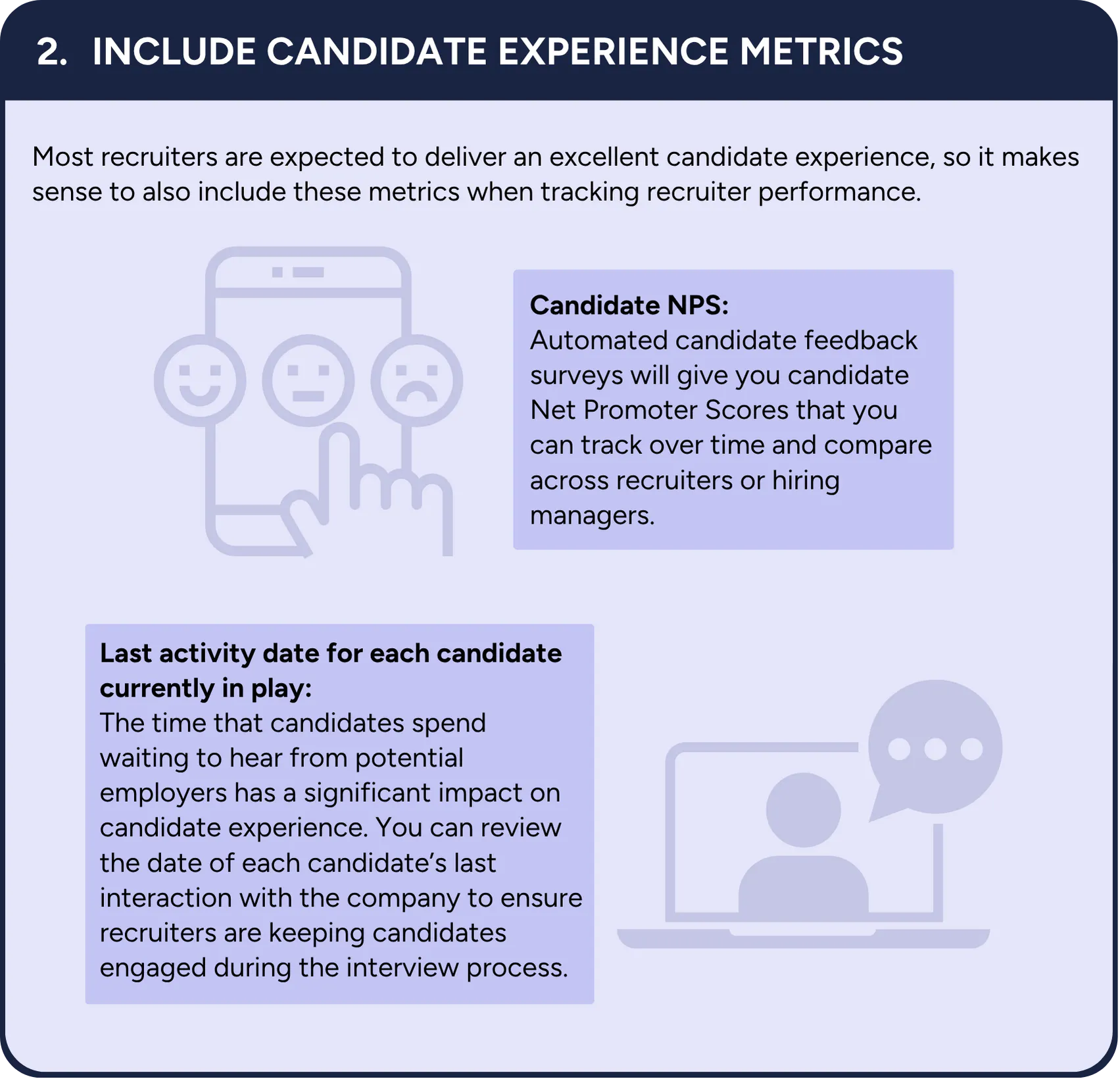
Candidate NPS
Use automated candidate feedback surveys to track Net Promoter Scores. This gives you candidate satisfaction data that you can track over time and compare across recruiters or hiring managers.
Last Activity Date Tracking
Monitor the last activity date for each candidate currently in play. The time candidates spend waiting to hear from potential employers significantly impacts candidate experience. Review the date of each candidate's last interaction with the company to ensure recruiters keep candidates engaged during the interview process.
Customize for Your Industry
While core metrics apply universally, some should be analyzed differently based on role type and industry.
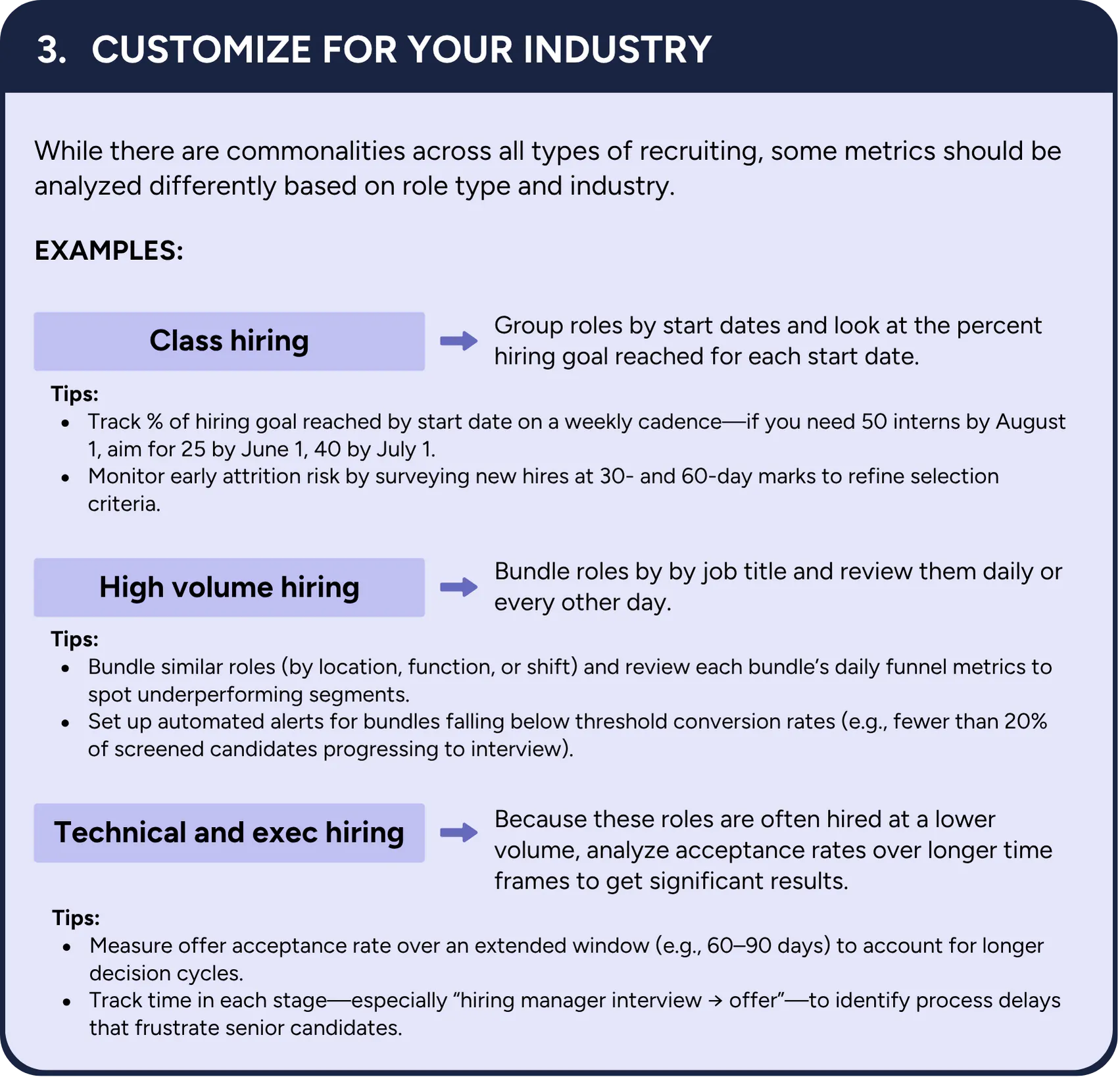
Class Hiring
For roles with specific start dates, track the percent of your hiring goal reached by start date on a weekly cadence.
Tips:
- Track % of hiring goal reached by start date on a weekly cadence—if you need 50 interns by August 1st for 25 by June 1, 40 by July 1
- Monitor early attrition for surveying new hires at 30- and 60-day marks to refine selection criteria
High Volume Hiring
Bundle roles by job title and review them daily or every other day.
Tips:
- Bundle similar roles (by location, function, or shift) and review each bundle's daily funnel metrics to spot underperforming segments
- Set daily velocity thresholds. If you're falling below threshold conversion rates (e.g., fewer than 20% of screened candidates progressing to interview)
Technical and Executive Hiring
Because these roles are often hired at lower volume, analyze acceptance rates over longer time frames to get significant results.
Tips:
- Measure offer acceptance rate over an extended window (e.g., 60-90 days) to account for longer decision cycles
- Track the "hiring manager interview → offer"—to identify process delays that frustrate senior candidates
Start Simple, Then Expand
When your team feels confident tracking and reporting on the essentials, you can start to explore more advanced reporting options.
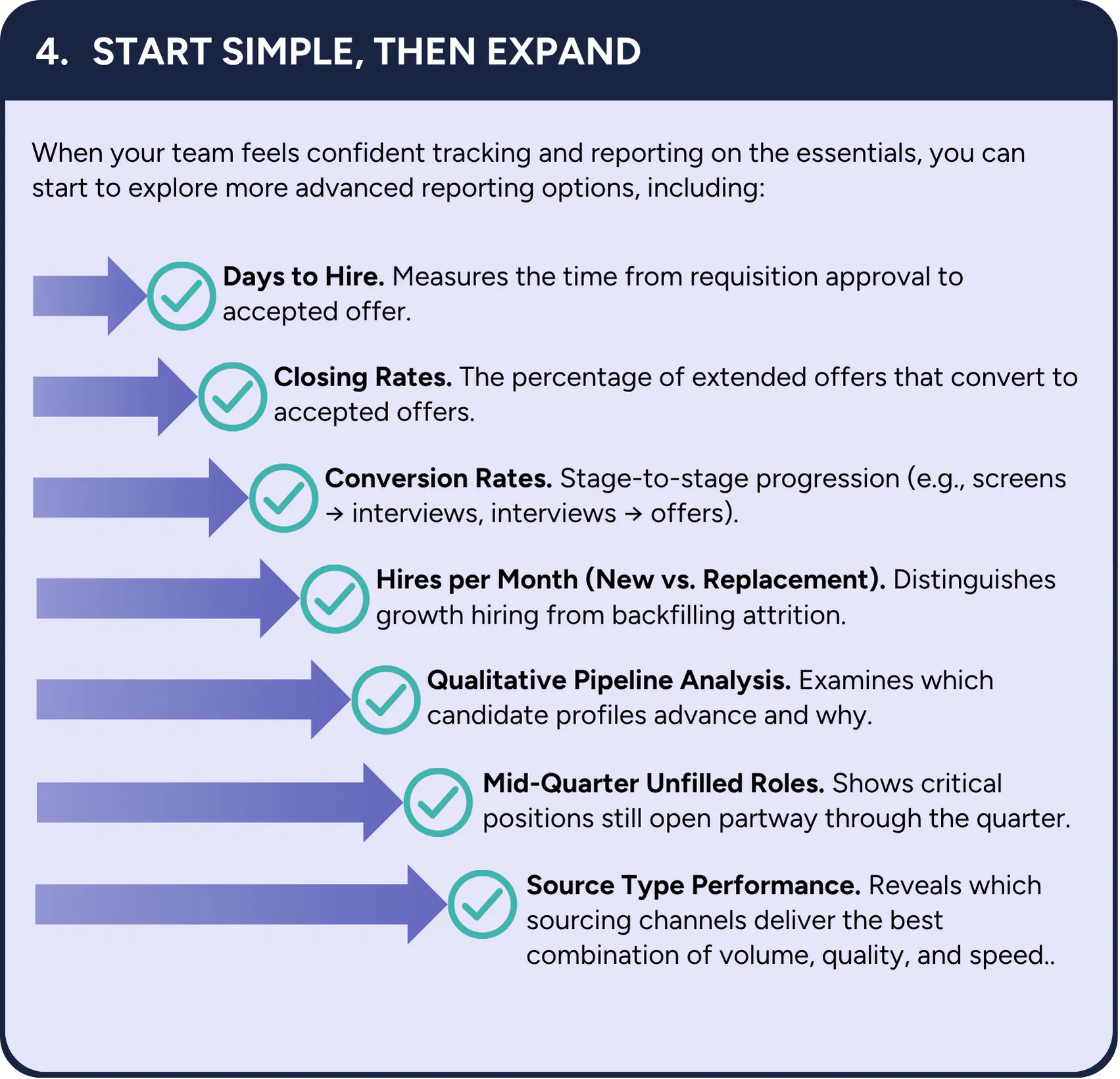
Advanced Metrics to Add Later:
Days to Hire: Measures the time from requisition approval to accepted offer.
Closing Rates: The percentage of extended offers that convert to accepted offers.
Conversion Rates: Stage-to-stage progression (e.g., screens → interviews, interviews → offers).
Hires per Month: (New vs. Replacement). Distinguishes growth hiring from backfilling attrition.
Qualitative Pipeline Analysis: Examines which candidate profiles advance and why.
Mid-Quarter Unfilled Roles: Shows critical positions still open partway through the quarter.
Source Type Performance: Reveals which sourcing channels deliver the best combination of volume, quality, and speed.
The Bottom Line
You don't need more tools. You need more clarity. And it starts with the right data, tracked consistently.
Most recruiting teams drown in vanity metrics that don't drive real outcomes. This framework focuses on the metrics that actually matter—the ones that help you hire better, faster, and with a superior candidate experience.
Start with weekly essentials, add candidate experience tracking, customize for your industry needs, then gradually expand to more sophisticated analytics. Your recruiters, hiring managers, and candidates will all benefit from this data-driven approach.

Was this content useful?