 cord
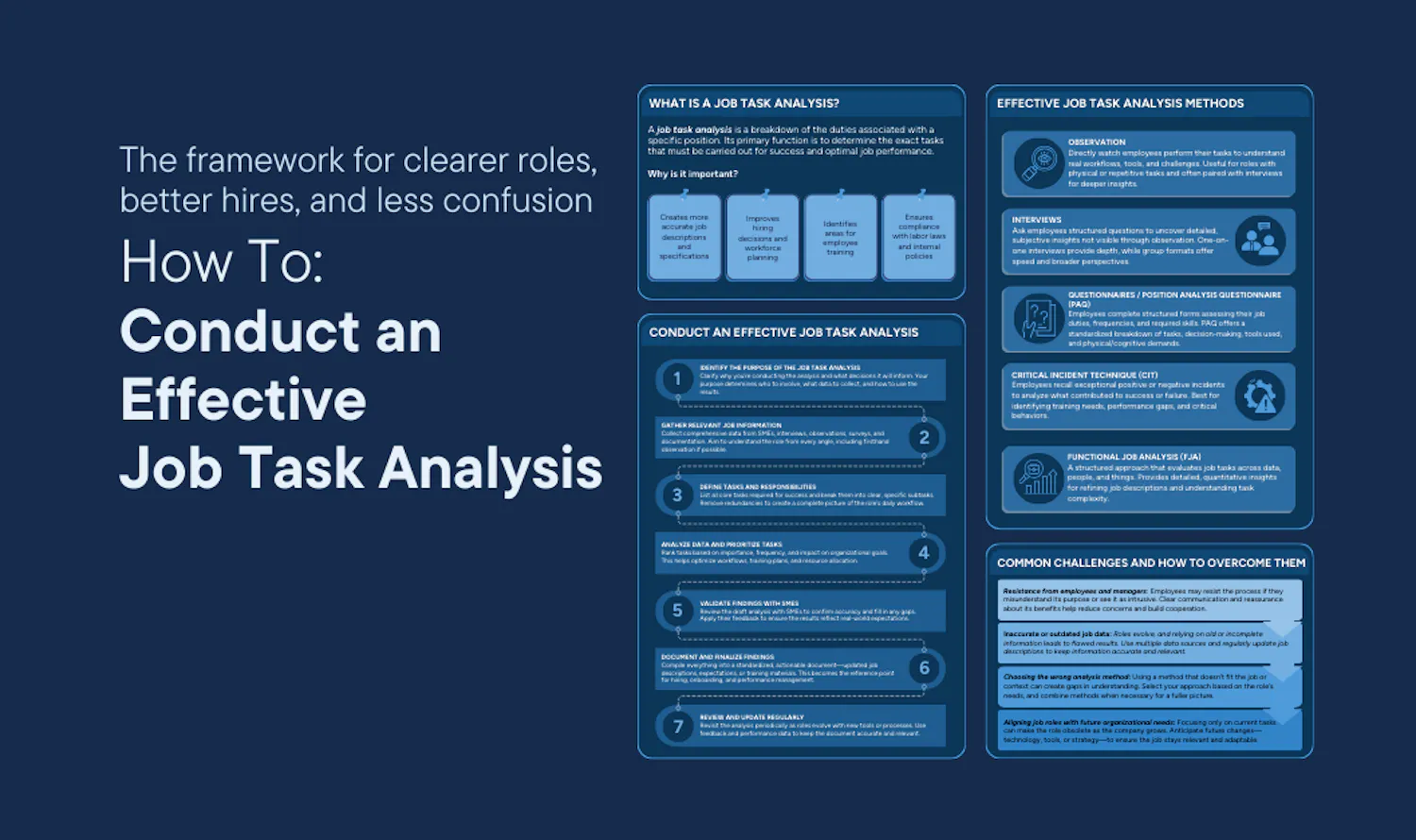
cordHow To: Conduct an Effective Job Task Analysis
The framework for clearer roles, better hires, and less confusion
Before you post that next job opening, pause and ask yourself: What would 'great' actually look like in this role?
If you're hesitating, you're not alone. Most teams skip this step entirely, which explains why we end up with vague job descriptions, misaligned expectations, and people who never get the chance to do their best work.
A job task analysis fixes that. It breaks a role down to its actual responsibilities so hiring, onboarding, and performance management all work with clarity instead of guesswork.
If you want people to do their best work, start by defining the work itself.
What Is a Job Task Analysis?
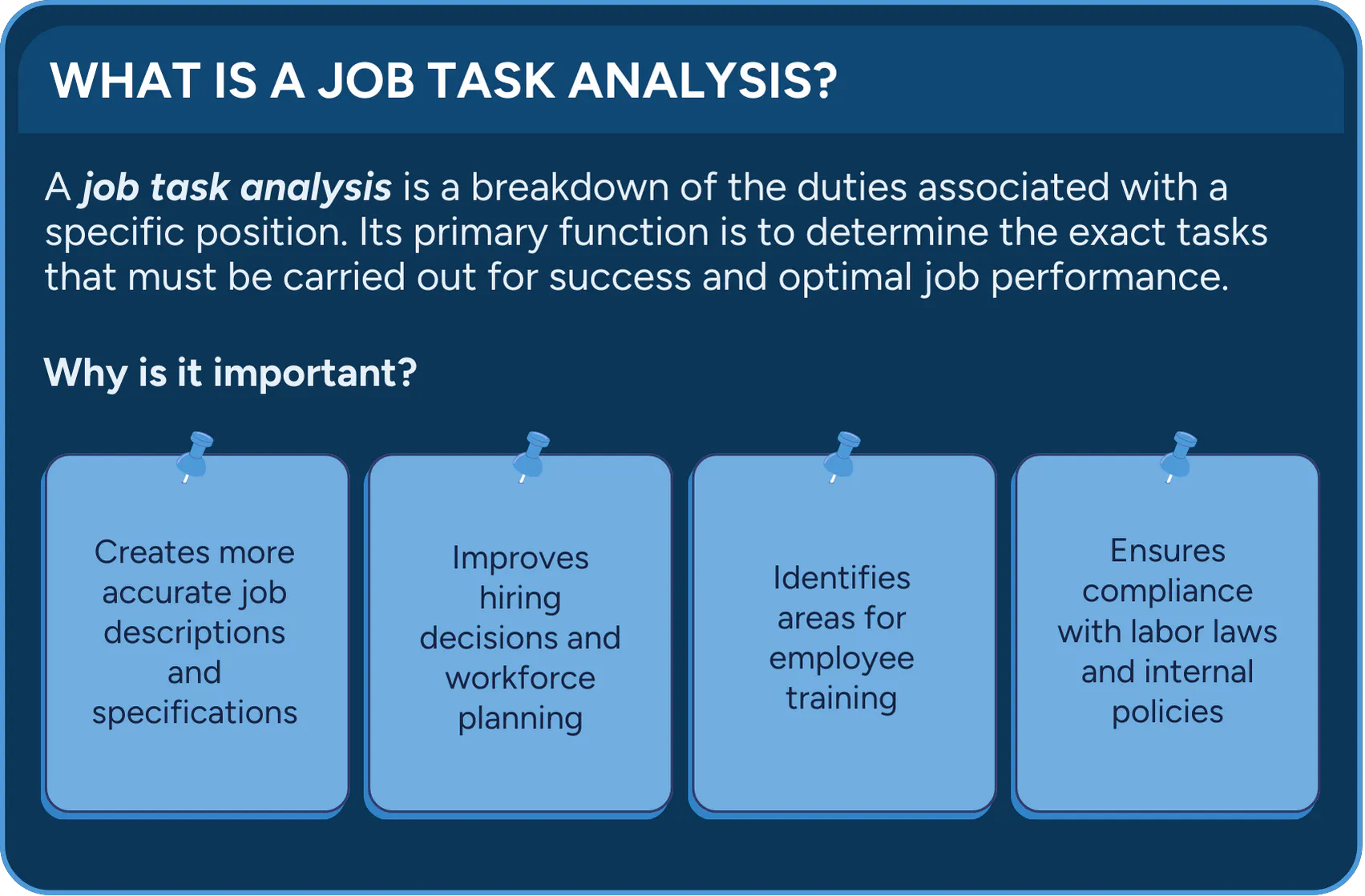
A job task analysis is a breakdown of the duties associated with a specific position. Its primary function is to determine the exact tasks that must be carried out for success and optimal job performance.
Why it matters:
Creates more accurate job descriptions and specifications – No more "wear many hats" nonsense. You'll know exactly what the role requires.
Improves hiring decisions and workforce planning – When you know what you're looking for, you're more likely to find it.
Identifies areas for employee training – Skill gaps become obvious when you've mapped out what skills the role actually needs.
Ensures compliance with labor laws and internal policies – Protects both your team and your organization from legal issues down the line.
7 Steps to Conduct an Effective Job Task Analysis

1. Identify the purpose of the job task analysis
Start by asking why you're conducting the analysis and what decisions it will inform. Are you clarifying expectations, improving hiring accuracy, or ensuring compliance? Set the goal so everything that follows is grounded in intention.
2. Gather relevant job information
Collect comprehensive data from SMEs (subject matter experts), managers, observations, surveys, and documentation. Interview people doing the work, shadow them if possible, and review current workflows. Don't rely on assumptions—use firsthand insights from every angle, including direct observation if possible.
3. Define tasks and responsibilities
List the core tasks required for success and break them into clear, specific subtasks. Remove redundancies to create a complete picture of the role's daily workflow. The clearer the detail, the better your hiring and training outcomes.
4. Analyze data and prioritize tasks
Rate tasks based on frequency, complexity, importance, and impact on organizational goals. This helps optimize workflows, training plans, and resource allocation. Identify which tasks are mission-critical, time-sensitive, high-skill, or secondary so you can align expectations and design assessments that focus on real performance drivers.
5. Validate findings with SMEs
Review the draft analysis with subject matter experts to confirm accuracy and fill in any gaps. Cross-check everything with the people doing the work. Apply their feedback to ensure the analysis is effective and avoids expectations that don't match reality.
6. Document and finalize findings
Compile everything into a standardized, actionable document—updated job descriptions, competency expectations, or training materials. This becomes the reference point for hiring, onboarding, and performance management.
7. Review and update regularly
Revisit the analysis periodically as roles evolve with new tools or processes. Use feedback and performance data to keep the document accurate and relevant as the business changes.
Effective Job Task Analysis Methods

Different methods work for different roles. Here's what's available:
Observation – Directly watch employees perform their tasks to understand real workflows, tools, and challenges. Useful for roles with physical or repetitive tasks and often paired with interviews for deeper insights.
Interviews – Ask employees structured questions to uncover detailed, subjective insights not visible through observation alone. One-on-one interviews provide depth, while group formats offer speed and broader perspectives.
Questionnaires / Position Analysis Questionnaire (PAQ) – Employees complete structured forms assessing their job duties, frequencies, and required skills. PAQ offers a standardized breakdown of tasks, decision-making, tools used, and physical/cognitive demands.
Critical Incident Technique (CIT) – Employees recall exceptional positive or negative incidents and explain what contributed to success or failure. Best for identifying training needs, performance gaps, and critical behaviors.
Functional Job Analysis (FJA) – A structured approach that evaluates job tasks across data, people, and things. Provides detailed, quantitative insights for refining job descriptions and understanding task complexity.
Common Challenges (And How to Overcome Them)
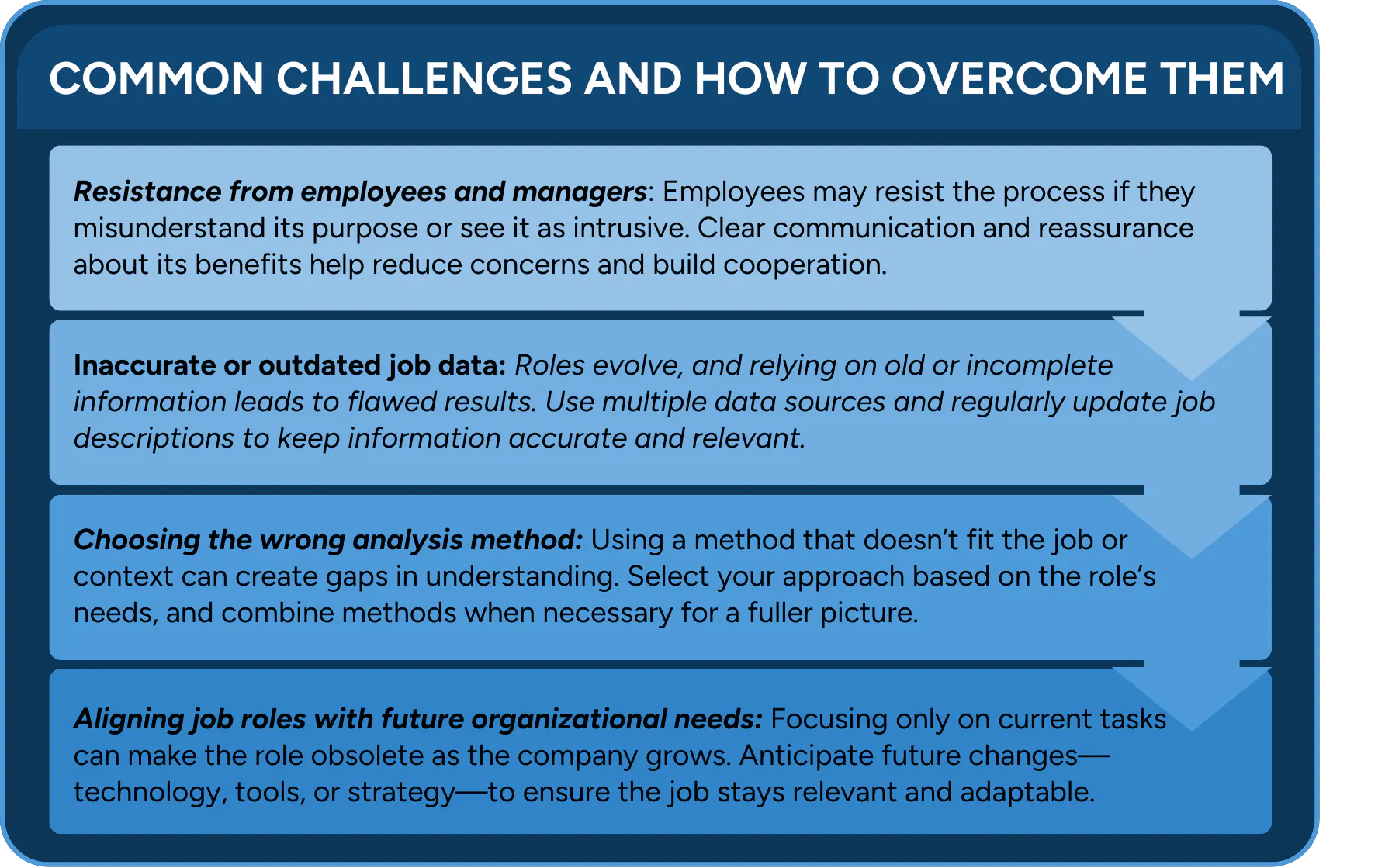
Resistance from employees and managers – Employees may resist the process if they misunderstand its purpose or see it as intrusive. Clear communication and reassurance about its benefits help reduce concerns and build cooperation.
Inaccurate or outdated job data – Roles evolve, and relying on old or incomplete information leads to flawed results. Use multiple data sources and regularly update job descriptions to keep information accurate and relevant.
Choosing the wrong analysis method – Using a method that doesn't fit the job or context can create gaps in understanding. Select your approach based on the role's needs, and combine methods when necessary for a fuller picture.
Aligning job roles with future organizational needs – Focusing only on current tasks can make the role obsolete as the company grows. Anticipate future changes in technology, tools, or strategy to ensure the job stays relevant and adaptable.
The Payoff
When you actually define the work, you get:
- Clearer job descriptions that attract the right people
- Smarter hiring decisions based on what the role actually needs
- Targeted training that addresses real skill gaps
- Teams that understand what high performance looks like
Stop guessing. Start defining. Your next great hire depends on it.


Was this content useful?