 cord
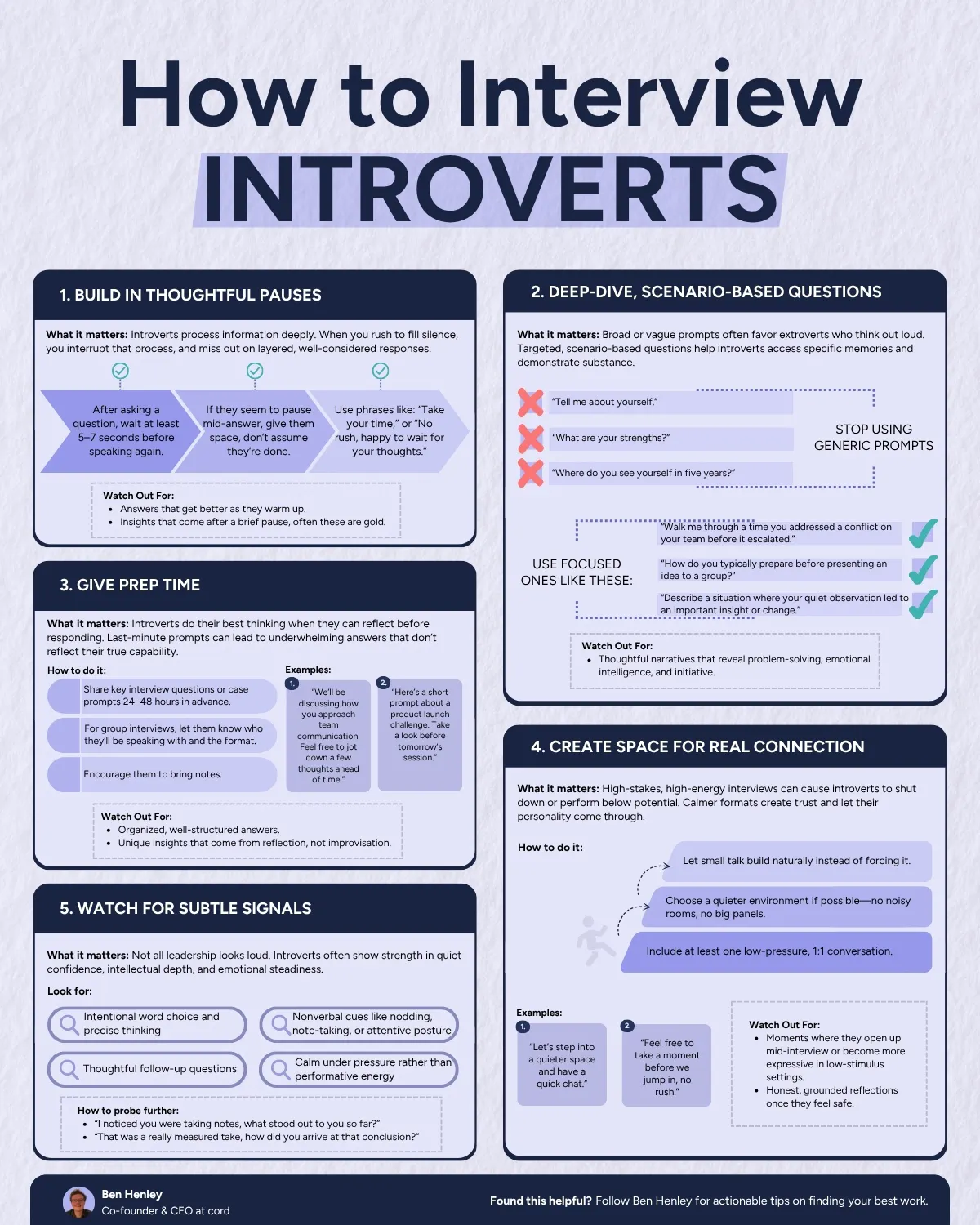
cordHow to Interview Introverts
Why standard interviews miss the best candidates—and what to do about it

If your hiring process rewards the loudest voices, you're missing out on exceptional talent. Most hiring managers can't identify introverts during interviews, and this blind spot costs organizations dearly.
Introverts bring valuable skills to teams: deep analysis, active listening, and consistent execution. Yet standard interview formats often overlook these traits, favoring candidates who are naturally outgoing and quick to respond.
When you consistently hire based on extroverted traits alone, you risk poor cultural fit, wasted time, and higher turnover. Adapting your interview approach to engage quieter candidates will expand your talent pool, raise hire quality, and boost overall team performance.
The Cost of Extrovert-Biased Hiring
Traditional interviews favor candidates who think out loud, speak quickly, and self-promote confidently. This approach misses introverts who may need more time to process questions but often provide more thoughtful, well-considered responses.
The result? You may hire candidates who interview well but lack the depth and consistency that introverts typically bring to their work.
5 Strategies for Interviewing Introverts Effectively
1. Build in Thoughtful Pauses
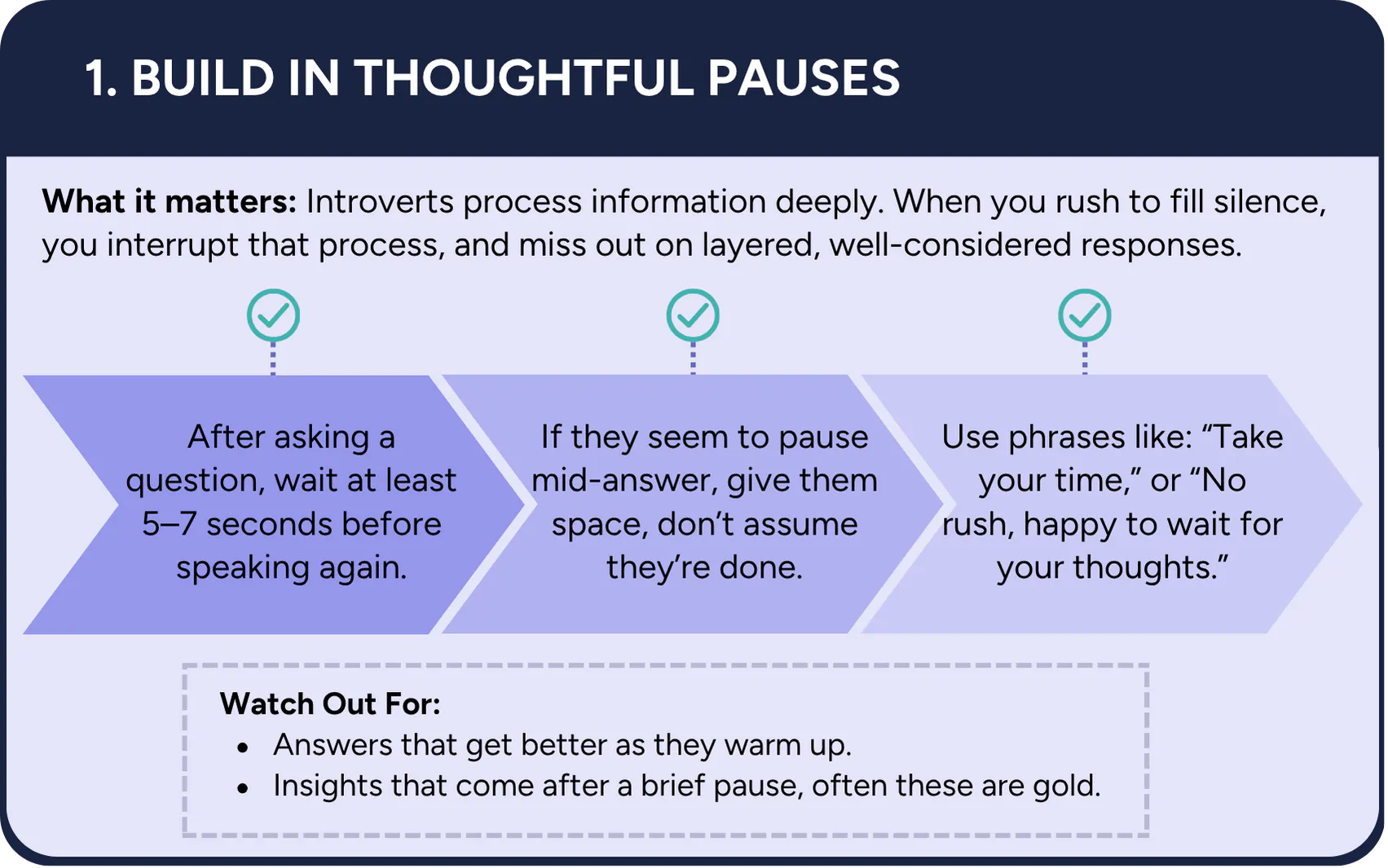
Introverts process information deeply and need time to organize their thoughts. When you rush to fill silence, you interrupt their process and miss out on well-considered responses.
How to do it:
- After asking a question, wait at least 5-7 seconds before speaking again
- If they seem to pause mid-answer, give them space—don't assume they're done
- Use phrases like "Take your time" or "No rush, happy to wait for your thoughts"
Watch for:
- Answers that improve as they warm up
- Insights that emerge after brief pauses—these are often valuable
2. Use Deep-Dive, Scenario-Based Questions
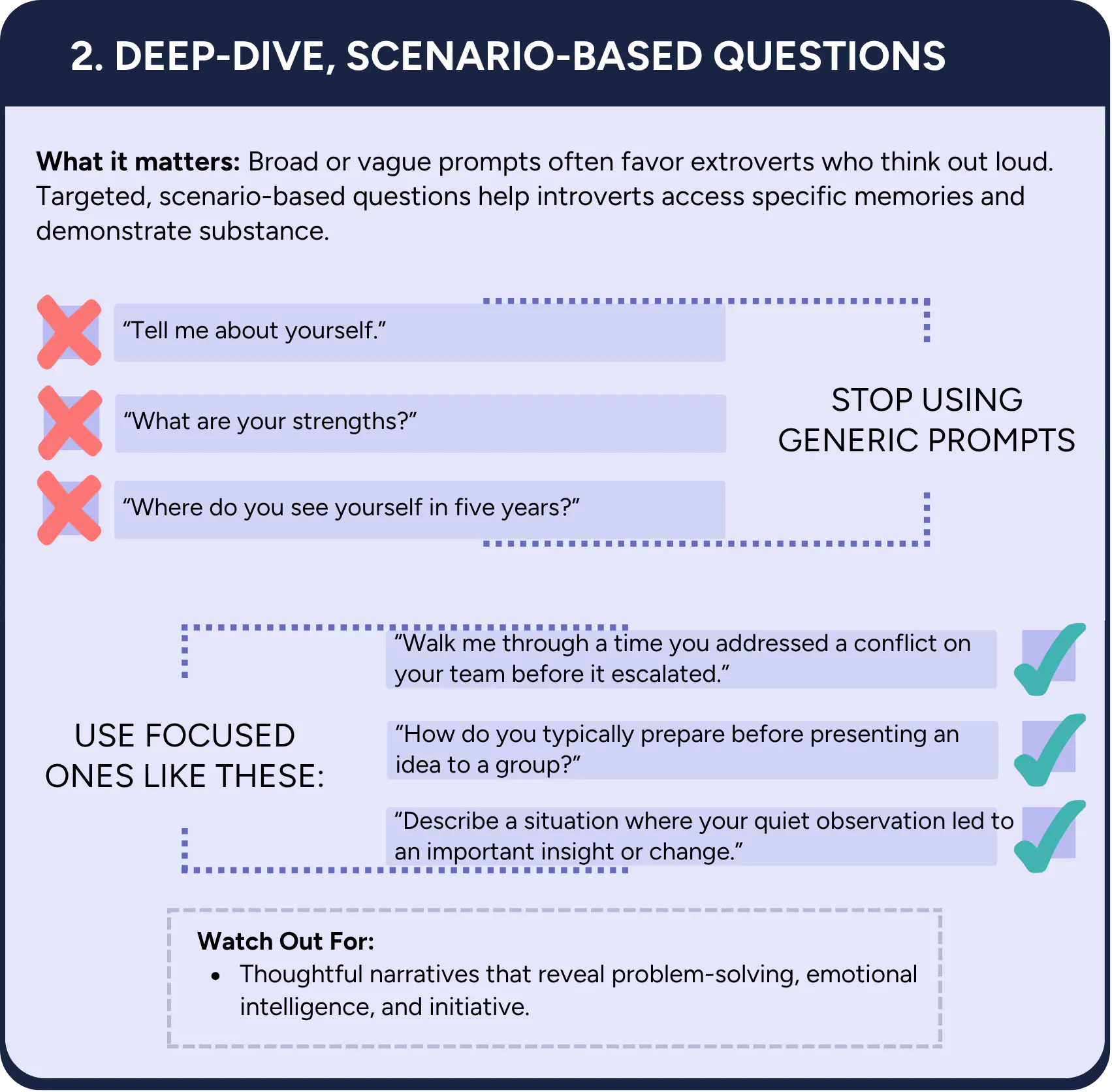
Broad or vague prompts favor extroverts who think out loud. Targeted, scenario-based questions help introverts access specific memories and demonstrate their problem-solving abilities.
Stop using generic prompts like:
- "Tell me about yourself"
- "What are your strengths?"
- "Where do you see yourself in five years?"
Use focused questions instead:
- "Walk me through a time you addressed a conflict on your team before it escalated"
- "How do you typically prepare before presenting an idea to a group?"
- "Describe a situation where your quiet observation led to an important insight or change"
Watch for:
- Thoughtful narratives that reveal problem-solving and emotional intelligence
- Evidence of initiative that may not be immediately obvious
3. Give Preparation Time
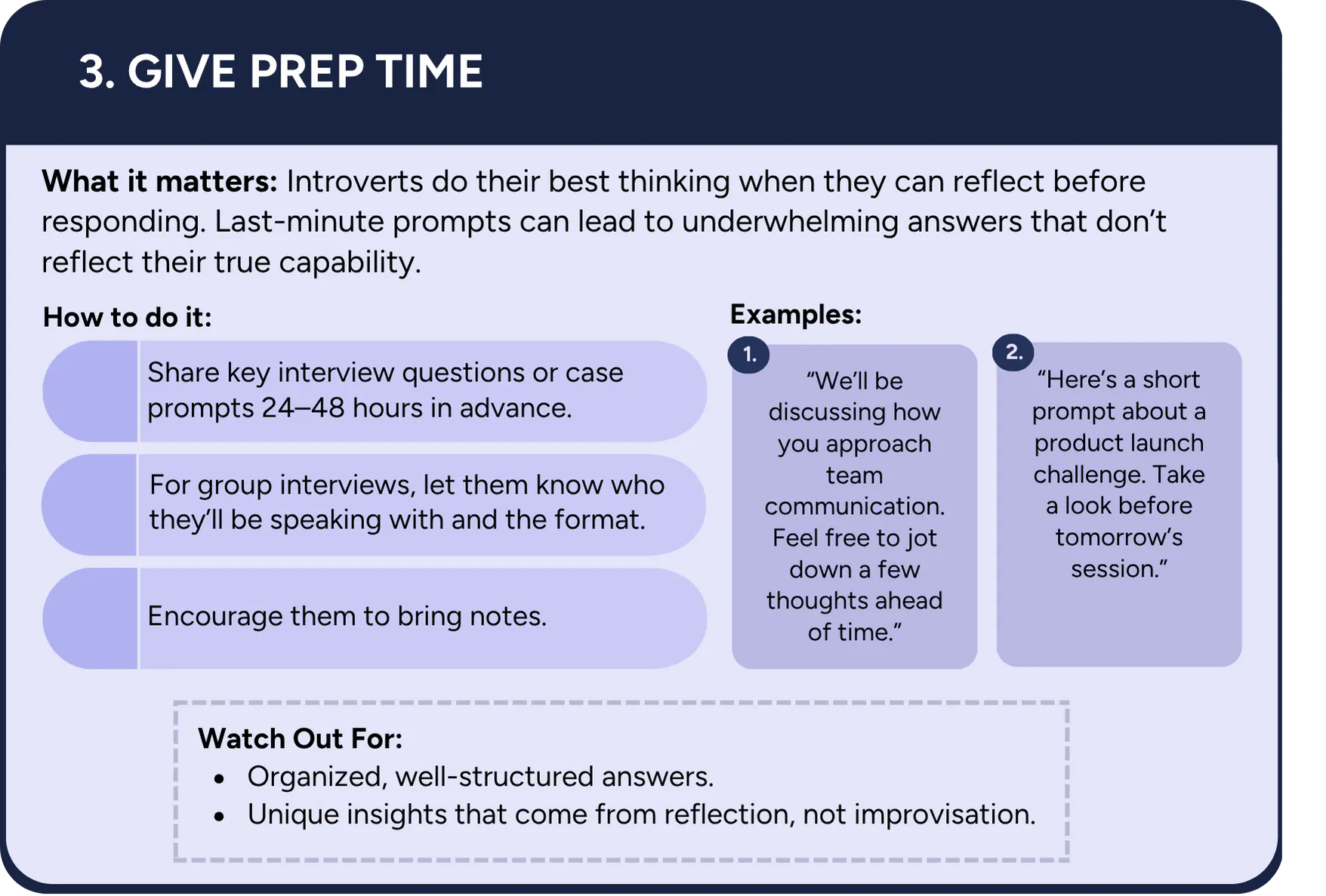
Introverts perform best when they can reflect before responding. Last-minute prompts can lead to underwhelming answers that don't reflect their true capability.
How to implement:
- Share key interview questions or case prompts 24-48 hours in advance
- For group interviews, let them know who they'll be speaking with and the format
- Encourage them to bring notes
Examples:
- "We'll be discussing how you approach communication. Feel free to jot down a few thoughts ahead of time."
- "Here's a short prompt about a product launch strategy—take a look before tomorrow's session."
Watch for:
- Organized, well-structured answers
- Unique insights that come from reflection, not improvisation
4. Create Space for Real Connection
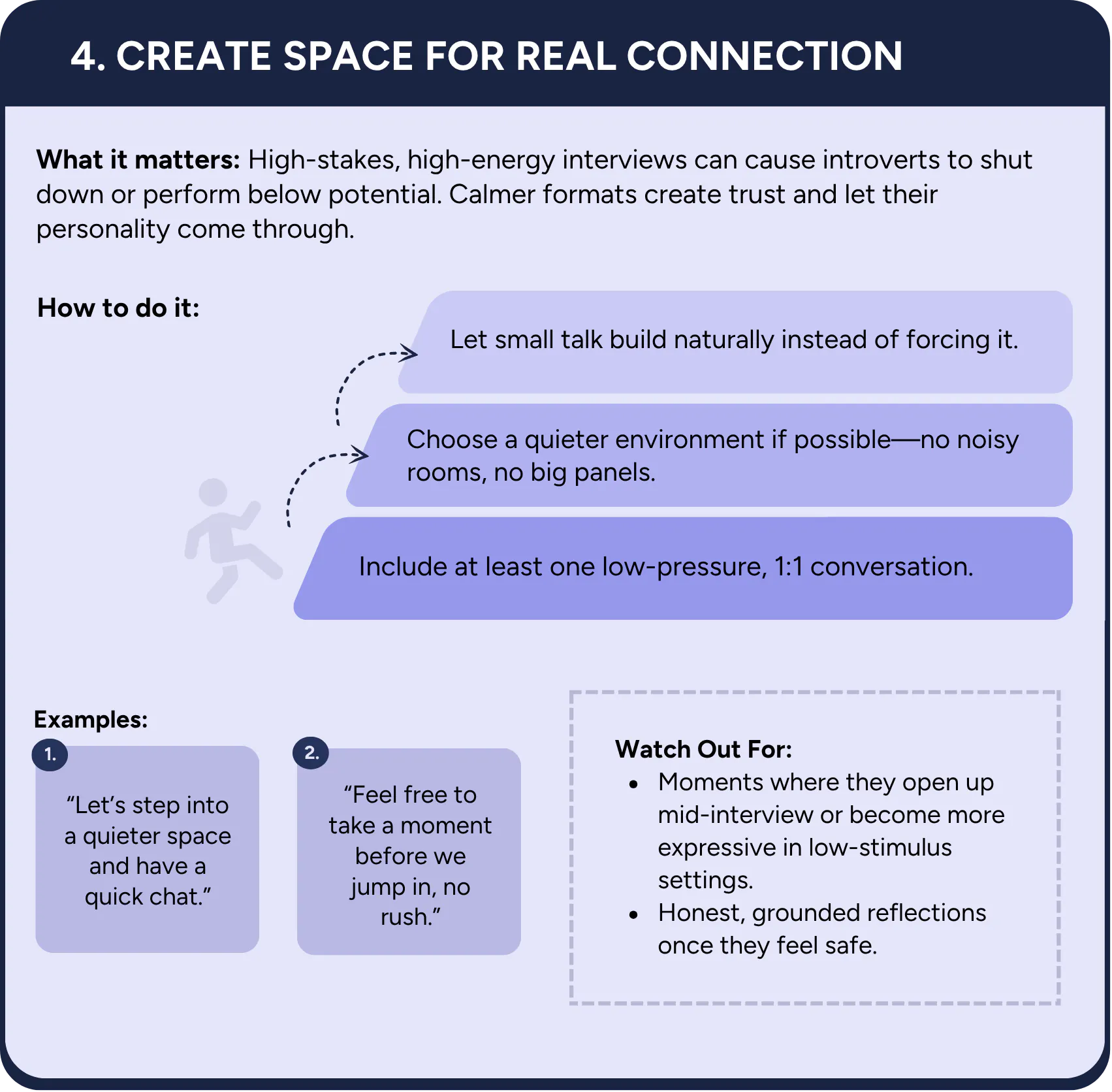
High-stakes, high-energy interviews can cause introverts to shut down or perform below their potential. Calmer formats create trust and let their personality emerge.
How to do it:
- Let small talk build naturally instead of forcing it
- Choose a quieter environment if possible—avoid noisy rooms or big panels
- Include at least one low-pressure, one-on-one conversation
Examples:
- "Let's step into a quieter space and have a quick chat" (before jumping into formal questions)
- "Feel free to take a moment before we jump in, no rush"
Watch for:
- Moments where they open up mid-interview or become more expressive in low-stimulus settings
- Honest, grounded reflections once they feel safe
5. Watch for Subtle Signals
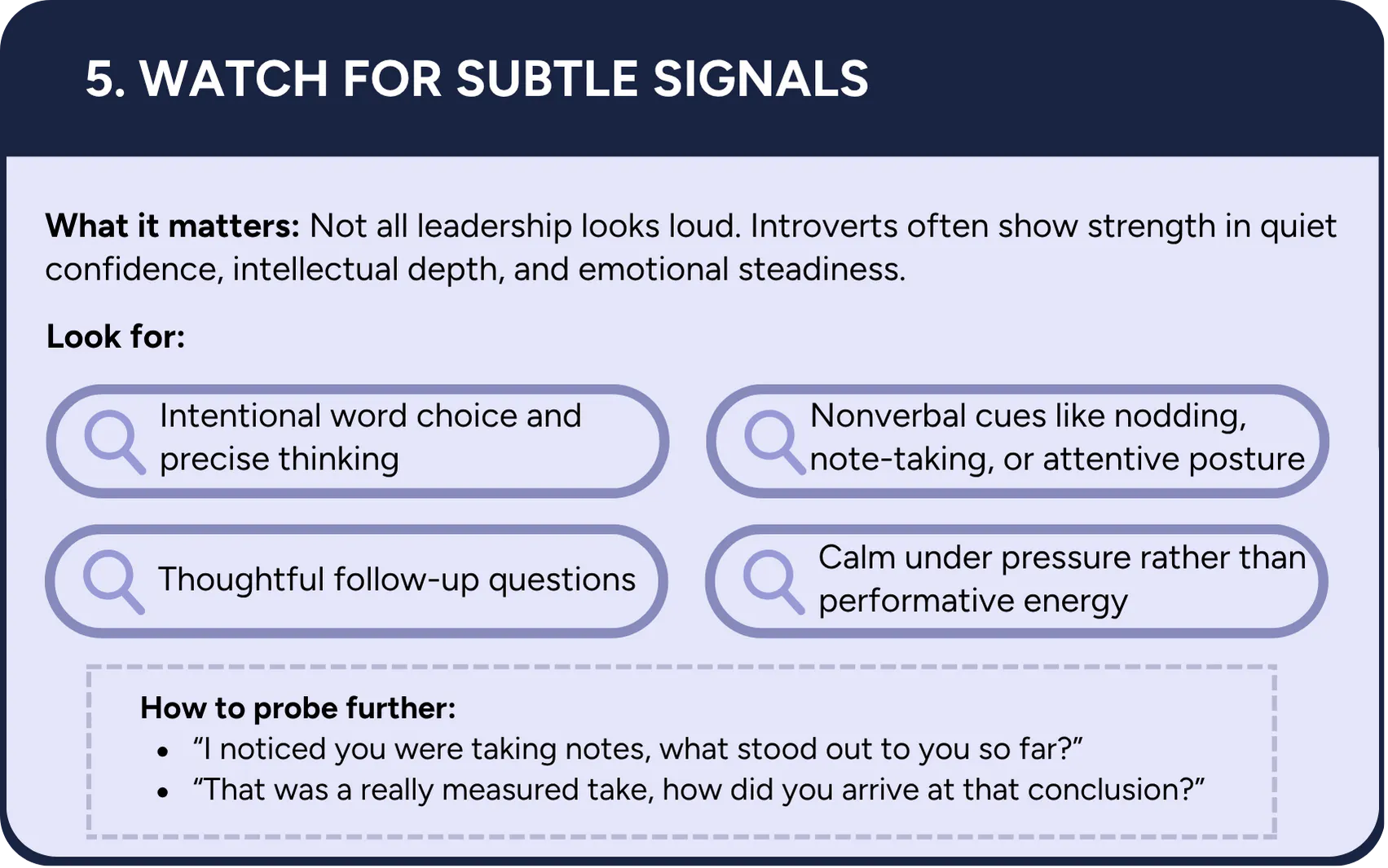
Leadership doesn't always look loud. Introverts often show strength through quiet confidence, intellectual depth, and emotional steadiness.
Look for:
- Intentional word choice and precise thinking
- Nonverbal cues like nodding, note-taking, or attentive posture
- Thoughtful follow-up questions
- Calm under pressure rather than performative energy
How to probe further:
- "I noticed you were taking notes, what stood out to you so far?"
- "That was a really measured take, how did you arrive at that conclusion?"
The Bottom Line
Most interviews are built for extroverts. If you don't adjust your approach, you'll continue overlooking talented people who simply don't self-promote in traditional ways.
The best teams need both personality types. By creating interview processes that work for introverts, you're not just being inclusive—you're accessing a talent pool that many of your competitors are missing entirely.
Start with one or two of these techniques in your next round of interviews. You may be surprised by the quality of candidates who emerge when you give them the right environment to shine.

Was this content useful?