 cord
cordIn-House vs. Offshore Developer Hiring
Why Smart Companies Use Both Instead of Choosing Sides

The smartest tech companies aren't choosing between in-house and offshore developers anymore. They're drawing clear lines about when to use each approach, and it's reshaping how teams get built.
Here's what you need to know about both options and why the winning strategy combines them.
UK-Based In-House Teams: The Foundation
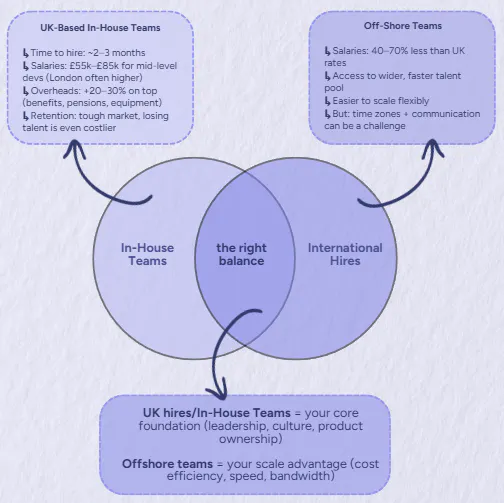
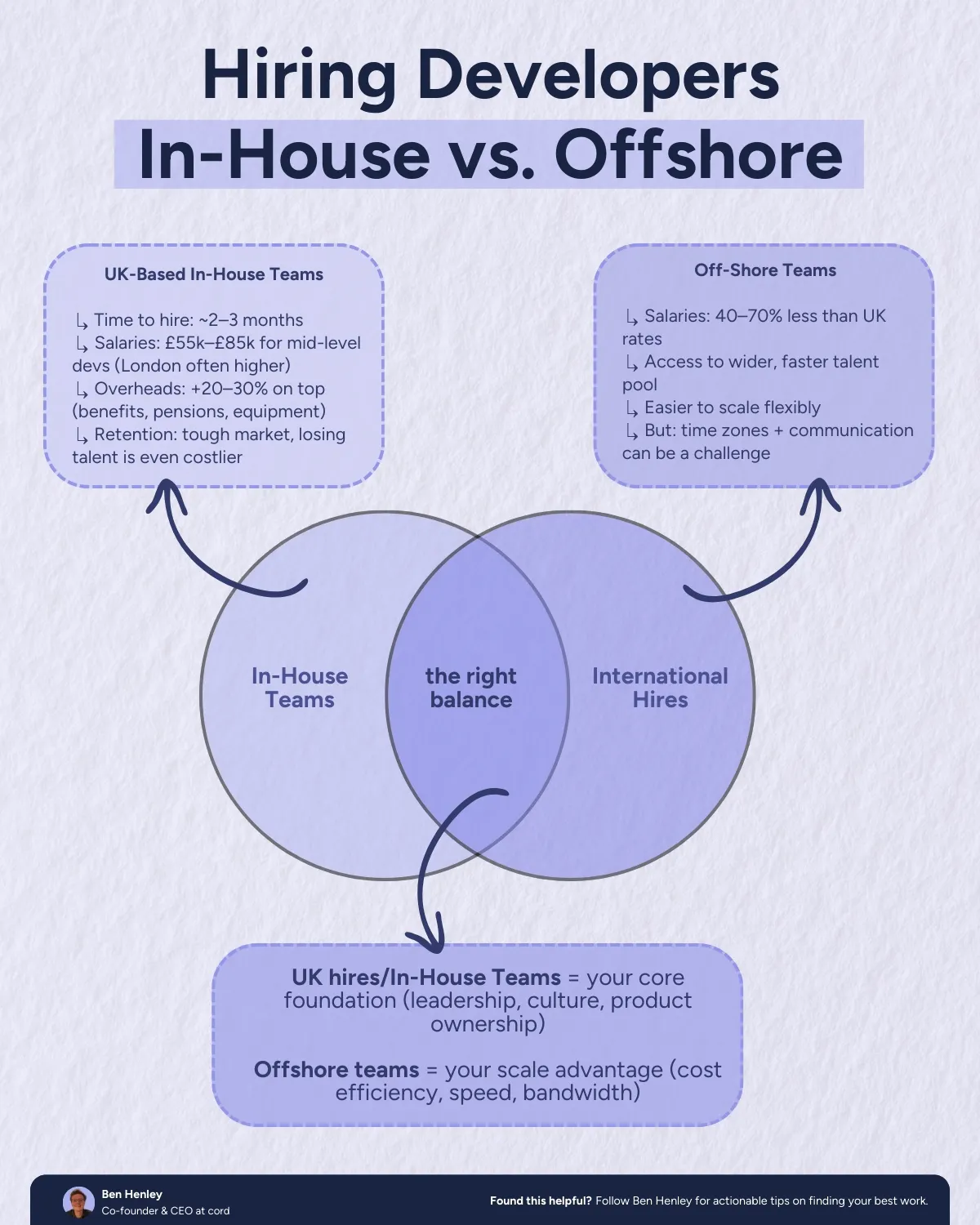
Hiring locally in the UK comes with specific realities. Time to hire typically runs 2-3 months, which feels slow when you need to move fast. Mid-level developers command £55k-£85k salaries, with London rates often pushing higher. Add another 20-30% on top for benefits, pensions, and equipment costs.
The retention game is brutal right now. The market is competitive, and losing talent after investing in onboarding and training hits hard financially.
But there's a reason companies still prioritize local hires for certain roles. In-house teams become your core foundation. They handle leadership positions, shape company culture, and take ownership of product decisions. These aren't just technical roles - they're strategic positions that need deep company alignment.
Offshore Teams: The Scale Advantage
International hiring offers a different value proposition. Salaries typically run 40-70% less than UK rates, which creates significant cost efficiency at scale. You get access to a wider talent pool that often moves faster than local hiring processes.
Scaling becomes much more flexible when you're not constrained by local market conditions. Need to double your development capacity quickly? Offshore teams make that possible.
The challenges are real though. Time zones create coordination complexity, and communication requires more intentional structure. These aren't dealbreakers, but they need active management.
Finding the Right Balance
The companies getting this right aren't picking sides. They're using both approaches strategically.
UK hires become the core foundation. They handle leadership roles, maintain company culture, and own product decisions. These team members understand the local market, can easily collaborate across the organization, and provide stability.
Offshore teams provide the scale advantage. They deliver cost efficiency, development speed, and bandwidth to handle larger workloads. When you need to expand quickly or tackle projects that require significant development resources, this is where offshore teams excel.
If you only hire locally, growth gets constrained by cost and talent availability. If you only go offshore, you miss the foundational elements that strong local teams provide.
The real opportunity lies in combining both approaches intentionally. Use in-house teams for strategic roles and cultural foundation. Use offshore teams for scalable development work and rapid expansion.
This isn't about choosing the cheaper option or the easier path. It's about matching the right hiring approach to specific business needs and team requirements.
The companies that figure this out first will have a significant advantage in building teams that can both maintain strong foundations and scale efficiently.

Was this content useful?