 cord
cordInterview Feedback
What to Say and How to Deliver It
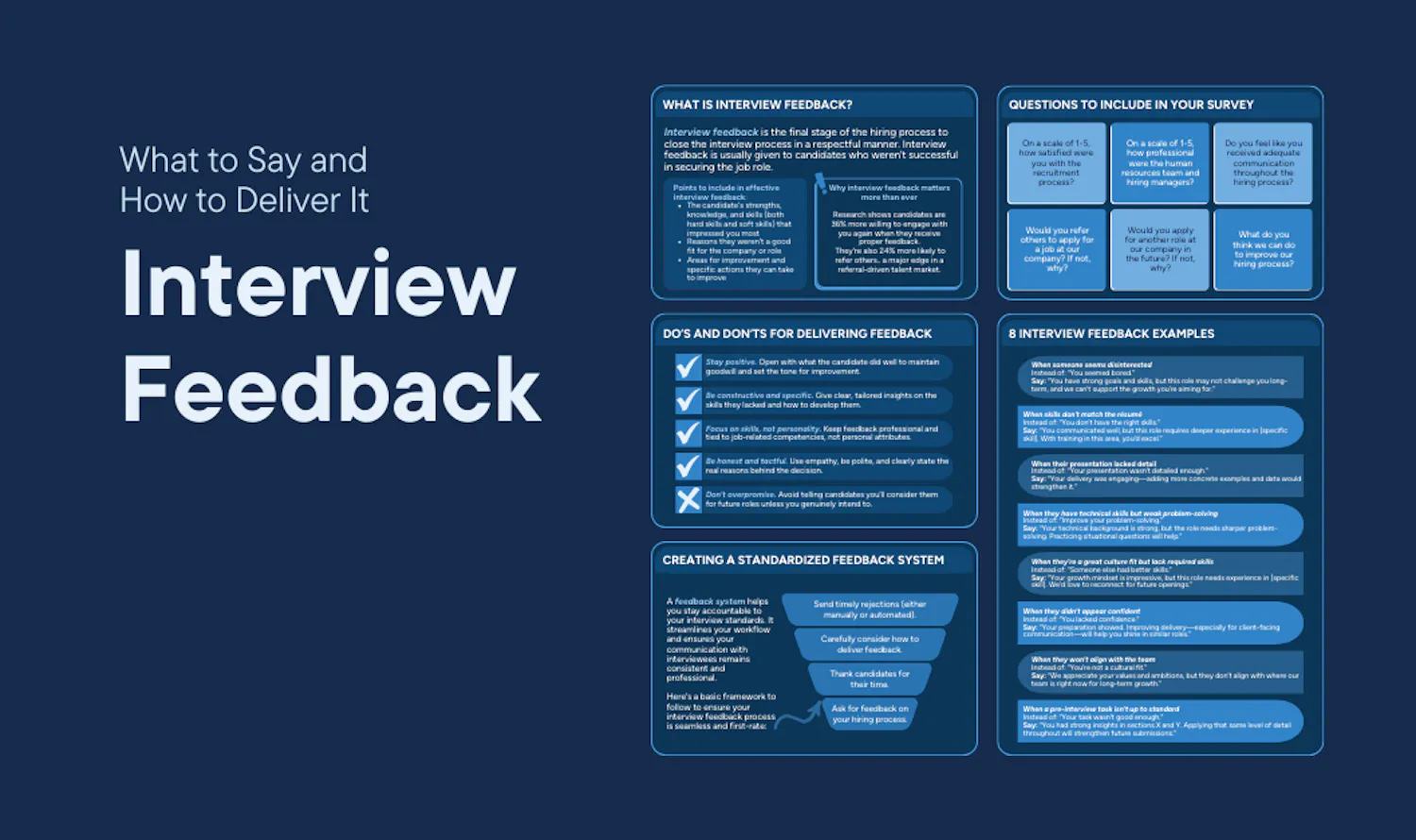
Strong employer brands aren't built on flashy perks or LinkedIn hype. They're built on how you treat candidates when they don't get the job.
Most companies ghost candidates or send generic rejection emails. Meanwhile, top performers are out here comparing notes on Glassdoor, Reddit, and group chats. Your hiring process is your brand whether you like it or not.
If you want to attract A-players in a referral-driven market, you need to close the hiring loop with the same energy you opened it with.
What Is Interview Feedback?
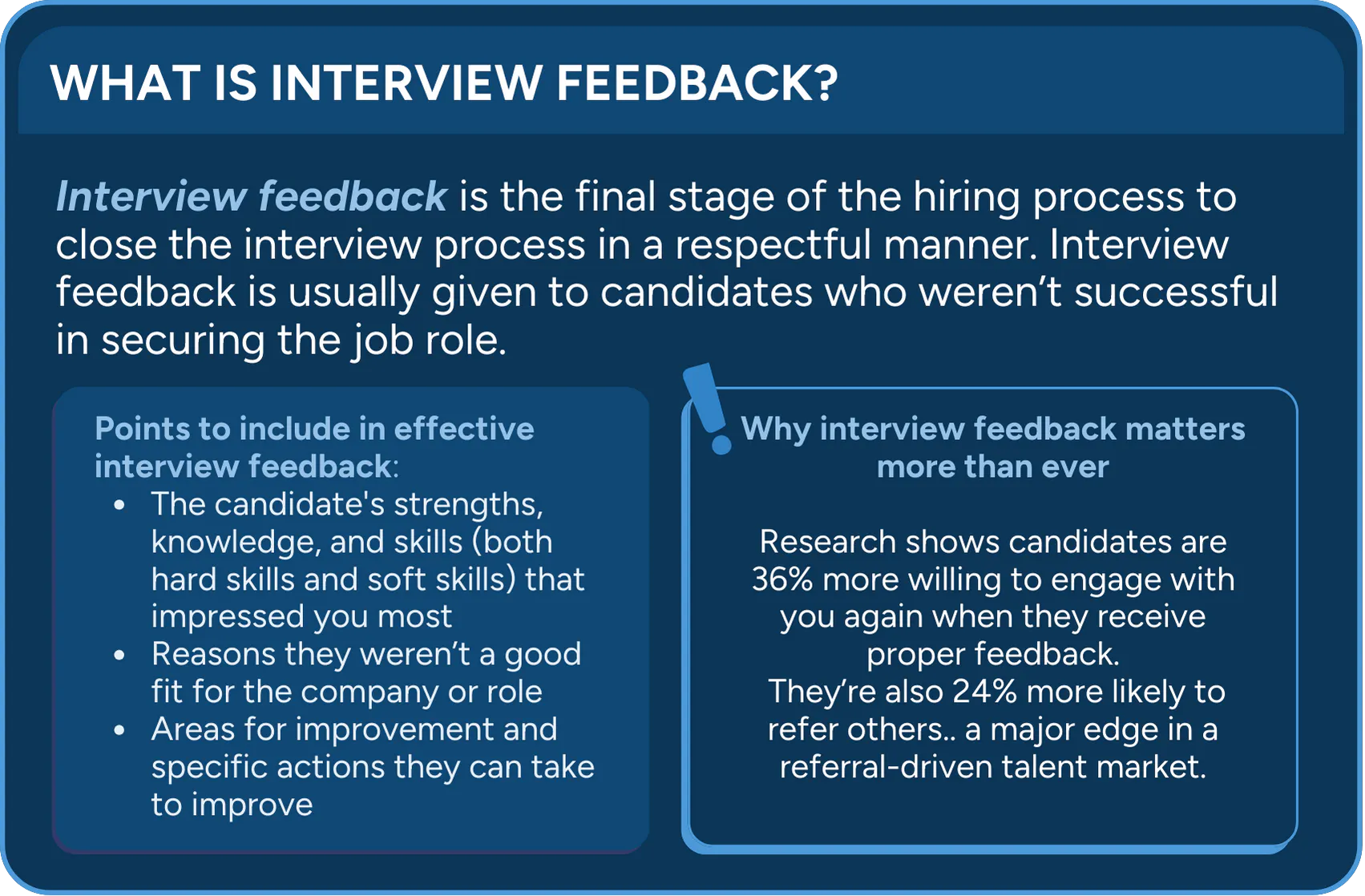
Interview feedback is the final stage of the hiring process. It's how you close the interview loop in a respectful, professional way—especially for candidates who didn't get the role.
This isn't just nice-to-have. It's strategic.
Points to include in effective interview feedback:
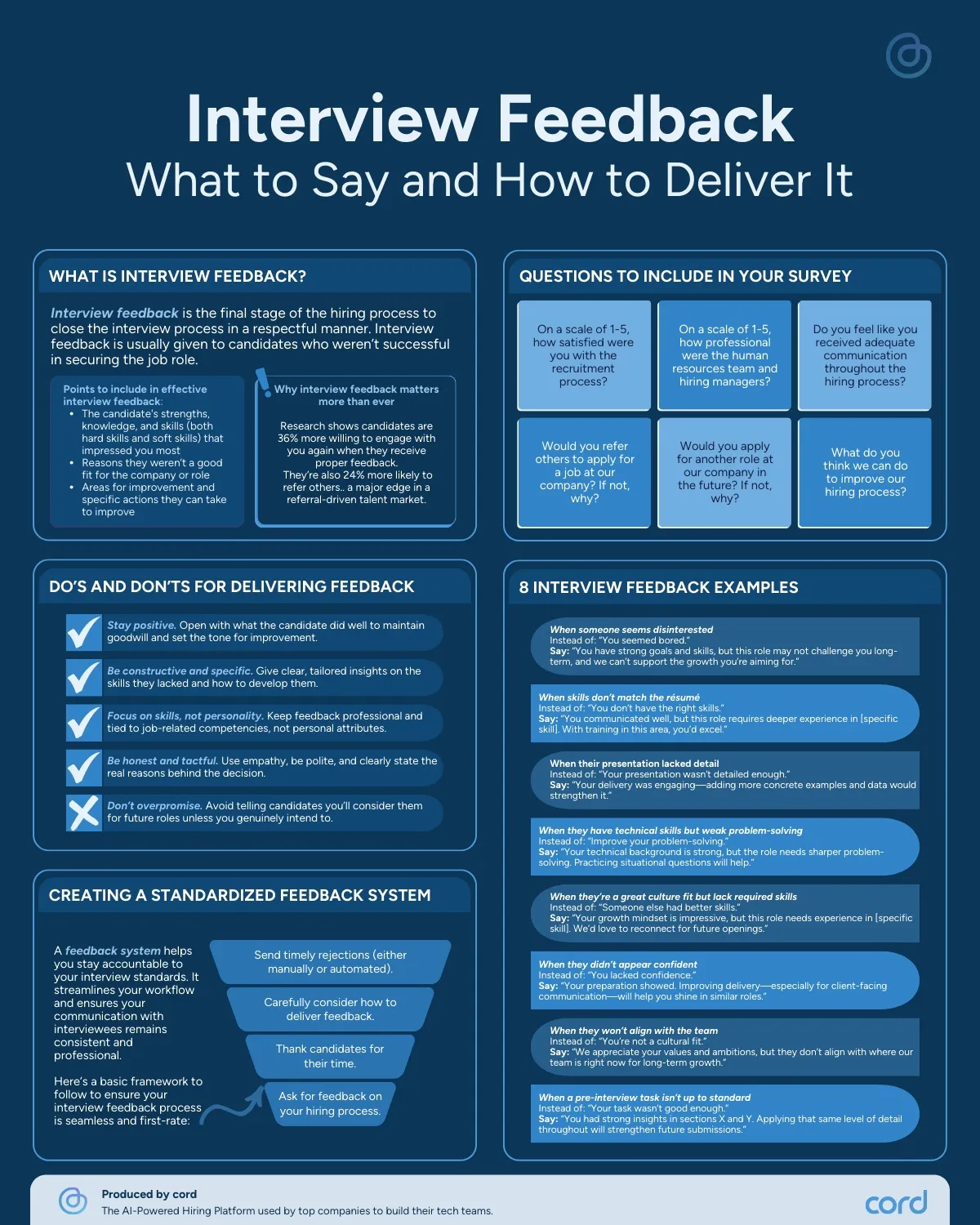
- What the candidate's strengths, knowledge, and skills (both hard and soft) were
- What impressed you most
- Why they weren't selected this time
- Areas for improvement and specific actions they can take to level up
Why interview feedback matters more than ever:
Research shows candidates are 36% more likely to engage with you again when they receive proper feedback. They're also 24% more likely to refer others to your company, even after a rejection.
In a referral-driven talent market, that's not a small win. That's pipeline gold.
Feedback also proves your decisions are evidence-based, not vibes-based. It helps candidates leave with respect, direction, and dignity. And it shows you actually care about people, not just role-filling.
Questions to Include in Your Survey
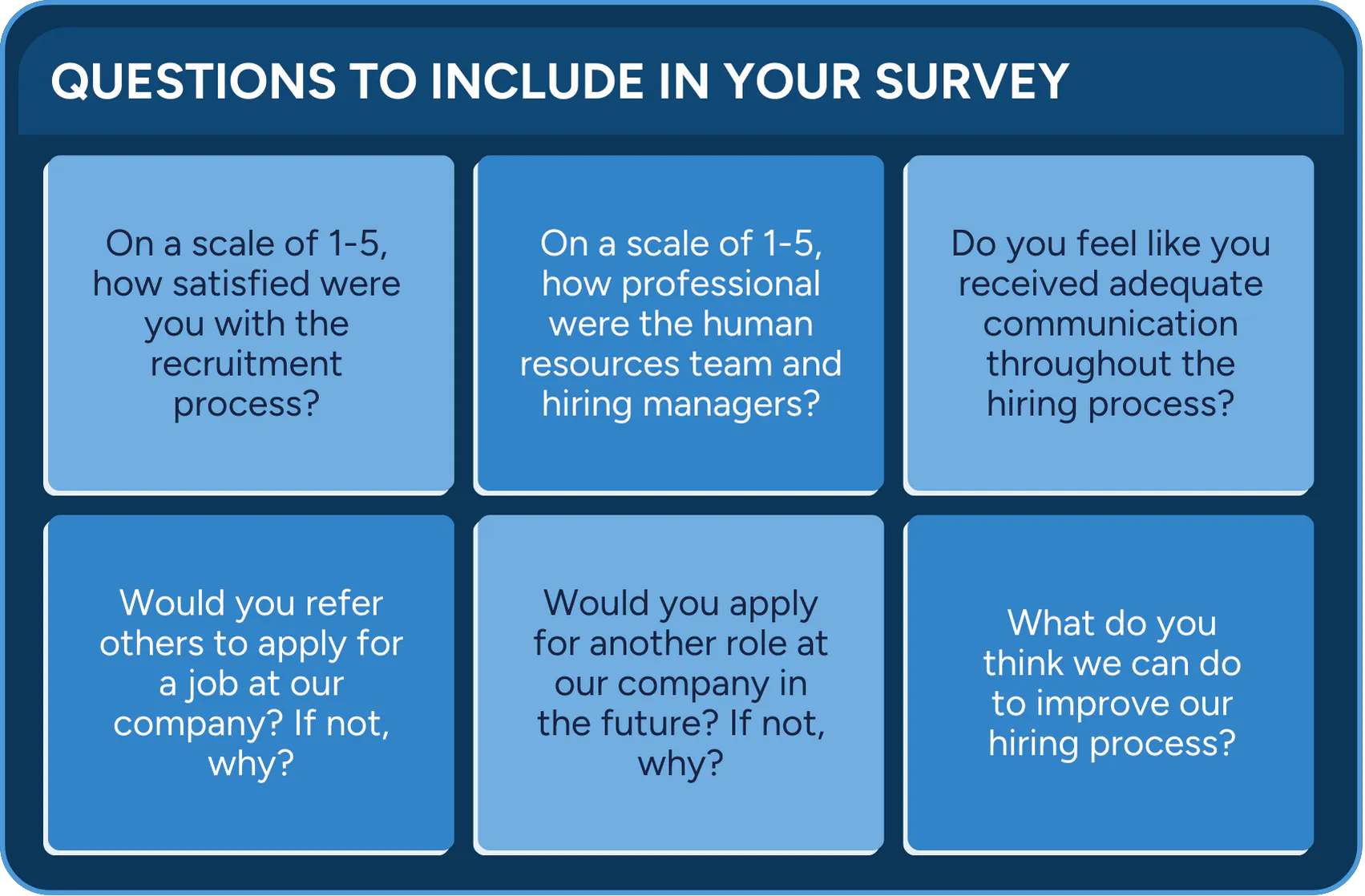
Want to know if your hiring process is broken? Ask candidates directly. Here are six key questions to include in your post-interview survey:
- On a scale of 1-5, how satisfied were you with the recruitment process?
- On a scale of 1-5, how professional were the human resources team and hiring managers?
- Do you feel like you received adequate communication throughout the hiring process?
- Would you refer others to apply for a role at our company? If not, why?
- Would you apply for another role at our company in the future? If not, why?
- What do you think we could do to improve our hiring process?
These questions give you real intel on where you're losing people—and where you're winning.
Do's and Don'ts for Delivering Feedback
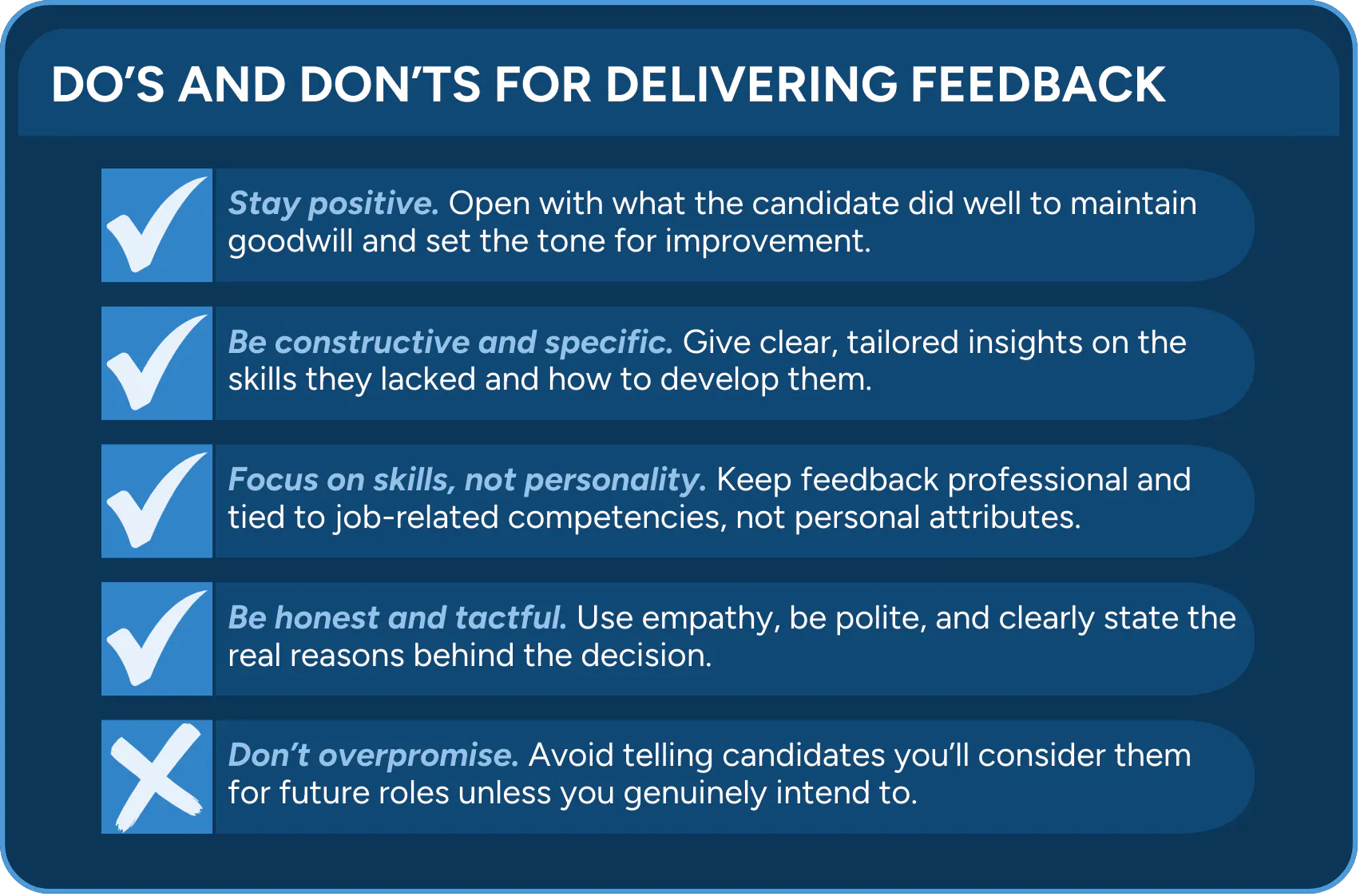
✅ Do's:
Stay positive. Open with what the candidate did well to maintain goodwill and set the tone for improvement.
Be constructive and specific. Give clear, tailored insights on the skills they lacked and how to develop them.
Focus on skills, not personality. Keep feedback professional and tied to job-related competencies, not personal attributes.
Be honest and tactful. Use empathy, be polite, and clearly state the real reasons behind the decision.
❌ Don't:
Don't overpromise. Avoid telling candidates you'll consider them for future roles unless you genuinely intend to.
8 Interview Feedback Examples
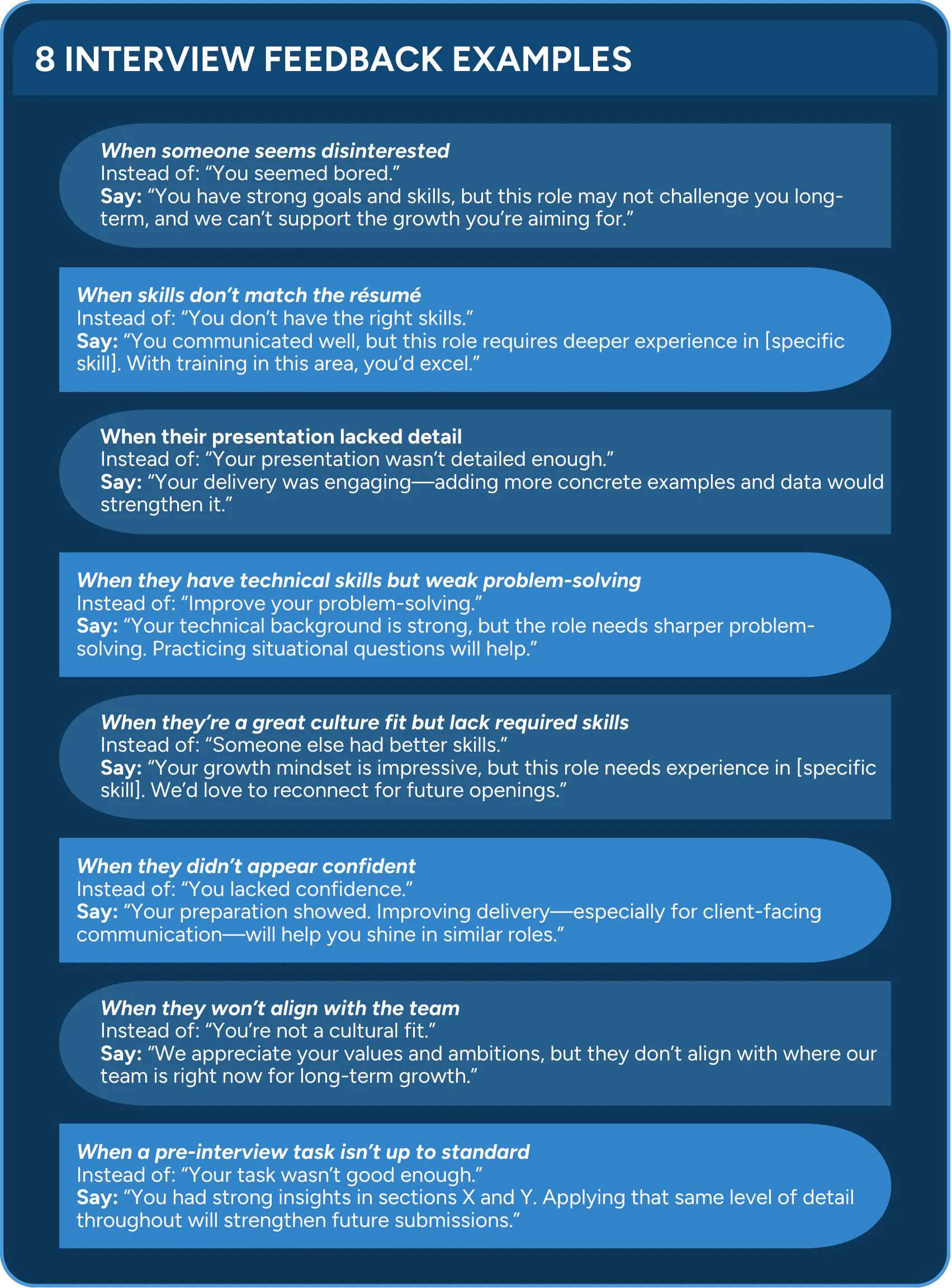
Here's how to reframe common rejection reasons into actionable, respectful feedback:
When someone seems disinterested:
- Instead of: "You seemed bored."
- Say: "You have strong goals and skills, but this role may not challenge you long-term. We can support the growth you're aiming for."
When skills don't match the resume:
- Instead of: "You don't have the right skills."
- Say: "You demonstrated well, but this role requires deeper experience in [specific skill]. With training in this area, you'd excel."
When their presentation lacked detail:
- Instead of: "Your presentation wasn't detailed enough."
- Say: "Your delivery was engaging—adding more concrete examples and data would strengthen it."
When they have technical skills but weak problem-solving:
- Instead of: "Improve your problem-solving."
- Say: "Your technical background is strong, but the role needs sharper problem-solving abilities. Tackling more complex projects will build that muscle."
When they're a great culture fit but lack required skills:
- Instead of: "Someone else had better skills."
- Say: "You'd fit our team well, but this role needs more experience in [specific skill]. We'd love to reconnect for future openings."
When they didn't appear confident:
- Instead of: "You lacked confidence."
- Say: "Your preparation showed. Improving delivery—especially for client-facing communication—will help you shine in similar roles."
When they won't align with the team:
- Instead of: "You're not a cultural fit."
- Say: "You bring strong skills and ambitions, but they don't align with where our team is right now for long-term growth."
When a pre-interview task isn't up to standard:
- Instead of: "Your task wasn't good enough."
- Say: "You had strong insights in sections X and Y. Applying that same level of detail throughout will strengthen future submissions."
Same message. Completely different experience.
Creating a Standardized Feedback System
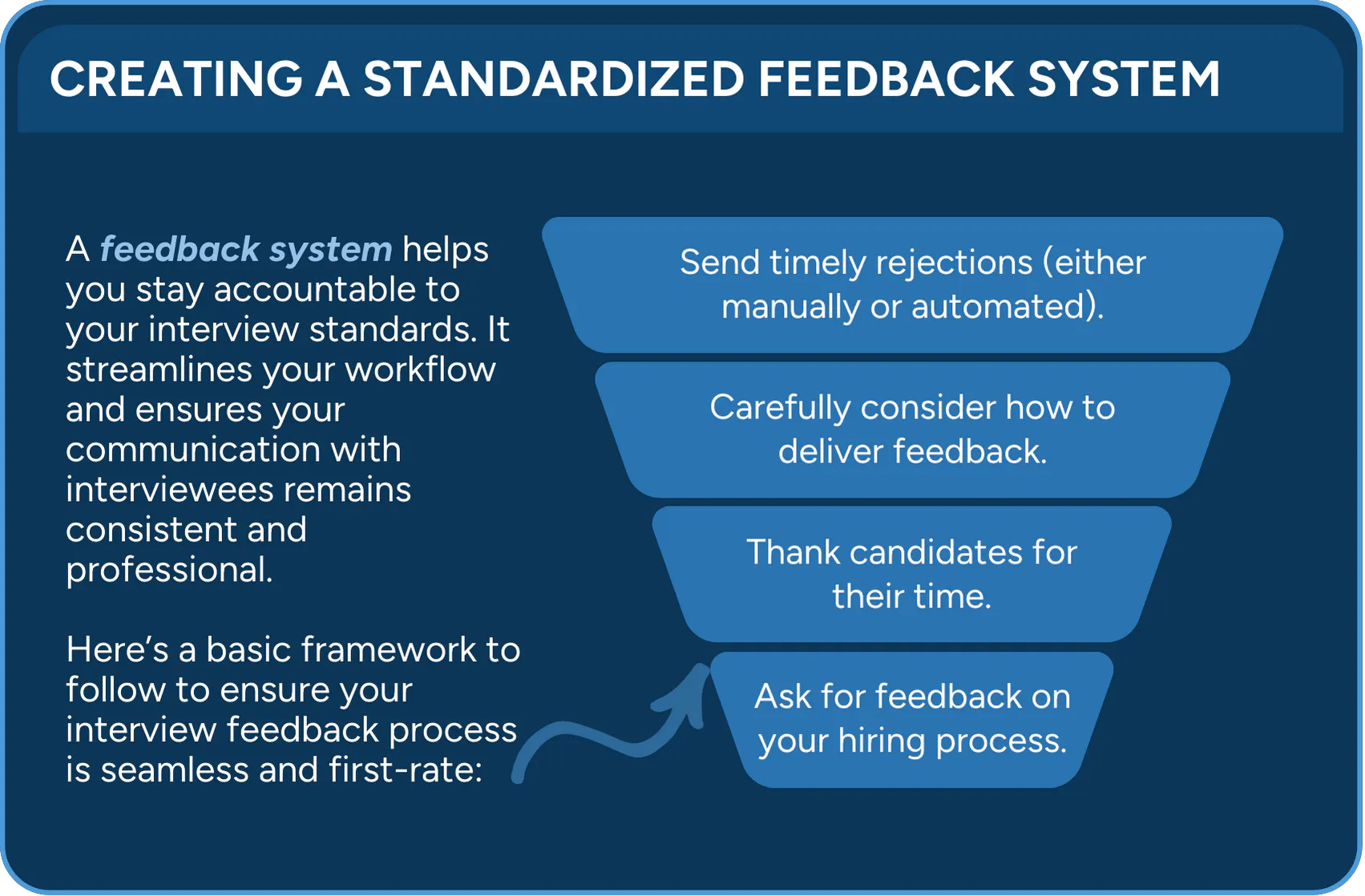
A feedback system helps you stay accountable to candidates, eliminates inconsistency, streamlines your workflow, and ensures your communication with interviewees remains consistent and professional.
Here's a basic framework to follow:
- Send timely rejections (either manually or automated)
- Carefully consider how to deliver feedback
- Thank candidates for their time
- Ask for feedback on your hiring process
Consistency builds trust. Trust builds your talent pipeline.
Make It a System, Not a Favor
Use scorecards. Record observations during and after interviews. Reply within a week. Ask candidates for feedback on your process too.
This isn't extra work. It's the work that separates companies people want to work for from companies people warn their friends about.
Great companies aren't just great because of who they hire. They're great because of how they treat the people they don't hire.
Looking to level up your hiring process and build a respectful, high-performance team? Start treating feedback like the strategic tool it is.

Was this content useful?