 cord
cordMastering Your Global Talent Strategy
The Strategic Guide to Hiring Top Talent Anywhere in the World
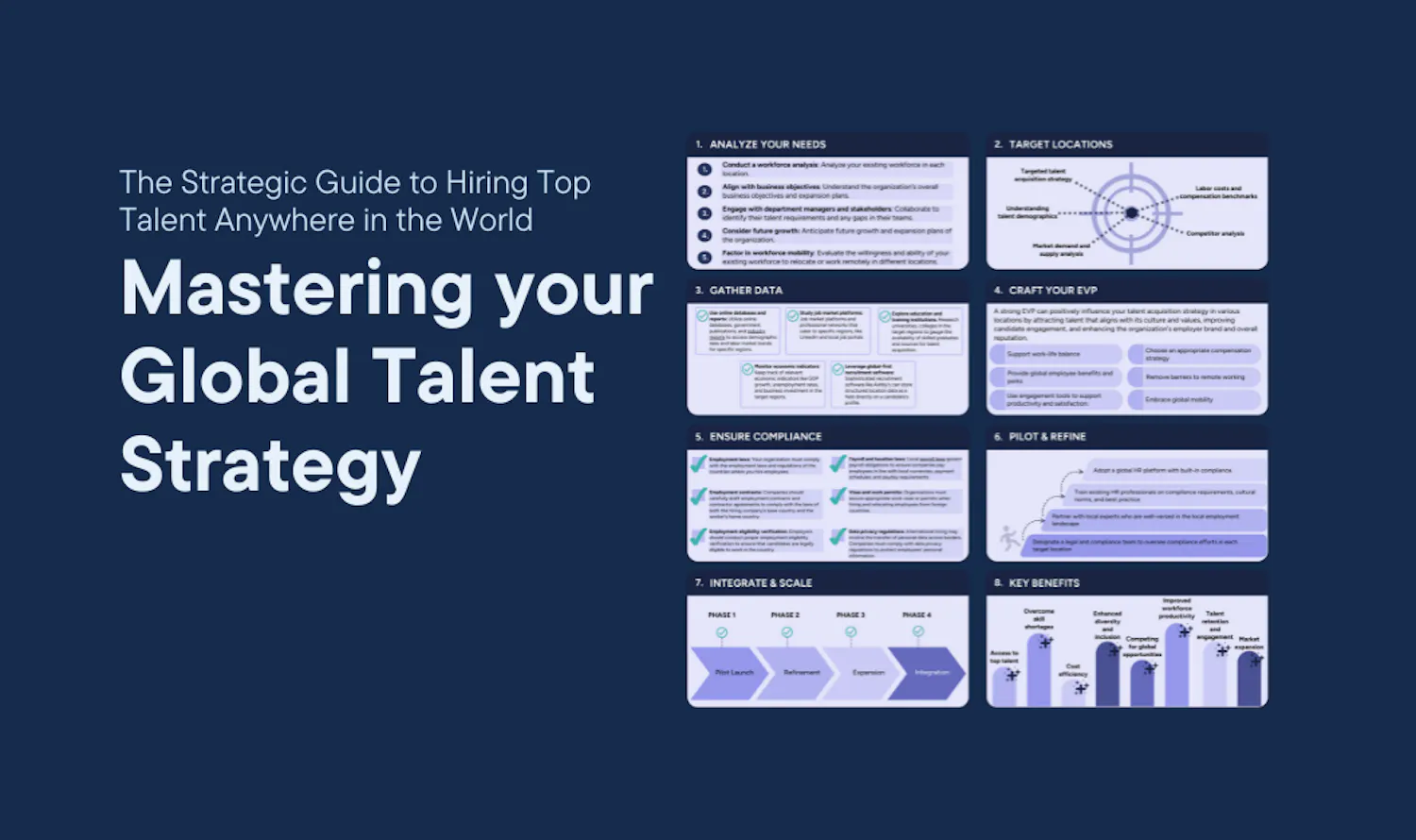
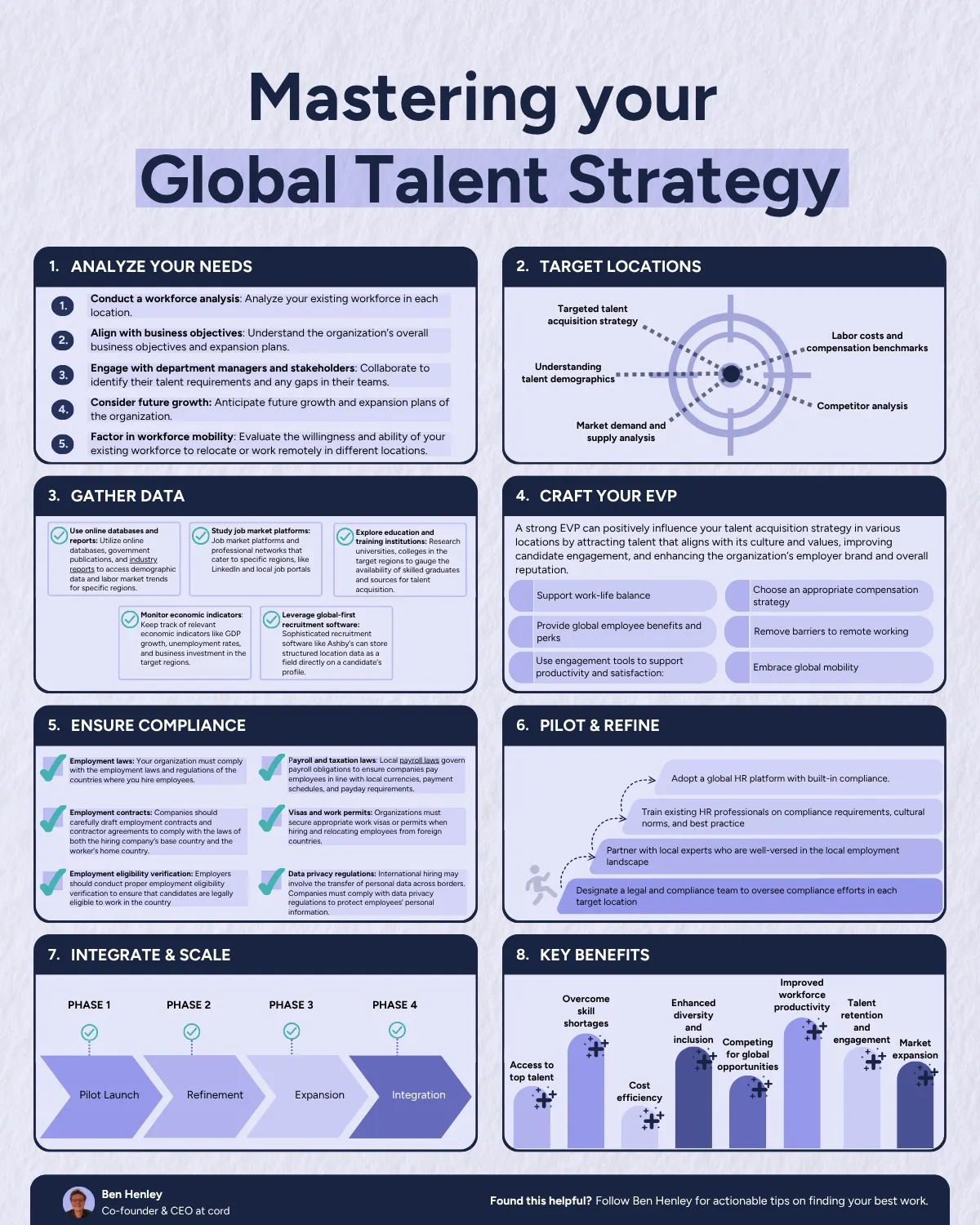
In talent acquisition, strategy matters—especially when hiring globally. With billions of people on the planet, no business should have to struggle to find the right person for the job. The right global talent strategy helps you avoid skill shortages, control costs, and hire the best people in the world.
Here's a practical 7-step guide to building a world-class global talent acquisition strategy inspired by Deel.
Analyze Your Needs
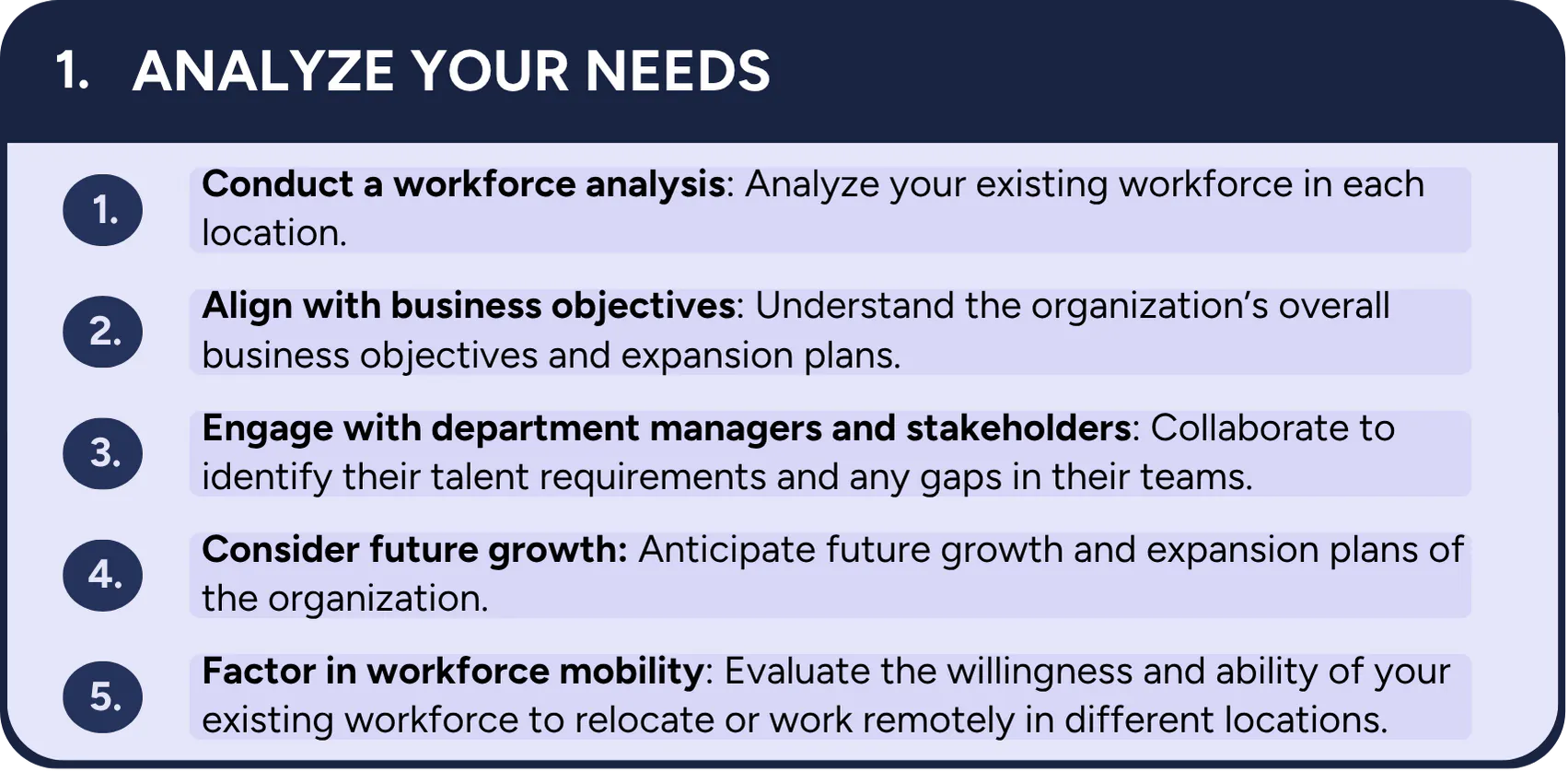
Start by conducting a comprehensive workforce analysis. This foundation will guide every subsequent decision in your global talent strategy.
Key actions:
- Conduct a workforce analysis: Analyze your existing workforce in each location to understand current capabilities and gaps
- Align with business objectives: Understand the organization's overall business objectives and expansion plans to ensure talent strategy supports growth
- Engage with department managers and stakeholders: Collaborate with leadership to identify their talent requirements and get buy-in for your strategy
- Consider future growth: Anticipate future growth and expansion plans of the organization to build a forward-looking approach
- Factor in workforce mobility: Evaluate the willingness and ability of your existing workforce to relocate or work remotely in different locations
Target Locations
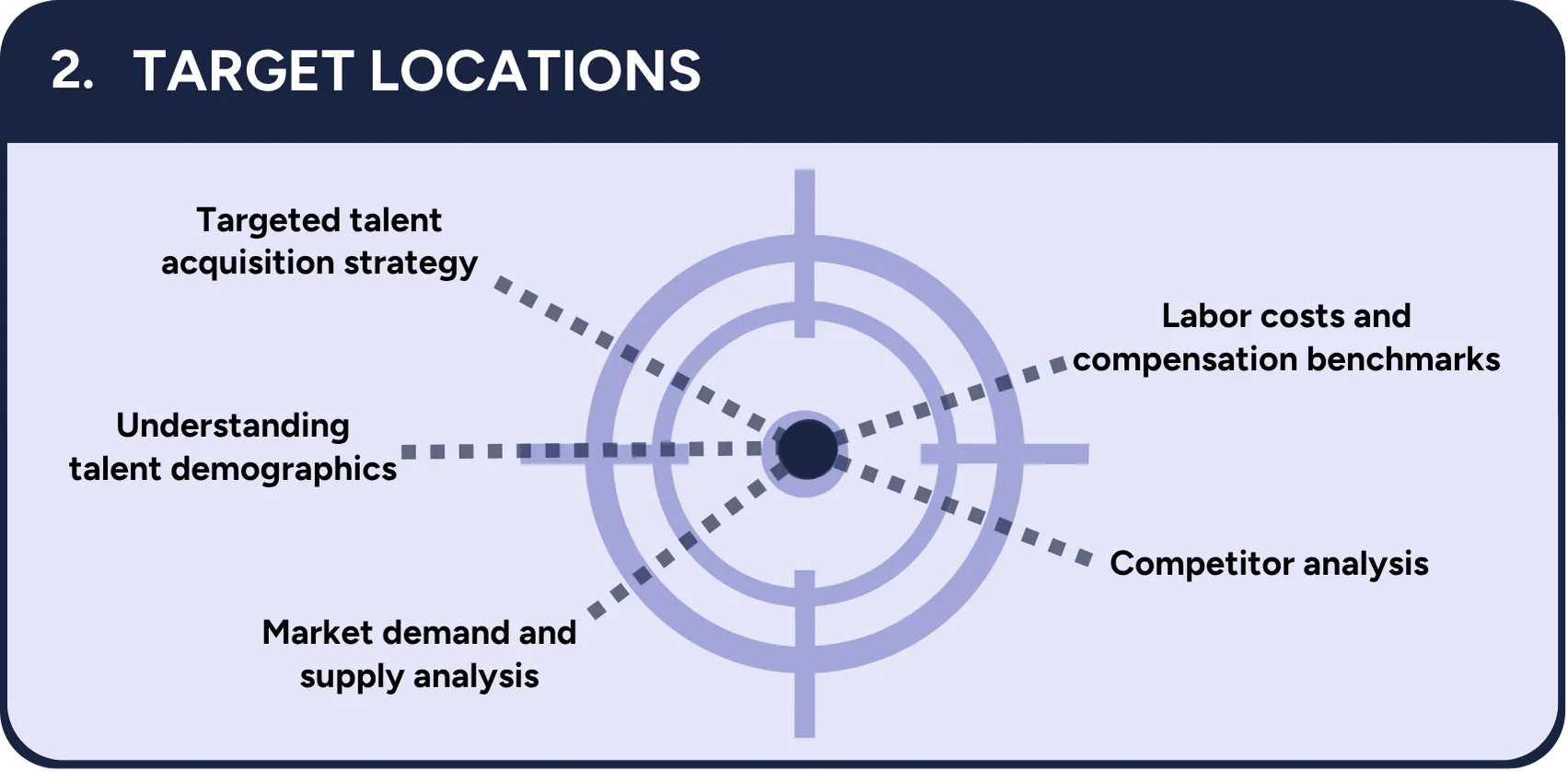
Your location targeting should be data-driven and strategic. Focus on markets that offer the right balance of talent availability, cost efficiency, and business alignment.
Research priorities:
- Targeted talent acquisition strategy: Develop location-specific approaches based on local market conditions
- Labor costs and compensation benchmarks: Understand regional salary expectations and benefit requirements
- Understanding talent demographics: Analyze the available talent pool, skills, and experience levels in target markets
- Market demand and supply analysis: Evaluate competition for talent and availability of specific skill sets
- Competitor analysis: Research how competitors are approaching talent acquisition in these markets
Gather Data
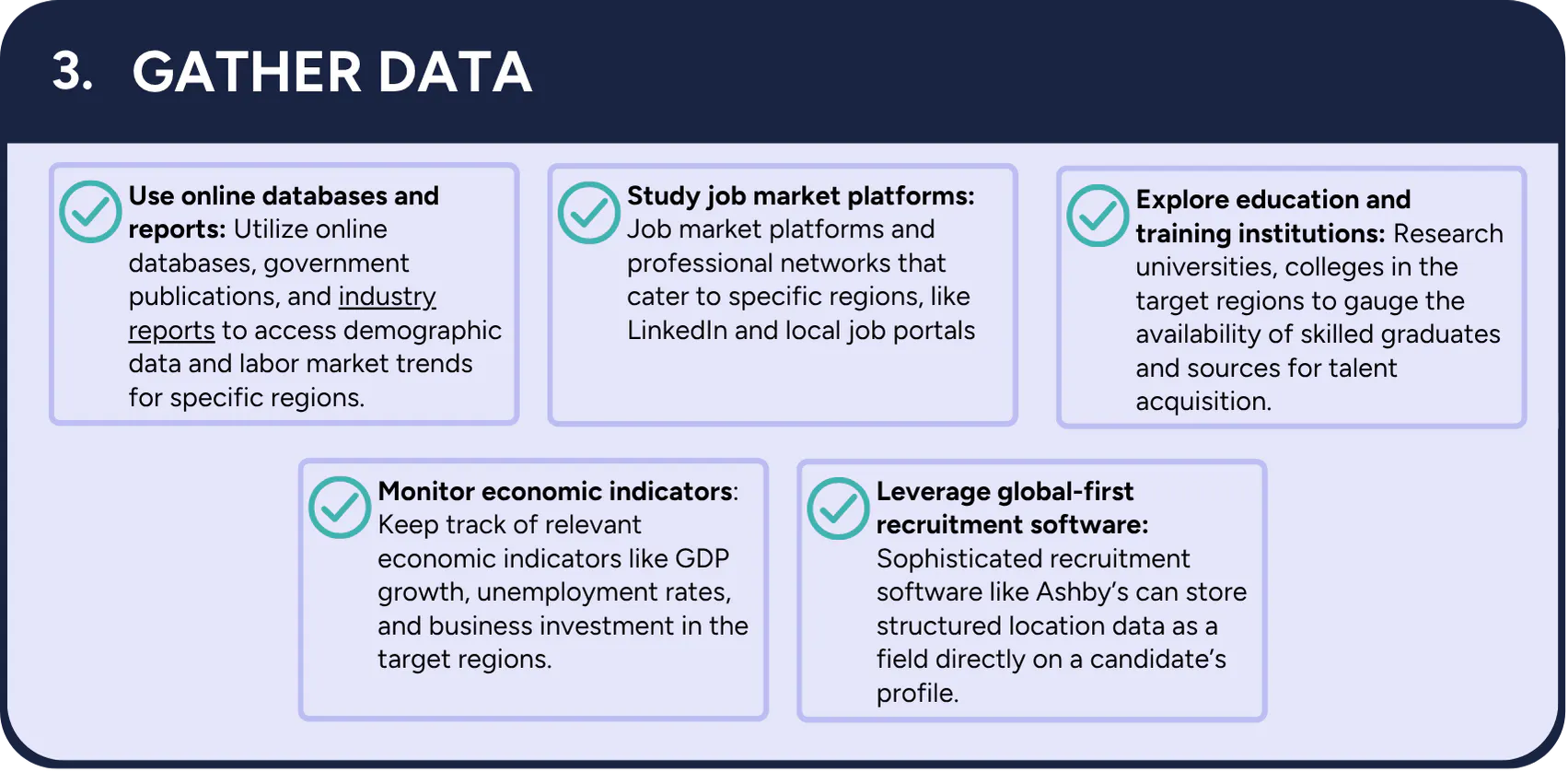
Comprehensive data collection enables informed decision-making and helps you understand market dynamics across different regions.
Data sources to leverage:
- Online databases and reports: Utilize online databases and government reports to access demographic data and market information for specific regions
- Study job market platforms: Analyze job market platforms and professional networking sites. Review job postings, salary data, and application rates
- University data and training institutions: Research universities, colleges, and training institutions in the target region to gauge the talent pipeline and skill development
- Monitor economic indicators: Keep track of relevant economic indicators like GDP growth rates, inflation, and business investment in target regions
- Leverage global talent recruitment software: Use specialized recruitment software that provides structured location data as a feed directly on a candidate's profile
Craft Your Employee Value Proposition (EVP)
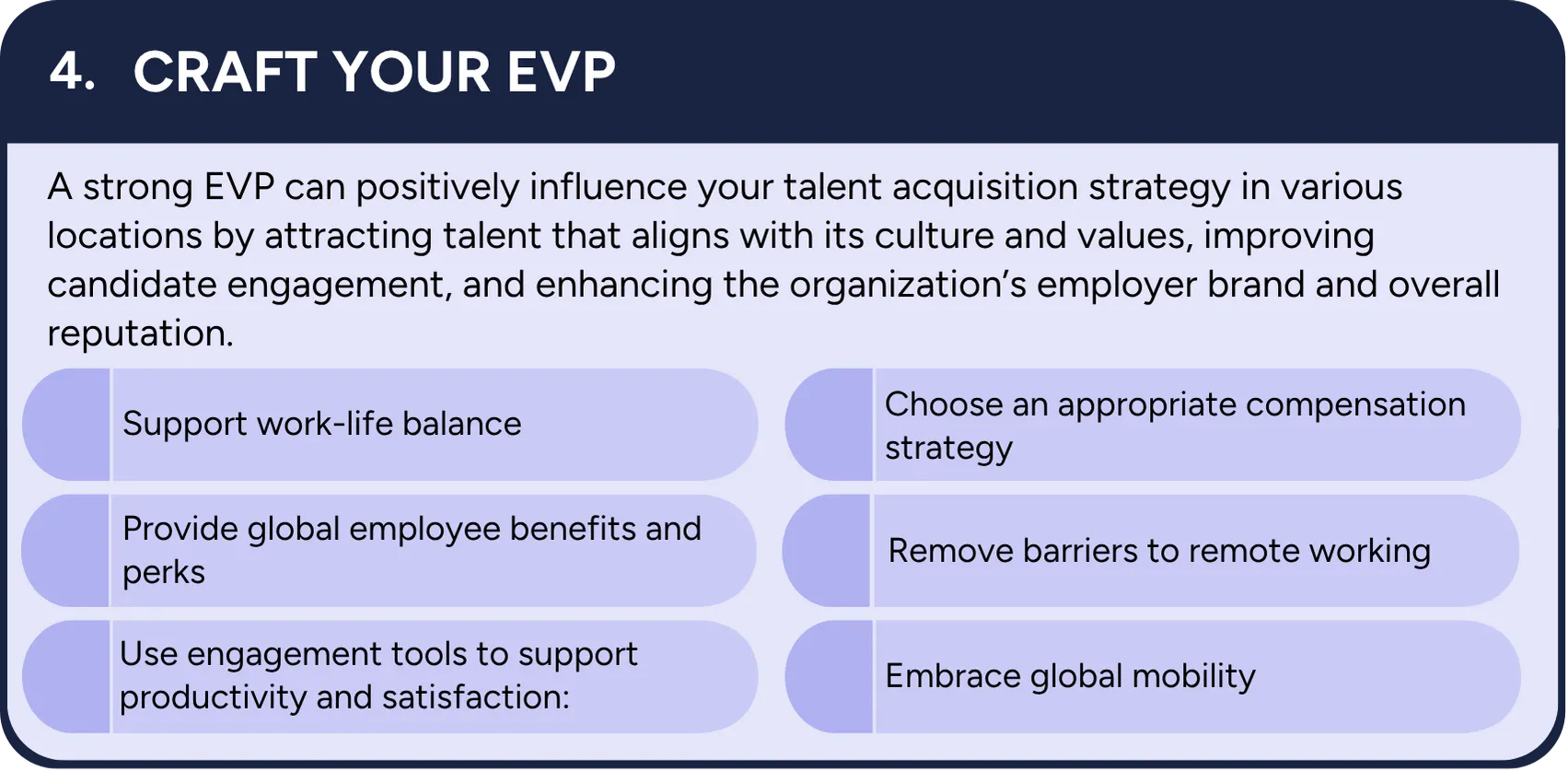
A strong EVP can positively influence your talent acquisition strategy in various locations by attracting talent that aligns with your culture and values, improving candidate engagement, and enhancing the organization's employer brand and overall reputation.
EVP components to consider:
- Support work-life balance: Offer flexible working arrangements and policies that promote healthy work-life integration
- Choose an appropriate compensation strategy: Develop competitive and fair compensation packages that reflect local market conditions
- Provide global employee benefits and perks: Create benefit packages that appeal to international talent while considering local preferences
- Remove barriers to remote working: Implement technology and policies that enable seamless remote collaboration
- Use engagement tools to support productivity and satisfaction: Invest in tools and platforms that keep distributed teams connected and productive
- Embrace global mobility: Offer opportunities for career development across different locations and regions
Ensure Compliance
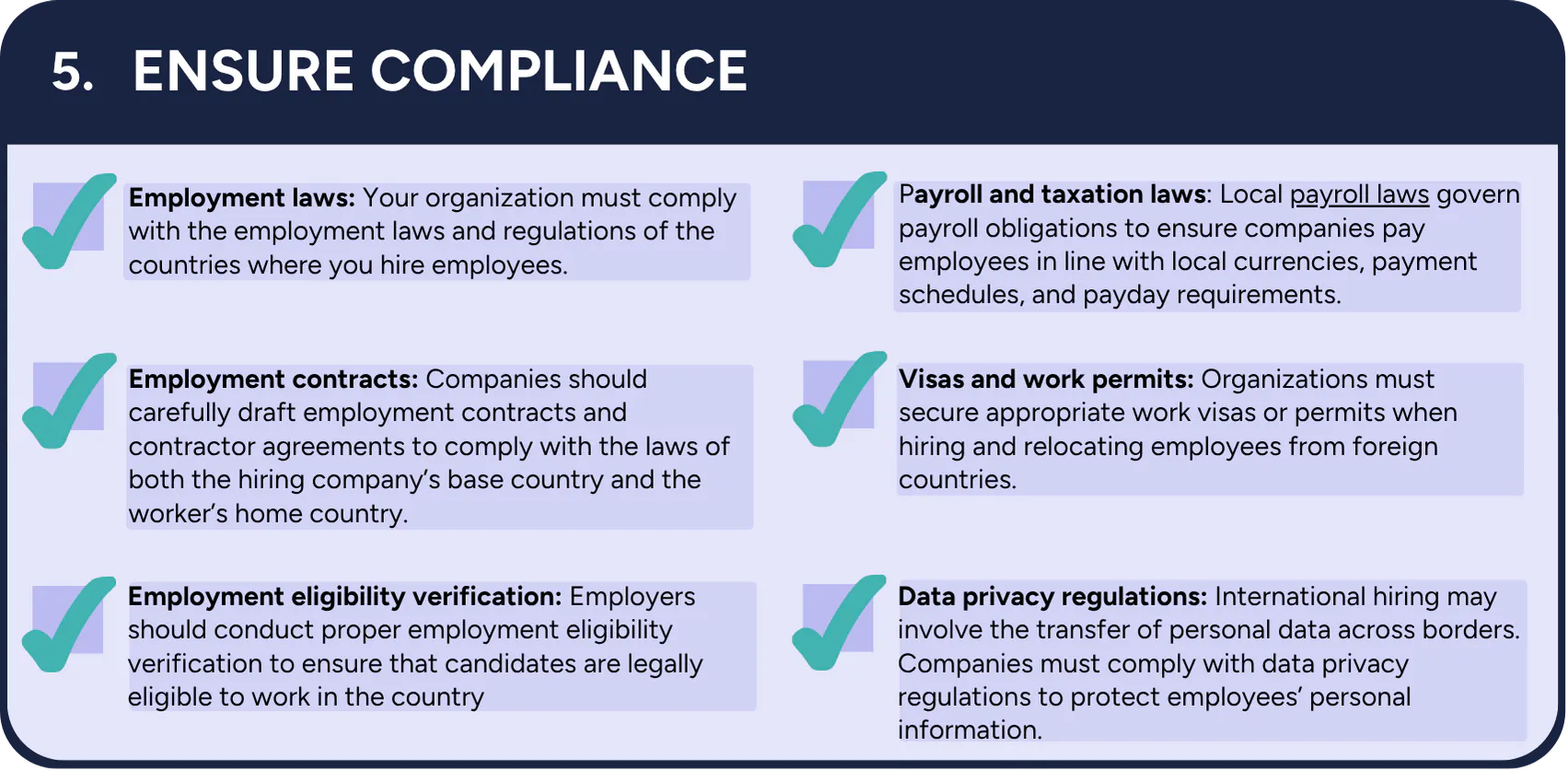
Navigating the complex landscape of international employment law is critical for successful global expansion and talent acquisition.
Compliance areas to address:
- Employment laws: Your organization must comply with the employment laws and regulations of the countries where you plan to hire
- Payroll and taxation laws: Local payroll and tax systems govern payroll obligations to ensure companies pay appropriate income taxes, social security contributions, and payslip requirements
- Employment eligibility verification: Employers should conduct proper employment eligibility verification based on the law of both the hiring company's base country and the worker's home country
- Visa applications and work permits: Secure appropriate work visas or permits when hiring and placing employees from foreign countries
- Data privacy regulations: International hiring may involve the transfer of personal data across borders, requiring compliance with data protection regulations to protect employees' personal information
Implementation strategies:
- Adopt a global HR platform with built-in compliance: Use technology solutions that automatically handle compliance requirements across different jurisdictions
- Train existing HR professionals on compliance requirements, cultural norms, and best practices: Invest in education and training for your HR team
- Partner with local experts who are well-versed in the local employment landscape: Work with legal and HR professionals in each target market
- Designate a legal and compliance team to oversee compliance efforts in each target location: Establish clear oversight and accountability for compliance matters
Pilot and Refine
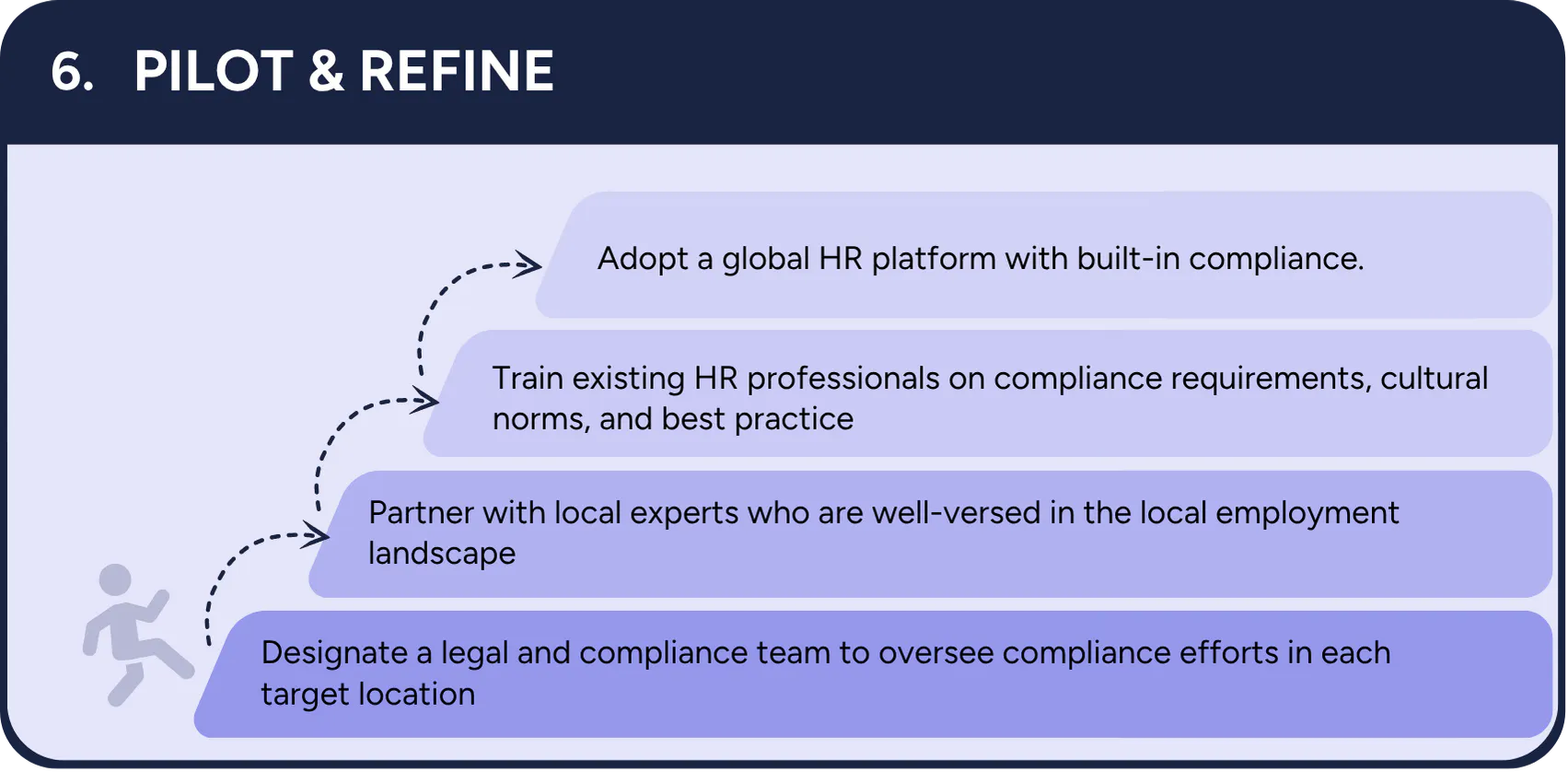
Rather than launching globally all at once, take a measured approach that allows for learning and optimization.
Pilot approach:
- Start with one or two strategic locations to test your approach
- Collect feedback from candidates, hiring managers, and employees
- Adjust processes based on real-world experience
- Refine your strategy before scaling to additional markets
This phase-by-phase approach reduces risk and allows you to build expertise gradually while maintaining quality standards.
Integrate and Scale
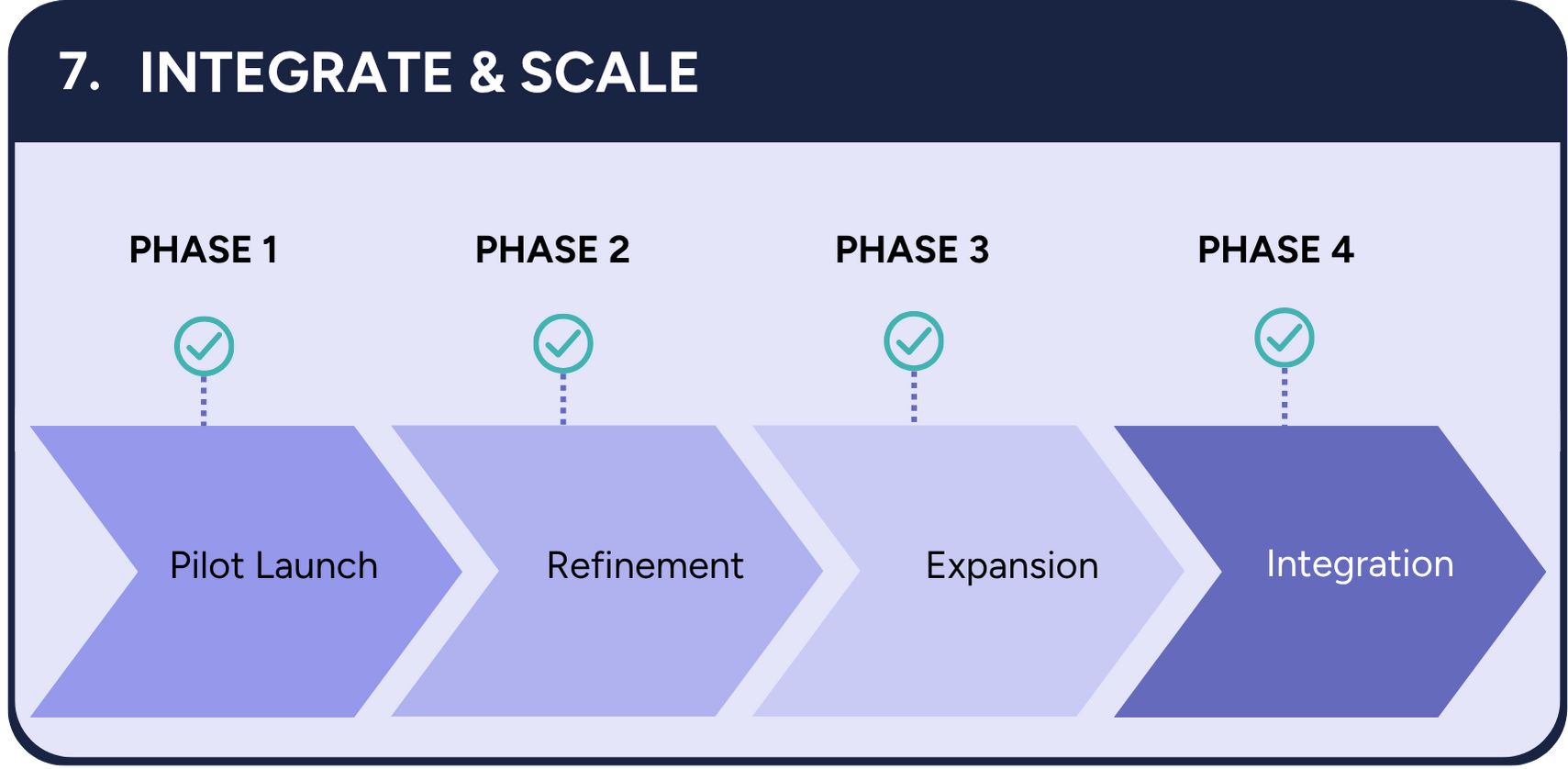
Once you've validated your approach through piloting, it's time to scale systematically across your target markets.
Scaling phases:
- Phase 1: Pilot Launch - Test your strategy in select markets with careful monitoring
- Phase 2: Refinement - Adjust processes based on pilot feedback and results
- Phase 3: Expansion - Roll out to additional priority markets with proven processes
- Phase 4: Integration - Fully integrate global talent strategy into all business operations
The key is maintaining consistency in your core approach while adapting to local market requirements and cultural nuances.
Key Benefits of a Strong Global Talent Strategy
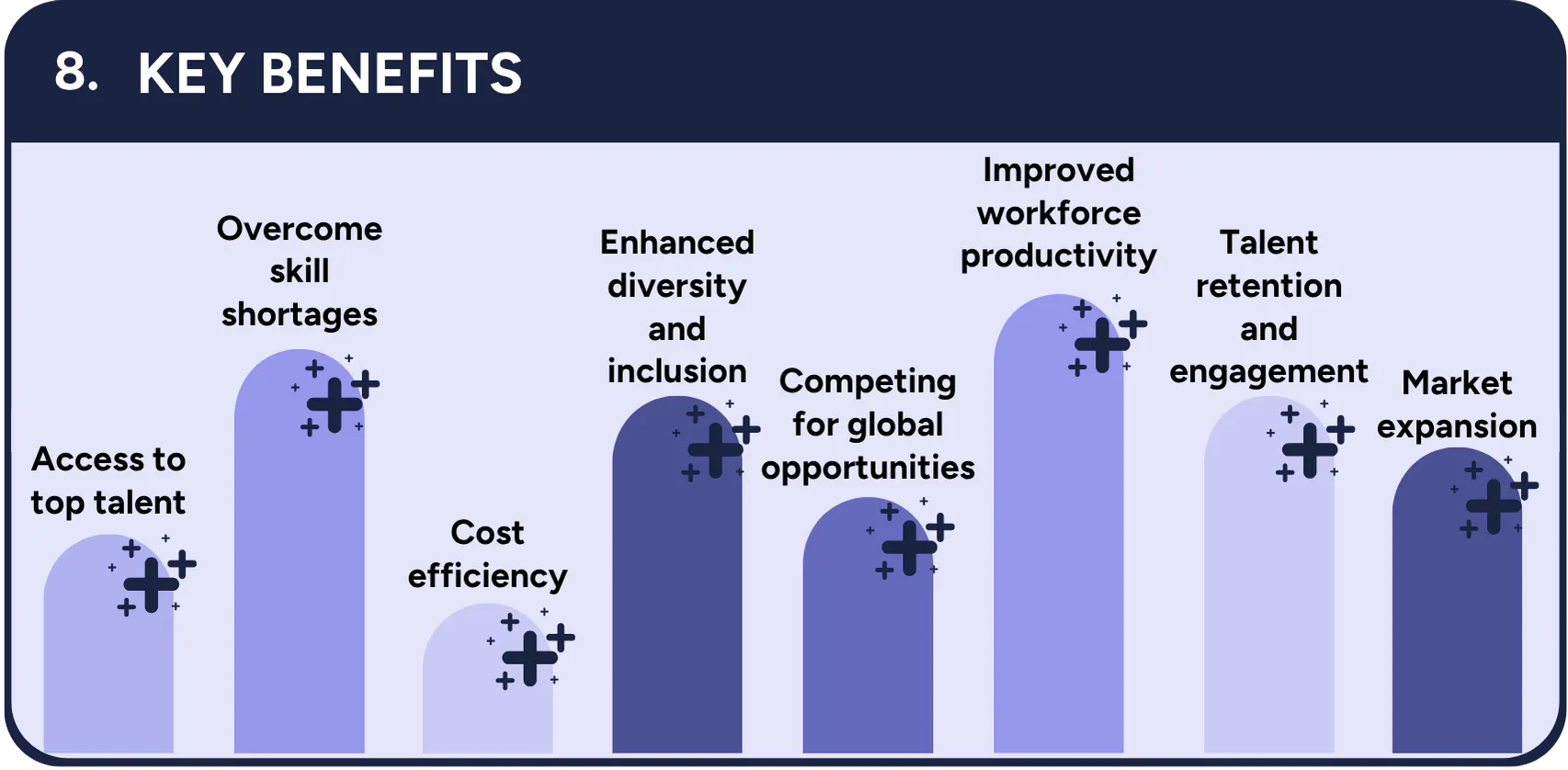
When executed properly, a comprehensive global talent strategy delivers measurable business benefits:
Talent Access and Quality:
- Overcome skill shortages: Access talent pools in regions where specific skills are more abundant
- Access to top talent: Tap into the best talent pools worldwide, regardless of geographic constraints
Operational Efficiency:
- Enhanced diversity and inclusion: Build more diverse teams that bring varied perspectives and approaches
- Cost efficiency: Optimize hiring costs by targeting markets with competitive labor rates
- Improved workforce productivity: Leverage time zone differences and regional expertise for continuous operations
Strategic Advantages:
- Competing for global opportunities: Position your organization to compete effectively in international markets
- Talent retention and engagement: Offer location-specific benefits and career opportunities that improve employee satisfaction
- Market expansion: Build local presence and understanding that supports business growth in new regions
Conclusion
The most successful companies don't hire the best people by accident—they execute a tailored global talent strategy that systematically addresses market analysis, compliance, employee experience, and operational excellence.
By following this comprehensive approach, organizations can build a sustainable competitive advantage through strategic global talent acquisition. The investment in developing a robust global talent strategy pays dividends through access to better talent, improved operational efficiency, and enhanced business agility in an increasingly connected world.
Start with thorough analysis, move to strategic targeting, and scale thoughtfully. Your global talent strategy should evolve with your business needs while maintaining the core principles of compliance, candidate experience, and operational excellence.

Was this content useful?