 cord
cordMeasuring Quality of Hire
A Practical Guide to Measuring Quality of Hire for Hiring Managers

Ask any People Leader what recruiting metric they care about most, and "Quality of Hire" usually tops the list. But here's the problem: few teams measure it well.
Understanding how to assess Quality of Hire (QoH) is essential for better hiring decisions, stronger teams, and long-term impact.
Here’s a practical breakdown based on insights from Screenloop’s Anton Boner Talent Operations data:
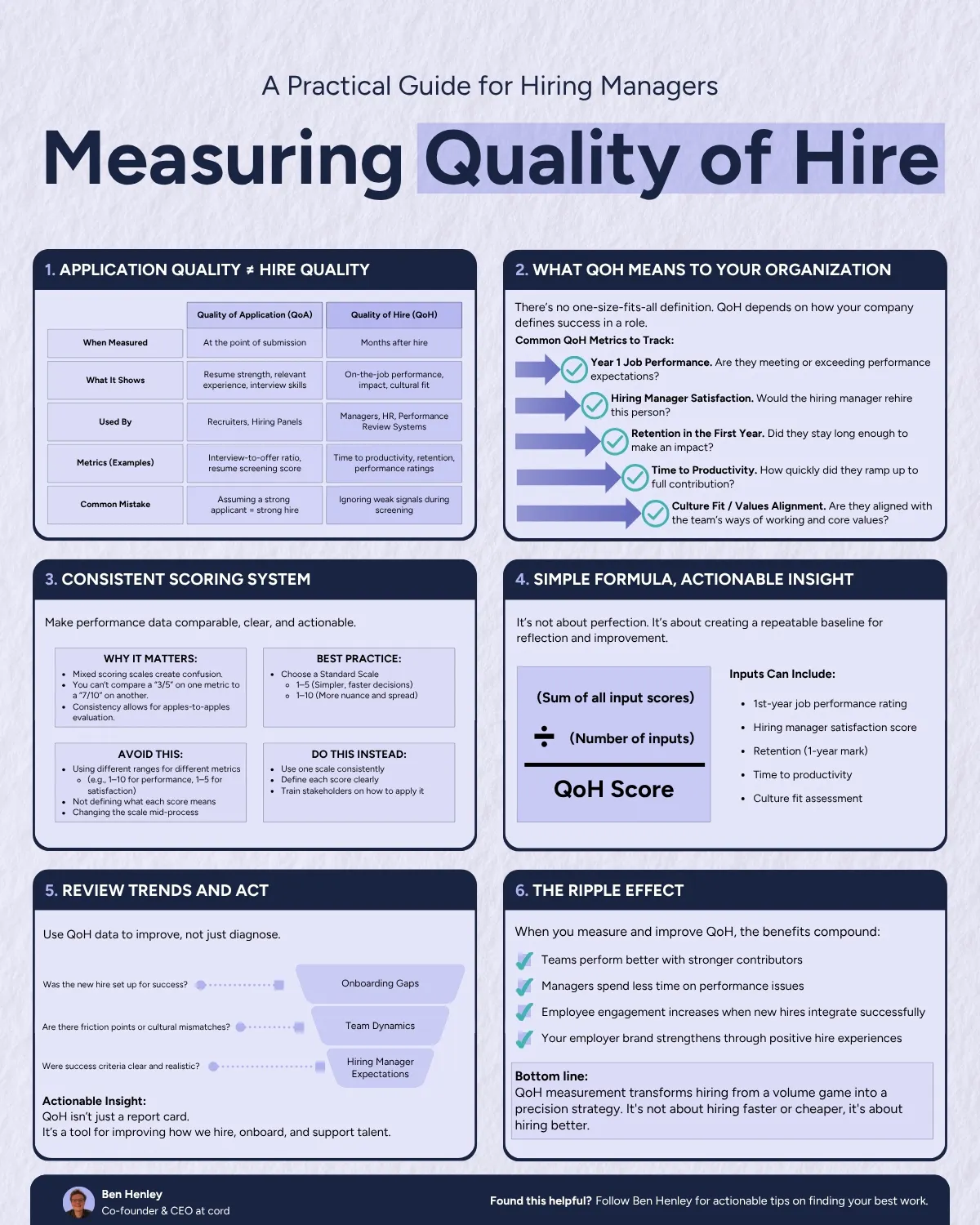
Separate the Signal: Application Quality ≠ Hire Quality
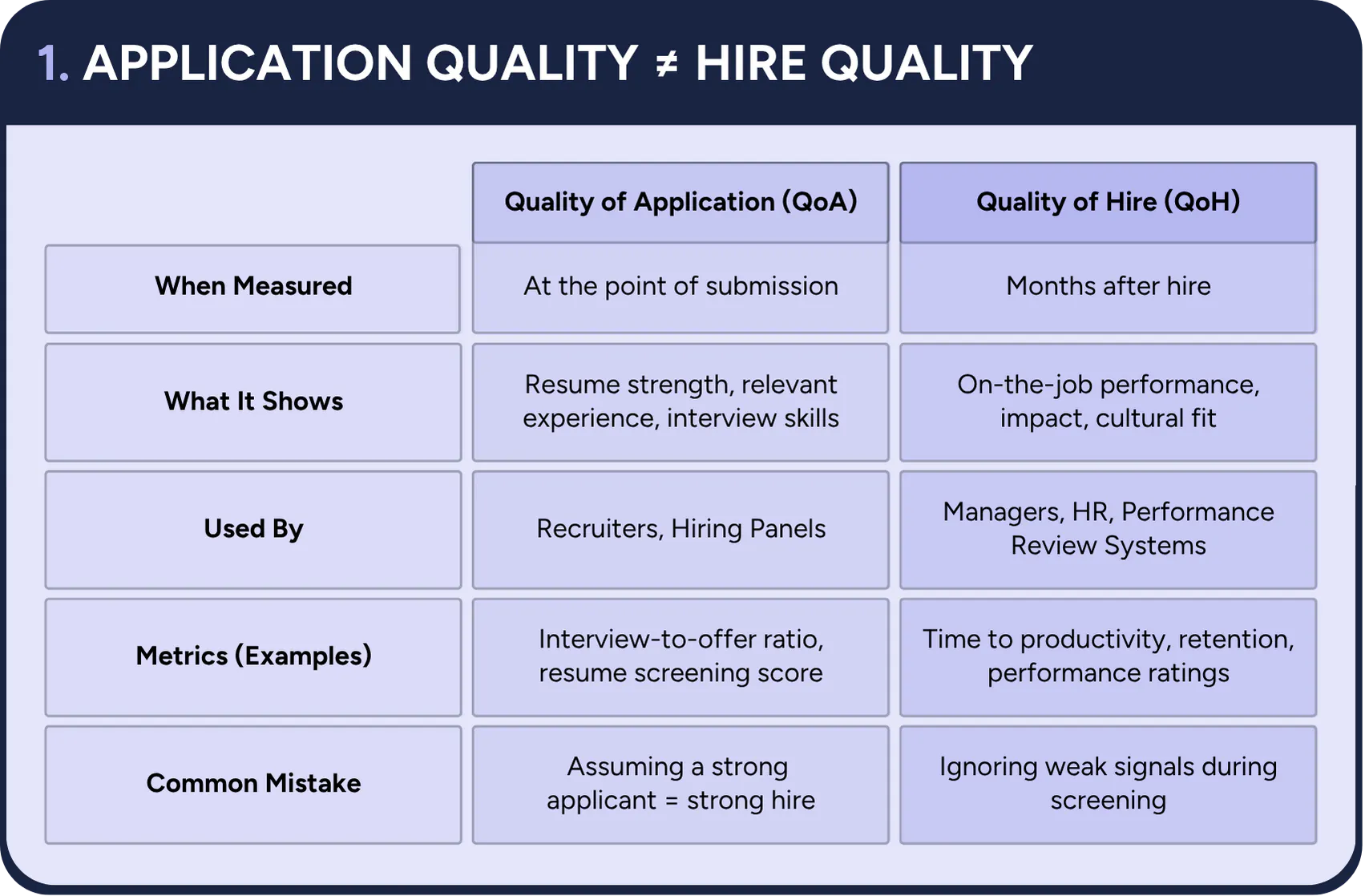
Many organizations confuse two distinct measurements:
Quality of Application (QoA) measures how strong a candidate appears at the point of submission. This includes resume strength, relevant experience, and interview skills. Recruiters and hiring panels typically use this measurement.
Quality of Hire (QoH) measures how the person actually performs on the job, evaluated months after hire. This focuses on on-the-job performance and impact ratings. Managers, HR, and performance review systems track this data.
The key difference: QoA shows potential based on interview-to-offer ratios and resume screening scores. QoH reveals reality through time to productivity, retention, and performance ratings.
Common mistake with QoA: assuming a strong applicant equals a strong hire. Common mistake with QoH: ignoring weak signals during the screening process.
Define What QoH Means to Your Organization
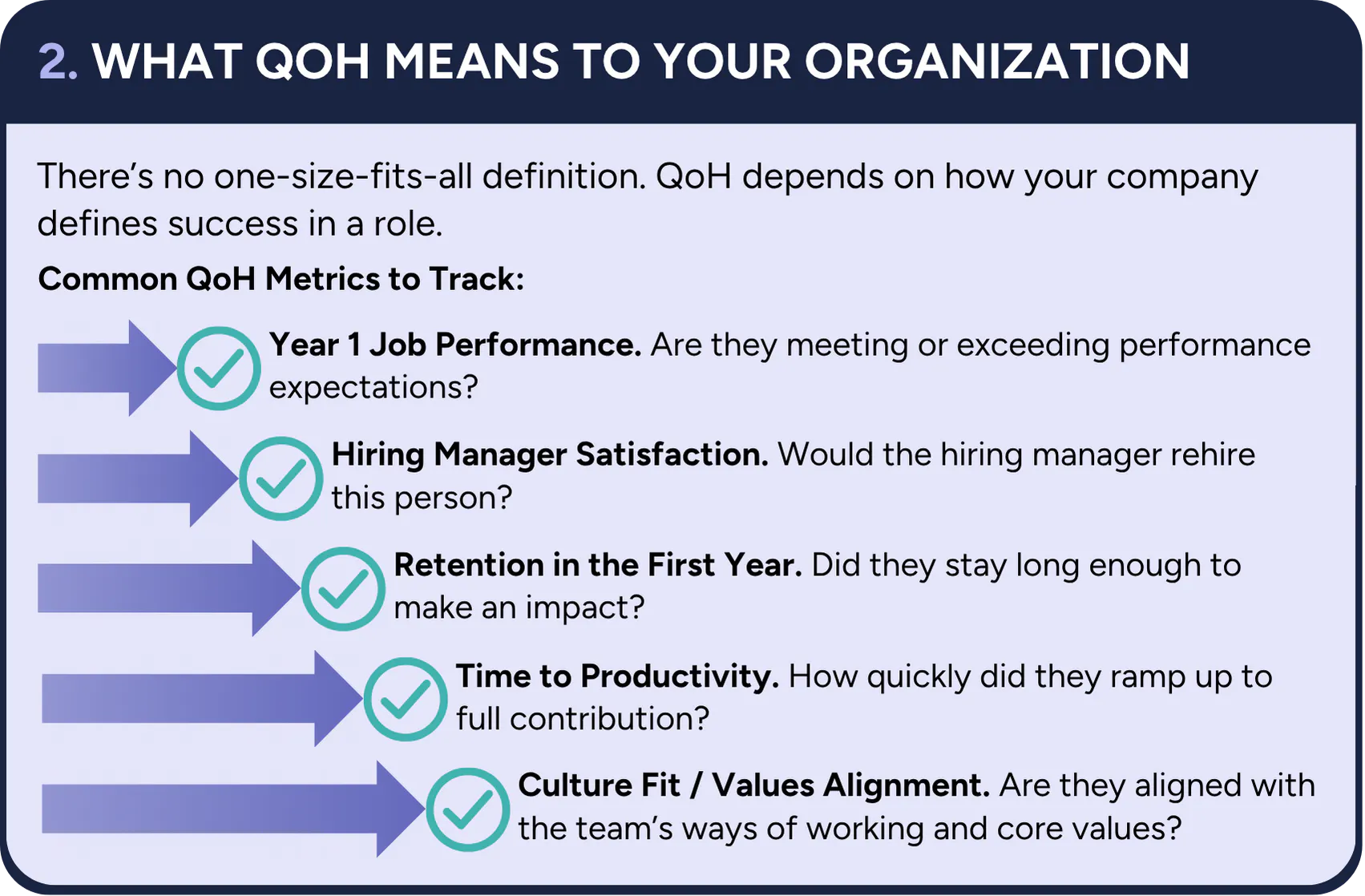
There's no universal formula for Quality of Hire. QoH depends on how your company defines success in a role.
Common QoH metrics to track:
- Year 1 Job Performance: Are they meeting or exceeding performance expectations?
- Hiring Manager Satisfaction: Would the hiring manager rehire this person?
- Retention in the First Year: Did they stay long enough to make an impact?
- Time to Productivity: How quickly did they ramp up to full contribution?
- Culture Fit / Values Alignment: Are they aligned with the team's ways of working and core values?
Use a Consistent Scoring System
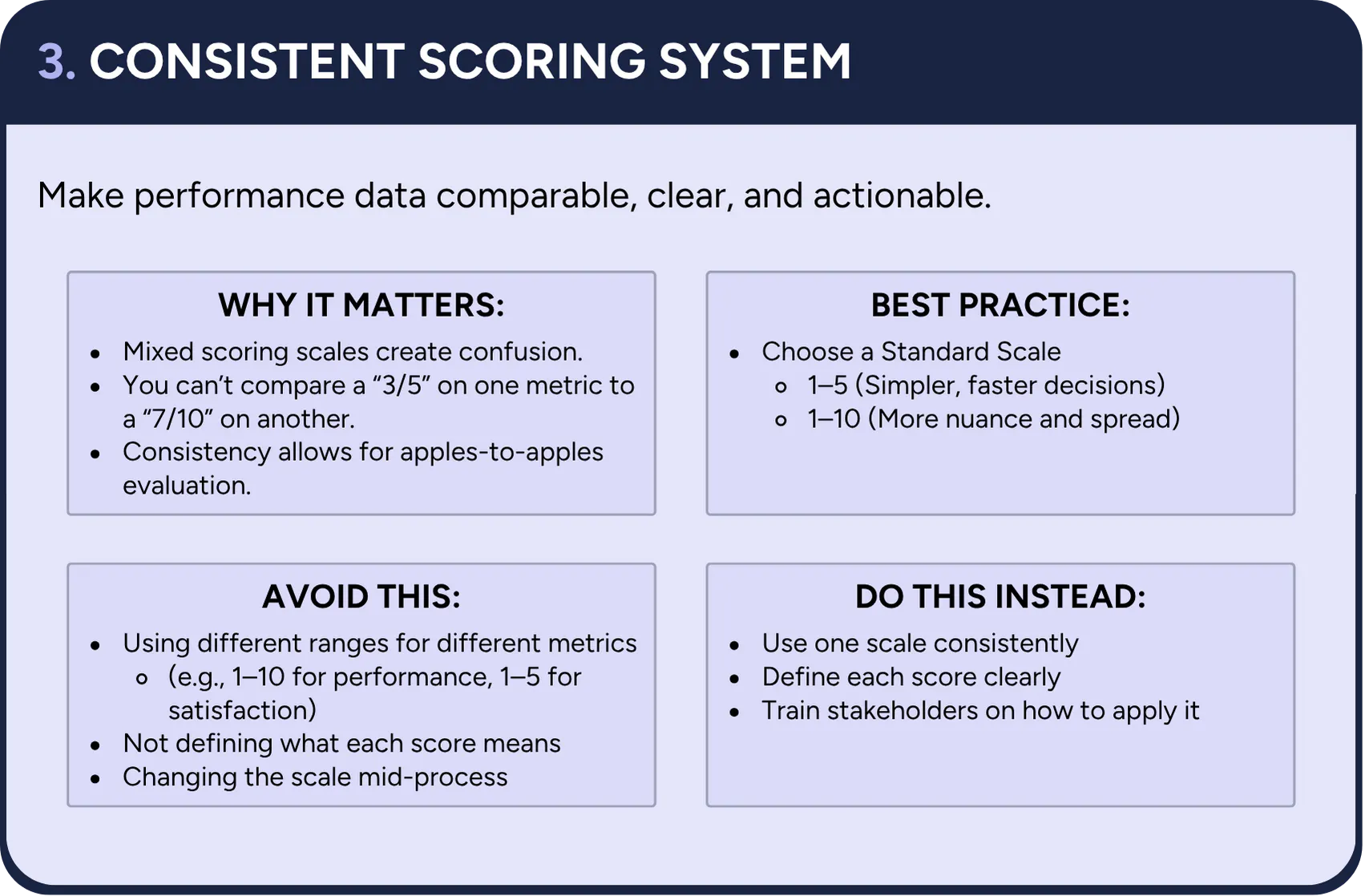
Mixed scoring scales create confusion. You can't compare a "3/5" to a "7/10" across different metrics. Consistency allows for apples-to-apples evaluation.
Why it matters:
- Mixed scoring scales create confusion
- You can't compare different metrics to identify improvement areas
- Consistency allows for apples-to-apples evaluation
Best practice: Choose a standard scale (1-5 or 1-10 for decisions, 1-3 for binary/nuanced and general use). Use one scale consistently and define each score clearly. Train stakeholders on how to apply it.
Avoid this: Using different ranges for different metrics (e.g., 1-10 for performance, 1-5 for satisfaction). Not defining what each score means. Changing the scale mid-process.
Do this instead: Use one scale consistently, define each score clearly, and train stakeholders on how to apply it.
Simple Formula, Actionable Insight
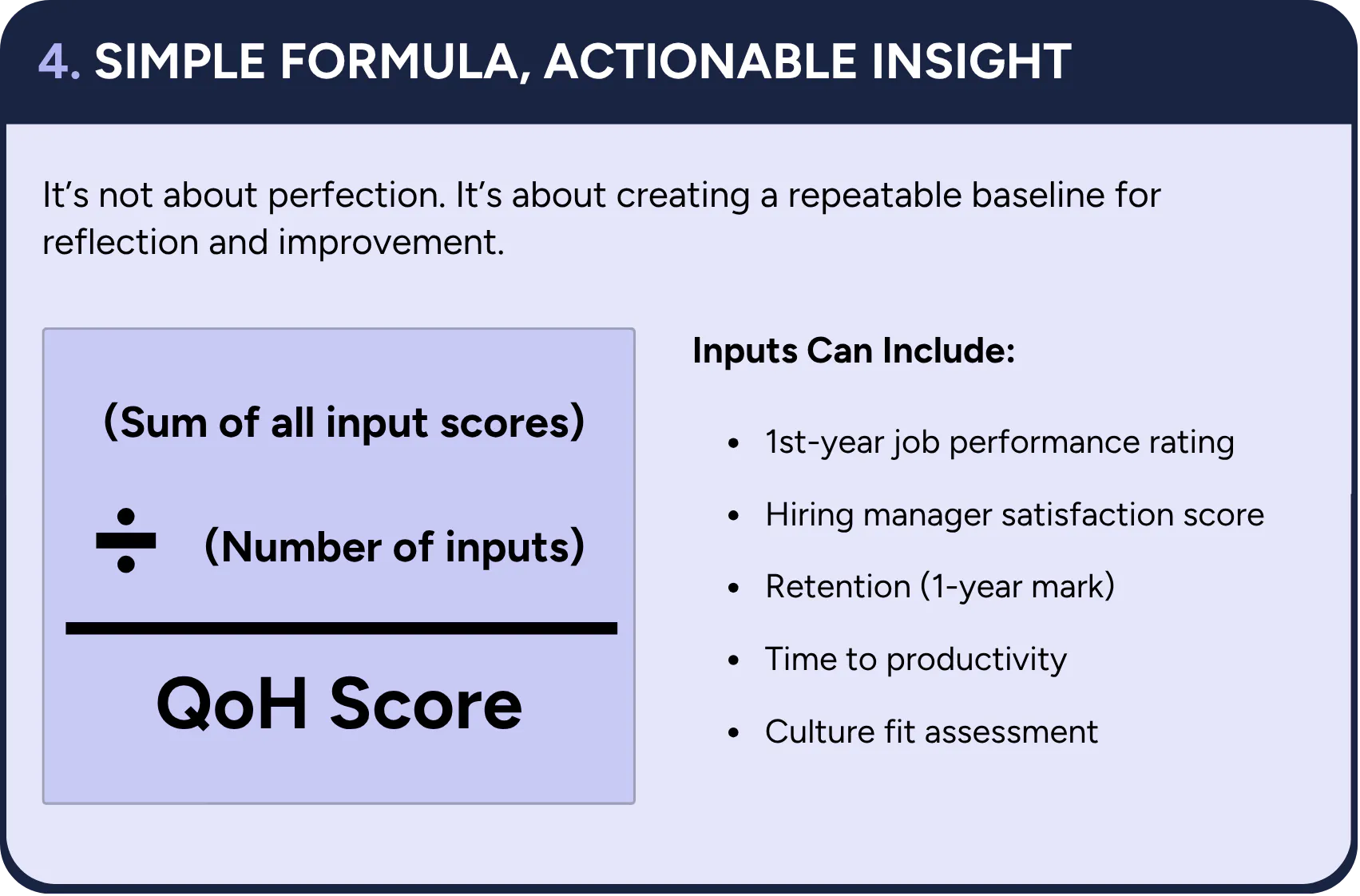
QoH Score = (Sum of all input scores) ÷ (Number of inputs)
It's not about perfection. It's about creating a repeatable baseline for reflection and improvement.
Inputs can include:
- 1st-year job performance rating
- Hiring manager satisfaction score
- Retention (1-year mark)
- Time to productivity
- Culture fit assessment
Review Trends and Act
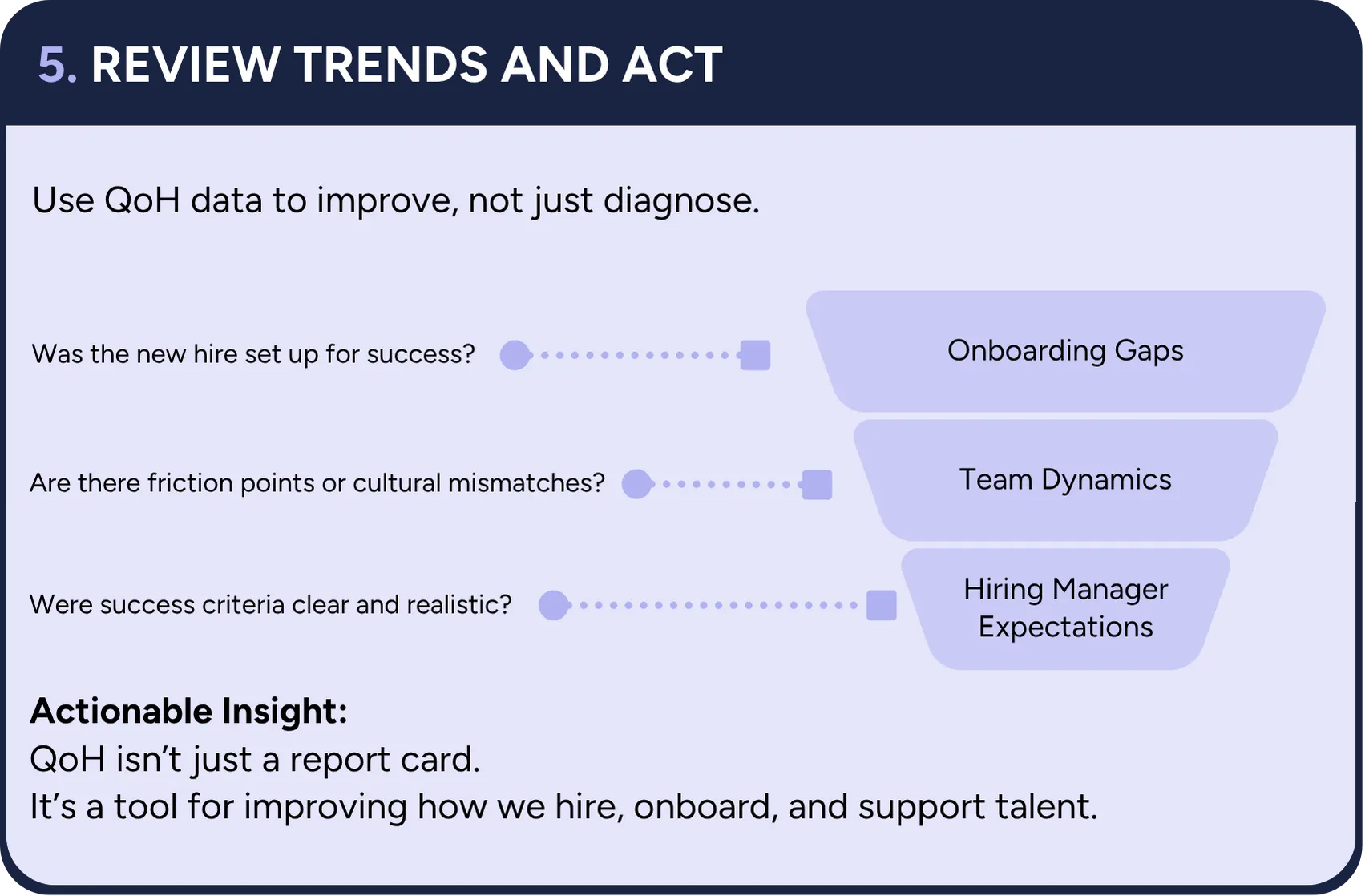
Use QoH data to improve, not just diagnose. Patterns in low scores require investigation beyond just the hire.
Look for trends in:
- Onboarding gaps: Was the new hire set up for success?
- Team dynamics: Are there friction points or cultural mismatches?
- Hiring manager expectations: Were success criteria clear and realistic?
Actionable insight: QoH isn't just a report card. It's a tool for improving how we hire, onboard, and support talent.
The Ripple Effect
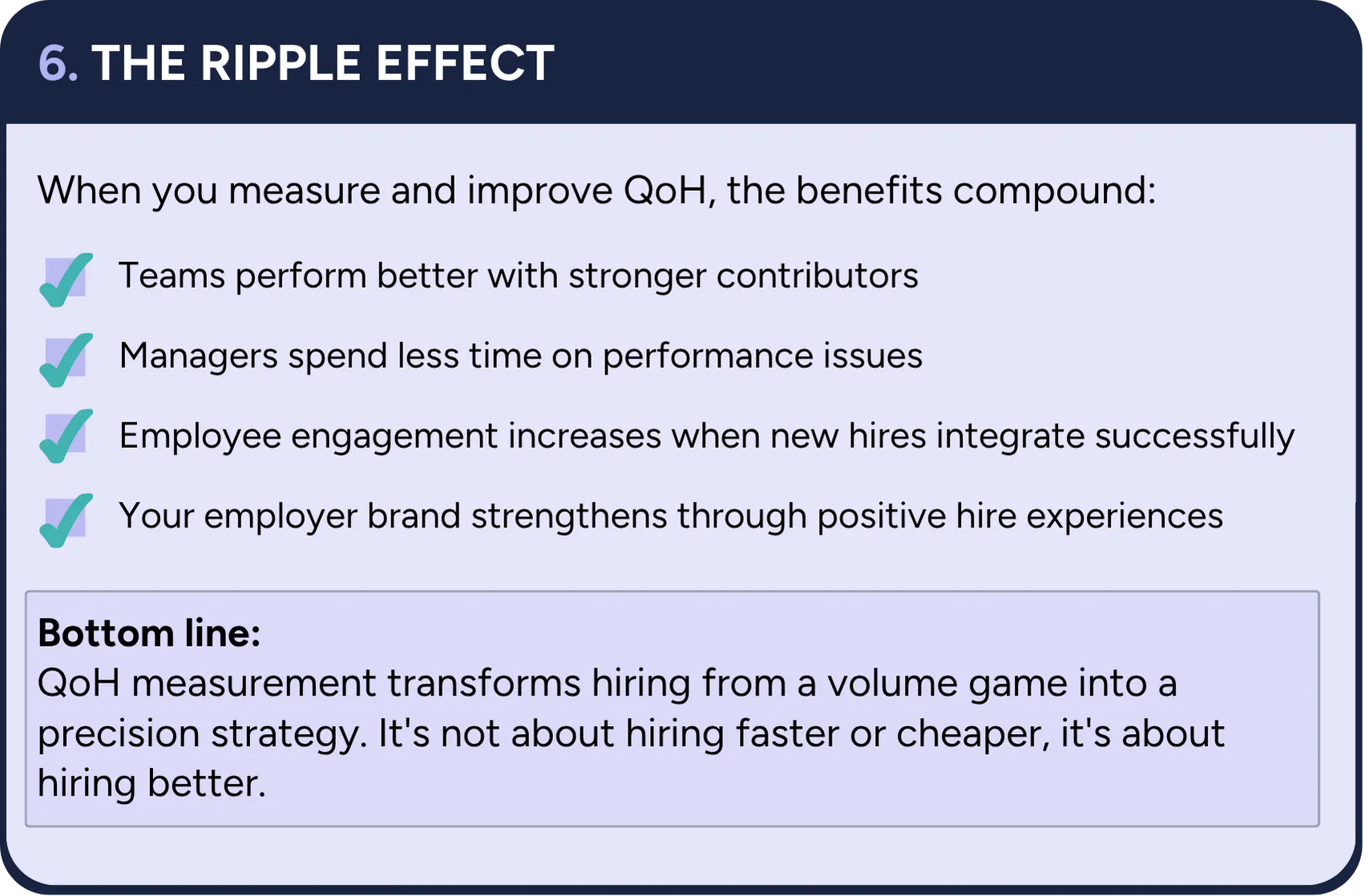
When you measure and improve QoH, the benefits compound:
- Teams perform better with stronger contributors
- Managers spend less time on performance issues
- Employee engagement increases when new hires integrate successfully
- Your employer brand strengthens through positive hire experiences
Bottom line: QoH measurement transforms hiring from a volume game into a precision strategy. It's not about hiring faster or cheaper, it's about hiring better.
Why This Matters
If you're serious about building high-performing teams, you can't rely on instincts or speed alone. Measuring Quality of Hire aligns your hiring process with what actually matters: performance, retention, and cultural fit.
The key is consistency in measurement, clarity in definitions, and commitment to acting on the data you collect. Start simple, measure consistently, and use the insights to continuously improve your hiring process.

Was this content useful?