 cord
cordOvercome (and Recognize) First Impression Bias When Hiring
Practical steps to eliminate snap judgments and evaluate candidates with real objectivity.

Most hiring mistakes don't come from a bad process—they come from a biased first impression. And the scary part? We rarely notice it happening.
Here's the reality: diverse teams outperform. They innovate faster and retain customers better. But you don't get diversity—or quality—when your hiring decisions are shaped by unconscious shortcuts.
What First Impression Bias Actually Looks Like
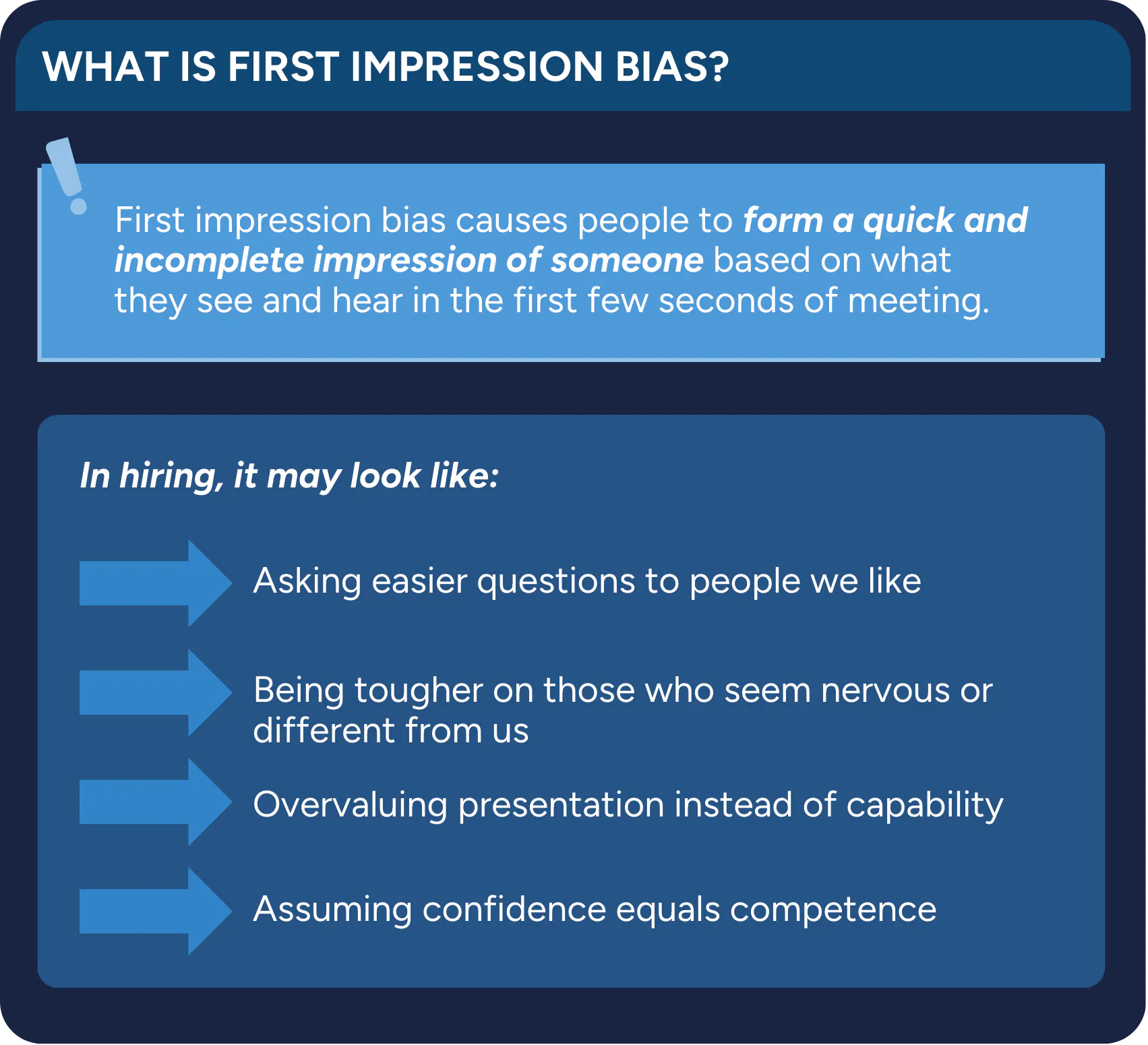
First impression bias causes people to form a quick and incomplete impression of someone based on what they see and hear in the first few seconds of meeting.
In hiring, it shows up as:
- Asking easier questions to people we like
- Being tougher on those who seem nervous or different from us
- Overvaluing presentation instead of capability
- Assuming confidence equals competence
A Relatable Example
You read a resume. You see the candidate is from your hometown, went to your university, and worked at a company you admire. Before the interview even starts, you're warmer, friendlier, and subconsciously more forgiving.
Suddenly, you ask them easier questions. Their answers "sound" better. Their mistakes feel smaller. And you walk away thinking they're a top performer—not because of skills, but similarity.
And it works both ways. A shy intro during an interview or an unpolished resume design can trigger negative assumptions that discount great talent.
The Three Biases That Quietly Derail Hiring
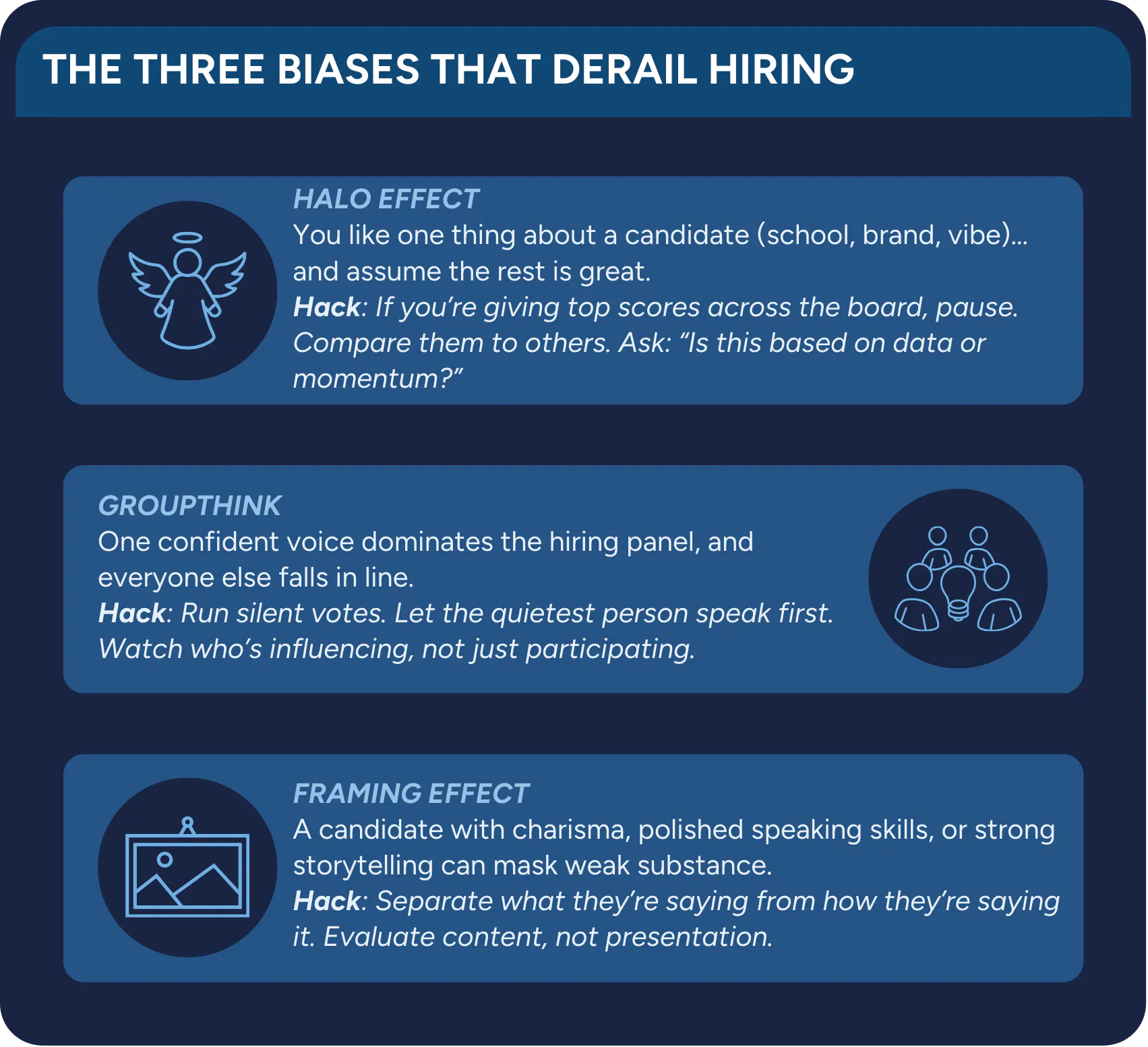
1. Halo Effect
You like one thing about a candidate (school, brand, vibe) and assume the rest is great.
Hack: If you're giving top scores across the board, pause. Compare them to others. Ask: "Is this based on data or momentum?"
2. Groupthink
One confident voice dominates the hiring panel, and everyone else falls in line.
Hack: Run silent votes. Let the quietest person speak first. Watch who's influencing, not just participating.
3. Framing Effect
A candidate with charisma, polished speaking skills, or strong storytelling can mask weak substance.
Hack: Separate what they're saying from how they're saying it. Evaluate content, not presentation.
Ways to Avoid First Impression Bias
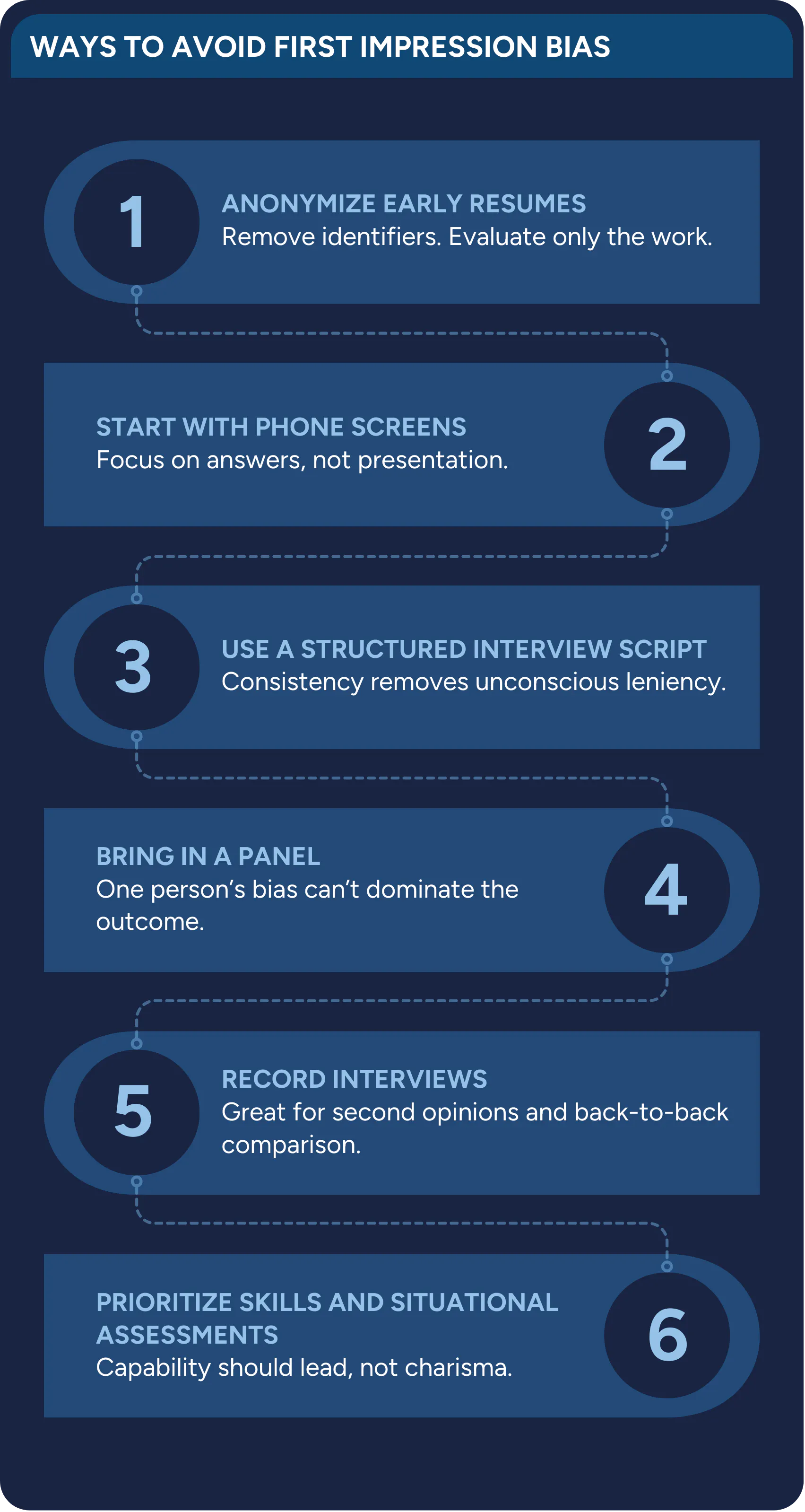
If you want to actually find your best work, here are six practical steps to eliminate snap judgments and evaluate candidates with real objectivity:
1. Anonymize Early Resumes
Remove identifiers. Evaluate only the work.
2. Start with Phone Screens
Focus on answers, not presentation.
3. Use a Structured Interview Script
Consistency removes unconscious leniency.
4. Bring in a Panel
One person's bias can't dominate the outcome.
5. Record Interviews
Great for second opinions and back-to-back comparison.
6. Prioritize Skills and Situational Assessments
Capability should lead, not charisma.
The Bottom Line
Bias isn't a flaw—it's human nature. But the companies that out-hire their competition are the ones that design systems that enable good human judgment.
If you want to build fairer, sharper, more accurate hiring processes, start by recognizing that first impressions aren't facts. They're shortcuts. And the best hires often come from candidates who didn't fit your initial mental image.
Hire on capability, not first impressions.

Was this content useful?