 cord
cordSalary Transparency DOs and DON'Ts
The Ultimate Guide for Hiring Managers

Handled right, salary conversations build credibility. Handled wrong, they break it. The way you talk about pay matters just as much as the numbers themselves.
Behind every salary conversation is a person deciding if this job will work for their life. Treat that moment with care, and you'll stand out not just as an employer, but as a team people want to join.
Here's a practical guide to salary transparency that every hiring manager should know.
The DOs: What You Should Do
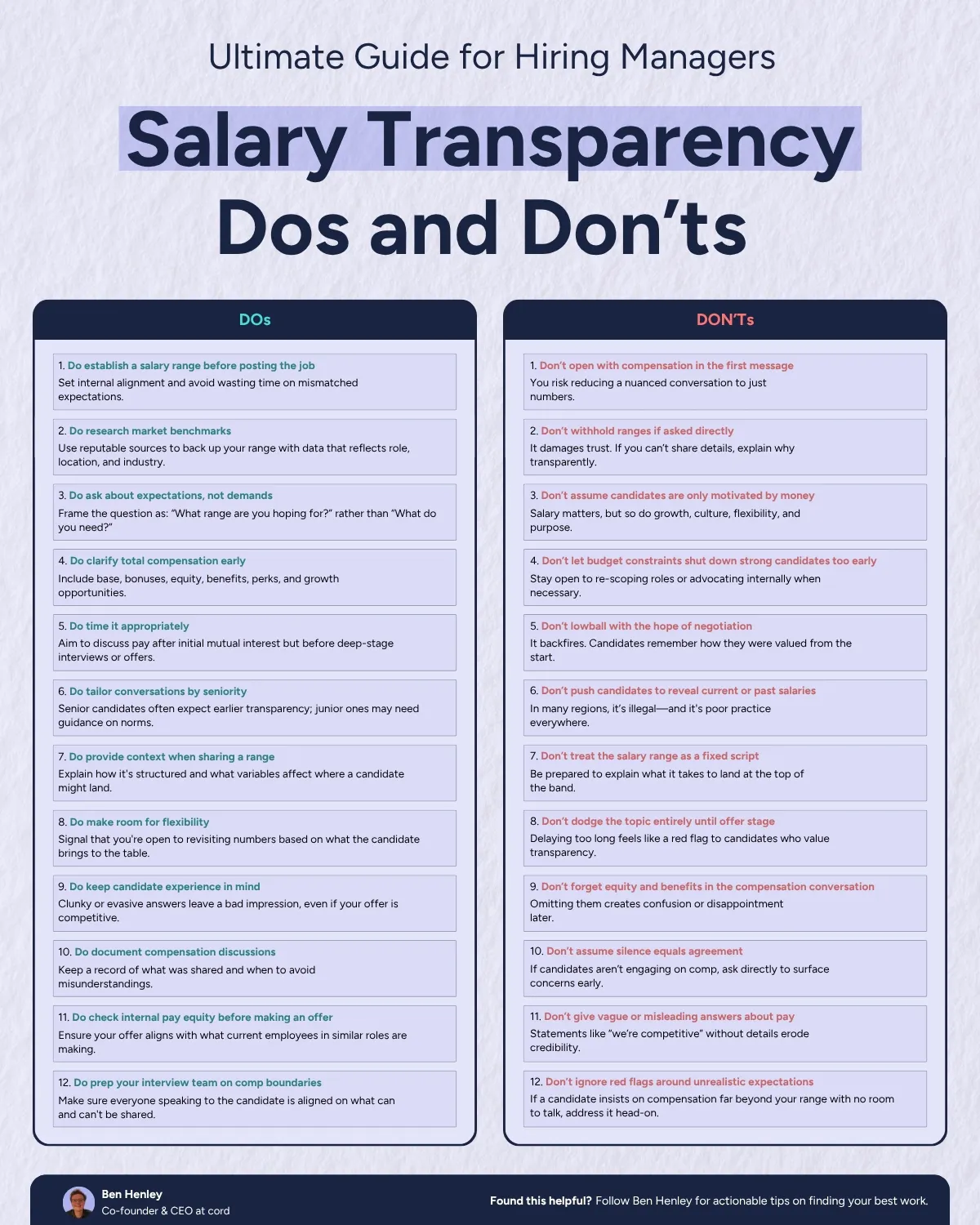
1. Do establish a salary range before posting the job
Set internal alignment and avoid wasting time on mismatched expectations. Having a clear range upfront prevents confusion and ensures everyone on your hiring team is on the same page.
2. Do research market benchmarks
Use reputable sources to back up your range with data that reflects role, location, and industry. This gives you confidence in your numbers and credibility with candidates.
3. Do ask about expectations, not demands
Frame the question as "What range are you hoping for?" rather than "What do you need?" This approach feels collaborative rather than confrontational.
4. Do clarify total compensation early
Include base salary, bonuses, equity, benefits, perks, and growth opportunities. Candidates need the full picture to make informed decisions.
5. Do time it appropriately
Aim to discuss pay after initial mutual interest but before deep-stage interviews or offers. This timing respects everyone's investment while avoiding wasted effort.
6. Do tailor conversations by seniority
Senior candidates often expect earlier transparency, while junior ones may need guidance on norms. Adjust your approach accordingly.
7. Do provide context when sharing a range
Explain what's included and what variables affect where a candidate might land. This prevents misunderstandings later.
8. Do make room for flexibility
Signal that you're open to revisiting numbers based on what the candidate brings to the table. This shows you value their unique contributions.
9. Do keep candidate experience in mind
Clunky or evasive answers leave a bad impression, even if your offer is competitive. Be smooth and professional in your delivery.
10. Do document compensation discussions
Keep a record of what was shared and when to avoid misunderstandings. This protects both you and the candidate.
11. Do check internal pay equity before making an offer
Ensure your offer aligns with what current employees in similar roles are making. Internal equity issues can cause problems later.
12. Do prep your interview team on comp boundaries
Make sure everyone speaking to the candidate is aligned on what can and can't be shared. Mixed messages damage credibility.
The DON'Ts: What to Avoid
1. Don't open with compensation in the first message
You risk reducing a nuanced conversation to just numbers. Build rapport first, then discuss compensation.
2. Don't withhold ranges if asked directly
It damages trust. If you can't share details, explain why transparently rather than being evasive.
3. Don't assume candidates are only motivated by money
Salary matters, but so do growth opportunities, culture, flexibility, and purpose. Address the whole package.
4. Don't let budget constraints shut down strong candidates too early
Stay open to scoping roles or advocating internally when necessary. Great talent is worth the extra effort.
5. Don't lowball with the hope of negotiation
It backfires. Candidates remember how they were valued from the start, and lowball offers can damage your employer brand.
6. Don't push candidates to reveal current or past salaries
In many regions, it's illegal—and it's poor practice everywhere. Focus on the value they'll bring to your role.
7. Don't treat the salary range as a fixed script
Be prepared to explain what it takes to land at the top of the band. Candidates want to understand how they can maximize their compensation.
8. Don't dodge the topic entirely until offer stage
Delaying too long feels like a red flag to candidates who value transparency. Address compensation when it naturally comes up.
9. Don't forget equity and benefits in the compensation conversation
Omitting them creates confusion or disappointment later. Present the complete compensation picture from the start.
10. Don't assume silence equals agreement
If candidates aren't engaging on compensation, ask directly to surface concerns early. Silence often means confusion or concern.
11. Don't give vague or misleading answers about pay
Statements like "we're competitive" without details erode credibility. Be specific and honest about what you can offer.
12. Don't ignore red flags around unrealistic expectations
If a candidate insists on compensation far beyond your range with no room to talk, address it head-on rather than hoping it will resolve itself.
The Bottom Line
Salary transparency isn't just about following legal requirements or industry trends. It's about building trust with the people you want to hire and creating a foundation for a successful working relationship.
When you handle compensation conversations with clarity, respect, and honesty, you signal that your organization values transparency and treats people fairly. That reputation will serve you well in attracting top talent and building a strong team.
Remember: every salary conversation is an opportunity to demonstrate your company's values and professionalism. Make it count.

Was this content useful?