 cord
cordThe 4 Most Common Interview Bottlenecks
When hiring feels slow, it's usually the process, not the talent

When teams say they "can't find great talent," it's often not the talent. It's the process.
After reviewing millions of applications across hundreds of teams, I've seen the same pattern over and over: most bottlenecks in hiring aren't caused by people—they're caused by design.
Here are the 4 bottlenecks that slow down interviews, and how high-performing teams remove them.
Coordination Across Too Many Calendars
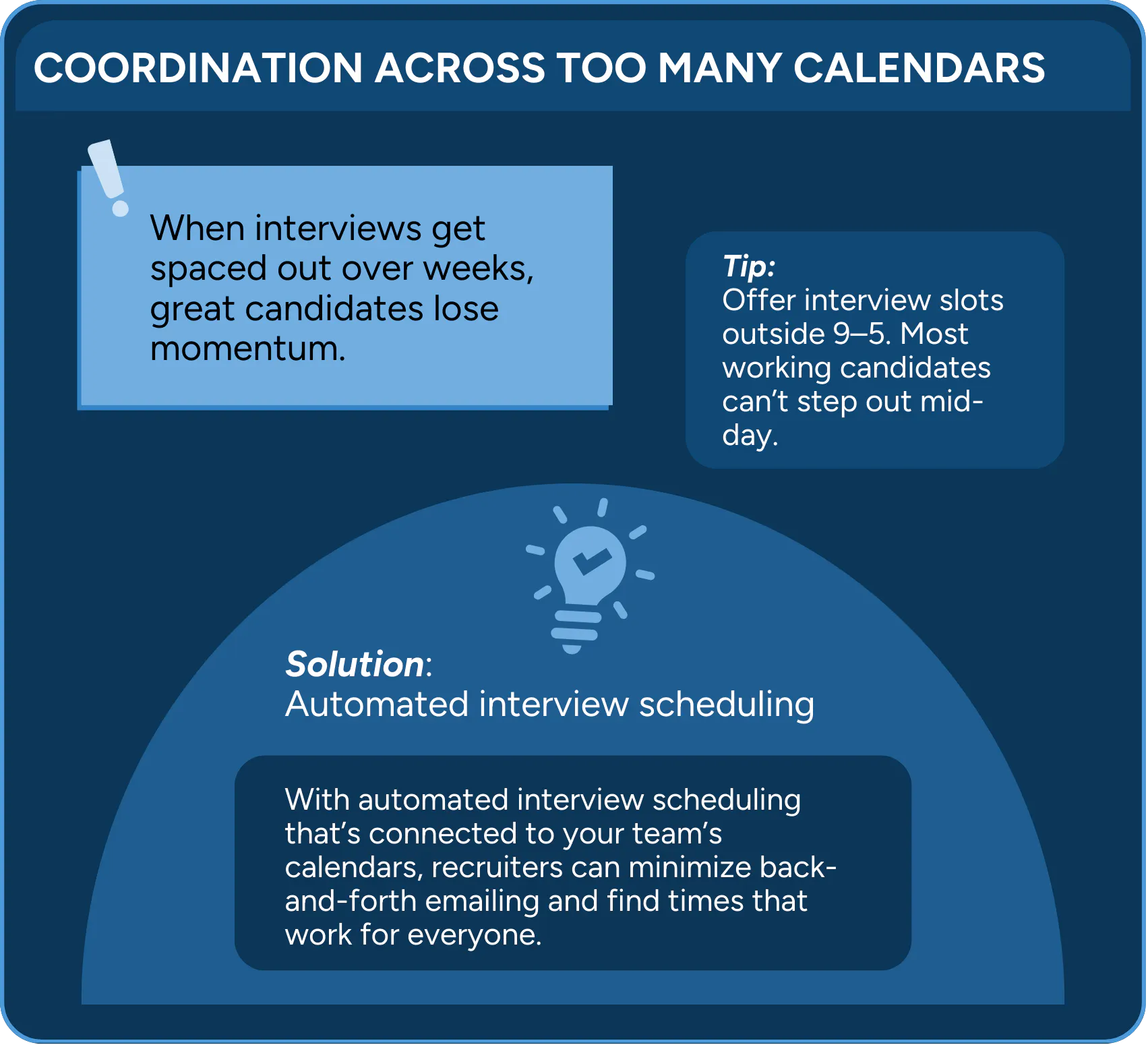
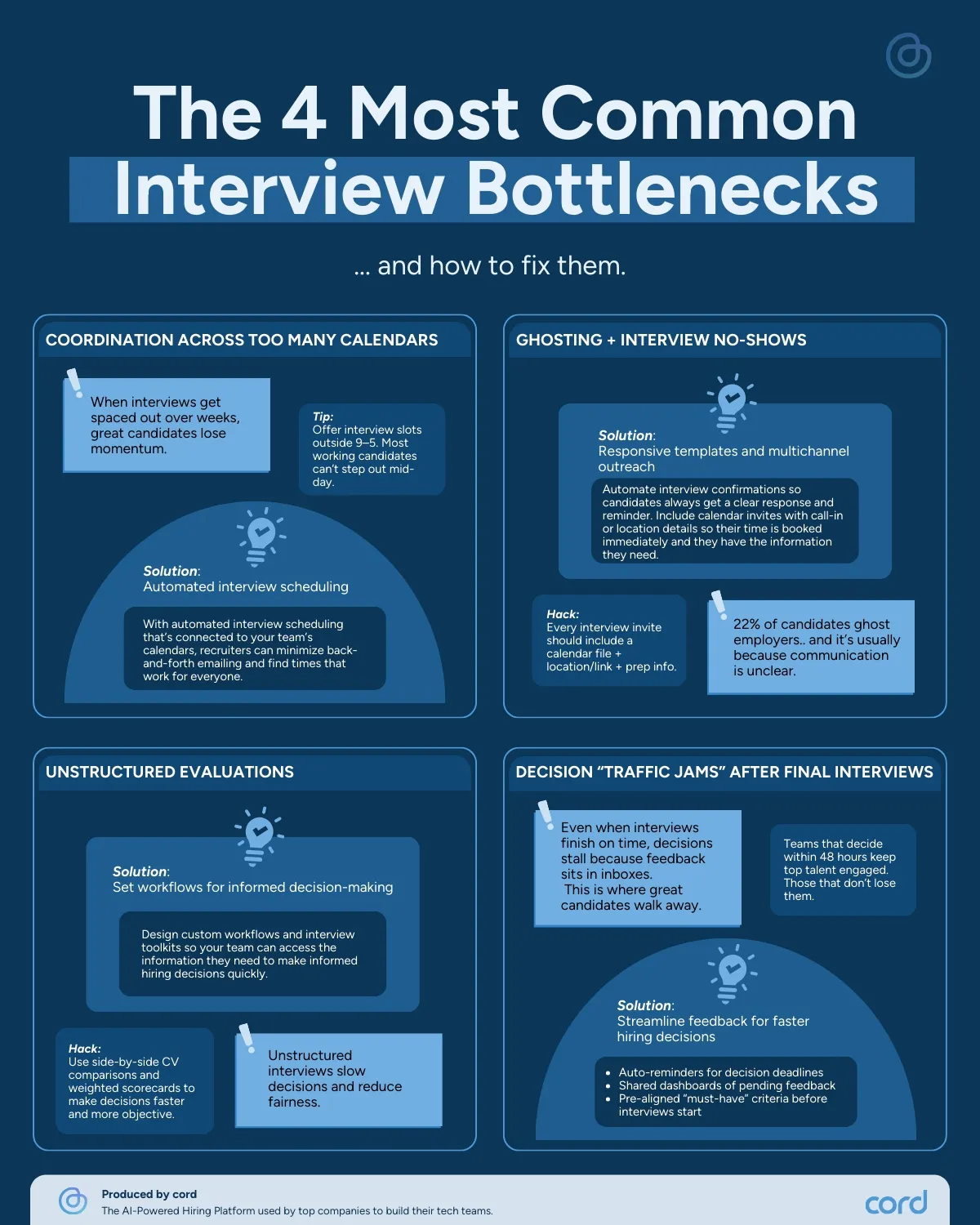
The Problem: When interviews get spaced out over weeks, great candidates lose momentum. They're actively job searching, getting other offers, and losing interest while you're still trying to find a time that works for everyone on your team.
The Solution: Automated Interview Scheduling With automated interview scheduling that's connected to your team's calendars, recruiters can minimize back-and-forth emailing and find times that work for everyone.
Pro Tip: Offer interview slots outside 9–5. Most working candidates can't step out mid-day without raising red flags at their current job.
Ghosting + Interview No-Shows
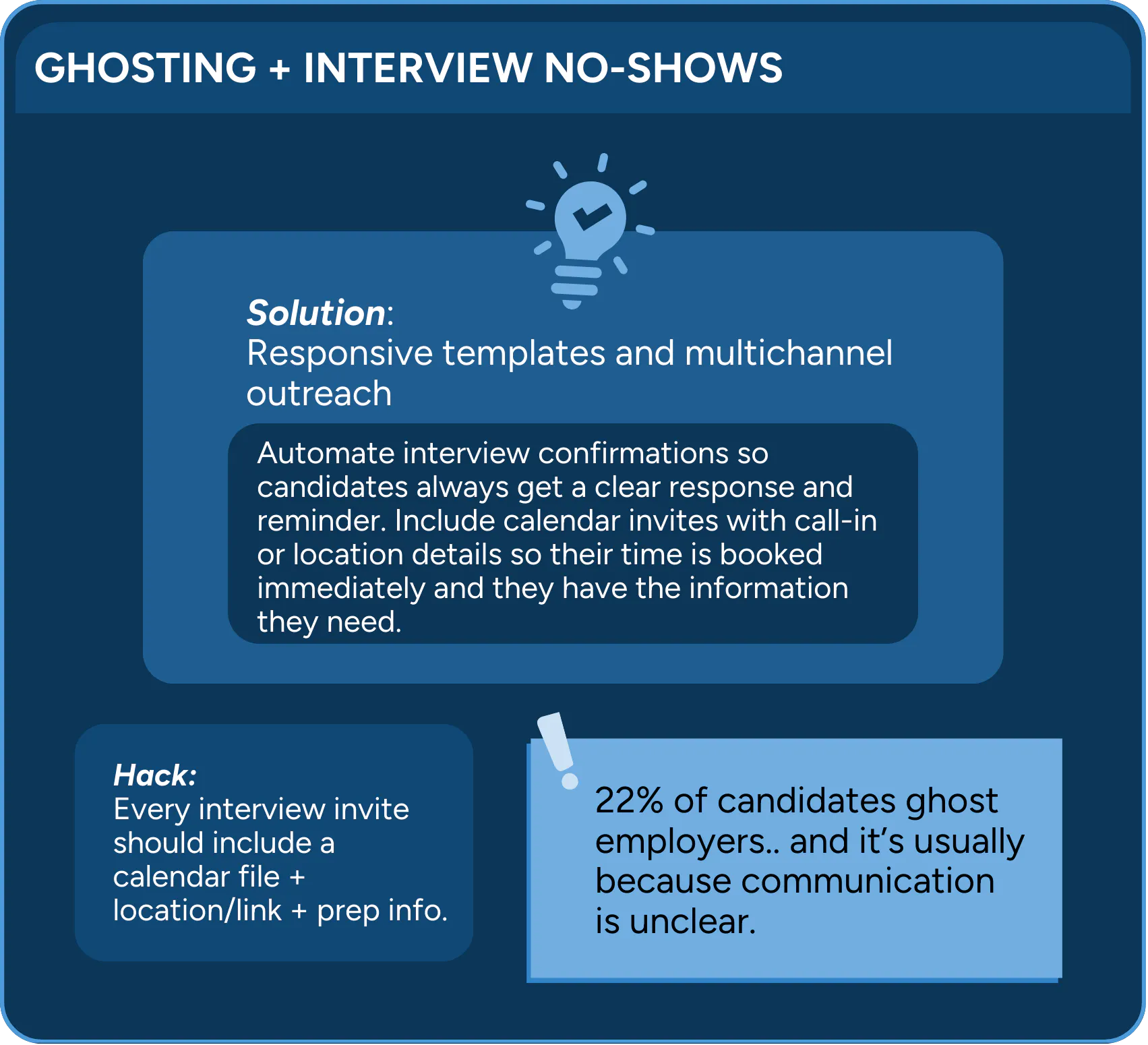
The Reality: 22% of candidates ghost employers, and it's usually because communication is unclear. When candidates don't know what to expect, where to go, or how to prepare, they disappear.
The Solution: Responsive Templates and Multichannel Outreach Automate interview confirmations so candidates always get a clear response and reminder. Include calendar invites with call-in information, so candidates know exactly where they need to be and when.
The Hack: Every interview invite should include a calendar file + location/link + prep info. Make it impossible for candidates to be confused.
Unstructured Evaluations
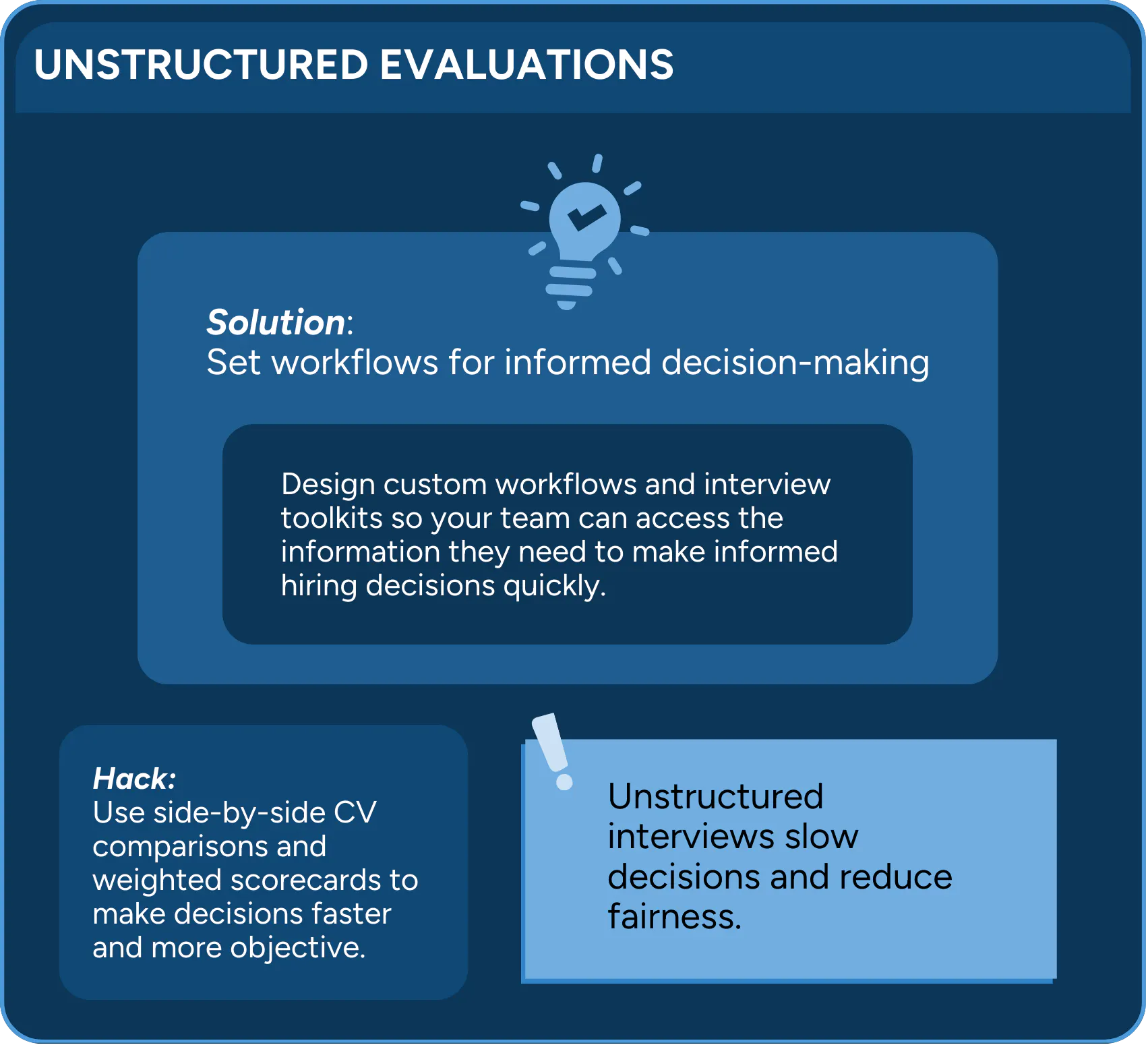
The Problem: Unstructured interviews slow decisions and reduce fairness. When interviewers don't have a framework for what they're evaluating, feedback becomes subjective and decisions stall.
The Solution: Set Workflows for Informed Decision-Making Design custom workflows and interview toolkits so your team can access the information they need to make informed hiring decisions quickly.
The Hack: Use side-by-side CV comparisons and weighted scorecards to make decisions faster and more objective. This removes bias and speeds up the process.
Decision "Traffic Jams" After Final Interviews
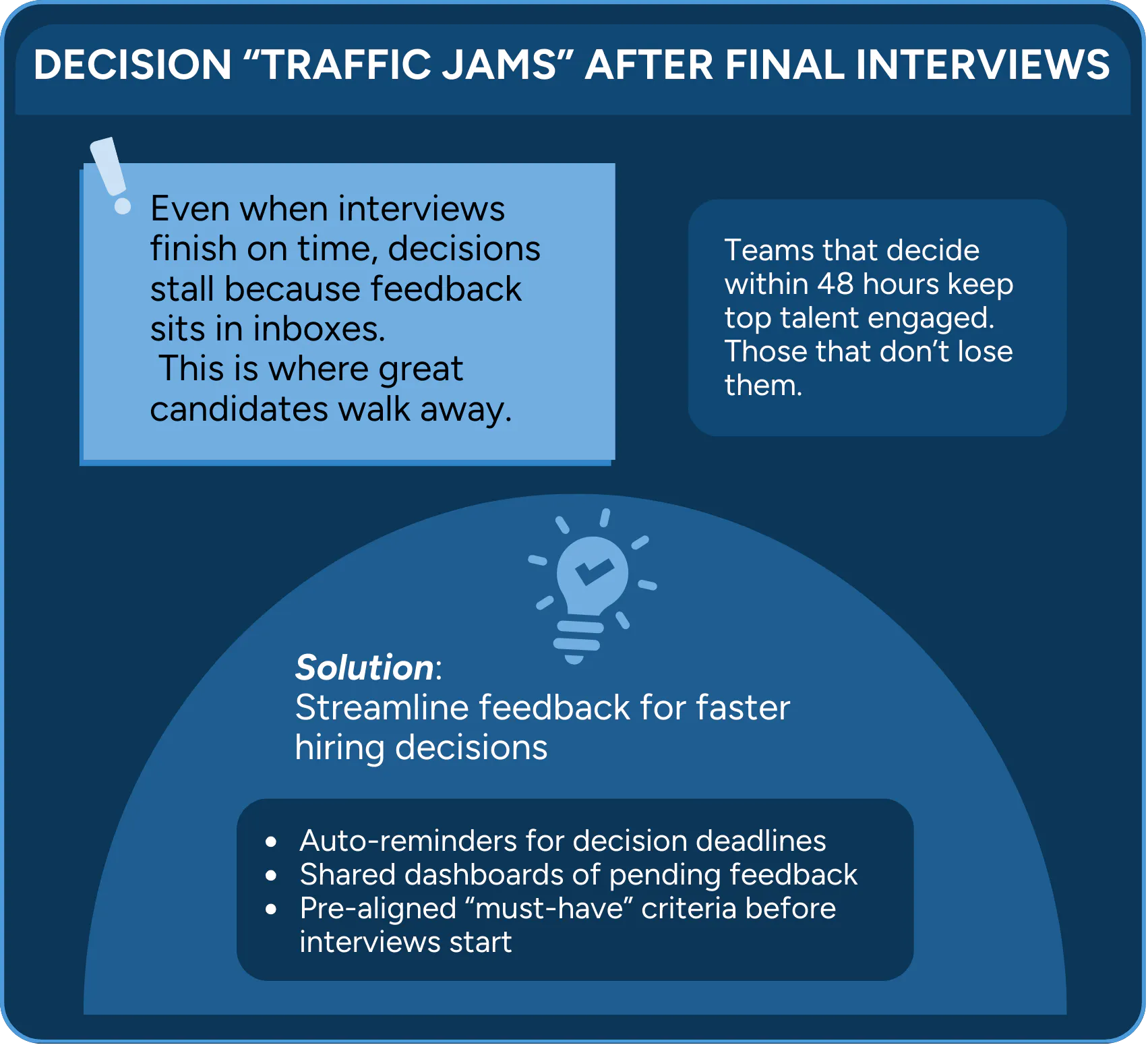
The Problem: Even when interviews finish on time, decisions stall because feedback sits in inboxes. This is where great candidates walk away. Teams that decide within 48 hours keep top talent engaged. Those that don't lose them.
The Solution: Streamline Feedback for Faster Hiring Decisions
The fix comes down to three things:
- Auto-reminders for decision deadlines
- Shared dashboards of pending feedback
- Pre-aligned "must-have" criteria before interviews start
When everyone knows what they're evaluating and when decisions need to be made, the process moves faster.
The Bottom Line
The best hiring teams don't rush the process—they eliminate the noise so they can focus on the human moments that matter.
Because when candidates feel informed, prepared, and prioritized, they're far more likely to show you their real capability, not their interview survival skills.
If your team is struggling to close great candidates, it's probably not a talent problem. It's a process problem. And the good news? Process problems are fixable.

Was this content useful?