 cord
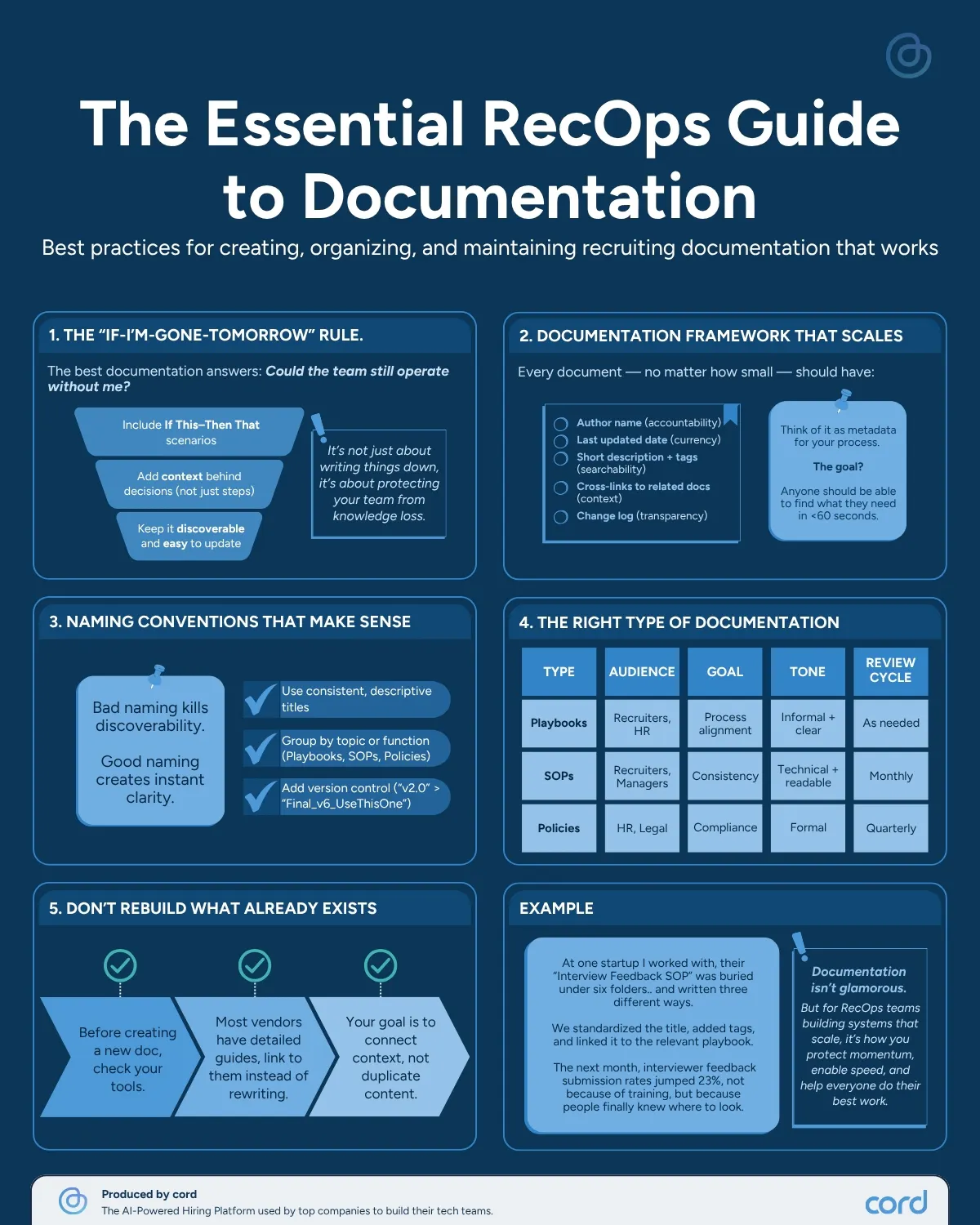
cordThe Essential RecOps Guide to Documentation
Best practices for creating, organizing, and maintaining recruiting documentation that works

High-performing recruiting teams don't run on luck—they run on great documentation.
When recruiting operations look effortless, it's never by accident. Behind every smooth process is a RecOps team that documents with intent, so people can move fast without creating chaos.
Here's how leading RecOps teams approach documentation in a way that actually works.
1. Start with the "if-I'm-gone-tomorrow" mindset
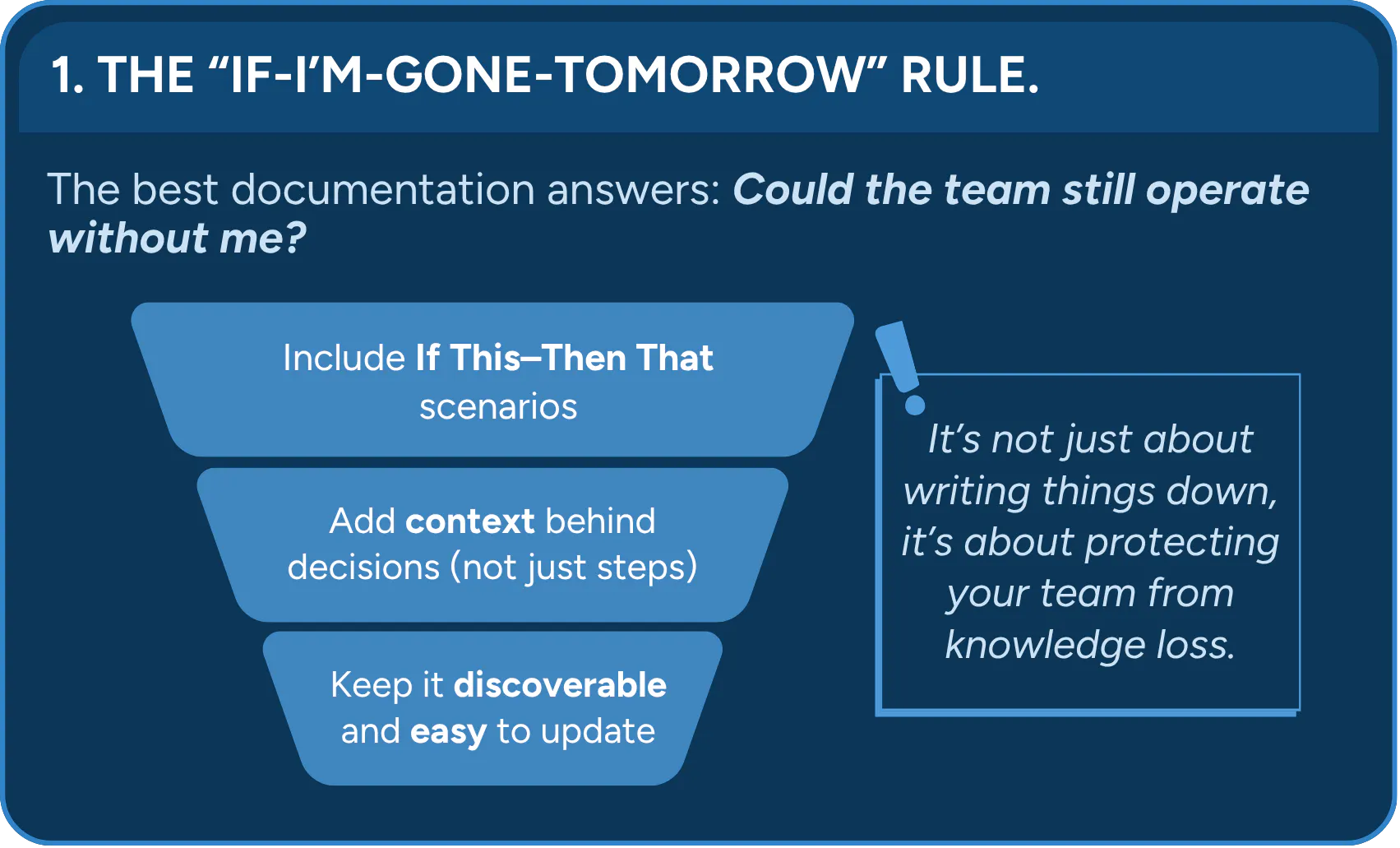
Ask yourself one question: Could the team still operate without me?
That shift turns documentation from simple notes into true knowledge transfer. It's not just about writing things down—it's about protecting your team from knowledge loss.
Here's what that looks like in practice:
- Include "If This–Then That" scenarios so people know how to handle different situations, not just the happy path
- Add context behind decisions, not just the steps themselves
- Keep it discoverable and easy to update so documentation stays useful over time
The goal is simple: anyone should be able to pick up where you left off without having to guess or start from scratch.
2. Build a documentation framework that scales
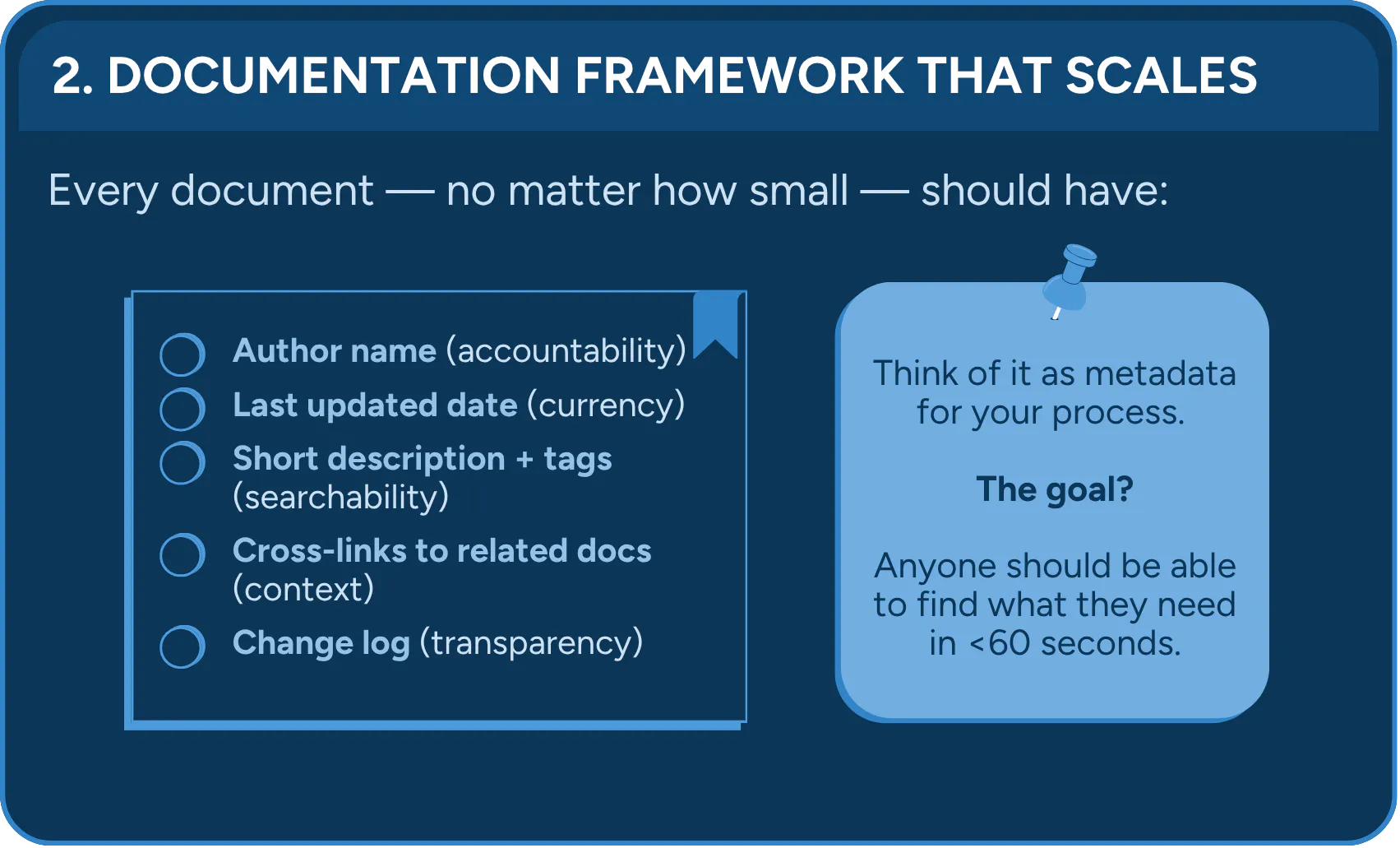
Every document—no matter how small—should have the same core elements. Think of it as metadata for your process docs.
Each document should include:
- Author name (accountability)
- Last updated date (currency)
- Short description + tags (searchability)
- Cross-links to related docs (context)
- Change log (transparency)
The standard is straightforward: anyone should be able to find what they need in 60 seconds or less.
3. Use naming conventions that create clarity
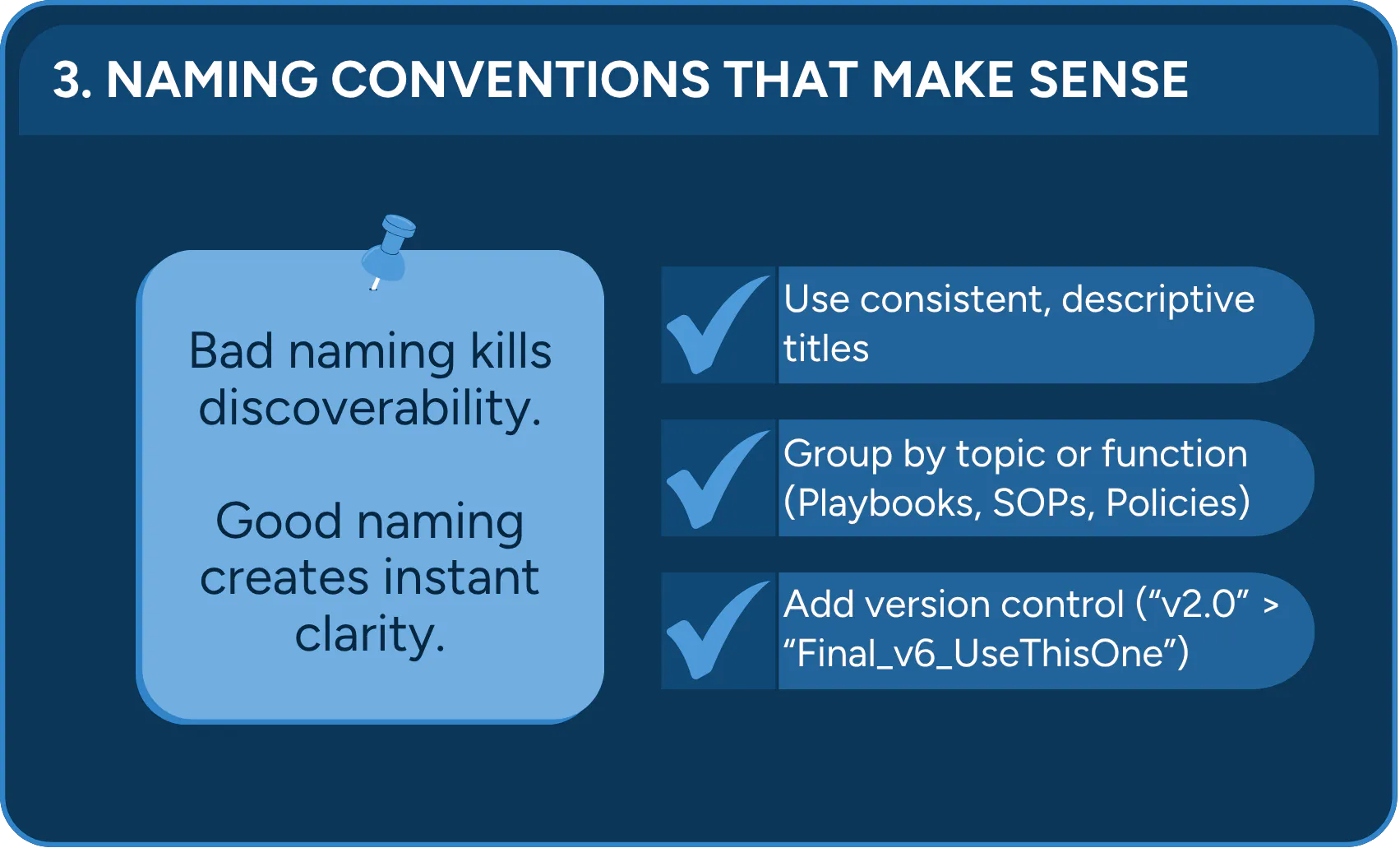
Bad naming kills discoverability. Good naming creates instant clarity.
Instead of vague titles like "Interview Process," use descriptive ones like "How to Build an Interview Plan [Last updated: Nov 2025]."
Key principles:
- Use consistent, descriptive titles that tell people exactly what's inside
- Group by topic or function (Playbooks, SOPs, Policies) so related content lives together
- Add version control (v2.0 > "Final_v6_UseThisOne") so people always know what's current
4. Match documentation type to purpose
Not all documentation serves the same function. Mixing them up creates confusion.
Here's how to choose the right format:
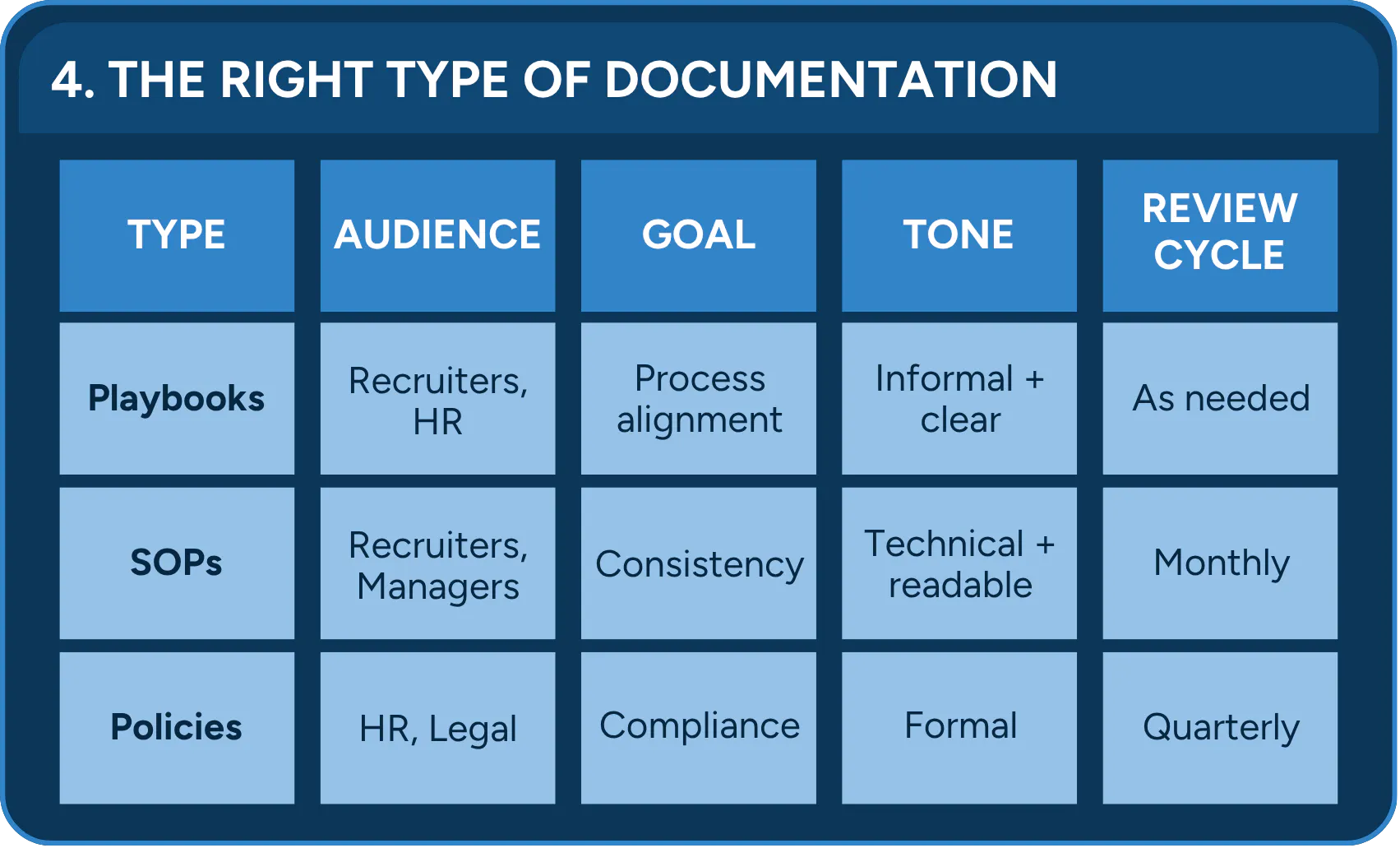
- Playbooks are for quick alignment—informal and action-oriented
- SOPs are for consistency—detailed and reviewed regularly
- Policies are for compliance—formal and updated quarterly
Use the right tool for the right job.
5. Don't rebuild what already exists
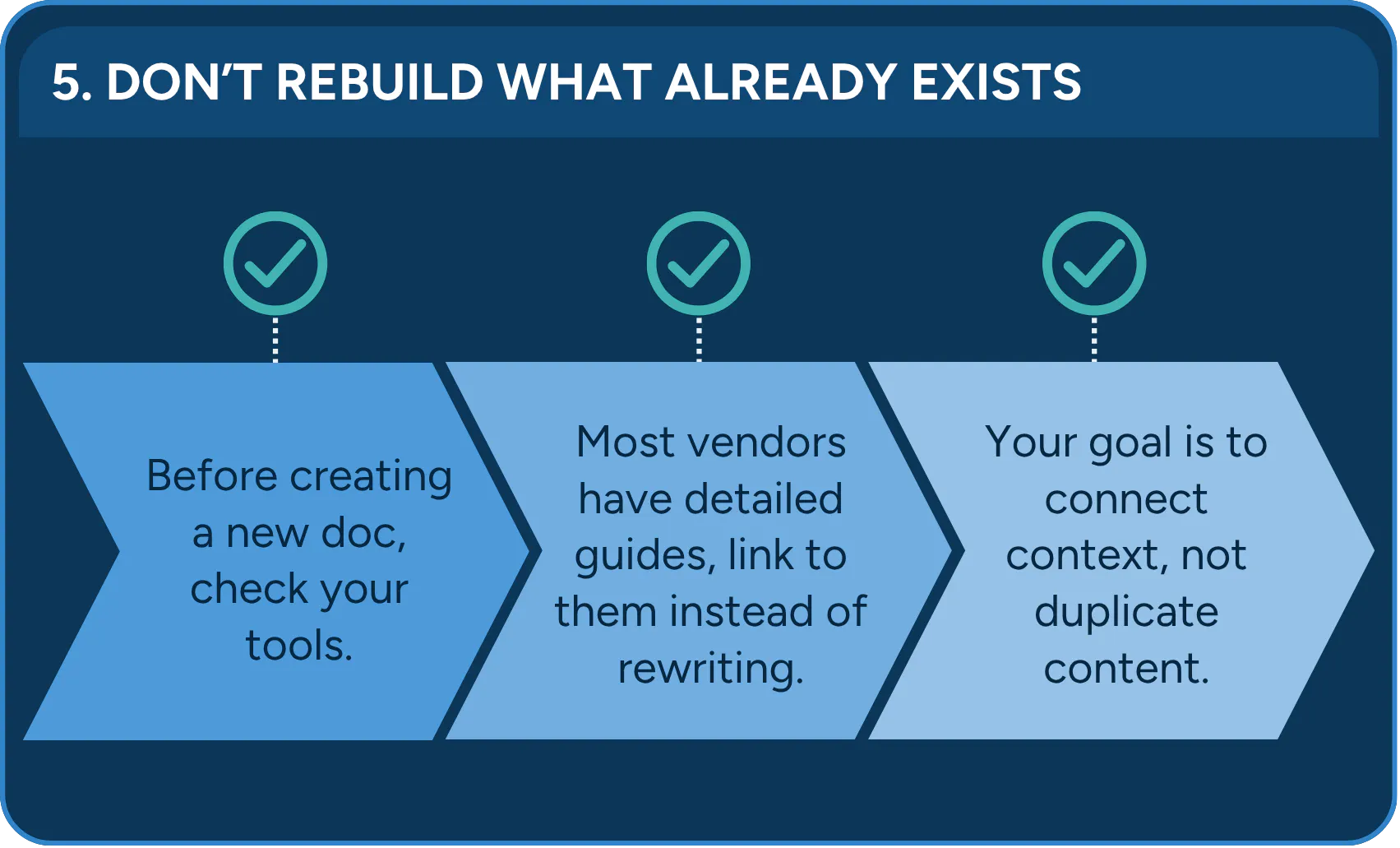
Before you create a new document, check your tools first. Most vendors have detailed guides already written.
Your job isn't to duplicate content—it's to connect context.
- Link to existing vendor documentation instead of rewriting it
- Add your team's specific context or edge cases
- Focus on connecting knowledge, not creating redundant content
The best documentation connects people to answers quickly, whether you wrote it or not.
Real-world example
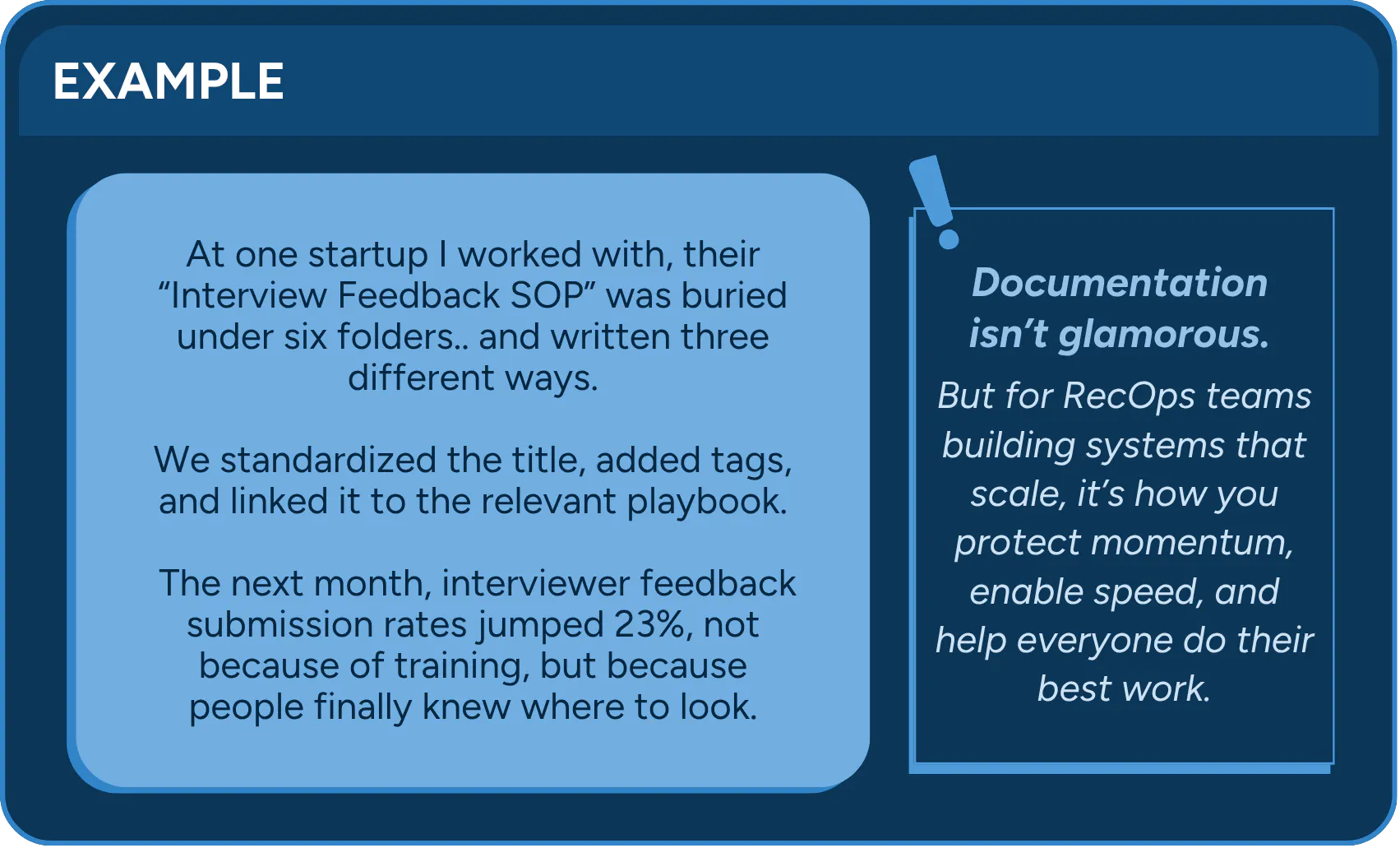
At one startup I worked with, their "interview feedback SOP" was buried under six folders and written three different ways.
We standardized the title, added tags, and linked it to the relevant playbook.
The next month, interviewer feedback submission rates jumped 23%—not because of training, but because people finally knew where to look.
Documentation isn't glamorous.
But for RecOps teams building systems that scale, it's how you protect momentum, enable speed, and help everyone do their best work.
When knowledge flows freely, teams perform faster and smarter.
That's the difference between chaos and clarity.

Was this content useful?