 cord
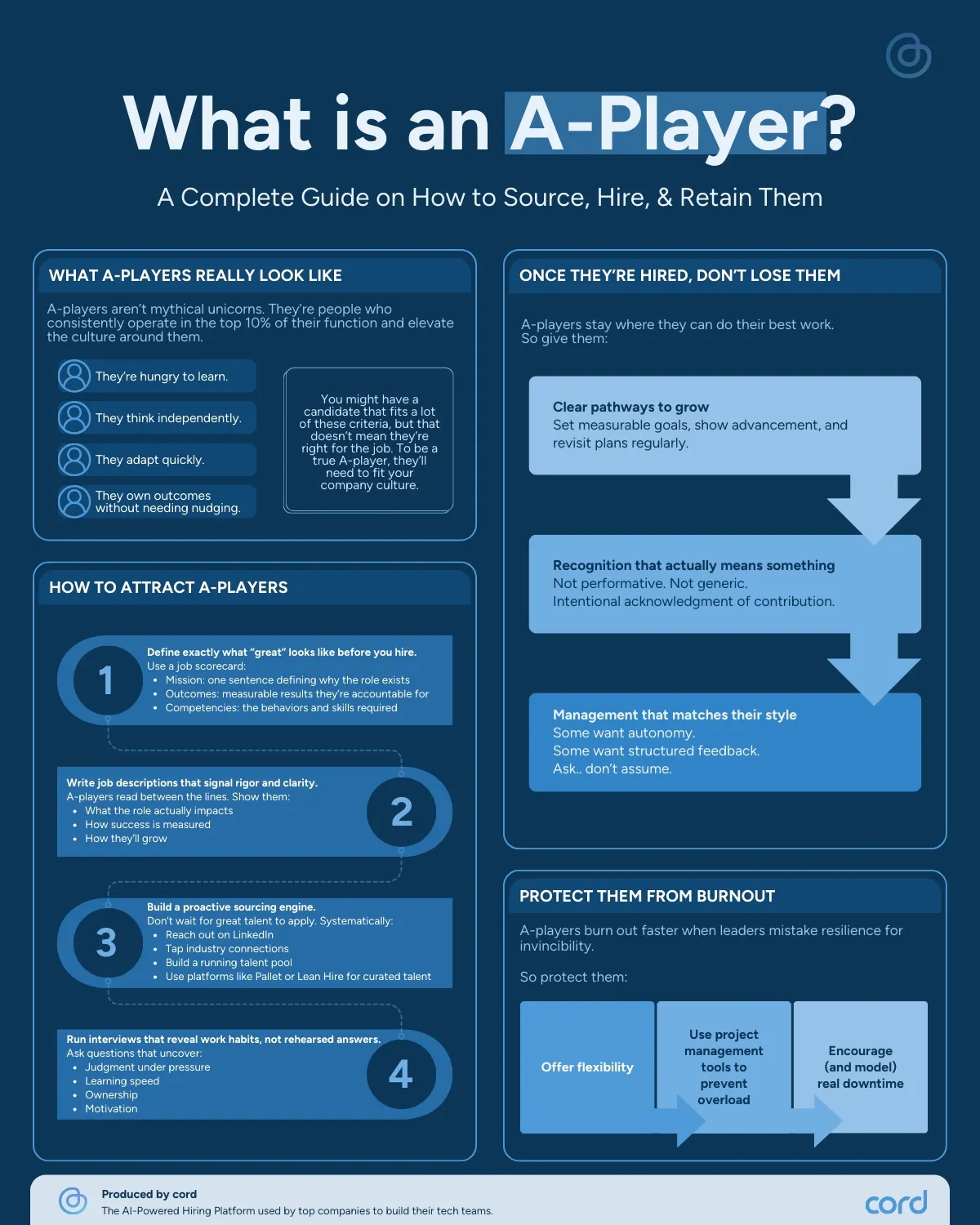
cordWhat is an A-Player?
A Complete Guide on How to Source, Hire, & Retain Them

Most hiring mistakes aren't about skill gaps. They're about misunderstanding what "great" actually looks like.
A-players aren't mythical unicorns. They're people who consistently operate in the top 10% of their function and elevate the culture around them. And if you want them on your team, you need to understand what they actually need to thrive.
What A-Players Really Look Like
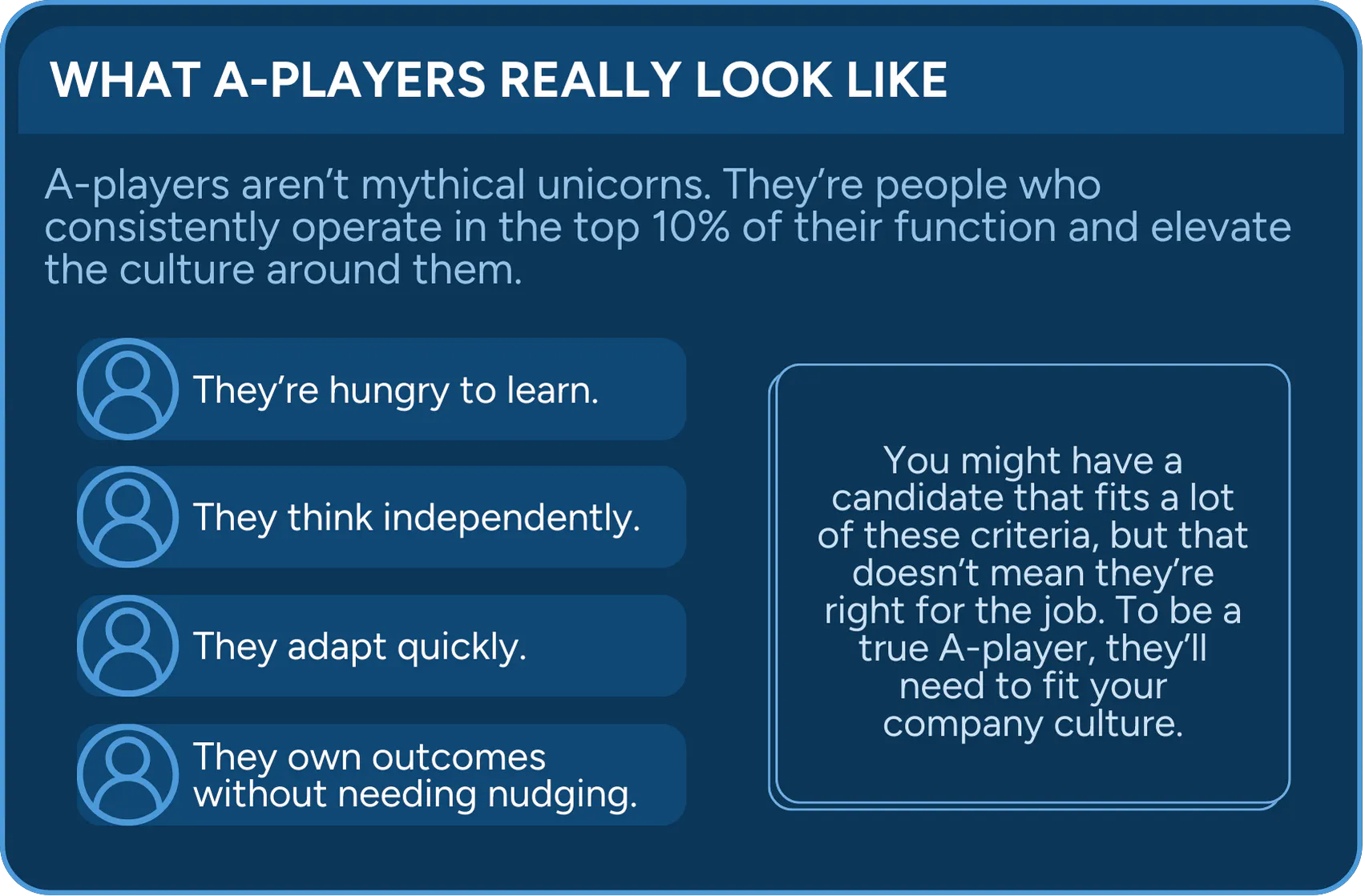
Here's the thing: you might have a candidate who fits a lot of these criteria, but that doesn't mean they're right for the job. To be a true A-player, they need to fit your company culture.
A-players share these traits:
- They're hungry to learn. They don't coast. They ask questions, seek feedback, and push themselves to improve.
- They think independently. They don't wait to be told what to do. They assess situations and make smart decisions on their own.
- They adapt quickly. When priorities shift or challenges emerge, they recalibrate without needing their hand held.
- They own outcomes without needing nudging. They take full responsibility for results, not just effort.
How to Attract A-Players
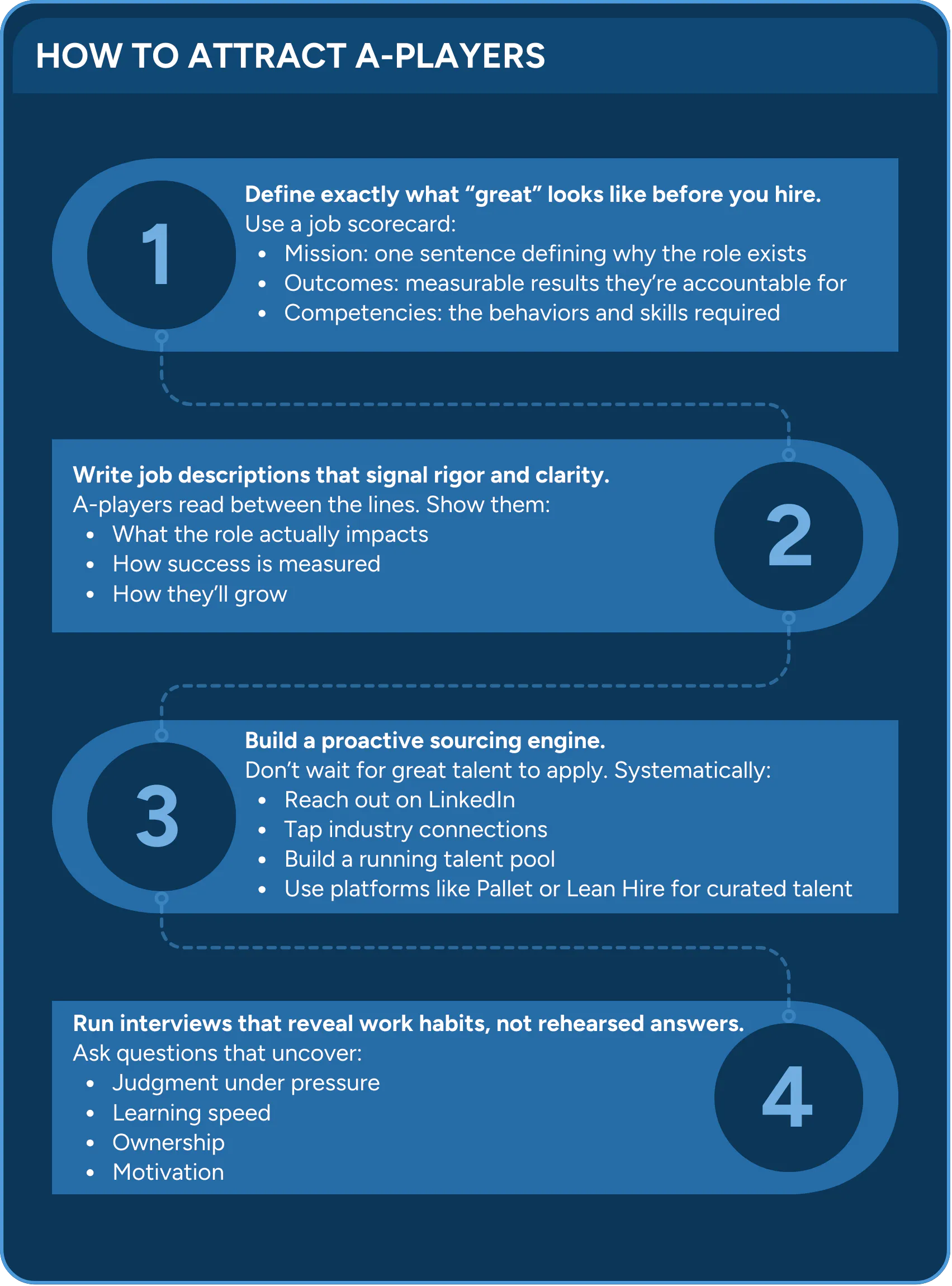
If you want A-players, here's what actually works:
1. Define exactly what "great" looks like before you hire
Use a job scorecard with three components:
- Mission: one sentence defining why the role exists
- Outcomes: measurable results they're accountable for
- Competencies: the behaviors and skills required
No alignment means no hiring. Period.
2. Write job descriptions that signal rigor and clarity
A-players read between the lines. Show them:
- What the role actually impacts
- How success is measured
- How they'll grow
If your job post is vague or full of buzzwords, you'll attract vague applicants.
3. Build a proactive sourcing engine
Don't wait for great talent to apply. Systematically:
- Reach out on LinkedIn
- Tap industry connections
- Build a running talent pool
- Use platforms like Pallet or Lemon Hire for curated talent
Top performers rarely show up through inbound applications alone.
4. Run interviews that reveal work habits, not rehearsed answers
Ask questions that uncover:
- Judgment under pressure
- Learning speed
- Ownership
- Motivation
A-players can explain how they think, not just what they've done. Probe their decision-making process, not their resume bullet points.
Once They're Hired, Don't Lose Them
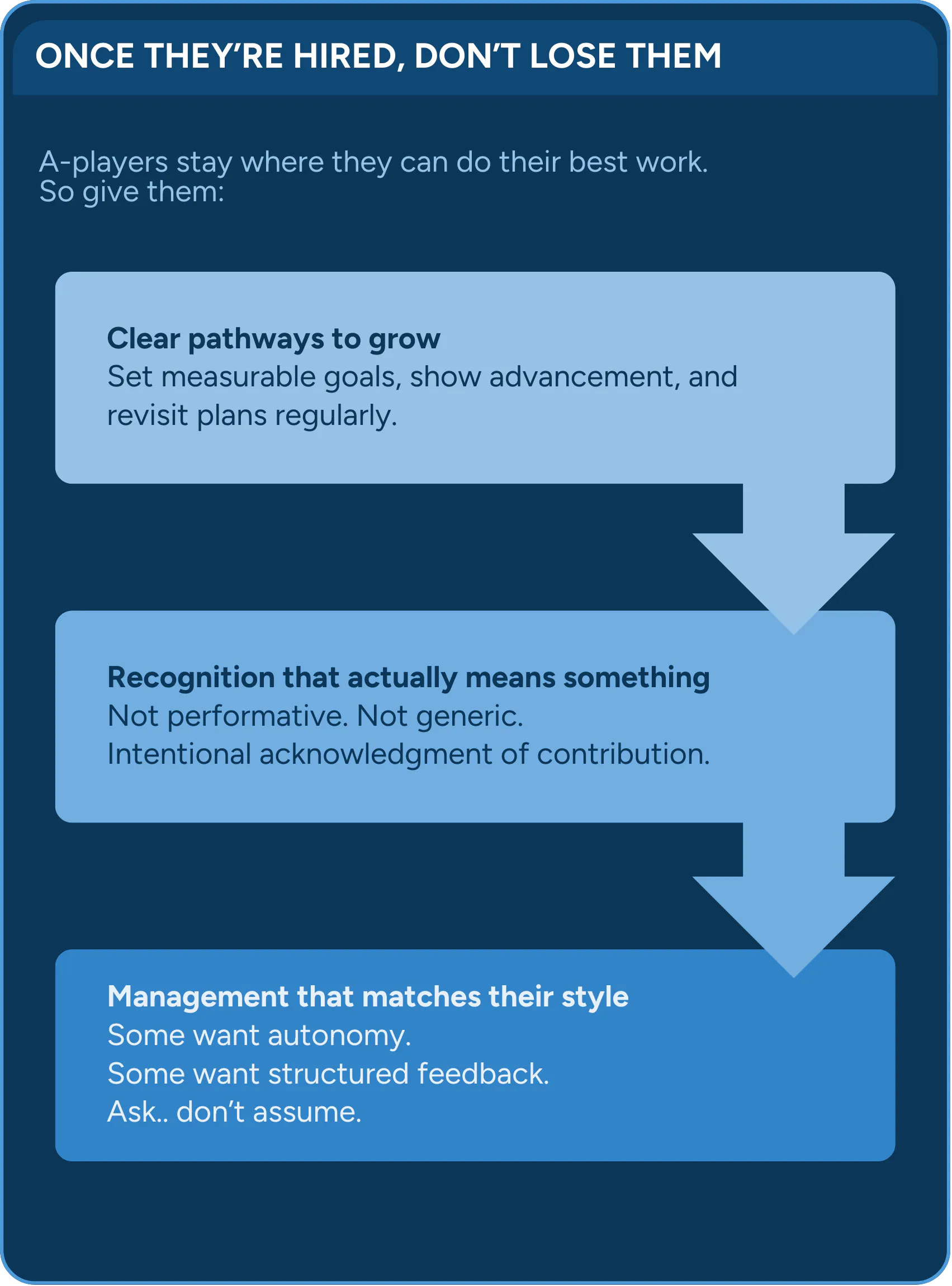
A-players stay where they can do their best work. So give them:
Clear pathways to grow
Set measurable goals, show advancement, and revisit plans regularly. Stagnation kills motivation faster than anything.
Recognition that actually means something
Not performative. Not generic. Intentional acknowledgment of contribution. A-players want to know their work matters.
Management that matches their style
Some want autonomy. Some want structured feedback. Ask, don't assume. Then lead accordingly.
Protect Them From Burnout
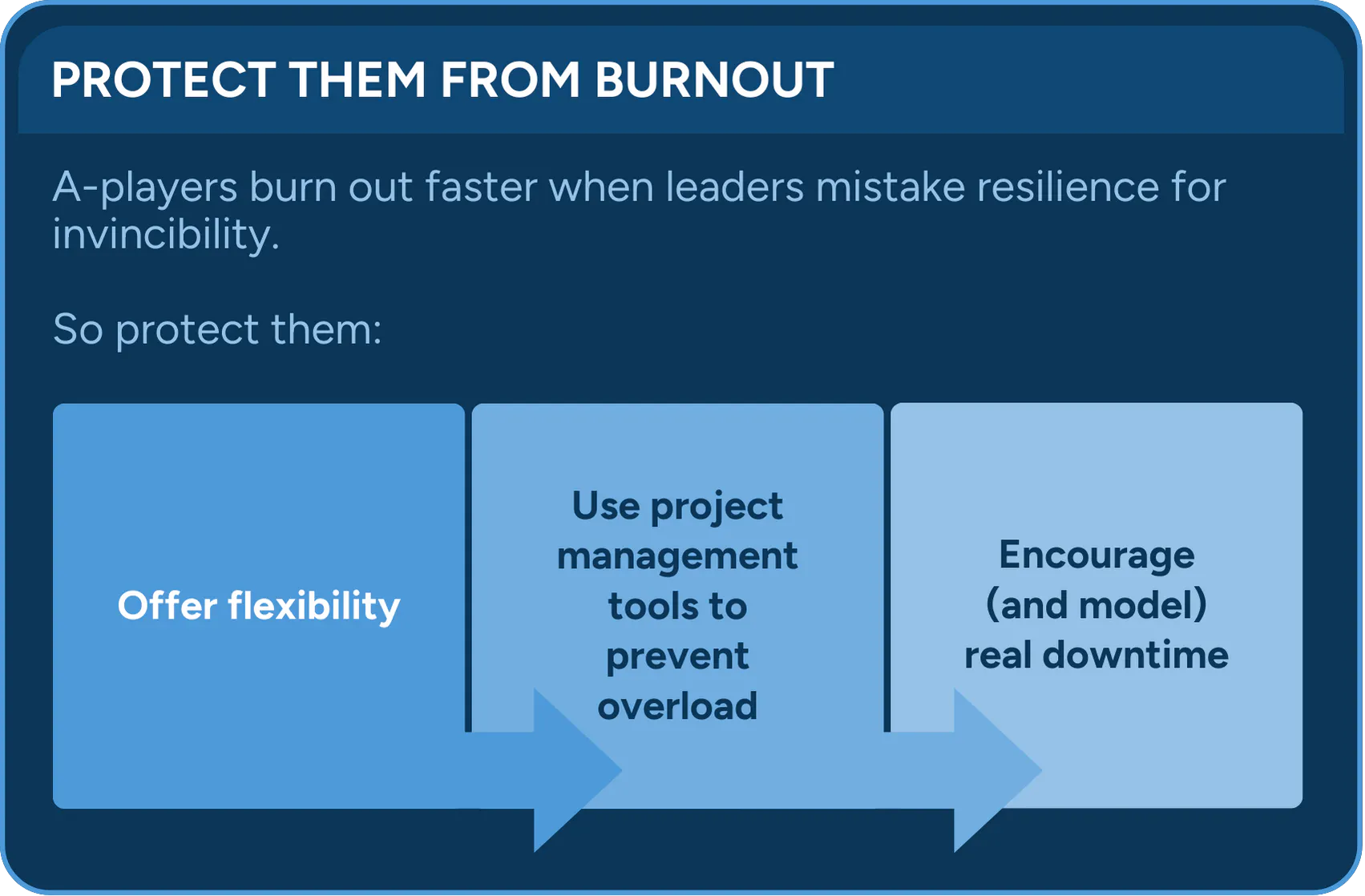
A-players burn out faster when leaders mistake resilience for invincibility.
So protect them:
- Offer flexibility. Trust them to manage their own time and energy.
- Use project management tools to prevent overload. Visibility prevents burnout before it starts.
- Encourage (and model) real downtime. High-performers aren't machines. Treat them like one and you'll lose them.
The Bottom Line
A-players elevate everything: culture, output, standards, momentum.
But only when leaders build environments where excellence is sustainable.
If you want to hire and keep top talent, stop optimizing for "culture fit" and start building systems that let great people do great work.

Was this content useful?