 cord
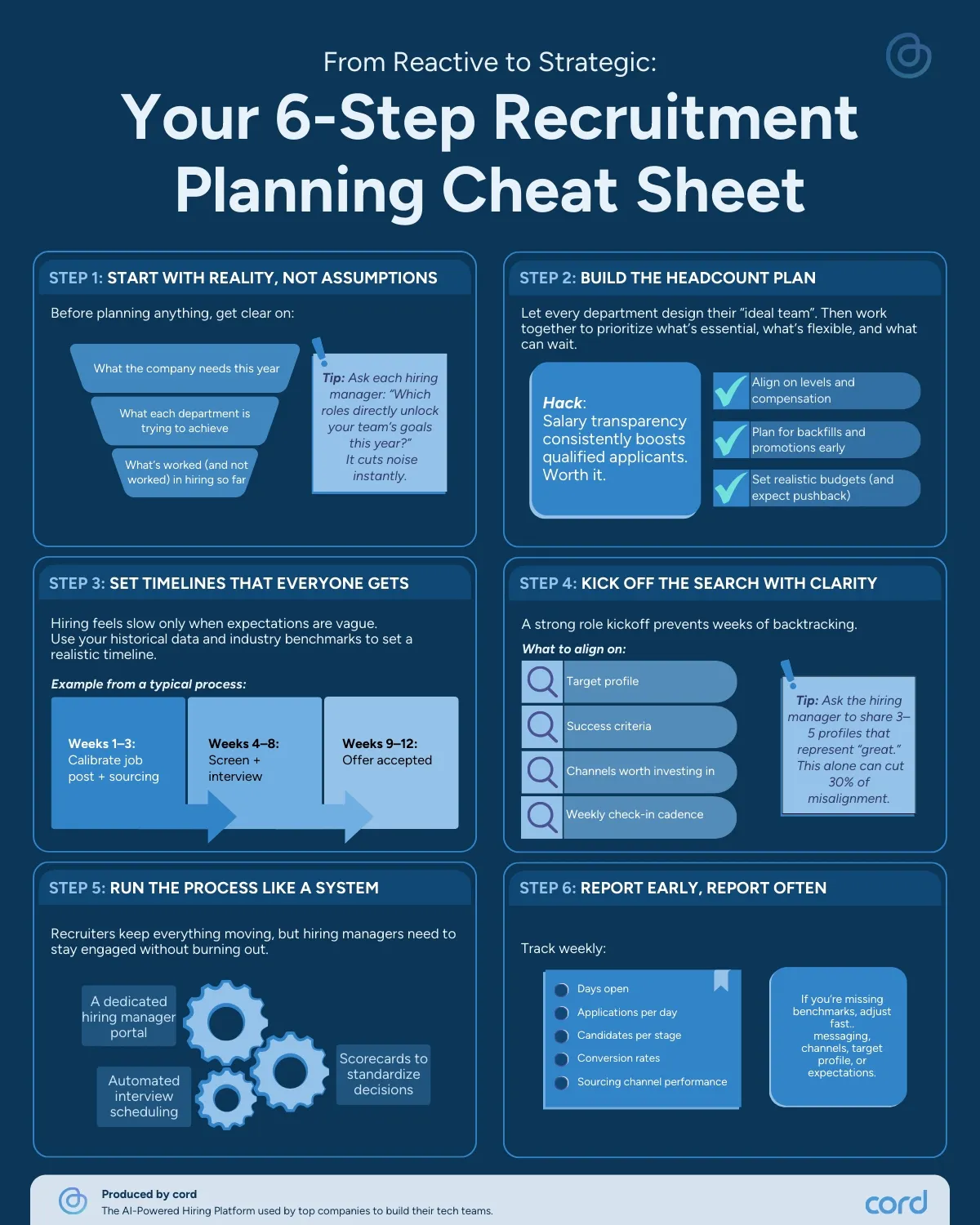
cordYour 6-Step Recruitment Planning Cheat Sheet
Build a Hiring Plan That Actually Brings Alignment and Predictability

Recruiting shouldn't feel like you're constantly putting out fires. But for most talent teams, that's exactly what it feels like—reqs dropping without warning, priorities changing overnight, and being the last to know about critical hiring needs.
Here's the thing: you're not an order-taker. You're a strategic partner. But you need a solid plan to actually operate like one.
A real recruitment plan brings alignment, predictability, and the kind of clarity that helps everyone—not just your talent team—do better work. Here's how to build one that actually works.
Step 1: Start with Reality, Not Assumptions
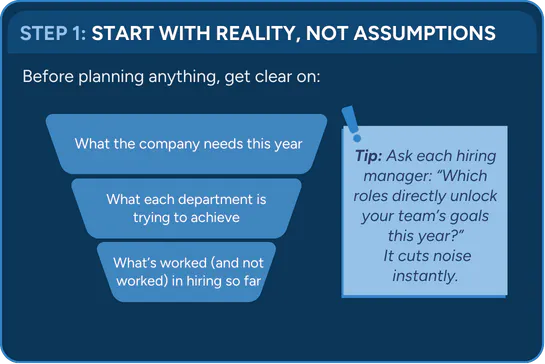
Before planning anything, get clear on three things:
- What the company actually needs this year
- What each department is trying to achieve
- What's worked (and what hasn't) in hiring so far
Pro tip: Ask each hiring manager directly: "Which roles directly unlock your team's goals this year?" This cuts through the noise immediately and helps you focus on what matters.
Step 2: Build the Headcount Plan
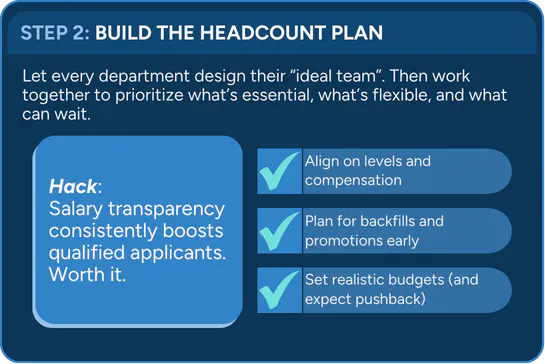
Let every department design their "ideal team." Then work together to prioritize what's essential, what's flexible, and what can wait.
A quick hack that consistently attracts more qualified applicants: salary transparency. It's worth the effort.
Make sure you align on:
✓ Levels and compensation
✓ Plans for backfills and promotions early
✓ Realistic budgets (and expect some pushback)
Step 3: Set Timelines That Everyone Gets
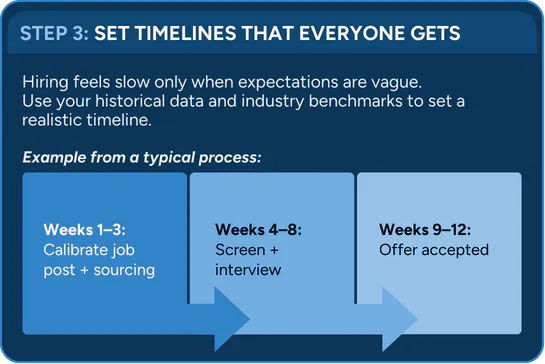
Hiring feels slow only when expectations are vague. Use your historical data and industry benchmarks to set a realistic timeline.
Here's what a typical process might look like:
- Weeks 1–3: Calibrate job post + sourcing
- Weeks 4–8: Screen + interview
- Weeks 9–12: Offer accepted
When everyone knows what to expect, the process stops feeling like it's dragging.
Step 4: Kick Off the Search with Clarity
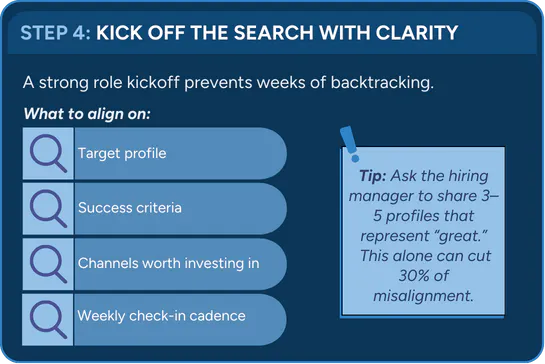
A strong role kickoff prevents weeks of backtracking later.
Align on:
- Target profile
- Success criteria
- Channels worth investing in
- Weekly check-in cadence
Another pro tip: Ask the hiring manager to share 3–5 profiles that represent "great" candidates. This alone can cut 30% of misalignment.
Step 5: Run the Process Like a System
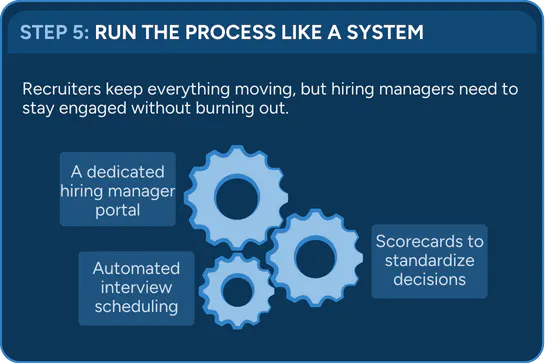
Recruiters keep everything moving, but hiring managers need to stay engaged without burning out.
Systemize with:
- A dedicated hiring manager portal
- Automated interview scheduling
- Scorecards to standardize decisions
These tools can boost efficiency by 50%+ and keep everyone on the same page.
Step 6: Report Early, Report Often
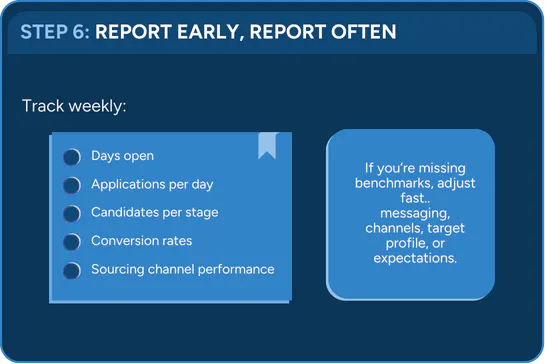
Track weekly metrics:
📊 Days open
📊 Applications per day
📊 Candidates per stage
📊 Conversion rates
📊 Sourcing channel performance
If you're missing benchmarks, adjust fast—whether that means changing your messaging, trying different channels, or resetting target expectations.
The Bottom Line
Recruitment plans aren't static. The market shifts. Your business shifts. Your strategy should shift too.
Talent teams aren't order-takers—they're strategic partners. But only when they have a plan strong enough to lead with.
Stop reacting. Start planning. Your team (and your sanity) will thank you.

Was this content useful?