 cord
cord10 Interview Red Flags to Never Ignore
10 Most Common Warning Signs at Interviews
Every job opportunity comes with trade-offs, but some warning signs reveal more about a company's culture and values than others. Recognizing these red flags during the interview process can save you from making a costly career mistake. Here are 10 warning signs that should make you think twice before accepting an offer.
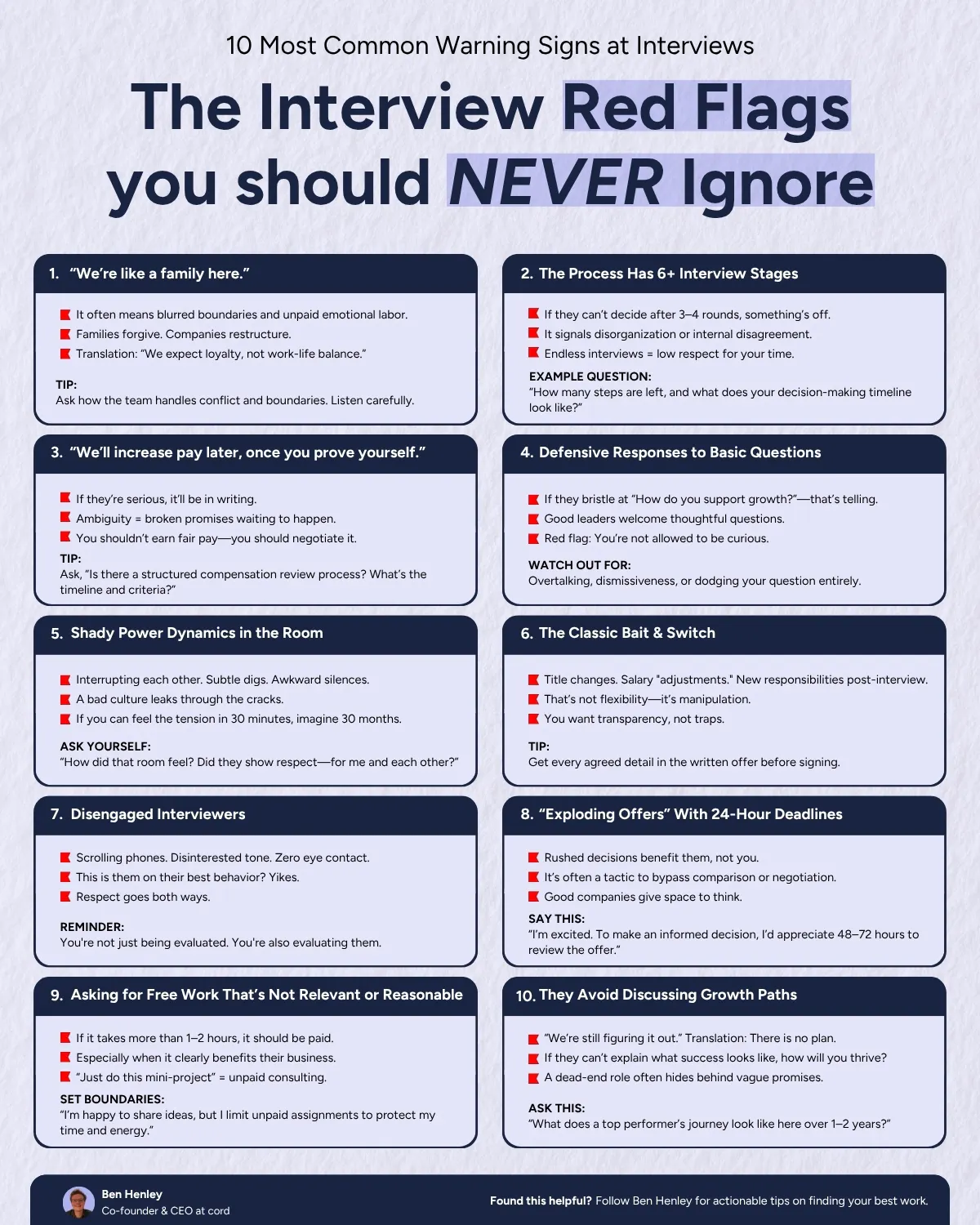
"We're Like a Family Here"
This phrase often masks problematic workplace dynamics. When companies use family language, they frequently expect:
- Blurred boundaries between work and personal life
- Unpaid emotional labor from employees
- Unconditional loyalty without reciprocal commitment
Remember: families forgive mistakes, but companies restructure and lay off employees. What they're really saying is "we expect loyalty, not work-life balance."
What to ask: "How does the team handle conflict and set boundaries? What does work-life balance look like here?"
Six or More Interview Stages
A lengthy interview process often indicates internal problems:
- Decision-making paralysis or disagreement among leadership
- Disorganized hiring processes
- Little respect for candidates' time
If a company can't make a hiring decision after 3-4 rounds of interviews, something is wrong with their process or internal communication.
Example question to ask: "How many steps are left, and what does your decision-making timeline look like?"
"We'll Increase Pay Later—Once You Prove Yourself"
Vague promises about future compensation are major red flags:
- If they're serious about pay increases, they'll put it in writing
- Ambiguous commitments often become broken promises
- You should negotiate fair pay upfront, not earn it later
What to ask: "Is there a structured compensation review process? What's the timeline and criteria?"
Defensive Responses to Basic Questions
Good leaders welcome thoughtful questions about growth, culture, and expectations. If interviewers become defensive or dismissive when you ask about:
- Professional development opportunities
- Team dynamics
- Company challenges
This suggests they don't value curiosity or transparency. You're not being difficult—you're being smart.
Watch out for: Overtalking, dismissiveness, or dodging your questions entirely.
Uncomfortable Power Dynamics
Pay attention to how interviewers interact with each other:
- Interrupting or talking over colleagues
- Subtle digs or passive-aggressive comments
- Awkward silences or visible tension
Bad culture shows through these cracks. If you can feel the tension in a 30-minute interview, imagine working there for 30 months.
Ask yourself: "How did that room feel? Did they show respect for me and each other?"
The Classic Bait and Switch
Watch for changes between the interview and offer:
- Job title modifications
- Salary "adjustments"
- New responsibilities not mentioned during interviews
This isn't flexibility—it's manipulation. You want transparency, not surprises.
Tip: Get every agreed detail in the written offer before signing.
Disengaged Interviewers
If interviewers are:
- Scrolling through their phones
- Speaking in a disinterested tone
- Avoiding eye contact
This is supposedly them on their best behavior. Respect should go both ways in the interview process.
Remember: You're not just being evaluated—you're also evaluating them.
"Exploding Offers" with 24-Hour Deadlines
Pressure tactics around job offers are red flags:
- Rushed decisions typically benefit the employer, not you
- It's often used to bypass comparison shopping or negotiation
- Good companies give you space to make informed decisions
What to say: "I'm excited about this opportunity. To make an informed decision, I'd appreciate 48-72 hours to review the offer."
Requests for Excessive Free Work
Some work samples are reasonable, but be cautious when:
- The assignment takes more than 1-2 hours
- It clearly benefits their business operations
- They frame it as a "mini-project"
This is essentially unpaid consulting work.
Set boundaries: "I'm happy to share ideas, but I limit unpaid assignments to protect my time and energy."
Avoiding Growth Path Discussions
When you ask about advancement opportunities and hear:
- "We're still figuring it out" (Translation: no plan exists)
- Vague promises without specifics
- Inability to explain what success looks like
A role with no clear growth path often hides behind empty promises.
Ask this: "What does a top performer's journey look like here over 1-2 years?"
Trust Your Instincts
If something feels off during the interview process, pay attention to that feeling. Being selective about job opportunities isn't being picky—it's being strategic. You're not just looking for any job; you're looking for the right opportunity that aligns with your values and career goals.
The interview process reveals how a company operates, treats people, and makes decisions. Use these insights to make informed choices about your career path.

Was this content useful?