 cord
cord12 Powerful Phrases to use in Interviews
Powerful Interview Phrases That Build Credibility
In every interview, there's a moment where the decision shifts. It rarely comes from having perfect answers. It comes from how you communicate.
Success isn't about being polished. It's about sounding credible. The phrases you choose can either undermine your candidacy or reinforce your professionalism.
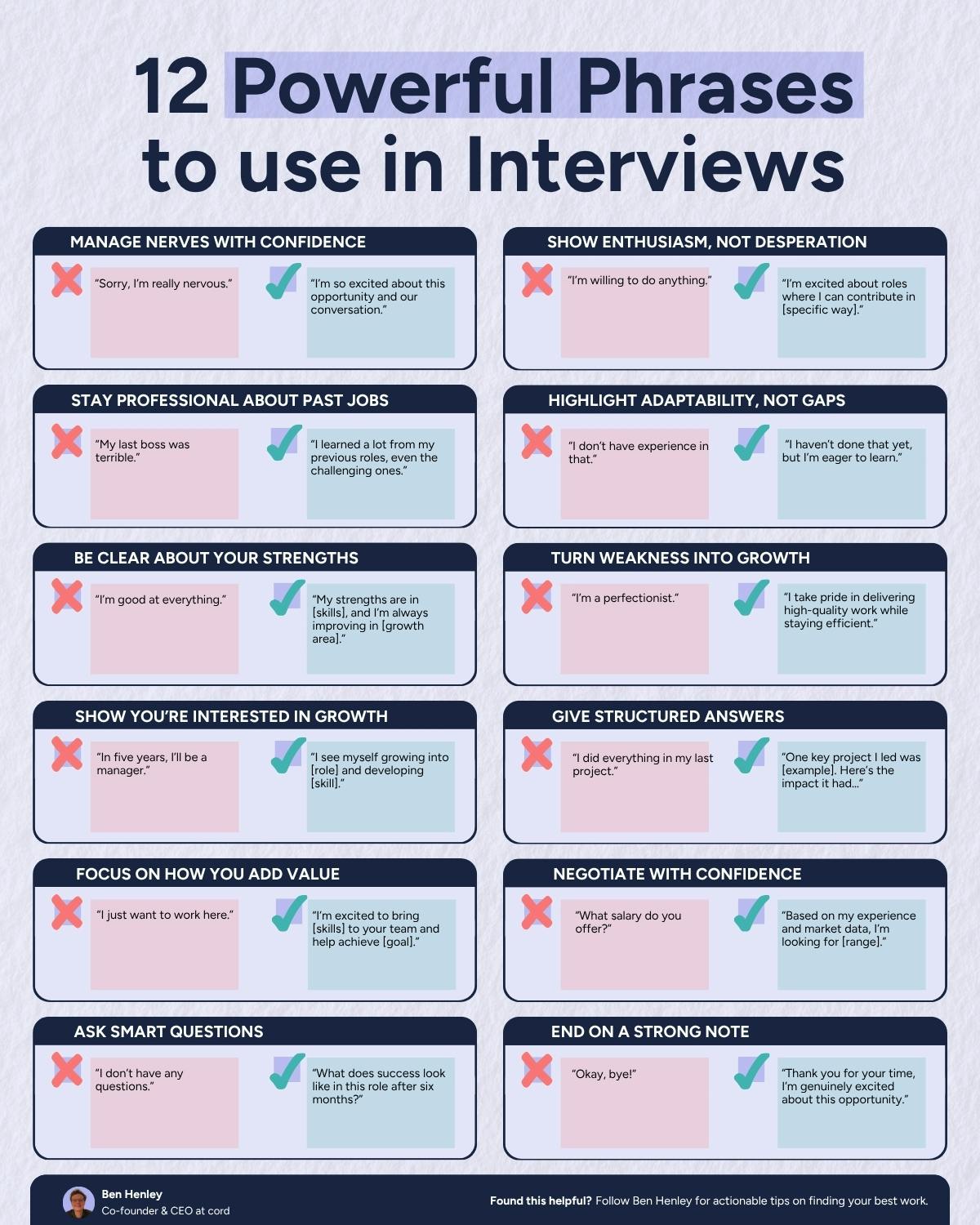
Here are 12 powerful phrases that will strengthen your interview performance, along with the weak alternatives to avoid.
Manage Nerves With Confidence
Avoid: "Sorry, I'm really nervous." Use: "I'm so excited about this opportunity and our conversation."
Nervousness is natural, but announcing it draws attention to your discomfort rather than your qualifications. Reframe your energy as enthusiasm instead.
Show Enthusiasm, Not Desperation
Avoid: "I'm willing to do anything." Use: "I'm excited about roles where I can contribute in [specific way]."
Generic willingness suggests you lack direction. Specific enthusiasm demonstrates you understand the role and have thought about your contribution.
Stay Professional About Past Jobs
Avoid: "My last boss was terrible." Use: "I learned a lot from my previous roles, even the challenging ones."
Criticizing former employers raises red flags about your professionalism and attitude. Focus on growth and learning instead.
Highlight Adaptability, Not Gaps
Avoid: "I don't have experience in that." Use: "I haven't done that yet, but I'm eager to learn."
Skill gaps are inevitable. What matters is how you frame them. Show willingness to grow rather than dwelling on limitations.
Be Clear About Your Strengths
Avoid: "I'm good at everything." Use: "My strengths are in [skills], and I'm always improving in [growth area]."
Claiming universal competence sounds unrealistic. Specific strengths paired with areas for growth show self-awareness and honesty.
Turn Weakness Into Growth
Avoid: "I'm a perfectionist." Use: "I take pride in delivering high-quality work while staying efficient."
The perfectionist answer is overused and suggests poor time management. Focus on quality balanced with efficiency.
Show You're Interested in Growth
Avoid: "In five years, I'll be a manager." Use: "I see myself growing into [role] and developing [skill]."
Ambitious goals are good, but they should align with realistic progression and skill development within the company.
Give Structured Answers
Avoid: "I did everything in my last project." Use: "One key project I led was [example]. Here's the impact it had..."
Vague claims about your involvement aren't convincing. Provide specific examples with measurable outcomes.
Focus on How You Add Value
Avoid: "I just want to work here." Use: "I'm excited to bring [skills] to your team and help achieve [goal]."
Companies want to know what you'll contribute, not just that you want the job. Connect your abilities to their needs.
Negotiate With Confidence
Avoid: "What salary do you offer?" Use: "Based on my experience and market data, I'm looking for [range]."
Passive salary questions suggest you haven't done your research. Come prepared with data-backed expectations.
Ask Smart Questions
Avoid: "I don't have any questions." Use: "What does success look like in this role after six months?"
Having no questions suggests lack of interest or preparation. Thoughtful questions demonstrate engagement and strategic thinking.
End on a Strong Note
Avoid: "Okay, bye!" Use: "Thank you for your time, I'm genuinely excited about this opportunity."
Your closing impression matters. Express gratitude and reinforce your interest professionally.
The Real Strategy
If you're preparing for interviews, don't just focus on what you say. Understand how you say it.
Review your typical responses and identify gaps in your phrasing. Practice reframing weak statements into confident, specific ones. The goal isn't to sound scripted—it's to communicate with clarity and credibility.
Your words shape perceptions. Choose them carefully, and they'll work in your favor when it matters most.

Was this content useful?