 cord
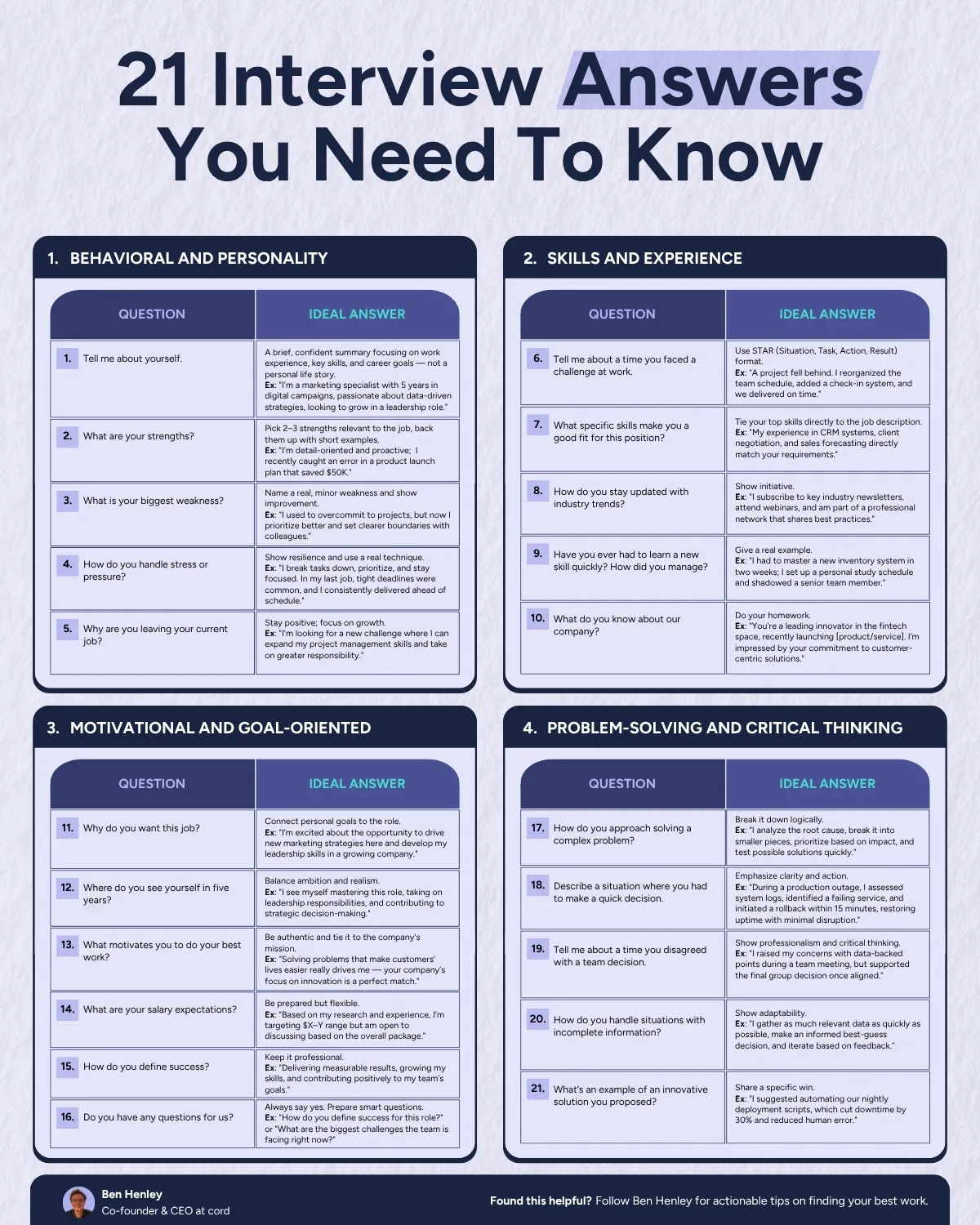
cord21 Interview Answers You Need to Know
How to Prepare Winning Answers for these 4 Interview Question Types
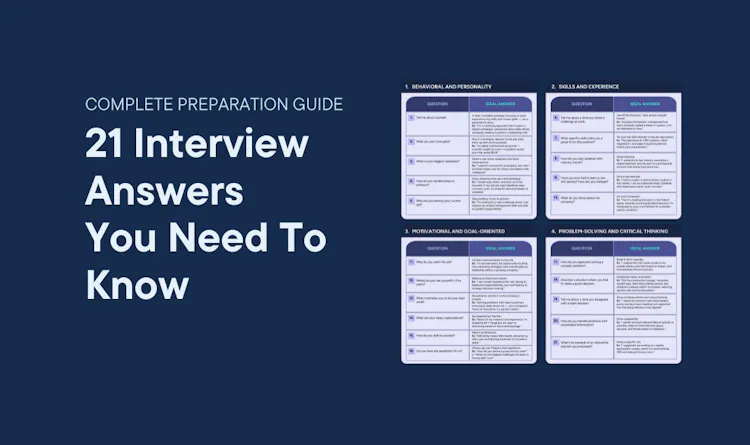
The difference between candidates who get job offers and those who don't often comes down to one thing: preparation. Successful candidates don't just wing it—they prepare specific answers for the most common interview questions.
There are four core categories of interview questions that every hiring manager asks. By preparing answers for each category, you'll walk into any interview with confidence and clarity.
Behavioral and Personality Questions
These questions reveal who you are as a person and how you work with others.
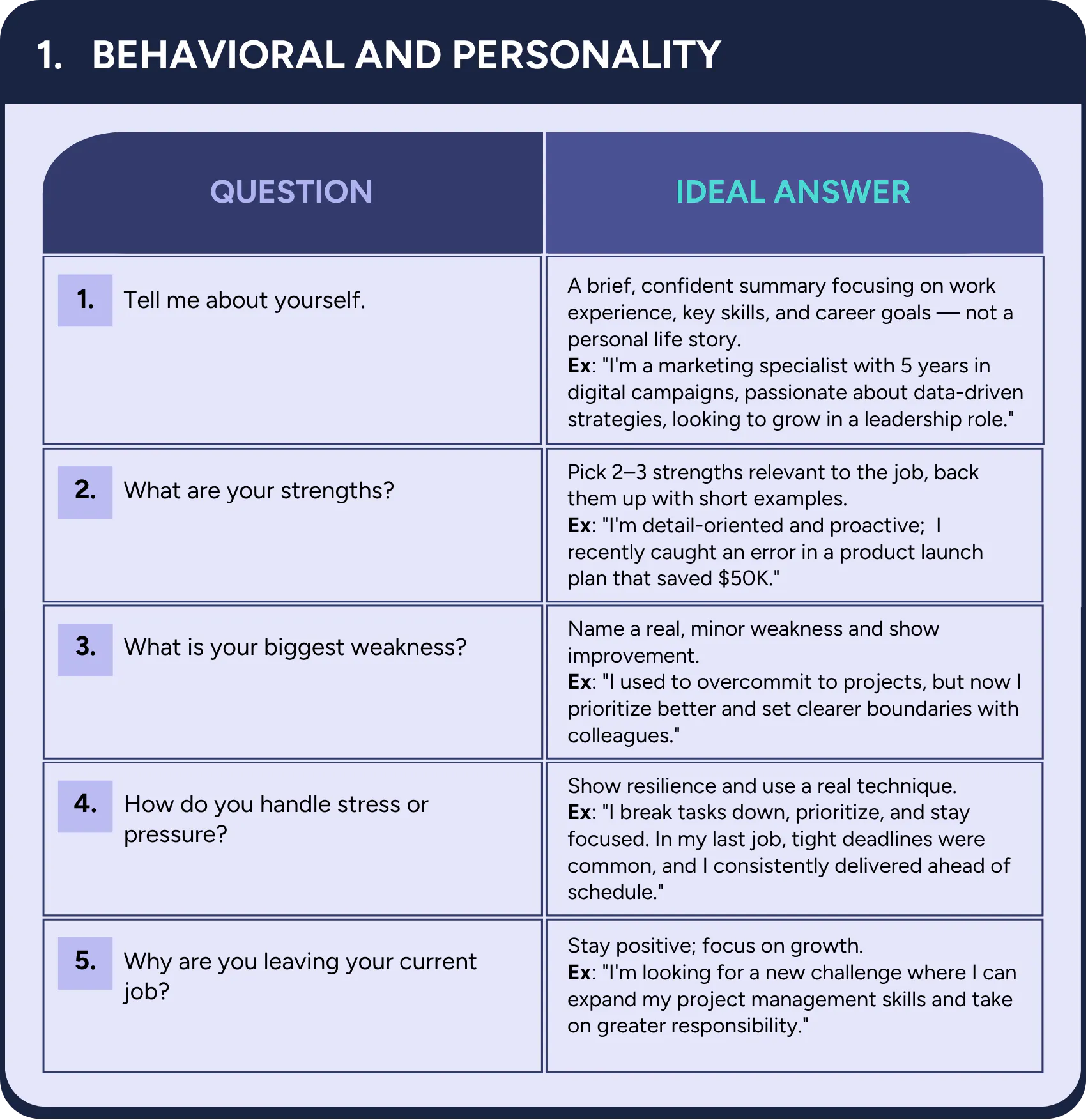
Question 1: Tell me about yourself.
Best Answer: A brief, confident summary focusing on work experience, key skills, and career goals—not a personal life story. Example: "I'm a marketing specialist with 5 years in digital campaigns, passionate about data-driven strategies, looking to grow in a leadership role."
Question 2: What are your strengths?
Best Answer: Pick 2-3 strengths relevant to the job, back them up with specific examples. Example: "I'm detail-oriented and proactive. I recently caught a error in a product launch that saved us $50,000."
Question 3: What is your biggest weakness?
Best Answer: Name a real, minor weakness and show improvement efforts. Example: "I used to overcommit to projects, but now I prioritize better and set clearer boundaries with colleagues."
Question 4: How do you handle stress or pressure?
Best Answer: Show methods and use a real technique. Example: "I break tasks down, prioritize, and stay focused. In my last job, tight deadlines were common, and I consistently delivered ahead of schedule."
Question 5: Why are you leaving your current job?
Best Answer: Stay positive, focus on growth. Example: "I'm looking for a new challenge where I can expand my project management skills and take on greater responsibility."
Skills and Experience Questions
These questions assess what you can actually do for the company.
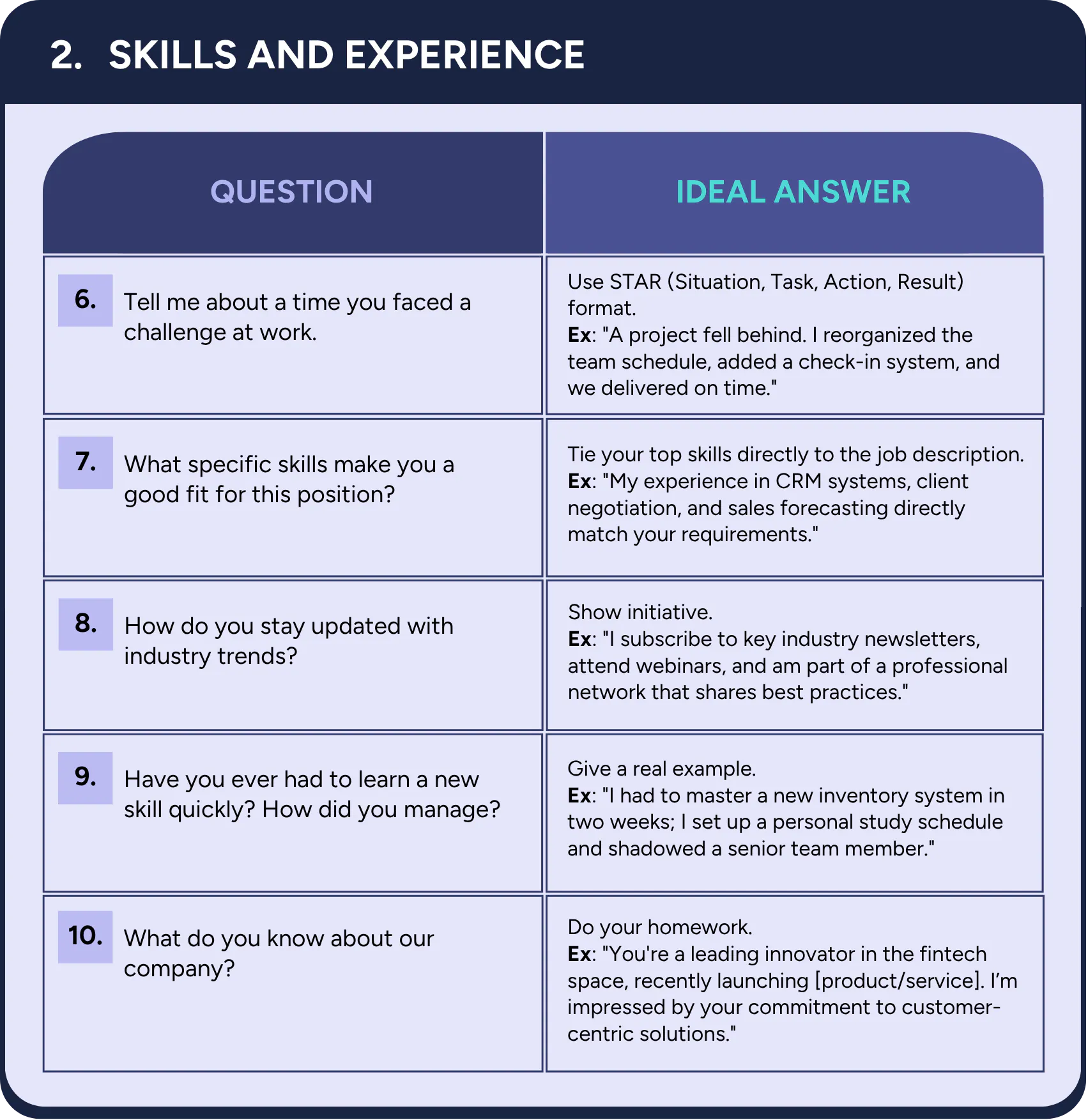
Question 6: Tell me about a time you faced a challenge at work.
Best Answer: Use STAR (Situation, Task, Action, Result) format. Example: "A project fell behind. I reorganized the team schedule, added a check-in system, and we delivered on time."
Question 7: What specific skills make you a good fit for this position?
Best Answer: Tie your top skills directly to the job description. Example: "My experience in CRM systems, client relationship management, and reporting directly match your requirements."
Question 8: How do you stay updated with industry trends?
Best Answer: Show initiative. Example: "I subscribe to key industry newsletters, attend webinars, and am part of a professional network that shares best practices."
Question 9: Have you ever had to learn a new skill quickly? How did you manage?
Best Answer: Give a real example. Example: "I had to master a new inventory system in two weeks. I set up a personal study schedule and practiced until I became team instructor."
Question 10: What do you know about our company?
Best Answer: Show research and connect to your goals. Example: "You're a leading innovator in the fintech space, recently launching [product/service]. I'm impressed by your commitment to customer-centric solutions."
Motivational and Goal-Oriented Questions
These questions explore where you're headed and why you want this specific role.
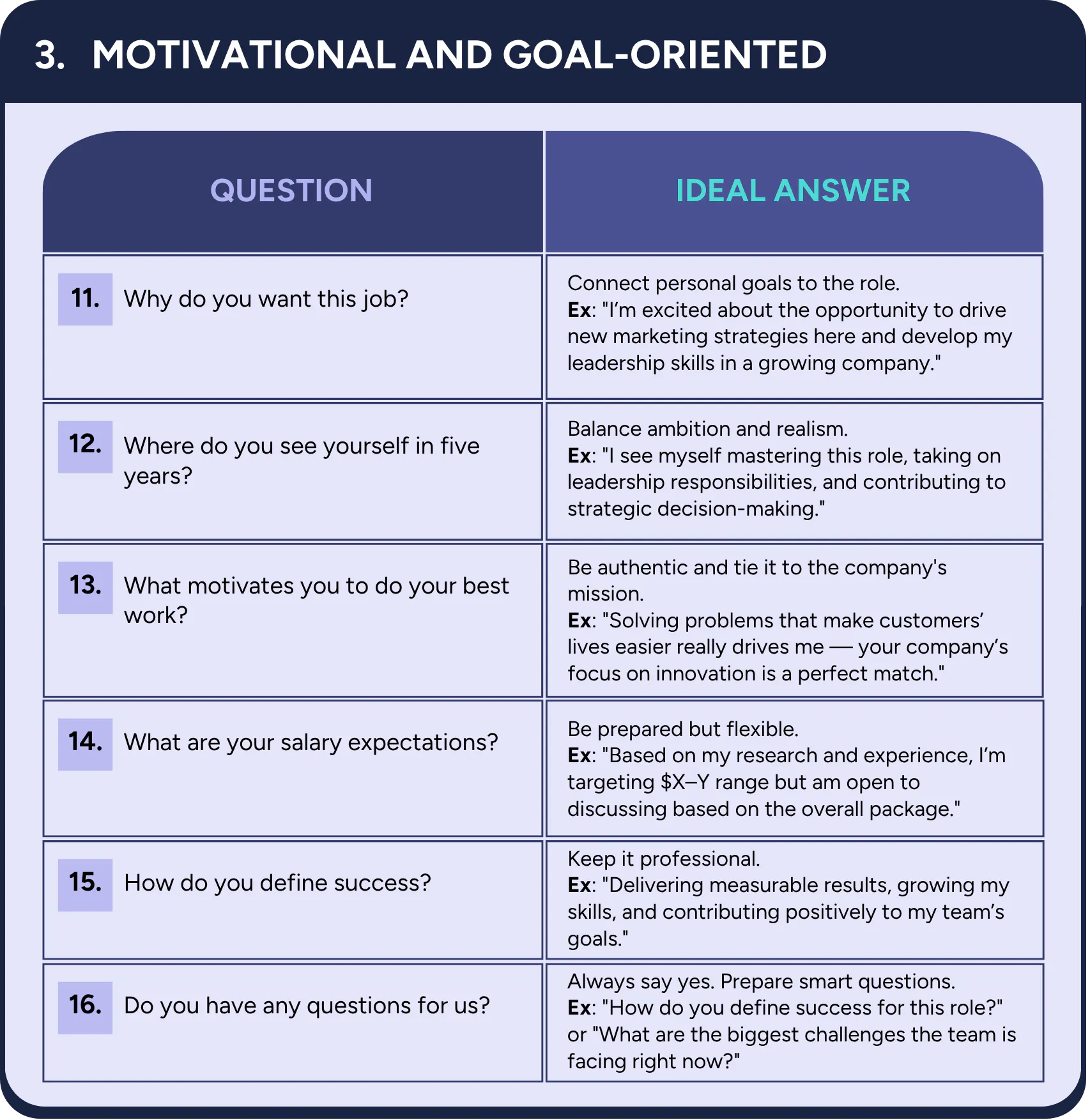
Question 11: Why do you want this job?
Best Answer: Connect personal goals to the role. Example: "I'm excited about the opportunity to drive new marketing strategies here and develop my leadership skills in a growing company."
Question 12: Where do you see yourself in five years?
Best Answer: Balance ambition and realism. Example: "I see myself mastering this role, taking on leadership responsibilities, and contributing to strategic decision-making."
Question 13: What motivates you to do your best work?
Best Answer: Be authentic and tie it to the company's mission. Example: "Solving problems that make customers' lives easier really drives me—your company's focus on innovation is a perfect match."
Question 14: What are your salary expectations?
Best Answer: Be prepared, be realistic. Example: "Based on my research and experience, I'm targeting $X-Y range but am open to discussing based on the overall package."
Question 15: How do you define success?
Best Answer: Keep it professional and measurable. Example: "Delivering measurable results, growing my skills, and contributing positively to my team's goals."
Question 16: Do you have any questions for us?
Best Answer: Always say yes. Prepare smart questions. Examples: "What does career success for this role?" or "What are the biggest challenges the team is facing right now?"
Problem-Solving and Critical Thinking Questions
These questions test how you think through challenges and make decisions.
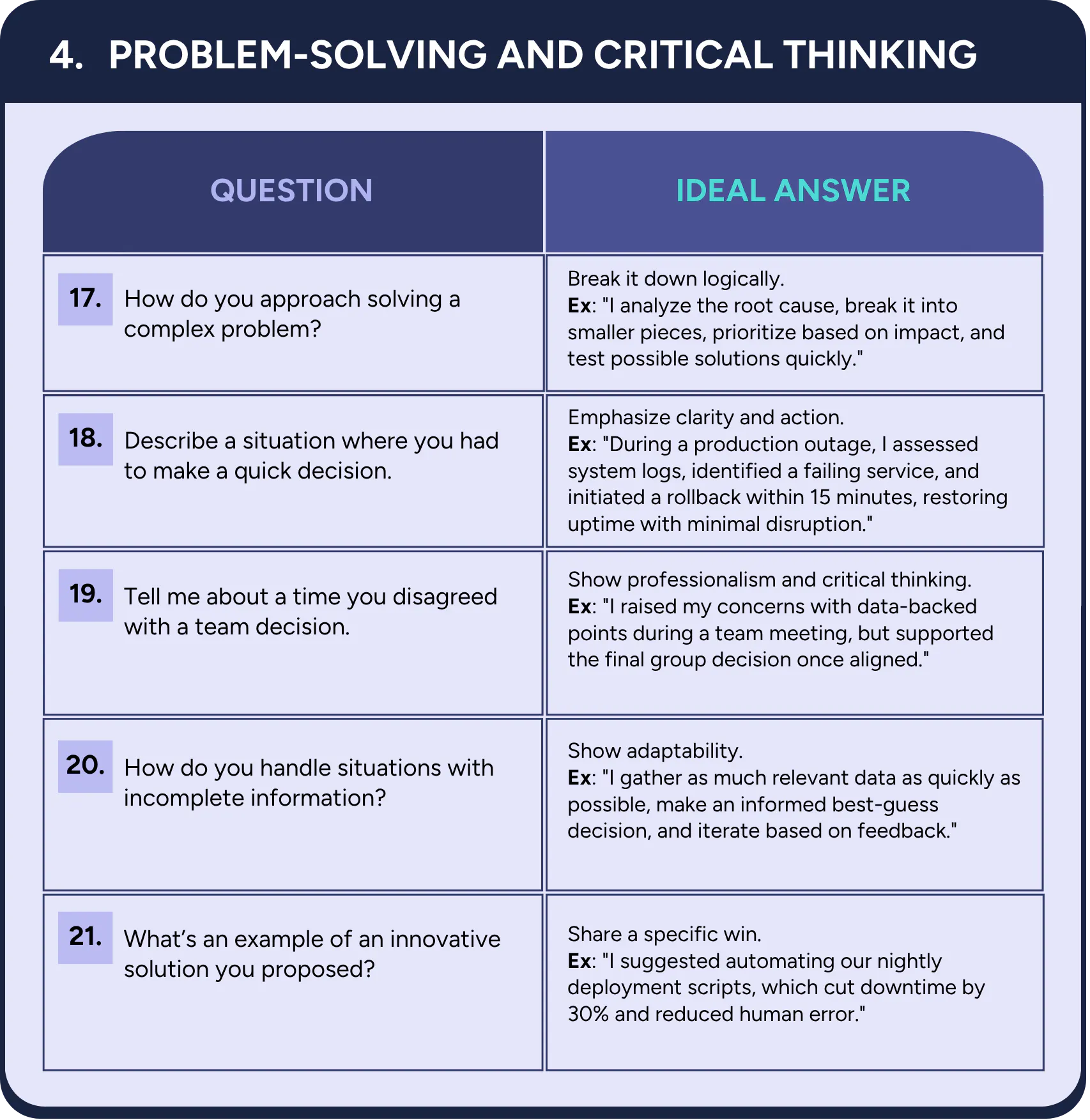
Question 17: How do you approach solving a complex problem?
Best Answer: Break it down logically. Example: "I analyze the root cause, break it into smaller pieces, prioritize based on impact, and test possible solutions quickly."
Question 18: Describe a situation where you had to make a quick decision.
Best Answer: Emphasize clarity and action. Example: "During a product launch, I assessed system logs, identified a failing service, and initiated backup procedures within 15 minutes."
Question 19: Tell me about a time you disagreed with a team decision.
Best Answer: Show professionalism and critical thinking. Example: "I raised my concerns with data-backed points during a team meeting, but supported the final group decision once aligned."
Question 20: How do you handle situations with incomplete information?
Best Answer: Show adaptability. Example: "I gather as much relevant data as quickly as possible, make an informed best-guess decision, and iterate based on feedback."
Question 21: What's an example of an innovative solution you proposed?
Best Answer: Share a specific win. Example: "I suggested automating our nightly deployment scripts, which improved delivery by 30% and reduced human error."
How to Structure Your Interview Prep
Behavioral & Personality Tips:
- Keep "Tell me about yourself" professional, not personal
- Turn "weakness" questions into growth stories
- For stress questions, focus on action plans, not emotions
Skills & Experience Tips:
- Use the STAR method (Situation, Task, Action, Result) for storytelling
- Show you're a lifelong learner with real examples
- Always tie your past work directly to their current needs
Motivation & Goals Tips:
- Align your ambitions with the company's vision
- Define success in ways that benefit both you and the team
- Research the company deeply; be ready to discuss their wins
Problem-Solving & Critical Thinking Tips:
- Explain your decision-making process clearly
- Use real examples of solving high-pressure or ambiguous problems
- Highlight how you prioritize, adapt, and move fast without sacrificing quality
The Bottom Line
The candidates who get the biggest offers aren't necessarily the smartest—they're simply the most prepared. Use this guide to practice your answers, adapt them to your specific experiences, and walk into your next interview with confidence.
Remember: preparation beats perfection every time.
Was this content useful?