 cord
cordPractical Steps to Overcome Interview Anxiety
How to Stay Present and In Control When the Pressure Is On
The toughest part of any job interview isn't the technical questions or behavioral scenarios. It's the self-reinforcing loop of anxiety that kicks in mid-conversation. Most candidates invest hours preparing their answers, researching the company, and practicing their pitch, only to come undone through self-doubt in the critical moment.
Overcoming interview anxiety requires more than traditional preparation. It requires intercepting those "I'll fail" thoughts and steadying yourself when pressure peaks. The key is changing how you think under stress, not forcing yourself to feel calm.
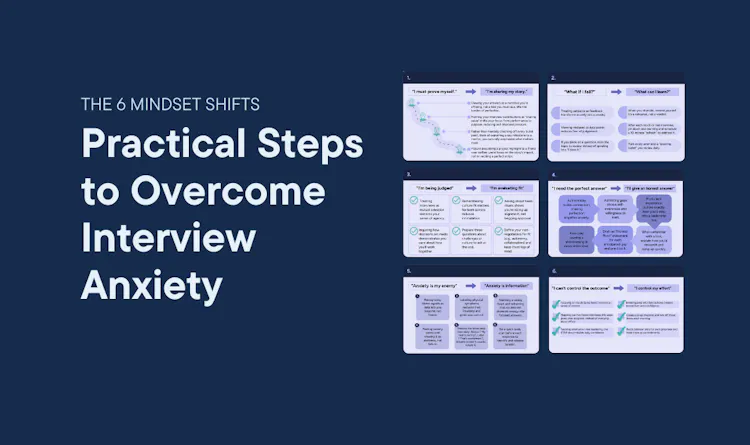
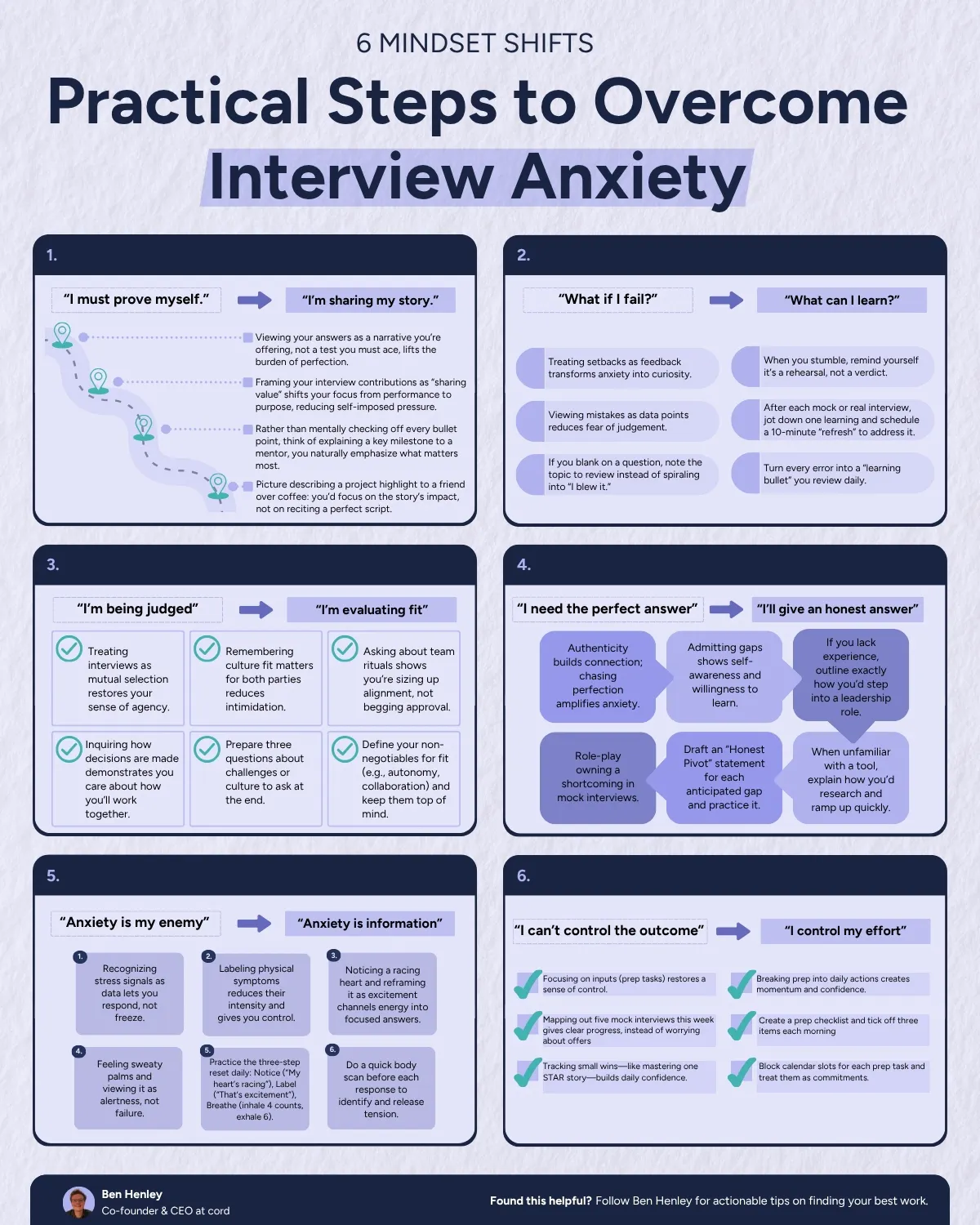
Here are six practical mindset shifts that will help you stay present, focused, and in control during your next interview.
From "I must prove myself" to "I'm sharing my story"
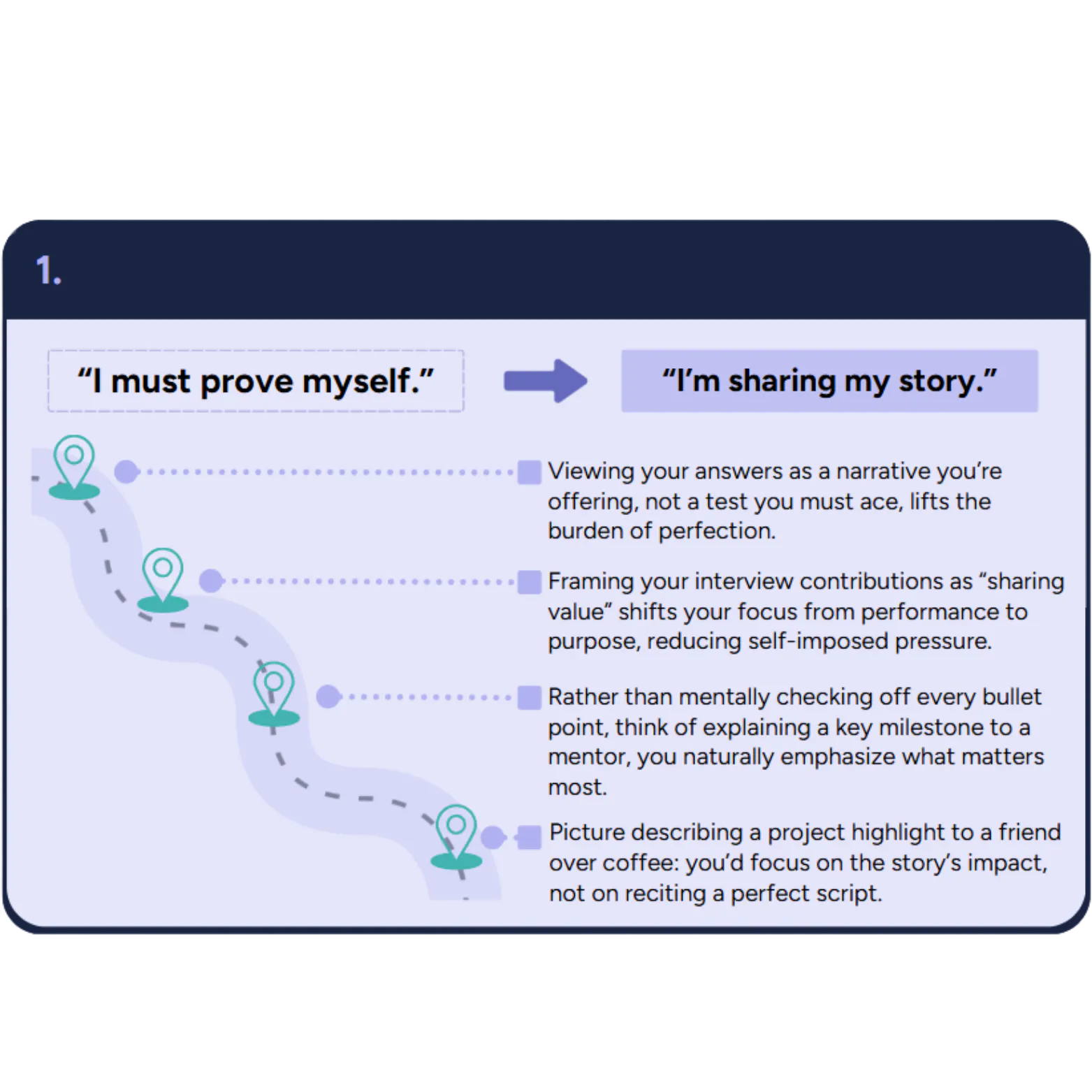
When you view your answers as a narrative you're offering rather than a test you must ace, you lift the burden of perfection. Framing your contributions as "sharing value" shifts your focus from performance to purpose, reducing the imposed pressure.
Instead of mentally checking off every bullet point you "have to" hit, think of explaining a key milestone to a mentor. You naturally emphasize what matters most rather than reciting a perfect script. Picture describing a project highlight to a friend over coffee—you'd focus on the story's impact, not on delivering flawless talking points.
From "What if I fail?" to "What can I learn?"
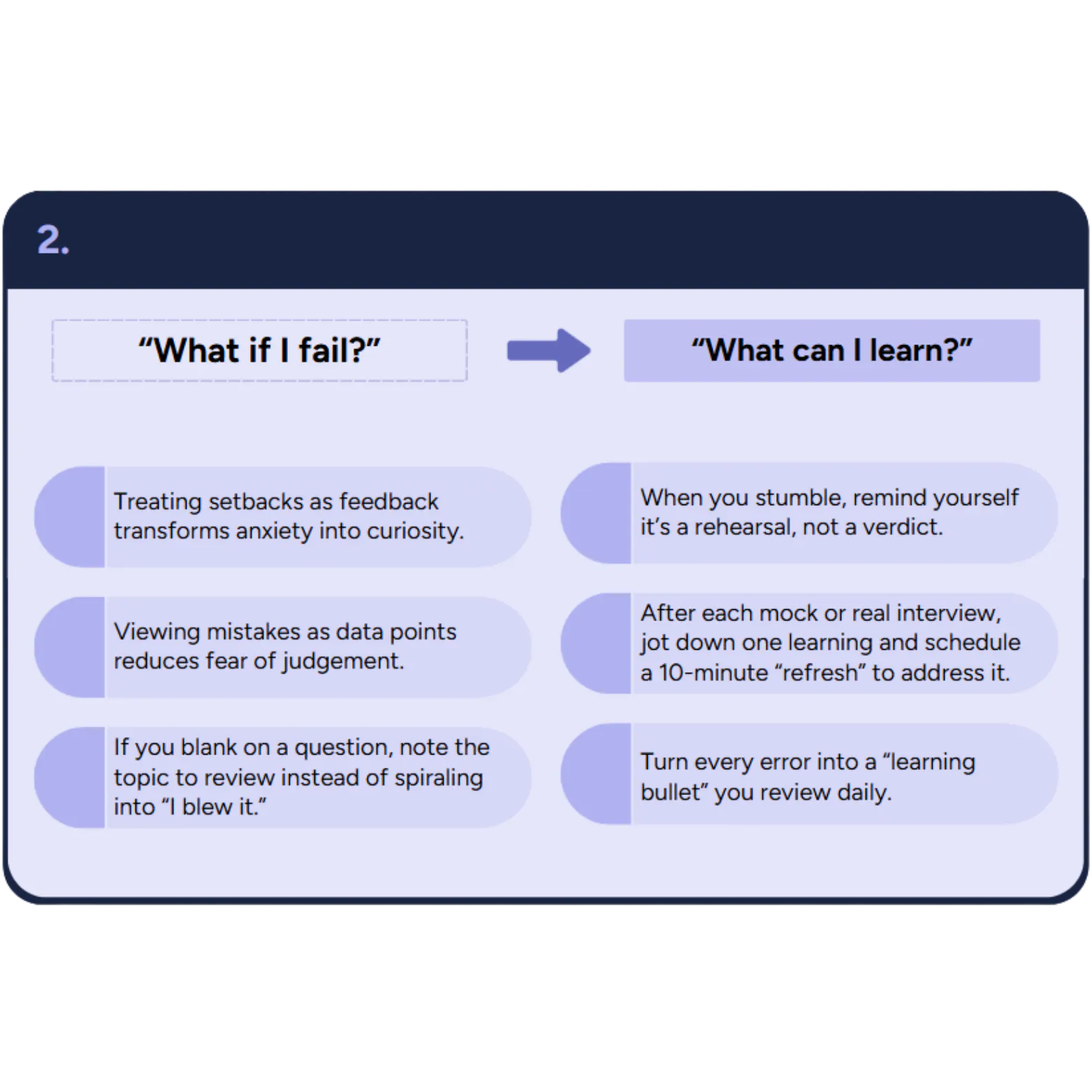
Treating setbacks as feedback transforms anxiety into curiosity. When you stumble, remind yourself it's a rehearsal, not a verdict. After each mock or real interview, jot down one learning and schedule a 10-minute "refresh" to address it.
Viewing mistakes as data points reduces fear of judgment. If you blank on a question, note the topic to review instead of spiraling into "I blew it." Turn every error into a "learning bullet" you review daily.
From "I'm being judged" to "I'm evaluating fit"
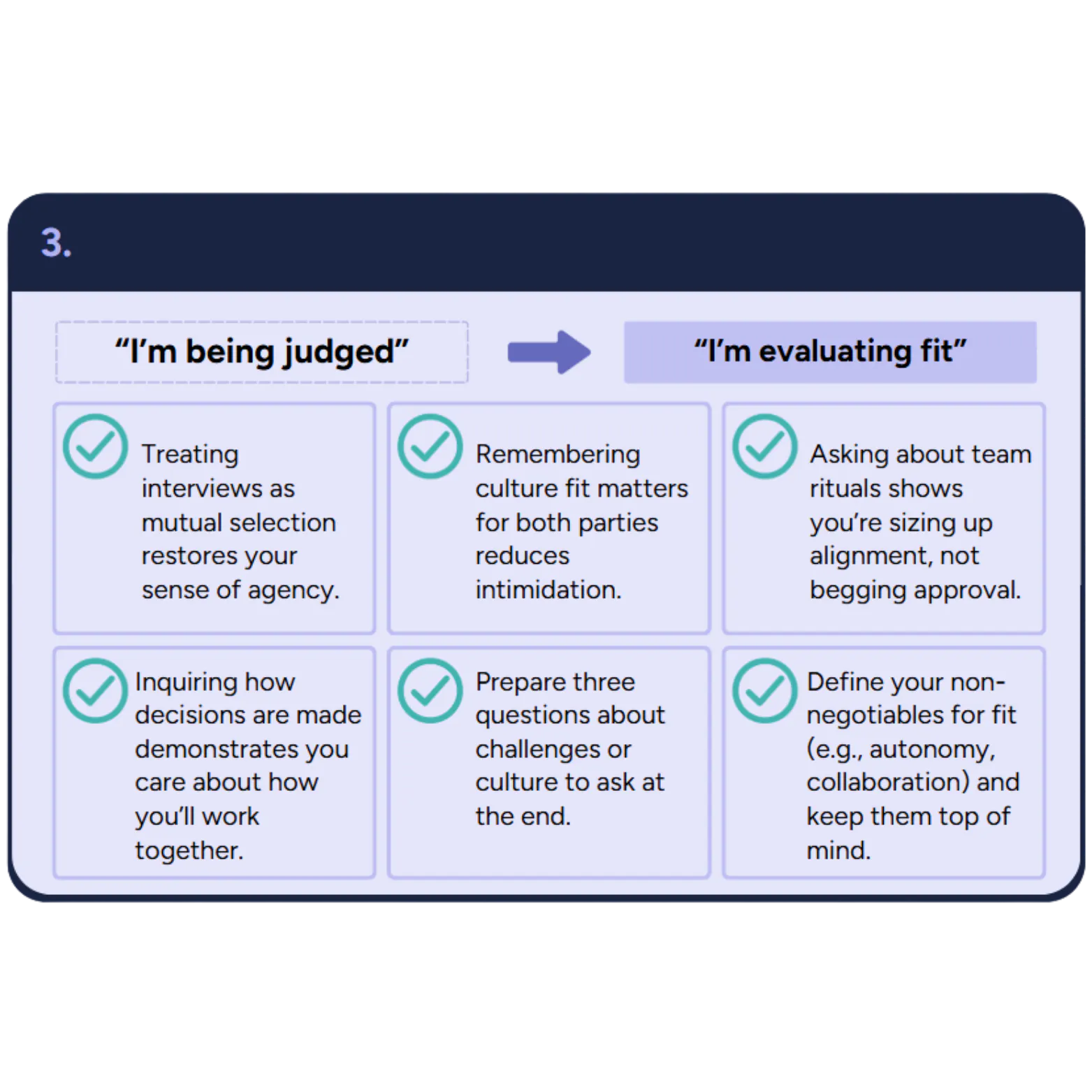
Treating interviews as mutual selection restores your sense of agency. Remembering that culture fit matters for both parties reduces intimidation. Asking about team habits shows you're sizing up alignment, not begging for approval.
Inquiring how decisions are made demonstrates you care about how you'll work together. Prepare three questions about challenges or culture to ask at the end, and define your non-negotiables for fit (autonomy, collaboration style) to keep them top of mind.
From "I need the perfect answer" to "I'll give an honest answer"
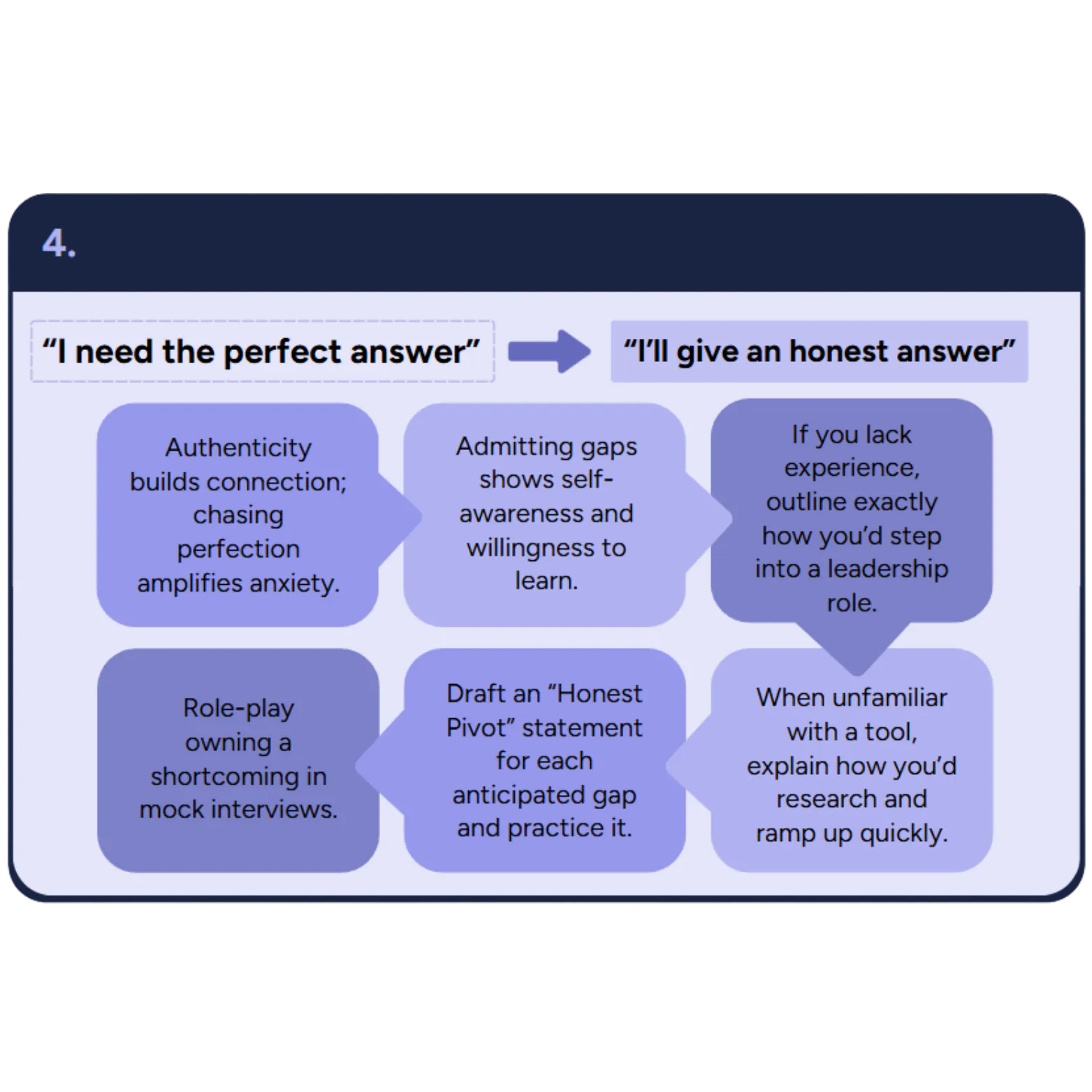
Authenticity builds connection while chasing perfection amplifies anxiety. Admitting gaps shows self-awareness and willingness to learn. If you lack direct experience, outline exactly how you'd research and ramp up quickly.
Role-play owning a shortcoming in mock interviews. Draft an "Honest Pivot" statement for each anticipated gap and practice it. When unfamiliar with a tool, explain how you'd research and ramp up quickly.
From "Anxiety is my enemy" to "Anxiety is information"
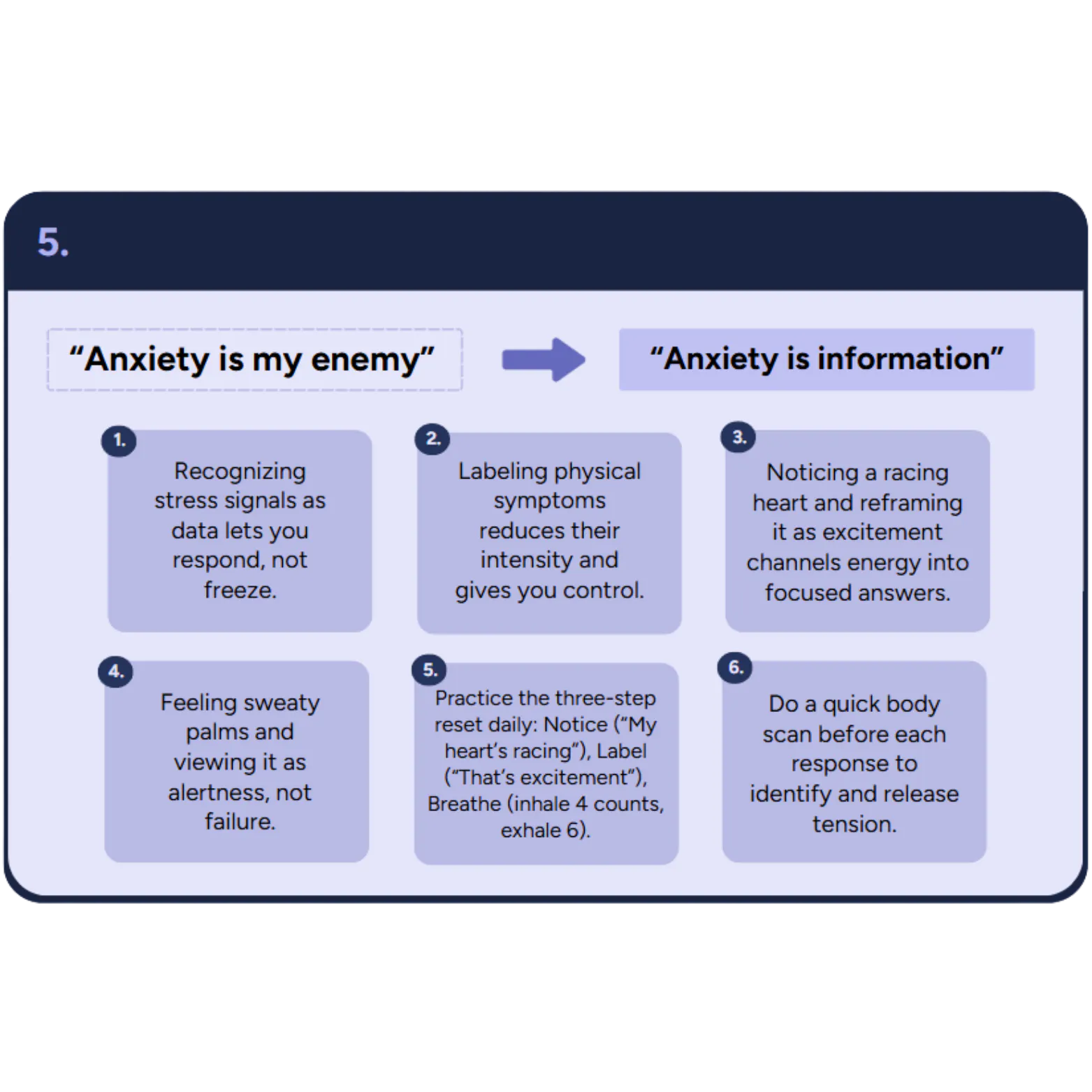
Recognizing stress signals as data lets you respond, not freeze. Labeling physical symptoms reduces their intensity and gives you control. Noticing a racing heart and reframing it as excitement channels energy into focused answers.
Feeling sweaty palms and increased heart rate signals alertness, not failure. Practice the three-step reset daily: Notice ("My heart's racing"), Label ("That's excitement"), Breathe (inhale 4 counts, exhale 6). Do a quick body scan before each interview to identify and release tension.
From "I can't control the outcome" to "I control my effort"
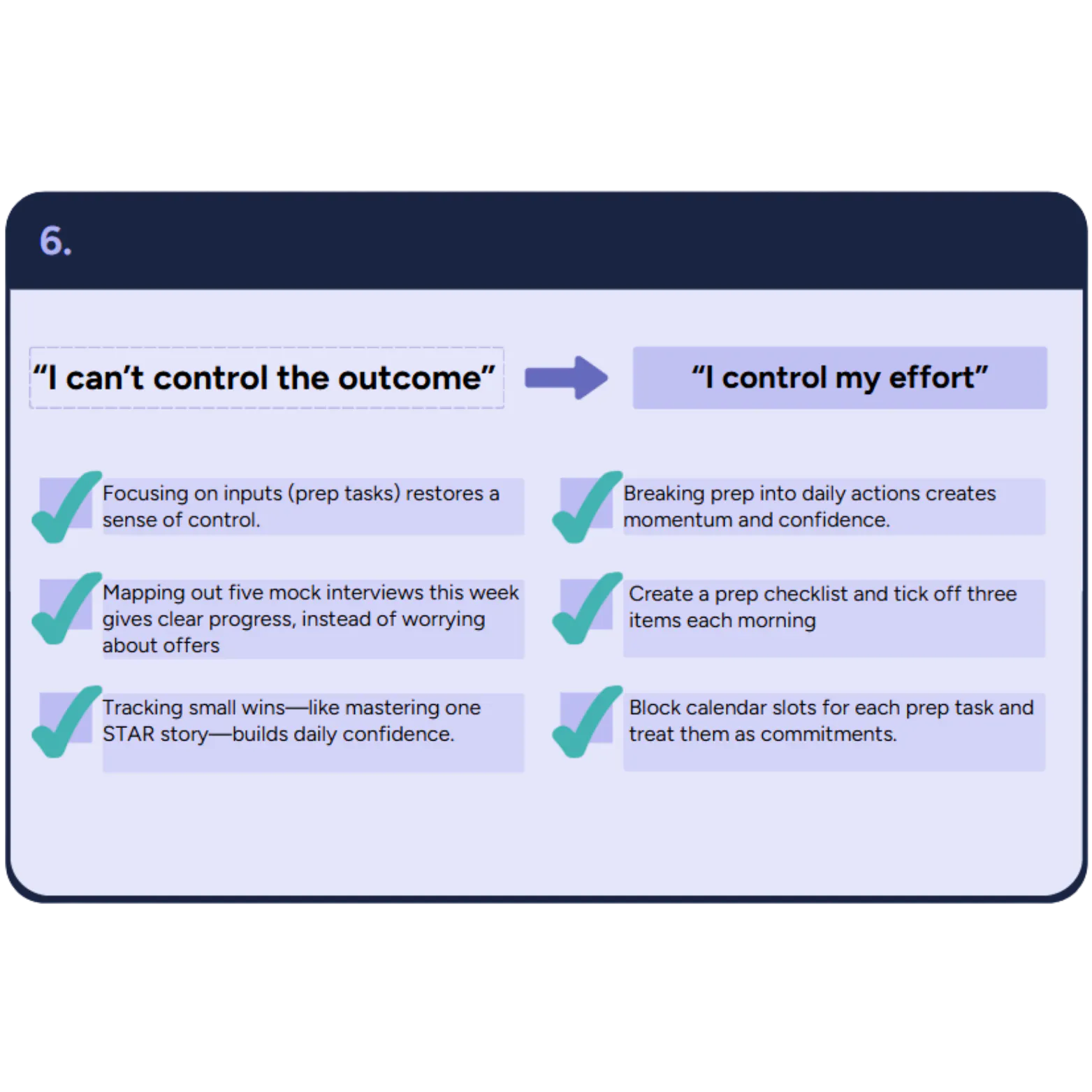
Focusing on inputs (prep tasks) restores a sense of control. Breaking prep into daily actions creates momentum and confidence. Mapping out five mock interviews this week gives structure instead of worrying about offers.
Tracking small wins—like mastering one STAR story—builds daily confidence. Create a prep checklist and tick off three items each morning. Block calendar slots for each prep task and treat them as commitments.
The Bottom Line
Overcoming interview anxiety isn't about forcing calm—it's about changing how you think under pressure. These mindset shifts put you back in control by reframing stress as information, perfectionism as authenticity, and judgment as mutual evaluation.
The next time you feel that familiar surge of interview anxiety, remember: you're not being tested. You're sharing your story, evaluating fit, and gathering information. That perspective alone can transform your entire interview experience.

Was this content useful?