 cord
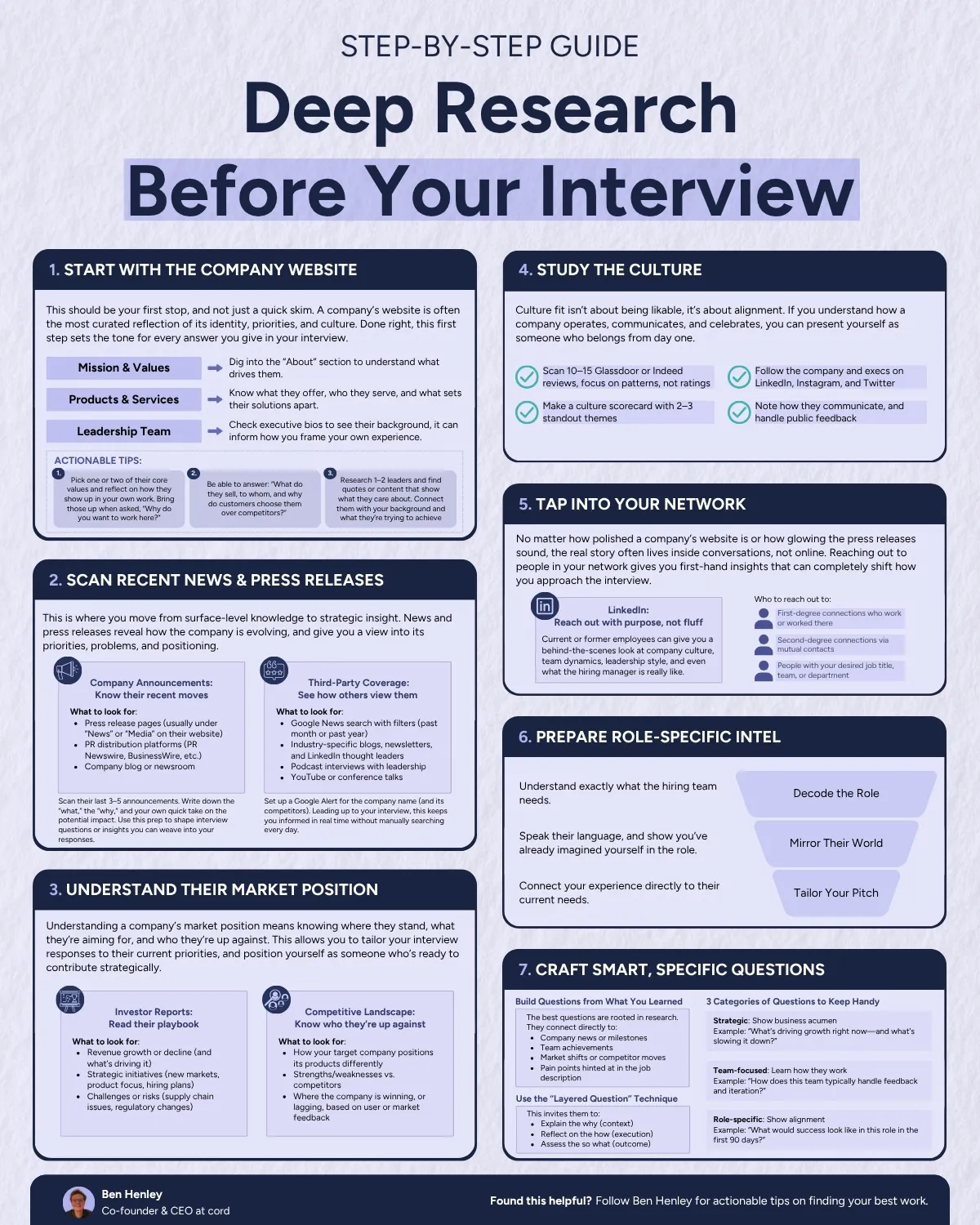
cordDeep Research Before Your Interview
How to Move Beyond Surface-Level Preparation and Position Yourself as the Right Candidate
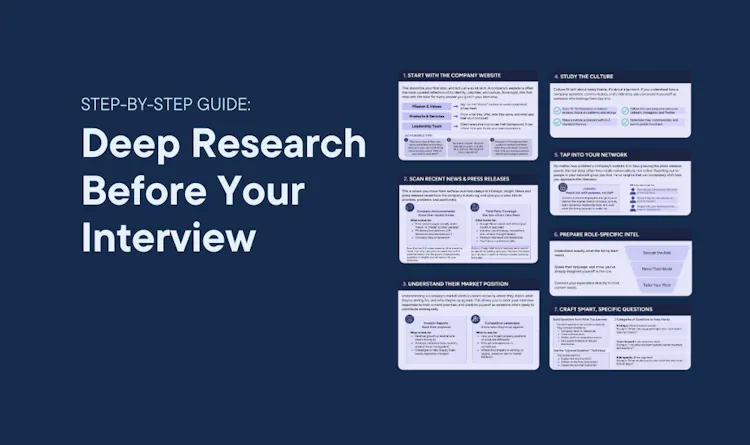
When it comes to interviews, it's better to be under-qualified and over-prepared than under-prepared and over-qualified. On interview day, success isn't just about how well you answer questions—it's about how deeply you understand the company itself.
Doing thorough research signals real interest, helps you tailor your responses, and equips you to ask better questions. Here's your step-by-step guide to conducting deep research before any job interview.
Start with the Company Website
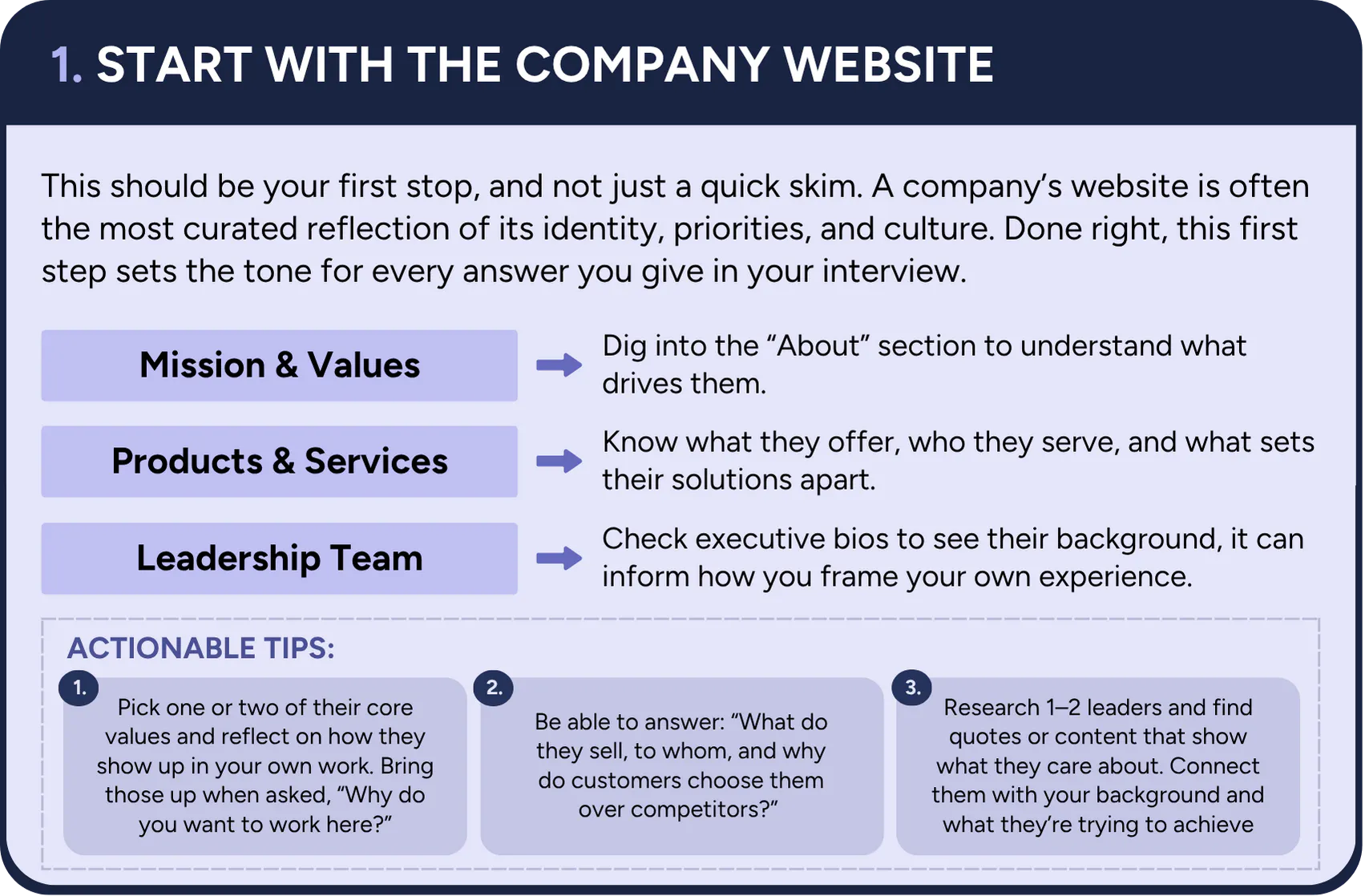
This should be your first stop, not just a quick skim. A company's website often holds the most curated information you need to identify their priorities and culture.
Mission & Values
Dig into the "About" section to understand what drives them. Don't just read the mission statement—look for how they demonstrate these values in practice.
Products & Services
Know what they offer, who they serve, and what sets their solutions apart. Understanding their customer base will help you frame your experience in relevant terms.
Leadership Team
Check executive bios to see their background. This can inform how you frame your own experience and what skills they likely value.
Actionable Tips:
- Pick one or two of their core values and reflect on how they align with your own experience
- Be able to answer: "What do they do, to whom, and why do customers choose them over competitors?"
- Research 1-2 leaders and find quotes or content that show their leadership style, then align them with your background and what you're trying to achieve
Scan Recent News & Press Releases
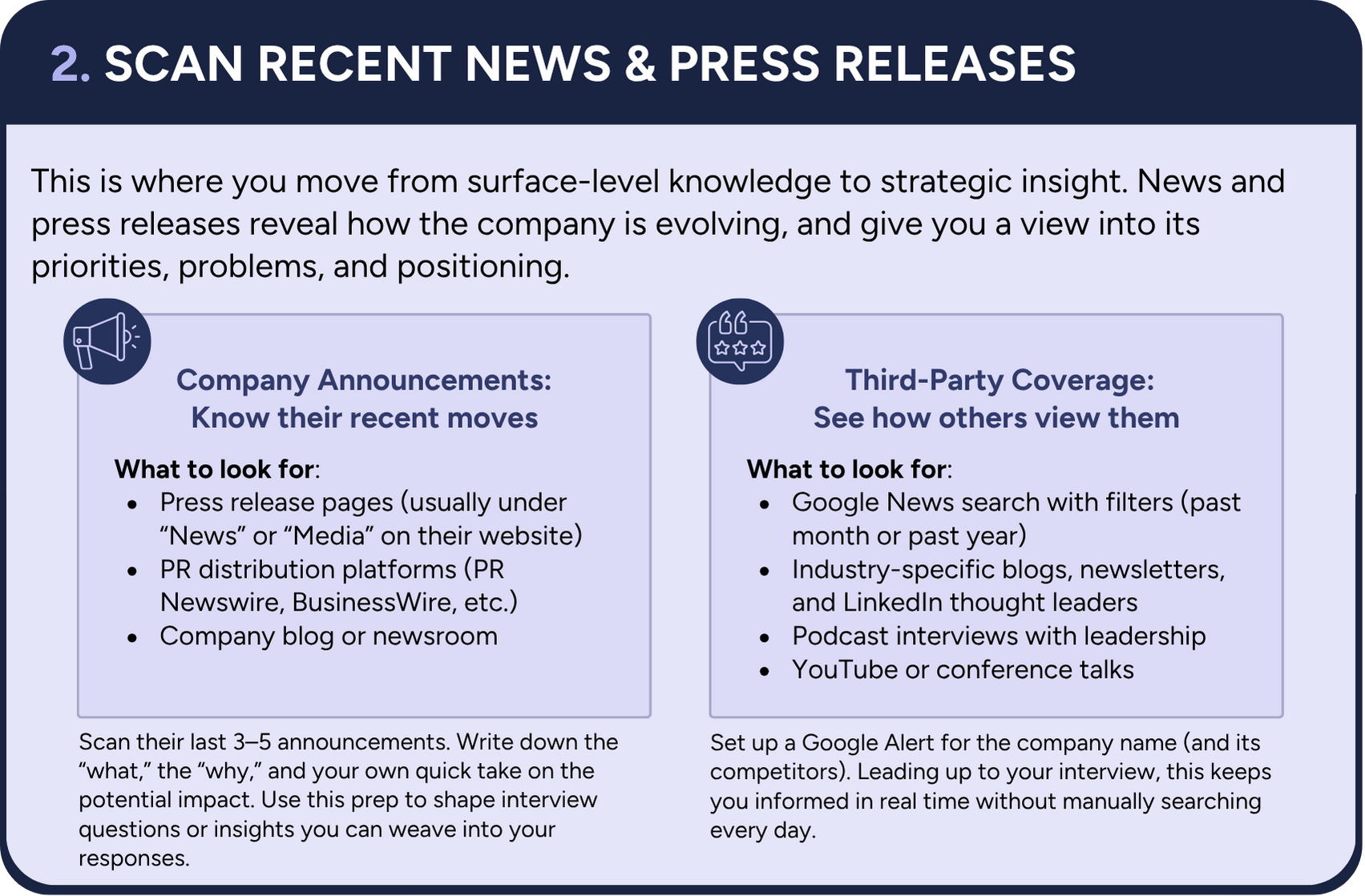
This is where you move from surface-level knowledge to strategic insight. News and press releases reveal how the company is evolving and give you a view into its priorities, problems, and positioning.
Company Announcements
Look for recent moves like acquisitions, new product launches, or leadership changes. Focus on press releases (usually under "News" or "Media" on their website), PR distribution platforms, and company blog or newsroom sections.
Third-Party Coverage
See how others view them through Google News searches with filters (past month or past year), industry-specific blogs and newsletters, trade publications, podcast interviews with leadership, and YouTube or conference talks.
Research Strategy: Scan their last 3-5 announcements. Write down the main themes, then think about the potential impact. Use this prep to shape interview questions or insights you can weave into your responses.
Set up a Google Alert for the company name and set it to "Leading up to your interview, this keeps you informed in real time without manually searching every day."
Understand Their Market Position
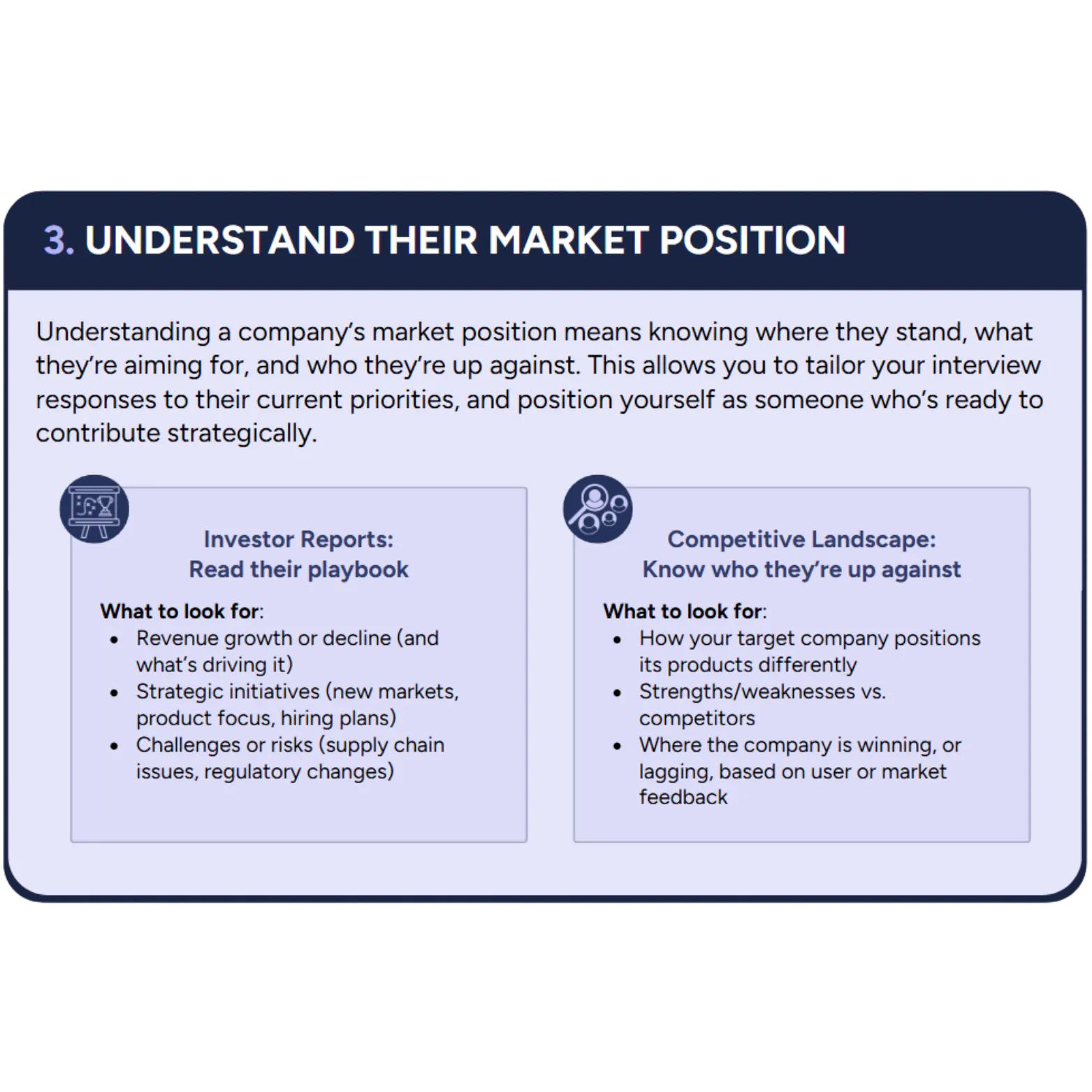
Understanding a company's market position means knowing where they stand, what they're aiming for, and who they're up against. This allows you to tailor your interview responses to their current priorities and position yourself as someone who's ready to contribute strategically.
Investor Reports
Read their latest playbook by looking for earnings growth or decline (and why), strategic initiatives (new markets, product bets, hiring plans), and challenges or risks (supply chain issues, regulatory changes).
Competitive Landscape
Know who they're up against by researching how they target company positions differently, key differentiators (what strengthens/weaknesses vs competitors), where the company is winning or lagging (based on market share or market feedback).
Study the Culture
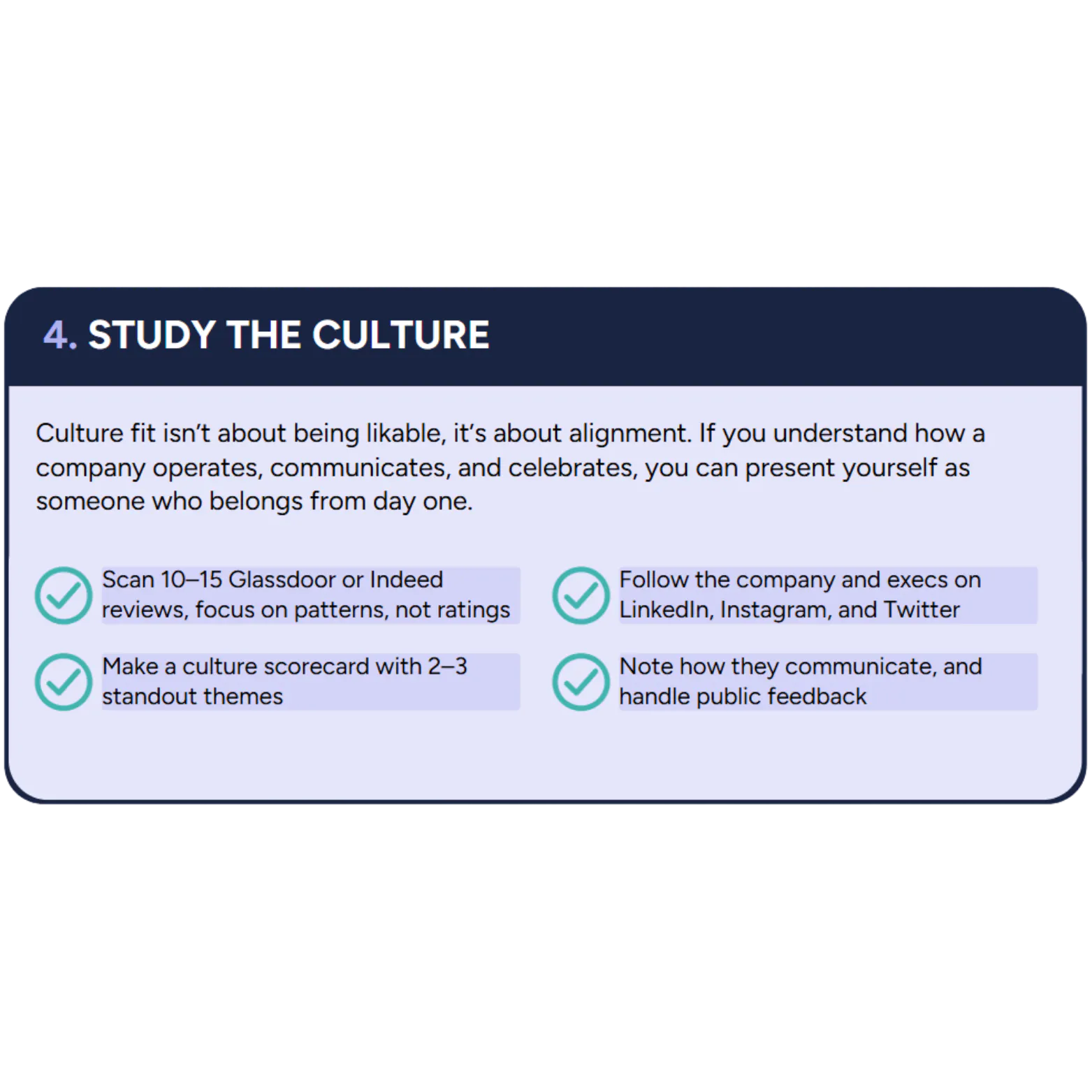
Culture fit isn't about being likeable—it's about alignment. If you understand how a company operates, communicates, and celebrates success, you can present yourself as someone who belongs from day one.
Employee Reviews
- Scan 10-15 Glassdoor or Indeed reviews, focus on patterns in ratings
- Make a culture scorecard with 2-3 standout themes
Social Media Presence
- Follow the company and execs on LinkedIn, Instagram, and Twitter
- Note how they communicate and handle public feedback
What to look for:
- Recent patterns in reviews, focus on culture and ratings
- Follow the company and execs on LinkedIn, Instagram, and Twitter
- Make a culture scorecard with 2-3 standout themes
- Note how they communicate and handle public feedback
Tap Into Your Network
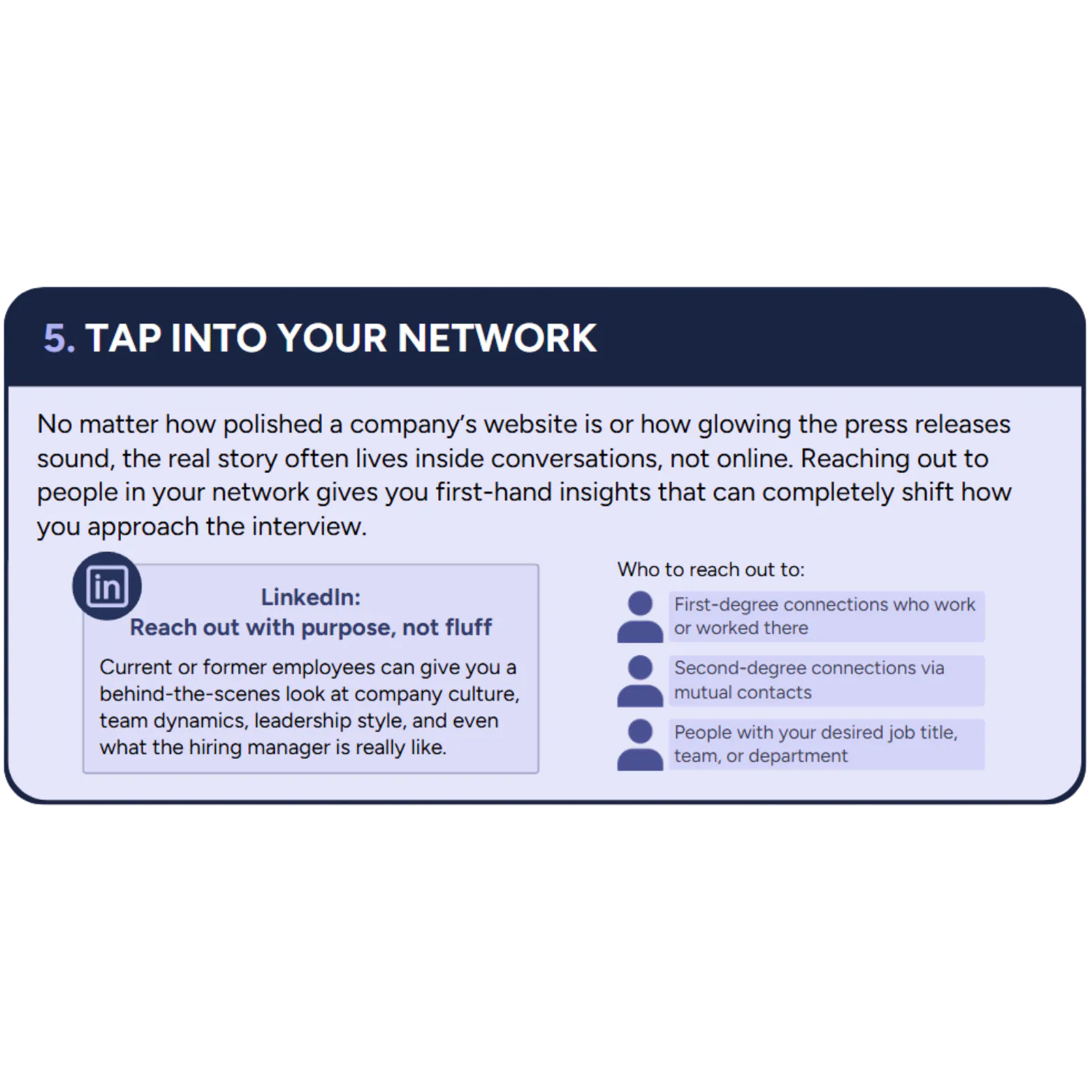
No matter how polished a company's website is or how glowing the press releases sound, the real story often lives inside conversations, not online. Reaching out to people in your network gives you first-hand insights that can completely shift how you approach the interview.
LinkedIn Strategy
Reach out with purpose, not fluff. Current or former employees can give you a behind-the-scenes look at company culture, team dynamics, leadership style, and even what the hiring manager is really like.
Who to reach out to:
- Sales or business development who work or worked there
- Second-degree connections via mutual contacts
- People in similar roles or departments
- People with your desired job title, team, or department
Prepare Role-Specific Intel
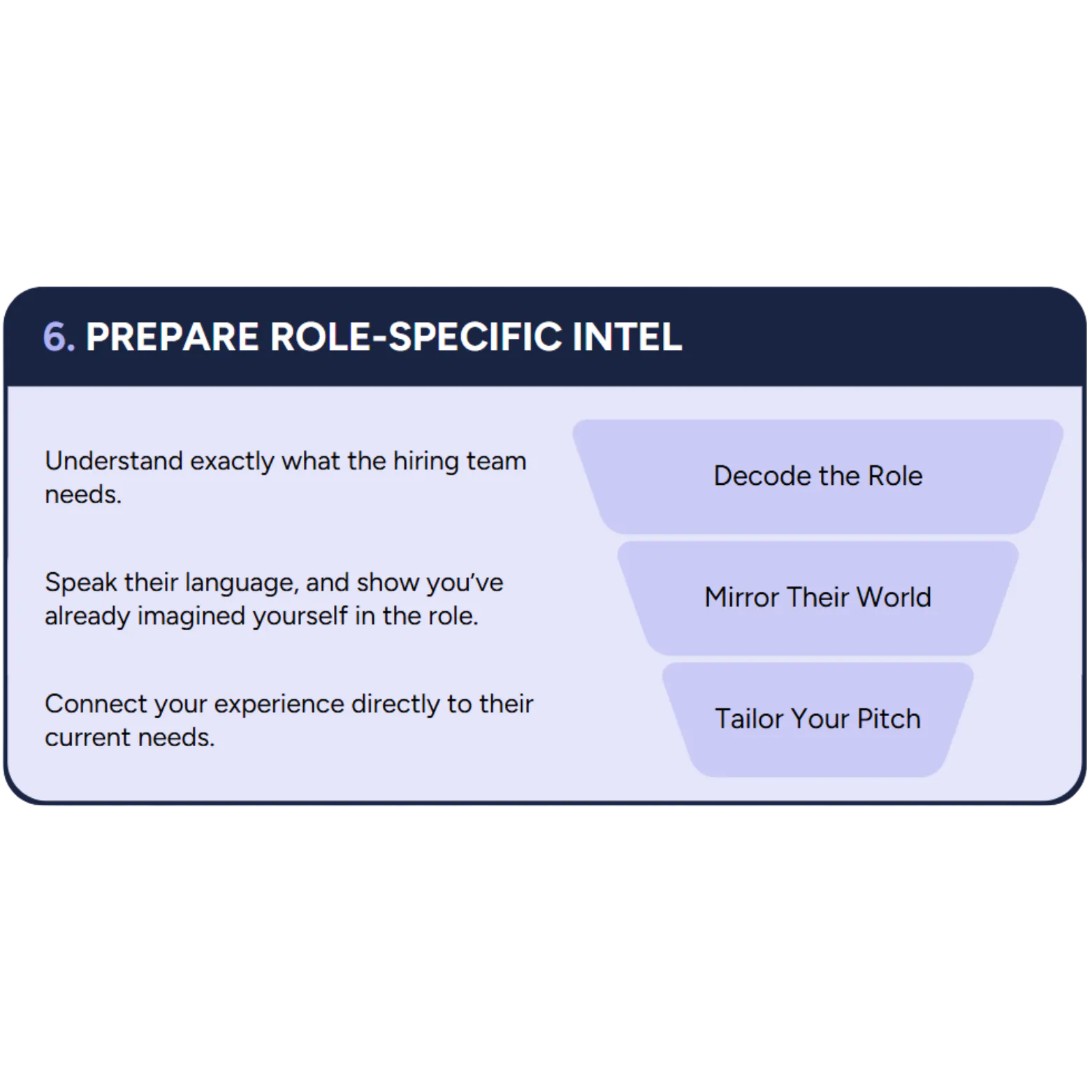
Understand exactly what the hiring team needs and show you've already imagined yourself in the role.
Decode the Role
Speak their language and show you've already imagined yourself in the role.
Mirror Their World
Connect your experience directly to their current needs.
Tailor Your Pitch
Position yourself as the solution to their specific challenges.
Craft Smart, Specific Questions
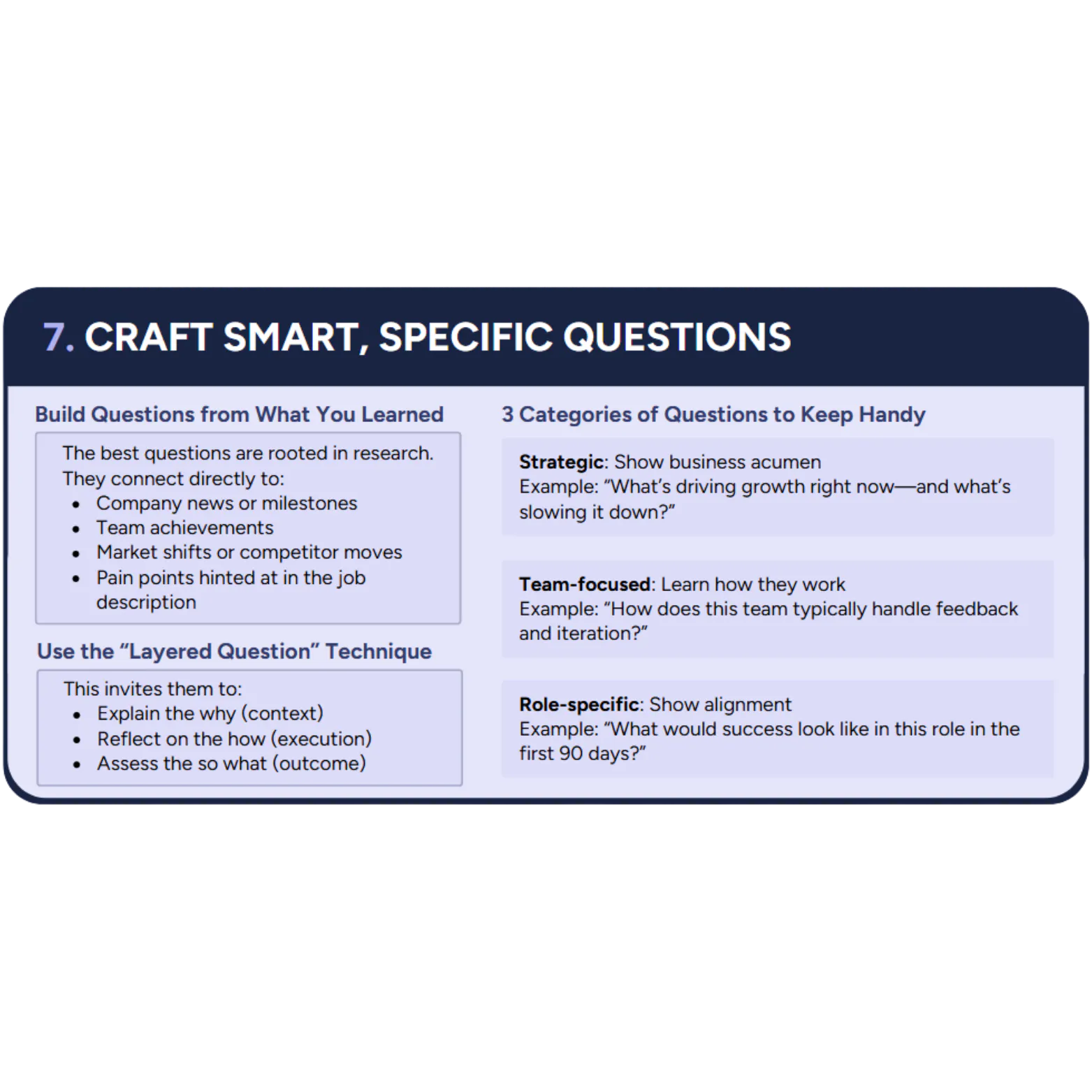
Build questions from what you learned through your research. The best questions are rooted in research—they connect directly to company news or milestones, their growth areas, and pain points hinted at in the job description.
Three Categories of Questions to Keep Handy:
Strategic Questions - Show business acumen:
- Example: "What looks different right now—and what's slowing it down?"
Team-focused Questions - Learn how they work:
- Example: "How does this team typically handle feedback and iteration?"
Role-specific Questions - Signal alignment:
- Example: "What would success look like in this role in the first 90 days?"
Use the "Layered Question" Technique
This makes it hard to give generic answers:
- Explain the why (context)
- Reflect on the how (execution)
- Assess the so-what (outcome)
The Bottom Line
Shallow prep leads to shallow interviews. If you don't know what drives a company, you can't position yourself in the right way.
Real preparation isn't about rehearsing lines—it's about knowing what matters to other people. When you understand a company's priorities, challenges, and culture, you can have a genuine conversation about how you fit into their future.
The goal isn't to impress them with how much you know. It's to demonstrate that you care enough to understand their world and can contribute meaningfully from day one.

Was this content useful?