 cord
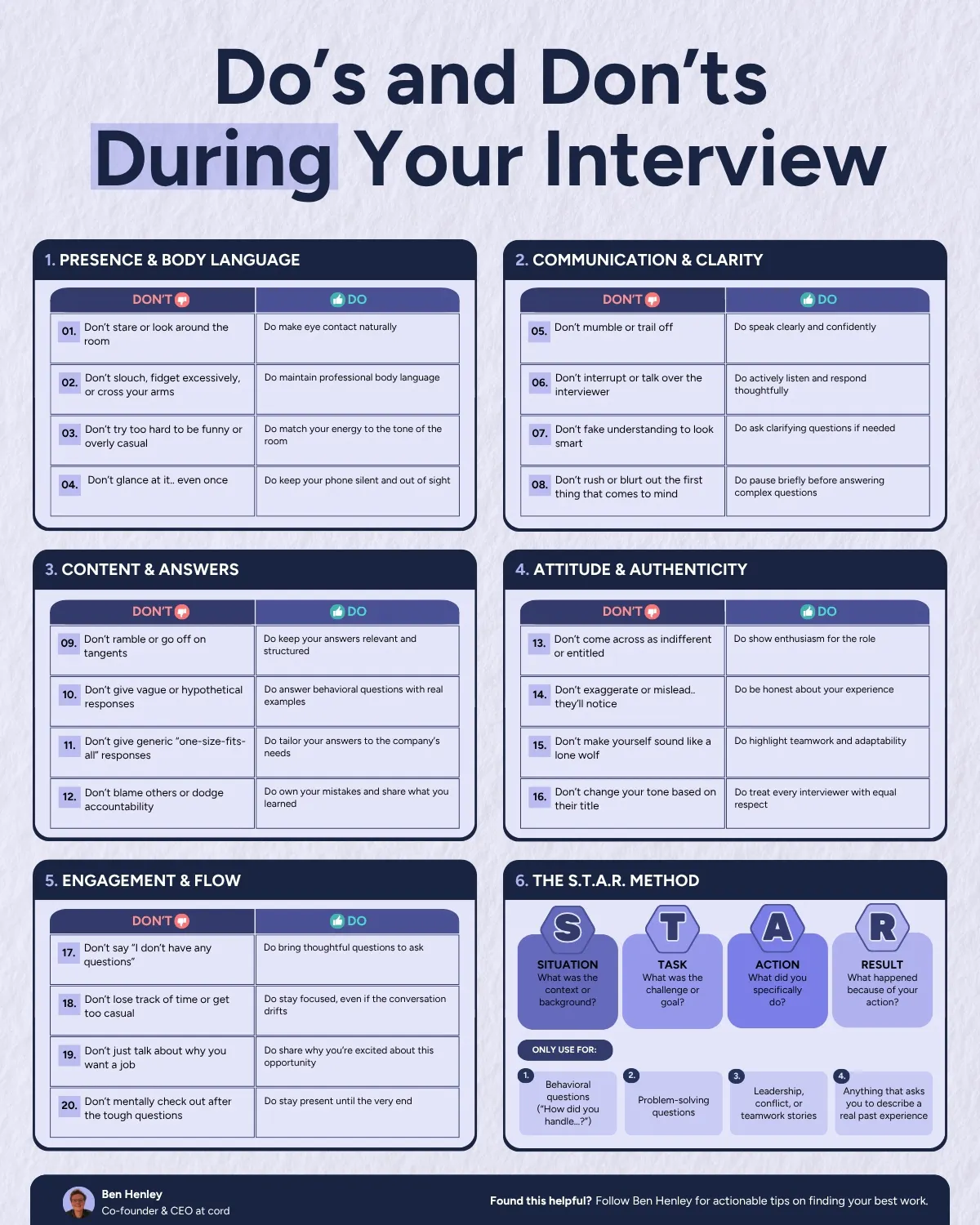
cordDo’s and Don’ts During Your Interview
Master the Details That Make or Break Your Interview Performance

Job interviews are won in the details—posture, pauses, and presence. But this is where even the strongest candidates slip up. You can have all the right experience, but if your delivery is off, your message won't land.
The good news? These are skills you can learn quickly if you know what to look out for. Here's what to do, what to avoid, and how to be present during the conversation.
Presence & Body Language
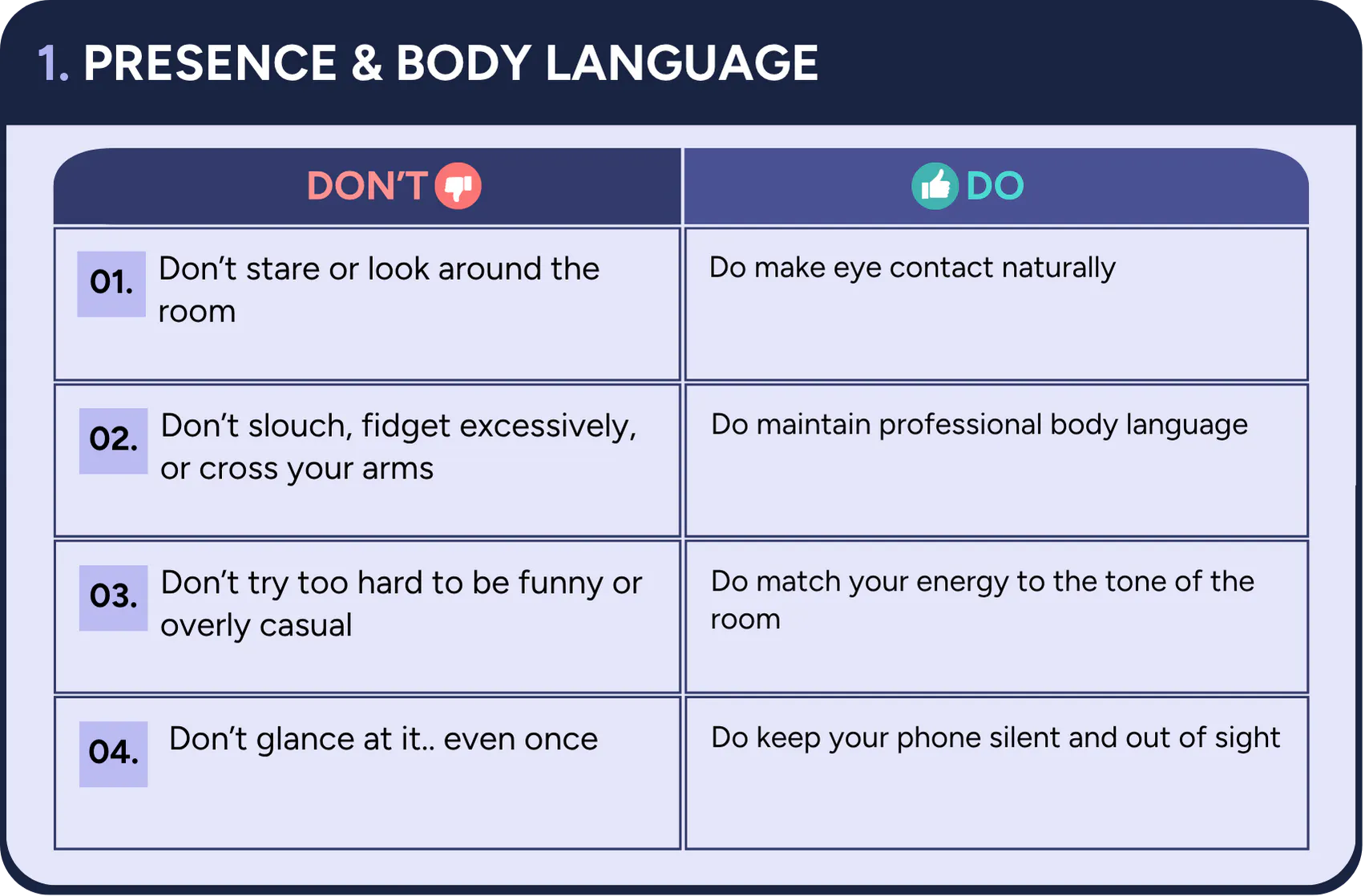
DON'T:
- Stare or look around the room
- Slouch, fidget excessively, or cross your arms
- Try too hard to be funny or overly casual
- Glance at your phone, even once
DO:
- Make eye contact naturally
- Maintain professional body language
- Match your energy to the tone of the room
- Keep your phone silent and out of sight
Communication & Clarity
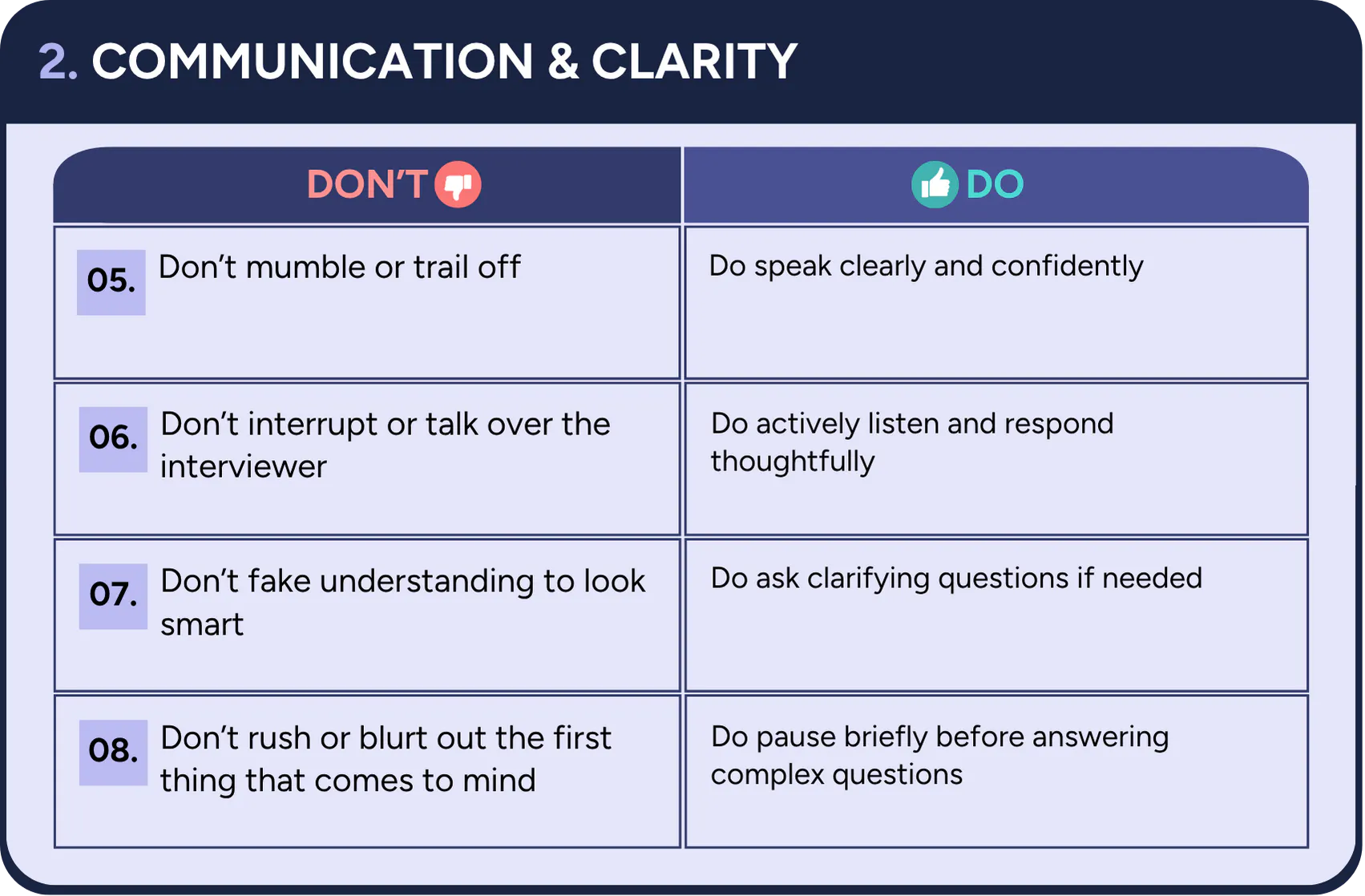
DON'T:
- Mumble or trail off
- Interrupt or talk over the interviewer
- Fake understanding to look smart
- Rush or blurt out the first thing that comes to mind
DO:
- Speak clearly and confidently
- Listen actively and respond thoughtfully
- Ask clarifying questions if needed
- Pause briefly before answering complex questions
Content & Answers
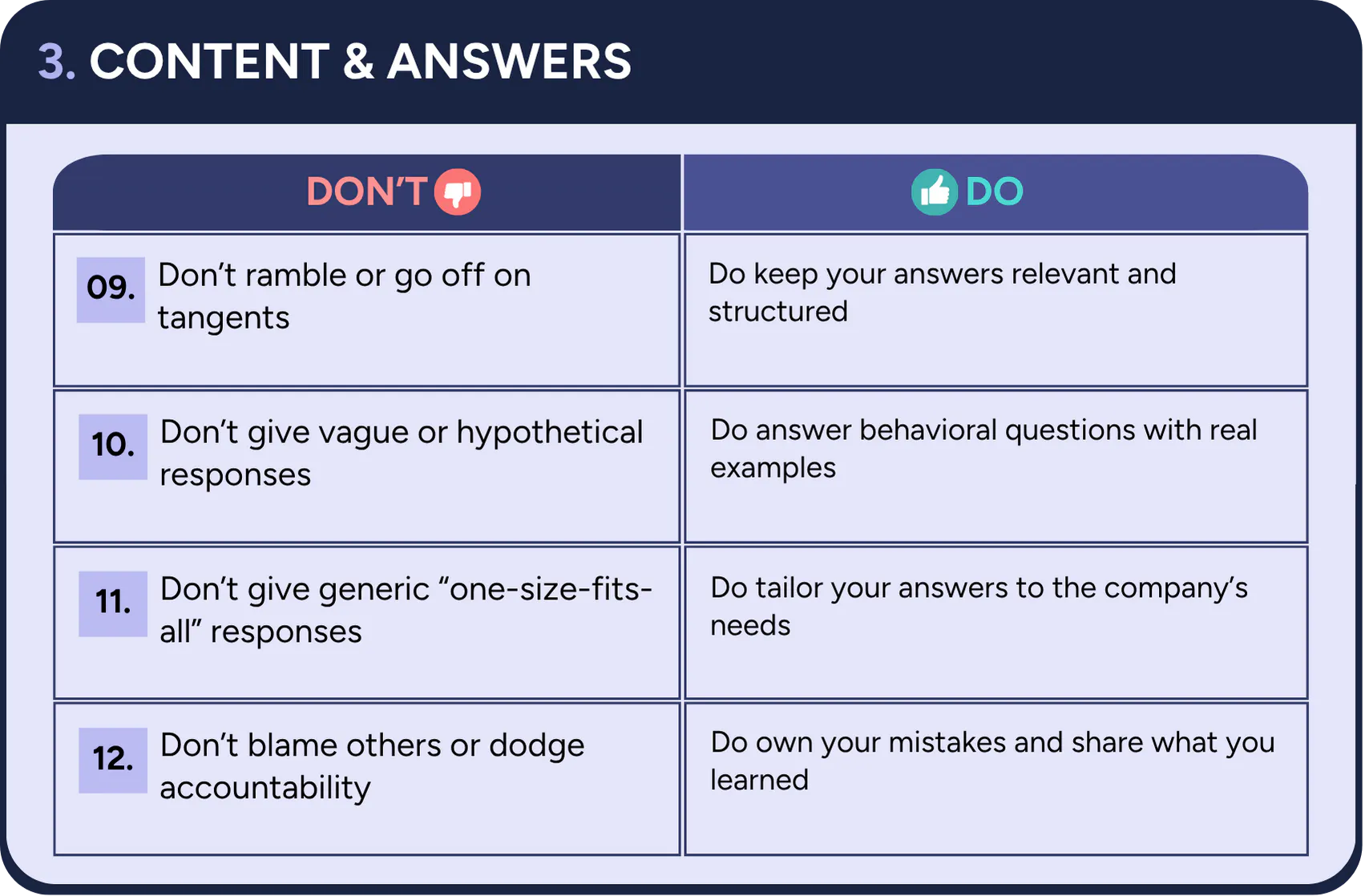
DON'T:
- Ramble or go off on tangents
- Give vague or hypothetical responses
- Give generic "one-size-fits-all" responses
- Blame others or dodge accountability
DO:
- Keep your answers relevant and structured
- Answer behavioral questions with real examples
- Tailor your answers to the company's needs
- Own your mistakes and share what you learned
Attitude & Authenticity
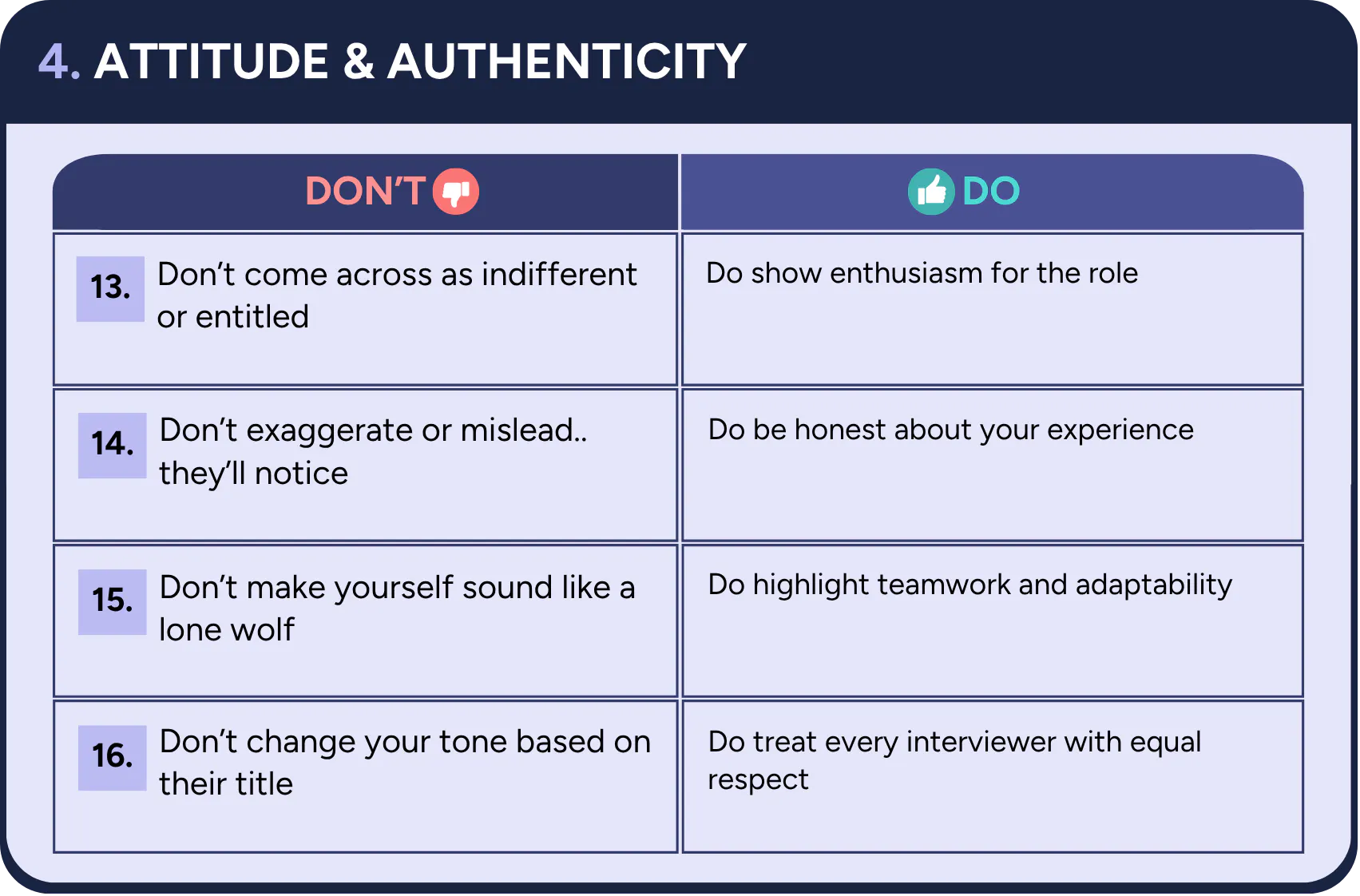
DON'T:
- Come across as indifferent or entitled
- Exaggerate or mislead—they'll notice
- Make yourself sound like a lone wolf
- Change your tone based on their title
DO:
- Show enthusiasm for the role
- Be honest about your experience
- Highlight teamwork and adaptability
- Treat every interviewer with equal respect
Engagement & Flow
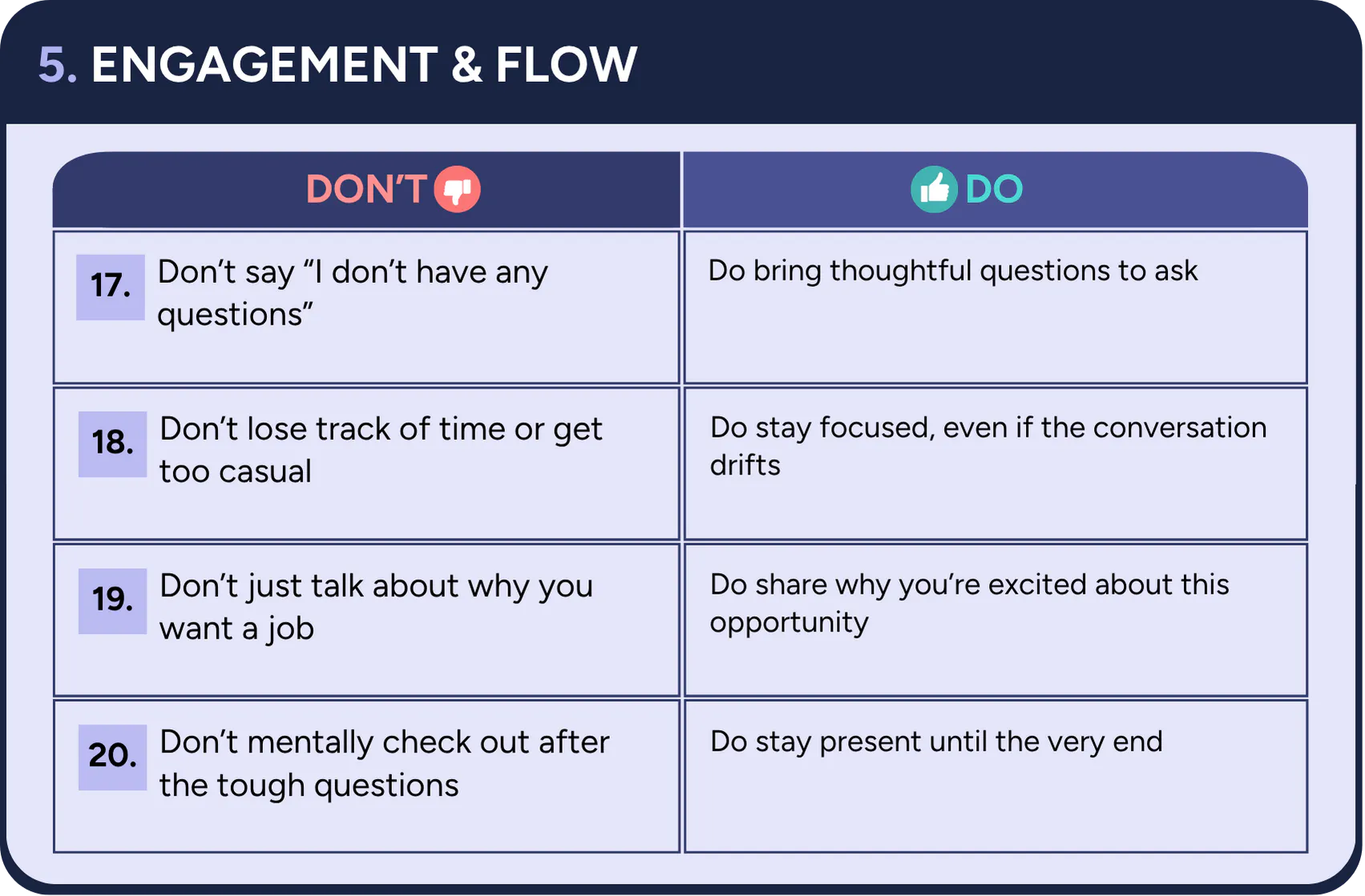
DON'T:
- Say "I don't have any questions"
- Lose track of time or get too casual
- Just talk about why you want a job
- Mentally check out after the tough questions
DO:
- Bring thoughtful questions to ask
- Stay focused, even if the conversation drifts
- Share why you're excited about this opportunity
- Stay present until the very end
The S.T.A.R. Method
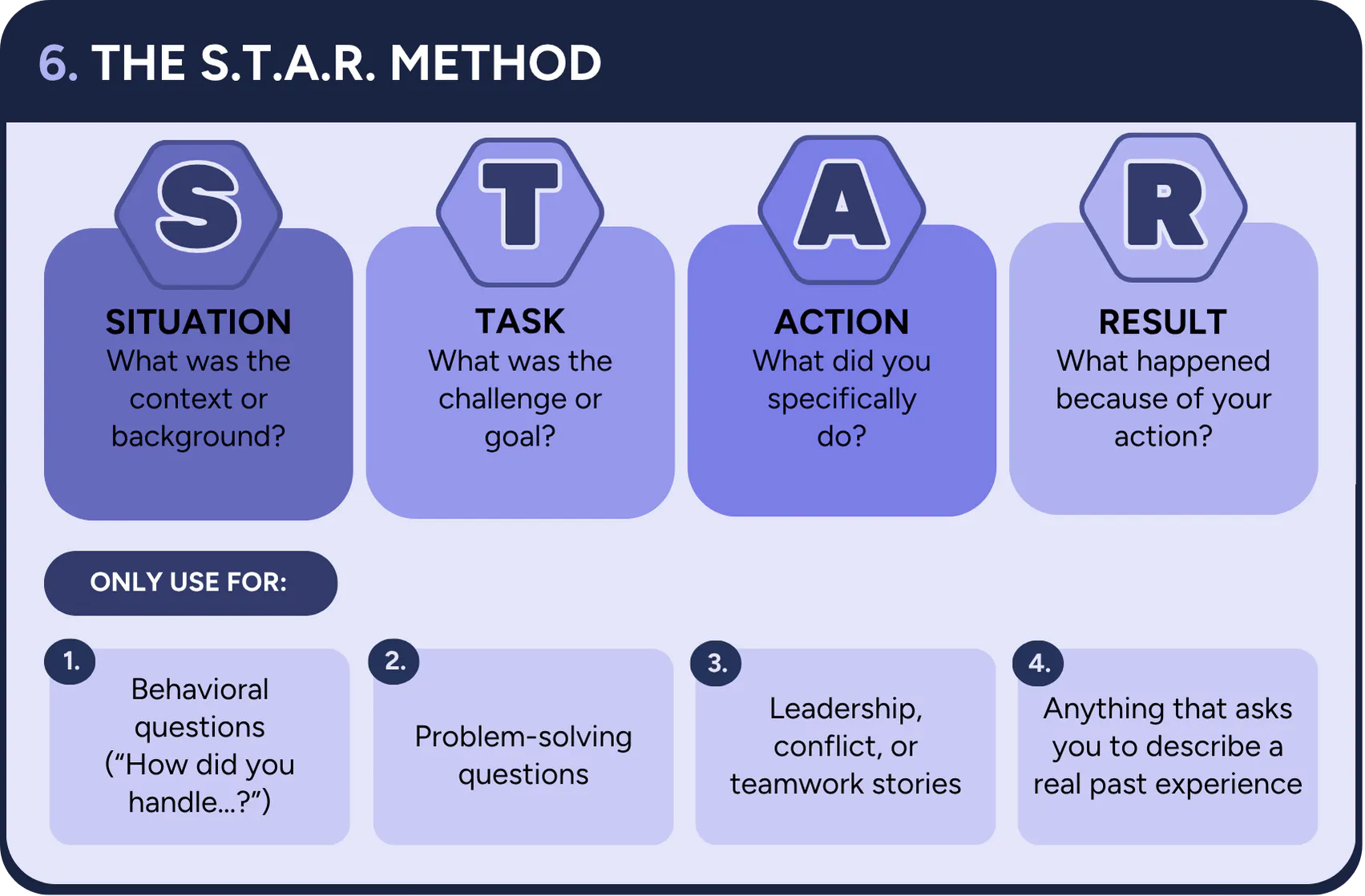
The STAR method (Situation, Task, Action, Result) is a powerful framework for structuring your responses, but knowing when to use it is crucial.
When to Use STAR:
- Behavioral questions ("How did you handle...?")
- Problem-solving questions
- Leadership, conflict, or teamwork stories
- Anything that asks you to describe a real past experience
When NOT to Use STAR:
- Yes/No or opinion-based questions (e.g., "What are your strengths?")
- Technical questions that require explaining how something works
- Hypothetical questions ("What would you do if...?" — these are better answered with logical reasoning, not past examples)
The Bottom Line
Interviews don't reward perfection—they reward precision. It's not about saying everything right. It's about saying the right things, at the right time, in the right way.
Remember: the strongest candidates can still lose if their delivery doesn't match their qualifications. Focus on being present, authentic, and strategic in your responses. The technical skills got you in the door, but these fundamentals will help you close the deal.

Was this content useful?