 cord
cordFirst Impressions That Get You Hired
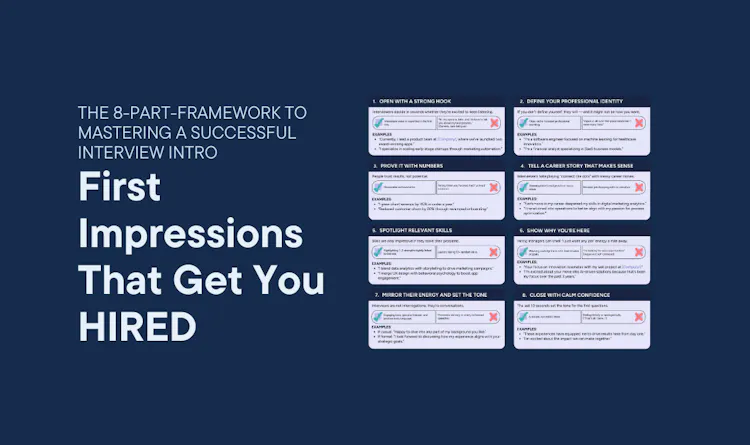
The 8-Part Framework to Mastering Your Interview Introduction
Your interview introduction sets the tone for everything that follows. Interviewers often decide within the first 30-60 seconds whether they're excited to continue the conversation. Despite this critical importance, most candidates default to generic openings that fail to make an impact.
Instead of memorizing a script, you need a framework that helps you connect meaningfully with your interviewer from the very first moment. Here's the 8-part system that transforms average introductions into memorable first impressions.
Open With a Strong Hook
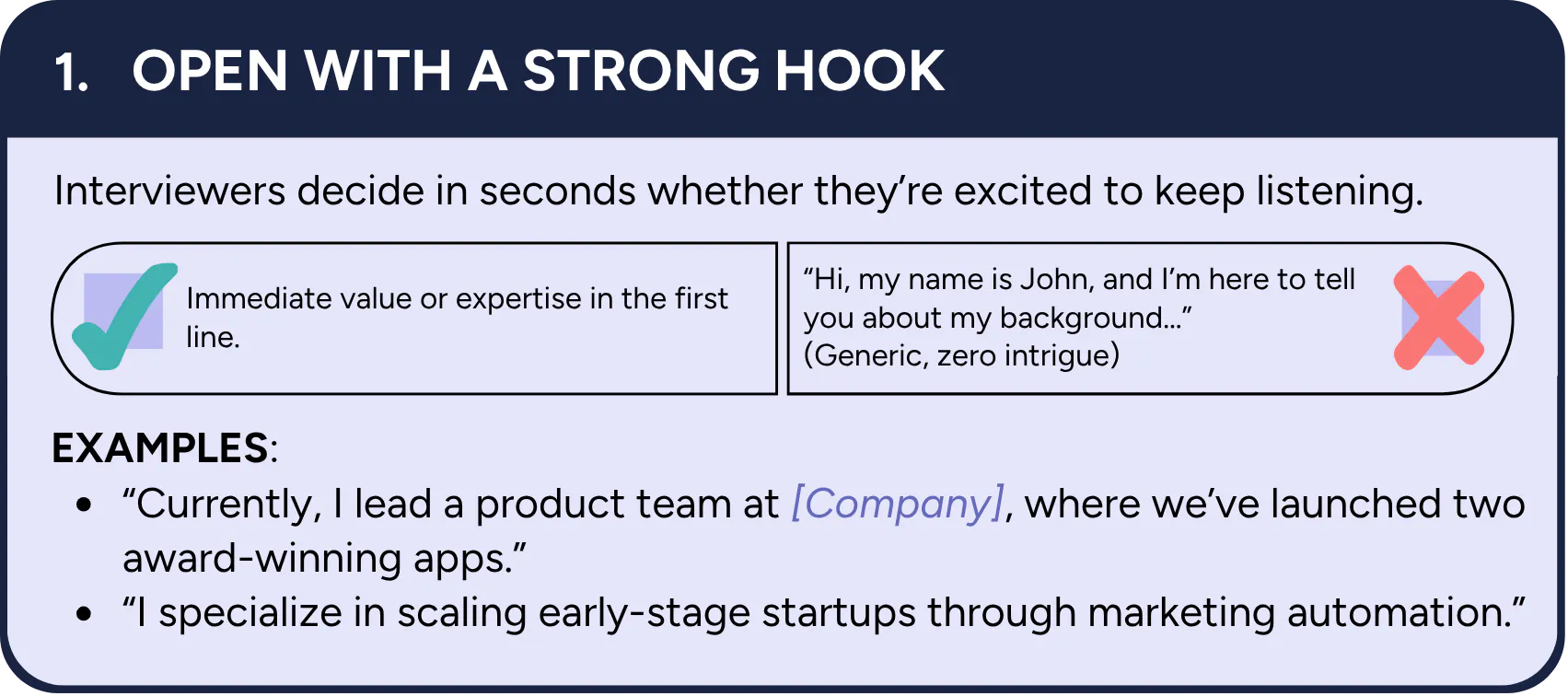
Your opening sentence should immediately signal value and expertise. Interviewers decide in seconds whether they're excited to keep listening, so make those words count.
What works:
- "Currently, I lead a product team at [Company], where we've launched two award-winning apps."
- "I specialize in scaling early-stage startups through marketing automation."
What doesn't:
- Generic statements like "Hi, my name is John, and I'm here to tell you about my background."
- Zero intrigue or specific value proposition
Define Your Professional Identity
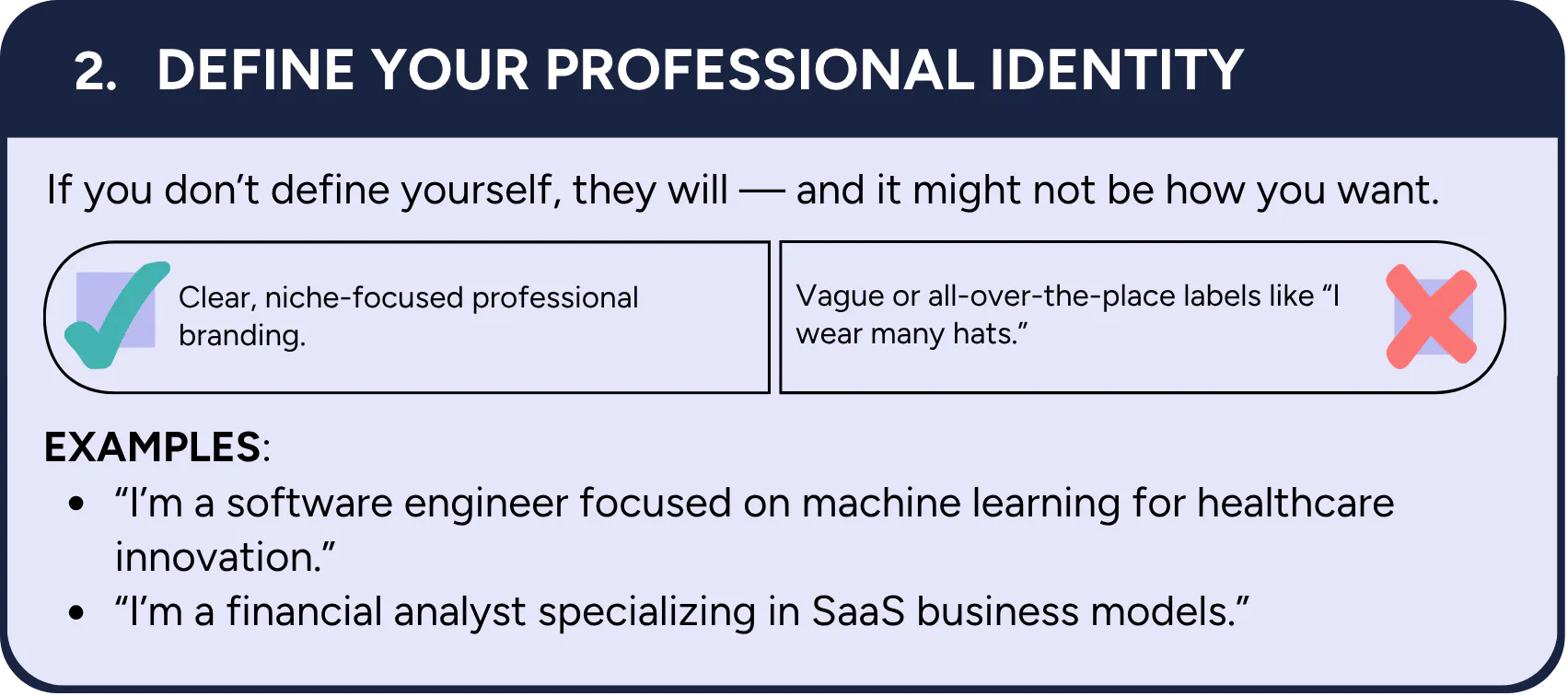
If you don't define yourself clearly, the interviewer will define you for themselves—and it might not align with what you want. Your professional identity should be crystal clear in one focused statement.
What works:
- "I'm a software engineer focused on machine learning for healthcare innovation."
- "I'm a financial analyst specializing in SaaS business models."
What doesn't:
- Vague descriptions like "I wear many hats"
- All-over-the-place labels that lack focus
Prove It With Numbers
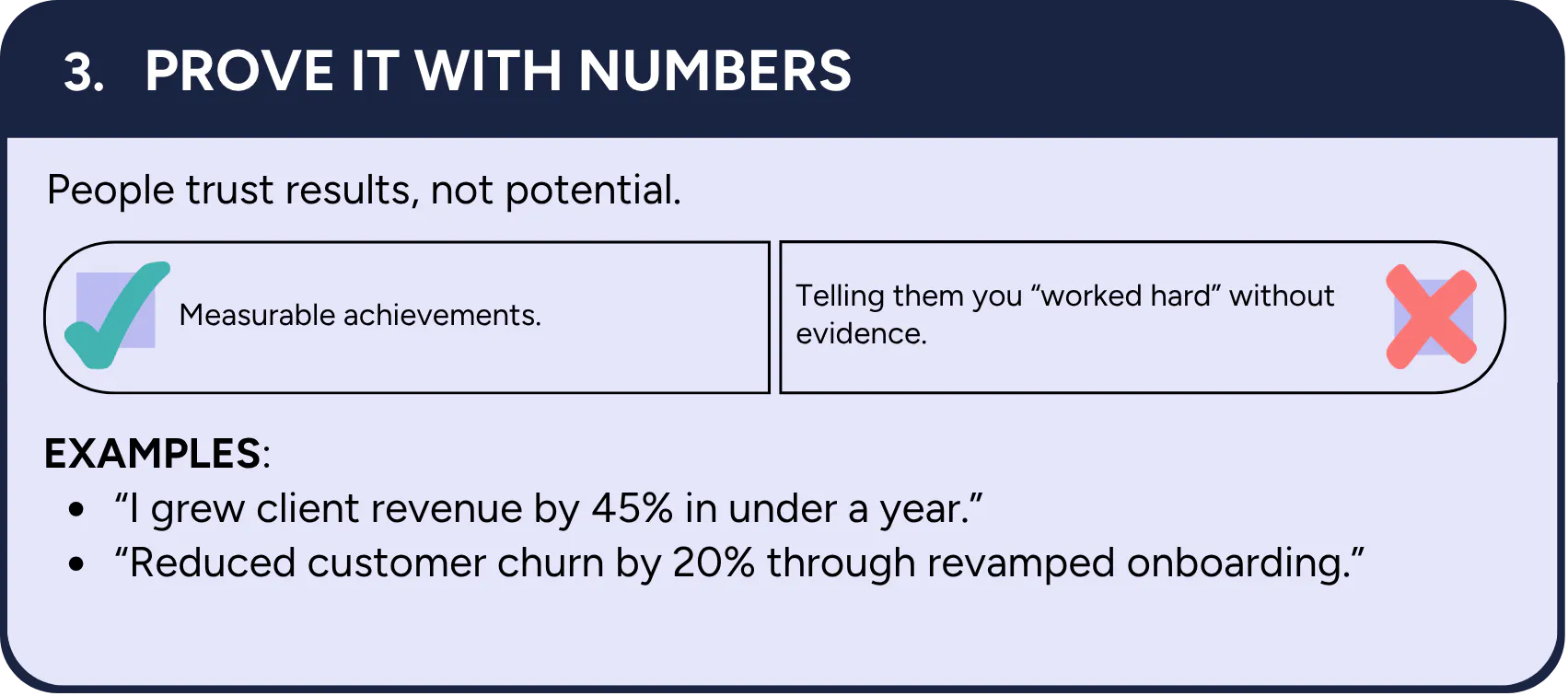
People trust results, not potential. Measurable achievements provide instant credibility and demonstrate real impact.
What works:
- "I grew client revenue by 45% in under a year."
- "Reduced customer churn by 20% through revamped onboarding."
What doesn't:
- Telling them you "worked hard" without evidence
- Vague claims without supporting data
Tell a Career Story That Makes Sense
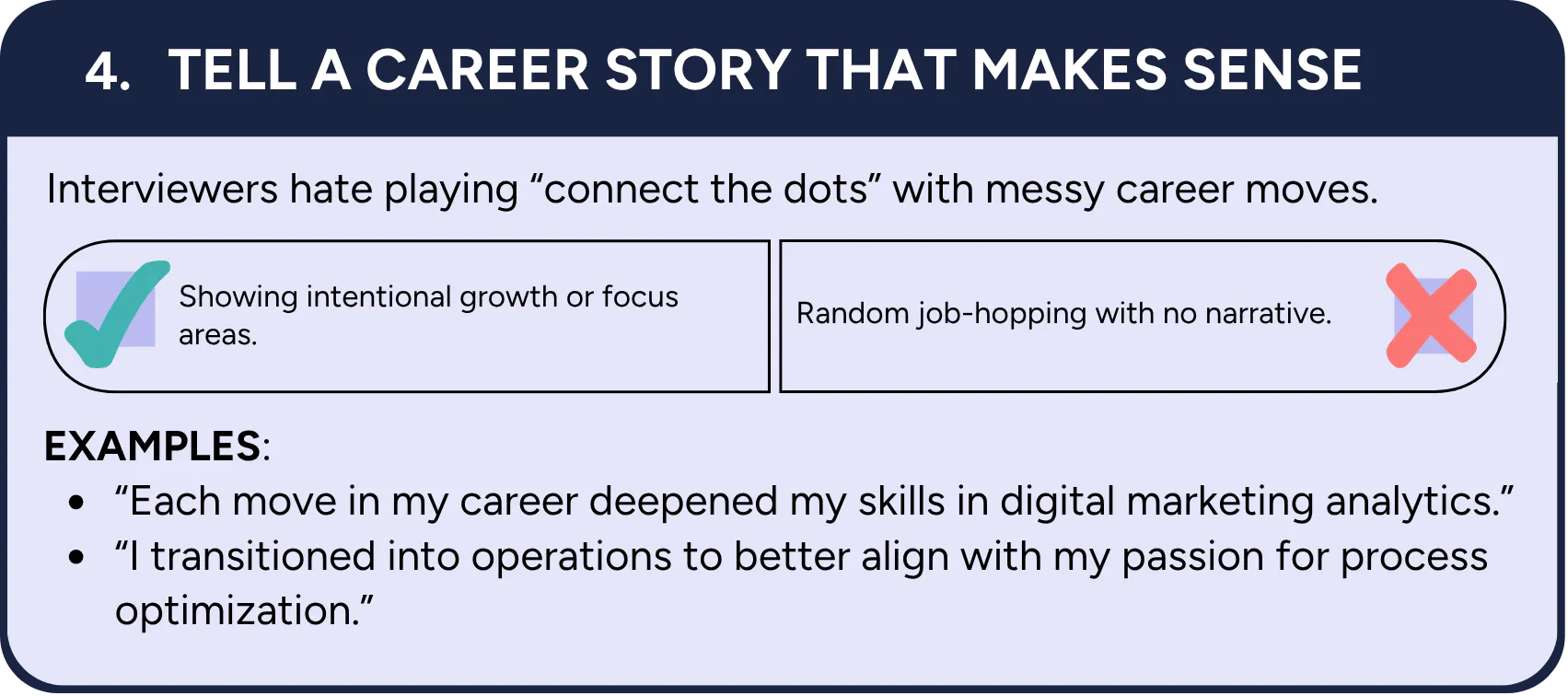
Interviewers want to understand your career progression as intentional growth, not random job-hopping. Show how each move deepened your skills in relevant areas.
What works:
- "Each move in my career deepened my skills in digital marketing analytics."
- "I transitioned into operations to better align with my passion for process optimization."
What doesn't:
- Showing intentional growth or focus areas
- Random job-hopping with no clear narrative
Spotlight Relevant Skills
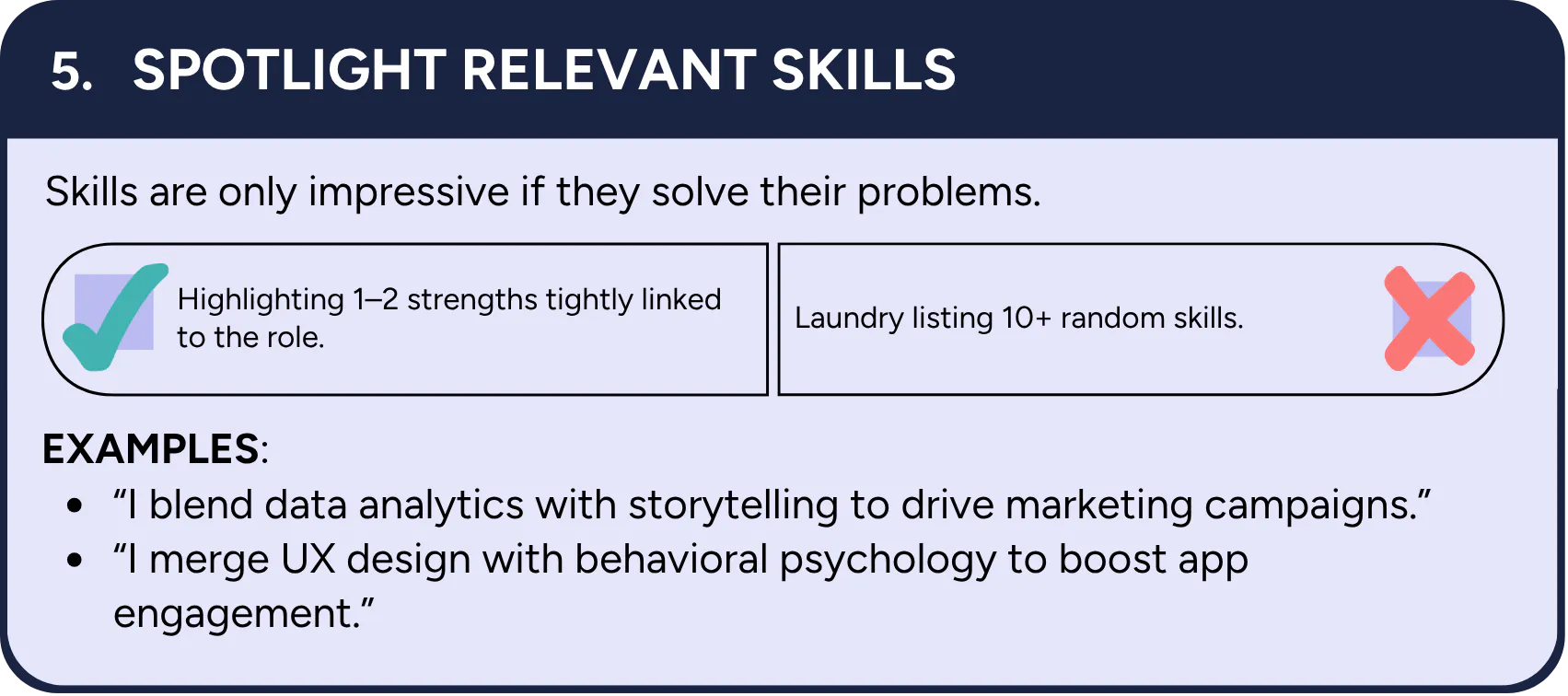
Skills are only impressive if they solve the interviewer's specific problems. Highlight 1-2 strengths that directly connect to the role requirements.
What works:
- "I blend data analytics with storytelling to drive marketing campaigns."
- "I merge UX design with behavioral psychology to boost app engagement."
What doesn't:
- Highlighting skills tightly linked to the role
- Laundry listing 10+ random skills
Show Why You're Here
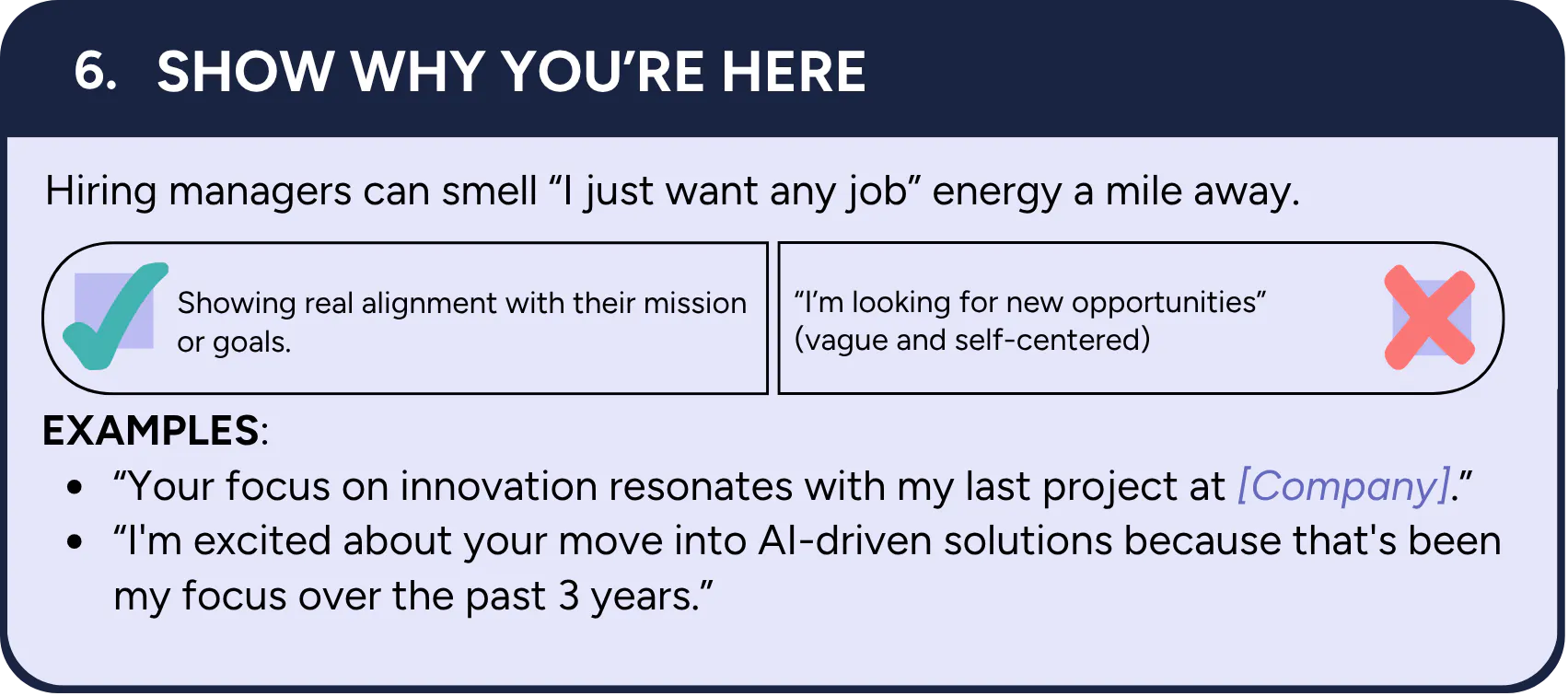
Hiring managers can detect "I just want any job" energy immediately. Demonstrate genuine alignment with their mission and goals.
What works:
- "Your focus on innovation resonates with my last project at [Company]."
- "I'm excited about your move into AI-driven solutions because that's been my focus for the past 3 years."
What doesn't:
- Showing real alignment with their mission or goals
- "I'm looking for new opportunities" or being self-centered
Mirror Their Energy and Set the Tone
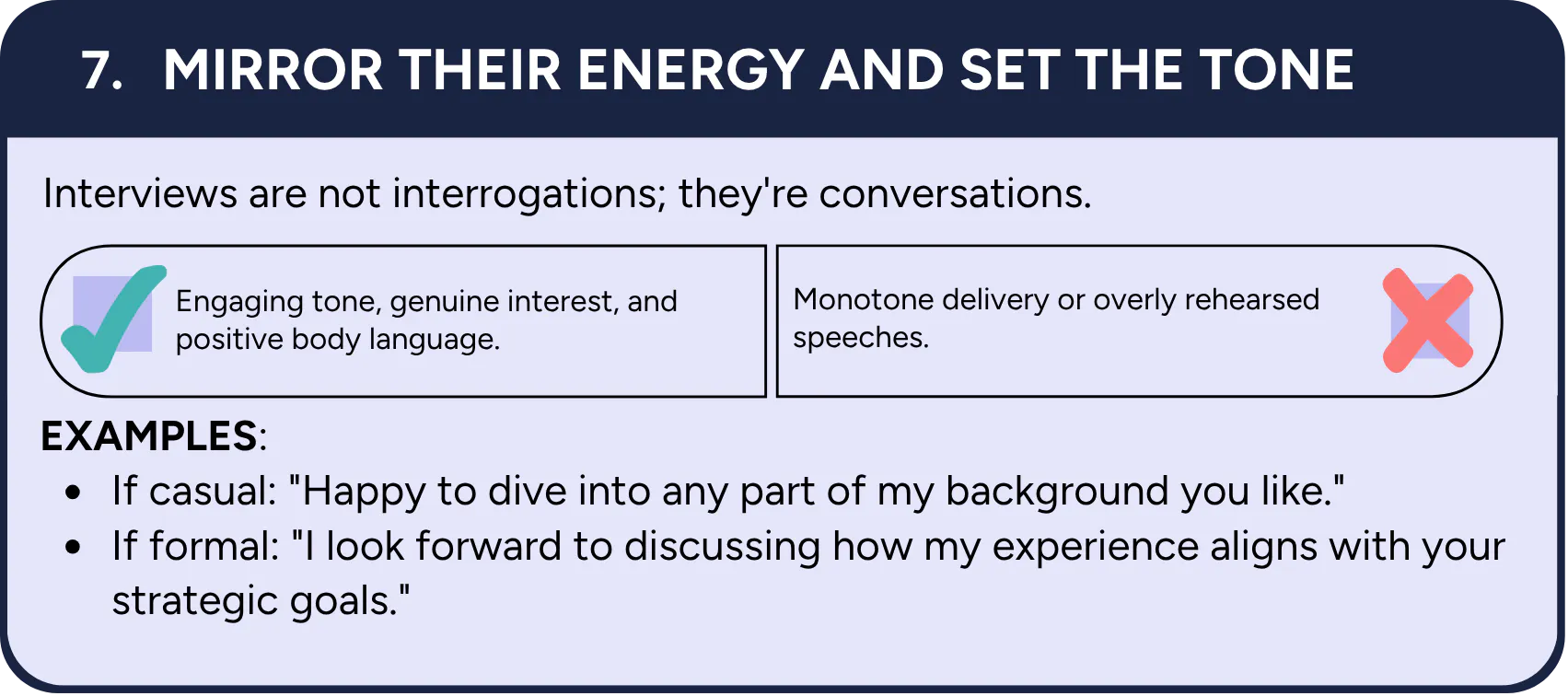
Interviews are conversations, not interrogations. Matching the interviewer's energy shows emotional intelligence and cultural fit.
What works:
- If casual: "Happy to dive into any part of my background you find most interesting."
- If formal: "I look forward to discussing how my experience aligns with your strategic goals."
What doesn't:
- Engaging tone, genuine interest, and positive body language
- Monotone delivery or overly rehearsed speeches
Close With Calm Confidence
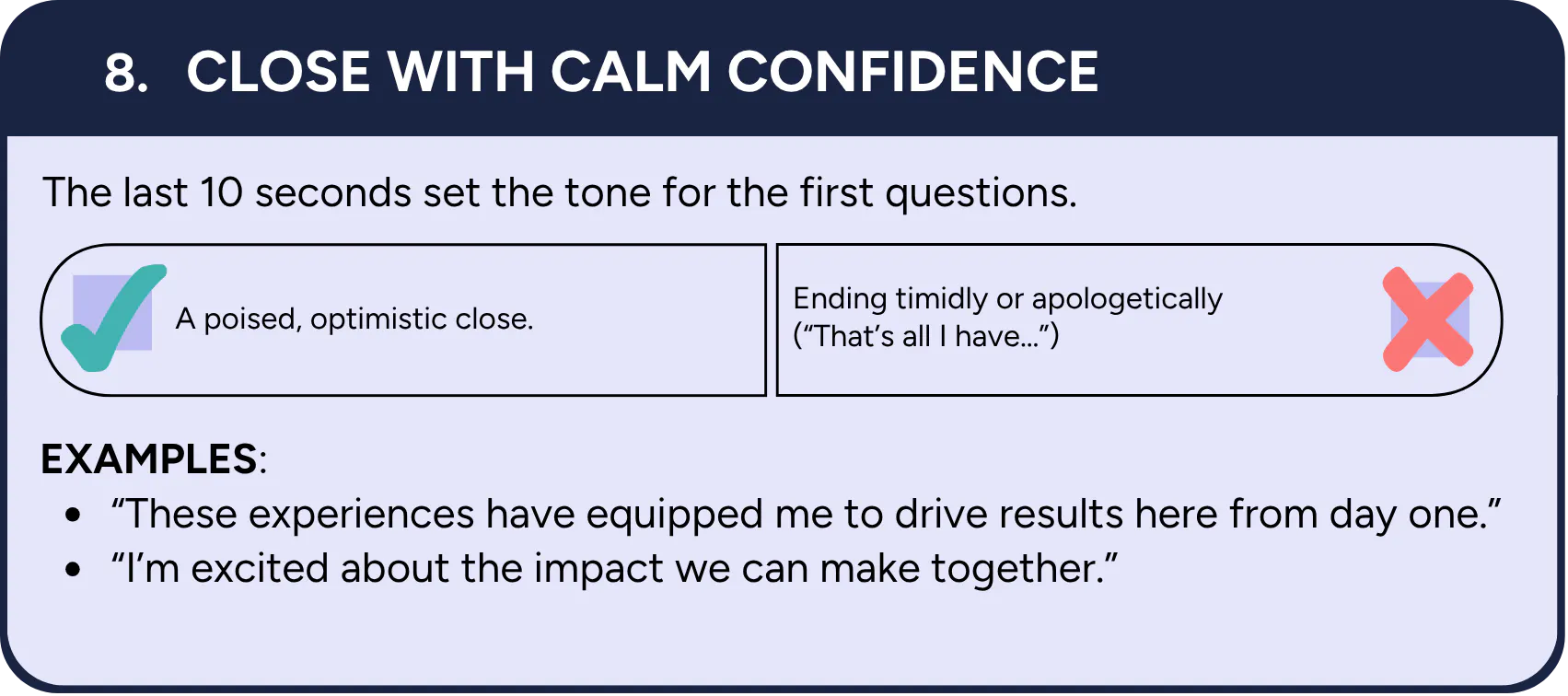
The last 10 seconds set the tone for the first questions. End with optimistic confidence that leaves them thinking "We need this person."
What works:
- "These experiences have equipped me to drive results here from day one."
- "I'm excited about the impact we can make together."
What doesn't:
- A poised, optimistic close
- Ending timidly or apologetically ("That's all I have...")
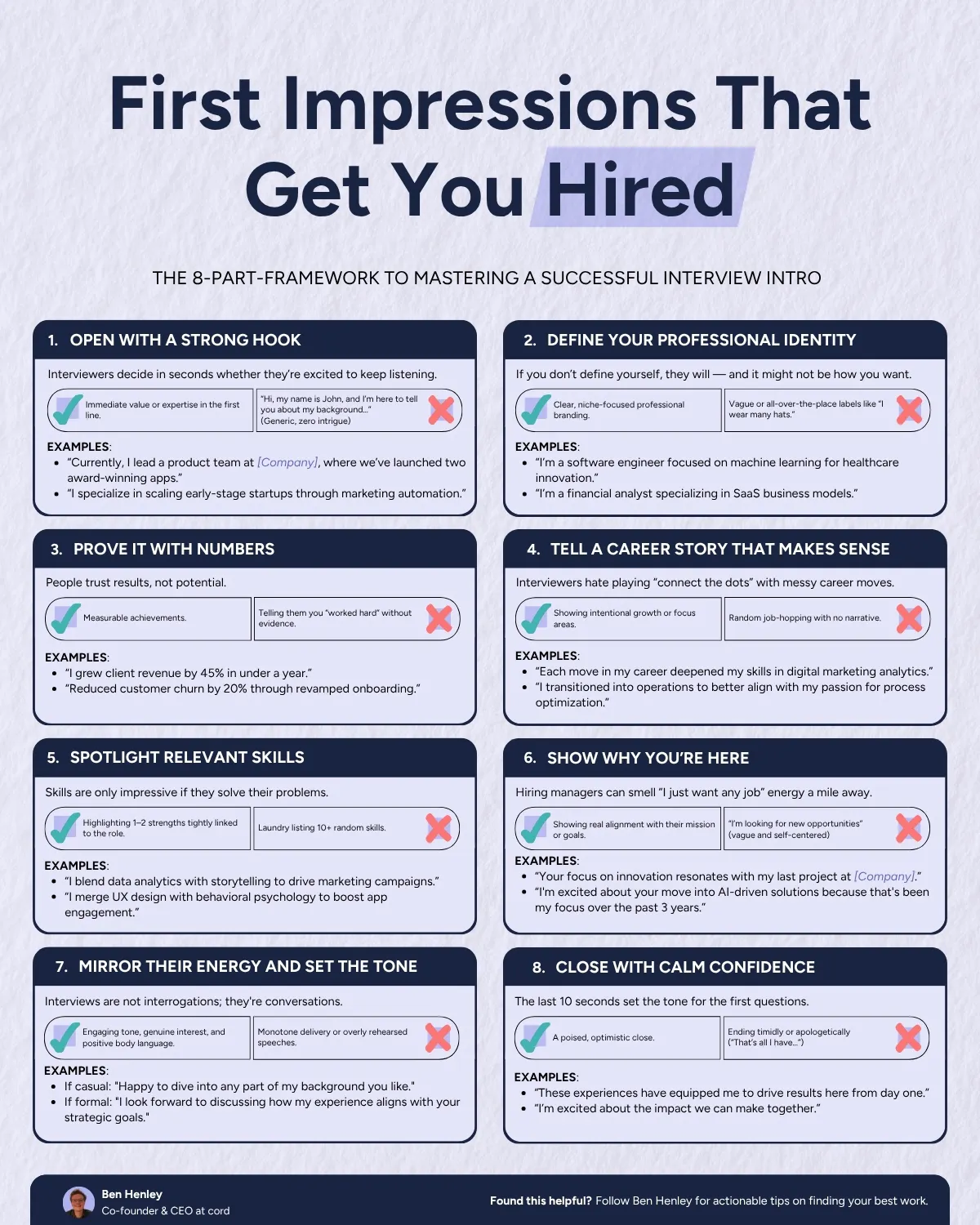
The Framework in Action
This isn't about perfection—it's about connection. Great introductions happen by design, not by accident. Practice these elements until they feel natural, then adapt them to each specific interview context.
Remember: you have one chance to make a first impression. Make it count by showing exactly why you're the person they've been looking for.

Was this content useful?