 cord
cordHidden LinkedIn Tactics That Actually Get You Hired
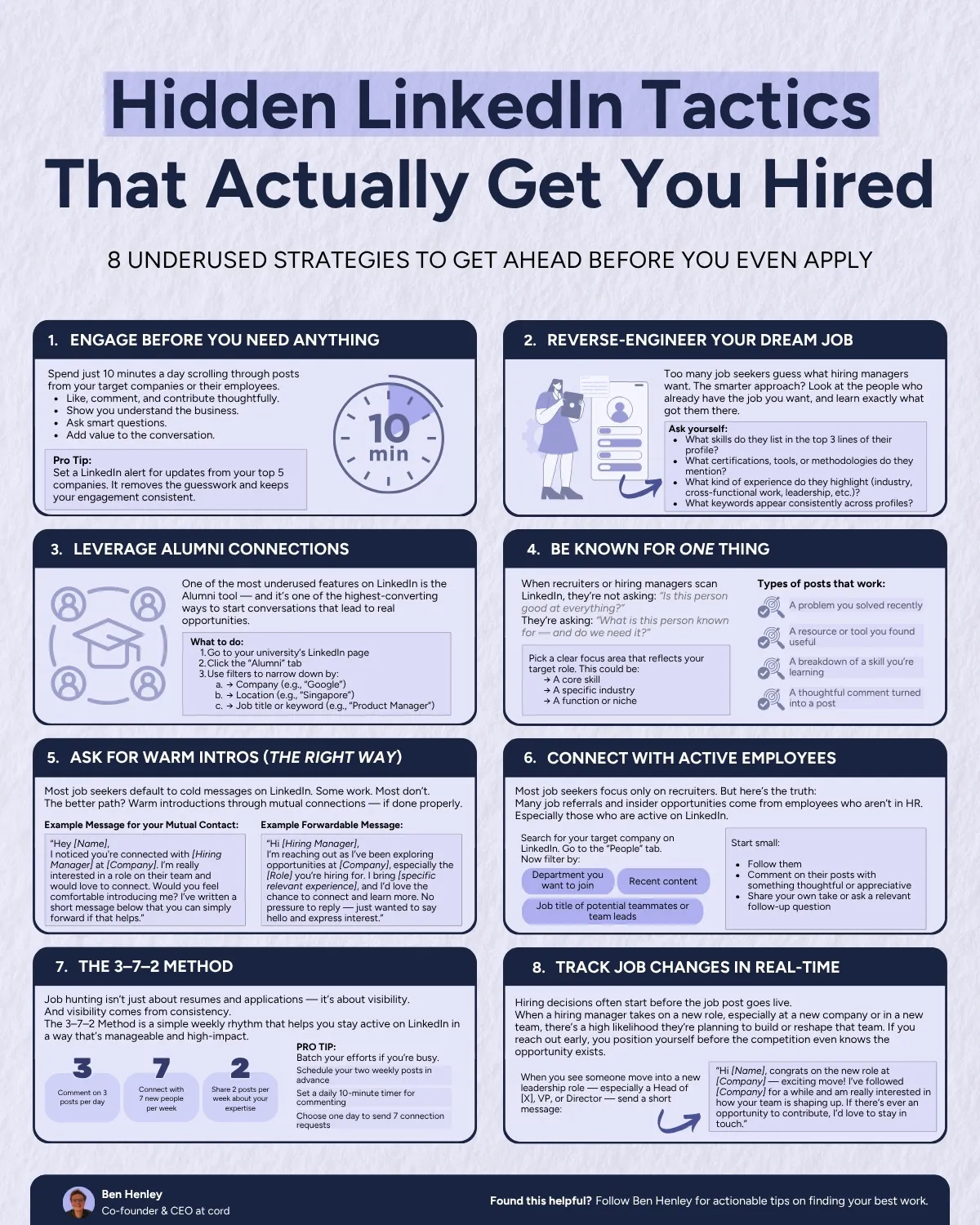
8 Underused Strategies to Get Ahead Before You Even Apply
Most people only use LinkedIn when they're desperately searching for work. By then, it's too late. Building your professional reputation takes time, and the best opportunities go to people who are already known and trusted.
If you're applying for jobs online, you need an online identity. Most people miss this completely. Here are 8 underused strategies to get ahead before you even apply.
Engage Before You Need Anything
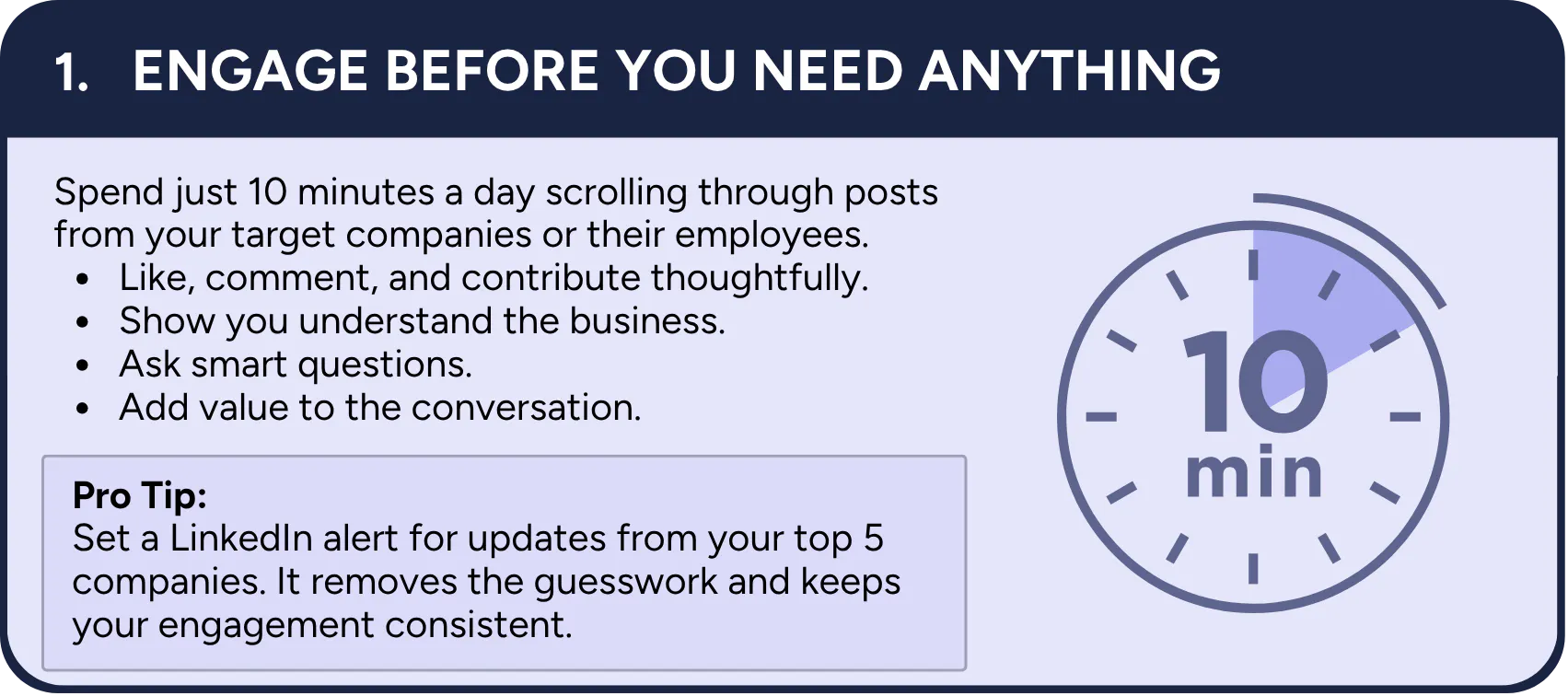
Spend just 10 minutes a day scrolling through posts from your target companies or their employees. Like, comment, and contribute thoughtfully. Show you understand the business. Ask smart questions. Add value to the conversation.
Pro Tip: Set a LinkedIn alert for updates from your top 5 companies. It removes the guesswork and keeps your engagement consistent.
When you eventually apply or reach out, recruiters will already recognize your name from previous interactions.
Reverse-Engineer Your Dream Job
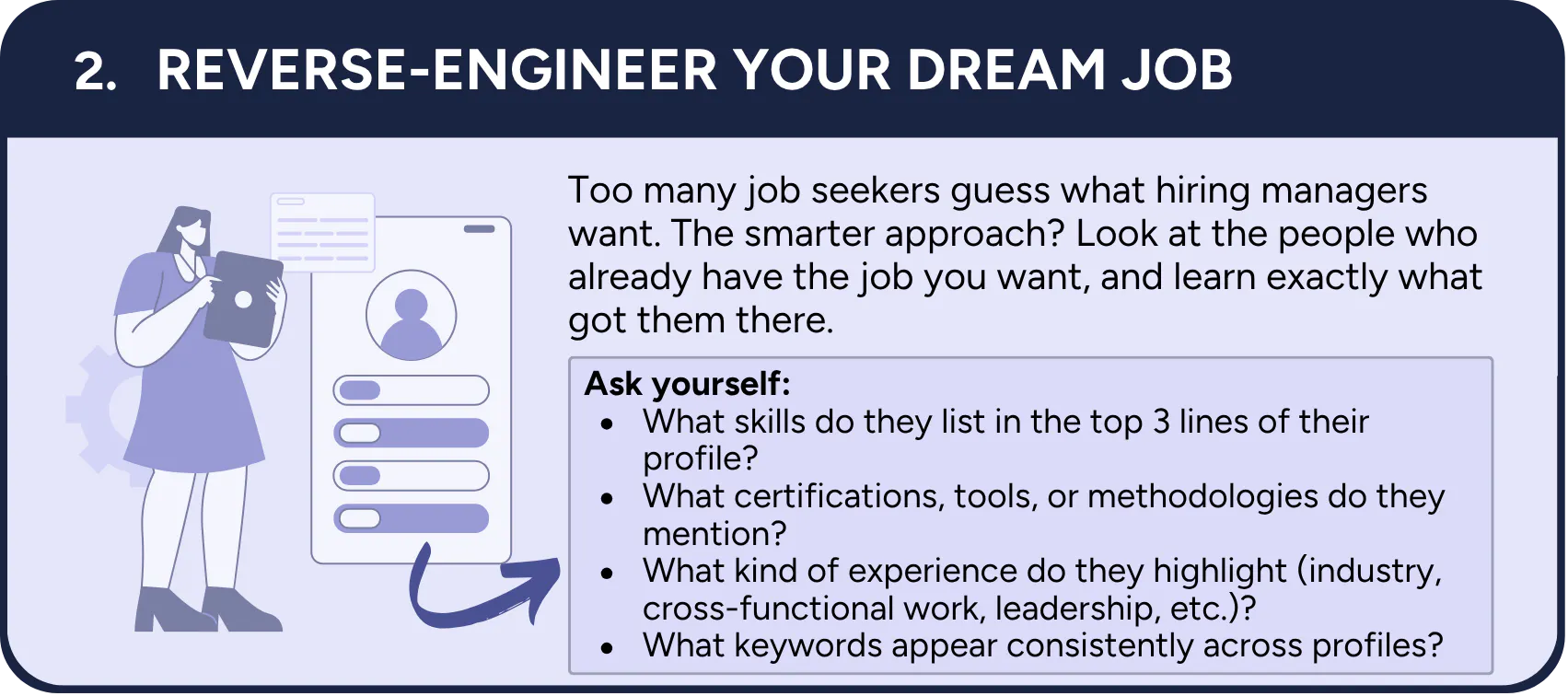
Too many job seekers guess what hiring managers want. The smarter approach is to find people who already have the job you want, and learn exactly what got them there.
Search for people in your target role and analyze their profiles:
- What skills do they list in the top 3 lines of their profile?
- What certifications, tools, or methodologies do they highlight?
- What kind of experience do they emphasize (industry, cross-functional leadership, etc.)?
- What keywords appear consistently across profiles?
Use this research to guide your own profile optimization and skill development.
Leverage Alumni Connections
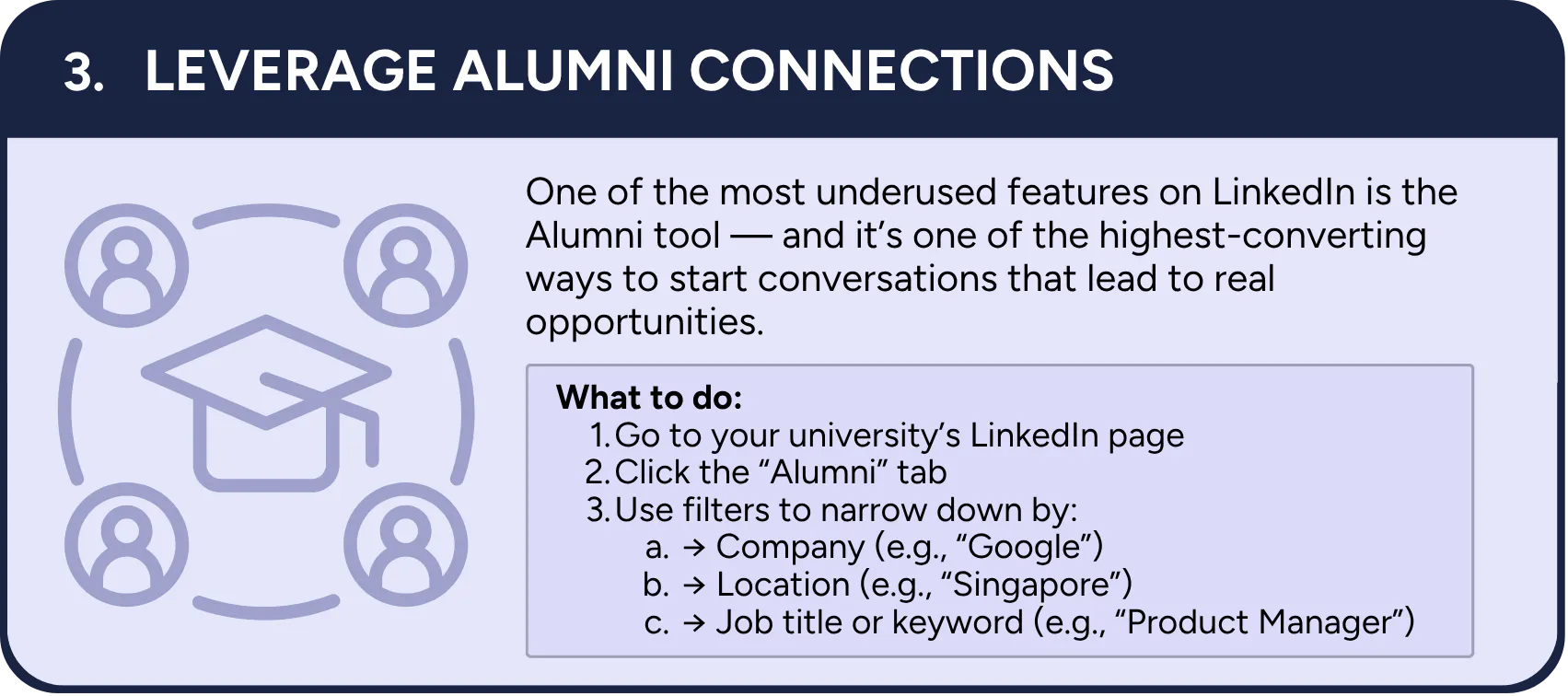
One of the most underused features on LinkedIn is the Alumni tool—and it's one of the highest-converting ways to start conversations that lead to real opportunities.
Go to your university's LinkedIn page, click the "Alumni" tab, then use filters to narrow down by:
- Company (your target employers)
- Location (where you want to work)
- Job title or keyword (like "Product Manager")
Reach out as a fellow graduate. Alumni connections have significantly higher response rates than cold outreach.
Be Known for One Thing
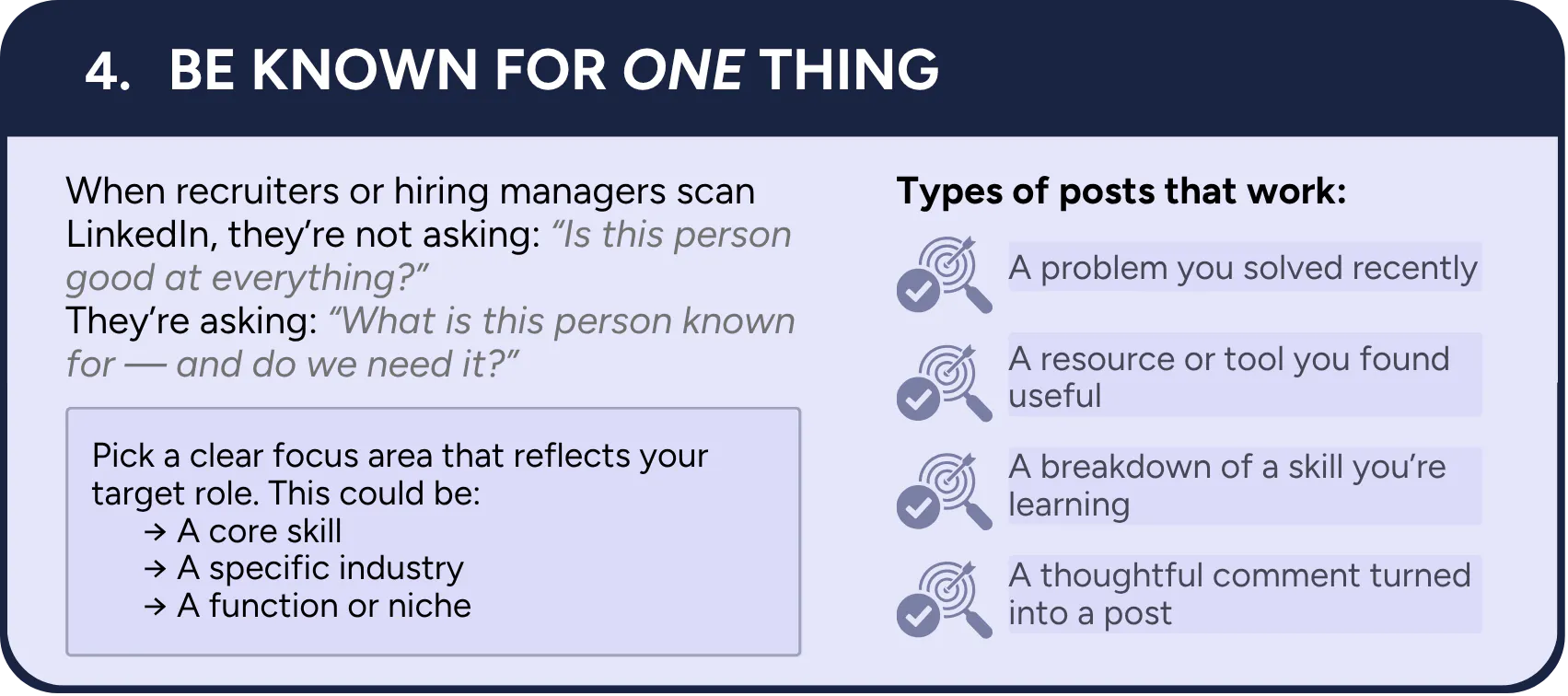
When recruiters or hiring managers scan LinkedIn, they're not asking "Is this person good at everything?" They're asking "What is this person known for—and do we need it?"
Pick a clear focus area that reflects your target role:
- A core skill
- A specific industry
- A function or niche
Post content that consistently demonstrates expertise in this area. Share problems you solved recently, resources or tools you found useful, breakdowns of skills you're learning, or thoughtful comments turned into posts.
Ask for Warm Intros (The Right Way)
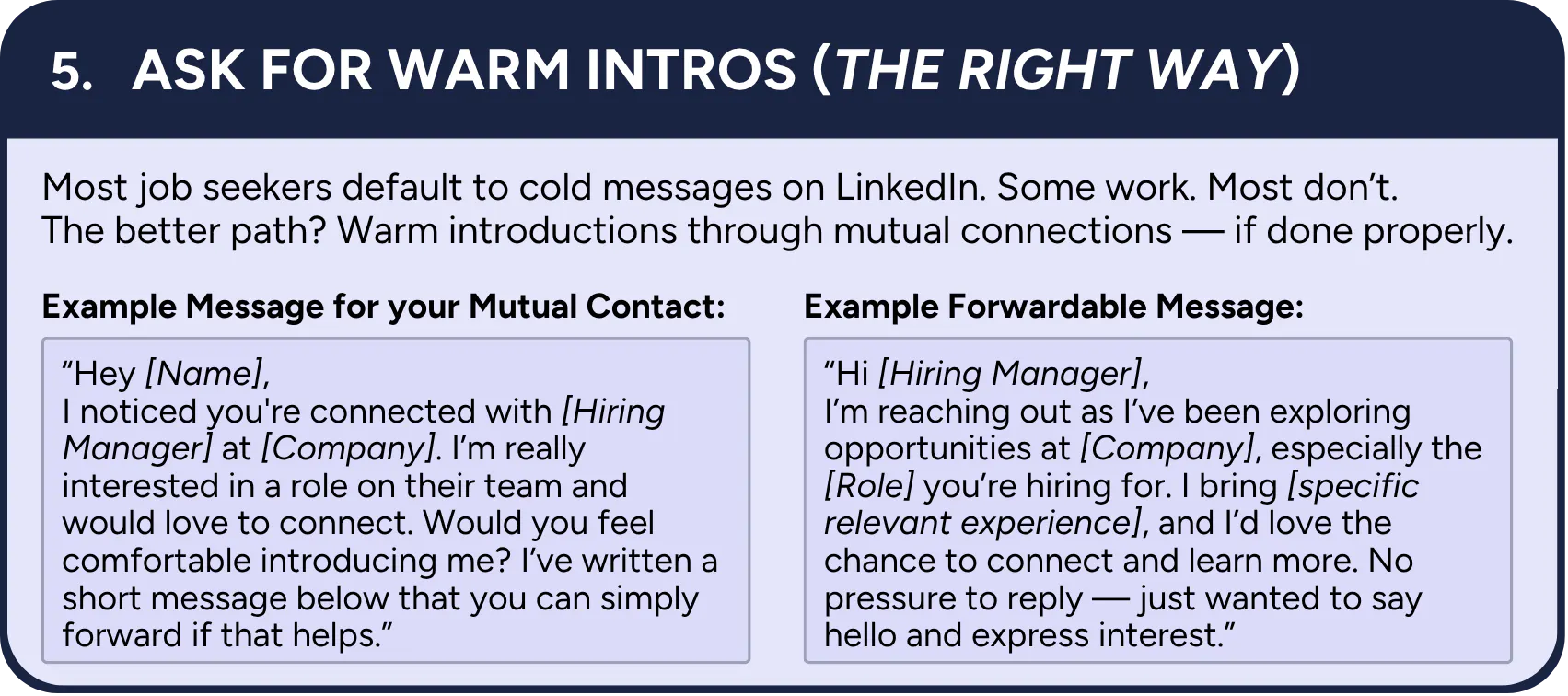
Most job seekers default to cold messages on LinkedIn. Some work. Most don't. The better path? Warm introductions—if done properly.
Instead of sending a cold message, look for mutual connections and ask for an introduction:
Example Message for Your Mutual Contact: "Hey [Name], I noticed you're connected with [Hiring Manager] at [Company]. I'm really interested in a role on their team and would love to connect. Would you mind introducing me? I've written a short message below that you can simply copy and paste if that works."
Example Forwardable Message: "Hi [Hiring Manager], I'm reaching out as I've been exploring opportunities at [Company], specifically the [Role] you're hiring for. I bring [specific relevant experience] and I'd love the chance to connect and learn more. No pressure to reply—just wanted to say hey and introduce myself."
Connect with Active Employees
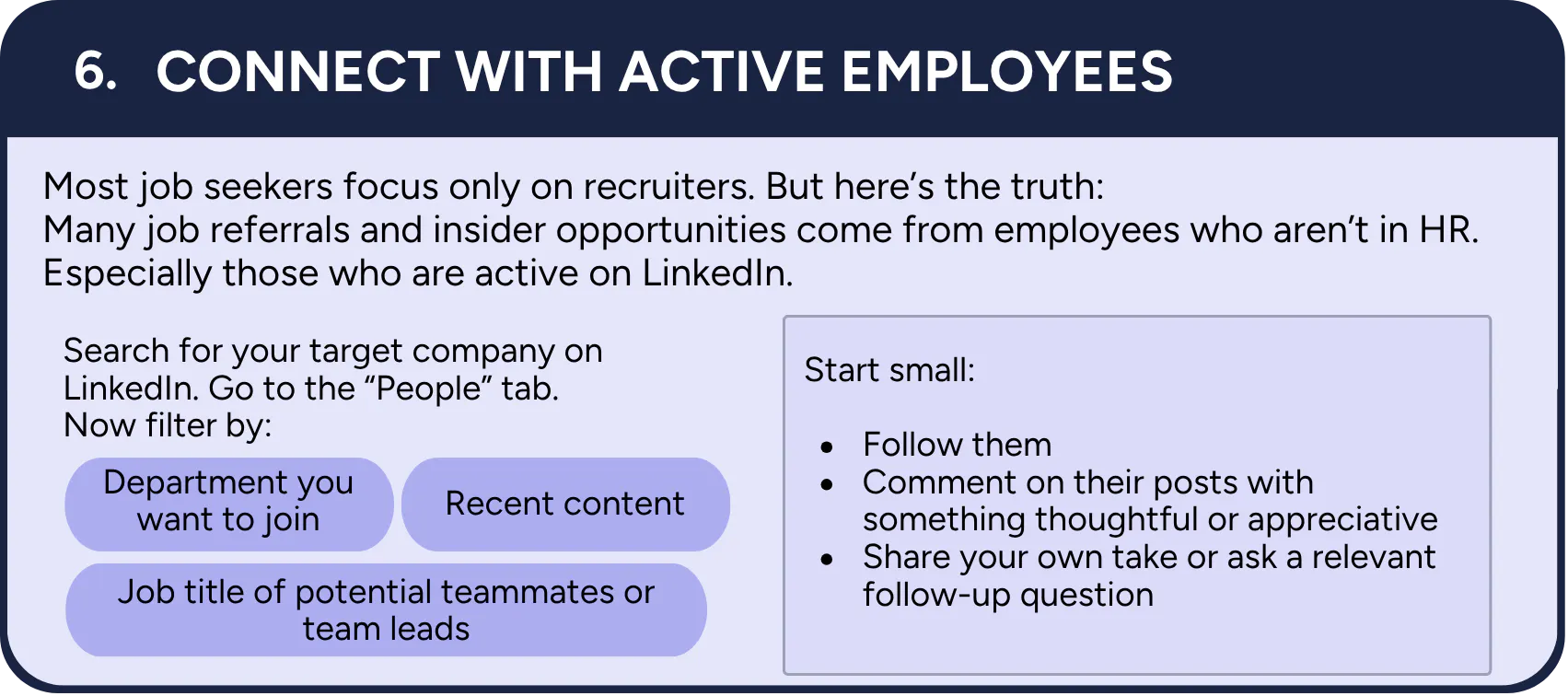
Most job seekers focus only on recruiters. But here's the truth: many job leads and insider opportunities come from employees who aren't in HR, especially those who are active on LinkedIn.
Search for people at your target company on LinkedIn. Go to the "People" tab. Filter by recent content, then:
- Follow them
- Comment on their posts with something thoughtful or appreciative
- Share your own take or ask a relevant follow-up question
Look for job titles of potential teammates or team leads, not just hiring managers.
The 3-7-2 Method
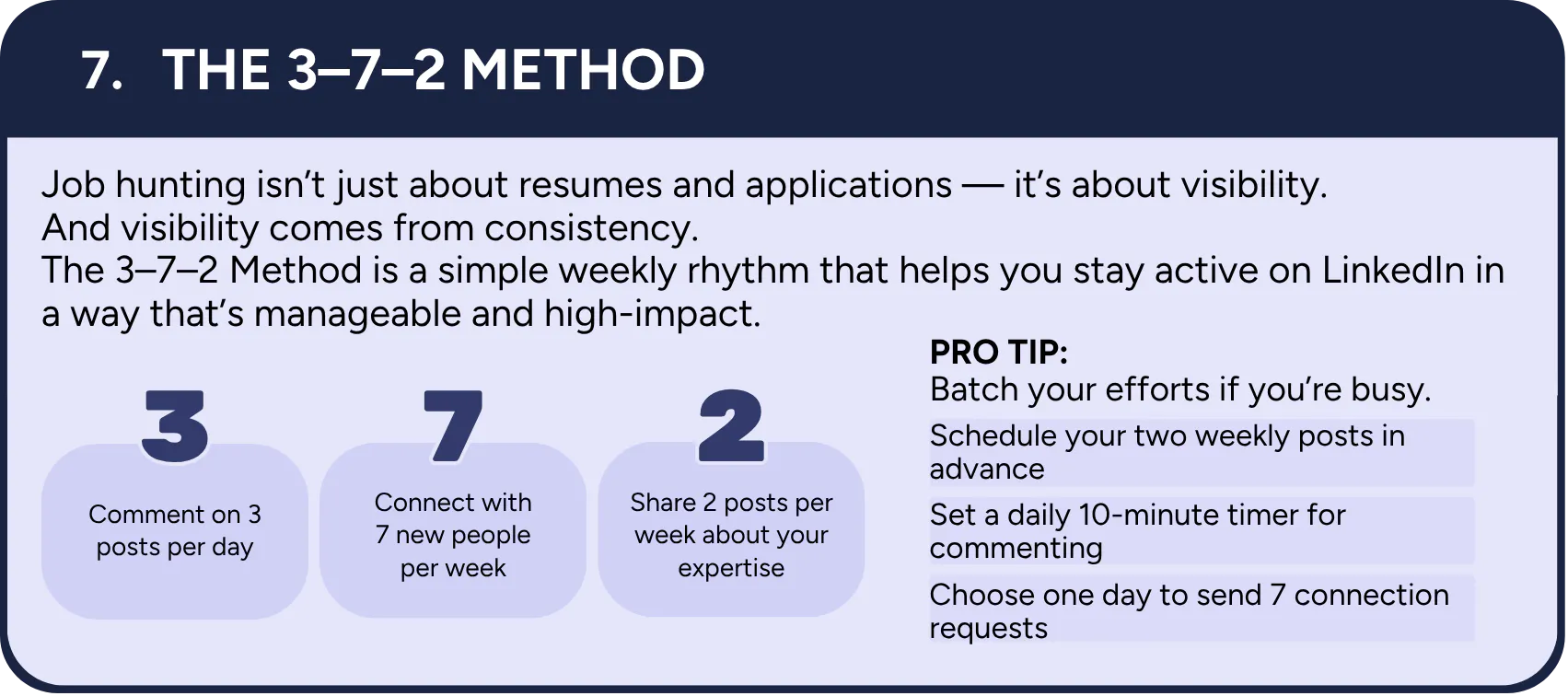
Job hunting isn't just about resumes and applications—it's about visibility. And visibility comes from consistency.
Use this simple weekly rhythm that helps you stay active on LinkedIn in a way that's manageable and high-impact:
- 3: Comment on 3 posts per day
- 7: Connect with 7 new people per week
- 2: Share 2 posts per week about your expertise
Pro Tip: Batch your efforts if you're busy. Schedule your two weekly posts in advance. Set a daily 10-minute timer for comments. Convert a few best / connection requests.
Track Job Changes in Real-Time
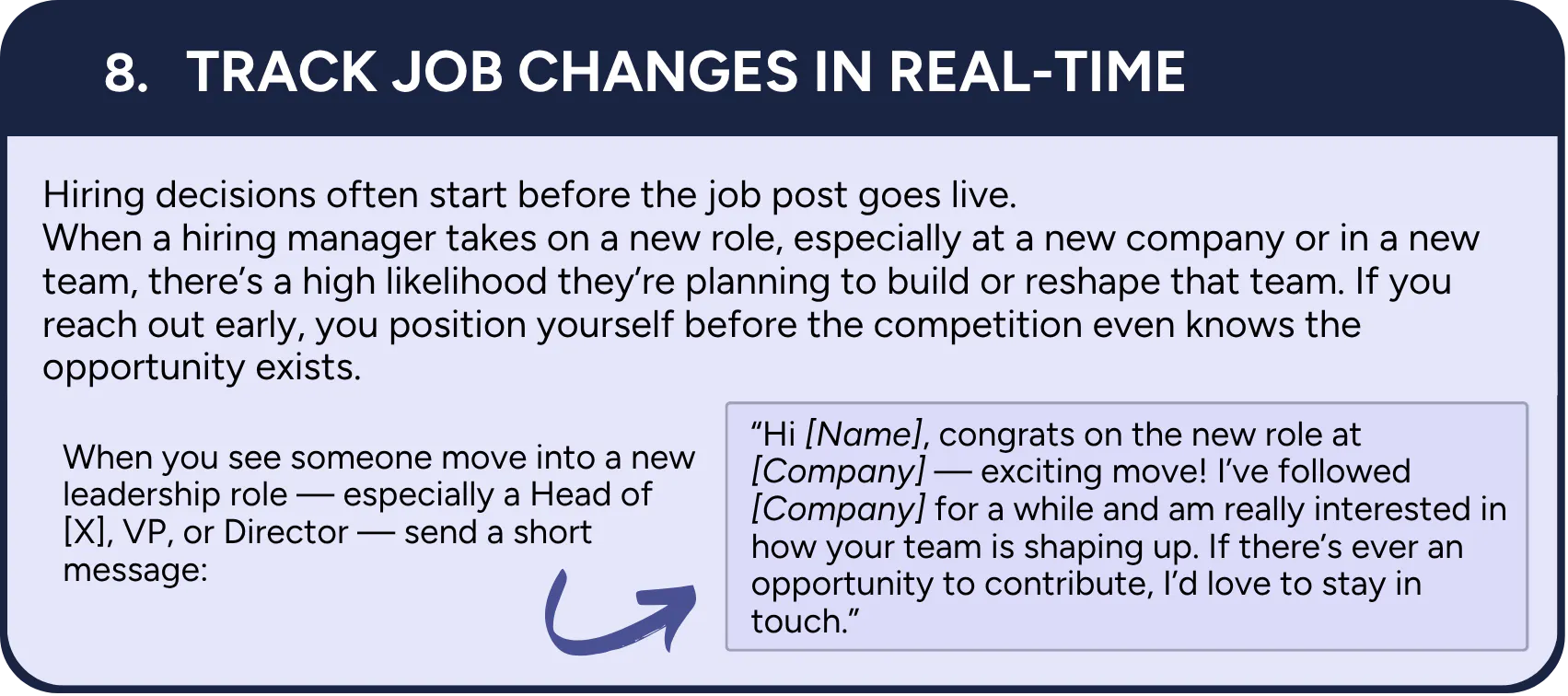
Hiring decisions often start before the job post goes live. When a hiring manager takes on a new role, especially at a new company or in a new team, there's a high likelihood they're planning to build or reshape their team. This is when you want to reach out early, position yourself before the competition even knows the opportunity exists.
When you see someone move into a new leadership role—especially a Head of [X], VP, or Director—send a short message:
"Hi [Name], congrats on the new role at [Company]—just followed your updates and it sounds like you're moving into an exciting position. How your team is shaping up. If there's ever an opportunity to contribute, I'd love to stay in touch."
The Bottom Line
If you wait until you need a job, you'll start from nothing. These strategies work because they build real trust and recognition over time. Trust and reputation matter more than a perfect resume.
The goal isn't to game the system—it's to build genuine professional relationships that benefit everyone involved. Start implementing these tactics today, even if you're not actively job searching. Your future self will thank you.

Was this content useful?