 cord
cord"What is Your Greatest Weakness?"
A step-by-step guide to turning this tricky question into your competitive advantage
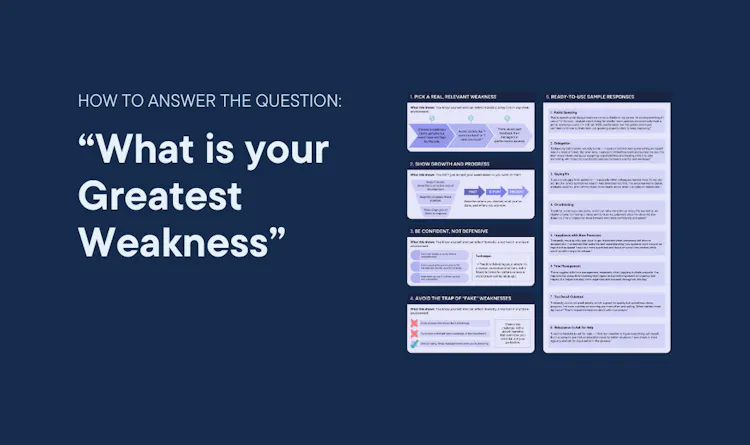
Top performers often stumble on this question not because they lack an answer, but because they don't know what is really being tested.
We've all heard bad answers to this one:
- "I'm a perfectionist."
- "I work too hard."
- "I care too much."
They sound rehearsed because they are, and they don't help you stand out.
What Interviewers Are Really Testing
When interviewers ask about your weaknesses:
They're NOT:
- Fishing for flaws
- Looking for an invitation to humble-brag
They ARE testing:
- Your self-awareness
- Your humility
- Your willingness to grow
These traits actually determine long-term success in any role.
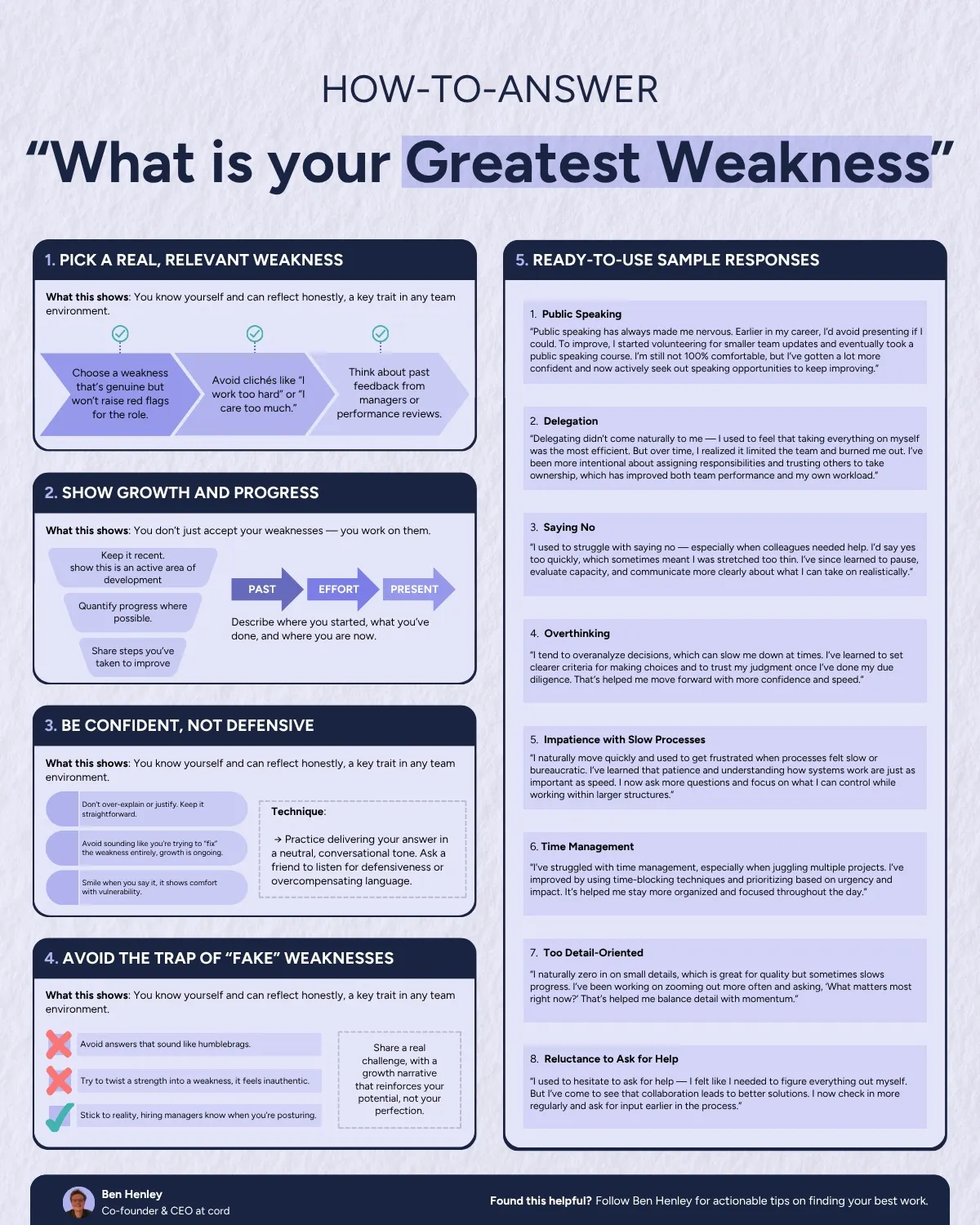
The Four-Step Framework for Success
1. Pick a Real, Relevant Weakness
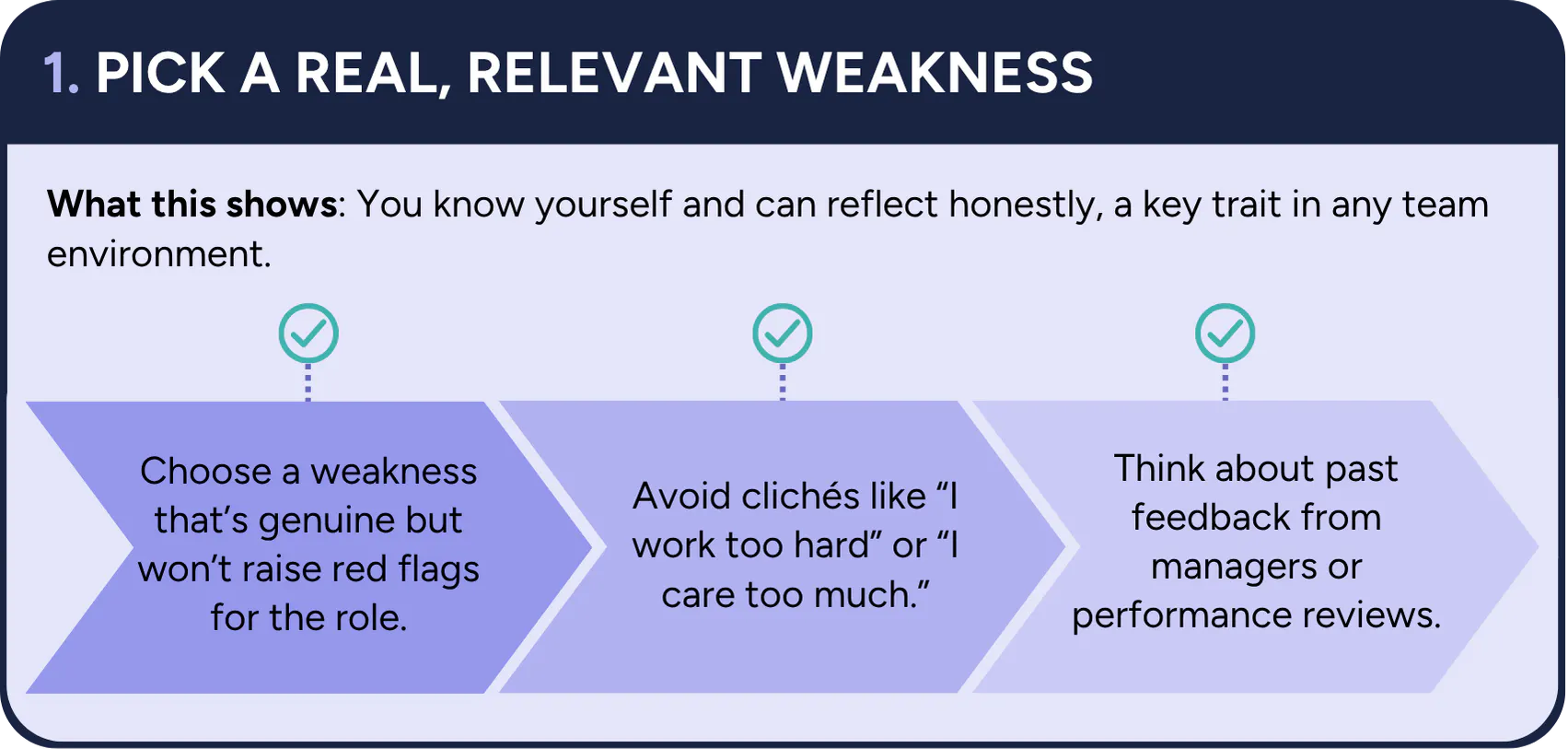
What this shows: You know yourself and can reflect honestly, a key trait in any team environment.
How to do it:
- Choose a weakness that's genuine but won't raise red flags for the role
- Avoid clichés like "I work too hard" or "I care too much"
- Think about past feedback from managers or performance reviews
2. Show Growth and Progress
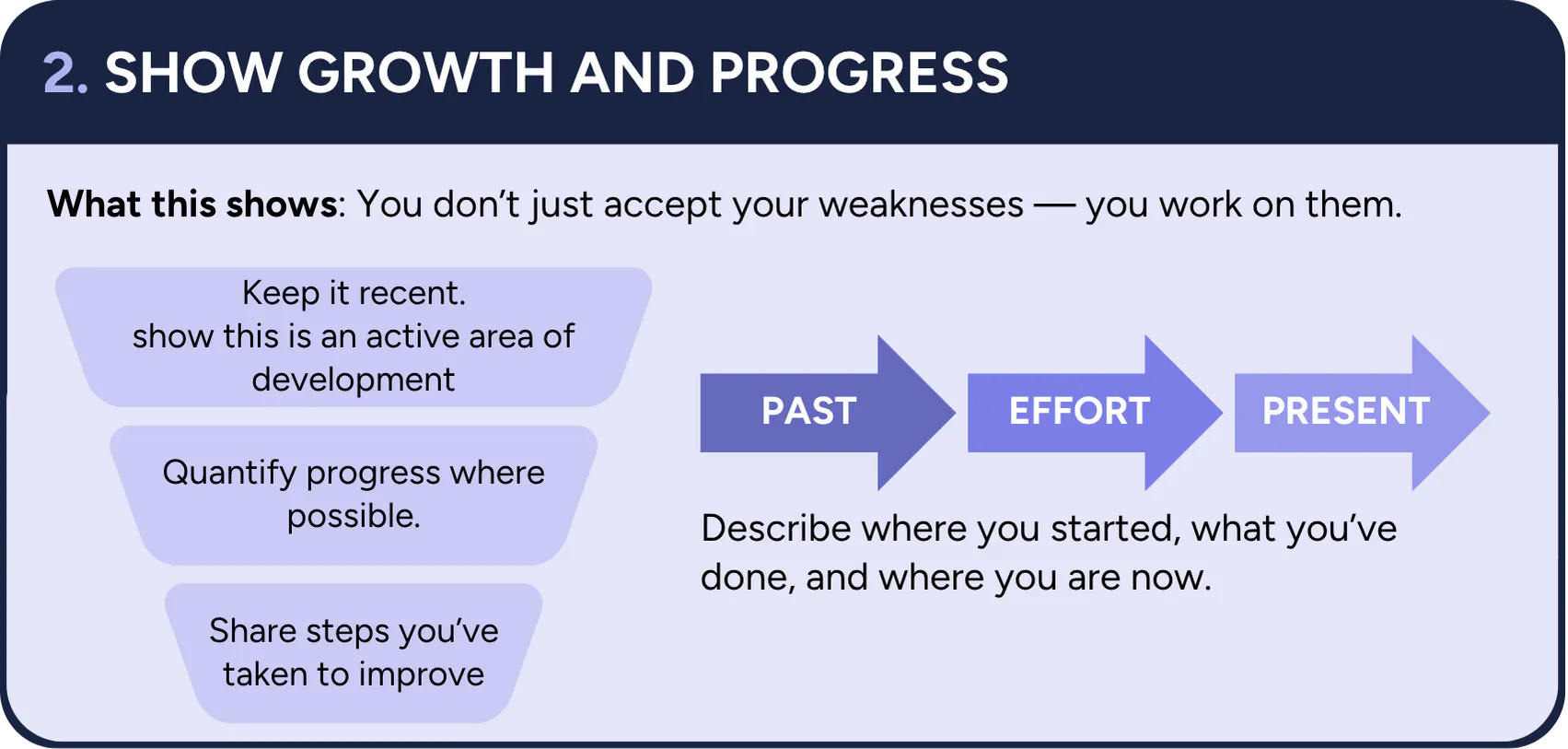
What this shows: You don't just accept your weaknesses—you work on them.
How to structure it:
- Past: Describe where you started
- Effort: What you've done to improve
- Present: Where you are now
- Keep it recent to show this is an active area of development
- Quantify progress where possible
- Share specific steps you've taken to improve
3. Be Confident, Not Defensive
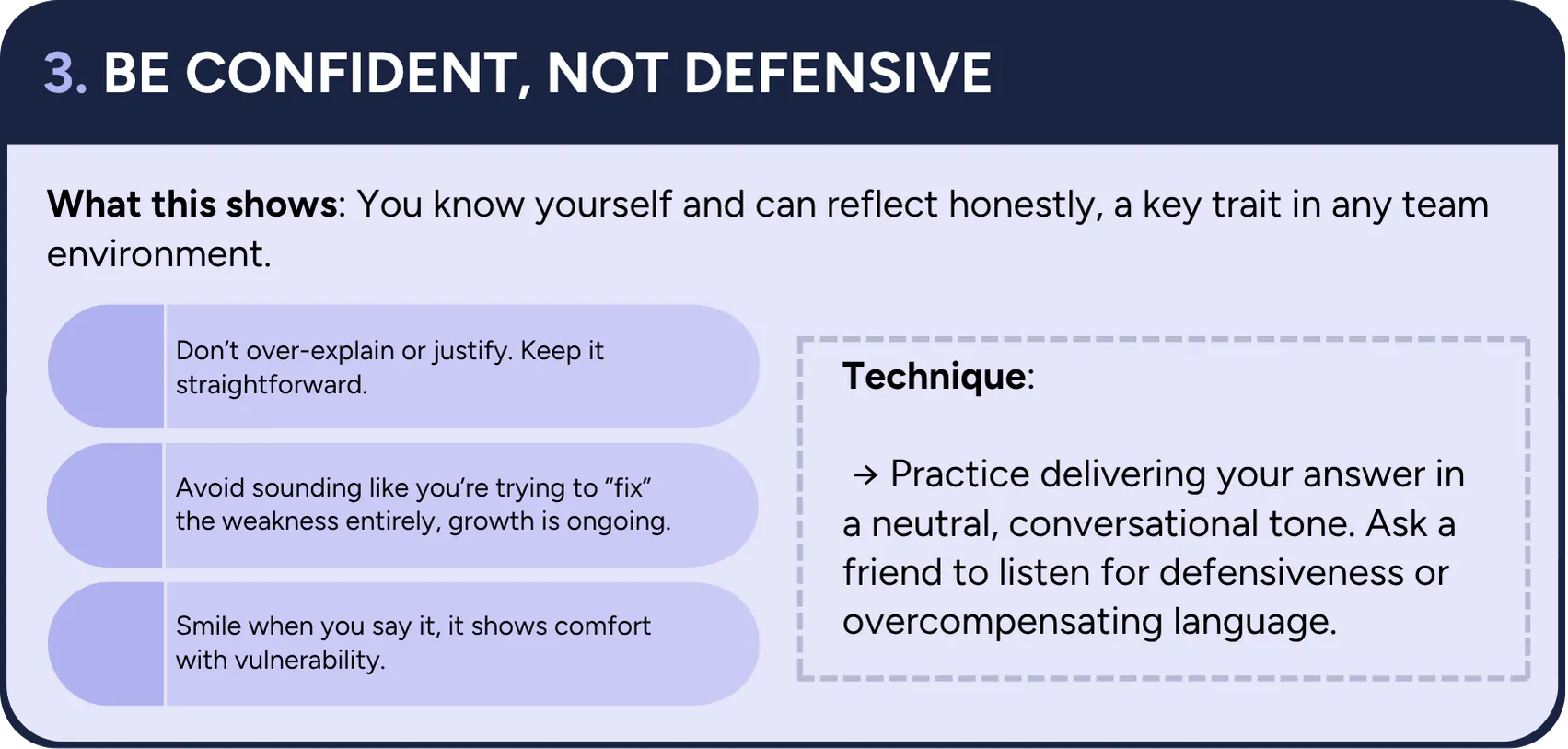
What this shows: You know yourself and can reflect honestly, a key trait in any team environment.
Technique:
- Don't over-explain or justify. Keep it straightforward
- Avoid sounding like you're trying to "fix" the weakness entirely—growth is ongoing
- Smile when you say it; it shows comfort with vulnerability
4. Avoid the Trap of "Fake" Weaknesses
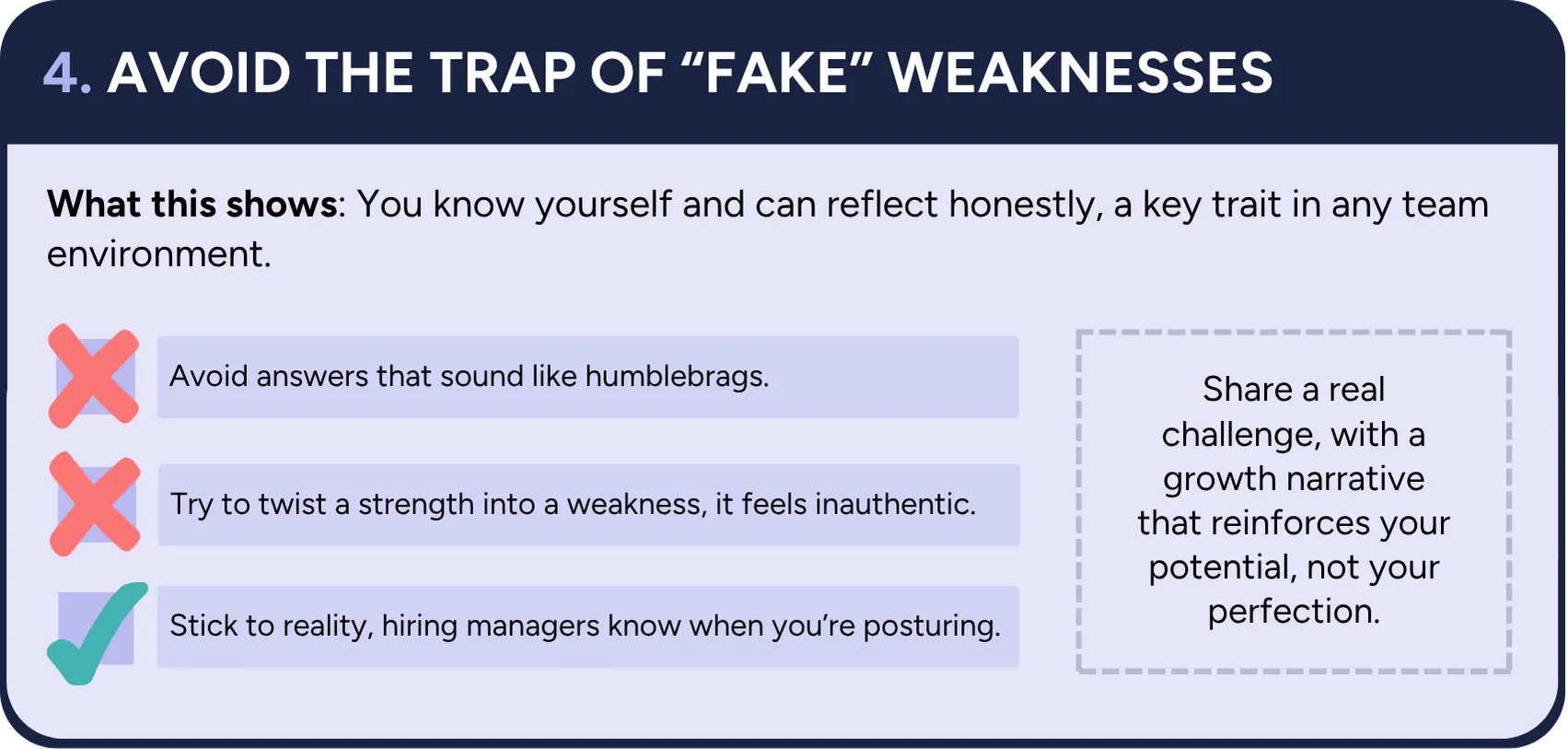
What this shows: You know yourself and can reflect honestly, a key trait in any team environment.
What to avoid:
- Answers that sound like humble-brags
- Trying to twist a strength into a weakness—it feels inauthentic
- Stick to reality; hiring managers know when you're posturing
What to do instead:
- Share a real challenge with a growth narrative that reinforces your potential, not your perfection
Ready-to-Use Sample Responses
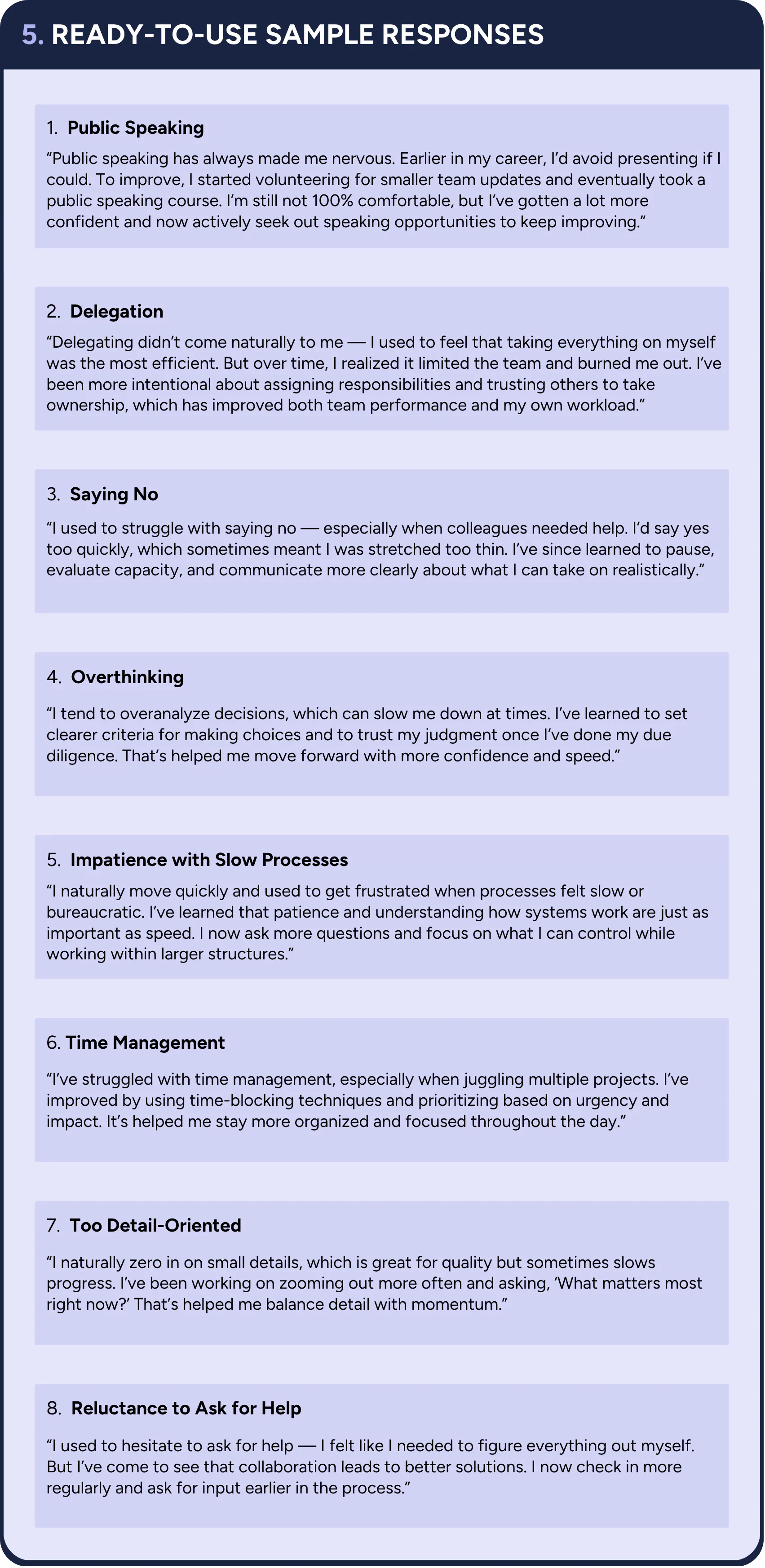
1. Public Speaking
"Public speaking has always made me nervous. Earlier in my career, I'd avoid presenting if I could. To improve, I started volunteering for smaller team updates and eventually took a public speaking course. I'm still not 100% comfortable, but I've gotten a lot more confident and now actively seek out speaking opportunities to keep improving."
2. Delegation
"Delegating didn't come naturally to me—I used to feel that taking everything on myself was the most efficient. But over time, I realized it limited the team and burned me out. I've been more intentional about assigning responsibilities and trusting others to take ownership, which has improved both team performance and my own workload."
3. Saying No
"I used to struggle with saying no—especially when colleagues needed help. I'd say yes too quickly, which sometimes meant I was stretched too thin. I've since learned to pause, evaluate capacity, and communicate more clearly about what I can take on realistically."
4. Overthinking
"I tend to overanalyze decisions, which can slow me down at times. I've learned to set clearer criteria for making choices and to trust my judgment once I've done my due diligence. That's helped me move forward with more confidence and speed."
5. Impatience with Slow Processes
"I naturally move quickly and used to get frustrated when processes felt slow or bureaucratic. I've learned that patience and understanding context are just as important as speed. I now ask more questions and focus on what I can control while working within larger structures."
6. Time Management
"I've struggled with time management, especially when juggling multiple projects. I've improved by using time-blocking techniques and prioritizing based on urgency and impact. It's helped me stay more organized and focused throughout the day."
7. Too Detail-Oriented
"I naturally zero in on small details, which is great for quality but sometimes slows progress. I've been working on zooming out more often and asking, 'What matters most right now?' That's helped me balance detail with momentum."
8. Reluctance to Ask for Help
"I used to hesitate to ask for help—I felt like I needed to figure everything out myself. But I've come to see that collaboration leads to better solutions. I now check in more regularly and ask for input earlier in the process."
The Bottom Line
This question isn't a trap—it's a test of character. If you can be honest about your blind spots and show that you're actively working on them, that's more impressive than pretending you don't have any at all.
The key is choosing a real weakness, demonstrating genuine effort to improve, and showing measurable progress. This approach proves you have the self-awareness and growth mindset that employers value most.

Was this content useful?