 cord
cordHow to Follow Up After Your Job Interview
Master the post-interview process with proven templates and strategies that get results

The interview doesn't end when you leave the room or close your laptop. What you do next can determine whether you get the job or fade into the pile of forgotten candidates.
Most people treat post-interview follow-up as optional. This is a critical mistake. Your actions after the interview are just as important as your performance during it.
Here's everything you need to know about following up professionally and effectively.
The Thank You Email: Your First Priority
Send a thank you email within 24 hours of your interview. This isn't just politeness—it's strategy.
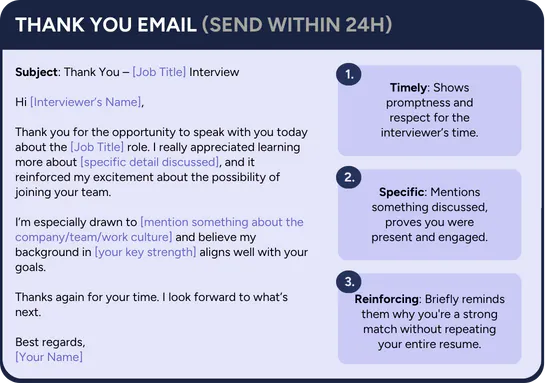
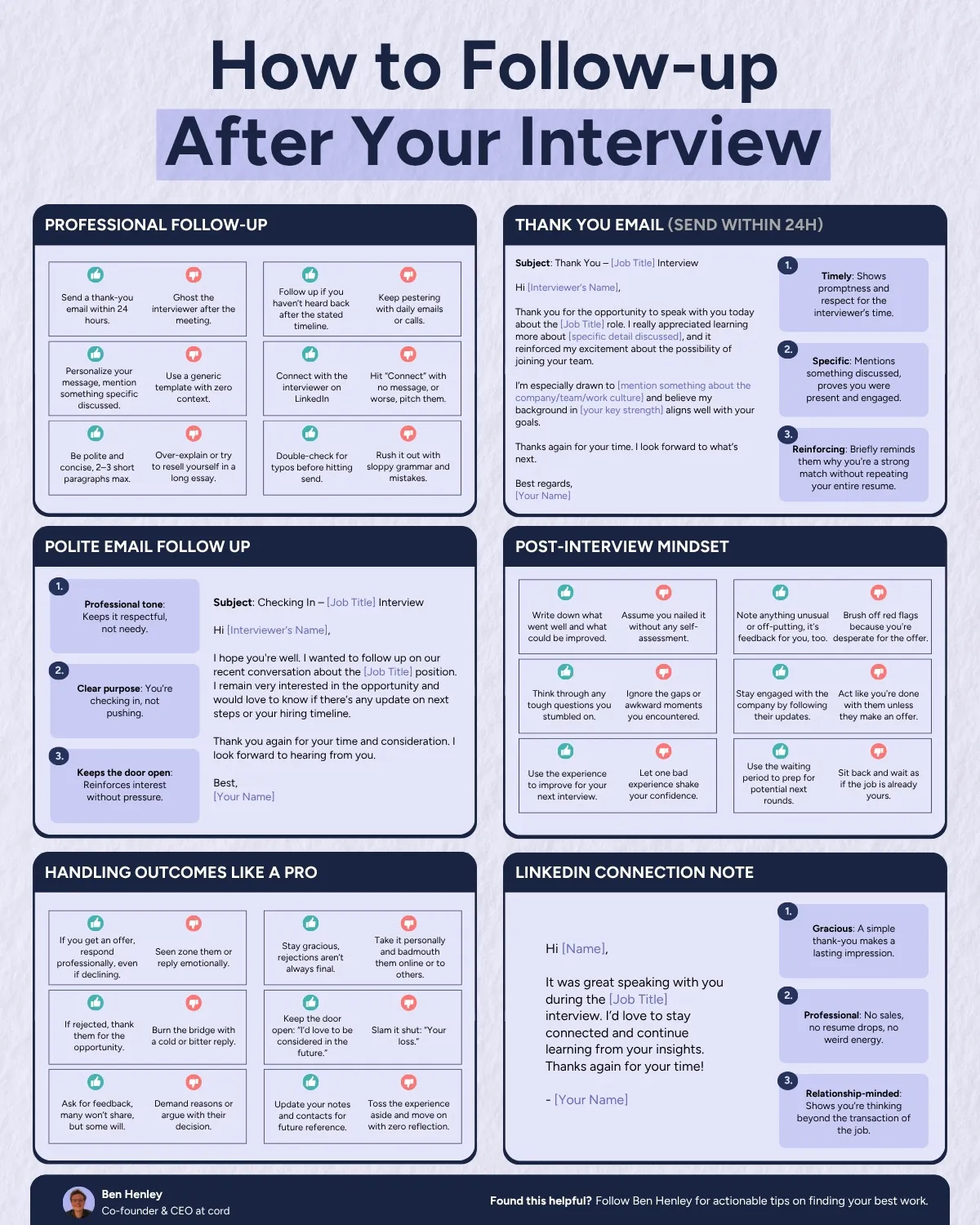
Subject: Thank You – [Job Title] Interview
Template:
Hi [Interviewer's Name],

Thank you for the opportunity to speak with you today about the [Job Title] role. I really appreciated learning more about [specific detail discussed], and it reinforced my excitement about the possibility of joining your team.

I'm especially drawn to [mention something about the company/team/work culture] and believe my background in [your key strength] aligns well with your goals.

Thanks again for your time. I look forward to what's next.

Best regards,
[Your Name]
Key elements that make this work:
- Shows promptness and respect for the interviewer's time
- Mentions something specific you discussed, proving you were present and engaged
- Briefly reminds them why you're a strong match without repeating your entire resume
When and How to Follow Up Again
If you haven't heard back after a week or two, send one polite follow-up email.
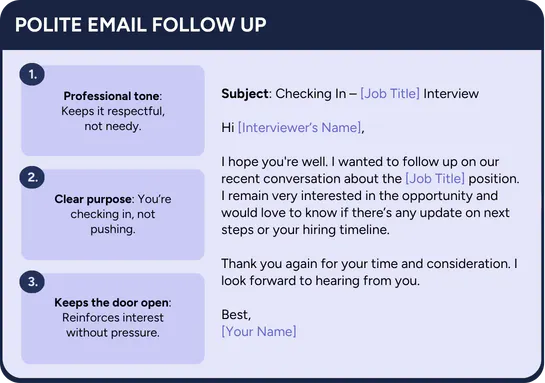
Subject: Checking In – [Job Title] Interview
Template:
Hi [Interviewer's Name],

I hope you're well. I wanted to follow up on our recent conversation about the [Job Title] position. I remain very interested in the opportunity and would love to know if there's any update on next steps or your hiring timeline.

Thank you again for your time and consideration. I look forward to hearing from you.

Best,
[Your Name]
What makes this effective:
- Professional tone that's respectful, not needy
- Clear purpose without being pushy
- Keeps the door open and reinforces interest without pressure
Your Post-Interview Self-Assessment
Take time to reflect on your performance while the interview is fresh in your memory:
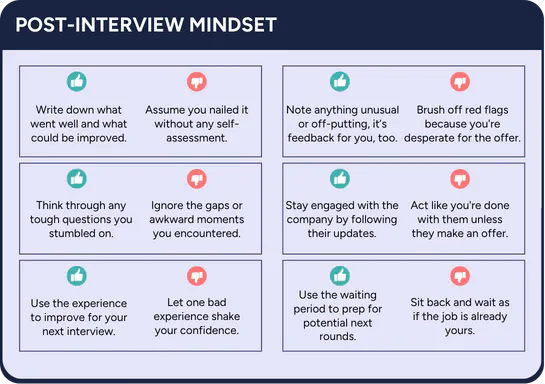
What went well: Note your strongest moments and what could be improved for next time.
Tough questions: Think through any questions you stumbled on and prepare better answers.
Overall experience: Use this as learning for your next interview, whether with this company or another.
Stay engaged: Follow company updates and news, but don't act like you've already got the job.
Be patient: Use the waiting period to prepare for potential next rounds, not to sit idle.
Connecting on LinkedIn
Send a connection request within a day or two of your interview:
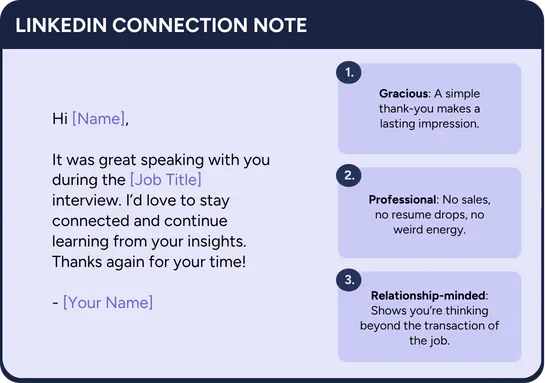
Hi [Name],

It was great speaking with you during the [Job Title] interview. I'd love to stay connected and continue learning from your insights. Thanks again for your time!

- [Your Name]
LinkedIn connection best practices:
- Keep it gracious and simple for a lasting impression
- Stay professional—no sales pitches or resume dumps
- Think relationship-minded, showing you're thinking beyond just the transaction of the job
Handling Different Outcomes
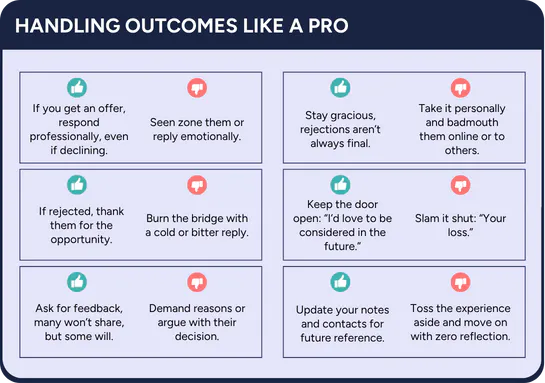
If you get an offer: Reply professionally, even if declining. You never know when paths might cross again.
If you're rejected: Thank them for the opportunity. Stay gracious—rejections aren't always final. Many companies keep strong candidates in mind for future roles.
If you hear nothing: Keep the door open for future opportunities. Don't burn bridges with cold or bitter responses.
If you want feedback: Ask politely, but understand that many companies won't share detailed feedback due to legal considerations.
What Not to Do
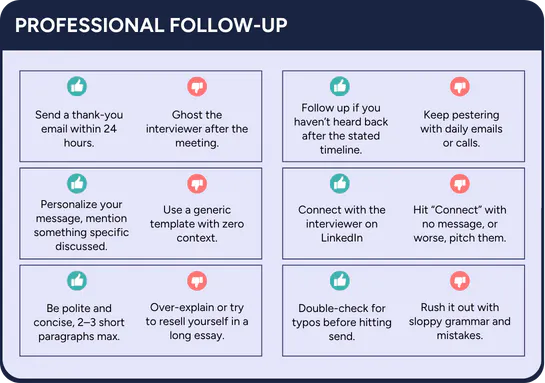
- Don't ghost the interviewer after the meeting
- Don't assume you nailed it without self-assessment
- Don't ignore gaps or awkward moments you encountered
- Don't sound frustrated or entitled in follow-ups
- Don't take rejection personally or badmouth the company
- Don't demand reasons or argue with their decision
- Don't update your notes and contacts carelessly—keep detailed records for future reference
- Don't toss the experience aside and move on without reflection
The Professional Mindset
Remember that you're being evaluated throughout the entire process, not just during the formal interview. Your follow-up communications are part of how you'll be remembered.
The best candidates don't leave their success to chance. They take ownership of the entire process, from preparation through final follow-up.
Your post-interview actions show employers how you handle professional relationships, manage follow-through, and maintain communication—all critical job skills they're evaluating.
Every interaction is an opportunity to reinforce why you're the right choice for the role.

Was this content useful?