 cord
cordJob Hunting HAS Changed: How to Adapt to the Job Market in 2025
Six systems to help you find your best work in a transformed hiring landscape
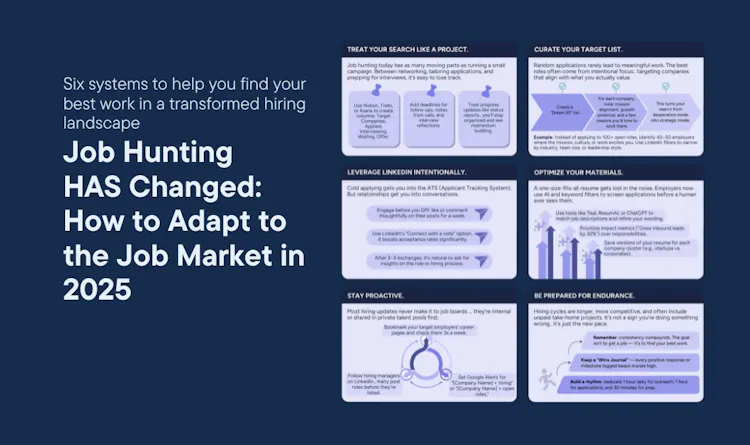
Job hunting in 2025 feels less like applying and more like running a campaign. Even the most talented people are struggling to land roles right now—not because they're less talented, but because the process has completely changed.
In 2019, the average time from application to offer was 30 days. Today it's 27 weeks.
If you're looking for your next role, especially your best work, you can't rely on what worked before. Here's what the modern job hunt looks like today.
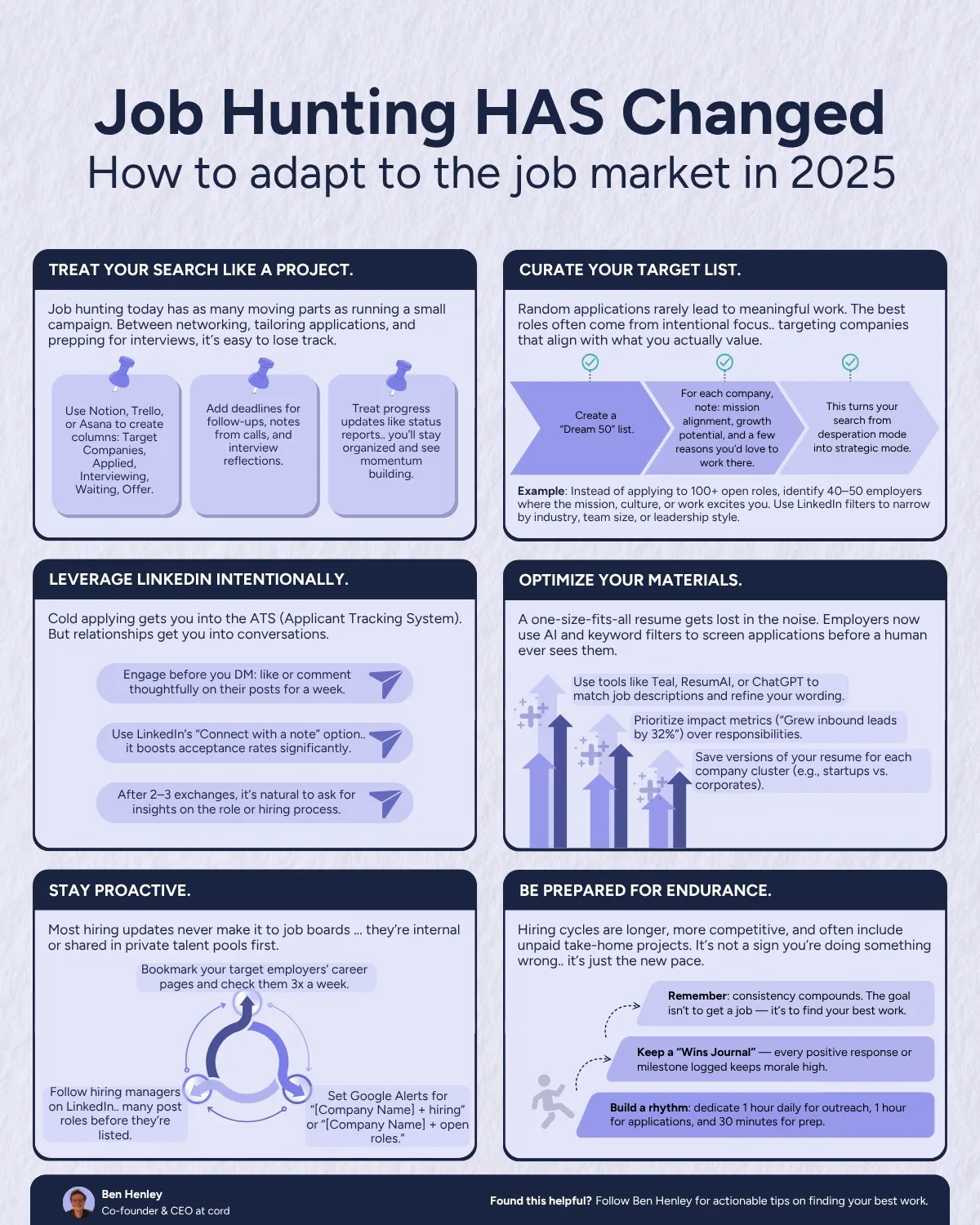
Treat Your Search Like a Project
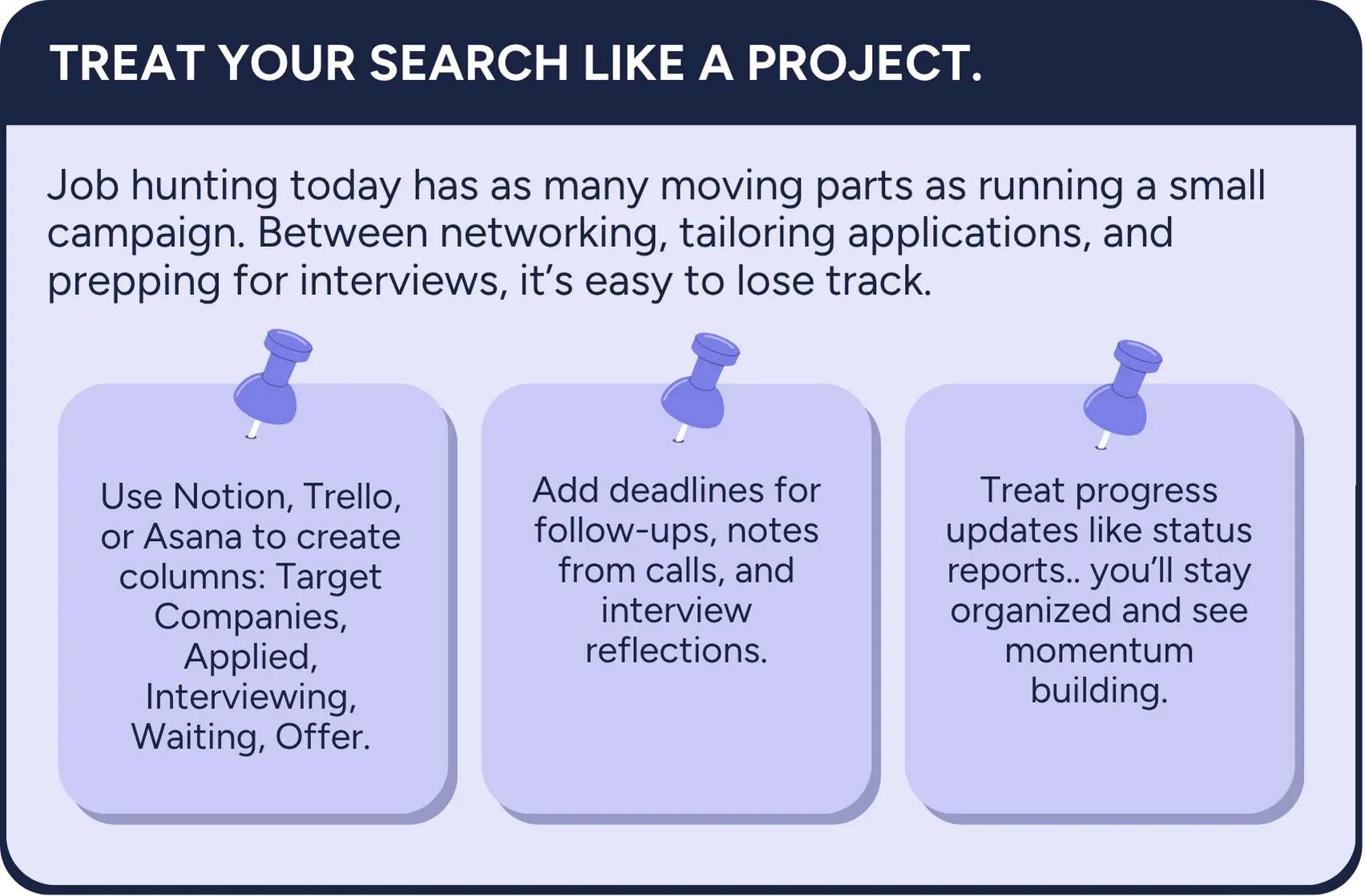
Job hunting today has as many moving parts as running a small campaign. Between networking, tailoring applications, and prepping for interviews, it's easy to lose track.
Use Notion, Trello, or Asana to create columns for Target Companies, Applied, Interviewing, Waiting, and Offer. Add deadlines for follow-ups, notes from calls, and interview reflections. Treat progress updates like status reports and stay organized to see momentum building.
Curate Your Target List
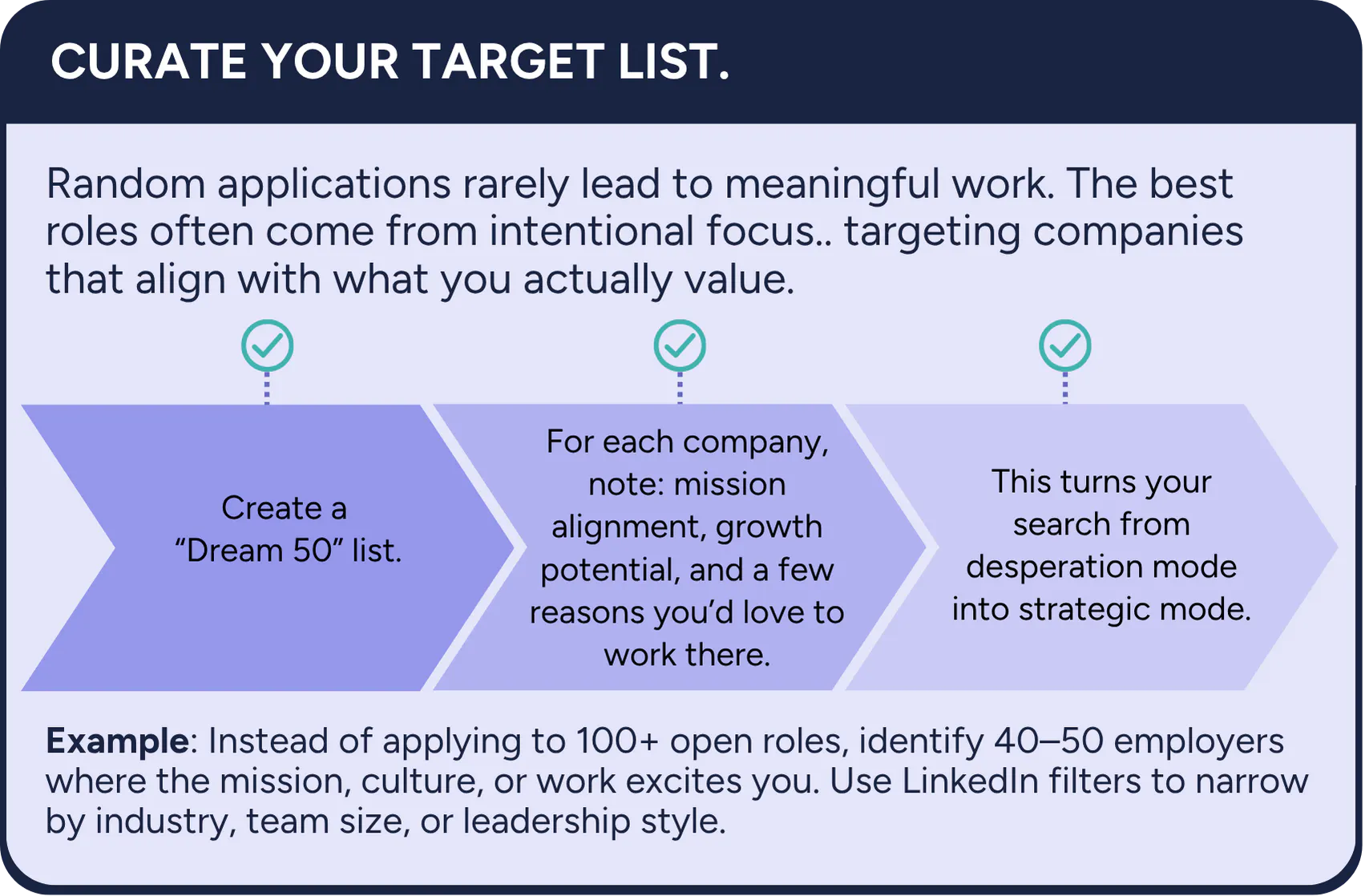
Random applications rarely lead to meaningful work. The best roles often come from intentional focus, targeting companies that align with what you actually value.
Create a "Dream 50" list. For each company, note their mission alignment, growth potential, and a few reasons you'd love to work there. This turns your search from desperation mode into strategic mode.
Instead of applying to 100+ open roles, identify 40–50 employers where the mission, culture, or work excites you. Use LinkedIn filters to narrow by industry, team size, or leadership style.
Leverage LinkedIn Intentionally
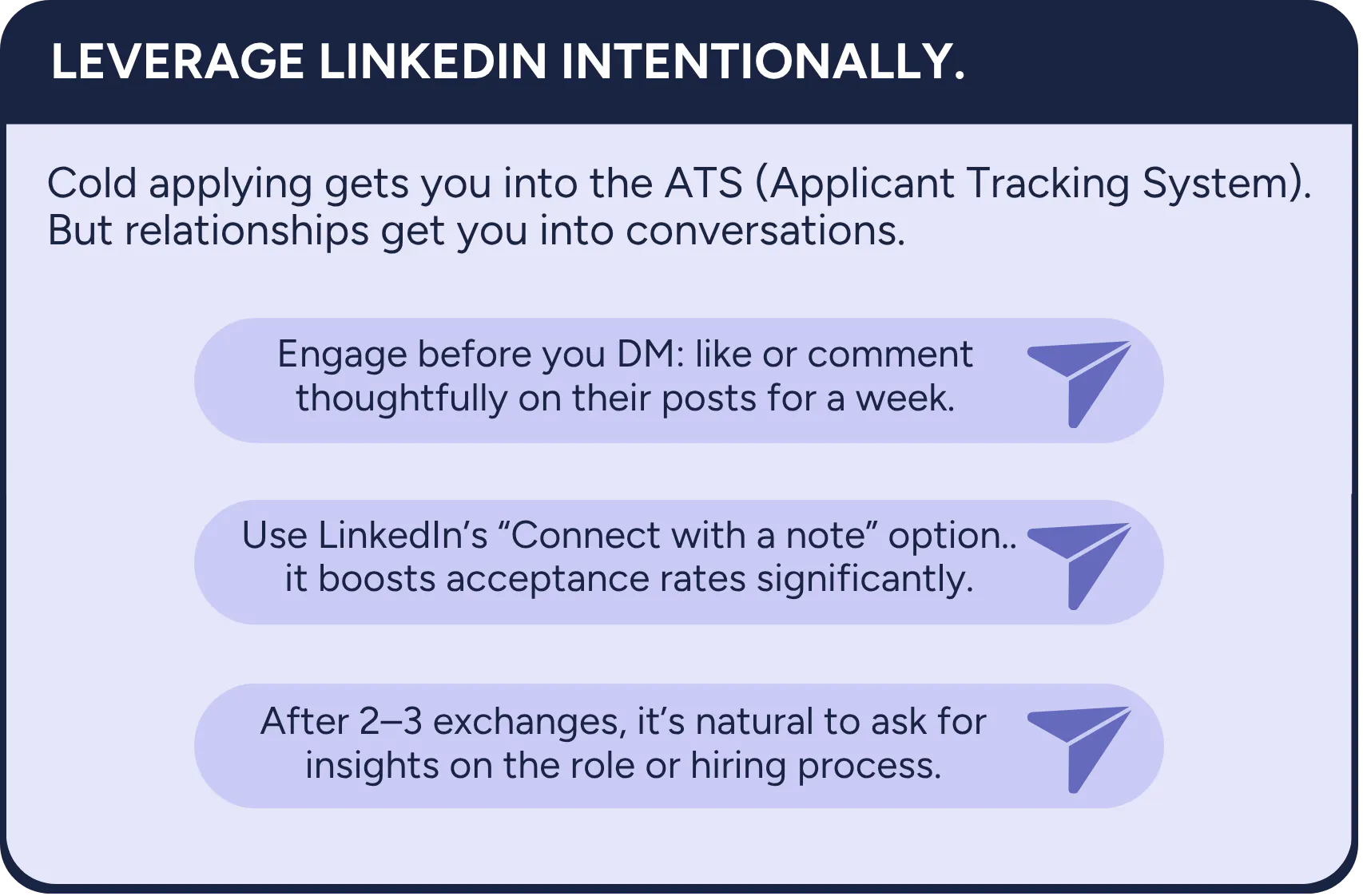
Cold applying gets you into the ATS (Applicant Tracking System). But relationships get you into conversations.
Engage before you DM—like or comment thoughtfully on their posts for a week. Use LinkedIn's "Connect with a note" option, as it boosts acceptance rates significantly. After 2–3 exchanges, it's natural to ask for insights on the role or hiring process.
Optimize Your Materials
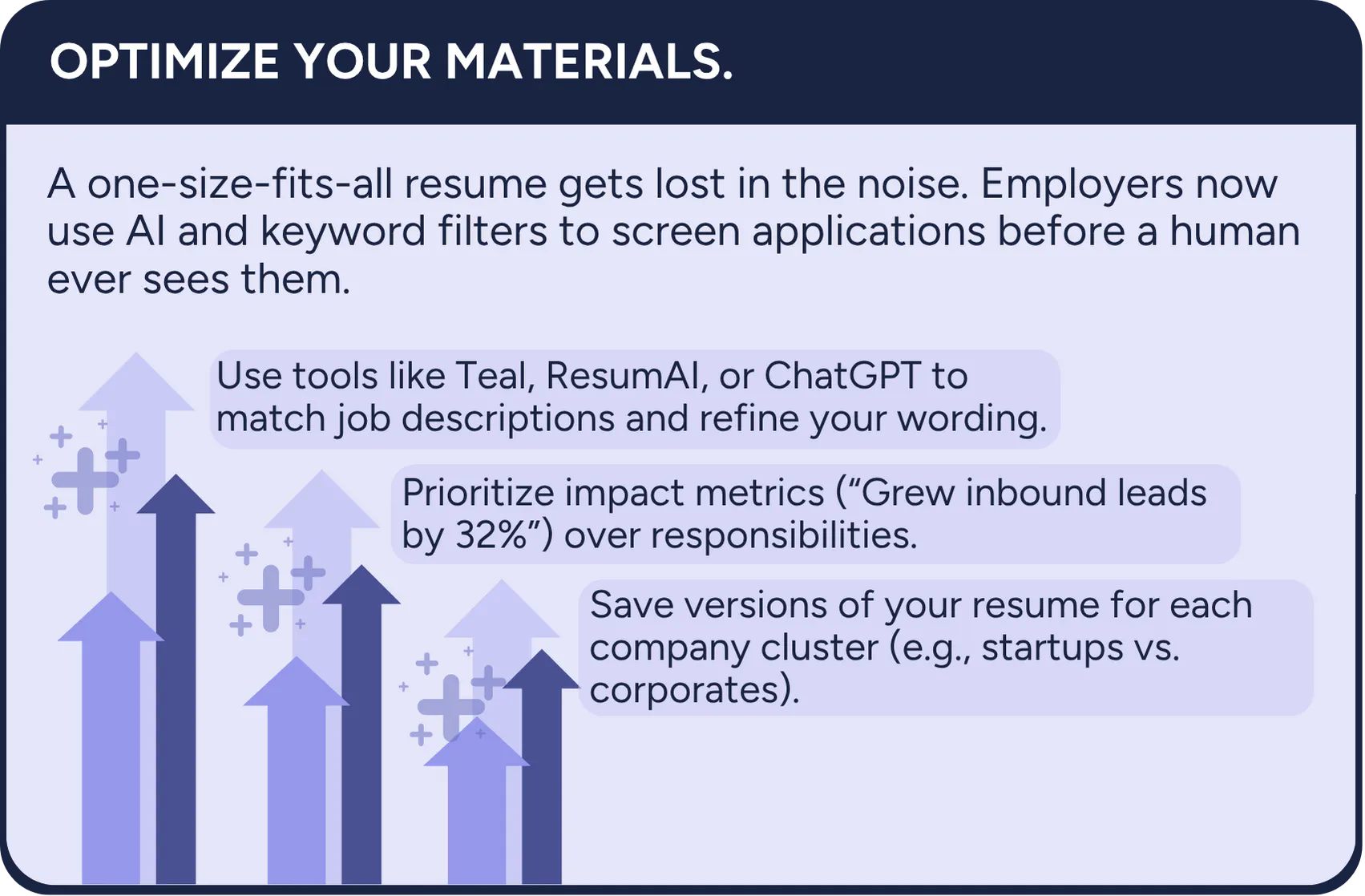
A one-size-fits-all resume gets lost in the noise. Employers now use AI and keyword filters to screen applications before a human ever sees them.
Use tools like Teal, ResumeAI, or ChatGPT to match job descriptions and refine your wording. Prioritize impact metrics ("Grew inbound leads by 32%") over responsibilities. Save versions of your resume for each company cluster (startups vs. corporates, for example).
Stay Proactive
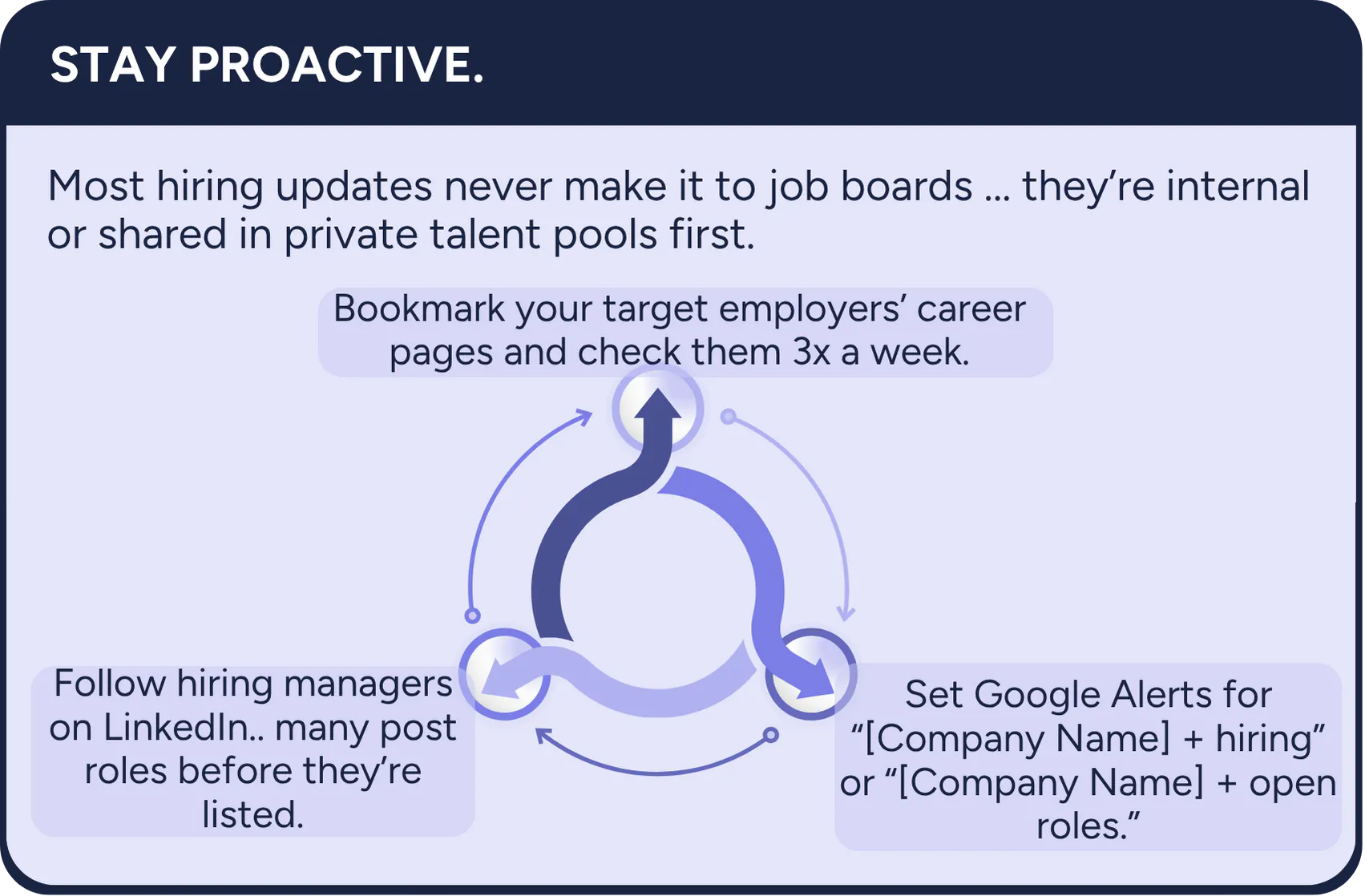
Most hiring updates never make it to job boards—they're internal or shared in private talent pools first.
Bookmark your target employers' career pages and check them 3x a week. Follow hiring managers on LinkedIn; many post roles before they're listed. Set Google Alerts for "[Company Name] + hiring" or "[Company Name] + open roles."
Be Prepared for Endurance
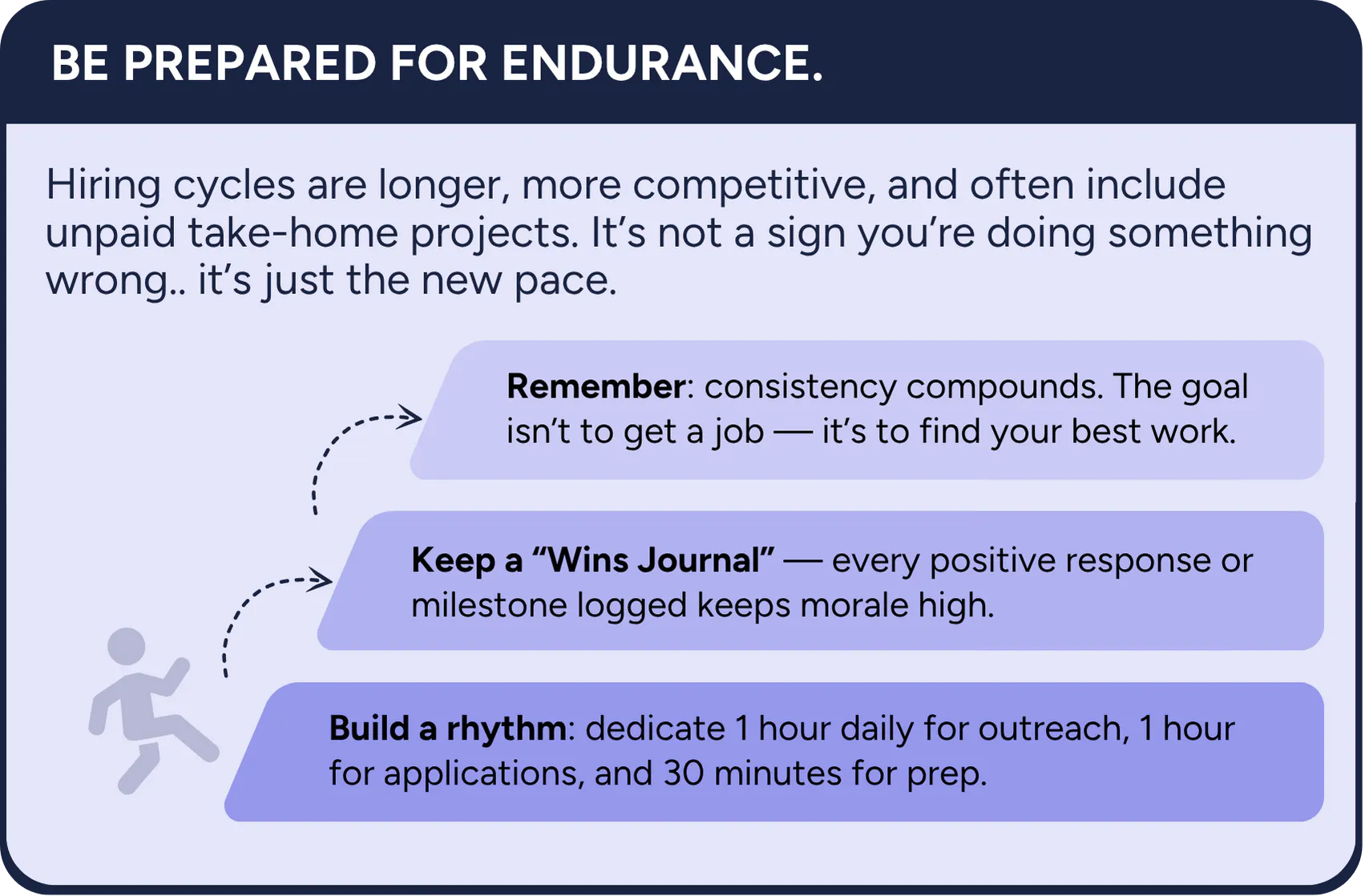
Hiring cycles are longer, more competitive, and often include unpaid take-home projects. It's not a sign you're doing something wrong—it's just the new pace.
Remember: consistency compounds. The goal isn't to get a job—it's to find your best work.
Keep a "Wins Journal"—every positive response or milestone logged keeps morale high.
Build a rhythm: dedicate 1 hour daily for outreach, 1 hour for applications, and 30 minutes for prep.
If this feels like a lot, it's because it is. Finding your best work has always required clarity—now it also requires systems.
Think like an operator: manage your search like a pipeline, not a lottery. It's not about luck, it's about visibility, preparation, and persistence. The more organized you are, the more control you'll have over the outcome.

Was this content useful?