 cord
cordMaster your Body Language in Job Interviews
How Your Nonverbal Communication Can Make or Break Your Next Interview
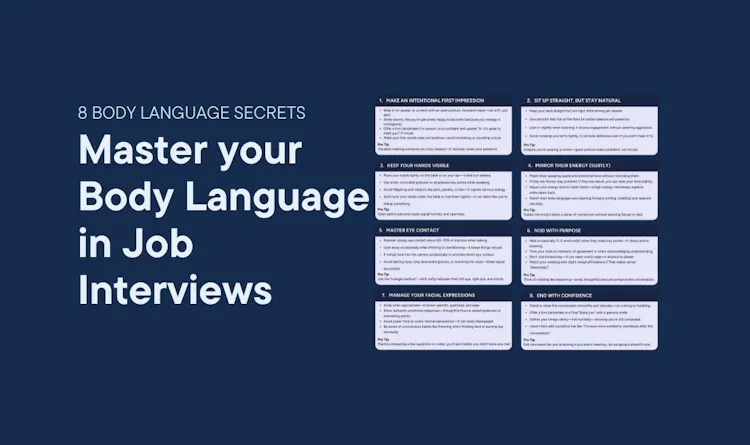
Your body language can determine whether you get hired or ruled out within seconds. Hiring managers form their first impression in just 7 seconds, and most of that assessment comes from your nonverbal communication.
Strong body language makes you memorable and demonstrates confidence. Weak body language makes you forgettable or raises doubts about your capabilities. The key is using your presence to showcase your authentic self while projecting confidence and competence.
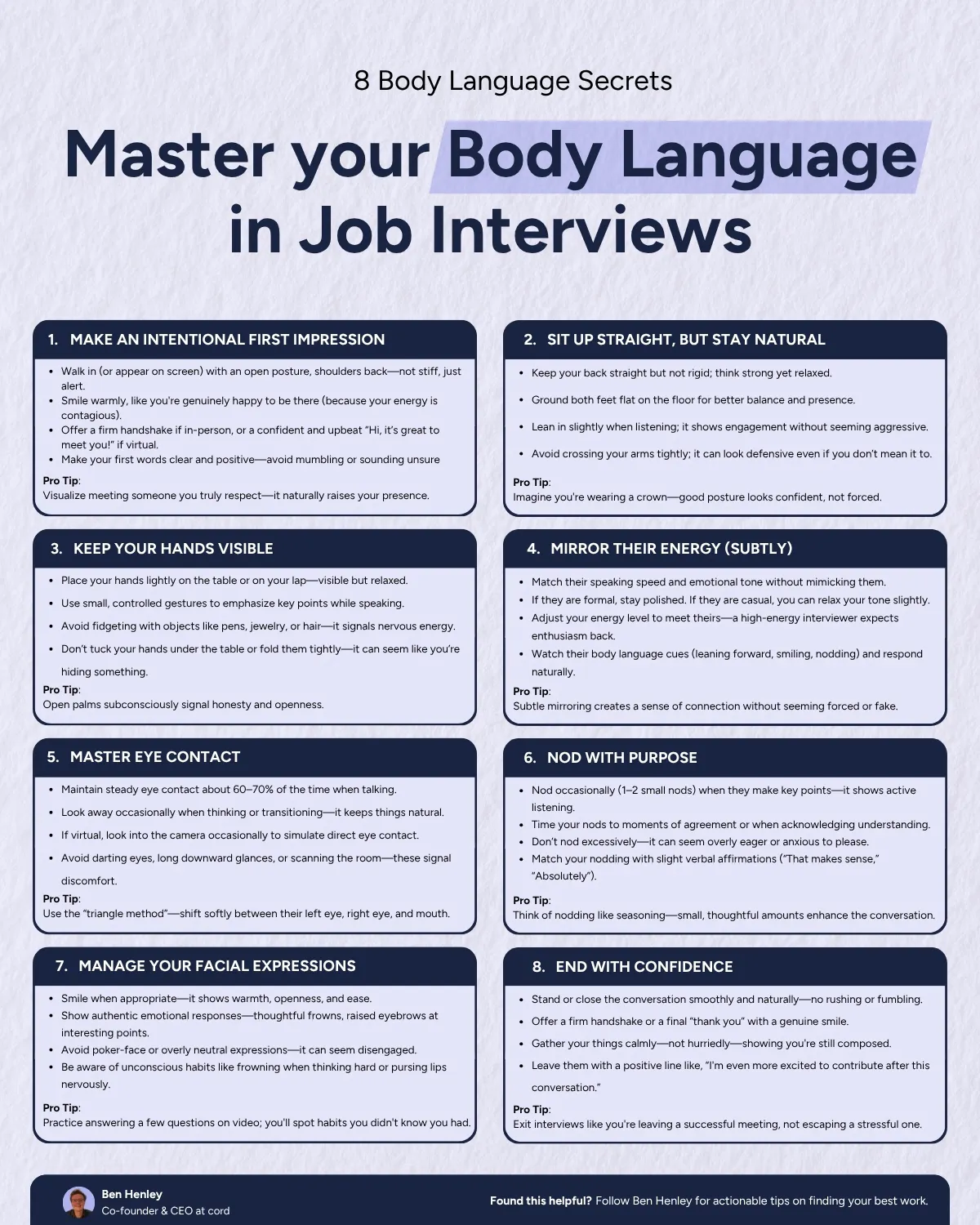
Here are eight body language strategies to increase your chances of interview success:
Make an Intentional First Impression
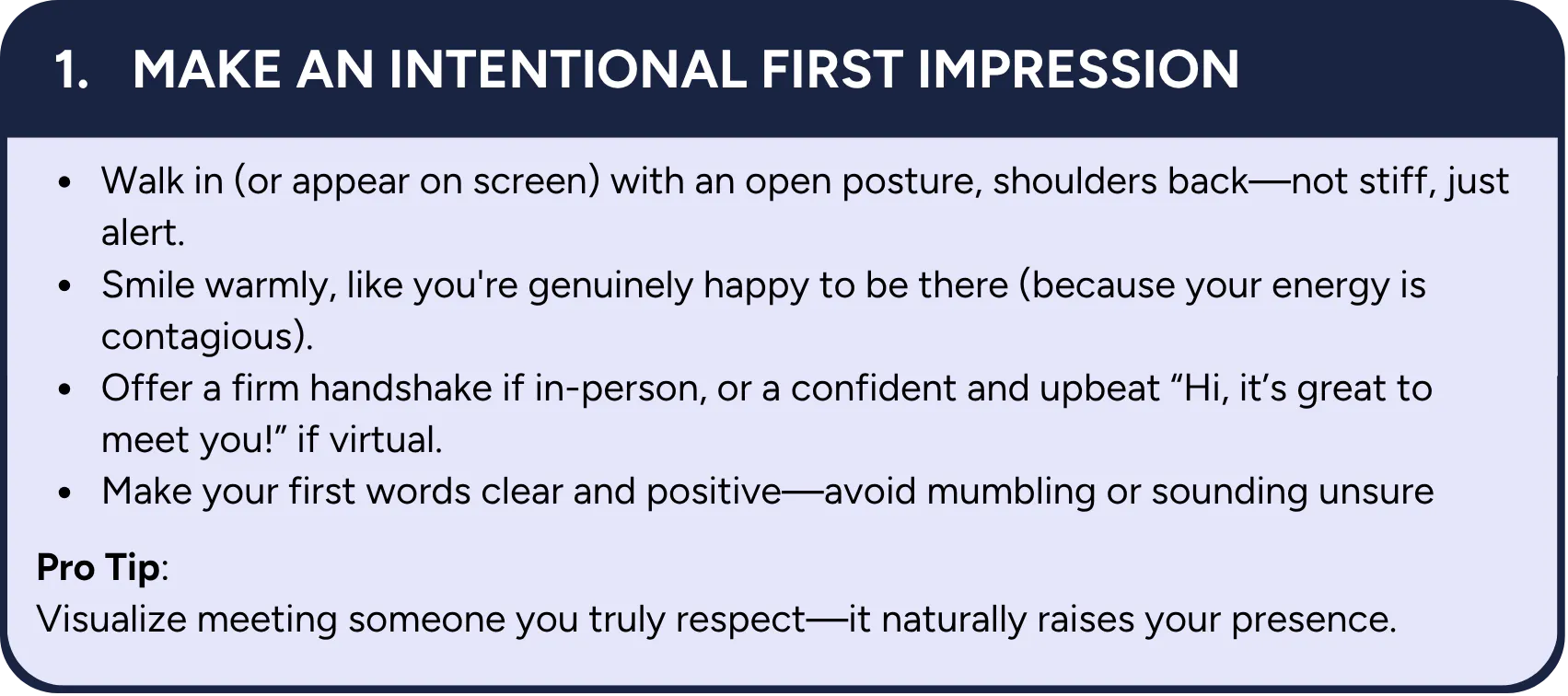
Your entrance sets the tone for the entire interview. Walk in with an open posture and shoulders back—avoid appearing stiff. Smile warmly and genuinely, showing you're happy to be there. Your energy should feel contagious.
Offer a firm handshake if meeting in person, or deliver a confident and upbeat "Hi, it's great to meet you!" for virtual interviews. Make your first words clear and positive, avoiding mumbling or sounding unsure.
Pro Tip: Visualize meeting someone you truly respect—it naturally raises your presence and confidence level.
Sit Up Straight, But Stay Natural
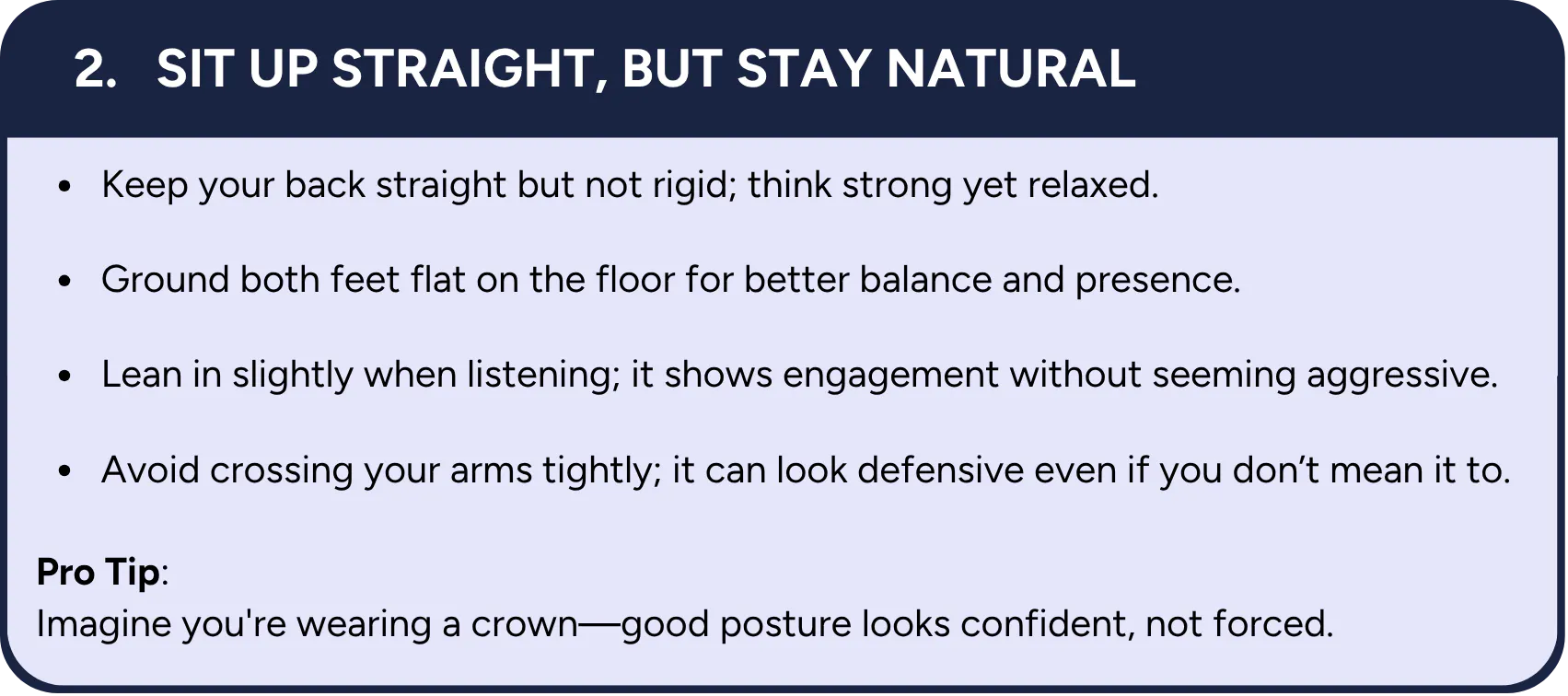
Keep your back straight but not rigid. Think strong yet relaxed. Ground both feet flat on the floor for better balance and presence. When listening, lean in slightly to show engagement without seeming aggressive.
Avoid crossing your arms tightly, as it can appear defensive even if unintentional.
Pro Tip: Imagine you're wearing a crown—good posture looks confident, not forced.
Keep Your Hands Visible
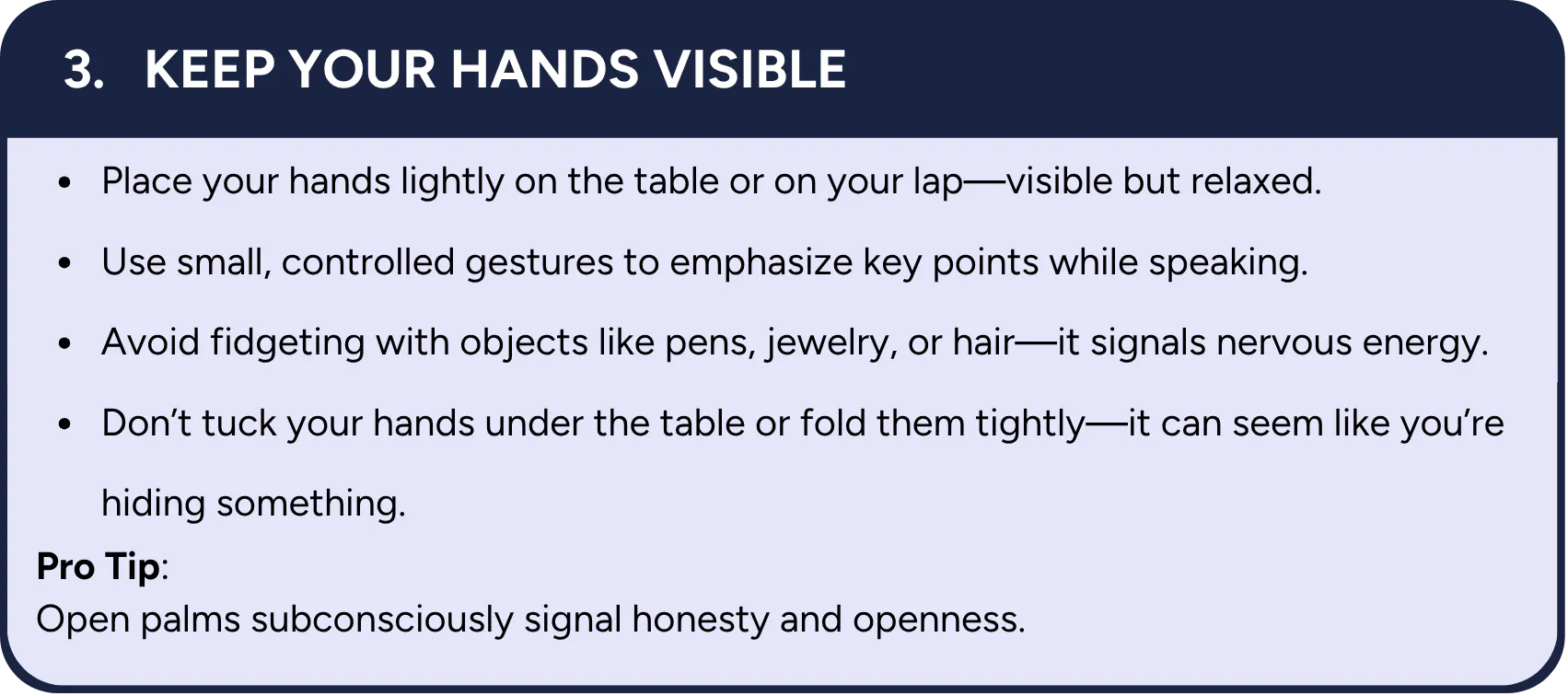
Place your hands lightly on the table or on your lap where they can be seen. Use small, controlled gestures to emphasize key points while speaking. Avoid fidgeting with objects like pens, jewelry, or hair, as these signal nervous energy.
Don't tuck your hands under the table or fold them tightly—it can seem like you're hiding something.
Pro Tip: Open palms subconsciously signal honesty and openness.
Mirror Their Energy (Subtly)
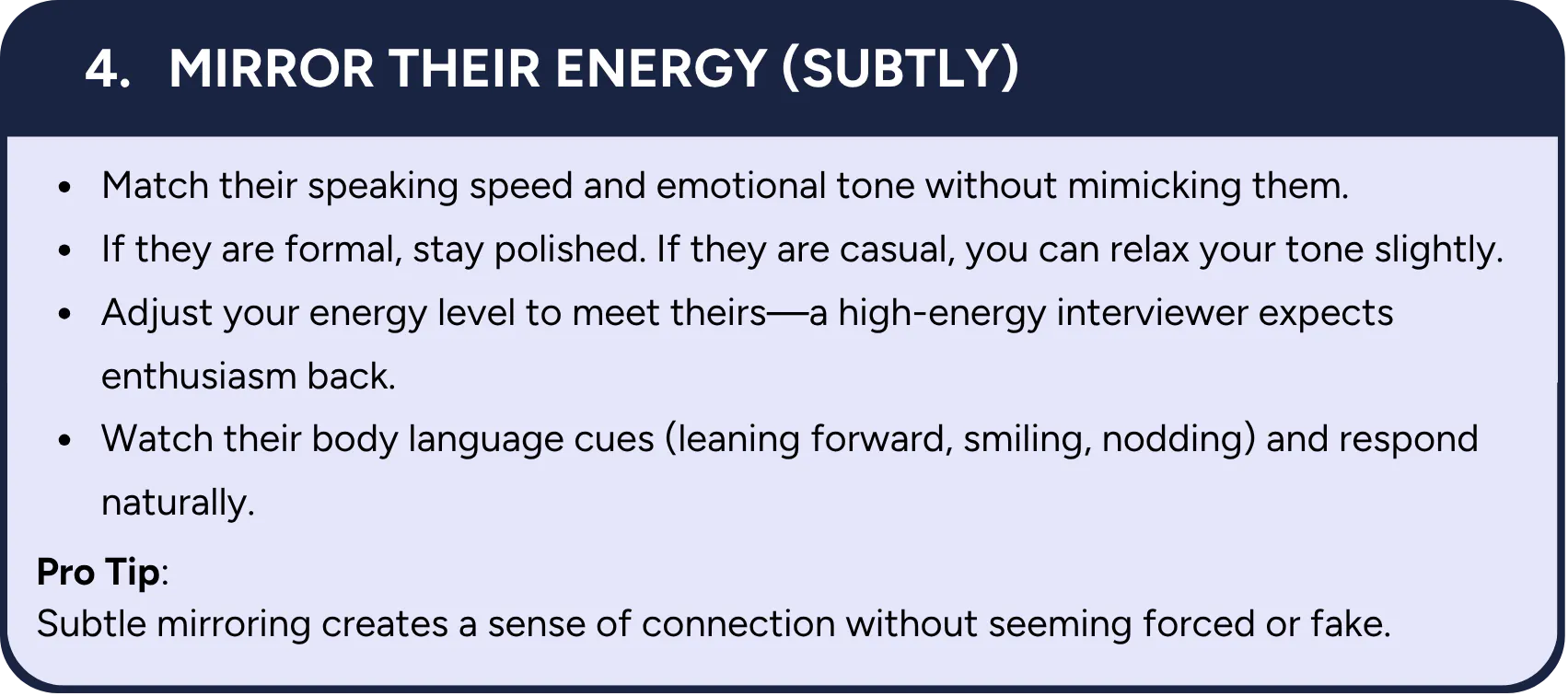
Match the interviewer's speaking speed and emotional tone without mimicking them directly. If they're formal, stay polished. If they're casual, you can relax your tone slightly. Adjust your energy level to meet theirs—a high-energy interviewer expects enthusiasm back.
Watch their body language cues like leaning forward, smiling, or nodding, and respond naturally.
Pro Tip: Subtle mirroring creates a sense of connection without seeming forced or fake.
Master Eye Contact
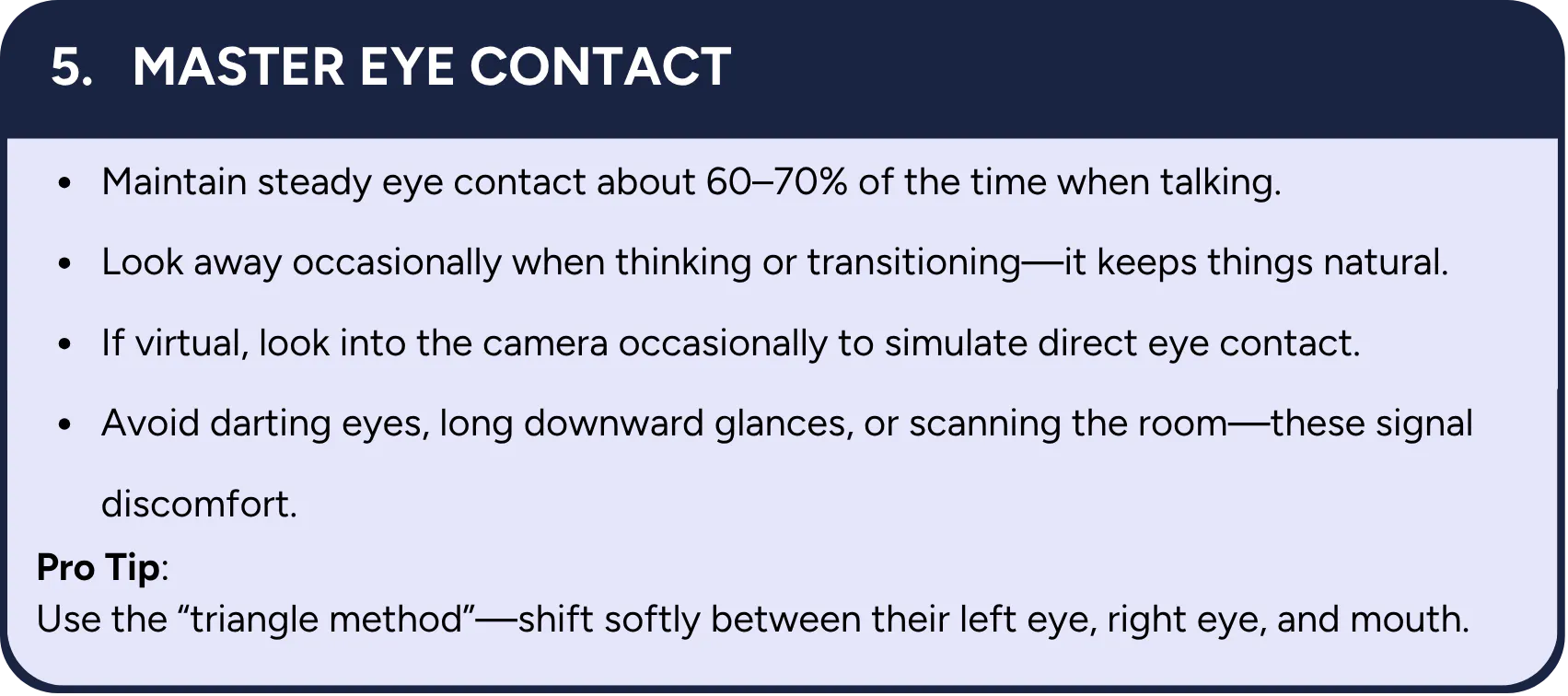
Maintain steady eye contact about 60-70% of the time when talking. Look away occasionally when thinking or transitioning to keep things natural. If virtual, look into the camera occasionally to simulate direct eye contact.
Avoid darting eyes, long downward glances, or scanning the room—these signal discomfort.
Pro Tip: Use the "triangle method"—shift softly between their left eye, right eye, and mouth.
Nod with Purpose
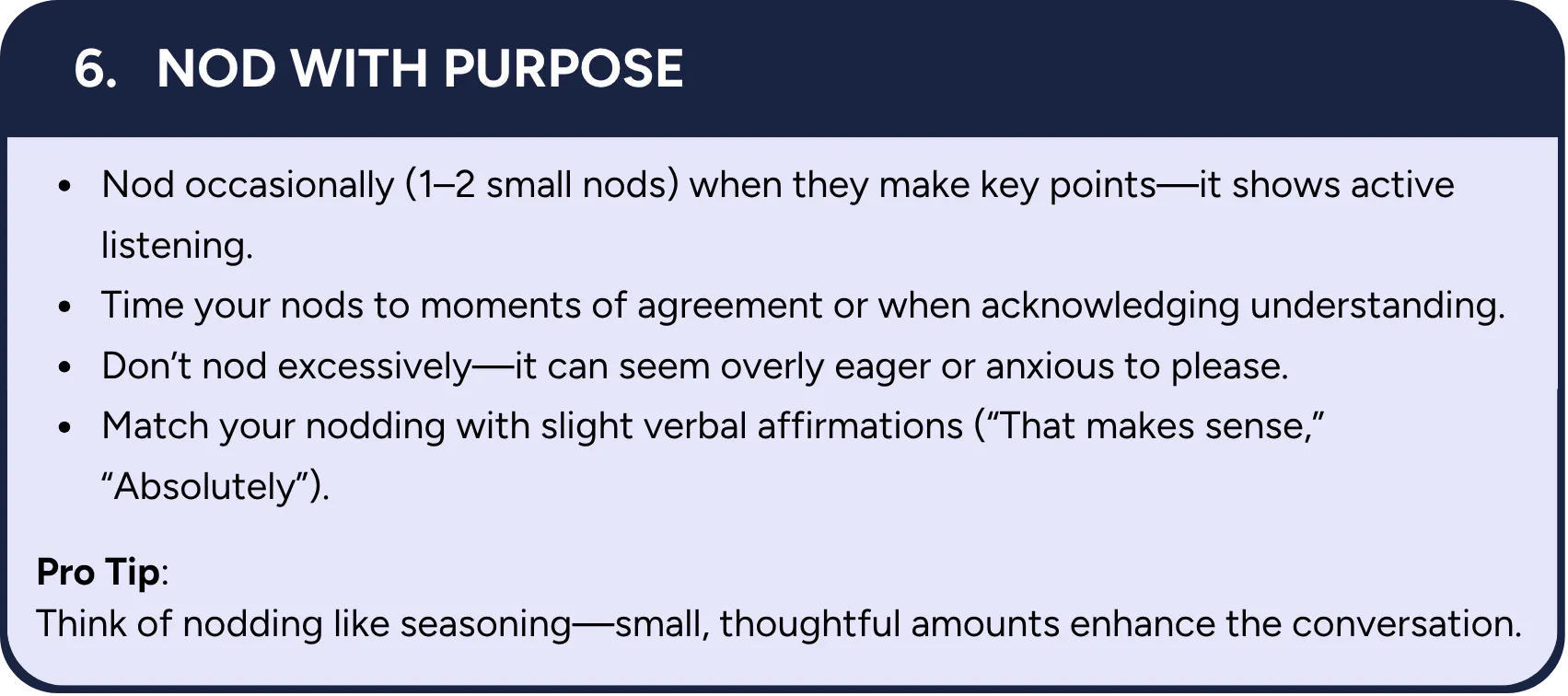
Nod occasionally with 1-2 small nods when they make key points to show active listening. Time your nods to moments of agreement or when acknowledging understanding. Don't nod excessively, as it can seem overly eager or anxious to please.
Match your nodding with slight verbal affirmations like "That makes sense" or "Absolutely."
Pro Tip: Think of nodding like seasoning—small, thoughtful amounts enhance the conversation.
Manage Your Facial Expressions
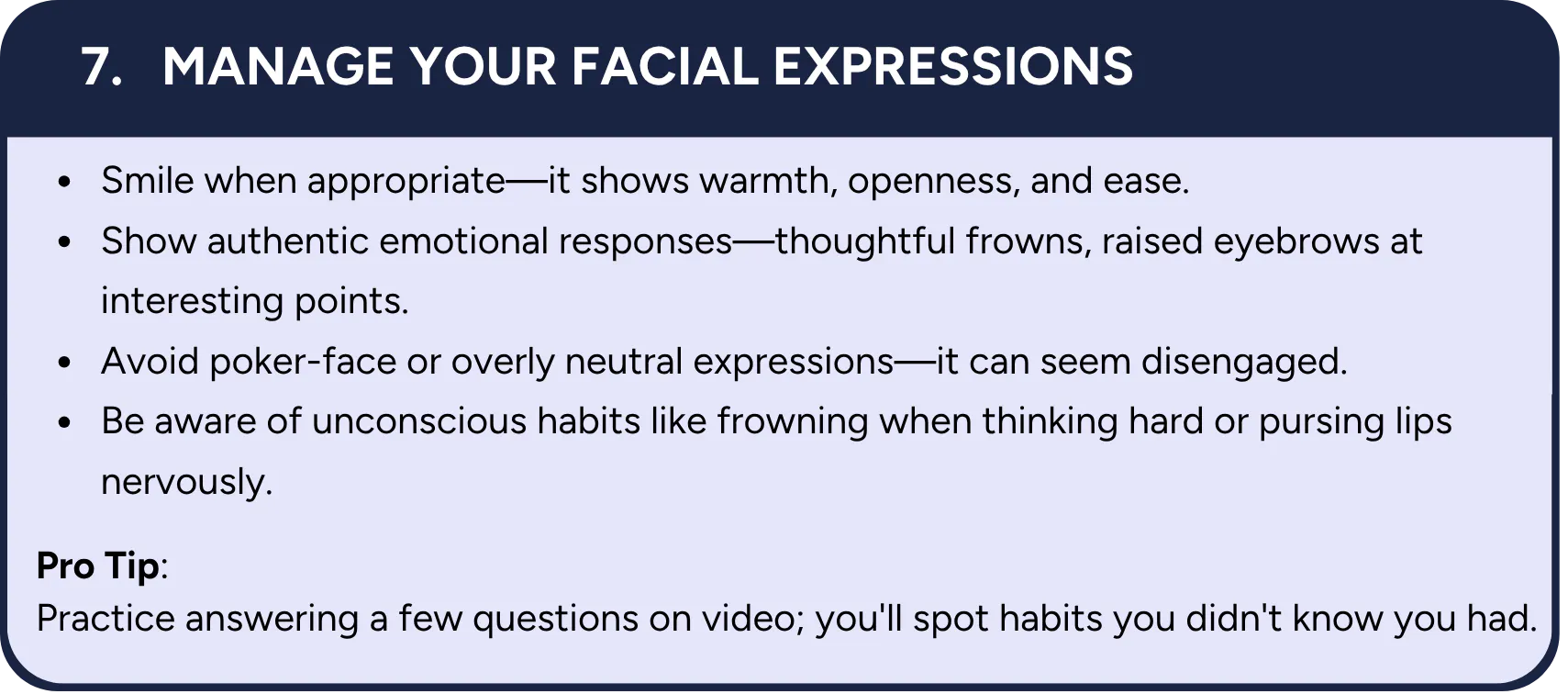
Smile when appropriate to show warmth, openness, and ease. Show authentic emotional responses with thoughtful frowns or raised eyebrows at interesting points. Avoid poker-face or overly neutral expressions that can seem disengaged.
Be aware of unconscious habits like frowning when thinking hard or pursing lips nervously.
Pro Tip: Practice answering a few questions on video to spot habits you didn't know you had.
End with Confidence
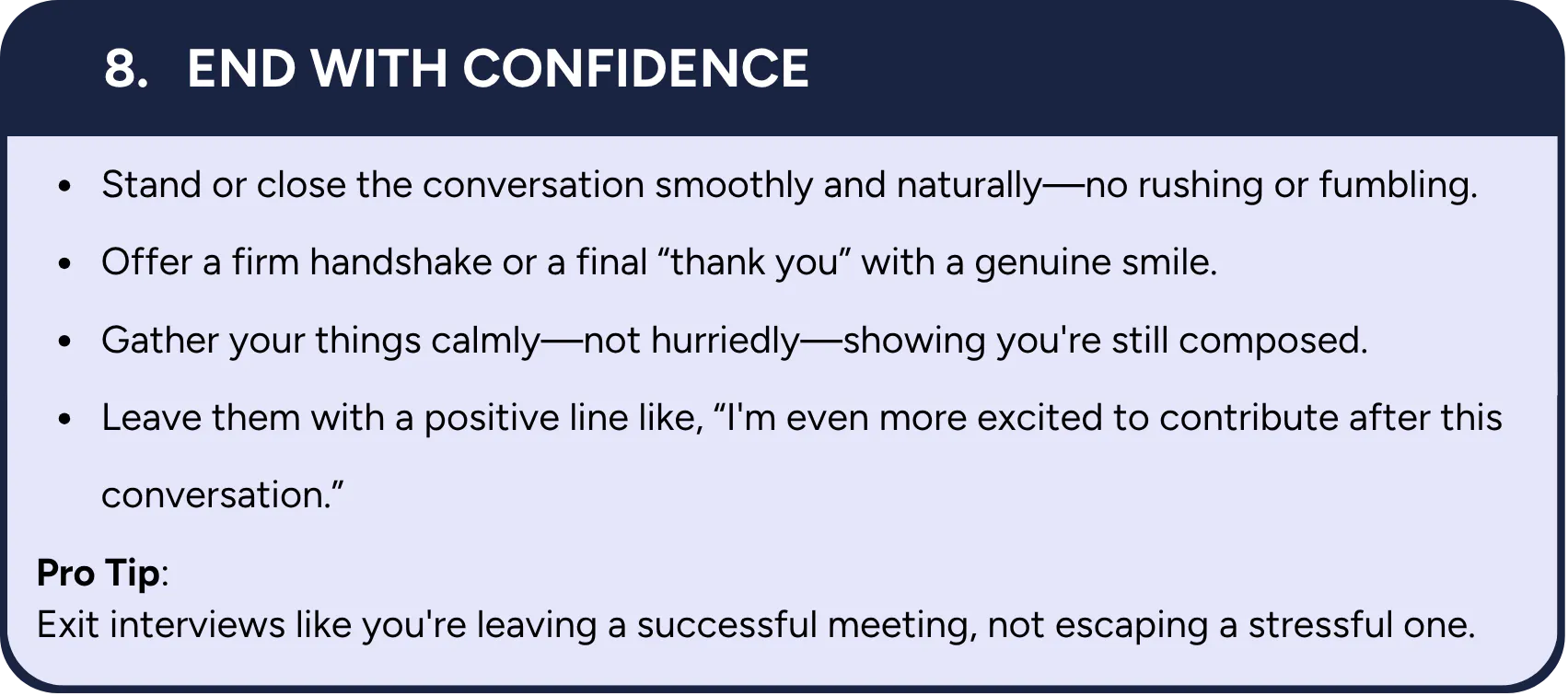
Stand or close the conversation smoothly and naturally—no rushing or fumbling. Offer a firm handshake or a final "thank you" with a genuine smile. Gather your things calmly, not hurriedly, showing you're still composed.
Leave them with a positive line like, "I'm even more excited to contribute after this conversation."
Pro Tip: Exit interviews like you're leaving a successful meeting, not escaping a stressful one.
The Bottom Line
Your resume gets you the interview, but your presence gets you the offer. These body language techniques help you project confidence while remaining authentic. The goal isn't to perform or pretend—it's to present the best, most confident version of yourself.
Practice these techniques before your next interview. Small adjustments in how you carry yourself can make a significant difference in how others perceive your capabilities and fit for the role.

Was this content useful?