 cord
cordStep-by-Step Guide to Interview Success
A Framework for Preparation, Performance, and Follow-Through
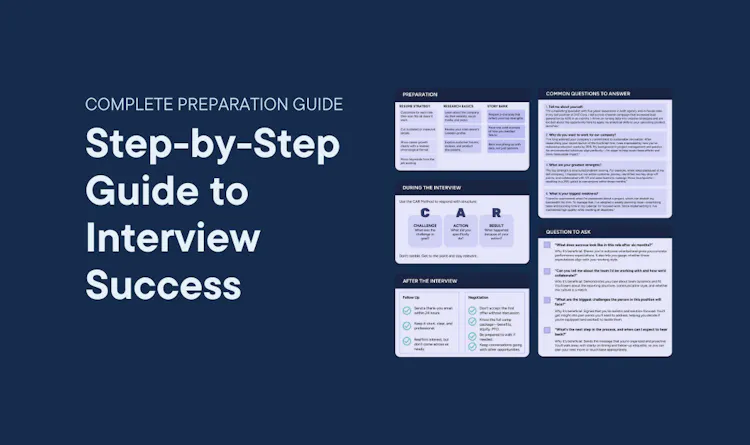
Interviewing is a skill that improves with practice and preparation. Many qualified candidates get rejected not because they lack abilities, but because they show up unprepared. Here's a straightforward framework to help you succeed in your next interview.
Before the Interview: Set the Foundation
Your preparation work speaks before you do. Here's how to build a strong foundation:
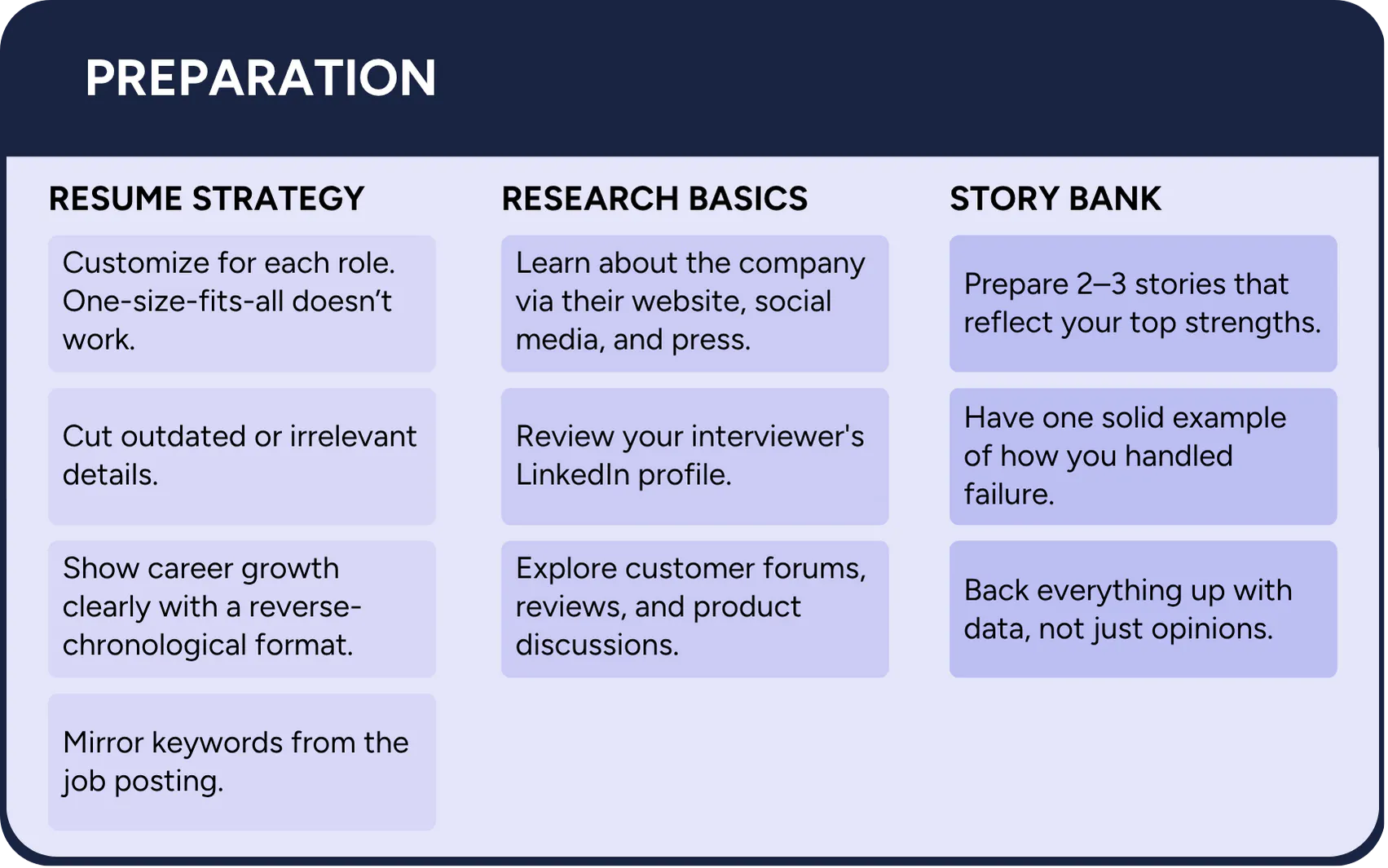
Resume Strategy
- Customize for each role - One-size-fits-all resumes don't work. Tailor your resume to match the specific position you're applying for.
- Cut outdated or irrelevant details - Remove information that doesn't support your candidacy for this particular role.
- Show career growth clearly - Use a reverse-chronological format to demonstrate your professional progression.
- Mirror keywords from the job posting - Include relevant terms and phrases that appear in the job description.
Research Basics
- Learn about the company - Study their website, social media presence, and recent press coverage.
- Review your interviewer's LinkedIn profile - Understand their background and role within the company.
- Explore customer forums, reviews, and product discussions - Get insights into the company's reputation and challenges.
Story Bank
- Prepare 2-3 stories that clearly demonstrate your top strengths and achievements.
- Have one solid example of how you handled failure or overcame a significant challenge.
- Back everything up with data - Use specific numbers and measurable outcomes, not just opinions or generalizations.
During the Interview: Make It Count
You only get one chance to make a first impression. Here's how to maximize your performance:
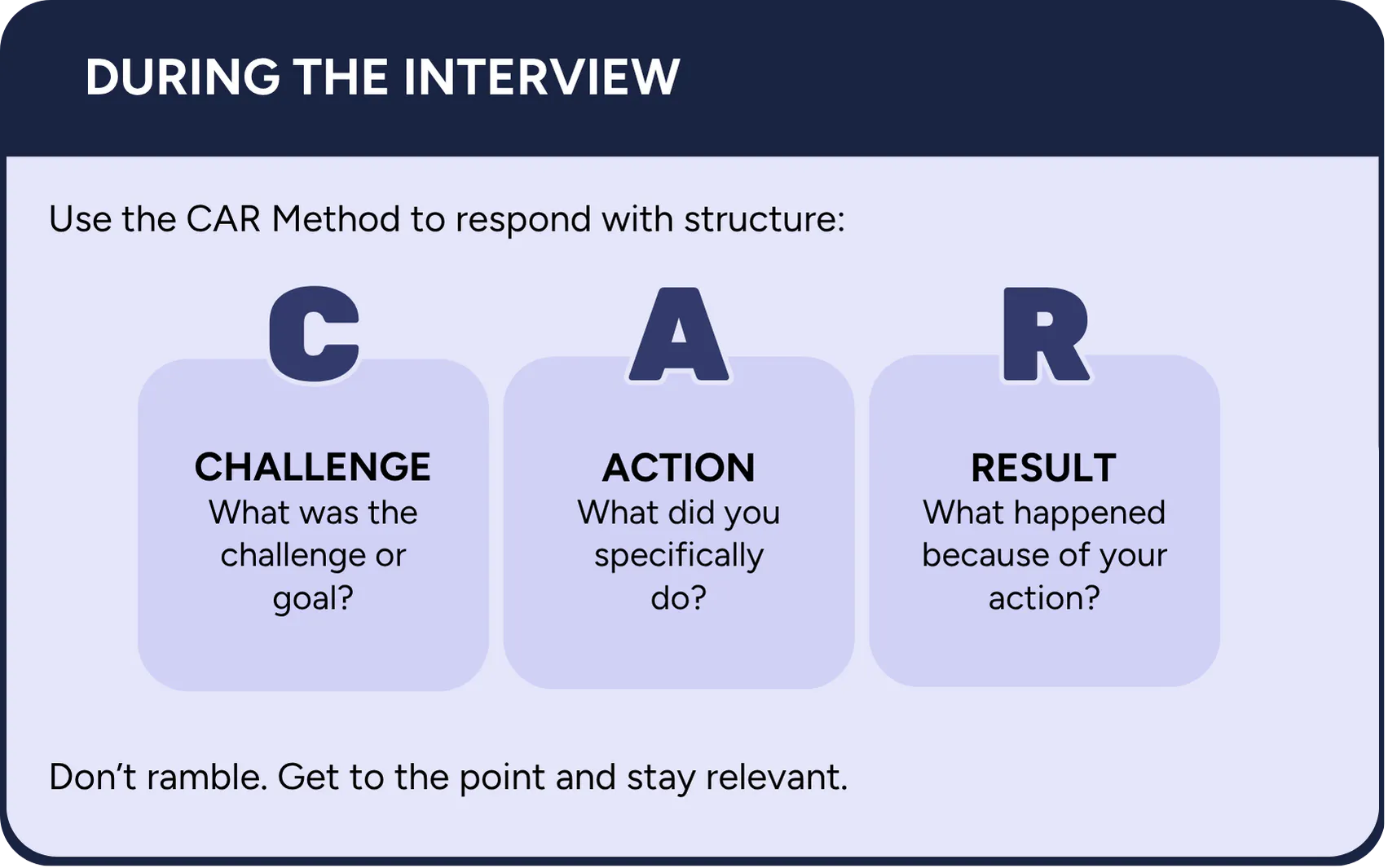
Answer Smart with the CAR Method
Structure your responses using this proven framework:
- Challenge: What was the specific problem or situation you faced?
- Action: What steps did you take to address it?
- Result: What happened because of your actions? What changed?
Key principle: Don't ramble. Get to the point and stay relevant to the question asked.
Common Questions and How to Answer Them
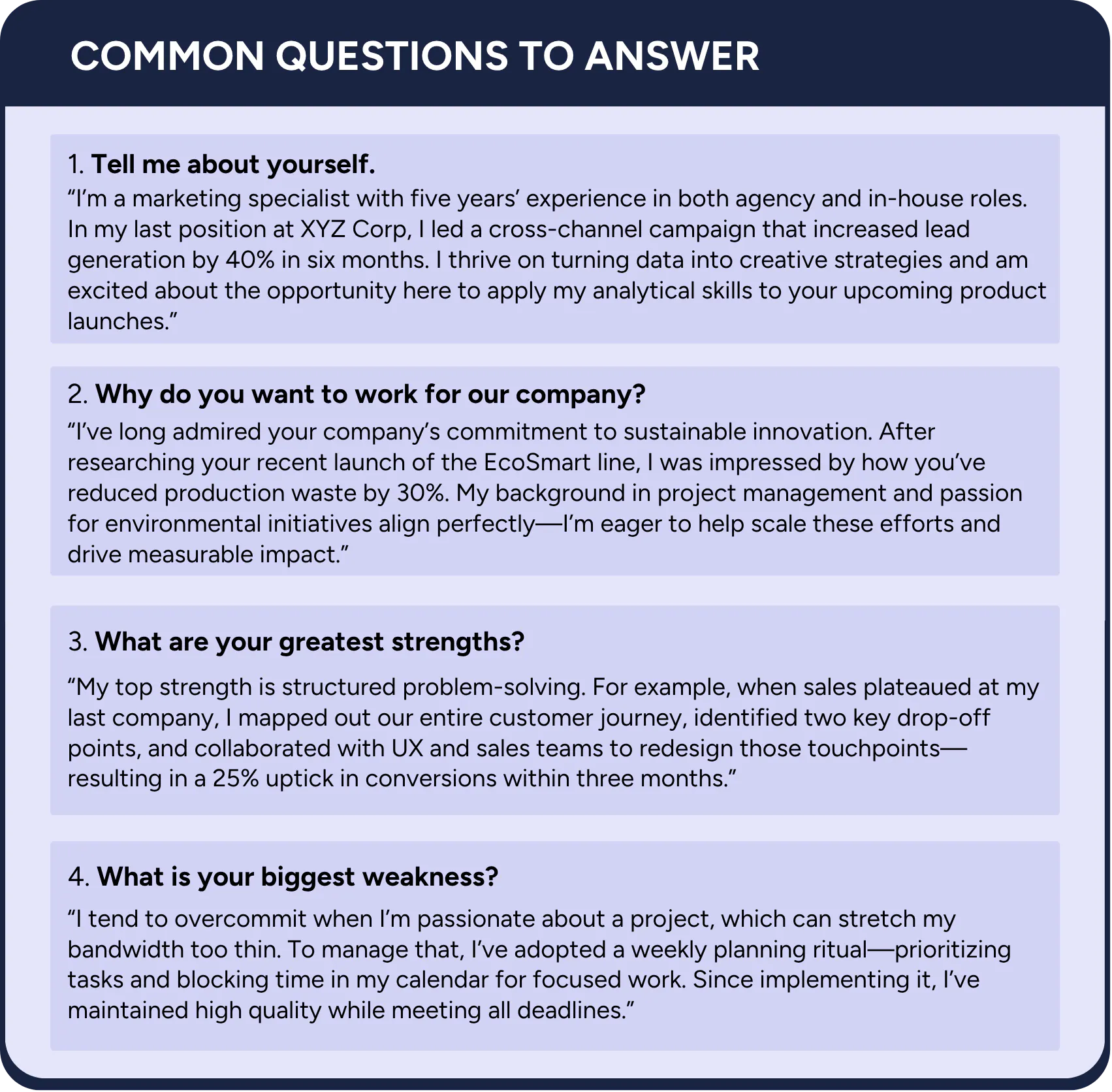
1. Tell me about yourself. Focus on your professional background, key achievements, and how they relate to the role. Example: "I'm a marketing specialist with five years of experience in both agency and in-house roles. In my last position at XYZ Corp, I led cross-channel campaigns that increased lead generation by 40% in six months. I thrive on turning data into creative strategies and am excited about the opportunity here to apply my analytical skills to your upcoming product launches."
2. Why do you want to work for our company? Show genuine interest by referencing specific aspects of the company. Example: "I've long admired your company's commitment to sustainable innovation. After researching your recent launch of the EcoSmart line, I was impressed by how you've reduced production waste by 30%. My background in project management and passion for environmental initiatives align perfectly—I'm eager to help scale these efforts and drive measurable impact."
3. What are your greatest strengths? Provide specific examples that demonstrate your strengths in action. Example: "My top strength is structured problem-solving. For example, when sales plateaued at my last company, I mapped out our entire customer journey, identified two key drop-off points, and collaborated with UX and sales teams to redesign those touchpoints—resulting in a 25% uptick in conversions within three months."
4. What is your biggest weakness? Show self-awareness and growth. Example: "I tend to overcommit when I'm passionate about a project, which can stretch my bandwidth too thin. To manage that, I've adopted a weekly planning ritual—prioritizing tasks and blocking time in my calendar for focused work. Since implementing it, I've maintained high quality while meeting all deadlines."
Questions to Ask

"What does success look like in this role after six months?" This shows you're outcome-oriented and gives you concrete performance expectations. It also lets you gauge whether those expectations align with your working style.
"Can you tell me about the team I'd be working with and how we'd collaborate?" This demonstrates that you care about team dynamics and fit. You'll learn about the reporting structure, communication style, and whether the culture is a match.
"What are the biggest challenges the person in this position will face?" This signals that you're realistic and solution-focused. You'll get insight into pain points you'll need to address, helping you decide if you're equipped (and excited) to tackle them.
"What's the next step in the process, and when can I expect to hear back?" This sends the message that you're organized and proactive. You'll walk away with clarity on timing and follow-up etiquette, so you can plan your next move or touch base appropriately.
After the Interview: Finish Strong
Many candidates lose opportunities in the follow-up phase. Here's how to maintain momentum:
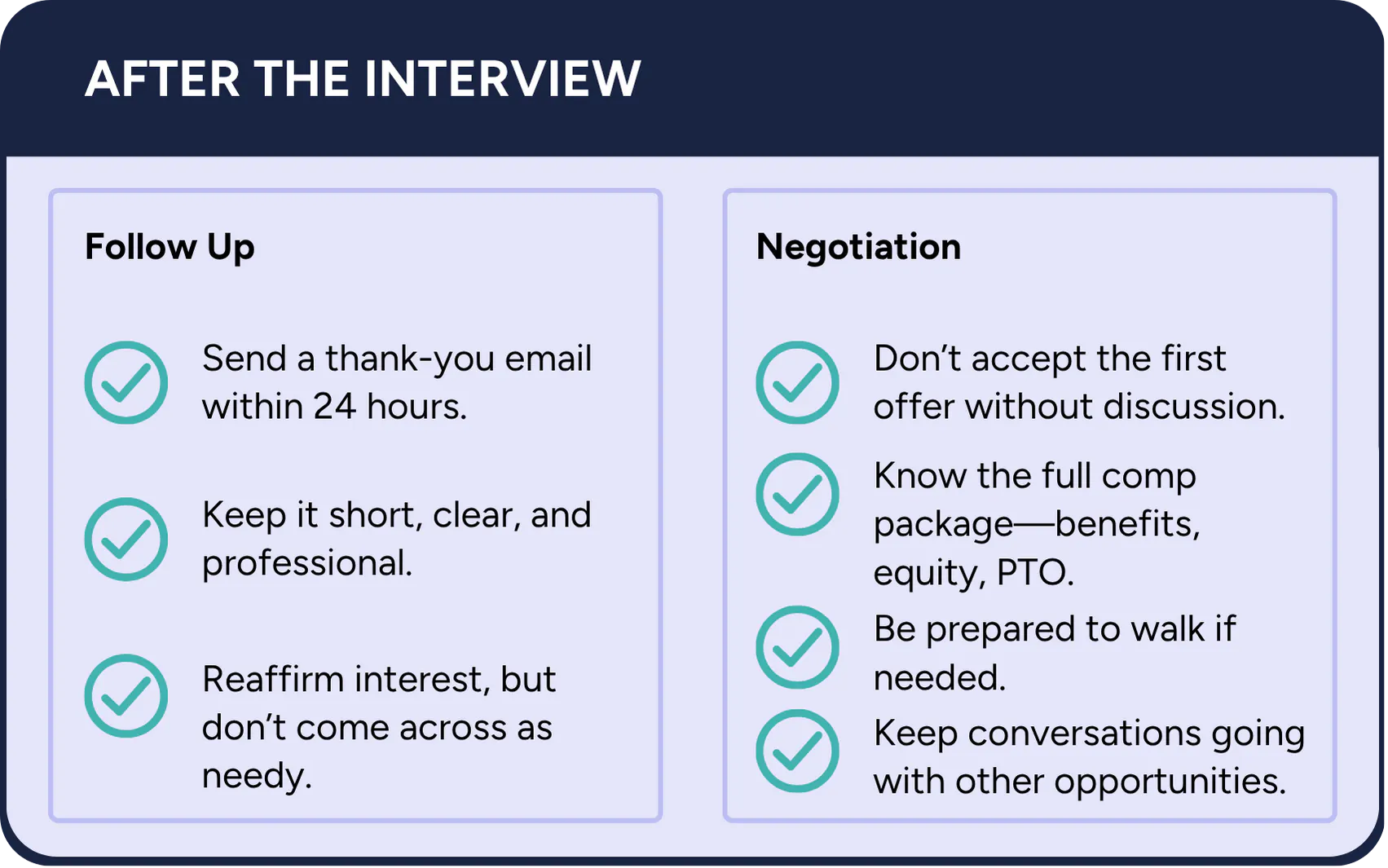
Follow Up
- Send a thank-you email within 24 hours - Express appreciation for the interviewer's time and reiterate your interest.
- Keep it short, clear, and professional - A concise message is more impactful than a lengthy one.
- Reaffirm interest without appearing needy - Strike the right balance between enthusiasm and desperation.
Negotiation
- Don't accept the first offer without discussion - Most initial offers have room for negotiation.
- Know the full compensation package - Consider benefits, equity, PTO, and other perks, not just base salary.
- Be prepared to walk if needed - Having alternatives strengthens your negotiating position.
- Keep conversations going with other opportunities - Don't put all your eggs in one basket.
The Bottom Line
Interviews aren't about perfection—they're about preparation. While others wing it, successful candidates stick to a proven process. Use this framework to approach each interview systematically, and you'll consistently perform at your best when it matters most.
Success in interviewing comes down to doing the work beforehand, staying structured during the conversation, and following through professionally afterward. Master these fundamentals, and you'll stand out from the competition every time.

Was this content useful?