 cord
cordSuccessful Frameworks for Interview Questions
Master Interview Questions: 4 Proven Frameworks That Actually Work
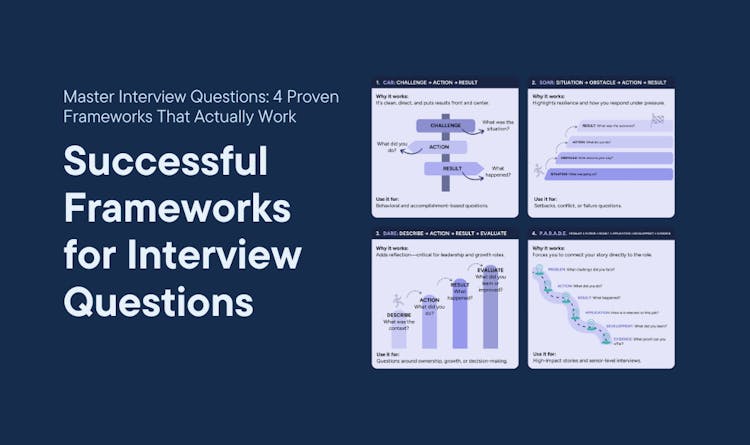
Preparing for interviews isn't about memorizing perfect stories. It's about learning how to structure your answers so they land with impact.
The difference between rambling through an example and delivering a compelling response comes down to framework. When you organize your thoughts clearly, interviewers can follow your logic and trust your decision-making process.
Here are four frameworks that successful candidates use to structure their interview answers:
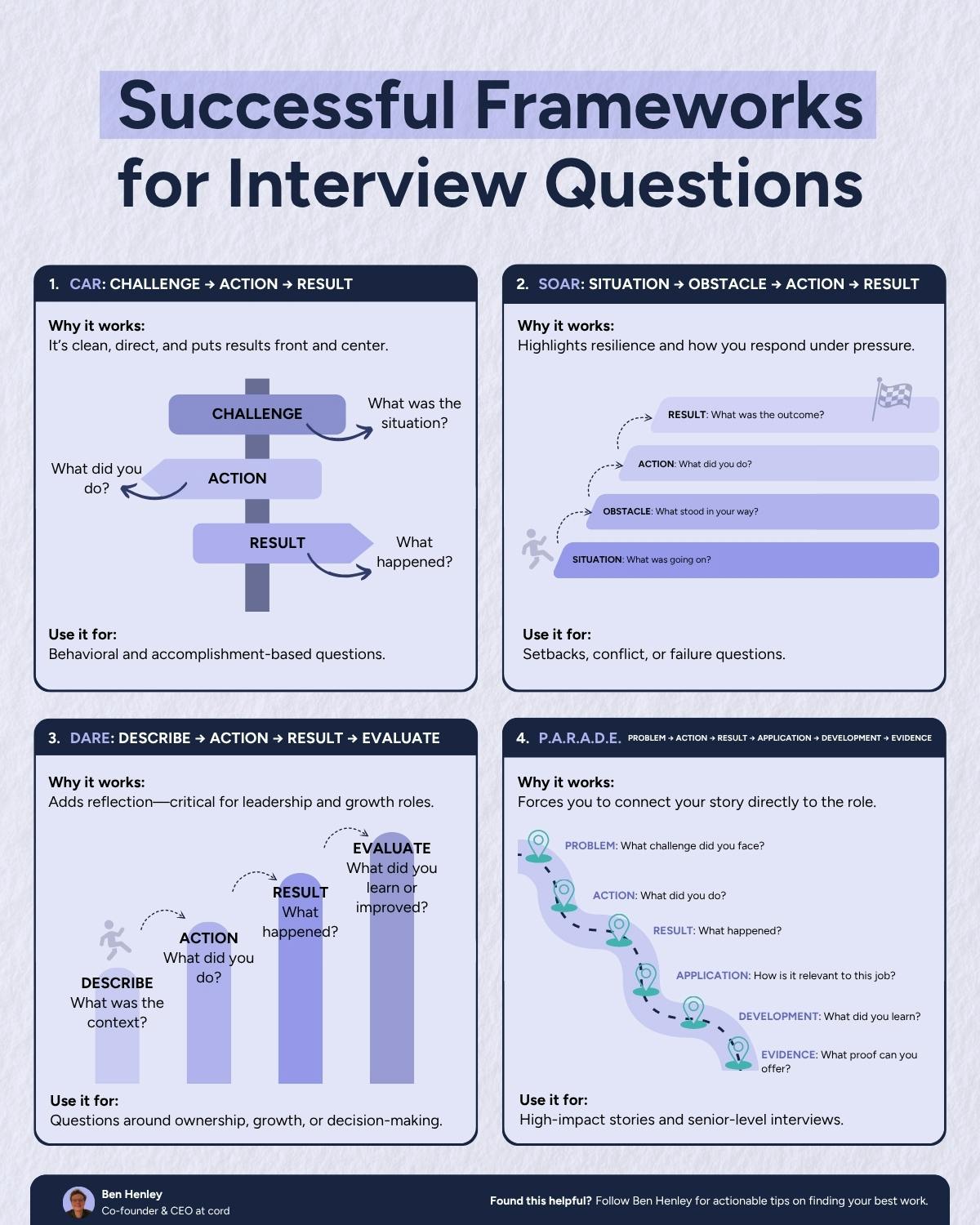
CAR: Challenge → Action → Result
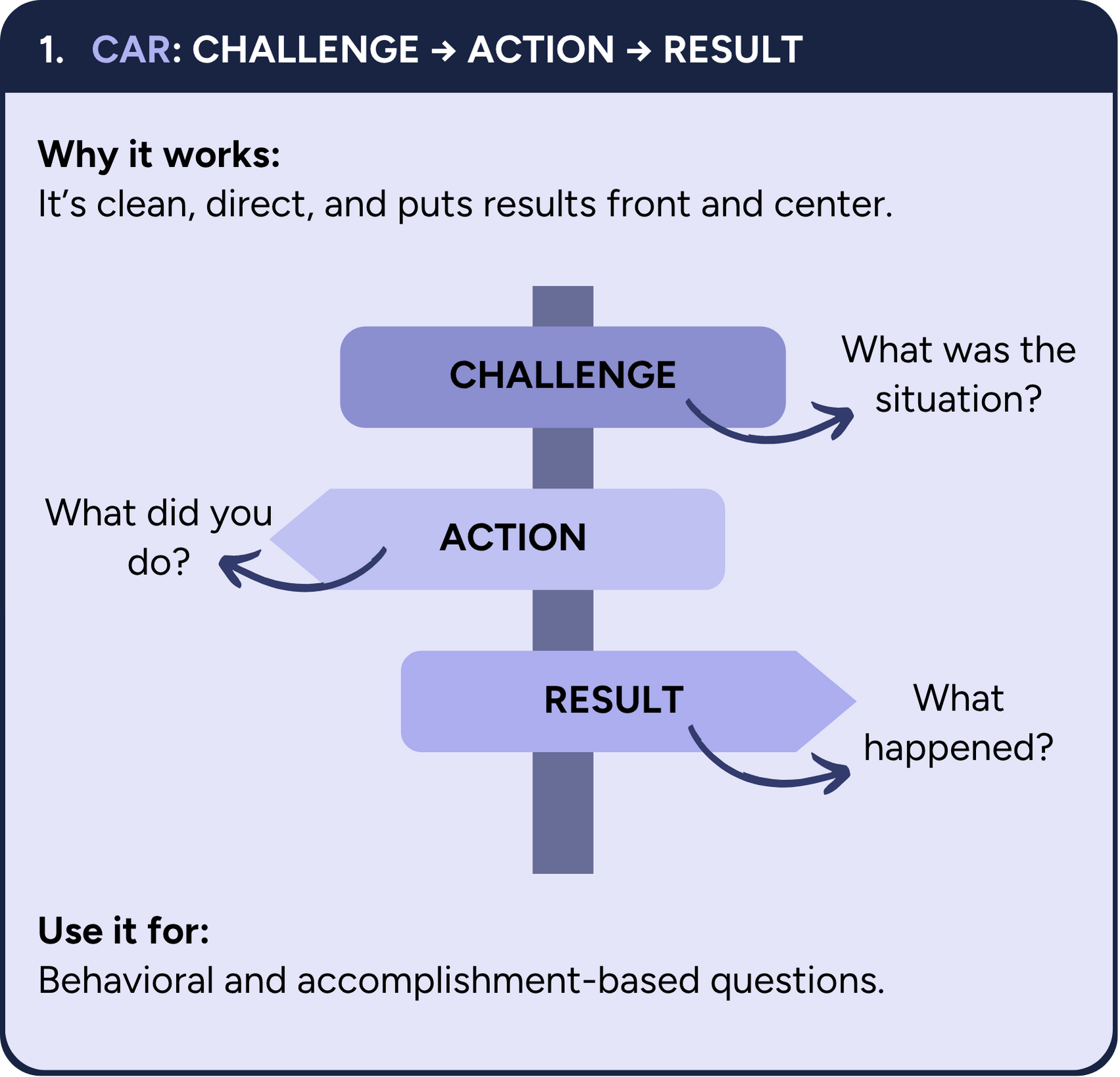
Why it works: This framework is clean, direct, and puts results front and center.
When to use it: Behavioral and accomplishment-based questions.
The structure:
- Challenge: What was the situation?
- Action: What did you do?
- Result: What happened?
This straightforward approach works because it immediately establishes context, shows your initiative, and demonstrates measurable outcomes.
SOAR: Situation → Obstacle → Action → Result
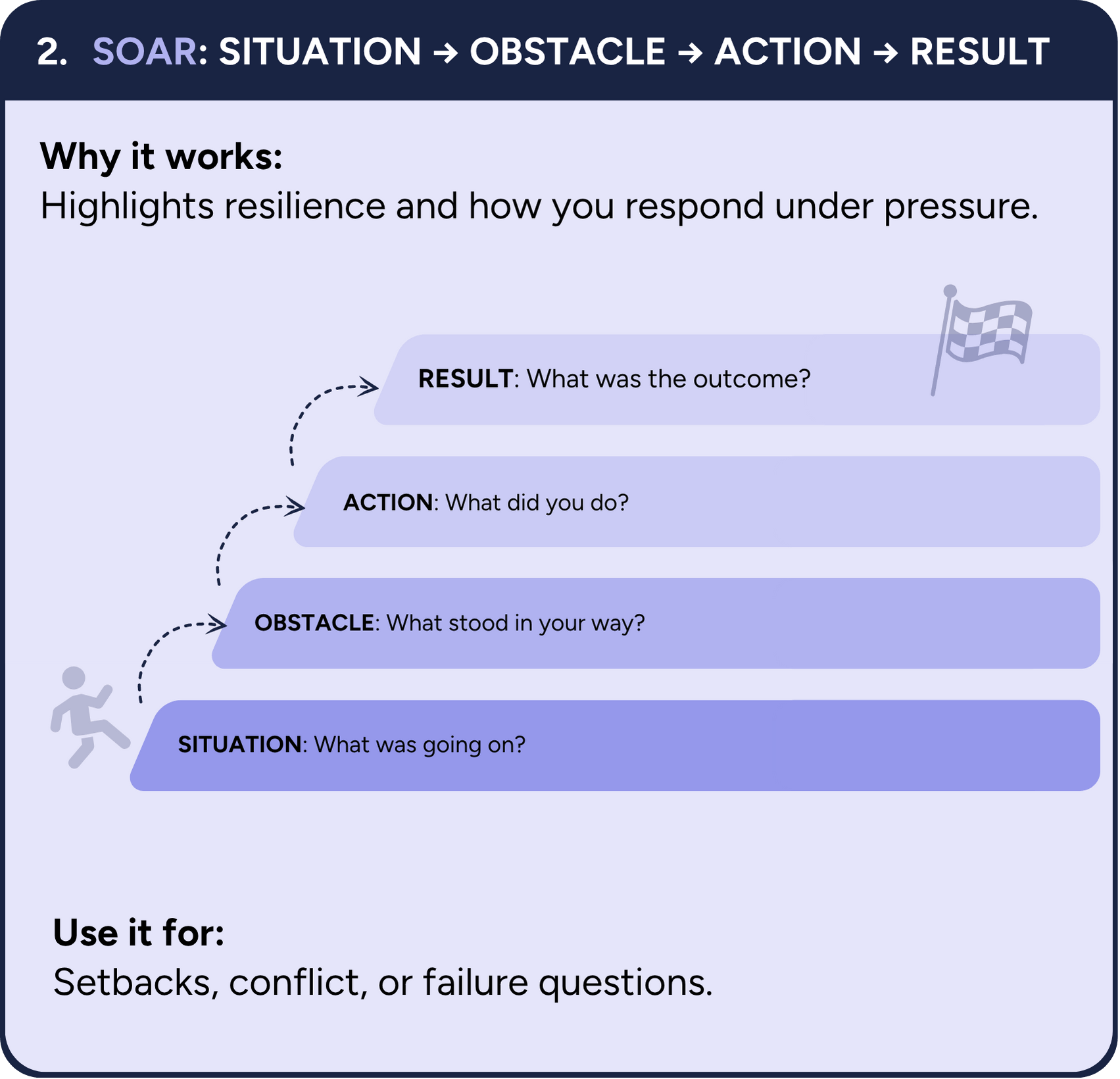
Why it works: This framework highlights resilience and shows how you respond under pressure.
When to use it: Questions about setbacks, conflict, or failure.
The structure:
- Situation: What was going on?
- Obstacle: What stood in your way?
- Action: What did you do?
- Result: What was the outcome?
SOAR is particularly effective for difficult scenarios because it acknowledges the challenge while showcasing your problem-solving abilities.
DARE: Describe → Action → Result → Evaluate
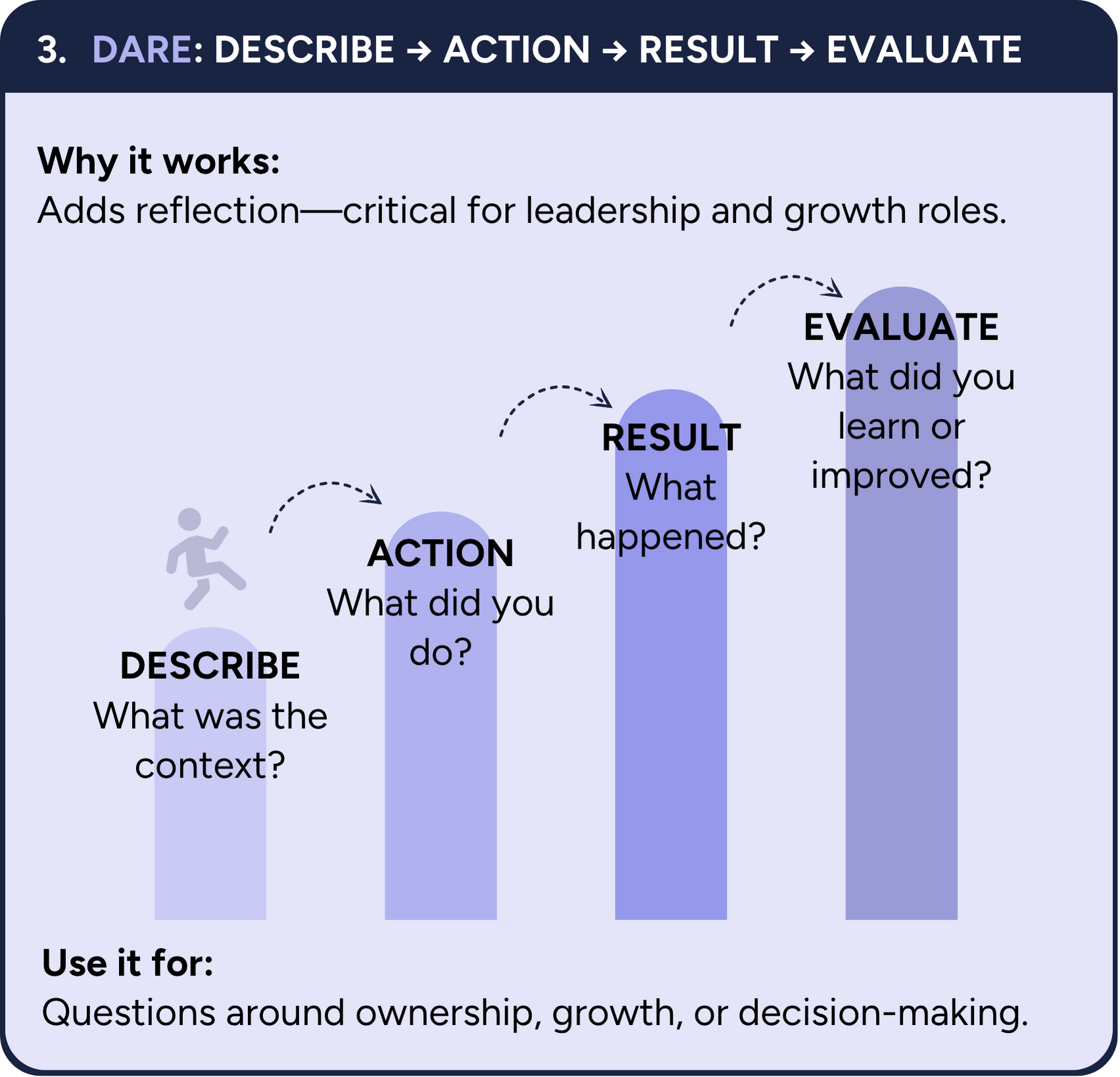
Why it works: This framework adds reflection, which is critical for leadership and growth roles.
When to use it: Questions around ownership, growth, or decision-making.
The structure:
- Describe: What was the context?
- Action: What did you do?
- Result: What happened?
- Evaluate: What did you learn or improve?
The evaluation component shows self-awareness and continuous improvement mindset that employers value in senior roles.
PARADE: Problem → Action → Result → Application → Development → Evidence
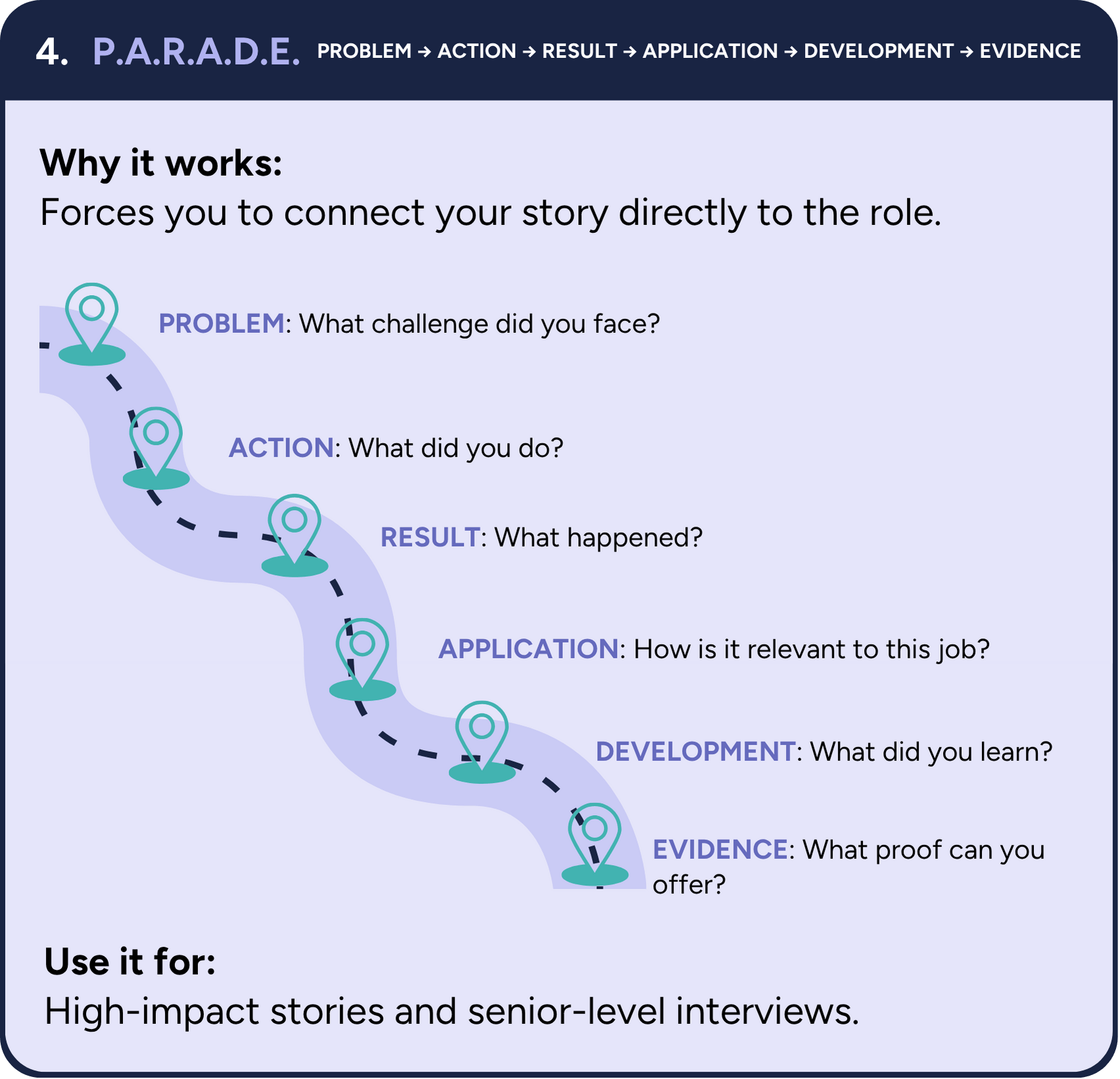
Why it works: This comprehensive framework forces you to connect your story directly to the role you're interviewing for.
When to use it: High-impact stories and senior-level interviews.
The structure:
- Problem: What challenge did you face?
- Action: What did you do?
- Result: What happened?
- Application: How is it relevant to this job?
- Development: What did you learn?
- Evidence: What proof can you offer?
PARADE is the most thorough framework, making explicit connections between your experience and the role requirements.
Why Frameworks Matter
These frameworks aren't just interview tricks. They're tools for organizing your thoughts in high-pressure situations. When interviewers can follow your thinking process, they gain confidence in your ability to make sound decisions.
The key is choosing the right framework for each question type. Practice with different scenarios until the structure becomes natural. This preparation allows you to focus on the content of your story rather than worrying about how to organize your response.
Remember: clear structure leads to clear communication, and clear communication builds trust.

Was this content useful?