 cord
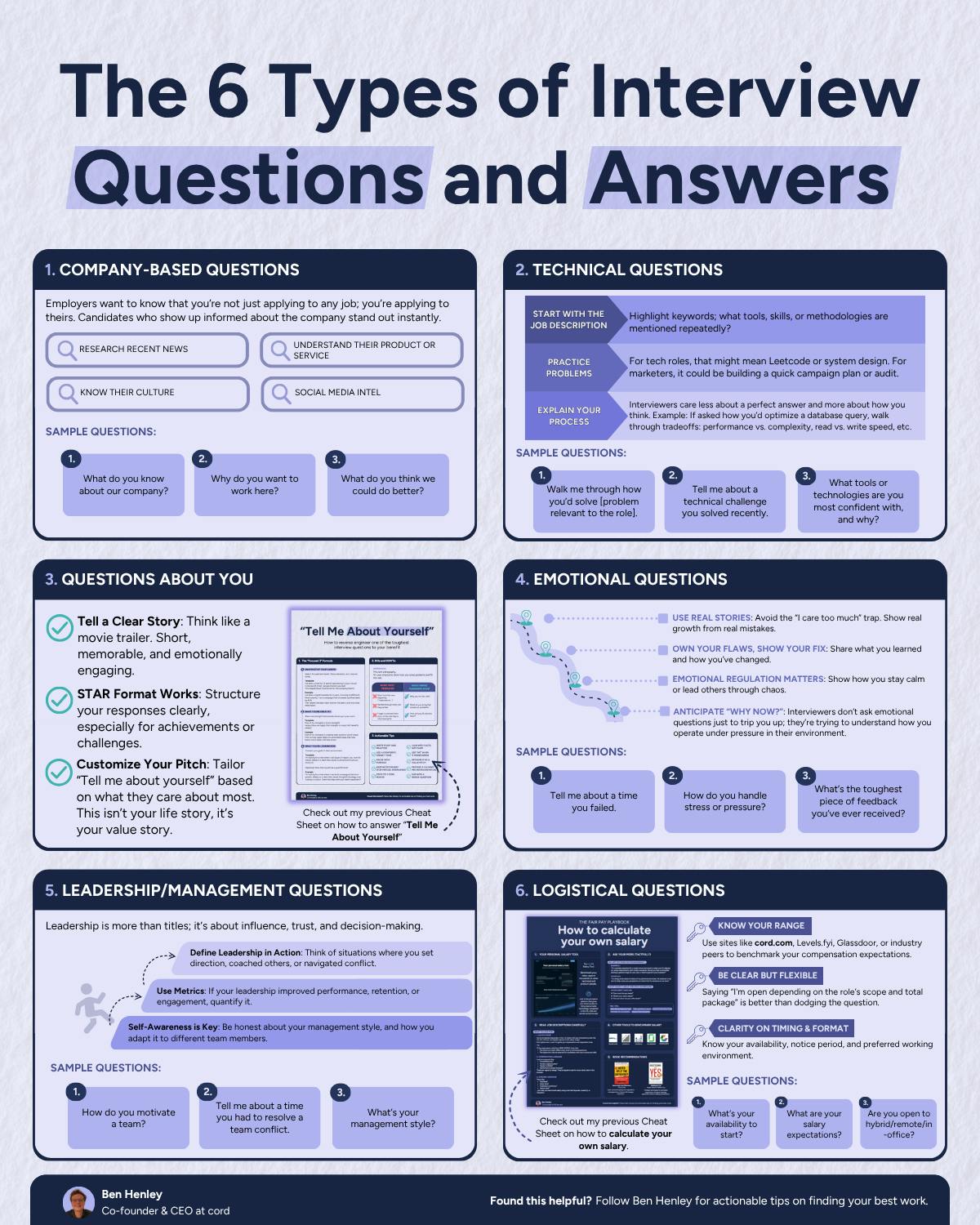
cordThe 6 Types of Interview Questions
What Every Question is Really Testing (And How to Nail Your Response)
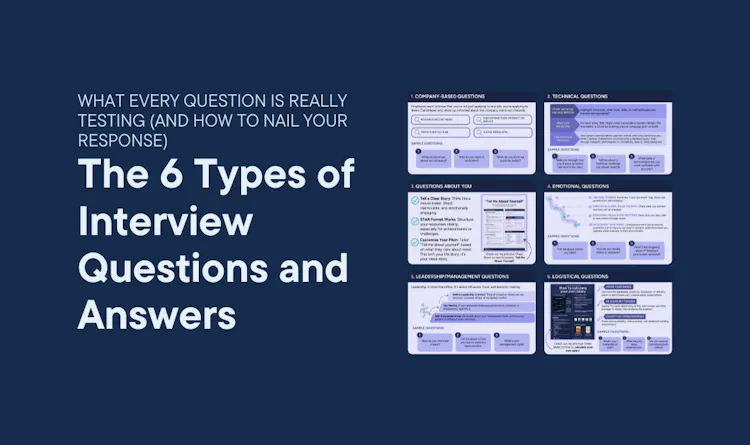
Memorizing answers to classic interview questions isn't enough. The key to successful interviews is understanding the why behind each question and tailoring your story to match it.
Here's a breakdown of the 6 types of questions you'll face and exactly how to prepare for each one.
Company-Based Questions
What they're testing: Whether you're genuinely interested in their specific company or just applying everywhere.
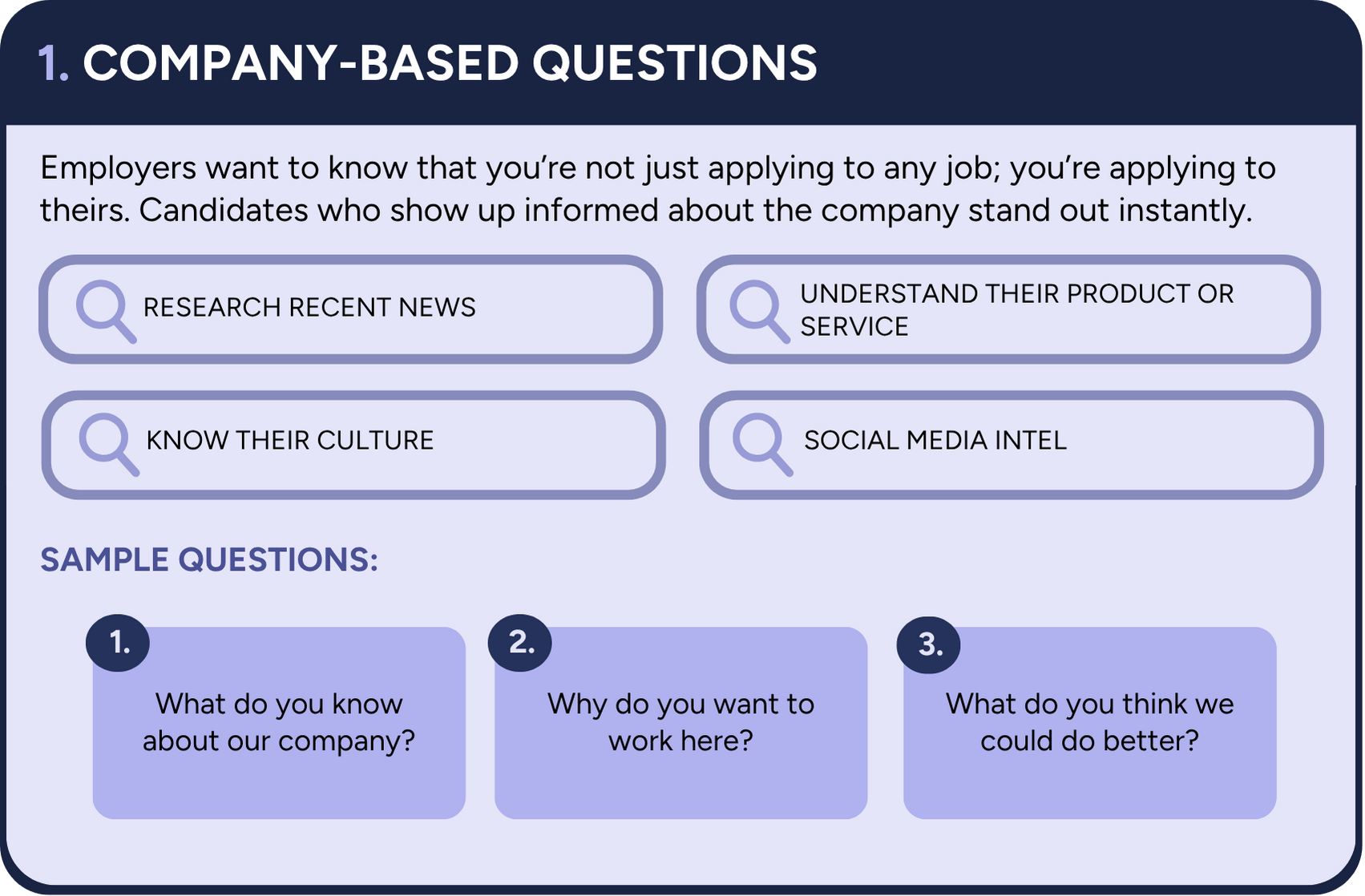
Employers want to know that you're not just applying to any job—you're applying to theirs. Candidates who show up informed about the company stand out instantly.
Preparation Tips:
- Research recent news about the company
- Understand their product or service deeply
- Learn about their company culture
- Check their social media presence and recent updates
Sample Questions:
- What do you know about our company?
- Why do you want to work here?
- What do you think we could do better?
Technical Questions
What they're testing: Your ability to actually do the job.
Preparation Tips:
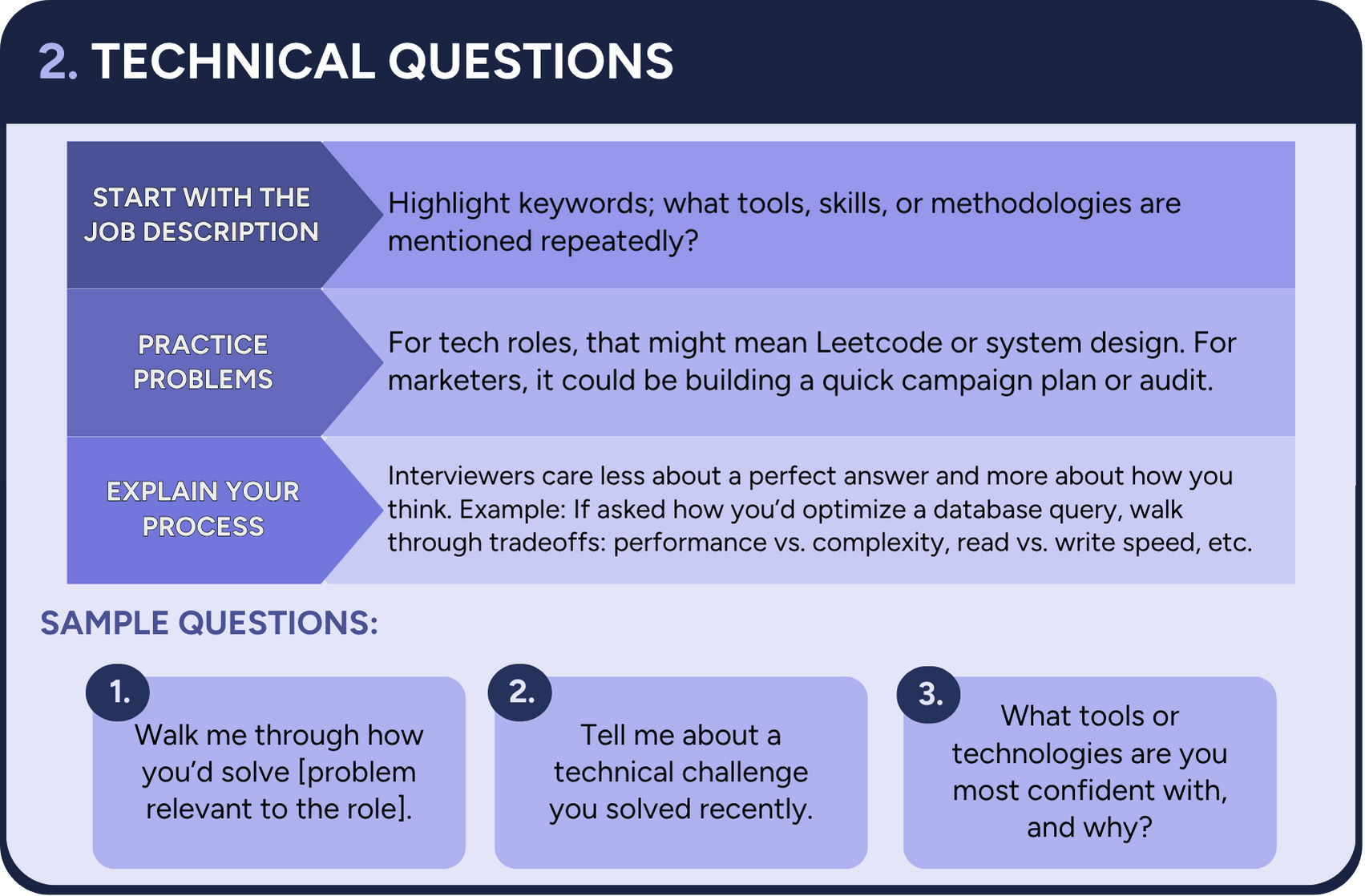
- Start with the job description and identify key skills
- Prepare for problems that might mean coding, system design, or role-specific tasks
- Explain your process—interviewers care about how you think, not just the final answer
Sample Questions:
- Walk me through how you'd solve [problem relevant to the role]
- Tell me about a technical challenge you solved recently
- What tools or technologies are you most confident with, and why?
Questions About You
What they're testing: Your self-awareness and how you present yourself professionally.
This is where many candidates get caught off guard. Yes, it's your story, but tell it with intention.
Preparation Tips:
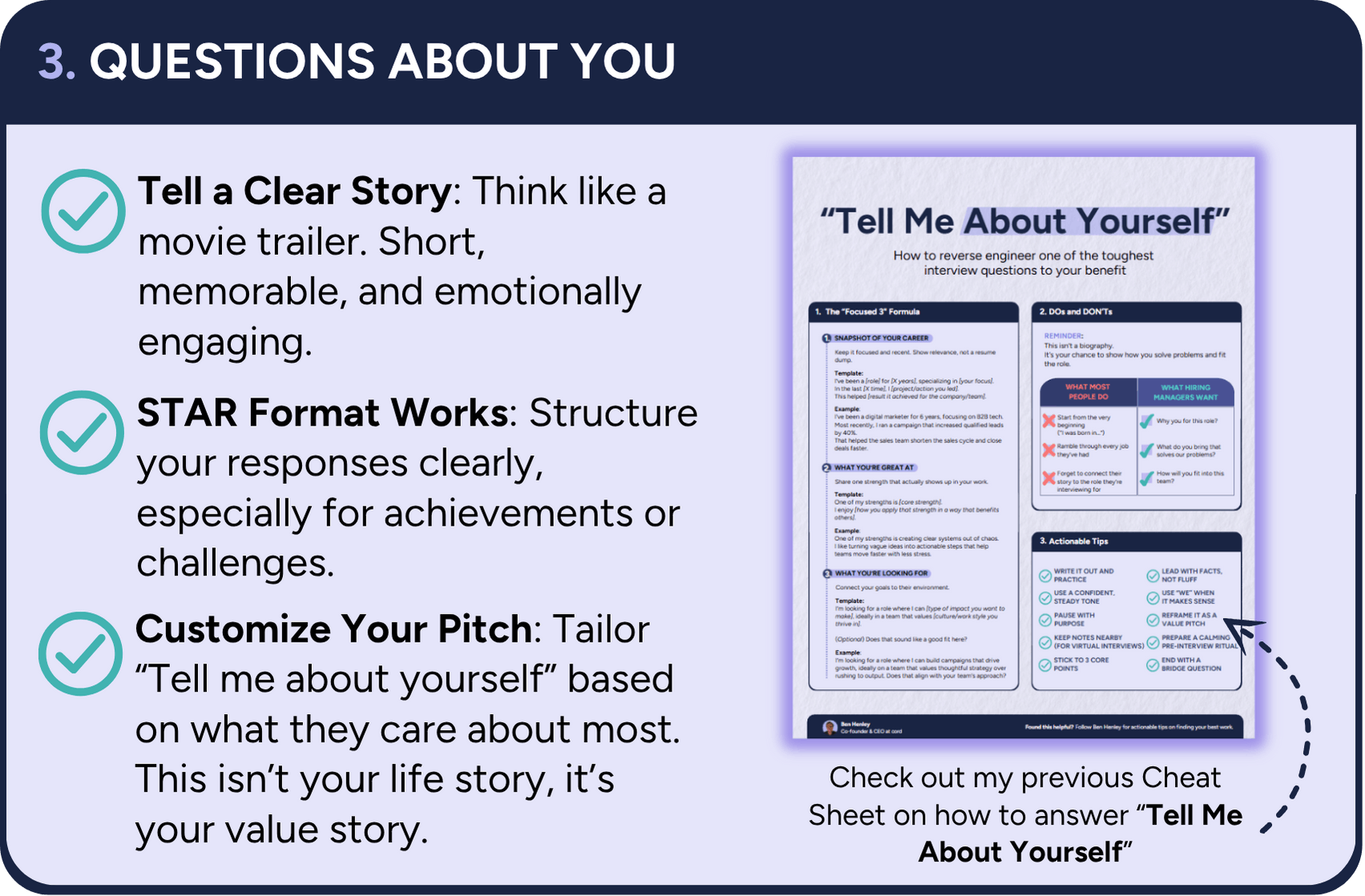
- Tell a Clear Story: Think like a movie trailer—short, memorable, and emotionally engaging
- STAR Format Works: Structure your responses clearly, especially for achievements or challenges
- Customize Your Pitch: Tailor "Tell me about yourself" based on what they care about most
Sample Questions:
- Tell me about yourself
- What are your strengths and weaknesses?
- What's a professional achievement you're proud of?
Emotional Questions
What they're testing: Your emotional intelligence, resilience, and maturity.
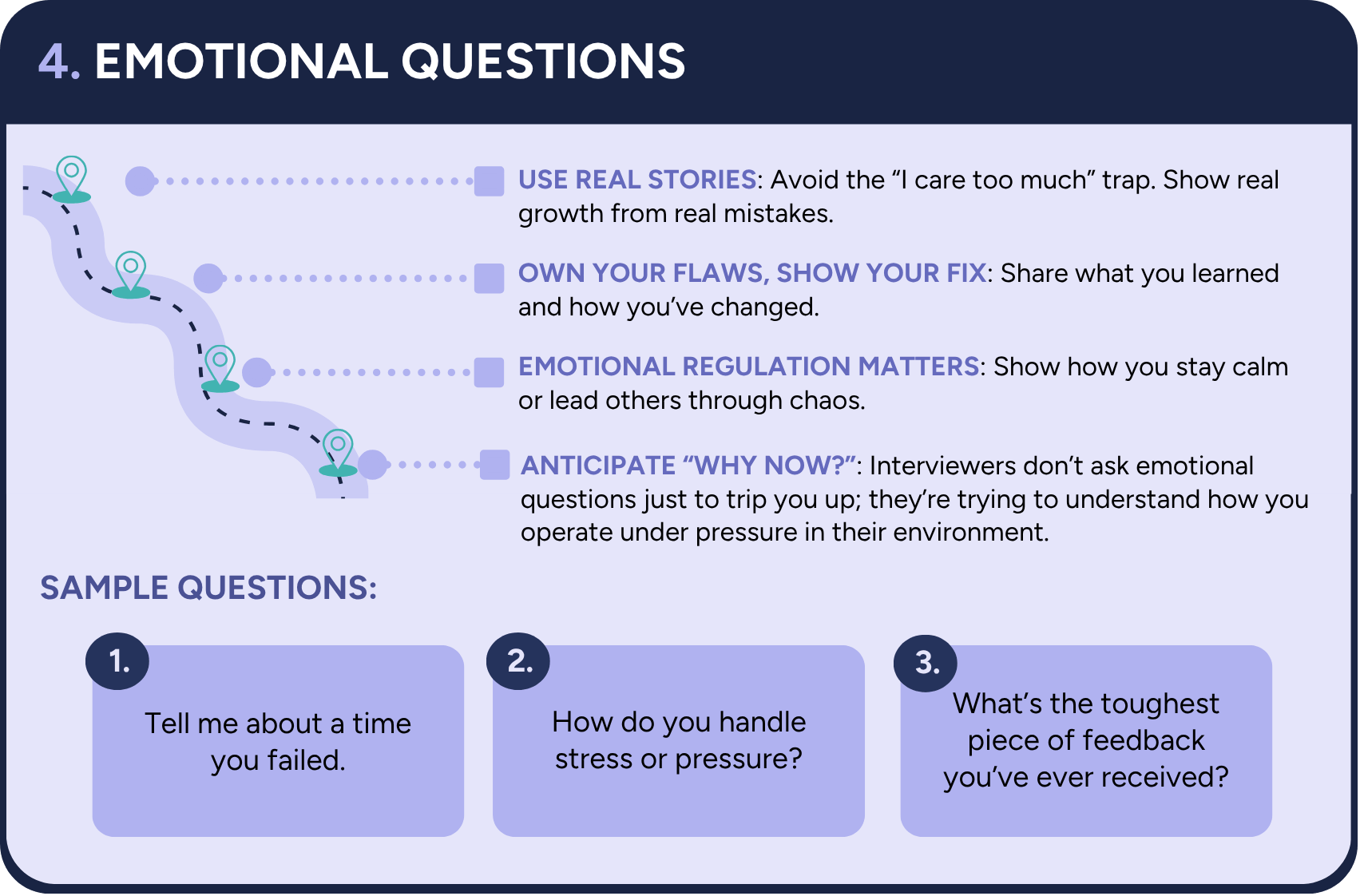
Preparation Tips:
- Use Real Stories: Avoid the "I care too much" trap. Show real growth through mistakes
- Own Your Flaws, Show Your Fix: Share what you learned and how you've changed
- Emotional Regulation Matters: Show how you stay calm or bounce back through challenges
- Anticipate "Why Now?": Interviewers don't ask emotional questions to trip you up—they're trying to understand how you operate under pressure in their environment
Sample Questions:
- Tell me about a time you failed
- How do you handle stress or pressure?
- What's the toughest piece of feedback you've ever received?
Leadership/Management Questions
What they're testing: Your ability to influence, build trust, and make decisions.
Leadership is more than titles—it's about influence, trust, and decision-making.
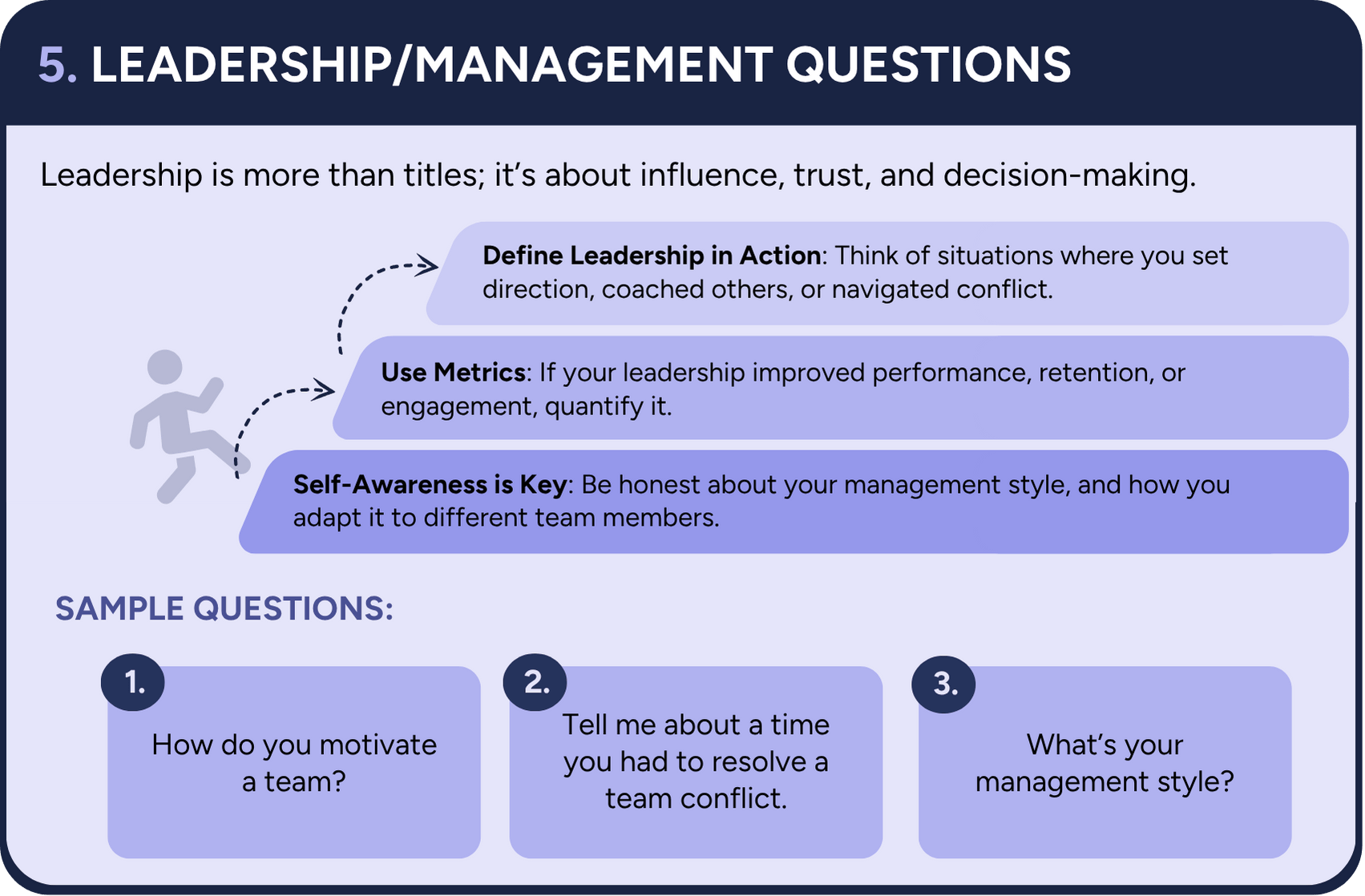
Preparation Tips:
- Define Leadership in Action: Think of situations where you set direction, coached others, or resolved conflict
- Use Metrics: If your leadership improved performance, retention, or engagement, quantify it
- Self-Awareness is Key: Be honest about your management style and how you adapt it to different team members
Sample Questions:
- How do you motivate a team?
- Tell me about a time you had to resolve a team conflict
- What's your management style?
Logistical Questions
What they're testing: Whether you're realistic about the role and aligned with their needs.
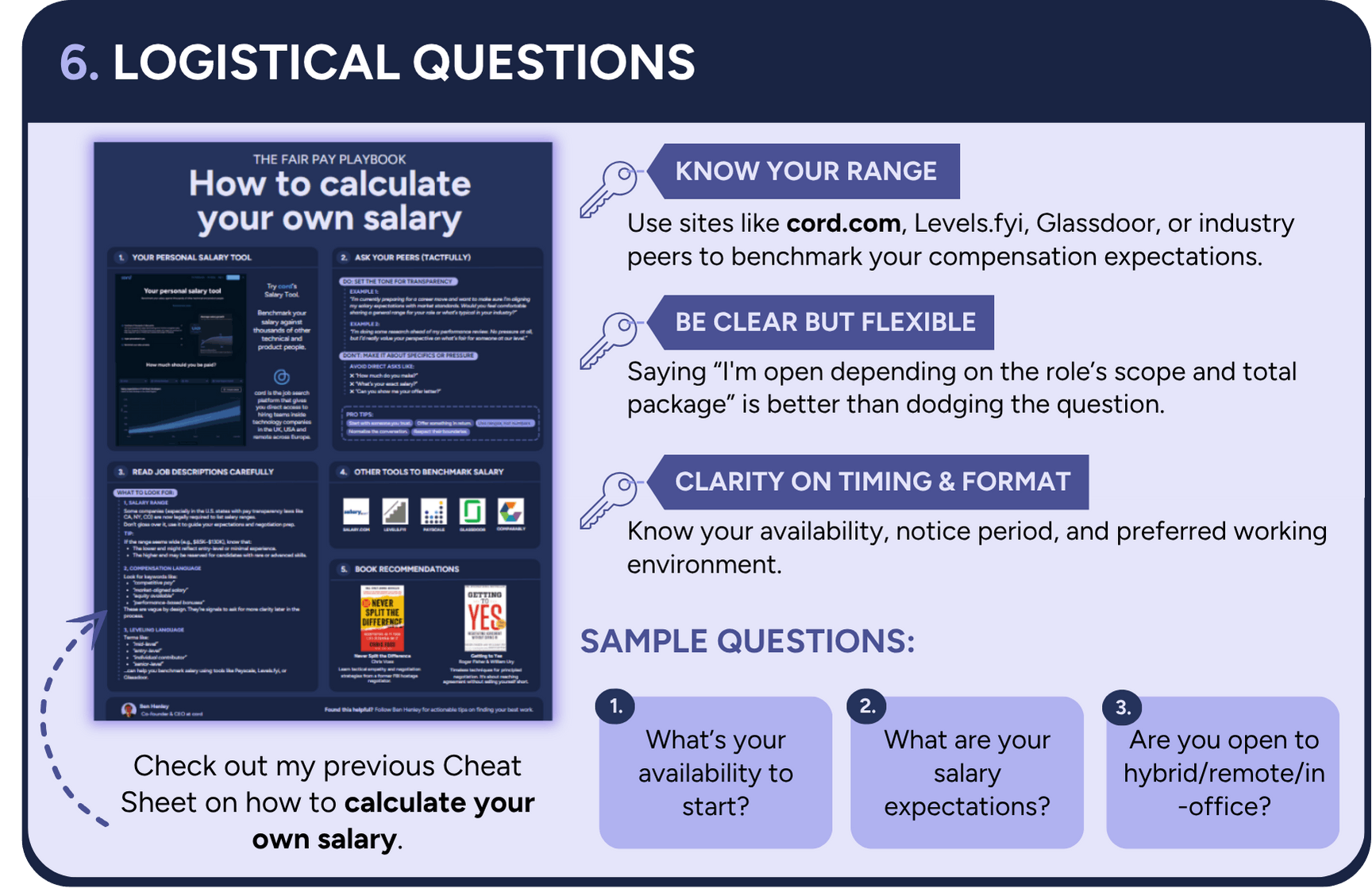
Preparation Tips:
- Know Your Range: Use sites like Glassdoor or industry peers to benchmark your compensation expectations
- Be Clear But Flexible: Saying "I'm open depending on the role's scope and total package" is better than dodging the question
- Clarity on Timing & Format: Know your availability, notice period, and preferred working environment
Sample Questions:
- What's your availability to start?
- What are your salary expectations?
- Are you open to hybrid/remote/in-office?
Key Takeaways
Interviewing well isn't a talent—it's a skill you can build. When you understand the question, you're already halfway to a great answer.
Each type of question serves a specific purpose in helping employers evaluate whether you're the right fit. By preparing strategically for each category, you'll walk into any interview with confidence and clarity.
Remember: the goal isn't to have perfect answers memorized, but to understand what each question is really asking and respond authentically while highlighting your strengths.

Was this content useful?