 cord
cordThe Smart End-of-Interview Questions To Ask
Stop Wasting Your Final Interview Moments—Ask These Instead

Most candidates waste the final moments of their interview with weak questions or worse—saying they have no questions at all. This is a critical mistake that costs you the opportunity to stand out and gather essential information about your potential workplace.
The questions you ask at the end of an interview reveal your thought process, show your engagement level, and help you evaluate whether the role is actually a good fit. They're one of the strongest predictors of interview success.
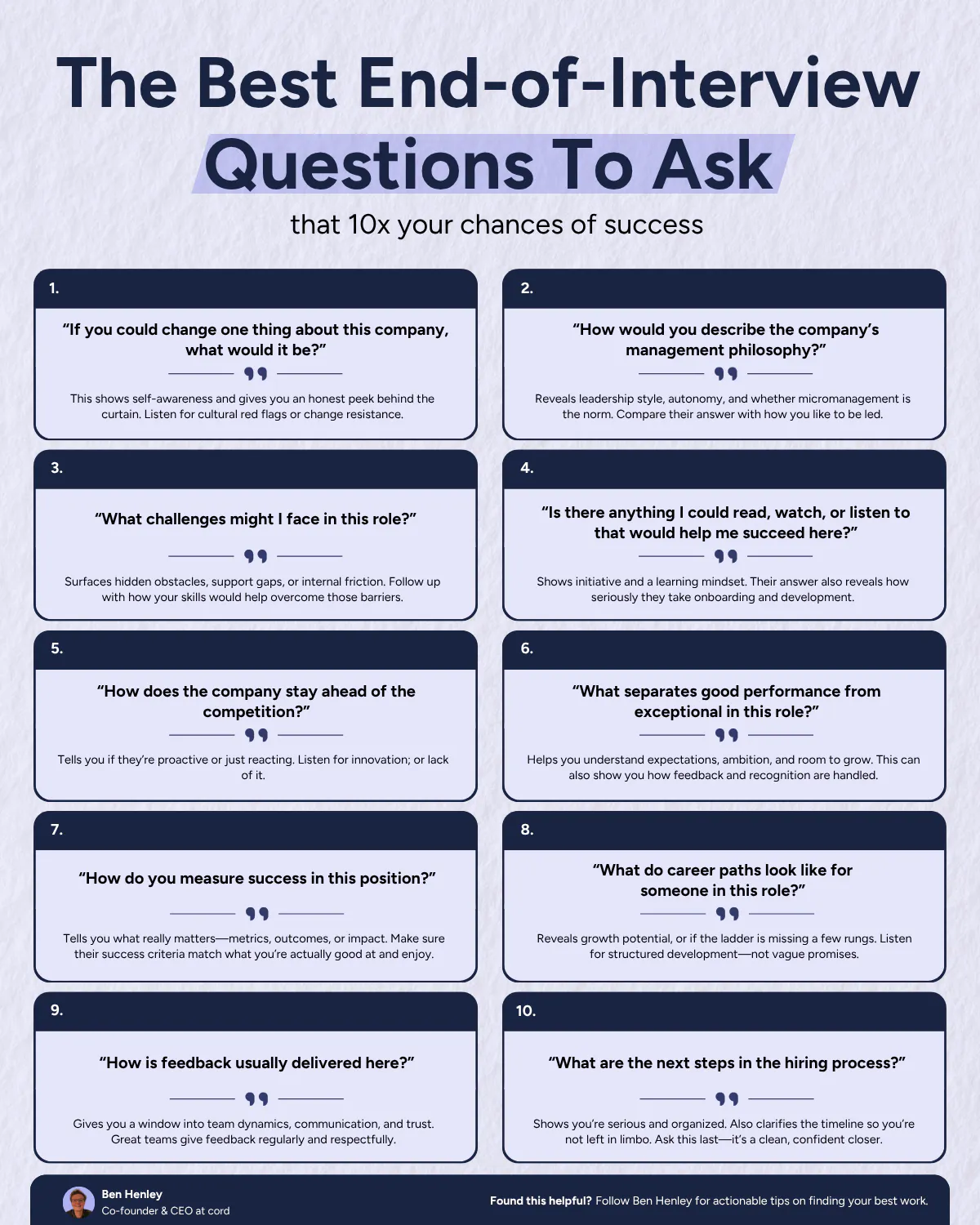
Here are 10 strategic questions that will help you make a lasting impression while uncovering what you really need to know:
"If you could change one thing about this company, what would it be?"
This question demonstrates self-awareness and gives you an honest look behind the scenes. Listen carefully for cultural red flags or signs of resistance to change. The way they answer—and whether they're willing to be candid—tells you a lot about the company's transparency and openness to improvement.
"How would you describe the company's management philosophy?"
This reveals leadership style, employee autonomy, and whether micromanagement is the norm. Pay attention to how their approach aligns with how you prefer to be managed. If they describe a hands-off style but you thrive with more guidance, that's valuable information for your decision.
"What challenges might I face in this role?"
This surfaces hidden obstacles, support gaps, or internal friction that might not come up otherwise. Once they share these challenges, follow up by explaining how your specific skills and experience would help address those barriers. This shows problem-solving thinking and positions you as a solution-oriented candidate.
"Is there anything I could read, watch, or listen to that would help me succeed here?"
This question shows initiative and a genuine learning mindset. Their response also reveals how seriously the company takes onboarding and professional development. A company that can't recommend relevant resources might not invest much in employee growth.
"How does the company stay ahead of the competition?"
This tells you whether the organization is proactive and innovative or simply reactive to market pressures. Listen for specific examples of innovation, strategic thinking, or competitive advantages. Vague answers might indicate a lack of clear direction or competitive strategy.
"What separates good performance from exceptional in this role?"
This helps you understand performance expectations, the level of ambition expected, and opportunities for growth. The answer also reveals how the company handles feedback and recognition. If they can't clearly articulate what exceptional looks like, it might be difficult to excel in the role.
"How do you measure success in this position?"
This question uncovers what really matters—whether success is measured by specific metrics, tangible outcomes, or broader impact. Make sure their success criteria align with your strengths and interests. There's no point excelling at something you don't enjoy or aren't naturally good at.
"What do career paths look like for someone in this role?"
This reveals genuine growth potential or whether advancement opportunities are limited. Listen for structured development plans rather than vague promises about "lots of opportunities." Ask for specific examples of people who have grown from this role.
"How is feedback usually delivered here?"
This gives you insight into team dynamics, communication patterns, and trust levels within the organization. Strong teams provide feedback regularly and respectfully. If feedback is rare, overly formal, or delivered poorly, it signals potential cultural issues.
"What are the next steps in the hiring process?"
This demonstrates that you're serious and organized while clarifying the timeline so you're not left wondering what comes next. Ask this question last—it serves as a clean, confident way to close the interview and shows you're ready to move forward.
The Key to Success
Remember that the best interviews feel like conversations, not interrogations. These questions should flow naturally from the discussion you've already had. Use them to gather the information you need to make an informed decision about whether this opportunity is right for you.
The goal isn't just to impress the interviewer—it's to ensure you're walking into a role where you can succeed and thrive. Smart questions help you accomplish both objectives simultaneously.

Was this content useful?