 cord
cordWhat is Your Greatest Strength?
Turn Your Most Challenging Interview Question Into Your Biggest Advantage
If someone asked you what your greatest strength is, would you know the answer without hesitation? Most of us pause—not because we lack strengths, but because we rarely take the time to recognize and articulate them.
Every interviewer asks this question, yet too many candidates answer it in a generic, unprepared way. Your greatest strength is your greatest asset. How you communicate it could be the difference between a "maybe" and a resounding "yes."
Here's a proven framework for formulating your answer:
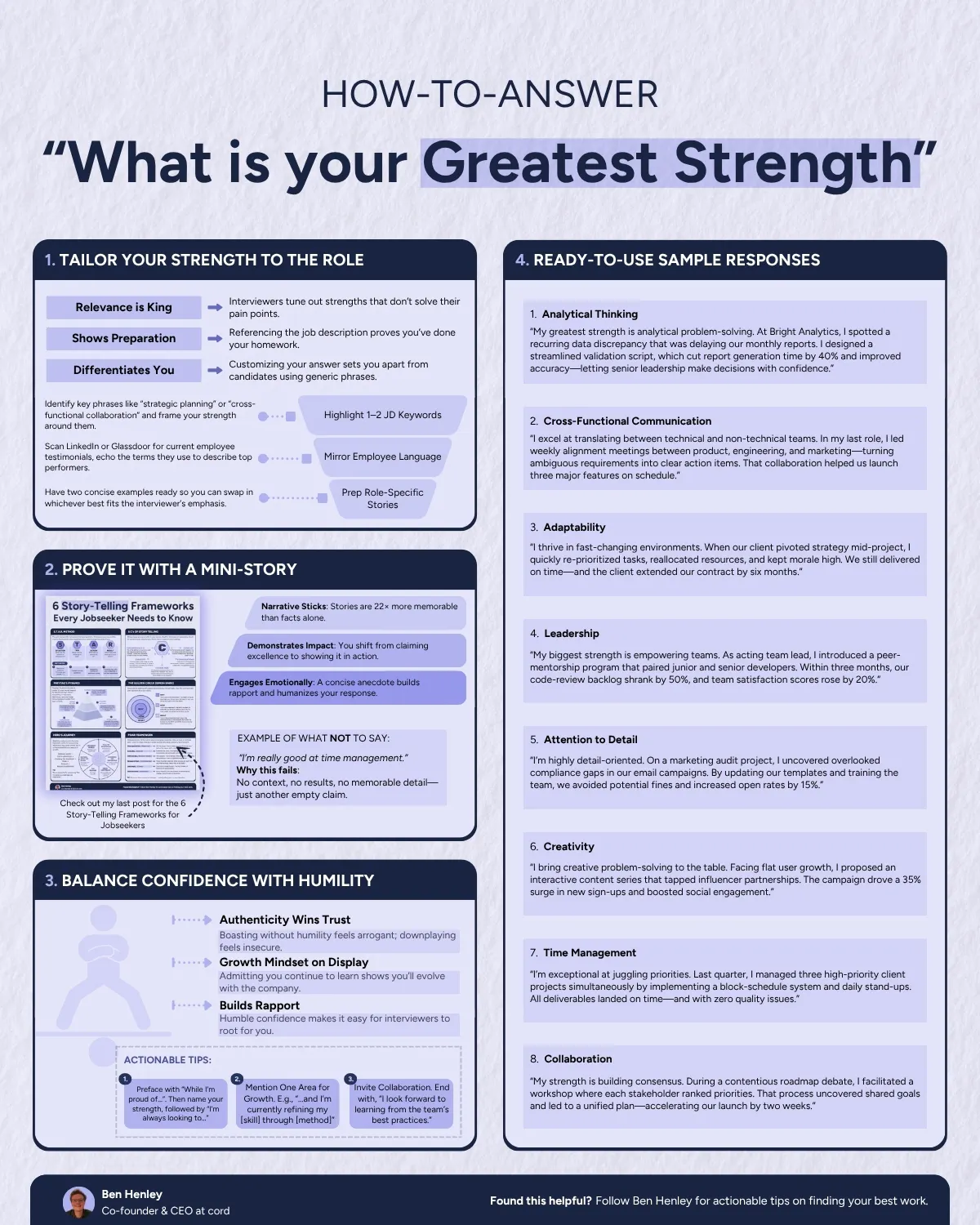
Tailor Your Strength to the Role
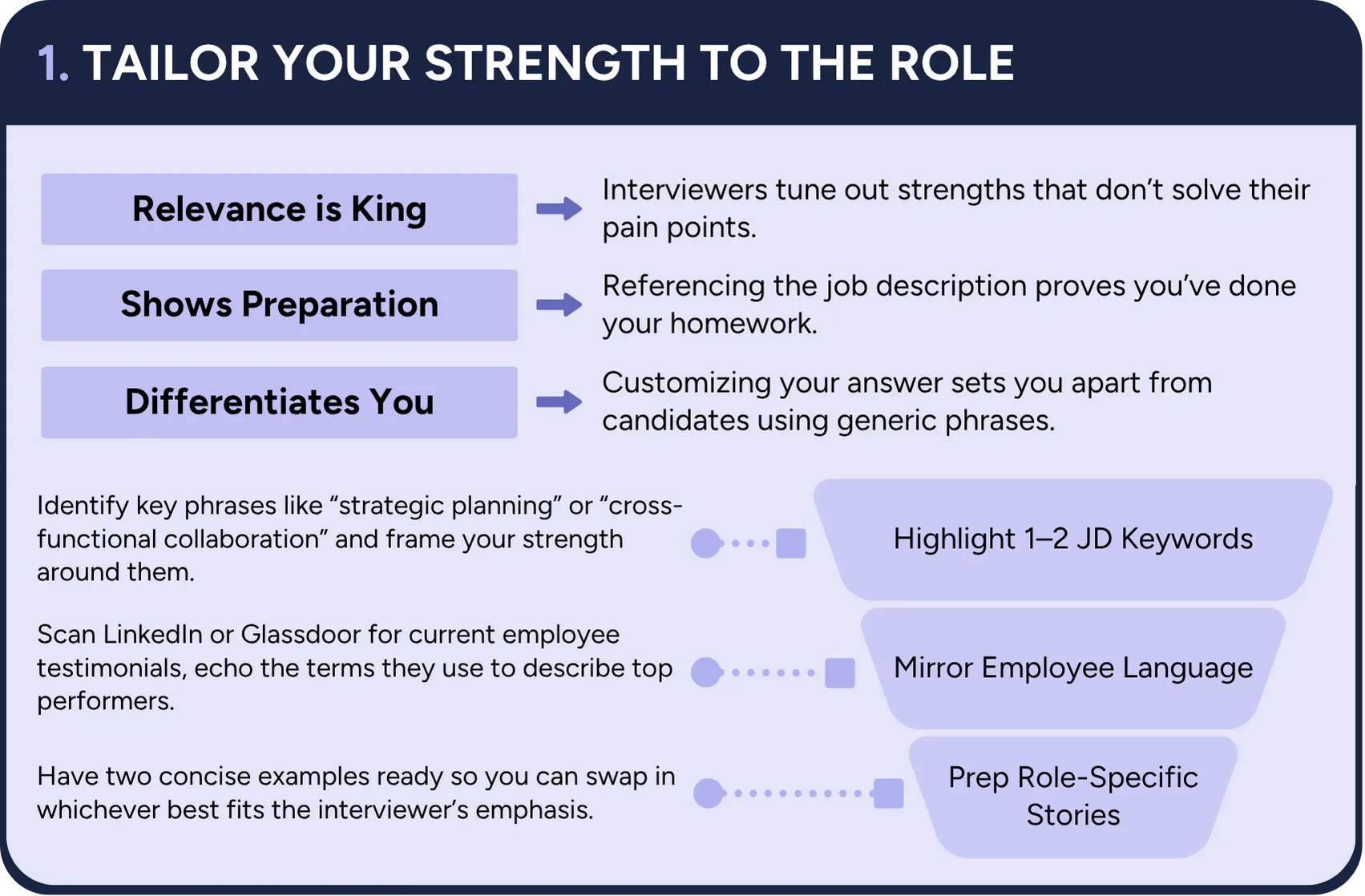
Relevance is King: Interviewers tune out strengths that don't solve their pain points.
Shows Preparation: Referencing the job description proves you've done your homework.
Differentiates You: Customizing your answer sets you apart from candidates using generic phrases.
How to Do It:
- Identify key phrases like "strategic planning" or "cross-functional collaboration" and frame your strength around them
- Highlight 1-2 JD keywords
- Mirror employee language
- Prep role-specific stories
Prove It with a Mini-Story
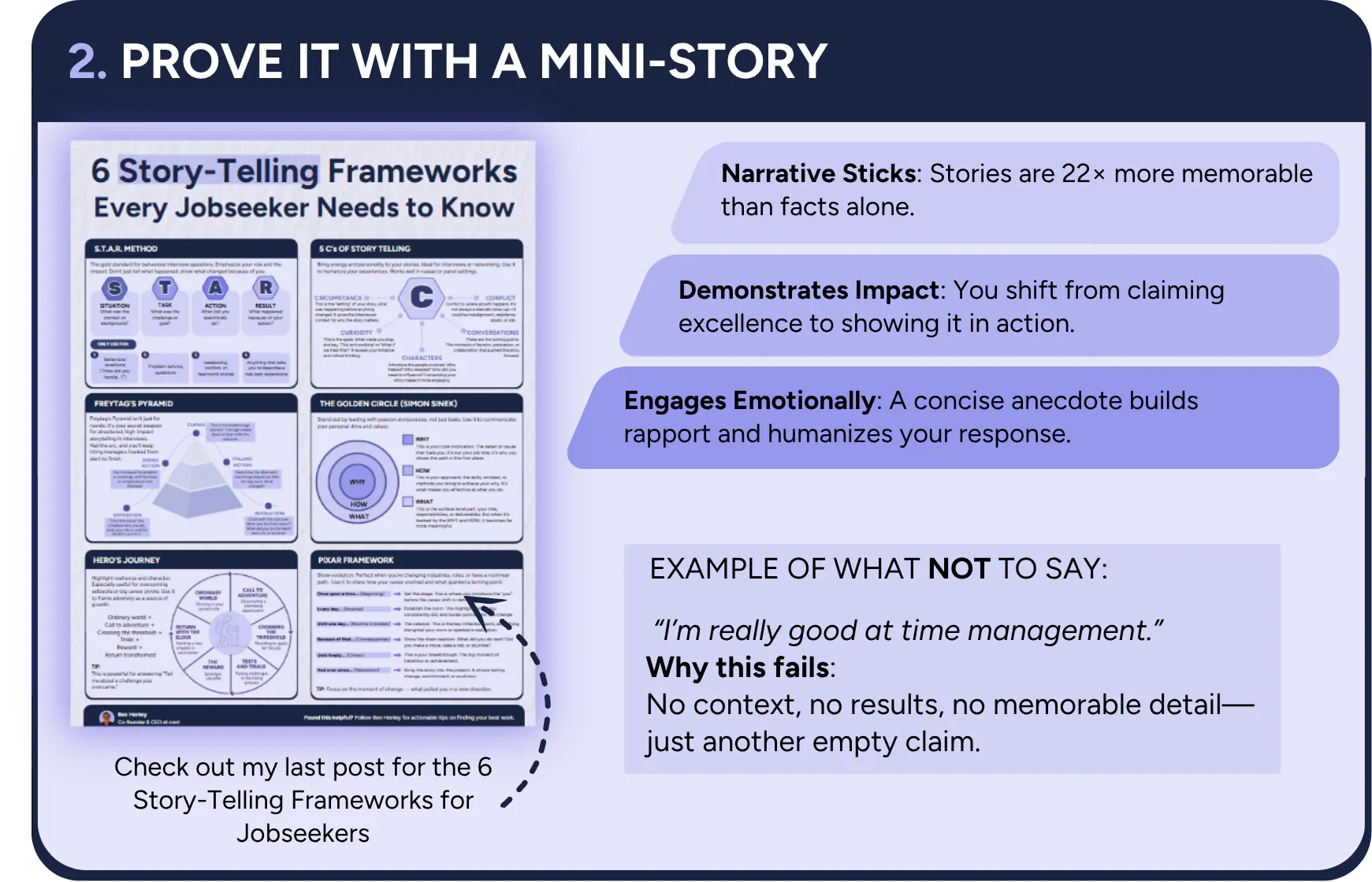
Stories are 22x more memorable than facts alone. A mini-story demonstrates impact, shifts from claiming excellence to showing it, and engages emotionally—a succinct anecdote builds rapport and humanizes your response.
6 Story-Telling Frameworks Every Job Seeker Needs to Know:
Use frameworks like STAR (Situation, Task, Action, Result) to structure your response in 2-3 sentences. Keep it concise but vivid.
Example of What NOT to Say:
"I'm really good at time management."
Why this fails: No context, no results, no memorable detail—just another empty claim.
Balance Confidence with Humility
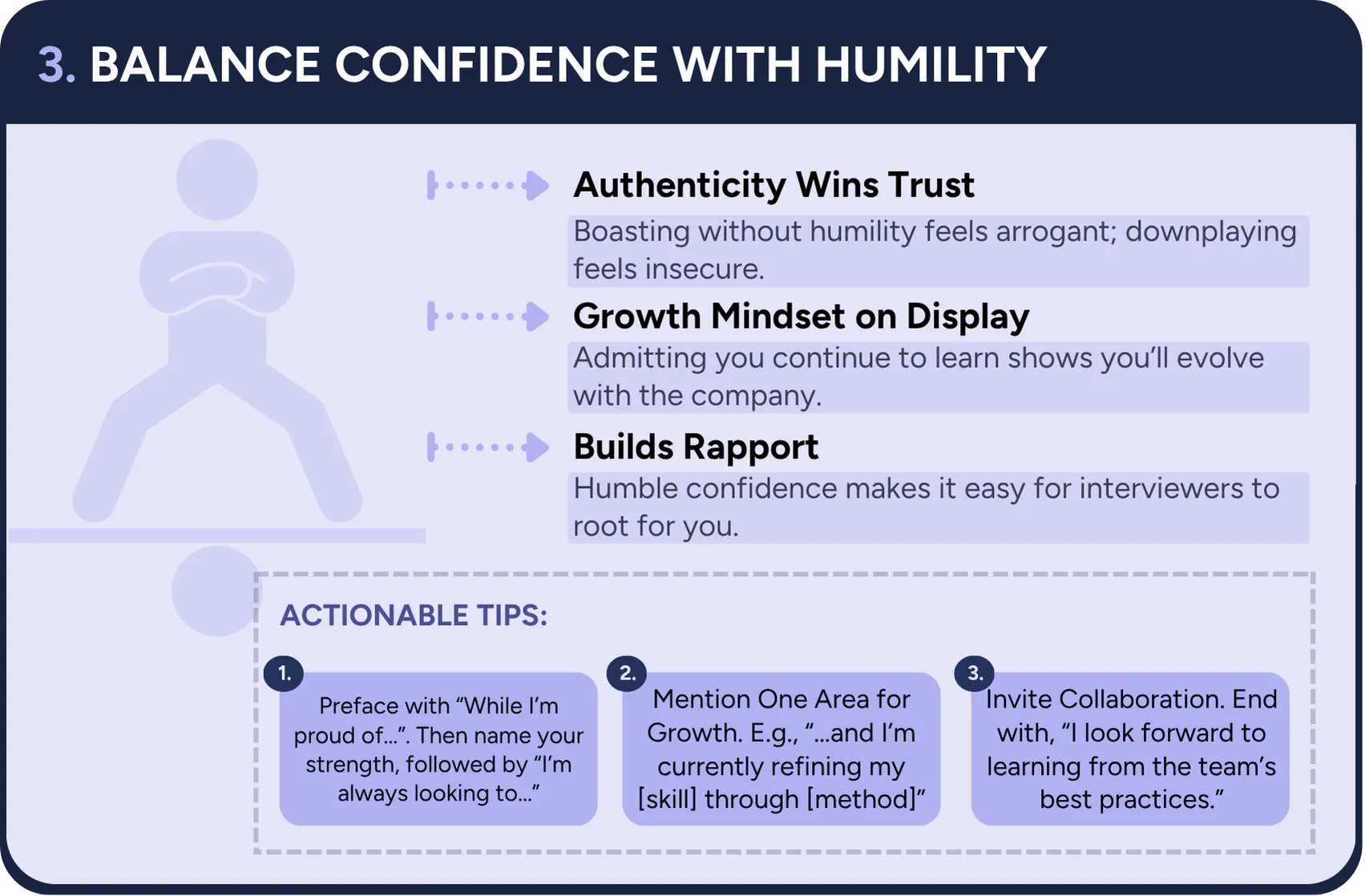
Authenticity Wins Trust: Boasting without humility feels arrogant; downplaying feels insecure.
Growth Mindset on Display: Admitting you continue to learn shows you'll evolve with the company.
Builds Rapport: Humble confidence makes it easy for interviewers to root for you.
Actionable Tips:
- Preface with "While I'm proud of..." Then name your strength. Humble framing keeps you from sounding like you're bragging.
- Mention One Area for Growth, e.g. "...and I'm currently working on my [skill] through [method]"
- Invite Collaboration. End with: "I look forward to learning from the team's best practices."
Ready-to-Use Sample Responses
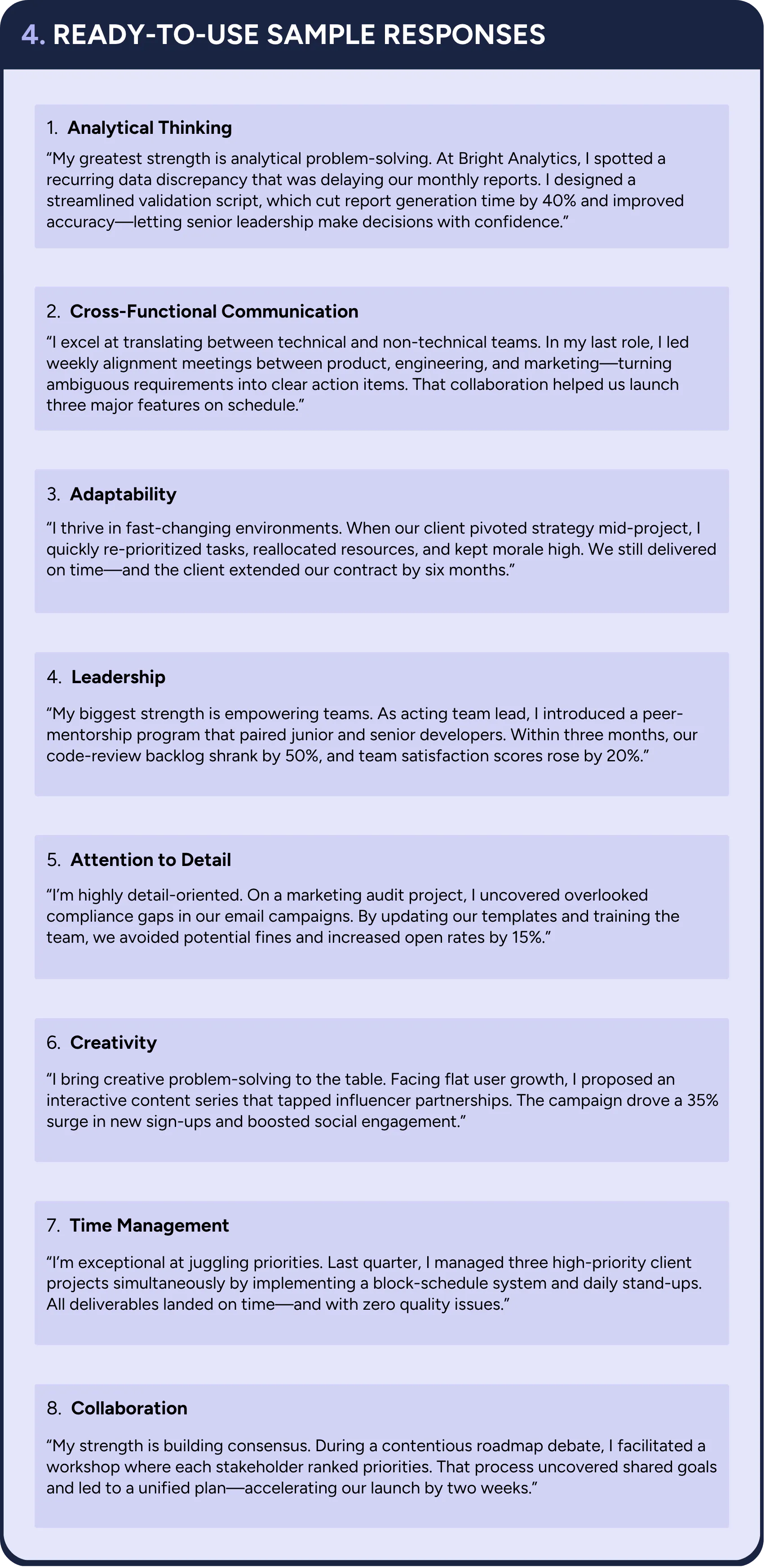
1. Analytical Thinking
"My greatest strength is analytical problem-solving. At Bright Analytics, I spotted a recurring data discrepancy that was delaying our monthly reports. I designed a streamlined validation script, which cut report generation time by 40% and improved accuracy—letting senior leadership make decisions with confidence."
2. Cross-Functional Communication
"I excel at translating between technical and non-technical teams. In my last role, I led weekly alignment meetings between product, engineering, and marketing—turning ambiguous requirements into clear action items. That collaboration helped us launch three major features on schedule."
3. Adaptability
"I thrive in fast-changing environments. When our client pivoted strategy mid-project, I quickly re-prioritized tasks, reallocated resources, and kept morale high. We still delivered on time—and the client extended our contract by six months."
4. Leadership
"My biggest strength is empowering teams. As acting team lead, I introduced a peer-mentorship program that paired junior and senior developers. Within three months, our code-review backlog shrank by 50%, and team satisfaction scores rose by 20%."
5. Attention to Detail
"I'm highly detail-oriented. On a marketing audit project, I uncovered overlooked compliance gaps in our email campaigns. By updating our processes and retraining the team, we avoided potential fines and increased open rates by 15%."
6. Creativity
"I bring creative problem-solving to the table. Facing flat user growth, I proposed an interactive content series that tapped influencer partnerships. The campaign drove a 35% surge in new sign-ups and boosted social engagement."
7. Time Management
"I'm exceptional at juggling multiple priorities. Last quarter, I managed three high-priority client projects simultaneously by implementing a block-schedule system and daily stand-ups. All deliverables landed on time—and with zero quality issues."
8. Collaboration
"My strength is building consensus. During a contentious roadmap debate, I facilitated a workshop where each stakeholder ranked priorities. That process uncovered shared goals and led to a unified plan—accelerating our launch by two weeks."
Key Takeaways
Your greatest strength deserves more than a generic response. By tailoring your answer to the role, backing it up with a compelling story, and balancing confidence with humility, you transform a routine interview question into a powerful opportunity to showcase your value.
Remember: the goal isn't just to list what you're good at—it's to demonstrate how your strengths will solve their problems and contribute to their success.

Was this content useful?