 cord
cordWhere Do You See Yourself in 5-10 Years?"
The Modern Interview Question That Tests Awareness, Not Ambition

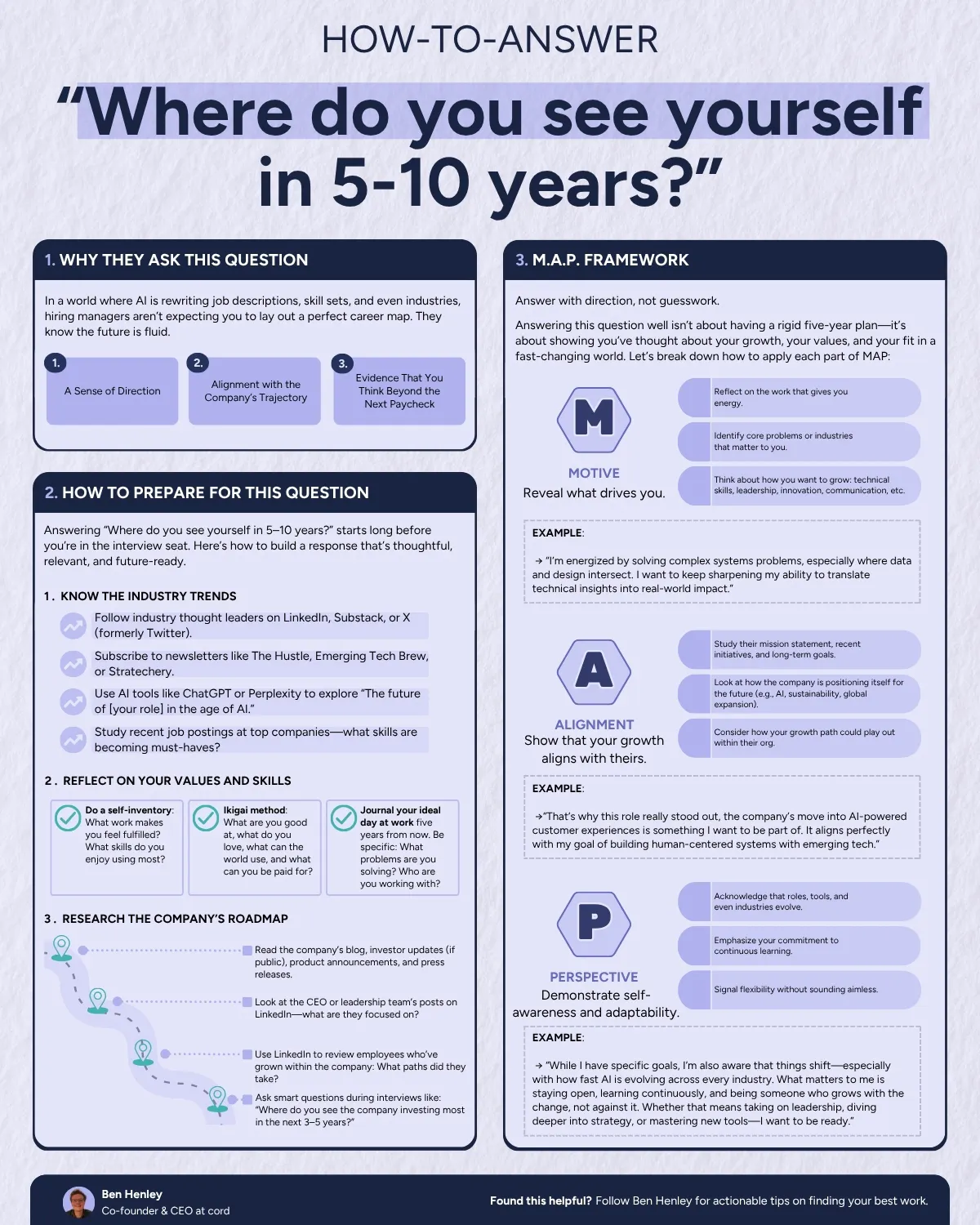
The classic interview question "Where do you see yourself in 5-10 years?" has evolved. The old answers don't work anymore. The shift is significant: interviewers are no longer testing your ambition—they're testing your awareness.
Why Hiring Managers Still Ask This Question
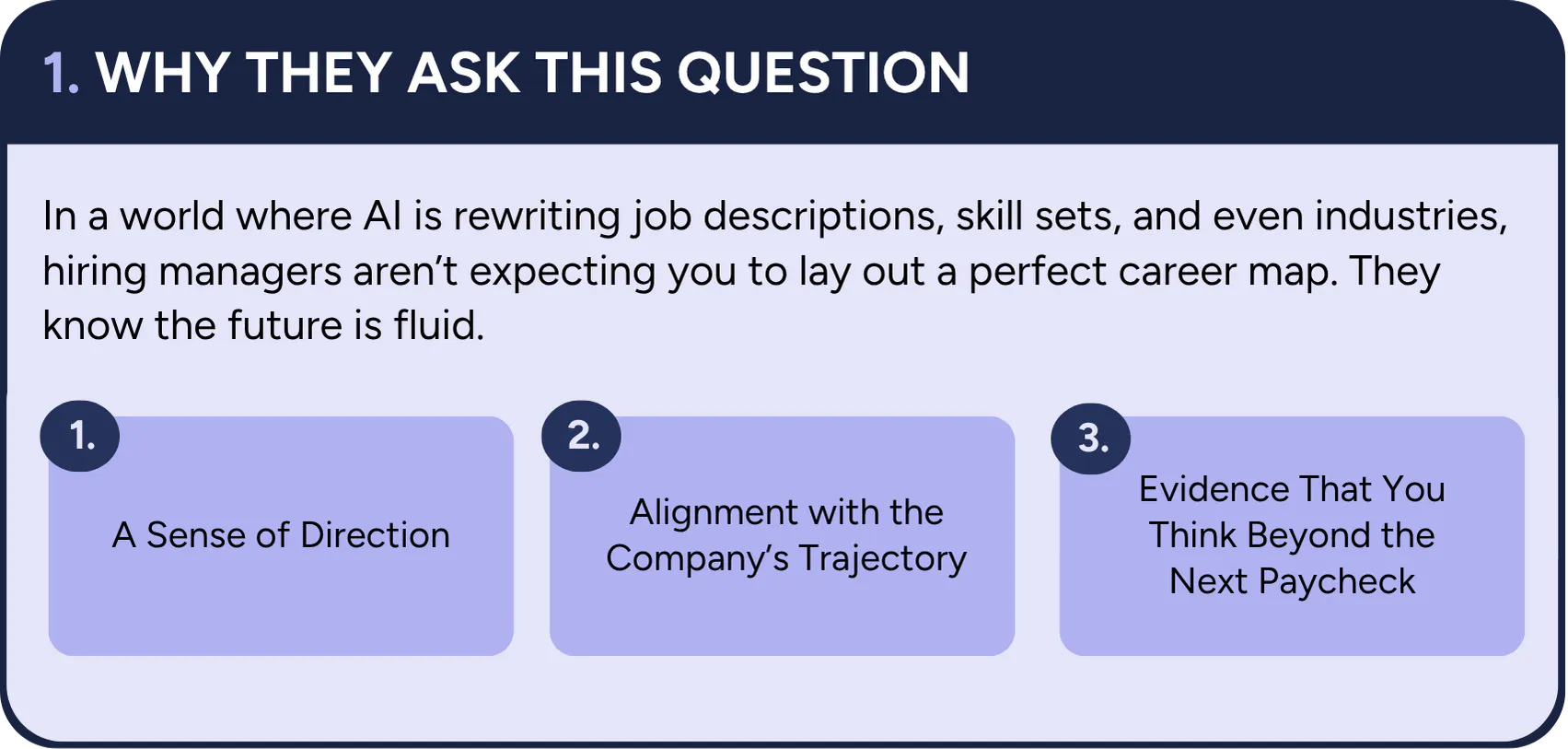
In a world where AI is reshaping job descriptions, skill sets, and entire industries, hiring managers don't expect you to predict the future perfectly. They understand that the future is unpredictable.
Instead, they're looking for three key indicators:
A Sense of Direction: Do you have thoughtful goals and a clear sense of where you want to grow professionally?
Alignment with the Company's Trajectory: Does your career path align with where the company is headed? Will you grow with the organization or quickly outgrow your role?
Evidence That You Think Beyond the Next Paycheck: Can you demonstrate that you're considering long-term impact and contribution, not just immediate benefits?
The underlying question they're really asking: Will you grow with the role, or will you grow out of it?
How to Prepare for This Question
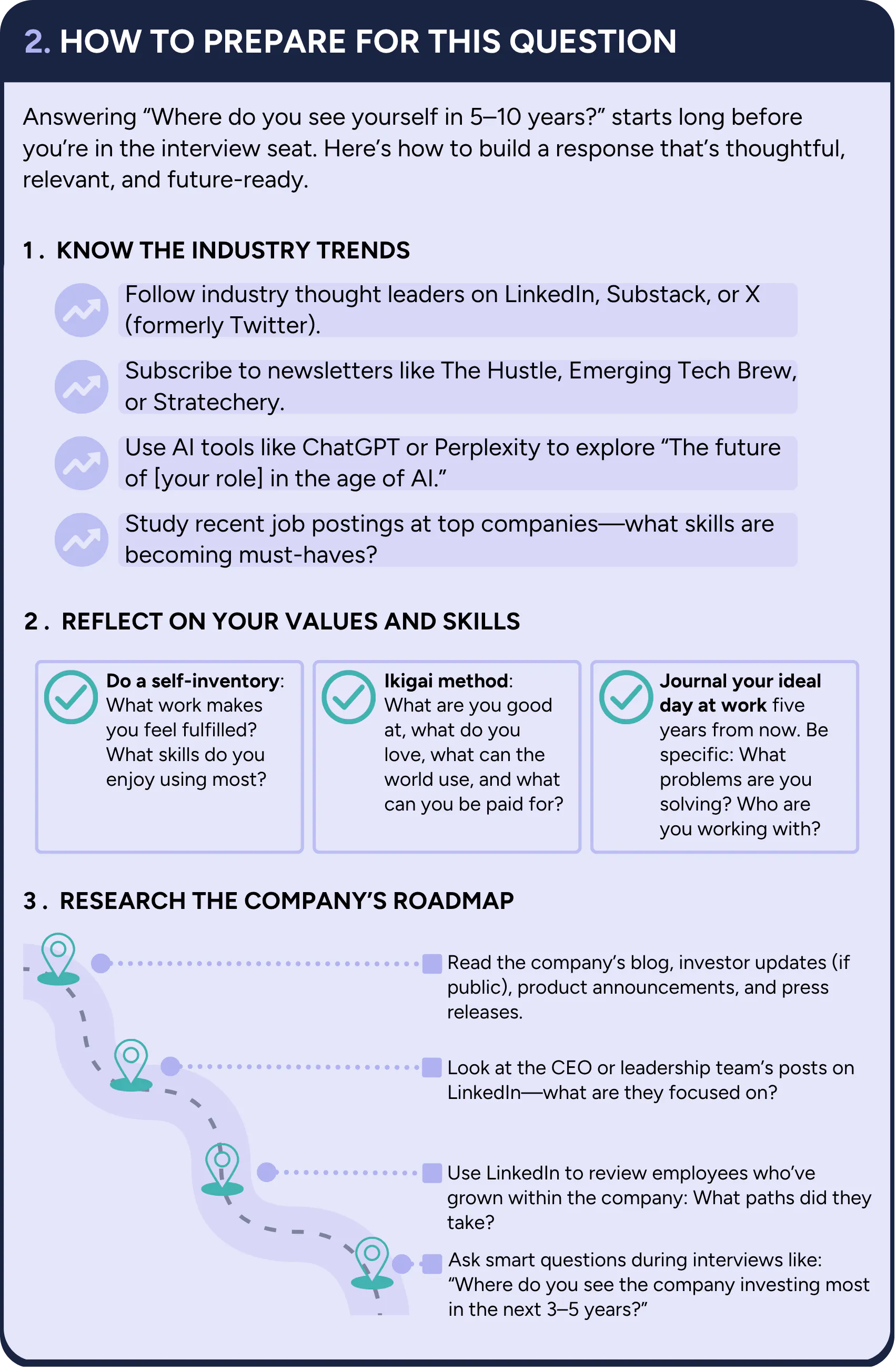
Answering this question effectively requires preparation that starts long before you sit in the interview chair.
1. Know the Industry Trends
Stay informed about how your industry is evolving, especially with AI's influence on the workplace. Research emerging skills, changing role requirements, and new opportunities in your field.
Practical steps:
- Follow industry thought leaders on LinkedIn, Substack, or other platforms
- Subscribe to relevant newsletters like The Hustle, Emerging Tech Brew, or Stratechery
- Use AI tools like ChatGPT or Perplexity to explore future trends in your role
- Study recent job postings at top companies to identify in-demand skills
2. Reflect on Your Values and Skills
Understanding yourself is crucial for crafting an authentic response.
Ask yourself:
- What work energizes you most?
- What skills do you enjoy using and want to develop further?
- What problems excite you to solve?
- What type of impact motivates you?
- What can you be exceptionally good at?
Document your insights:
- Journal about your ideal day at work
- Identify patterns in projects that have fulfilled you most
- List specific problems you want to solve and people you want to help
3. Research the Company's Roadmap
Before your interview, thoroughly research the company's direction and growth plans.
Research sources:
- Company blog, investor updates, and press releases
- CEO and leadership team posts on LinkedIn
- Employee growth stories and career progression examples within the company
- Recent interviews where leadership discusses company vision
Key questions to explore:
- Where is the company investing most in the next 3-5 years?
- What does the leadership team focus on in their public communications?
- What career paths have successful employees taken within the organization?
The M.A.P. Framework for Your Response
Structure your answer using the M.A.P. framework to ensure clarity and impact.
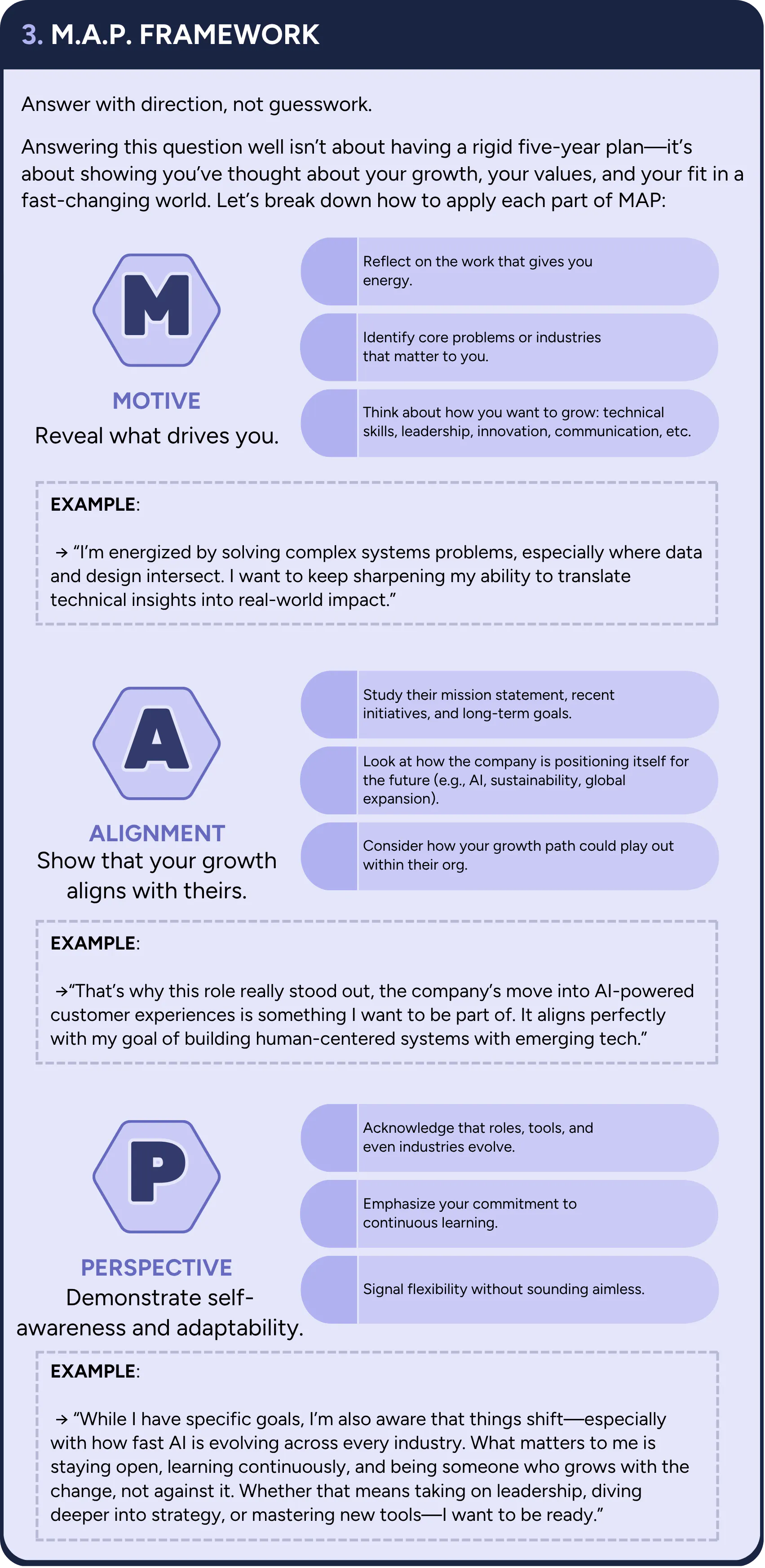
M - Motive
Reveal what drives you.
Start by explaining what energizes you professionally. Focus on the work itself, the problems you want to solve, and the skills you want to develop.
Example: "I'm energized by solving complex systems problems, especially where data and design intersect. I want to deepen my ability to translate technical insights into real-world impact."
A - Alignment
Show that your growth aligns with theirs.
Connect your career goals directly to the company's mission, recent initiatives, and long-term strategy. Demonstrate that you've researched their direction and see yourself contributing to their success.
Example: "That's why this role really stood out. The company's move into AI-powered customer experiences is exactly where I want to be part of. It aligns perfectly with my goal of building human-centered systems with emerging tech."
P - Perspective
Demonstrate self-awareness and adaptability.
Acknowledge that the future includes uncertainty and show that you're prepared to evolve. Emphasize your commitment to continuous learning and staying flexible.
Example: "While I have specific goals, I'm also aware that things shift—especially with how fast AI is evolving across every industry. What matters to me is staying open, learning continuously, and being someone who grows with the change, not against it. Whether that means taking on leadership, diving deeper into strategy, or mastering new tools—I want to be ready."
Key Principles for Your Response
Answer with direction, not guesswork. Your response should demonstrate thoughtful consideration of your career path while acknowledging uncertainty.
Focus on growth alignment. Show how your professional development will benefit both you and the organization.
Emphasize adaptability. In a rapidly changing work environment, flexibility and continuous learning are essential qualities.
Be specific but not rigid. Provide concrete examples of skills you want to develop or problems you want to solve, but avoid overly detailed predictions about job titles or organizational charts.
What This Question Really Reveals
This interview question isn't about your ability to predict the future. It's about whether you're thinking strategically about your career while remaining grounded in present realities.
Hiring managers want to see that you can balance ambition with awareness, planning with adaptability. They're looking for candidates who will contribute meaningfully to the organization's success while continuing to grow professionally.
Your answer should demonstrate that you understand both where you want to go and how the journey might evolve along the way. In a world of constant change, that combination of direction and flexibility is exactly what employers are seeking.

Was this content useful?