 cord
cord"Why are you leaving your current role?"
The interview question that reveals everything about your judgment, decision-making, and emotional intelligence in just 20 seconds.
"So... why are you leaving your current role?"
Your answer to this question reveals more about you than any application form ever could. It can either build trust with your interviewer or quietly raise red flags. In just 20 seconds, you'll demonstrate your judgment, mindset, and emotional intelligence.
Getting this answer right matters. Here's how to nail it.
What Interviewers Are Really Listening For
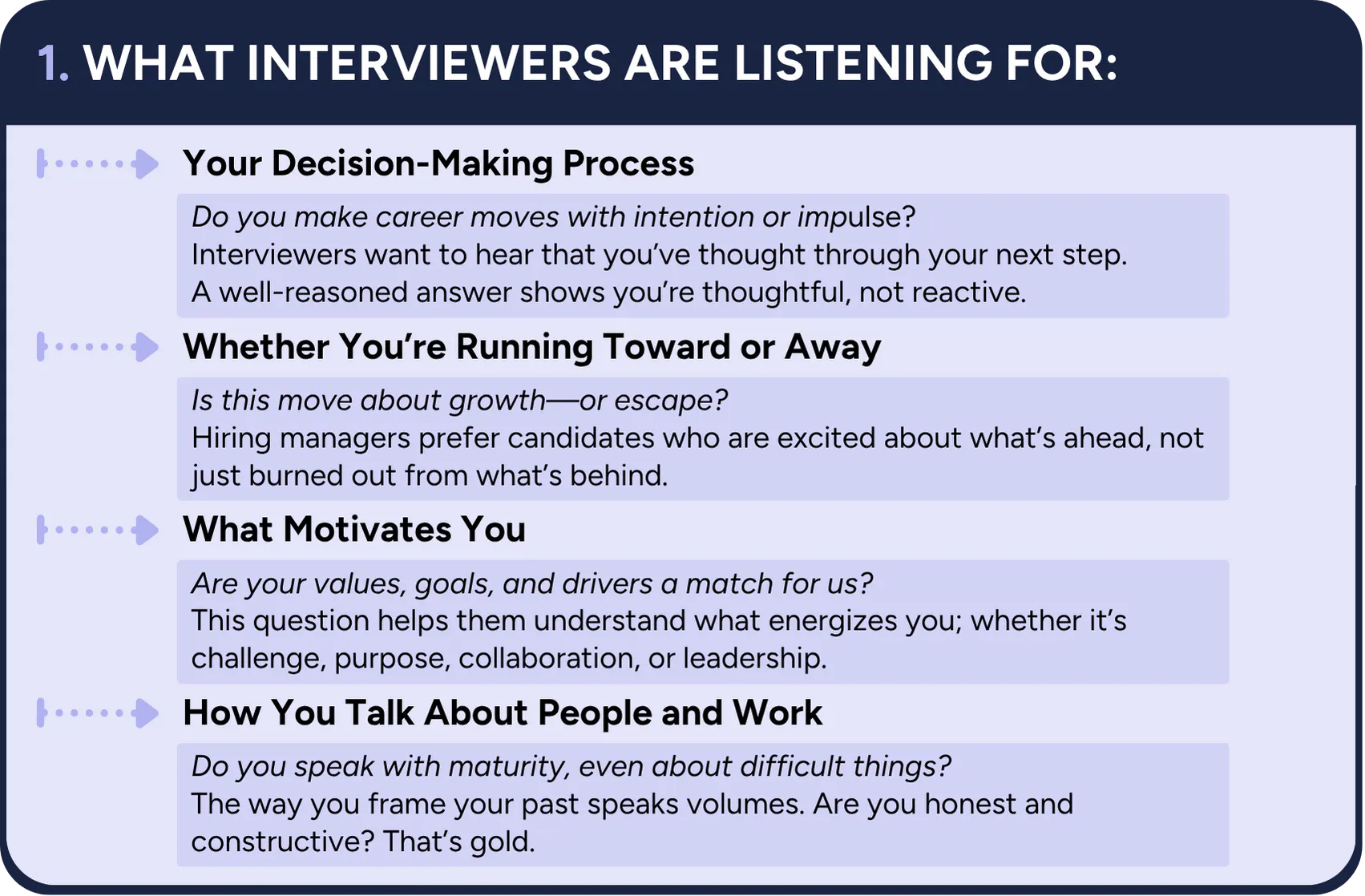
When interviewers ask this question, they're evaluating three key areas:
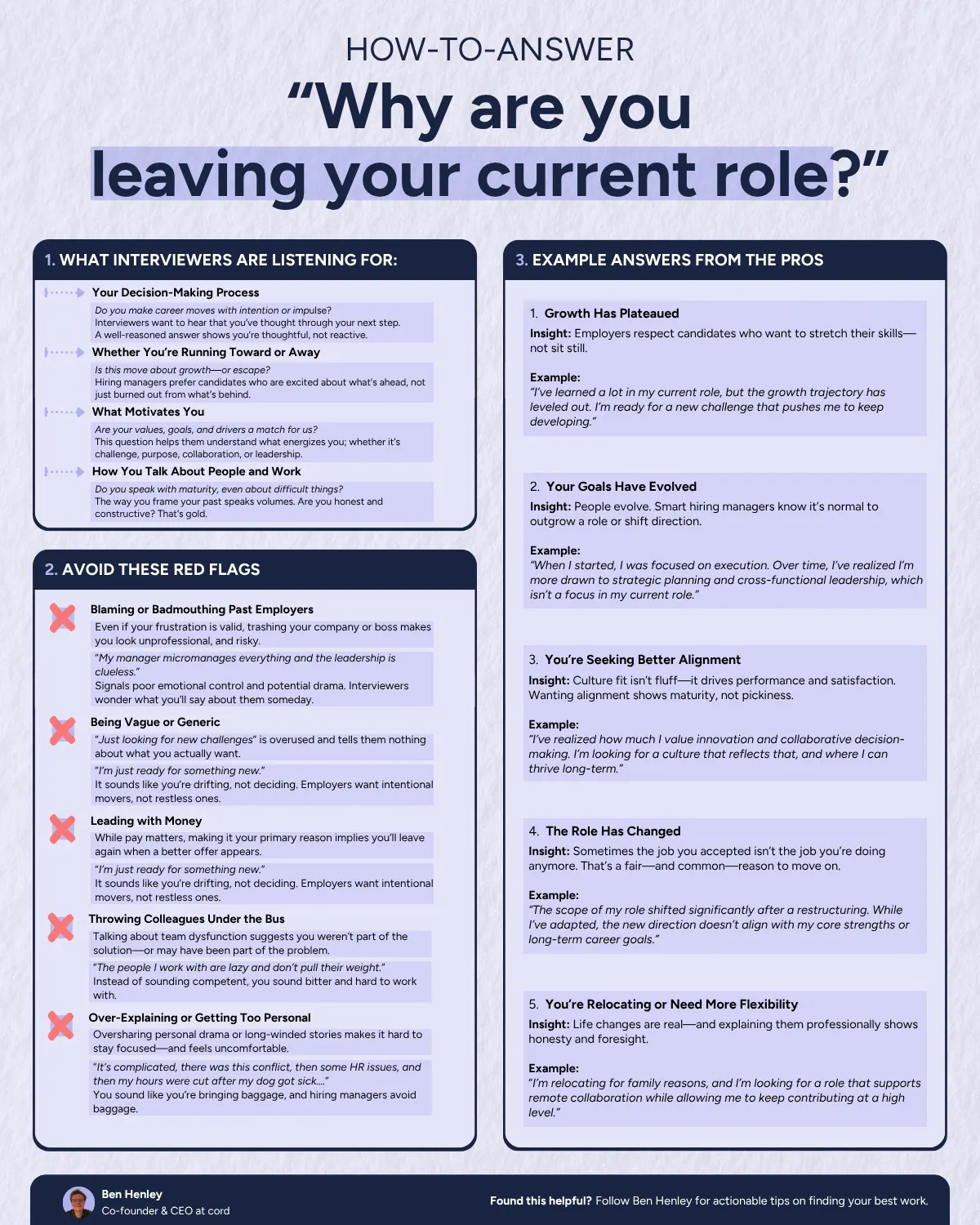
Your Decision-Making Process: Do you make career moves with intention or impulse? Interviewers want to hear that you've thought through your next step. A well-reasoned answer shows you're thoughtful, not reactive.
Whether You're Running Toward or Away: Is this move about growth—or escape? Hiring managers prefer candidates who are excited about what's ahead, not just burned out from what's behind.
What Motivates You: Are your values, goals, and drivers a match for us? This question helps them understand what energizes you, whether it's challenge, purpose, collaboration, or leadership.
How You Talk About People and Work: Do you speak with maturity, even about difficult things? The way you frame your past speaks volumes. Are you honest and constructive? That's gold.
Red Flags to Avoid
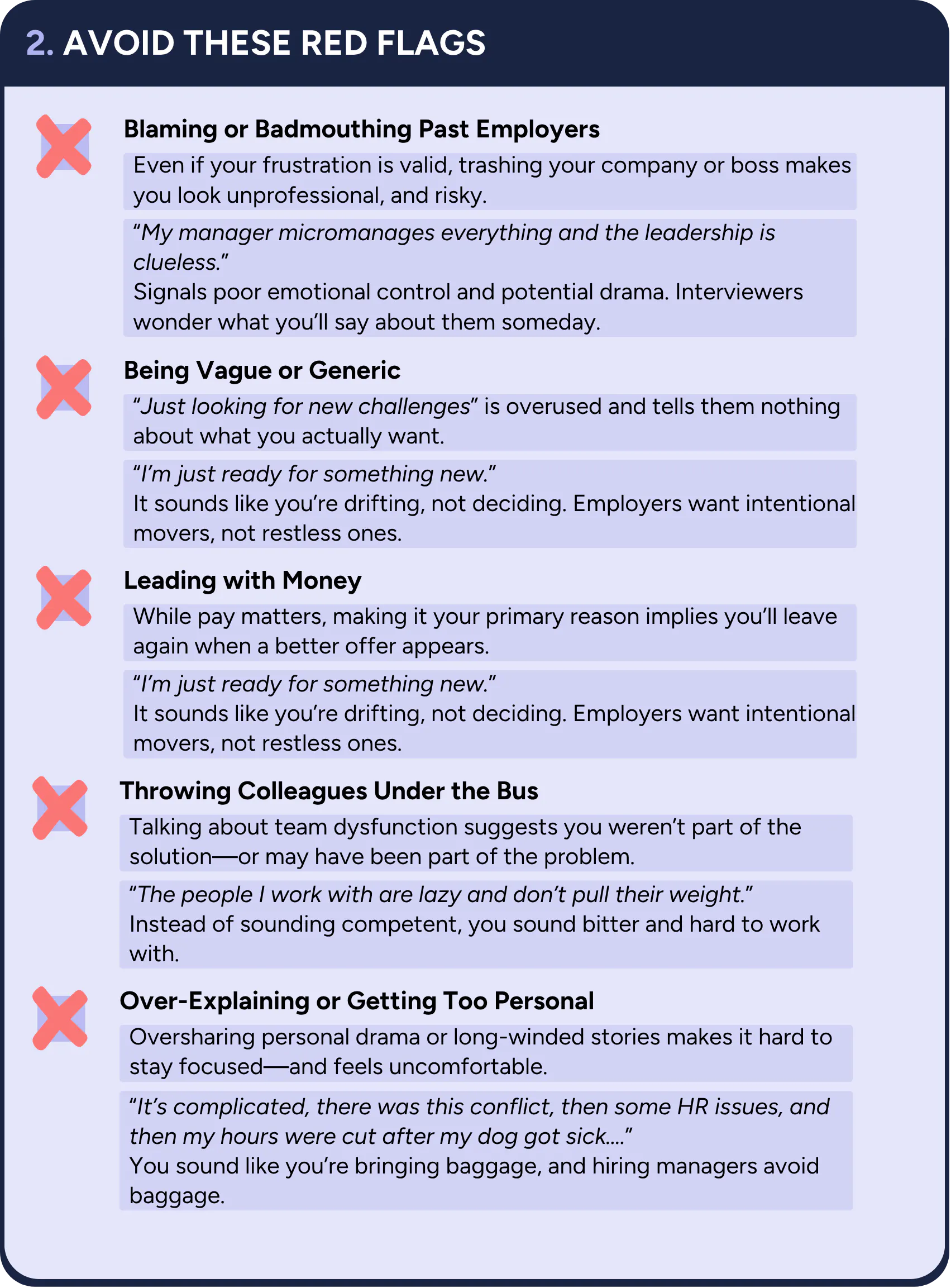
Blaming or Badmouthing Past Employers
Even if your frustration is valid, trashing your company or boss makes you look unprofessional and risky.
Why it backfires: "My manager micromanages everything and the leadership is clueless." Signals poor emotional control and potential drama. Interviewers wonder what you'll say about them someday.
Being Vague or Generic
"Just looking for new challenges" is overused and tells them nothing about what you actually want.
Why it fails: "I'm just ready for something new." It sounds like you're drifting, not deciding. Employers want intentional movers, not restless ones.
Leading with Money
While pay matters, making it your primary reason implies you'll leave again when a better offer appears.
Why it's risky: "I'm just ready for something new." It sounds like you're drifting, not deciding. Employers want intentional movers, not restless ones.
Throwing Colleagues Under the Bus
Talking about team dysfunction suggests you weren't part of the solution—or may have been part of the problem.
Why it's problematic: "The people I work with are lazy and don't pull their weight." Instead of sounding competent, you sound bitter and hard to work with.
Over-Explaining or Getting Too Personal
Oversharing personal drama or long-winded stories makes it hard to stay focused—and feels uncomfortable.
Why it's awkward: "It's complicated, there was this conflict, then some HR issues, and then my hours were cut after my dog got sick..." You sound like you're bringing baggage, and hiring managers avoid baggage.
Five Professional Reasons That Work
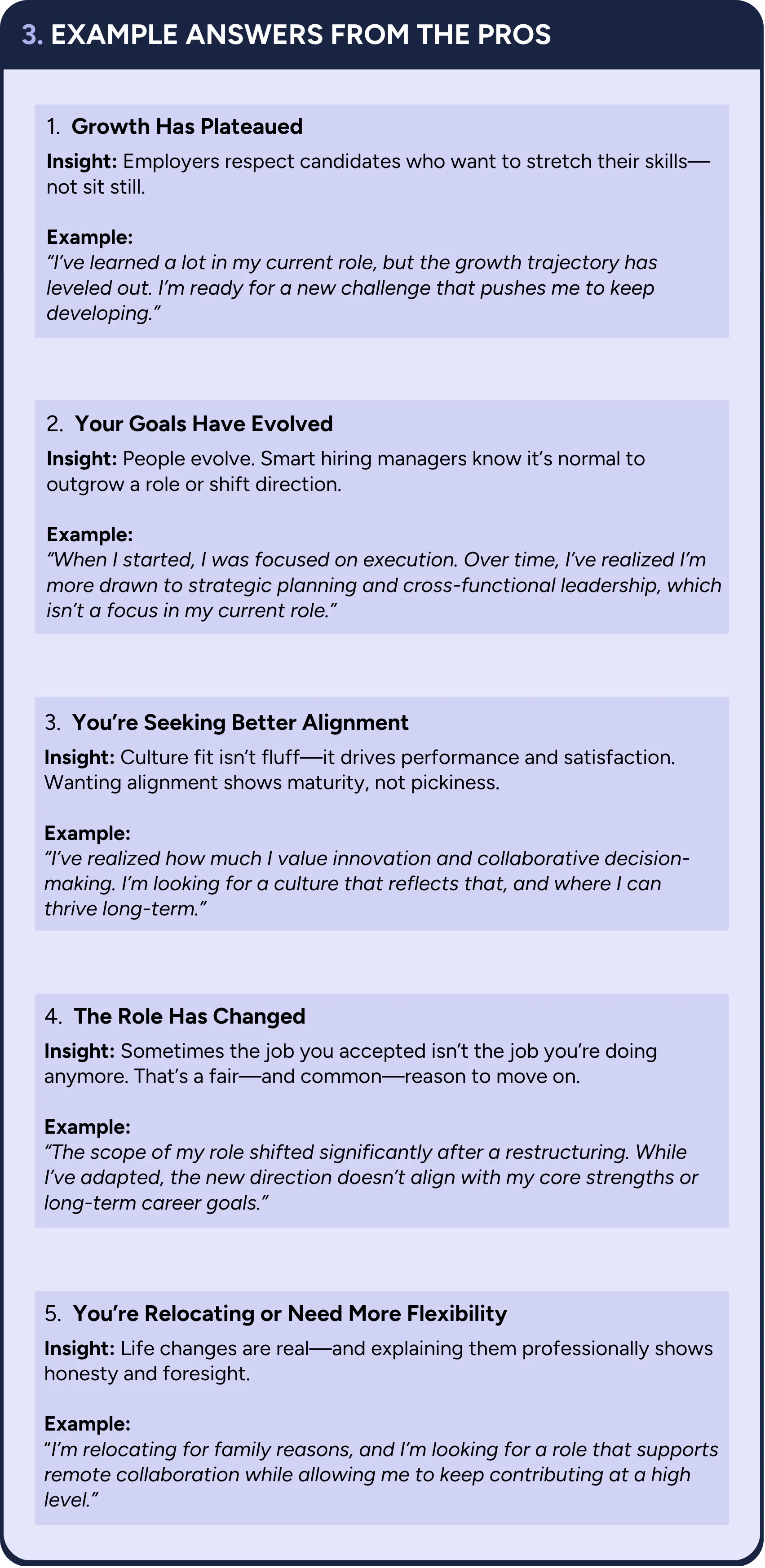
Growth Has Plateaued
Insight: Employers respect candidates who want to stretch their skills—not sit still.
Example: "I've learned a lot in my current role, but the growth trajectory has leveled out. I'm ready for a new challenge that pushes me to keep developing."
Your Goals Have Evolved
Insight: People evolve. Smart hiring managers know it's normal to outgrow a role or shift direction.
Example: "When I started, I was focused on execution. Over time, I've realized I'm more drawn to strategic planning and cross-functional leadership, which isn't a focus in my current role."
You're Seeking Better Alignment
Insight: Culture fit isn't fluff—it drives performance and satisfaction. Wanting alignment shows maturity, not pickiness.
Example: "I've realized how much I value innovation and collaborative decision-making. I'm looking for a culture that reflects that, and where I can thrive long-term."
The Role Has Changed
Insight: Sometimes the job you accepted isn't the job you're doing anymore. That's a fair—and common—reason to move on.
Example: "The scope of my role shifted significantly after a restructuring. While I've adapted, the new direction doesn't align with my core strengths or long-term career goals."
You're Relocating or Need More Flexibility
Insight: Life changes are real—and explaining them professionally shows honesty and foresight.
Example: "I'm relocating for family reasons, and I'm looking for a role that supports remote collaboration while allowing me to keep contributing at a high level."
How to Deliver Your Answer
Keep your tone neutral, your message clear, and your delivery calm. Practice your answer out loud until it sounds natural. You want to come across as confident, not defensive.
Remember: the best candidates don't just leave jobs—they move toward opportunities with clear intention and purpose.

Was this content useful?