 cord
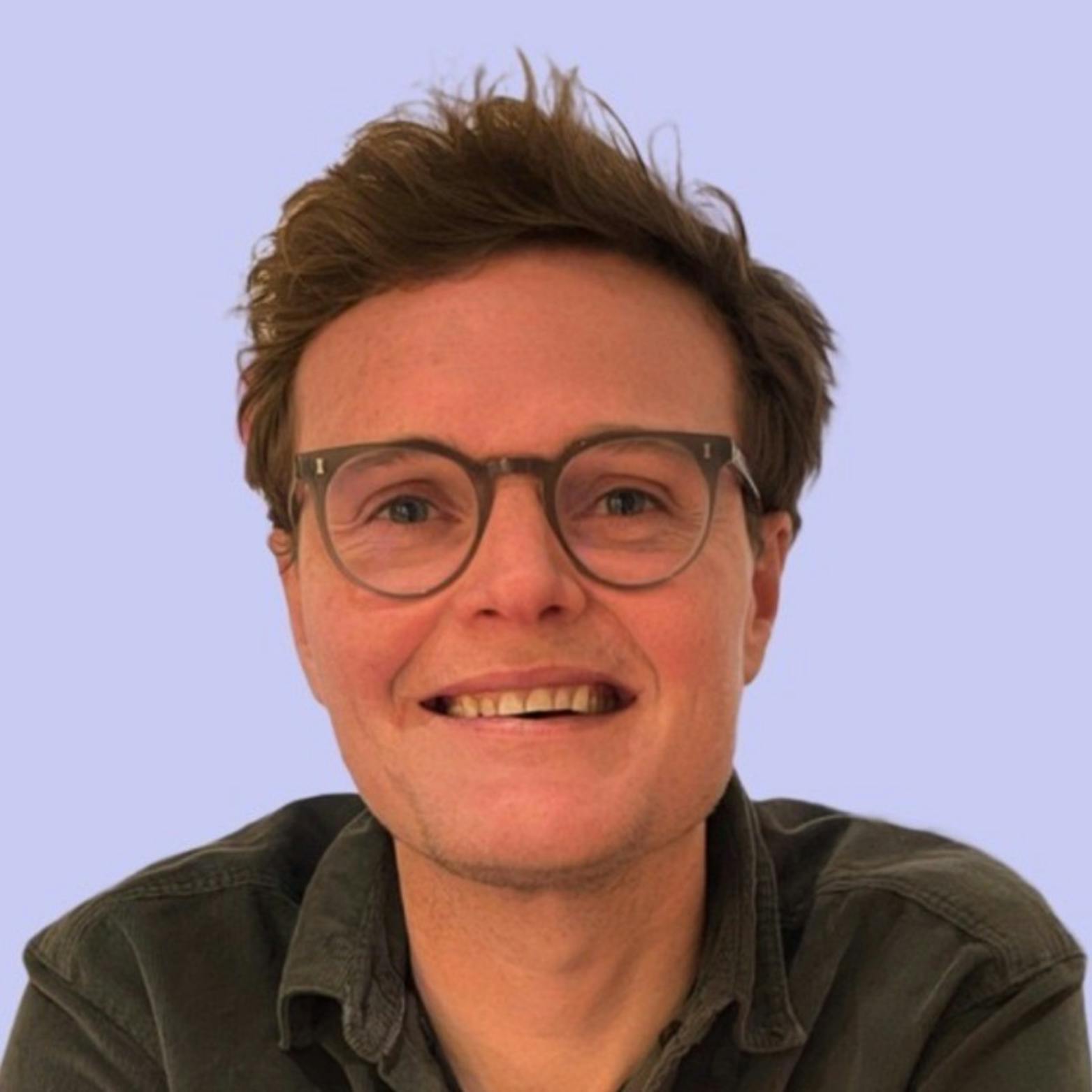
cordA virtual journey - Tom Szirtes
Happenstance and purposefulness on the road to our best work
Transcript
Tom Szirtes
00:00
I see my role as constantly learning. Being a co-founder, being a founder running my own company, it's basically taking a job where you just get hit in the face multiple times a day. It's about being slapped in the face and going, "No, you got that wrong. No, you got it wrong." It's not a comfortable place, but it's an incredible learning journey. And I see a career as a way, how can I keep learning when I'm 50 or when I'm 60? I want to still be able to learn and to explore things. I guess ultimately, that's the driving factor for what motivates me. I had this expression when I started off, which is, do interesting things and get paid for it. That was my life motto.
Ben Henley-Smith
00:48
How's music enabled your working journey? And what impact has music had on your career so far?
Tom Szirtes
00:59
It's probably held it back in many ways. I had quite a few opportunities that maybe... I prioritized things differently, I guess. You could look at, what does music give you? I think creating music, and for instance, development. They do share quite a lot in common. In some ways they're both require an abstract thought. They're creative. They require problem solving. Obviously, they're in quite different domains. Typically, you're trying to solve a problem with a computer program, whereas in a piece of music, it's a very interesting abstract form. It's storytelling, but it's not storytelling. It's creating worlds with an audio field, which is with sounds and it is one of the most interesting of the arts and one that we just take for granted. But I think there is something similar to that feeling of creating things, solving out problems. How do I get that sound? How do I get this result on the screen? And a lot of the areas of computing I've worked in have been in the creative sectors. I've recently now started working in education, which is what the current business Bodyswaps does.
Tom Szirtes
02:14
But for a lot of it, video games. I love video games because for me, video games was the ultimate expression of multimedia arts and everything coming together. It's an amazing industry, it's game design. It's art, it's animation, it's sound design, it's music, it's storytelling, it's logic, it's using cutting edge computing, graphics, artificial intelligence. And that's the thing that I loved about it. And I'm somewhat ashamedly a Jack of all trades, rather an expert in one, and I think that's one of the things that really appealed to me. And one of the things that's interesting for my job as a CTO, certainly in the company that I'm in, which it's about 14 people in my company. So it's still a very small company, we're growing. It's about my role, this transition of the co-founder who built everything single handed at the beginning as the technical founder to me then going off and hiring people and building out this company. You're a founder of your company universe. I would say you've been on this journey yourself. Yeah.
Ben Henley-Smith
03:22
It was fascinating hearing you talk about this, as you were talking about music and development, it was like escapism to me. It was almost as if you're able to solve problems in these parallel universes that you can escape to, whether it's music or designing a game.
Tom Szirtes
03:43
It's world building, essentially, isn't it? Games are very much about creating an imaginary world. And an interestingly in what we do at Bodyswaps, it's virtual reality. So it's education focused, but we're still building worlds in which you learn things and you can practice for instance, difficult conversations, soft skills, et cetera. So yeah, it is very much about creating worlds. And it's interesting in my role, creating virtual environments. I remember sitting at one point and it was in the middle of the summer of COVID number one, my wife was pregnant, et cetera. It was all pretty intense. And I was sitting there trying to work out what color the carpet should be in this virtual lobby I was designing?
Tom Szirtes
04:33
I suddenly realized I'm now I'm now an interior designer, which wasn't what I anticipated at the beginning of my career to be doing. But it just so happens that was one of the tasks I had to do. I had to pick, what does this room look like? Started researching hotel lobbies, picking out things. And that's what I love about being in startups and being in these smaller companies because I've worked in big corporations as well. I've worked at Orange, I've worked at Sega. I've been a much smaller cog in a big organization. One thing I like about startups is the diversity of tasks that you get given, especially as co-founder because ultimately, any job that no one else is qualified to do, you end up doing because you're the person who has to get it done. So you have to have that attitude. When I hire, that's also one of the things that I look for in the people that we bring into organization is that attitude to just muck in and roll up their sleeves.
Ben Henley-Smith
05:31
Are there any particular skills that you've learned either by writing or playing music or by writing software that's then crossed into the other world and that's helped you in the other?
Tom Szirtes
05:51
Yeah, there is. Again, in the early stages I did the audio design for our apps. So clearly being able to be proficient with audio editing software and recording and sorting things. There's some light music in it, so I wrote the music. I've been able to bring that across to it and then when I have a discussion. Now, we have an audio designer who's much better at this stuff than I am. I can have really detailed discussions with the audio designer about exactly what technology we're going to use, I can talk in the language that's useful for them. So yes in that regards, it has been valuable.
Ben Henley-Smith
06:34
And if you were to take the principles of problem solving, are there any ways of approaching problems or solving problems in music or any ways of writing code, almost like a framework with which you've used in each one that's fallen into the other, other than obviously the practical side to it.
Tom Szirtes
07:00
Probably less so. I think obviously the one thing about making music is it's a very iterative process. And as software development has become more iterative, I would say.
Ben Henley-Smith
07:12
You don't come out with a great song straight away.
Tom Szirtes
07:16
No, you don't. You work on it and you refine it. So I don't know if we do that so much in software development. We don't often have the luxury. I know we talk about agile development and stuff like that, but it's rare to have the opportunity to iterate a lot. We might go back and refactor some code and I guess that maybe that's the nearest equivalent. So probably not so much overlap in terms of that with music.
Ben Henley-Smith
07:49
It makes me think of the word range and how you couldn't have known that both music and development would come together in one project necessarily, but yet they have. And I wonder how much of that is by accident and how much of that is you following your inclinations, even if you're not consciously aware of it. That's pulling you into a place that's between the two.
Tom Szirtes
08:20
Yeah. I probably wasn't conscious, I think. If you have experience in something or a skill set, you tend to end up using it because you gravitate towards it. I'm probably giving away my age, but I'm a child of the 80s and I started off programming when I was 10 years old. I started playing the piano when I was six years old. So the two things that have always been with me from a very young age and certainly when I was a teenager, I was making software on my Commodore Amiga going way back then, which I'd write the music and I'd code it. And sometimes I'd do the graphics really, really badly. It's just a very natural thing for me.
Tom Szirtes
09:22
It's probably one of my weaknesses where I do tend to just take a task and start doing it. And often maybe, I need to learn to delegate a lot more, but that's because I've worked in organizations where with Bodyswaps, we've been going for about three years now. Before that, I had my own agency for about five years. And so in both of those environments, it's sometimes been quicker to do it yourself rather than try and find someone, explain it to them, do the revisions. And because I had luxury of being reasonably competent at these other skill sets, I'm not an expert, but I'm reasonably competent enough to pull it off for the level that I needed to do these things. And now as we grow as a company and now as we get bigger, it's more and more about finding the specialist who can not just do a good enough job on that, but do an amazing job. And that's how I find my role transitioning.
Ben Henley-Smith
10:23
Still feel like the challenge is that even when you do specialized, you still then end up as a leader, context switching a lot. So being able to have range still and a certain amount of Jack of all tradeness continues to help, even when you go through some of that, because you're constantly knitting different specializations together. And I don't think I'm yet to meet someone who is running a company or in a leadership position of sorts who is so specialized that they only understand one thing as opposed to, where it influences around them.
Tom Szirtes
11:09
Yeah. I think that's the decision that a lot of people come to and at some point in their career if you get that point is, do I specialize? Do I want to become a technical specialist or do I become a manager? I don't know if manager's the right word, but ultimately do I go wide or do I go narrow? And they both have a pros and cons and they really depend on, if you feel specialist, you can really dig deep into that one thing. You can become the expert at it. And if you're in the right market conditions, you can charge a lot of money for your expertise and skills. If the market changes, then you're vulnerable because your specialism might not be so required so much.
Tom Szirtes
11:52
And for certain personality types, I guess probably more introvert people. That can be really natural, a happy place for them to be. And then other people necessarily gravitate towards, "I want to have more responsibility, more control for more things." But you have to let go. You can't scale, right? You can't replicate yourself. So you have to cede control and you ultimately lose some of the technical expertise that got you to that point in your career. That's been the way it's gone for me and other people take the more specialist move and that's always a big step up.
Ben Henley-Smith
12:37
What was it like when that came? When did that moment come for you and how did you navigate it? Because it sounds like since the beginning, you'd love jumping into those problems and being a part of all of them, and it must have been quite the moment to find yourself at that precipice and have to make a call.
Tom Szirtes
13:04
Yeah. Again, I think these things come by opportune or chance. Certainly for me, I was just trying to think back as to when I don't know if there's any particular moment that it happens. I started off as a software engineer, and then I became a senior software engineer. This is a very typical thing. Then I became a lead programmer. And at some point, I guess at an actual point, that's where you either become the lead program or you go into more project management side, which I guess I did, but with a gap in between the two. And it wasn't really me necessarily making a conscious decision at the time, I think an opportunity arose and that felt like the right decision to do.
Tom Szirtes
13:54
And for me, I think it was also my expression, your eyes are bigger than your stomach. It's me wanting to get involved in everything, it's overeagerness. And so it was natural for me to go, "If I could just control this and if I could do this and do this and get involved in that." And that's just my personality, that's the generalist in me that feels that urge. And that happened a couple times. And I think you also have to know what your skills are as well, and it so happened I am an introvert, I'm ultimately the geek child. But I am relatively able to communicate and I don't mind communicating and I'm quite happy to do the other tasks.
Tom Szirtes
14:51
I don't mind doing boring project management tasks, and I can write documents and all that other skills that you need to do those jobs. So it didn't feel like a big lurch for me, but often look back on it and one day when I'm doing some project management, looking at some Gantt table with a 1,000 lines on it and scratching my head and just going... Some of the moments I'm happiest is refactoring a piece of code. Maybe I should just be doing that all day. But if I did that all day, I would not be able to start a company and I wouldn't start a company.
Tom Szirtes
15:33
I wanted to grow a company as well. So you make trade offs in life. You have priorities and you make decisions that set you down a path. And it's like meeting your partner, having a child. I think no one really, very few people can really plan out their lives and go, "I'm going to do this, this and this." People might have an idea. A lot of these things just happen and you look back at it and you have closed some doors and you've opened new ones. And I think you just have to be philosophical about it and just make sure that you're steering your ship in the right way. Am I happy? And I really believe in if you have the attitude of wanting to develop yourself and I see my role as constantly learning.
Tom Szirtes
16:23
Being a co-founder, being a founder of running my own company. It's basically taking a job where you just get hit in the face multiple times a day. And it's about being slapped in the face. You're going, "No, you got it wrong. No, got it wrong." It's not a comfortable place, but it's an incredible learning journey. And I see a career as a way, how can I keep learning when I'm 50, when I'm 60? I want to still be able to learn and to explore things. I guess ultimately, that's the driving factor for what motivates me. I had this expression when I started off, which is, do interesting things and get paid for it. That's that was my life motto.
Ben Henley-Smith
17:07
It's interesting that it split into two, as you're talking about it. On the one hand, there's skills that you need to understand in yourself. You need to know what you are good at. And often that's actually different to your own self perception and it does take a bit of time to understand it. And there's also a second part to it, which is, what you actually want. What's that thing that I know I want to start companies and I want to do that. It almost felt like the two were potentially different and almost required different ways of, understanding yourself and what you want to be doing.
Tom Szirtes
17:47
Yeah. I think there's always conflicts. Yeah. It's complex. I don't think you ever know, or maybe it's just me, maybe some people do. I quite often do still feel conflicted about things that have happened or decisions I've made or decisions I have to make. And that's part of life, I think.
Ben Henley-Smith
18:17
How many of those doors that you go through are ones that you feel are deliberate? There's almost a difference to me between reflecting on those doors and being like, "Well, they just happened and I wasn't aware of what was going on. And now I look back and I'm trying to work out what happened." Or as opposed to being in the moment and making a conscious decision to say, "Okay, I feel like I am in control of this decision." How much of them are deliberate to you?
Tom Szirtes
18:46
I think it's been a mix. There's been a couple of Cases. Once the company I was working at, a games company went bust. Everyone lost their job.
Ben Henley-Smith
18:59
Don't have much of a choice there.
Tom Szirtes
19:00
You don't have much of a choice. That's something that just happened to you. And I wasn't thinking of ever of leaving. I wasn't thinking about leaving that place at the time and it was a good working environment. And I'm still friends with lots of people who worked at that company, including my boss. But that was something that has happened in my life. And at the time, what I decided was I'm going to take a break because I'd been just constantly working in the video games industry and I'm going to take a break and just concentrate on music. I did that and then start contracting a little bit on the side and did that for a few years. And so I guess that was a less conscious decision, but a conscious decision that did happen.
Tom Szirtes
19:45
I was working in the research and development for Orange and been there for about two and a half years. Again, it was an opportunity came along and a friend of mine who runs it, who used to run a successful studio said, "Hey, we're thinking about this. We've got this project idea." And I was like, "Oh, that's fantastic." At that point, I made decision to leave the full-time job at Orange. And I went, "Do you what? I've come to an age, I'm ready to try this journey of entrepreneurship, I don't know where it's going to go." And how old was I at time? I was probably almost 40 at that point. It's quite late on in your career. And I stopped and followed that. And it was a very conscious decision and it was very stressful at the beginning. Certainly got pretty much a lot of stuff changing in my life at that time. Relationship ended, job ended, security ended. And I was pretty much on my own for a good couple years.
Tom Szirtes
20:57
And then picked up and I went on this amazing journey for three or four years. Just started building up. I had no idea. So basically, we tried to do a Kickstarter to create a new video game and the Kickstarter was reasonably successful, but it didn't reach its target goals. So in the end, we didn't end up pursuing that. So I was left at the end of it like, "Okay, what am I going to do next? I've quit my job." So I set up my company at the time without actually knowing what my company was going to do, other than I was going to sell my skills. And I went on this amazing journey for three or four years where I started off fixing some websites. And then a project came along where with my friend's studio where we built a virtual gallery. This is in 2014, we did a little bit on it, which was used for the first Oculus VR headset when it was just a prototype.
Tom Szirtes
21:57
That moved me into the journey of setting up going, "Oh, right. Virtual reality is something I'm really excited about. I'm going to specialize in virtual reality." I spent then the next three or four years building a business around creating virtual reality software, going along the way also then finding myself in some space where I was nurturing digital artists. I ended up creating things that were displayed in the Barbican and sold in Mayfair galleries, which was really bizarre. Going on a strange journey, talking at trade shows. I went from being just a developer to then going on stage giving presentations at trade shows. Came around that company being an employer for the first time. Build that.
Tom Szirtes
22:42
And then the opportunity to pivot came again where it was an agency. I met my current co-founders who had a different journey, but we were in the same space. And then we joined together to create Bodyswaps about almost three years ago now. And because we wanted to create a product and we saw an opportunity around training and virtual reality that hadn't really been exploited. And now we've spent the three years. We've now gone through two investment rounds. We've now 14 people, the challenge is building a product company as opposed to an agency. And I can look at, there were other inflection points in my life where I remember when I was quite early on, when I was offered a CTO-ship in Brighton, I was based in London because I wanted to do music. And was like, "Well, why do I want to go to Brighton? The cool stuff is happening in London. So, nah, I'm not going to take that." And that company went on to be a very famous video games company, which I could have been one of the directors of.
Tom Szirtes
23:43
So that was an opportunity I turned down. Sometimes I think, "Well, maybe I should have done that," but I wouldn't have gone on that amazing journey of just putting on all these different hats and that excited me and it hasn't necessarily been the financially sensible decision or necessarily the career sensible decision, but it's just enriched my life in different ways. And I hope whatever happens next with Bodyswaps or the next thing, that I can continue to do that for as long as possible.
Ben Henley-Smith
24:18
It really does sound like you're following your nose.
Tom Szirtes
24:22
Yeah, very much so. Yeah. It is, it's not like I just. I stress about decisions quite a lot, I really agonize about making decisions. I'm dreadful at procrastination. So I don't want to give you the idea about I'm this brave person who just goes off and does stuff. That is not me at all. I stress, I procrastinate. I do all the things that everyone else does, but I guess the circumstances allowed me to just push a little bit, just take a little bit of risk. Go on Tom, push yourself off that little bit of comfort, go into this space. How do you feel? Okay, this is interesting. Maybe I'll go in that direction.
Tom Szirtes
25:05
And I do try and plan ahead. I am aware of the dangers of going down a particular route. I always think about, what if this business fails, what am I going to do next? What transferable skills do I have? I do consider all that stuff too, but it just so happened that I've been on this wiggly waggly journey and I don't regret really any of decisions apart from not buying a flat in Shoreditch when I first looked in 2000 and something.
Ben Henley-Smith
25:43
Said everyone.
Tom Szirtes
25:45
Yeah. Which would now be worth a million pounds.
Ben Henley-Smith
25:52
The way that you explain it sounds like you're living not just in a mind that feels like it's on its own, but that you're a part of this wider system. The way that you're like, "Okay, I go into this place and I see what it's like. I look around, work out which direction I want to go and then move." It's almost as if you are continually discovering things as you go on to the point where if we sat in a place and just tried to think through exactly where we want to get to and work out how to get there. By the time that we'd worked it out, you're so far away from the thing that you're trying to do that actually, if you'd just taken a few steps forward, got there, figured out where to go and then carried on. It's these constant little loops, it almost feels like. Little steps that I guess they're the dots that you can't connect looking forwards, but you can connect looking backwards that you're almost experimenting with over time.
Tom Szirtes
26:56
Well, it stops you getting disappointed, doesn't it? I guess if you start your life and go, "I'm going to work at Google and then I'm going to become vice president and then I'm going to..." You're setting yourself up for potential disappointment just because you don't know what's along the way.
Ben Henley-Smith
27:13
That's so interesting, yeah. Because your happiness, you're always aligning your work with your expectations, and if happiness is the difference between expectations and reality. Then you're just hacking your own career happiness.
Tom Szirtes
27:29
Yeah. I think so. It's good to have aspirations though. Goals are important and I think a sense of direction. We're getting a bit philosophical now, but do we really have any control in life? If you see what events are happening around the world right now, I feel incredibly powerless in many ways around climate, political events. War on Taiwan next? I haven't checked the news today. So we like to give ourselves a sense of that we're somehow in control. We're never really in control, are we? And a lot of times, control is an illusion. I don't think as developers, we necessarily like that because we like to be in control and we're trying to solve a specific problem. And if your program doesn't act in a way that you feel isn't in controlled manner, you get very frustrated very quickly. But yeah, people like to feel like they have some control of their life.
Tom Szirtes
28:28
So it's good to plan. It's good to have a sense of your direction that you're going for, but it's prudent to take each step forward. A journey is made of many steps. And also if you're too fixated on the end, as I say. It's a dreadful cliche, but you're going to miss out on a beautiful journey. You need to take time to look around which I'm always trying to do.
Ben Henley-Smith
28:56
It does sound like a lot of the way that you approach it does start with this core belief that there are things happening outside of your control. If you're getting there, looking around, or if you're being a Jack of all trades. You're almost doing all of that with this awareness, that there's things that are happening around you and to you that are outside of your control. But it is then quite interesting that you choose to do work that is so specific, that is problem solving. That does create worlds that are more controlled.
Tom Szirtes
29:38
Yeah. Maybe that's a deep yearning to actually have control over some things. I suspect I am. There is a bit of control freakery about my personality, I suspect. I'm definitely not as laissez faire as some of my friends, but I think that's not too uncommon. I'm going to try and not psychoanalyze myself too much.
Ben Henley-Smith
30:25
What advantages are there to accepting that things are outside of your control?
Tom Szirtes
30:27
Well, I think what advantages are there? It's peace of mind, ultimately. Is it stoicism or something.
Ben Henley-Smith
30:34
Make yourself feel better.
Tom Szirtes
30:42
It makes you believe. I think. I'm a pragmatist, I'm not a dreamer. Yeah. Maybe it is as simple as don't get your hopes up too high, Tom because you might get disappointed. Maybe I'm just afraid of getting disappointed. See, I am psychoanalyzing myself now, this is dreadful. But I think there's that aspect of, set your expectations and your happiness is expectations minus the reality. And maybe it's just a very pragmatic decision that you set your goals. Have dreams, but set manageable goals. I think we're programmed also in a way to, if you look at this in terms of how we work and generally how we need something to work towards, but we need tangible successes quite frequently to make us feel satisfied.
Tom Szirtes
31:42
It might be as simple as, "Oh, I got that task done today. Brilliant. I got this great piece of feedback from another staff member or a client or whatever, tick." We need that we're progressing because otherwise, it does get very frustrating, doesn't it? And we know because there's what? Seven, eight billion of us on the planet and everyone has dreams and aspirations and 99% of those will never be realized. And yet we can still leave live, hopefully lives have happiness and they have tragedy. But we'll find that we'll find meaning hopefully through whatever it takes and that changes per person. I find meaning mostly through work and now also through family and other people take more meaning from their friends and society and their status. So everyone has their own path and I'm rambling.
Ben Henley-Smith
32:53
This is also a part to it where it almost feels like it's the truth. What's that pencil thing? There's no one on earth who knows how to make a pencil or something. It's as if no one person could go and make that. No one could go and chop wood, no one could go and get the lead or whatever. I'm talking to you through a piece of software that I didn't make and a microphone I've got absolutely no idea how this thing's working inside. For me to think that I'm in control of what's happening when I have no idea about how any of it is actually working. Just seems like that really would be ludicrous. I'd be completely deluding myself. I genuinely don't have any control over what's happening there. And as much as I would like to think that I do, I don't.
Tom Szirtes
33:55
Well, it's certainly interconnected and I guess these interviews or chats are vaguely based around your business of recruitment. But I think yeah, we are very much interconnected and one thing that I've realized is super important is your network and the network of people. So we're connected to technologies and the fact that I eat every day, the food got to me is an amazing chain of people involved to provide the energy and gas and food and process it and everything. But when it comes down to purely professional development, I would say your network is so valuable. It's the most effective way of finding your next job. It's the most effective way of finding your next customer.
Tom Szirtes
35:00
And if I was to give advice to anyone, it's really to nurture that network. And I don't nurture my network as well as I should do mostly because my head's so buried in the day to day things that have to be done in the business. But every so often, I go, "I really, really got to work on my network," because I've seen that it's your number one resource.
Tom Szirtes
35:24
And feeding into that network is then, how do you treat people? How do people feel about you when you've had a transaction with them? Even if it's just a light transaction, because that's where 90% of your opportunities will come from. What employee were you? Did people get along with you? Because they were recommended like when that company went bust, my next job came through the boss of the company who just lost his company. But now said, "I liked working with Tom. Hey come along, do you want to try this?" And that opens the door. And if I'd been really disgruntled because I lost equivalent to four or five months salary in that bust. So I could have been really blah, blah, blah. But it wasn't, and now being a business owner, I can totally appreciate how hard that process of him losing his business must have been. But we have a relationship to date, we're not mates but we have relationship and everyone you touch becomes a potential opportunity in the future.
Tom Szirtes
36:35
So I think that's what might interesting about your platforms like the ones Cord has where you're connecting people. What might be interesting in your business actually and I don't know how it works is, what can you do with networks after people have been recruited? How can you leverage that? Can you create community? Because I learned about Cord through there's a very interesting Slack group, Amazon Run. They have a CTO fellowship. I'd had to join that. It was just a resource. I was posting, "I need to hire some developers." And few people recommended Cord. We tried Cord and we hired a developer through Cord. It really reinforces that person to person network.
Ben Henley-Smith
37:29
I think it's about access to opportunities, isn't it? And I guess if you were to ask the question, why should you build a network? It's because talent might be evenly distributed, but opportunities aren't and you have to go out of your way in order to expose yourself to a network of not just people either, but ideas and events and places. There was a brilliant talk By Bill Gurley, it's called running down a dream. And it's how he studied Bob Dylan and the guy who started Shake Shack and how the key to their success was actually just moving themselves to the epicenter of wherever it was that they needed to be. And in some ways, that is networking. It's just putting yourself in the place with which everything around you is atoms firing off against each other and randomly splitting. What would you do in order to get as much exposure and touch points to all the stuff that's happening around you? Well, you would go and do it.
Ben Henley-Smith
38:41
And networking to me, I think it's got this bad connotation, because it's relationships, snarky, smooth. And you think, "Oh my God, I don't want to go and do that." Whereas if instead it was, "Okay, why am I networking?" Not the snarly stuff, what am I actually doing? What you're really doing is just putting yourself in a room full of stuff that might help you out over time. And if you can get over the way that you want to network, get out of the way that you perceive networking to be, then it is just that you're putting yourself in front of opportunities somehow.
Tom Szirtes
39:24
Yeah. And I think it's finding the ways of networking because you're right, you've touched a good point. If you perceive it as going to a networking event and sitting awkwardly in a room and I've done that loads of times.
Ben Henley-Smith
39:39
That's not networking, yeah.
Tom Szirtes
39:42
I'm not the most extroverted person, so I don't find that particularly comfortable being in a room for the strangers and going up and saying, "Hello." And trying to say it yourself. I have done it and I do it grudgingly, but some people are really good at that and kudos to them. But I think for a lot of people, certainly in my industry who happen to come into my role, that's not a favorite way of doing it. But being in an interest group, I've met my best friend. My best friend I met through it was a Harvard sponsored entrepreneurship and just happened to be standing next to him. I just started chatting and he was just like, "Oh, this is boring. Should we go out and have a beer?" And then 10 years later, he's my best mate. And all sorts of things.
Tom Szirtes
40:40
And the Internet's great at being able to connect people that you wouldn't necessarily meet. I think face to face, you still can't replace the face. If you can physically get yourself in with a group of people else, it's really much harder to do now. I think just be yourself, you don't have to necessarily pretend to be something you're not. Just find your community, find a community of people who are interested in the same things as you, or have similar values in there. And similarly in your professional life is just be nice to people. You don't always get that. Surprisingly how a few people or paying attention, or just being sincere. You remember people who are honest and nice and sincere in interaction with you as to some person you just feel a little bit, that didn't quite feel genuine or that person's trying a bit too hard or that person's just rude or just awkward. And you'll know that, you'll go out of your way to avoid that person.
Tom Szirtes
41:56
But if even if you have an interaction with someone, there's that transactional element in an interaction, it might not be that transaction makes sense now. There might be a transaction two, three years down the line. You can't anticipate that. So just be nice to people and go out and expose yourself to people like what you're doing or passionate about what you are. I think it's certainly since COVID, it's social networks, it's been much more tempting for people to cocoon themselves a bit more. And I still think all that other stuff is super valuable.
Ben Henley-Smith
42:43
Whatever can get you to the truest root of yourself. It's like public speaking, biggest bit or tip I think people get when it comes to public speaking is just figure out what your earth is here? What is it that's the way that you want to do it? Do you want to be planned? Do you want to do it improv? Do you want to do it half and half? Do you want to be on hard seating? Do you want to be on soft seating? Do you want to sit down or do you want to stand up? Do you want to use your hands, do you want to not? What do you want to wear? It's all about how do you connect with the communication that you want to share.
Ben Henley-Smith
43:24
Then the other part to it, it's like if you've got a dog. You've all of a sudden got a reason to talk to everyone and everyone's got a reason to talk to you. If you had some fake animal on the end of a lead, people just wouldn't talk to you. They'd be like, whatever reason, if that people do talk to you, if you have a dog. Same with interest groups. You're not actually talking about each other, you're talking about the interest, which then almost takes this sting out of networking where if it's just about me and you, and we know we're here just to actually connect with each other, then they're almost the social awkwardness of that interaction is just impartible to some people.
Tom Szirtes
44:04
Yeah, that's a good segue actually. The product that we're developing next at Bodyswaps is a public speaking. We're developing a whole range of modules and how to speak within meetings or in public forums. And so that's quite interesting. We have learning designers who design that content, but it's really quite interesting for us to explore. That's actually what you're saying. One of the modules is called your authentic voice. It's really about not necessarily trying to be someone else or who you think should be, but finding how you want to communicate in particular. And then on top of that, we provide you all the practical skills, how to use your voice, how to make eye contact, how to build your confidence. And in virtual reality, we can simulate all those environments so that you can practice in a safe space.
Tom Szirtes
44:57
And we use artificial intelligence to analyze what you said and how you say it to give you personalized feedback. So it's a super interesting area. I've been talking quite a lot a bit philosophical about soft skills. But to take round full circle, that's Bodyswaps. That's what we do for people. We provide soft skills training so you can practice those conversations in a safe space. It's very different from what I imagined I would be doing when I started my career making video games 20 years ago. Do you like the way I bought everything back together to the beginning now?
Ben Henley-Smith
45:47
Incredible. Thanks so much for sharing it. And it's so refreshing to go through a working journey in someone's experience that has in equal measure, the desire to step forward and move forward and be deliberate. But at the same time, recognize all of the happenstance and the interdependentness and I've loved it.
Tom Szirtes
46:18
Catch you later.
Ben Henley-Smith
46:18
Cool.
Tom Szirtes
46:19
See ya.
Ben Henley-Smith
46:19
Take easy.
Was this content useful?
Start using cord
The messaging tool for finding work

Senior Designer, Performance Marketing at CreditSpring
Senior Network Engineer at Trellint
You might also like


Ines Elloumi
Overcoming perfectionism - Ines Elloumi
Jumping into the unknown and the joys of exploration.
Youssef Ahres
Compounding effects - Youssef Ahres
Finding work at Instagram by accident.
Sean Gabriel
Systems and loops - Sean Gabriel
From networks, to people, to growth.

Jonathan Cutrell
Work that matters - Jonathan Cutrell
How to embrace meaning and work
Ahmed Ahres
Pursuing a vision - Ahmed Ahres
Discipline, clarity and focus in finding our best work