 cord
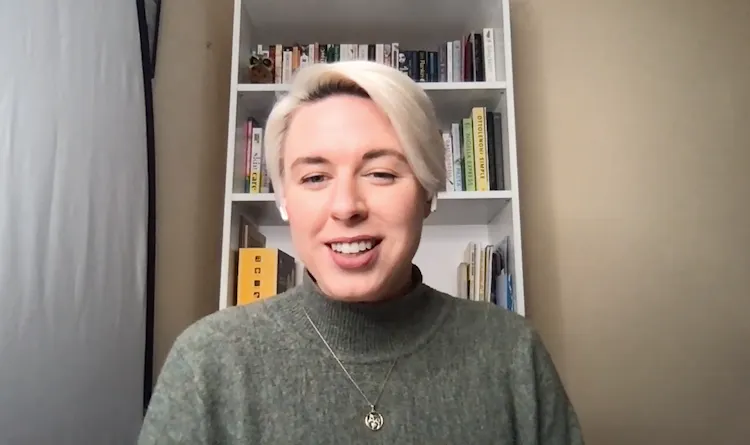
cordBeing a full-participator - Katelyn Sorensen
Knowing when to take the medium path, and differentiating the external and the internal
Transcript
Katelyn Sorensen
00:00
He always says that, when we're looking at other people's lives at social media, that we're comparing our insights to everyone else's outsides.
Ben Henley-Smith
00:10
Reading something online, and when you're asked what advice you would give to other CEOs who are beginning their entrepreneurial journey, you said, "Don't do it alone." Did you start your own journey alone?
Katelyn Sorensen
00:24
No. One of the pieces of advice that I've been thinking about a lot recently is, to A, sort of never think you're too good for something, and B, always build relationships. So, one of the reason that I am where I am is, because I've focused so much on building relationships with everyone. I found this job because of a recruiter that I used for many years to hire lead generation specialists. And so, who would have thought that then he would kind of place me in my dream job seven years later. It's something that like, I still talk to him, I still use him to recruit for this company. And that... I guess you sort of never know what's going to happen later. And so, the more that you can surround yourself with people that you trust, that bring something to the table, bring a unique perspective, and can help guide you the better.
Ben Henley-Smith
01:36
And you are now in tech, but you didn't start in tech, where did you start?
Katelyn Sorensen
01:40
Technically I did, I graduated from college with a psych degree, so not tech. But then I went to Microsoft Australia to do software testing, and worked on the link product, which I don't know if anyone except the team that I was on, then knows that.
Ben Henley-Smith
02:09
[crosstalk 00:02:09] I think.
Katelyn Sorensen
02:09
And then I went into kind of sales and marketing for more of a services product, and then found my way into tech again through marketing consulting.
Ben Henley-Smith
02:21
Through marketing consulting. How did that happen? Because there are quite a few people who might find that transition more tricky.
Katelyn Sorensen
02:29
Yeah. I had worked in one place for a really long time, had grown a ton, and was the director of marketing when I left. And was, burnt out to be totally honest, and so I just like, I needed a change, I needed to take a break. So I signed up to work at a consulting company, be an individual contributor, and went on a sailing trip from Panama to Columbia to completely decompress. And then while I was consulting, I kind of started looking for what is the next thing that I really want to do.
Ben Henley-Smith
03:18
How did you know that you were burnt out? It's so hard to know.
Katelyn Sorensen
03:22
That's a very good question. And I think my understanding of burnout is definitely a little bit different, at this point in my life. Being the CEO of two companies, you'd think that I would burn out faster in a role like that than a director of marketing for one company. But I think we talked at the very beginning about finding your best work, and if you feel supported, have the right team around you, and enjoy and love what you do, it's a little bit easier to work longer hours, and it doesn't have as much of a negative toll. I still try to get a lot of sleep. I'm still tired sometimes, I won't deny that, but it's less of a, I don't know, existential dread than it used to be.
Ben Henley-Smith
04:22
What were the signs other than existential dread? Which sounds enough in itself.
Katelyn Sorensen
04:28
I just didn't want to go to work anymore. I wasn't excited about what I was doing, I didn't feel like I was growing, and I was getting sick all the time actually. That was kind of a big indicator for me, where I just like could not stay healthy. And I think that kind of helped me realize that there was a little bit of dissonance between, what I thought I was doing, what I thought I was contributing, and what I thought I wanted, from what my body was telling me that I needed, which was at that point a break.
Ben Henley-Smith
05:10
Yeah. How did that affect the work that you chose next? Because it sounded like it was somewhat of a deliberate choice to go into consulting.
Katelyn Sorensen
05:20
Yeah, I took a pay cut, I decided, I'd been managing people for five years, decided to go into an individual contributor role. I think at that point, I wanted to get out of something, and I knew that I wasn't going to find the thing that I really wanted to get into in that like escape place. So, instead of trying to find the best thing, the thing I was excited about while I was in that place, I wanted to get myself in the right head space, to be ready for what was next.
Ben Henley-Smith
06:05
That's an incredibly practical way of thinking through your next working step, because you've done such an in... You've been on such an incredible journey at first, and then it must have been kind of tumultuous to then kind of proactively decide, you know what? Like I'm going to almost go with the medium path here, and I'm going to like bank it almost.
Katelyn Sorensen
06:32
Yeah. I've definitely not really been a medium path person in my life. My goal is always to exceed expectations. And it's funny actually, when I was kind of making that decision, I was talking to one of my friends about asking for advice, saying that I wanted to go somewhere where I could just work normal hours and recharge. And she kind of looked at me-
Ben Henley-Smith
07:02
What's going on, Katelyn.
Katelyn Sorensen
07:04
Well, her response was, "You know that no matter where you go, you're not going to work normal hours. Like you're not like coasting person." And I was like, "I don't know, I'm tired. I think I can do it." Fast forward a few months, and I could not coast. I was still working 12 hour days. I was still trying to develop new programs for the company, and like talking to the CEO. So, she was right.
Ben Henley-Smith
07:41
Did it give you what you wanted?
Katelyn Sorensen
07:43
Yes. Yeah, it did. It helped me realize what my passion is, and that really is leadership. I would not be here, I would not be able to do anything that I'm doing without an incredible team. And so like developing people, working with the people that I do, that is what energizes me, and that's what I want to do. I actually read Rand Fishkin's book, Lost and Founder. And he was talking about, he's the Moz founder, and at one point he was talking about how his role of founder transitioned into the role of CEO, and how much he hated that. And he was talking about all of the things he does as a CEO, like solving problems, removing blockers, developing people, building culture. And he's like, "All that, I hate all that stuff." He wanted to get back to the like building, and the tinkering.
Katelyn Sorensen
08:55
And I went to my boss at the time and I was like, "I think I was supposed to read this and agree with him, but actually everything that he described, I want that." And that was kind of the beginning of the conversations that led me to where I am today.
Ben Henley-Smith
09:12
Was that the beginning of the end at the Spur Group then? I can Imagine if you're having that conversation with your boss, like that's both good and bad.
Katelyn Sorensen
09:22
Yeah, no. I mean, the Spur Group was great in a lot of ways, the people there are fantastic. And I think that I was pretty open when I joined them, that it was something that I wanted to try. And at the end of the day, I want to own things, I want to see the results of things. I still make PowerPoints, and I learned a lot about kind of how to present ideas at the Spur Group, but that path isn't what I want to do, I want to work for a small scrappy company, I want to solve problems, and I want to see what happens with those solutions and when they're implemented.
Ben Henley-Smith
10:12
What happened next?
Katelyn Sorensen
10:13
I joined Traject, well, what is now traject? We were at the time ASG MarTech, and had I think five brands at the time. We've been through a lot, that is still where I am today. Traject is the parent company of Loomly and Sendible. And we have expanded a ton Sendible, and then we were not part of Traject when I joined. And we did have a small social media management presence, but have grown a lot since I joined. I was the head of sales and marketing at the time, when I got hired working for Steve Reardon, who's now the CEO of the parent company of Traject, and learned a ton from him. He's been an incredible mentor for me.
Katelyn Sorensen
11:15
And just really like... It was an incredible role, I was terrified going into it. It was a bit of a stretch, as I mentioned at the beginning, the recruiter that I used to use to fill my lead generals, he reached out to me and was like, "Hey, don't know if you're looking, but here's an opportunity." And I actually didn't get it at first. I was passed on in the initial stages, partially because I didn't know how to articulate what I wanted. I think that that was a lesson that I learned through that process of like being really clear, going into something, going into the conversation with a recruiter, going into the conversation with anyone really, you need to know what is your goal and what do you want, so that then you can be clear with your requests.
Ben Henley-Smith
12:20
What was it that you weren't clear about?
Katelyn Sorensen
12:22
I wasn't clear on where I wanted to go, and what that would mean for the company. So there were reasons why at the time, but I said that I wanted to be a chief people officer in the interview, and at that time the role was head of sales, and he was like, "Why does my head of sales want to be a chief people officer?" And I couldn't really answer that question. My answer was, "I hadn't really thought about where I wanted to be in five years, and we just hired a chief people officer at the Spur Group, and I think our job looks cool." So that was a really good experience for me, I reached out afterwards, and I just said, "Hey, thanks for pushing me on that. I've thought about it, here's what I want to do, this is where I want to go, I'm super excited about this opportunity, and hopefully, you realize that I'm the best fit for it." And I think it was two months later, he emailed me back.
Ben Henley-Smith
13:37
Wow.
Katelyn Sorensen
13:40
He said, he cleaned out his email or his inbox, got down to inbox zero every day, but he left that email in there for two months before responding.
Ben Henley-Smith
13:51
Why do you think he responded after all of that time?
Katelyn Sorensen
13:53
Well, he told me that he interviewed a lot of people, kind of kept coming back to... Apparently I got some of the answers in the interview right, and I think I was really able to articulate why I wanted this, why I wanted to be part of that, and what I would bring to the team, and I think that struck a chord. They also, it was a very busy time, so I think they basically continued interviewing people, but put the role a bit on pause until they figured out kind of what was going to happen next.
Ben Henley-Smith
14:41
How did that lead to becoming a CEO?
Katelyn Sorensen
14:46
The Alpine ecosystem is a really supportive, really phenomenal environment. So Alpine is the holding company, the private equity company. ASG is the other holding company, that is the software vertical of Alpine, and Traject is the company that I work for. And there is a like CIT program that is incredible, that kind of takes people, looks at attributes over experience, and then kind of gives people the opportunities and the support to be able to run a company, or learn those skills. I took a bit of a circuitous route to get there, but it was really... It started with understanding that the opportunity existed, so I had been really fortunate to work for several female leaders, two lesbian CEOs, and know that people like me actually could have that opportunity, and that was really huge for me. And then seeing that there was this CIT program, I knew that like, if I put in the work, if I exceeded expectations, there was a small chance that I could get into that program, or potentially have more opportunities to lead.
Katelyn Sorensen
16:30
So I volunteered, I raised my hand, I said, every opportunity that there was. Oh, we need somebody to run this initiative, we need somebody to run this team, we need somebody to run this company, I just volunteered.
Ben Henley-Smith
16:46
And you've got access to, I guess, what's happening because you were the VP of sales and marketing inside a company that is like giving you the chance to have this. It sounds like you almost couldn't find that from the outside.
Katelyn Sorensen
17:01
Yeah. I was very lucky to end up where I did, where M&A is a huge part of the strategy, and there were opportunities to run companies, definitely, I think. Yeah.
Ben Henley-Smith
17:16
Has becoming CEO been what you thought it might be when you first read that book?
Katelyn Sorensen
17:23
I think so, yeah. It's been incredible, it's been exhausting, it's been exhilarating. I think the one thing I didn't quite realize was part of the CEO job description was dealing with all of the mail that we get.
Ben Henley-Smith
17:41
Oh my goodness.
Katelyn Sorensen
17:44
I'm not sure if that's your experience, but there's a lot of important mail that I have to sort through, and figure out what to do with.
Ben Henley-Smith
17:53
Who's mailing you? Oh my goodness.
Katelyn Sorensen
17:59
A lot of government people are mailing, not emailing, HMRC.
Ben Henley-Smith
18:07
The revenue.
Katelyn Sorensen
18:08
Yeah.
Ben Henley-Smith
18:10
Yeah. Okay. Your day to day work will have changed so much from the beginning until now, but also your relationship with work must have changed so much between then and now, has it? And if so, how?
Katelyn Sorensen
18:33
That's a good question. Definitely my day to day has changed a lot. The time zones are definitely a challenge. Sendible is global, Loomly is global, but Loomly skews a little bit more like Pacific Standard Time, Sendible skews a bit more GMT, so that's definitely a challenge. But I'm more of a night owl, also sleeping agrees with me. In terms of my relationship with work, I don't actually know how much it's changed, to be totally honest. I've always been a full participator. I think one of the reasons that I am where I am, is that I've always thought about not just my department, not just my purview, I never... That's why I like small companies, is I don't want to be a cog in a machine, I want to really have an impact, and that mentality is why I was on the Fierce leadership team by 25, and is still the way I approach things.
Katelyn Sorensen
20:00
I think curiosity, always wanting to learn, love book recommendations if you have any, and always kind of trying to stretch myself, get out of my comfort zone so that I learn a little bit more, my dad taught me that.
Ben Henley-Smith
20:20
Why is it that you put yourself through all of that? Because some people may hear that and be like, "Well, I would love to be in the situation that Katelyn said, but like all of that sounds like way out of my comfort zone." What is motivating you to do that?
Katelyn Sorensen
20:40
I've always had this desire not to settle, and sometimes it's healthy, sometimes it's not. I really want to get the most out of whatever opportunity that I have, I want to get the most out of life. I don't want to look back and say, oh, I wish that I'd done that. My dad has had an incredibly interesting life. And one of the things that he kind of has talked about with me since I was very young, is that you sort of never know what's going to happen. You just taking those opportunities, just participating fully, is the best way to kind of find what you're doing, and what you want to do. So from an early age, when I did internships, or worked, did tutoring, I was always trying to figure out, what are the things about this thing that I'm doing that I love? What are the things that I want to do more of in the next phase of my life? And then how do I get there? Obviously.
Ben Henley-Smith
22:12
Is that intrinsic or extrinsic motivation?
Katelyn Sorensen
22:15
I've never really been very money motivated. I have wanted to continue to grow on that side, but I do think that it's an intrinsic motivation of like, ultimately my goal is I want to make the world better. All of my best friends for the most part are in nonprofit work, and directly making the world better. I didn't go that path, but I do have that mentality. So, my goal is in my microcosm, I want to make this the best experience for everyone, I want to invest in hiring diverse talent, I want to invest in hearing perspectives and helping people develop. That might not get as much attention somewhere else. So that's always been really important to me. And I think also showing people that this is possible, because I do think that that was a big part of it for me, is knowing that I could do it.
Ben Henley-Smith
23:30
Is that the... Just seeing the people who are like you, who are doing it before you.
Katelyn Sorensen
23:36
Yeah. I think that, and then also I ask for feedback a lot. I want to know like, how can I improve? What am I doing that's helping us get to where we want to get to? Where do we want to get to? Asking a lot of questions, and getting that positive reinforcement that like, you're doing some things right, keep up those things, and here are the ways that you can adjust, and have even bigger of an impact?
Ben Henley-Smith
24:06
You said that your dad, one of the things you learned from your dad was that you kind of never know what's going to happen. What does that mean? Well, does that mean you just basically just go for it, because you don't know what's going to happen?
Katelyn Sorensen
24:19
Yeah. I mean, my dad was in and out of jail at 15, and he went to Vietnam, was the last, first number actually not to be drafted, was there for three years, had a very intense experience, came back, became a famous scrimshander. So was carving ivory, and then stumbled into motivational speaking, and then did, well he's not a college graduate, but still did corporate training for CEOs for 30 years. He's really incredible. And I think he helped instill in me that like... A lot of those things weren't things, he was like, oh yeah, in five years I'm going to be, I'm going to do this. It was, here's a thing in front of me, and I'm just going to step in and see what happens.
Ben Henley-Smith
25:24
What's been the most valuable lesson that he's passed on? That must be such a difficult question I'm sure, but...
Katelyn Sorensen
25:30
One thing that I really like that he's taught me. He's taught me to laugh at myself, not take myself too seriously. And he always says that when we're looking at other people's lives, at social media, that we're comparing our insides to everyone else's outsides. And so, to not let that get you down, or create narratives in your head. And so I think that helps me understand that my insecurities, my imposter syndrome, doesn't mean that I can't do it, it just means that's what I'm feeling, and that I need to work a little bit harder, and get feedback, and learn and grow.
Ben Henley-Smith
26:24
Do you have any tools that you use, in order to help you quell that imposter syndrome day to day?
Katelyn Sorensen
26:31
The power stance is a really good one.
Ben Henley-Smith
26:33
Yeah, just as wide as I can.
Katelyn Sorensen
26:43
I really think talking to people, building relationships, and asking for feedback has helped me a lot. Because if I create an environment where people feel like they can tell me if I have done something, or am going down a path that is not helpful, then I can fix it. And that's really my goal, is how do I remove blockers? And how do I create an environment where people feel safe telling me what those blockers are?
Ben Henley-Smith
27:15
What was it he said about inside and the outside?
Katelyn Sorensen
27:19
When you're looking at other people, you're comparing your insides to other people's outsides.
Ben Henley-Smith
27:25
All right. Okay. I love it. It reminds me of that Montaigne quote, I think it's just, "Kings and philosopher shit, and so do ladies."
Katelyn Sorensen
27:37
Yeah, exactly. And he told me that before the age of social media. So...
Ben Henley-Smith
27:45
Where now it's just so much worse.
Katelyn Sorensen
27:49
Mm-hmm (affirmative). One of the things I really like is that, we're getting more to a transparency phase, where people are even on social media being a little bit more honest about the things that are going on inside, and I think that that is so important, and one of the reasons I like being in this industry so much.
Ben Henley-Smith
28:14
What do you think has been the hardest part of your working journey so far?
Katelyn Sorensen
28:17
The two hardest parts, one was COVID, the initial kind of transition from, I was always an office person, now I'm a home working person, that was really tough. There was a lot of really hard decisions that had to be made, and it was just not something that we ever thought that we would have to deal with. And furloughs, like those kinds of conversations were really, really tough. I am a bit of a control freak in some areas of my life, and so, to not be able to do anything about it was really hard. And like, we were able to turn things around and bring everyone back, which was really helpful, at least on my team. And I think it was just... It really forced us to come to rethink and understand what boundaries, what limitations were in our heads, versus what were actual limitations.
Katelyn Sorensen
29:37
And I actually really like working from home now, I'm shocked that I would say that. The other one that was really hard for me was, the transition into being a CEO. When I took over Sendible, I was trying to run a company, also because of COVID from a UK company, from Seattle, Washington, and waking up at 4:00 AM to lead company meetings, when I'm a night owl, it was pretty tough.
Ben Henley-Smith
30:12
I honestly don't have clear how you did that. Like-
Katelyn Sorensen
30:12
It was pure adrenaline. It was for three months, the first month was okay, because it was just pure adrenaline. Second month was a little bit worse, and the third month was just, I don't know how I did that.
Ben Henley-Smith
30:30
Yeah. I don't know either. I think you're amazing, just for madness. I think you should run cord as well, all sorts it out. I think Jeff Bezos calls regret minimization framework, but basically means, imagine yourself when you're 80 and like work backwards, and imagine if you'd, what decision would you make type of thing. Are there any other models that you use in order to make big life decisions about work?
Katelyn Sorensen
30:59
I think the models are really helpful, and yes, I do use the regret minimization framework. I use models for tough conversations, I actually think that the Fierce conversations tools are really, really beneficial. I think there are planning models and lots of different things you can use. And what I really try to do is, make decisions from my values, making sure that I feel in integrity. I think like we talked about this at the beginning, why I was burnt out, and I think it was because I was starting to make decisions that didn't feel in line with who I was. And so, really, I've done a lot of personal work on, who am I? What do I want from life? I talked a little bit about like making an impact, leaving the world better than how I found it. And so really kind of coming to terms, being comfortable in my own skin, and knowing who I am, makes that a little bit easier. There's probably a framework for that, but I don't know the name.
Ben Henley-Smith
32:11
Could we focus in on how you came into terms with yourself there, and what are the practical steps that are involved to come terms with yourself and your own values?
Katelyn Sorensen
32:27
Yeah, I think a big part of that for me was coming out in college. I did... So I grew up where communication was a huge focus, and it was really... I was asked a lot of questions. My dad is a question asker, he's super curious. And so, he helped me kind of ask myself those questions, my mom did as well. They were both very supportive of me kind of going through that journey. And I think a big part of it is just not starting out from a place of, I know exactly who I am, and asking yourself questions along the way of like, how does it make me feel? What do I want? Where am I trying to go? And checking in internally, and understanding like, how do these decisions make me feel?
Katelyn Sorensen
33:32
And sometimes the decisions or the things that make you feel the most terrified, are actually the most right. And that was coming out for me, I sort of knew it for a while, had talked to a couple of people about it. My parents, I told them when I was 17 that I think I might like girls. Then my dad asked me every day for like two weeks, "So have you decided yet?" I had to tell him to stop. But yeah, I think it's just, how do you make decisions and slowly get closer to a place where you feel good and great. And after I finally had told the world and started living my whole truth, my experience and my own skin was totally different.
Ben Henley-Smith
34:34
The questions that your dad is asking there, not necessarily the incessant questions every day, it's almost as if they help unearth the things that are harder to understand in ourselves. It's like love, I guess, like you don't really know where it is, and you also struggle to verbalize it, and it's because it doesn't exist in a specific part of our mind, it's in multiple parts. It's almost like it's kind of the same as we go through our working journey, and we decide, what it is that we want, the meaning of our work to be, it's almost impossible to put a direct pin on it. And so we have to go through you this question and an answer process, in order to uncover it slowly somehow.
Katelyn Sorensen
35:26
Yeah. I mean, and I think, 100%, I think also like, that's what I was talking about earlier of like, when you're in a job, when you're doing something, like, I always like to joke that I could do anything for six months. And that is like, I love to be put into new situations, and try different things, and see how it goes. Because most decisions are not irreversible, especially in work, you can try something, you can take on a role, you can do consulting for six months, and like, maybe you hate it, and you realize that you don't want to do that, and like, what about it did you like? And then how do you apply that to the next thing? I think that that is so important, is just exposure. And over time you'll hone into, what is it that brings you joy? And where do you feel the most like yourself?
Ben Henley-Smith
36:21
Some people would say that those big working decisions aren't reversible decisions, because that we have like a sunken cost fallacy where we spend six months doing something, and we're worried that we've gone too far away from where we started, or we kind of have this kind of perfectionism trap, where we want our career to have looked perfect. But in practice, sounds like you're saying like, actually it's not, then they are reversible.
Katelyn Sorensen
36:49
I think one of the things that helped me understand... Like reversible is maybe the wrong word, but there's an opportunity to change them. I think we're taught, at a really young age, that you have to figure out what your college major is, you have to determine what your first job is, and then you have to work 20 years in that field to get to the next step. And I think that is how it used to be, but it's not really how it is anymore. And I also don't necessarily ascribe to the gig economy, I think there is something to loyalty, and putting in the time, and learning, and growing within a role. But I think it's also about not being overly loyal. So you might start down a path... I actually, I don't remember the book, I think it was Rethink by Adam Grant or Think Again by Adam Grant, it's a phenomenal book. And he talks about how we have this idea that we need to stick to our opinions, and once we've made a decision, you have to like, back that decision up, you have to go that direction.
Katelyn Sorensen
38:11
He talks a lot about, I think it's like his cousin, who was a doctor. And he went through med school, that an insane, one of my friends is a doctor, like that is an insane amount of time. And he was miserable, he hated it. And every step of the way he was like, "I'm miserable, I hate this, but I've already done X, Y, Z. I've already done two years, so I might as well do two more." And then, 10 years later, he was just like, I don't want to do this anymore, and quit his doctor job, and went did something else. And I think that that is so powerful, and those stories of people changing their careers later in life, are so important, because life is short, but it's also long. And there is, for those who are lucky for it to be long.
Katelyn Sorensen
39:13
And hearing those stories, helps to reduce that fear that like, the decision I make is going to be the decision that is the decision I have to stick to for the rest of my life.
Ben Henley-Smith
39:26
I think he says something like all persuasion and self persuasion.
Katelyn Sorensen
39:31
Yeah. I'm sure he does, I'm a big Adam Grant fan.
Ben Henley-Smith
39:34
Could we touch upon how... It must have been an extraordinary experience having a dad who coaches CEOs, and then you end up becoming a CEO, perhaps on purpose, or however that materialized. How have you been able to kind of not feel in his shadow though?
Katelyn Sorensen
40:05
I just... I don't know. I've never really felt like I was in his shadow. He did do some work for Fierce, so there was a little bit of that, like fear of nepotism for me there. He did a lot of work for Fierce. I don't need to minimize it. But I think once I stopped working at Fierce, and saw that like people that didn't know my dad, also thought I was cool, that helped a lot. But as far as the CEO thing, he did coach CEOs and he had a huge impact on a lot of businesses, worked with a lot of Fortune 500 companies and leaders. And so, I was able to learn from him, but he also was focused on kind of one area. And so, we have a lot of conversations where I talk about my day to day, and he's like, "That just doesn't even like compute what you're doing." It's taken him a while to know the name of my company, he does have it now. Sendible helped him get a little bit clearer.
Katelyn Sorensen
41:20
And I think the biggest thing is just, he's been so proud of me, and so supportive, both my parents have. I mean, my mom was not pleased when I told her I was moving to London in the middle of a global pandemic to run a company, but they've been truly wonderfully supportive. And I've been really lucky that that's the persuasion that they've chosen.
Ben Henley-Smith
41:51
Your story's amazing Katelyn.
Katelyn Sorensen
41:54
Thank you.

Was this content useful?
Start using cord
The messaging tool for finding work

Senior Product Manager - Financial Crime (Fraud Prevention) at Ebury

Partnerships Operations Manager at Simprints
You might also like


Paul Egan
Exploratory Q&A - Paul Egan
Paul returns to share more insights

Rhiannon Sheridan
An entirely different bubble - Rhiannon Sheridan
On transitioning from corporates to charities, from on-site to remote, and between extrinsic and intrinsic motivation
Eimear O'Carroll
Not hearing no - Eimear O'Carroll
How two female co-founders are tackling tinnitus, together

Megan Bingham-Walker
Identifying the world’s needs - Megan Bingham-Walker
Aligning our selves, our rhythms and our goals in order to find our niche

Dave Lush
Exploratory Q&A - Dave Lush
Exploring skills gaps, imposter syndrome, burn-out, stress, personal growth and accountability